Is it Safe to Leave Electric Car Charging Overnight? (Expert Answer)
Many electric car owners wonder if it’s truly safe to leave their vehicle charging overnight. This is a common question, especially for those new to electric vehicles (EVs) or people thinking about making the switch. It’s normal to worry about overcharging, battery health, or even fire risks.
After all, our experience with charging phones or laptops might make us cautious about leaving any battery plugged in for hours while we sleep.
But in the world of EVs, things are a bit different. Electric cars use advanced battery management systems and safety features that most people don’t know about. These systems are designed to protect both you and your vehicle, even during long charging sessions.
Understanding how these systems work—and what you can do to maximize safety—can help you charge with confidence and peace of mind.
Let’s explore what really happens when you leave an electric car charging overnight, the risks involved, the safety features in place, and some best practices to follow.
How Electric Car Charging Works
Before diving into safety, it’s important to understand how electric car charging actually functions. When you plug in your EV, electricity flows from your home outlet (or charging station) into your car’s battery. The process is controlled by both the charger and the car’s onboard electronics.
EV batteries are usually made from lithium-ion cells, similar to those in smartphones but much larger and with more advanced safety controls. The car’s battery management system (BMS) monitors charging speed, temperature, and voltage. If anything goes wrong, the BMS can slow down charging, stop it, or alert you.
Different Charging Levels
There are three main types of EV charging:
- Level 1 Charging – Uses a regular home outlet (120V). Adds about 3-5 miles of range per hour.
- Level 2 Charging – Uses a special 240V outlet, like those for dryers. Adds about 15-30 miles per hour.
- DC Fast Charging – Found at public charging stations. Very fast, but not meant for overnight charging at home.
Most people who charge overnight use Level 1 or Level 2 at home. These are much slower—and safer—compared to DC fast charging.

Is It Safe To Leave Electric Cars Charging Overnight?
The short answer is yes, it is generally safe to leave your electric car charging overnight. Let’s look at the reasons why.
Built-in Safety Features
Modern EVs and home chargers are packed with safety systems. Here are some key protections:
- Battery Management System (BMS): Constantly checks battery temperature, voltage, and charge level.
- Automatic Shutoff: Charging stops automatically when the battery is full.
- Ground Fault Protection: Detects electrical issues and cuts off power to prevent shock or fire.
- Thermal Monitoring: Prevents overheating by slowing or stopping charging.
- Smart Charging Controls: Some EVs and chargers can schedule charging or limit the battery to 80-90% to reduce wear.
These features work together to keep you safe, even if you forget your car is plugged in.
Statistical Safety
According to the National Fire Protection Association, electric vehicles are no more likely to catch fire than gasoline cars. In fact, many studies show EVs have fewer fire incidents per mile driven.
A 2021 report from the Swedish Civil Contingencies Agency found that for every 100,000 EVs, there were about 3.8 fire incidents, compared to 68 incidents for gasoline cars. Most EV fires are not caused by charging, but by accidents or external damage.
Potential Risks Of Overnight Charging
While overnight charging is generally safe, it’s wise to understand the risks—however small—and how to minimize them.
Electrical Faults
Old or damaged wiring in your home can increase the risk of overheating or fire. Charging an EV draws more power than most home devices, especially with Level 2 charging.
Overheating
Poor ventilation in your garage or using a low-quality charger can cause heat to build up. Batteries and charging cables both need to stay cool.
Water Or Moisture
Charging in wet or humid environments can cause problems. Most chargers are designed to be weather-resistant, but old or damaged equipment may not be.
Power Surges
Lightning strikes or sudden spikes in your electrical grid can damage your car’s charging system, just like with other electronics.
How Charging Systems Prevent Overcharging
One of the most common fears is overcharging the battery. People imagine leaving their car plugged in all night will “cook” the battery or shorten its life. But this is a myth.
Battery Management System (bms)
The BMS in every modern EV is designed to stop charging exactly when the battery reaches the set limit (usually 100%, or less if you choose). After that, the car stops drawing power, even if it’s still plugged in.
Smart Chargers
Many home chargers have built-in controls to stop charging at a certain time or battery level. Some can even be controlled from your smartphone.
Self-regulation
If the battery loses a small amount of charge overnight (from keeping internal systems running), the car may “top up” a bit, but this is carefully managed and not harmful.
Impact On Battery Life
A big concern for EV owners is whether overnight charging will make their batteries wear out faster. In reality, it’s not the charging duration, but the charging habits, that matter most.
Depth Of Discharge
Batteries last longer if they are kept between 20% and 80% charge most of the time. Charging to 100% every night, especially if you don’t use the full range daily, can speed up battery aging.
Charging Speed
Level 1 and Level 2 charging are gentle on the battery. Fast charging (like at public stations) creates more heat and stress, which can shorten battery life if used too often.
Temperature Control
Extreme heat or cold during charging can hurt battery health. Most EVs have thermal management to keep things safe, but it’s best to avoid charging in very hot or freezing conditions if possible.
Best Practices For Safe Overnight Charging
You can make overnight charging even safer by following some simple steps. These tips will help protect your car, your home, and your battery.
- Use Certified Chargers: Always use the charger that came with your car, or buy a well-known brand with safety certifications.
- Check Your Wiring: Have a licensed electrician inspect your home’s electrical system before installing a Level 2 charger.
- Install a Dedicated Circuit: Your EV charger should be on its own circuit, not shared with other appliances.
- Keep the Area Ventilated: Don’t block vents or pile items around the charger or car.
- Avoid Extension Cords: Plug the charger directly into the wall outlet.
- Inspect Cables Regularly: Look for cracks, fraying, or heat damage.
- Set Charging Limits: Many EVs allow you to set a charging limit (like 80%) for better battery health.
- Enable Alerts: Use your car’s app to get alerts for any charging issues.
- Schedule Charging: Charge during off-peak hours for lower cost and less grid stress.
- Keep Away from Water: Don’t charge in standing water or with wet hands.
Example: Setting A Charging Limit
Most modern EVs let you set a maximum charge level. For example, in a Tesla, you can use the touchscreen or app to select 80% instead of 100%. This simple step can add years to your battery’s life if you don’t need maximum range every day.
Real-world Data: How Owners Charge Their Evs
To get a clearer picture, let’s look at how people actually charge their electric cars.
| Charging Method | % of Owners Using Overnight Charging | Reported Safety Issues |
|---|---|---|
| Level 1 (120V Home) | 65% | Very Rare |
| Level 2 (240V Home) | 80% | Very Rare |
| Public DC Fast Charging | 10% | Rare (mostly heat-related) |
As you can see, the vast majority of EV owners safely charge their cars overnight at home, with very few safety issues.
Common Misconceptions About Overnight Charging
People new to EVs often believe things about charging that simply aren’t true. Let’s clear up the biggest misunderstandings.
“my Car Will Overcharge And Damage The Battery.”
As mentioned earlier, the BMS prevents this. The car stops charging automatically when full.
“charging Overnight Is A Fire Risk.”
Properly installed and certified chargers are very safe. In fact, EV charging fires are less common than fires from household appliances like toasters or dryers.
“i Have To Unplug As Soon As Charging Is Done.”
There’s no need to rush out and unplug at 3 am. The car manages its own charging and will not draw more power than needed.
“every Electric Car Is The Same.”
Different brands may have unique features or settings, but the basics of charging safety are standard across the industry.
Comparing Ev Charging Safety To Other Devices
It’s helpful to compare EV charging to other everyday activities. Consider this:
| Device | Automatic Shutoff | Overheat Protection | Common to Leave Overnight? |
|---|---|---|---|
| Smartphone | Yes | Some | Yes |
| Laptop | Yes | Some | Yes |
| Electric Car | Yes | Yes (Advanced) | Yes |
| Toaster | No | No | No |
Electric cars have more advanced safety controls than most home devices. In fact, you’re probably safer leaving your EV plugged in overnight than your phone or laptop.
What The Experts Say
Leading organizations and automakers agree that overnight charging is safe, provided you use proper equipment and follow guidelines.
The U.S. Department of Energy states: “Charging your vehicle overnight using Level 1 or Level 2 charging equipment is safe and convenient.” Automakers like Tesla, Nissan, and Chevrolet all recommend home charging as the main way to keep your EV ready.
Insurance companies do not charge higher rates for homes with EV chargers—another sign that the real-world risk is very low.
For extra reassurance, you can review official guidelines from the U.S. Department of Energy at afdc.energy.gov.
Steps To Install Safe Home Charging
If you’re new to EVs, you might need to set up a home charging station. Here’s how to do it safely:
- Choose the Right Charger: Decide between Level 1 (slow, cheaper) or Level 2 (faster, more convenient).
- Hire a Qualified Electrician: Never try DIY electrical work for EV chargers.
- Get the Right Permits: Some areas require permits for installing high-power outlets.
- Inspect Your Panel: Make sure your home’s electrical panel can handle the extra load.
- Test Before Use: Have the electrician test the charger before you first plug in.
- Register with Your Utility: Some power companies offer discounts or rebates for EV charging.
Example: Upgrading To Level 2 Charging
Suppose you drive 40 miles a day. Level 1 charging adds about 4 miles per hour, so you’d need 10 hours to recharge. Level 2 can recharge in 2-4 hours. Upgrading to Level 2 is worth it for most EV owners, and it’s just as safe if installed correctly.
Practical Insights Most People Miss
Many new EV owners focus on big things—like battery size or range—but miss smaller details that can make a big difference.
- Charger Placement Matters: Don’t install your charger near gasoline cans, lawnmowers, or anything flammable. Keep the area tidy.
- Regular Maintenance: Like any appliance, EV chargers benefit from occasional checks. Wipe dust from vents and check cables monthly.
- Utility Notifications: Some power companies can notify you if there’s a local outage or surge during charging. Signing up can prevent surprises.
Insurance And Warranty Implications
Charging overnight does not void your car’s warranty or raise your home insurance, as long as you follow the manufacturer’s guidelines. Some automakers may not cover battery damage if you use uncertified chargers or ignore safety warnings.
Many EV batteries have warranties up to 8 years or 100,000 miles. Charging overnight with proper equipment will not affect this coverage.
Environmental And Cost Benefits Of Overnight Charging
Charging at night is often better for the environment and your wallet.
- Lower Carbon Footprint: Power plants often use cleaner energy at night, especially if you live in areas with wind or nuclear power.
- Reduced Grid Stress: Charging off-peak helps prevent blackouts and keeps electricity prices stable.
- Cheaper Rates: Many utilities offer lower rates for overnight charging, saving you money.
What To Do If Something Goes Wrong
Even with all the safety features, problems can happen. Here’s what to do:
- If You Smell Burning or See Smoke: Unplug the charger immediately (if safe). Call the fire department.
- If the Charger Gets Hot: Stop charging and let it cool. Check for damage and call an electrician.
- If Your Car Shows an Error: Don’t ignore warnings. Check your car’s manual or call the manufacturer’s support.
- Report Recurring Issues: If you have frequent problems, get your charger and home wiring inspected.
Future Of Ev Charging Safety
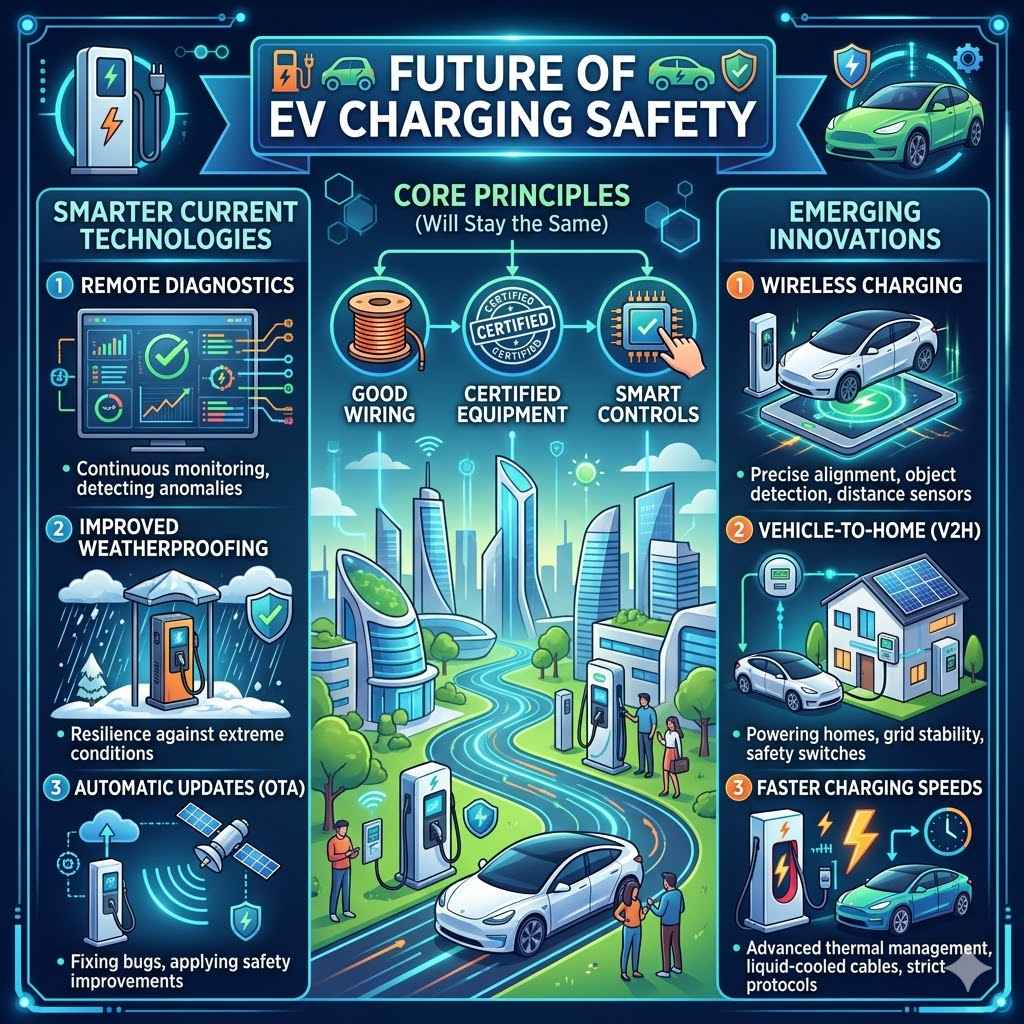
Technology is moving fast. Newer EVs and chargers have even smarter features, like remote diagnostics, improved weatherproofing, and automatic updates to fix bugs or add safety improvements.
Wireless charging, vehicle-to-home power, and faster charging speeds are coming. These will have their own safety protocols, but the core principles—good wiring, certified equipment, and smart controls—will stay the same.
Frequently Asked Questions
Is It Safe To Charge My Electric Car Overnight Every Night?
Yes, it’s safe to charge your EV overnight regularly, as long as you use certified equipment and follow your car maker’s instructions. Modern EVs are designed for daily charging.
Can I Leave My Car Plugged In For Days?
Most EVs are fine if left plugged in for several days or even weeks. The car’s system will keep the battery at a safe level and prevent overcharging. Just avoid leaving it at 100% for long periods unless needed.
Will Charging Overnight Increase My Electric Bill A Lot?
It depends on your local electricity rates and how much you drive. Many utilities offer cheaper rates for overnight charging, so your bill may not increase as much as you expect.
What Should I Do If My Charger Feels Hot In The Morning?
If your charger or cable is hot to the touch, stop using it and call an electrician. Heat can mean a wiring problem or faulty equipment, which needs fixing before you charge again.
Does Weather Affect Overnight Charging?
Extreme temperatures can affect charging speed and battery life. Most EVs have systems to manage this, but it’s best to charge indoors or in mild weather when possible.
Safe, reliable, and convenient overnight charging is one of the biggest advantages of owning an electric car. By understanding the technology and following a few smart practices, you can enjoy the benefits of EV ownership without worry.