
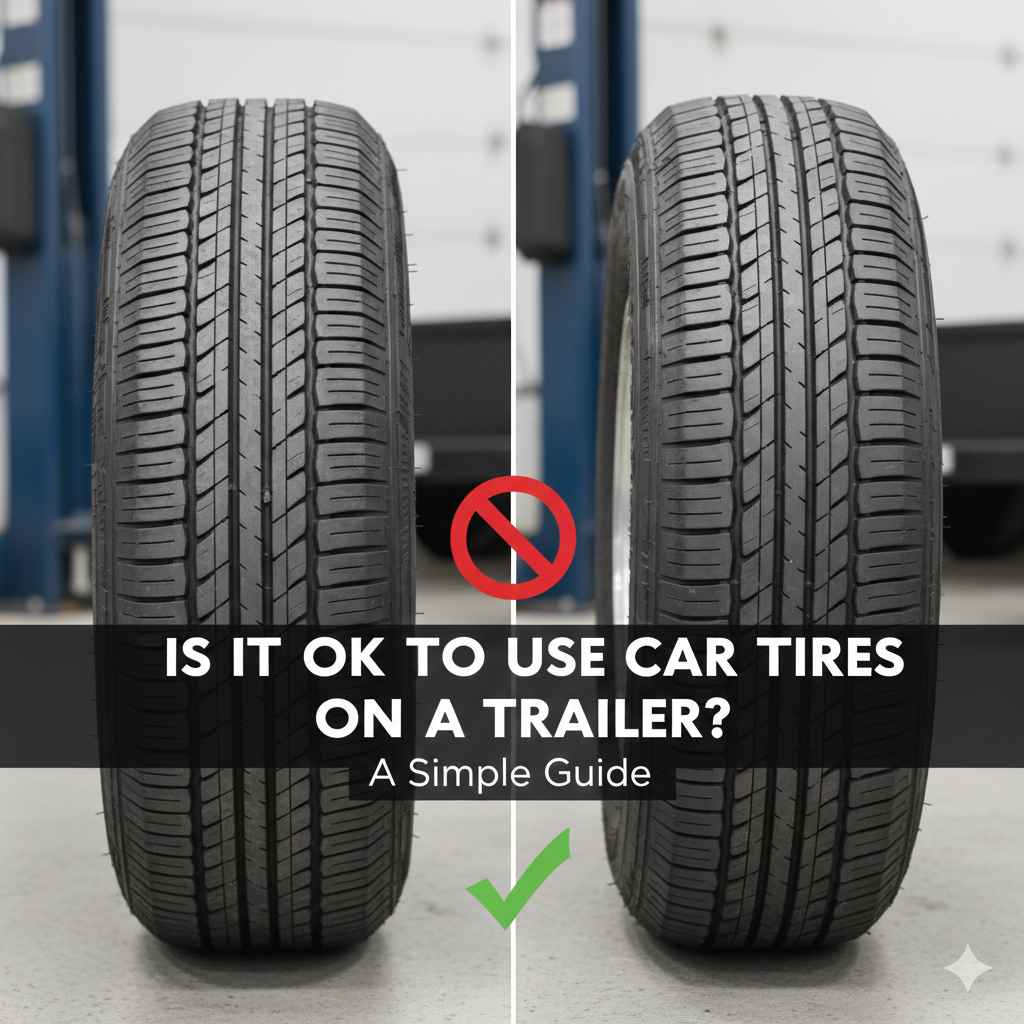
Thinking about using car tires on your trailer? It’s a common question, especially for those just getting into towing. The short answer can be tricky, which is why it can be confusing at first. Don’t worry, though. This guide will simplify everything. We’ll explore the main differences and the most important things to consider. Let’s find out whether Is It OK to Use Car Tires on a Trailer? We’ll break it down step-by-step to make sure you have all the information.
Tire Basics for Trailers Versus Cars
The core difference between car and trailer tires comes down to their purpose and how they’re built. Cars are made to handle a mix of driving conditions and maneuverability, while trailers focus on carrying heavy loads and maintaining stability. This affects the tire’s construction, materials, and how it handles different stresses. Ignoring these differences could lead to safety problems. This section will explore these fundamental differences.
Construction Differences Explained
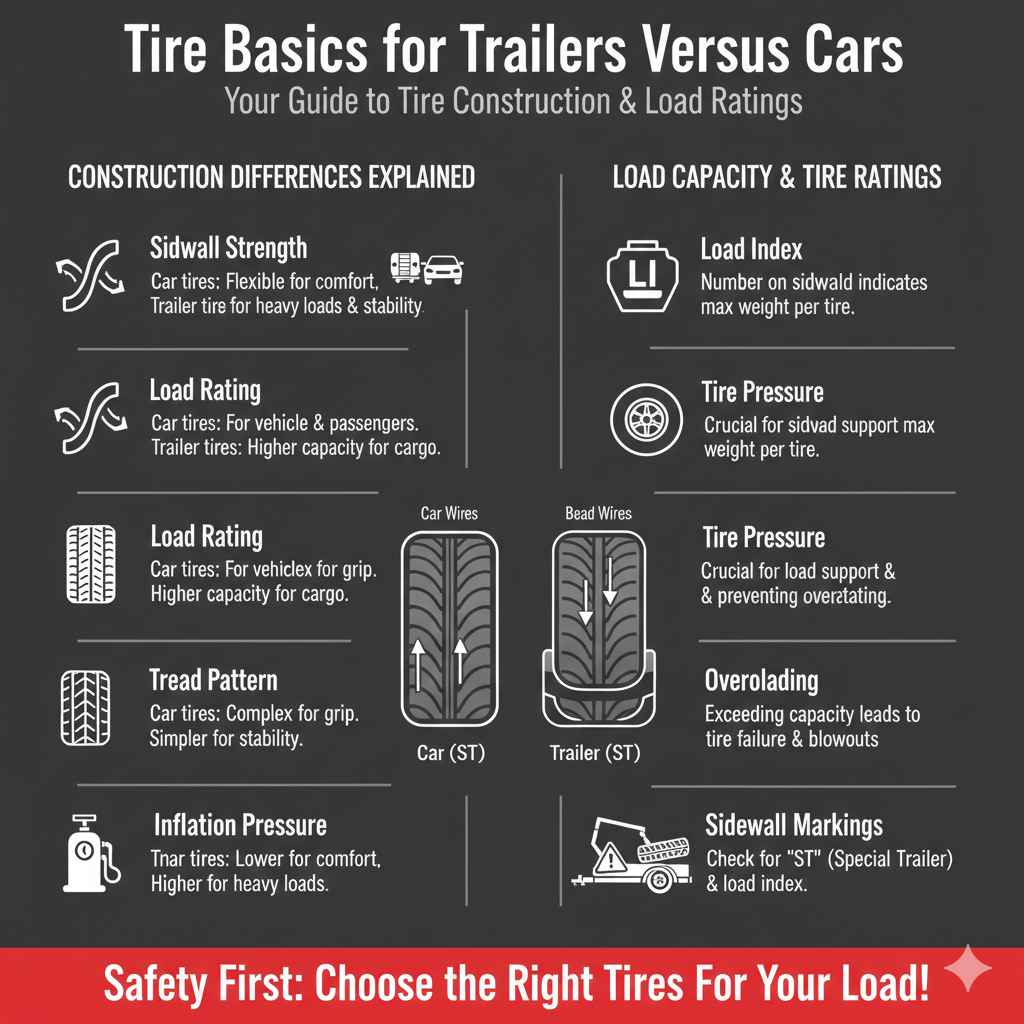
Car tires are engineered for responsiveness, cornering, and passenger comfort. They have flexible sidewalls, which help absorb bumps and provide a smoother ride. Trailer tires, on the other hand, prioritize load capacity and stability. They have stiffer sidewalls to handle heavier weights and reduce sway. Because of these variations, using car tires on a trailer could cause the sidewalls to fail under heavy loads.
- Sidewall Strength: Car tires have more flexible sidewalls for ride comfort. Trailer tires have tougher sidewalls to manage heavier loads and reduce tire sway.
- Load Rating: Car tires are built for the vehicle’s weight and passengers. Trailer tires have higher load ratings to bear the combined weight of the trailer and cargo.
- Tread Pattern: Car tires have complex tread patterns to enhance grip and performance in various conditions. Trailer tires often have simpler tread patterns designed for stability and straight-line tracking.
- Inflation Pressure: Car tires often use lower inflation pressures for comfort. Trailer tires need higher inflation pressures to support heavy loads and maintain sidewall rigidity.
Understanding these construction differences is key. Using the wrong tire can cause accidents. The differences in design directly affect how the tires handle stress and perform on the road. This means that a car tire, built for different forces, might not hold up on a trailer.
Load Capacity and Tire Ratings
Load capacity is a critical factor when choosing tires. Car tires are usually made to handle the weight of the car and its passengers, while trailer tires are designed to handle the weight of the trailer and its cargo. Checking the tire’s load rating is essential to make sure it matches the weight you’ll be hauling. This information is printed on the tire’s sidewall. Choosing the right load rating is an important step to ensure safety and prevent tire failure.
- Load Index: Each tire has a load index number. This number shows the maximum weight the tire can handle at a certain speed and pressure.
- Tire Pressure: Proper inflation is vital for any tire. It helps support the load and keeps the tire from overheating.
- Overloading: Going over the load capacity can cause tires to overheat, leading to a blowout.
Make sure you understand these ratings and always check the tire’s sidewall for specifics. Proper load management ensures the tires will function as expected and prevent unexpected issues. Also, make sure to consider the total weight of your trailer and its load.
Why You Shouldn’t Use Car Tires on a Trailer Usually
The primary reason you shouldn’t use car tires on a trailer is that they’re often not made to handle the specific demands of trailer use. Trailer tires are built with heavier loads and more specific conditions in mind. Car tires may struggle to cope with the increased weight, constant stress, and different types of handling that trailers require. This section will discuss the most important factors.
Tire Load and Stress
Trailers typically carry heavier loads compared to cars. This difference in weight places more stress on the tires. Car tires, with their flexible sidewalls, are not designed to withstand these higher stress levels. They may deform, overheat, and fail. Trailer tires, with their tougher construction, are specifically designed to manage these increased forces, keeping your trailer stable and your journey safer.
- Weight Distribution: Trailers often carry weight differently, with more of it distributed directly on the tires.
- Heat Buildup: Overloading a car tire on a trailer can cause dangerous heat buildup, leading to failure.
- Road Hazards: Trailers may travel on rougher roads, demanding tires that can resist damage better than passenger car tires.
Make sure you fully grasp these factors to protect both your trailer and its cargo. When it comes to tires, focusing on safety first is the best way to ensure smooth journeys.
Handling and Stability Issues
Car tires are made to handle a car’s driving needs, which often include steering, cornering, and acceleration. Trailers, on the other hand, need tires designed for stability and straight-line tracking. Car tires may make a trailer sway or wobble. This lack of stability can make it difficult to control, particularly at higher speeds or in windy conditions. The proper trailer tires will provide a more stable towing experience.
- Sway: Car tires may not handle lateral forces well, leading to trailer sway.
- Tracking: Trailer tires offer better tracking for smoother towing.
- Safety Concerns: Instability can lead to accidents.
Focusing on these issues helps prioritize safety when choosing trailer tires. Ensuring the right tires keeps your trailer steady and your cargo secure.
When Car Tires Might Be Okay for a Trailer
In certain, very specific scenarios, car tires might be usable on a trailer, but only after careful consideration. This typically applies to very light trailers. Before using car tires, it’s essential to assess the load, travel distance, and overall conditions. Always prioritize safety and make sure the tires’ load rating and inflation are adequate.
Lightweight Trailers and Limited Use
For very light trailers, such as small utility trailers used for occasional, short-distance trips, car tires might be considered. However, even in these situations, it’s essential to ensure the tires’ load rating matches or exceeds the trailer’s loaded weight. The trips must be short. Longer trips could lead to tire strain. Always monitor the tires closely for any signs of wear or instability.
- Weight Limit: The trailer and cargo must be extremely light.
- Short Distances: Only use car tires for short trips.
- Speed: Drive slower than usual.
- Regular Checks: Frequently check tires for wear, pressure, and any unusual behavior.
The main thing to keep in mind is the overall weight of the trailer and its load. If the total weight is near the car tire’s limit, it’s best to use a more appropriate tire. These factors will ensure both safety and optimal performance.
Load Rating and Tire Pressure Considerations
If you’re considering car tires on a light trailer, properly matching the tire’s load rating to the trailer’s weight is crucial. It’s also vital to maintain the correct tire pressure. The tire’s sidewall will have the maximum pressure. You should typically inflate the tires to or near this maximum. This helps ensure that the tires can support the load without issues. However, trailer tires are still the safer option.
- Check the Load: Calculate the trailer’s maximum loaded weight.
- Tire Specs: Find the tire’s load rating on the sidewall.
- Pressure: Inflate the tire to the recommended pressure.
Carefully following these steps, while keeping in mind the limitations of using car tires on a trailer, may provide a temporary solution for a very light load. Choosing the right tires makes your journeys safer.
Choosing the Right Tires for Your Trailer
Selecting the correct tires is key for the safety and efficiency of your trailer. When choosing trailer tires, consider factors such as load rating, tire type, and intended use. Make sure the tires you select are designed for the specific weight and operating conditions of your trailer. This section provides insights into making the right choices.
Load Range and Tire Types
Trailer tires come in various types, including bias-ply and radial tires. Bias-ply tires are a traditional design known for their strength and stability. Radial tires offer better ride quality and improved fuel efficiency. Your choice of tire type should match your needs. Make sure to consider the load range. The load range indicates the tire’s maximum load capacity at a specific inflation pressure. It’s often indicated by letters such as “C,” “D,” or “E.” Choosing tires with the correct load range is essential for safety.
- Bias-Ply Tires: Durable and economical, suitable for heavier loads and rugged use.
- Radial Tires: Offer a smoother ride and better fuel efficiency, suitable for longer trips.
- Load Range: Crucial to match the trailer’s total weight.
Choosing the right tire can reduce your risk of accidents. Make sure that your choice meets your specific needs. Understanding load ranges and tire types will help you.
Tire Size and Compatibility
Choosing the right size tire is as important as choosing the right tire type. Use tires that are appropriate for the trailer. Check your trailer’s information to find the proper tire size. This will be on a sticker. The tire size is the specific dimension of the tire, measured in diameter and width. Using the wrong size can lead to issues with performance. Always match the tire size to the original equipment specifications to keep your trailer safe and functional. Also, make sure that the tires have the correct speed rating.
- Check Specs: Find your trailer’s recommended tire size.
- Read the Tire Sidewall: The sidewall will have information such as the load index and the tire’s dimensions.
- Install: Make sure tires fit properly and do not rub against any part of the trailer.
Selecting the correct size ensures safety and improves the way your trailer handles. Choosing the right size is important for both performance and longevity.
| Feature | Car Tire | Trailer Tire |
|---|---|---|
| Sidewall Strength | Flexible | Stiffer |
| Load Capacity | Lower | Higher |
| Tread Design | Complex | Simplified |
| Handling | Designed for Vehicle Maneuverability | Designed for Stability and Load Support |
Maintaining Your Trailer Tires
Proper care of your trailer tires is essential for their performance and longevity. Regular inspections and maintenance can help prevent tire failures and increase safety. This section will explore the key steps to maintaining your trailer tires.
Inspection and Pressure Checks
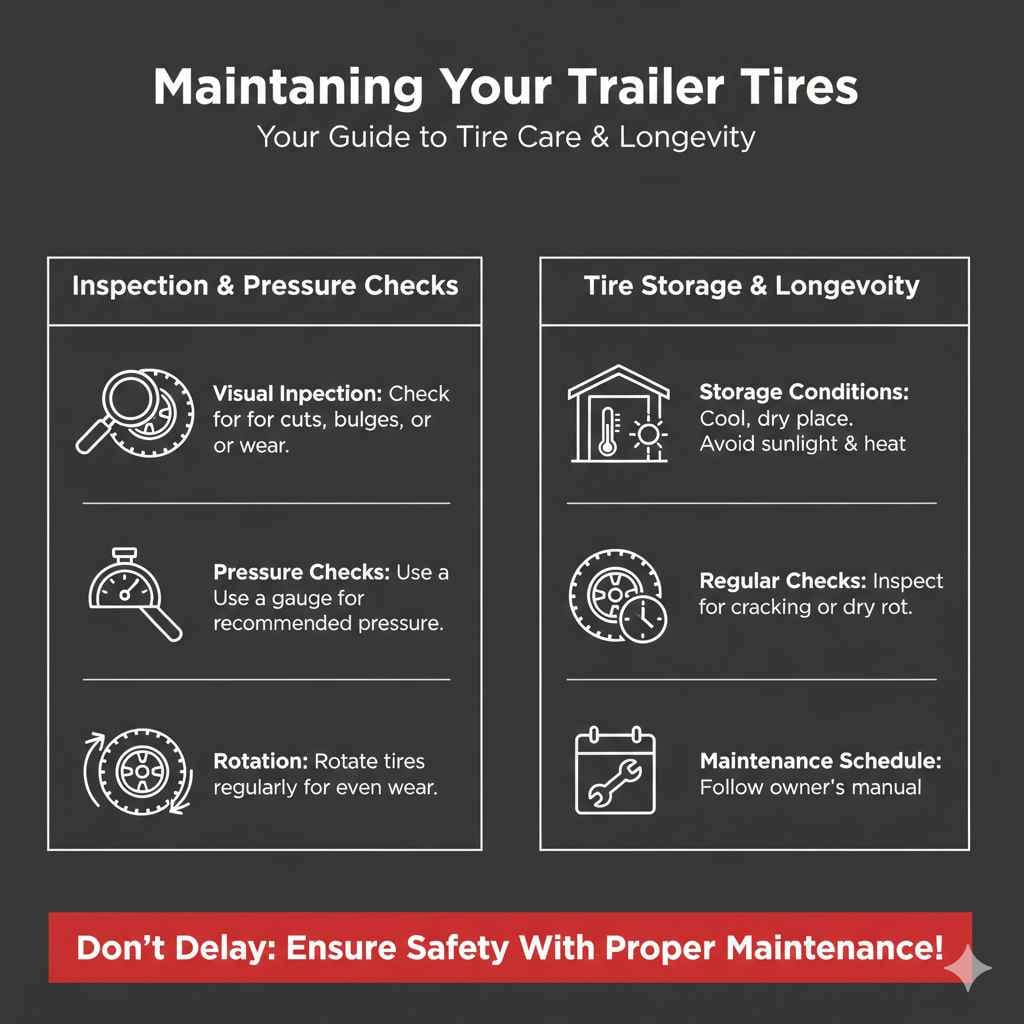
Regular inspections and tire pressure checks are essential for maintaining your tires. Check for visible signs of damage, such as cuts, bulges, or uneven wear, and also make sure you’re using the correct tire pressure. Maintaining proper tire pressure helps the tires last longer. This can be done with a tire pressure gauge and an air compressor. Always check the pressure when the tires are cold. Regular tire maintenance is a key part of maintaining safe trailer operation.
- Visual Inspection: Check the tires for cuts, bulges, or wear.
- Pressure Checks: Use a gauge to ensure tires are inflated to the recommended pressure.
- Rotation: Rotate tires regularly to promote even wear.
Make sure you inspect your tires regularly. Tire maintenance can help extend the life of your tires. This will also make sure that your trailer stays safe on the road.
Tire Storage and Longevity
Proper storage is important for your tires’ lifespan. If you’re not using your trailer for an extended period, store the tires in a cool, dry place away from direct sunlight and extreme temperatures. Make sure that you regularly inspect your tires for any signs of aging, such as cracking or dry rot. A properly stored and well-maintained tire will last longer. Follow the maintenance schedule in your owner’s manual.
- Storage Conditions: Store tires in a cool, dry place.
- Sunlight and Heat: Avoid direct sunlight and extreme temperatures.
- Regular Checks: Inspect for cracking or dry rot.
The way you store and take care of your tires directly impacts their performance and how long they last. Make sure you’re properly storing and maintaining your tires. Keeping them in good shape is an important part of trailer ownership.
Frequently Asked Questions
Question: Can I temporarily use car tires on my trailer?
Answer: It’s generally not recommended unless it’s for very light trailers and extremely short distances. Always ensure the car tires have a load rating that meets or exceeds the trailer’s fully loaded weight.
Question: What’s the main difference between car and trailer tires?
Answer: Trailer tires have stronger sidewalls and higher load ratings to handle heavy loads and provide stability, whereas car tires are made for a more comfortable ride and better handling.
Question: How often should I check my trailer tire pressure?
Answer: Check your trailer tire pressure before each trip and always when the tires are cold. This helps make sure they’re properly inflated, which is vital for safety.
Question: What does the load range on a tire mean?
Answer: The load range indicates the maximum weight a tire can support at a specific inflation pressure. It’s crucial to match the load range to the trailer’s loaded weight to avoid tire failure.
Question: Can I mix different tire types on my trailer?
Answer: It’s best to use the same type and size tires on your trailer. This ensures even wear and balanced handling. If you change a tire,
Final Thoughts
So, Is It OK to Use Car Tires on a Trailer? Generally, no. While in rare instances it might seem okay for very light loads and short distances, it’s usually not the best choice. Car tires aren’t made to handle the stresses of a trailer. They can fail. Always choose trailer tires that match your trailer’s needs. Remember to consider load ratings, tire size, and proper inflation. Regular inspections and maintenance will ensure your tires are in good condition. By following these guidelines, you can ensure a safe and successful journey. Prioritizing the right tires and care will keep your trailer secure and protect your cargo.