

To make your Square Body Chevy ride better, focus on refreshing worn suspension components like shocks, bushings, and ball joints. Simple, often overlooked steps like proper tire pressure and alignment offer immediate improvements without complicated modifications. Upgrading key parts gently enhances comfort and handling safely.
Do you love the classic looks of your Square Body Chevy truck (1973-1987 era), but hate how it bounces down the road? You are not alone! These tough trucks were built for work, not smooth highway cruising. The ride can feel harsh, shaky, or just plain floaty. Dealing with a bumpy classic doesn’t mean selling it. You can make real, noticeable improvements without turning your tough truck into a complicated show queen.
We are going to break down the easiest and most effective ways to smooth out that legendary ride. You don’t need to be a master mechanic to tackle these jobs. We will focus on simple fixes that bring modern comfort back to your classic Chevy. Get ready to enjoy driving your Square Body again!
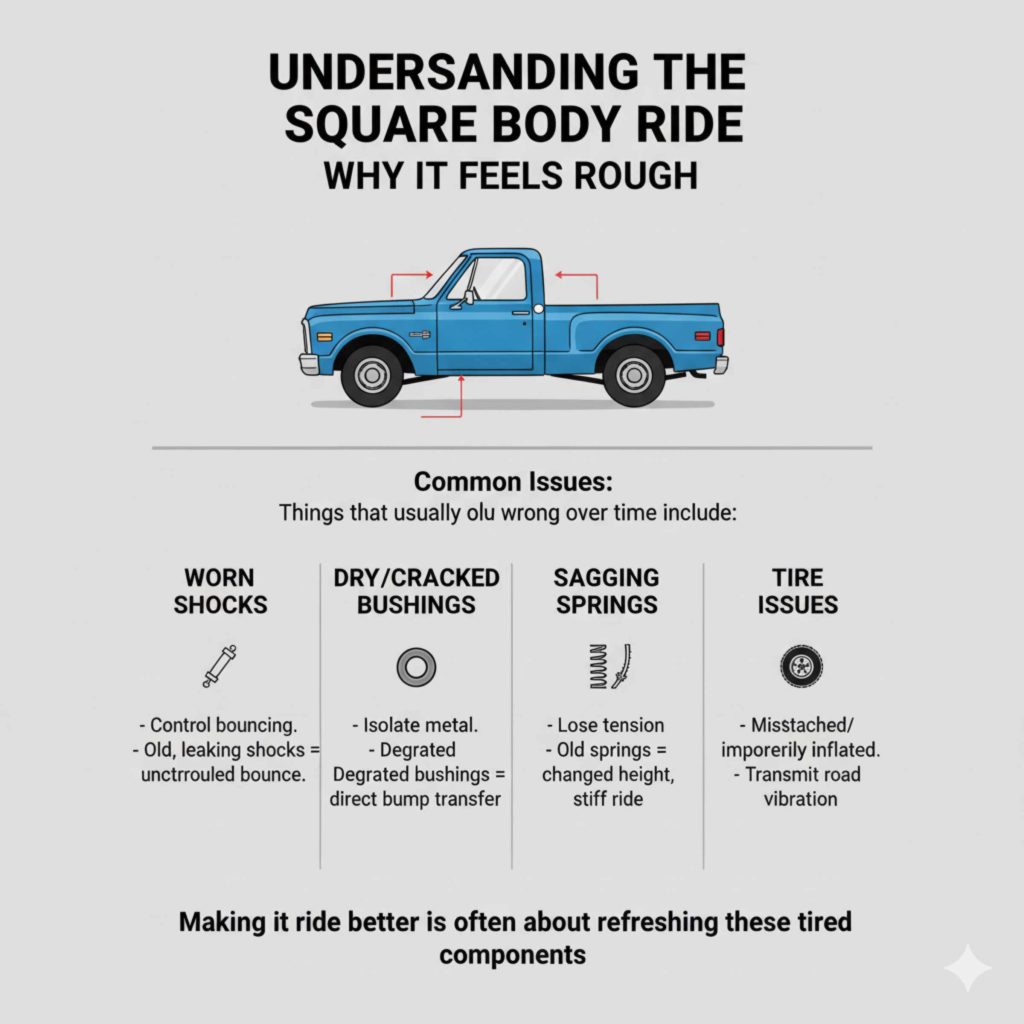
Understanding the Square Body Ride: Why It Feels Rough
Before we fix the problem, let’s understand what causes that classic harshness. Square Bodies used robust, heavy-duty suspension setups designed to haul heavy loads. This usually means stiff leaf springs in the rear and coils up front.
Things that usually go wrong over time include:
Worn Shocks: Shocks (or dampers) control how fast the springs compress and rebound. Old, leaking shocks let the truck bounce uncontrollably.
Dry or Cracked Bushings: These rubber or polyurethane pieces isolate metal-on-metal contact. When they dry out or break, you feel every single bump directly through the frame.
Sagging Springs: Over decades, leaf springs and coil springs lose their tension and sag, changing the height and stiffening the ride unnecessarily.
Tire Issues: Old, mismatched, or improperly inflated tires transmit road vibration directly into the cab.
Making it ride better is often about refreshing these tired components.
Fix #1: The Easiest Wins – Tires and Pressure
The connection between your truck and the road is your tires. Getting this right gives you an immediate, low-cost improvement.
Checking and Setting Proper Tire Pressure
This is the absolute first thing you should check. Under-inflated tires mush around, causing vague steering and wobbling. Over-inflated tires feel rock-hard, transmitting every pebble directly to you.
Here is a safe approach:
1. Find the Sticker: Check the sticker inside the driver’s side door jamb for the factory-recommended pressure. For older trucks, this is often lower than modern truck recommendations.
2. Use a Quality Gauge: Invest in a reliable digital tire pressure gauge.
3. Inflate Cold: Check or adjust the pressure before driving the truck significantly, as driving heats the tires and increases pressure.
4. Don’t Overload Mindset: If you are not hauling heavy loads frequently, you can often safely run 2-4 PSI below the maximum load rating listed on the tire’s sidewall, aiming for the door jamb recommendation for a better ride.
Choosing the Right Tires for Comfort
Tire construction plays a huge role in ride quality.
Load Range (Ply Rating): Look for tires rated P-metric (Passenger) or a lower Load Range C if you need versatility, rather than heavy-duty Load Range E, which are very stiff.
Sidewall Height: Taller sidewalls have more material to absorb bumps. If you have huge aftermarket wheels, you have less rubber, leading to a harsher ride. Sticking closer to the original wheel size (like 15 or 16 inches) generally improves comfort.
Fix #2: Shock Absorber Replacement – Your Suspension’s Dampers
Shocks are what keep your springs from oscillating wildly. If your truck bounces more than once after hitting a speed bump, your shocks are tired. Replacing them is straightforward maintenance that dramatically smooths the ride.
When to Replace Shocks
If you notice any of these signs, it is time to buy new shocks:
- Visible oil leaks on the shock body.
- The truck continues to bounce after hitting a dip or bump.
- Excessive swaying or body roll in corners.
- A “floaty” feeling at highway speeds.
Choosing Shocks for a Better Ride
You are aiming for comfort, not maximum towing capacity. Look for shocks designed for light trucks or standard load applications.
| Shock Type | Best For | Ride Impact |
| :— | :— | :— |
| OEM Replacement (Gas/OEM Spec) | Daily driving where comfort is key. | Excellent baseline ride improvement. |
| Adjustable Shocks | Drivers who sometimes haul heavy loads. | Allows tuning for comfort or load firmness. |
| Heavy Duty/Towing Shocks | Primarily hauling/off-roading. | Generally stiffer, less ideal for pure comfort. |
For the best comfort upgrade, look for high-quality, age-appropriate replacement shocks. Reputable brands often offer “Touring” or “Comfort” lines.
Basic Shock Replacement Steps (General Guide)
This is a common DIY job. Remember safety first! Consult your local safety guidelines, such as those promoted by the National Highway Traffic Safety Administration (NHTSA) regarding vehicle maintenance.
- Safely lift the truck using quality jack stands placed on the frame rails. Never work under a vehicle supported only by a jack.
- Locate the old shocks (front coils usually have them mounted inside the coil spring; rear axle attaches above and below the axle).
- Remove the mounting bolts securing the old shocks. You may need to cycle the suspension slightly to align the mounting points.
- Compare the new shock to the old one to ensure they are the same length (when compressed and extended).
- Install the new shocks, ensuring all hardware (washers, bushings) is installed correctly according to the manufacturer’s instructions.
- Lower the truck and bounce each corner gently to ensure everything settles correctly.
Fix #3: Addressing Bushings—The Unsung Heroes of Smoothness
Bushings are small spacers made of rubber or polyurethane that sit between metal parts. They absorb vibration. If they are old, dried out, or broken, you get noise, harshness, and sloppy handling.
What to Inspect
You need to look closely at the control arm bushings (front suspension) and leaf spring bushings (usually rear suspension).
Visual Check: Look for cracking, crumbling rubber, or if the bushing has completely separated, allowing the metal bolt sleeve to touch the metal mounting bracket.
The Wiggle Test: If you can push or rock the control arm significantly by hand or by prying gently with a large screwdriver (when the truck is safely supported), the bushings are likely shot.
Replacing Bushings: A Bigger Job, Big Rewards
Replacing bushings is more time-consuming than shocks because they often require removing large suspension components (like pressing old bushings out and new ones in).
Tip for Beginners: If you plan to keep the truck long-term, consider a kit that replaces all the major rubber components with polyurethane. Polyurethane lasts longer but can sometimes transmit slightly more initial vibration than fresh rubber. However, for a Square Body that sees regular use, it is a fantastic upgrade.
If you are not equipped with a shop press or specialized tools, this might be a great job to have a trusted local shop handle for you. A full front-end or rear-end bushing replacement is one of the single best ways how to make Square Body Chevy ride better for pure road comfort.
Fix #4: Upgrading Springs and Coils (When Replacement is Necessary)
If your truck sits unevenly, has excessive sag, or still bangs over bumps even with new shocks, the springs themselves are likely fatigued.
Front Coil Springs
The front of the Square Body uses coil springs. If one side sits noticeably lower than the other, or if they never seem to compress easily, they are worn out.
The Comfort Choice: When replacing coils, always buy a matching set for both sides. Look for “Standard Load” or “Comfort Height” coils. Avoid “Lifting Coils” if your goal is ride quality over ground clearance.
Rear Leaf Springs
Leaf springs are complex, but for ride quality, you have two main options if the old ones are shot:
1. Re-arch/Re-leaf (Budget Option): A suspension shop can disassemble your existing leaf packs, add new metal spacers (leaves) to restore the original arch, and replace/grease all bushings. This saves money and maintains the original “feel.”
2. New Comfort Leaf Packs (Best Upgrade): Purchase brand new aftermarket leaf springs designed specifically for a light-duty ride. These often come with fewer, flatter (and therefore more comfortable) leaves than the heavy-duty towing packs used from the factory.
Fix #5: The Alignment Check—Crucial for Stability
After replacing shocks, springs, or any steering components (like tie rods or ball joints), an alignment is non-negotiable. A poor alignment will make the truck feel loose, wander on the road, and increase tire wear, totally ruining any comfort improvements you just made.
Why Alignment Matters for Ride Feel
Alignment sets the caster, camber, and toe angles.
Toe Setting: If the toe is off, the tires scrub slightly as you drive, feeling like you are constantly correcting the steering wheel, which is exhausting and rough.
Caster: This helps the steering wheel return to center. Incorrect caster makes steering feel heavy or twitchy.
Because Square Bodies are older and robust, ensuring precise alignment often requires using specialized shims or adjusting kits, which is why a shop familiar with classic truck geometry is highly recommended for this specific task.
Fix #6: Dampening Vibrations—The Secret Weapons
Sometimes the main issue isn’t the suspension, but vibrations transferring directly through the chassis or cab.
Steering Components Inspection
Worn steering parts transmit road impact straight to your hands. Check these components carefully:
1. Steering Box Play: Does the steering wheel have excessive “dead spot” before the wheels actually turn? If so, the steering gearbox adjustment might need tightening or replacement.
2. Ball Joints and Tie Rod Ends: These must be tight. Any play here translates directly into a harsh ride feel. Replace any components showing excessive lateral movement.
Driveshaft and U-Joints
A worn center support bearing (on 4×4 models) or bad Universal Joints (U-joints) will cause shuddering or vibration, especially when accelerating or cruising at highway speeds. Replacing U-joints is a relatively inexpensive and achievable DIY fix that eliminates annoying shakes.
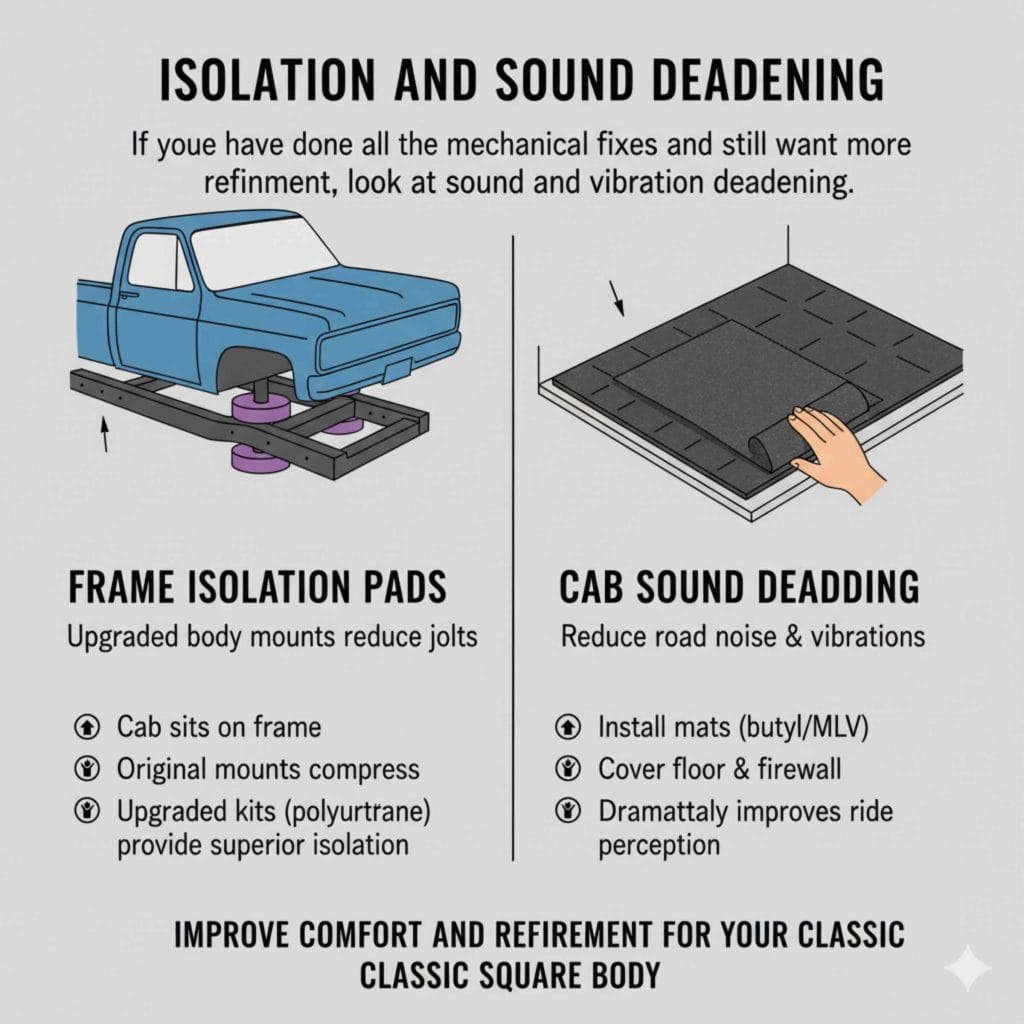
Fix #7: Isolation and Sound Deadening
If you have done all the mechanical fixes and still want more refinement, look at sound and vibration deadening.
Frame Isolation Pads
The cab of the Square Body often sits directly on the frame with basic rubber mounts. Over time, these mounts compress or degrade.
You can purchase upgraded body mount bushing kits (often polyurethane or high-density composites) that provide superior isolation between the cab and frame. This stops sharp jolts from traveling up through the floorboards.
Cab Sound Deadening
Installing sound-deadening material (like mass-loaded vinyl or butyl mats) on the floorboards and firewall significantly reduces road noise and high-frequency vibrations that tire the driver out. This doesn’t technically “fix” the suspension, but it dramatically improves the perception of a better ride quality.
Summary of Top Upgrades for Ride Improvement
To easily visualize the priorities for improving your ride quality, here is a quick cheat sheet based on cost and impact:
| Upgrade Priority | Component | Ease of Install (DIY) | Potential Ride Improvement |
|---|---|---|---|
| Tier 1: Essential Check | Tires & Pressure | Very Easy | High (Immediate) |
| Tier 2: Quick Fix | All Four Shocks | Easy/Moderate | Very High |
| Tier 3: Major Improvement | Steering/Suspension Linkage (Ball Joints, Tie Rods) | Moderate | High (Adds Stability) |
| Tier 4: Long-Term Comfort | All Suspension Bushings | Hard (Time Consuming) | Excellent |
| Tier 5: Refinement | Body Mount Bushings & Sound Deadening | Moderate (Requires access underneath) | Noticeable Reduction in Harshness |
Frequently Asked Questions (FAQ) About Square Body Ride Quality
Q1: Can I lower my Square Body to make it ride better?
A: Sometimes, yes. Lowering kits often involve new, shorter springs or shackle adjustments. Shorter springs are generally stiffer, but if you eliminate excessive, tired factory height, the ride can feel more controlled. However, lowering too much will cause the suspension to “bottom out” easily, making the ride significantly worse* and potentially dangerous.
Q2: Should I use rubber or polyurethane for my new bushings?
A: For maximum comfort, high-quality new rubber bushings are the traditional choice as they absorb high-frequency dampening well. For durability and longevity (especially if you drive it often), polyurethane kits are excellent, though some enthusiasts feel they transmit slightly more road harshness.
Q3: What is the goal ride height for a comfort-focused Square Body?
A: The best ride height is usually close to the factory specification found on the door sticker, or perhaps one inch lower if using standard replacement springs. Extreme lowering or lifting compromises the factory geometry designed for road use.
Q4: I fixed the front end, but the back is still rough. Why?
A: This is common! The rear uses leaf springs, which are inherently stiffer than front coil springs. The fix is usually replacing the leaf springs with modern “comfort-rated” packs (as mentioned in Fix #4) or installing better shocks specifically designed for the rear axle.
Q5: How often should I lubricate my suspension fittings?
A: If you installed greaseable ball joints or tie rods, aim to grease them every oil change (or every 3,000–5,000 miles) until you see clean grease coming out of the fitting. If you used sealed (non-greasable) components, listen for noise, which indicates replacement time.
Q6: Does replacing the steering gear box help the ride?
A: Yes, significantly! A worn steering gearbox introduces slop (play) in the steering. When you hit a bump, you feel the slack taken up through the steering wheel. A tight, properly adjusted or replaced gearbox makes the ride feel instantly tighter and more responsive, reducing perceived harshness.
Conclusion: Enjoying Classic Style with Modern Manners
The Square Body Chevy is an icon for a reason. It offers rugged looks and a timeless design. By systematically addressing the common weak points—old shocks, dried-out bushings, and improperly inflated tires—you can transform that kidney-jarring experience into something genuinely enjoyable.
Start with the easiest fixes: check those pressures and replace the shocks. You will be amazed at the immediate difference. For the ultimate improvement, investing time (or budget) into refreshing the control arm and leaf spring bushings will solidify a much smoother, quieter ride. Go build confidence under that tough-looking hood—your classic truck deserves to ride as good as it looks!