
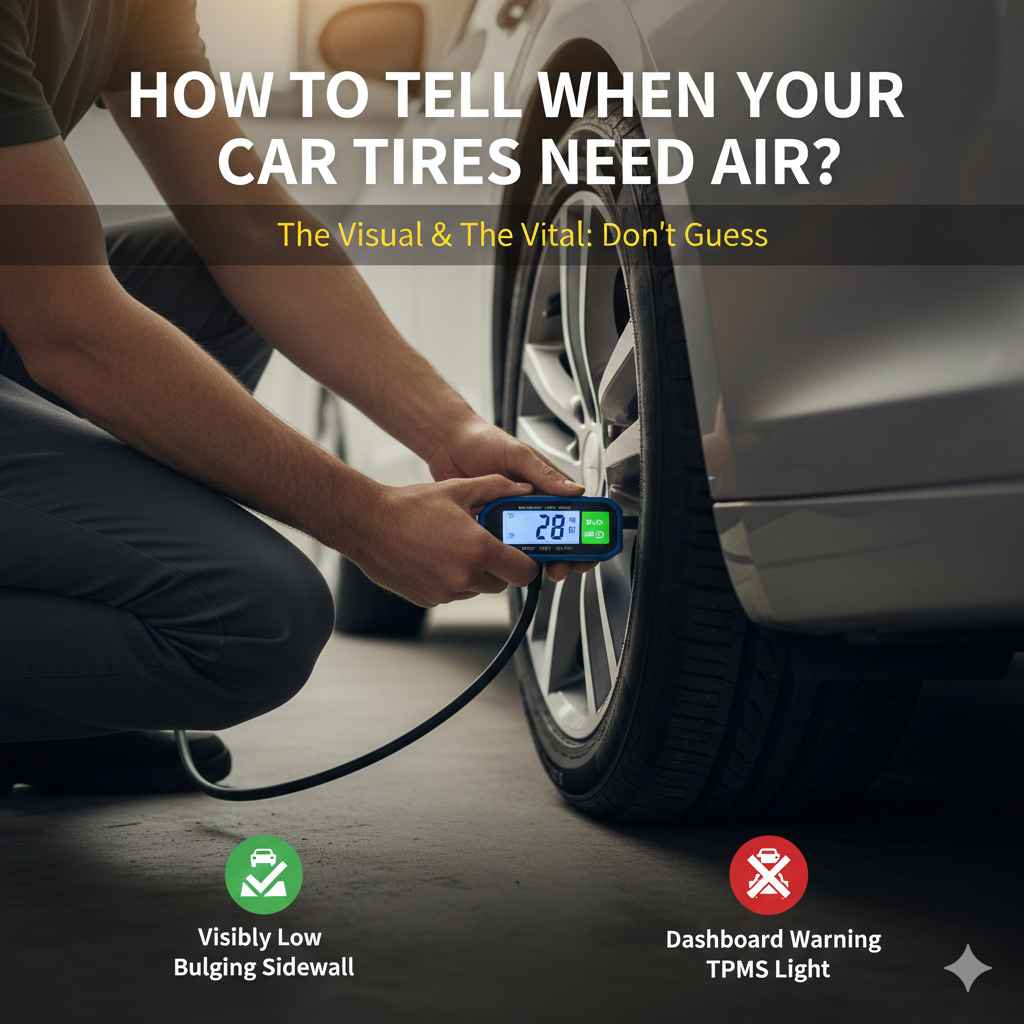
Figuring out How Do You Know If Your Car Tires Need Air? can feel tricky when you first start driving. You might wonder how to tell if your tires are okay. Don’t worry, it’s simpler than you think! We’ll explore the signs and explain what you need to do. This guide will help you easily check your tires. Next, we’ll break down the steps.
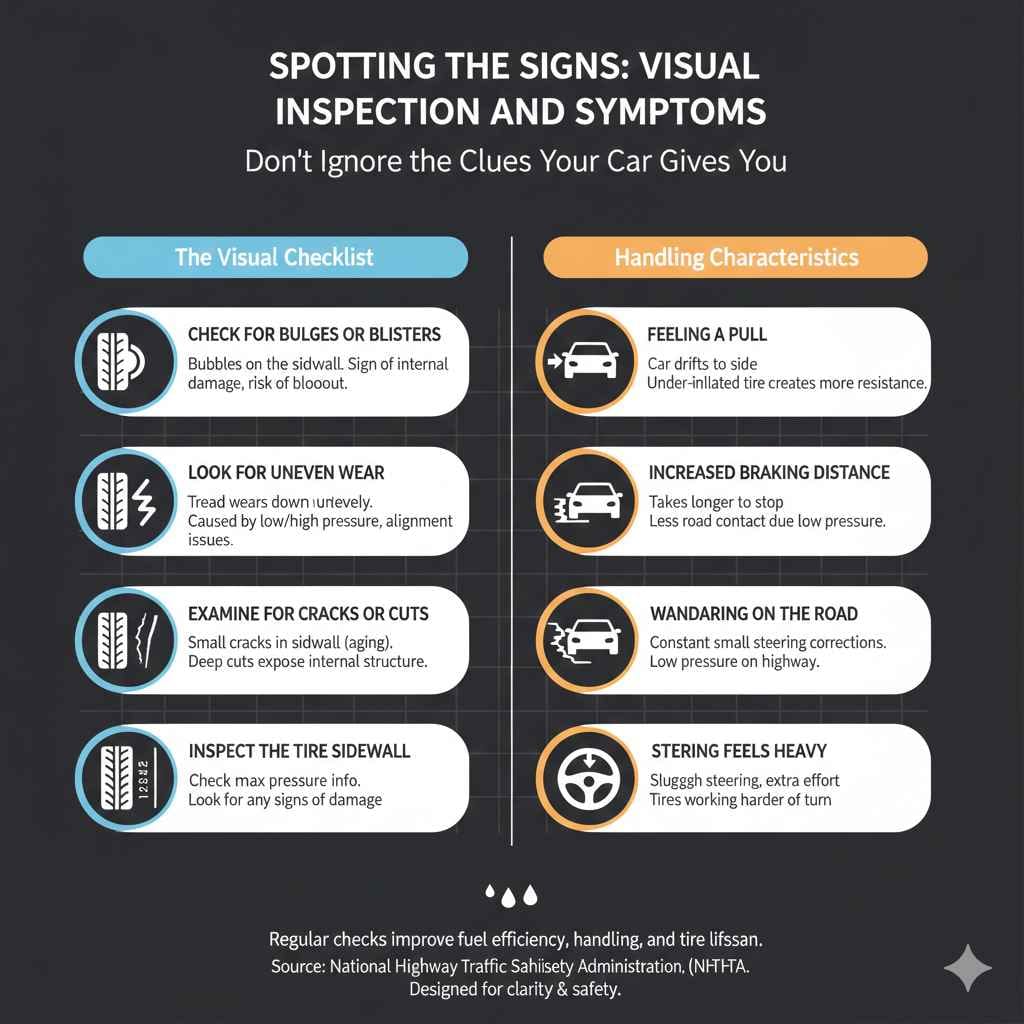
Spotting the Signs: Visual Inspection and Symptoms
Knowing when to add air to your tires starts with paying attention to them. It’s like checking your shoes before a long walk. There are easy things to look for. These signs can help you prevent future issues. Remember, tire pressure influences your car’s fuel efficiency, handling, and tire lifespan. Regular checks can save you money and keep you safe. We’ll start by checking the tires themselves and what you might see.
The Visual Checklist
Checking your tires visually is a quick and easy first step. You don’t need any tools, just your eyes! Look at the tires when the car is parked on a level surface. Walk around your car and carefully examine each tire. What you find could tell you a lot about your tire pressure. These simple checks can often tell you if you have a problem. Catching the problem early is always the best idea.
- Check for Bulges or Blisters. These are like bubbles on the tire’s sidewall. They usually mean there’s internal damage, which could cause a blowout. If you see any, it’s time to get your tire checked by a mechanic. The tire might need to be replaced.
- Look for Uneven Wear. Uneven wear means the tread isn’t wearing down smoothly. This can be caused by low or high tire pressure, or even alignment issues. Check the tread depth across the tire. Use a tread depth gauge or the penny test to help you.
- Examine for Cracks or Cuts. Small cracks and cuts can lead to bigger problems. Cracks in the sidewall might appear as your tires get older, and cuts can expose the tire’s internal structure. Any deep cuts are a sign your tire may need to be replaced.
- Inspect the Tire Sidewall. The sidewall has important information, including the maximum tire pressure. A quick look can help you determine the correct pressure for your tires. Also, check for any damage.
Handling Characteristics: What Your Car Is Telling You
Your car’s handling can also tell you if your tires need air. The car’s response to your steering, braking, and acceleration gives you valuable clues. You’ll become more familiar with your car’s feel over time. This can improve your awareness of potential tire problems. Changes in handling should prompt you to check your tires and correct any pressure issues. It’s always best to be cautious with handling changes.
- Feeling a Pull. If your car pulls to one side while driving, low tire pressure could be a cause. The under-inflated tire can create more resistance, causing the car to drift. This means the low tire is working harder than the others.
- Increased Braking Distance. Low tire pressure can make your car take longer to stop. This is because the tires have less contact with the road. Having good tread and proper tire pressure helps you stop faster.
- Wandering on the Road. When driving on the highway, low tire pressure can cause your car to wander. You might find you’re constantly making small corrections to keep your car in its lane. This could make a long drive tiring.
- Steering Feels Heavy. If your steering feels sluggish or requires extra effort, this might be a sign of low tire pressure. The tires might be working harder, and you’ll notice it when turning the steering wheel.
Understanding Tire Pressure: What Is PSI and Why It Matters
Tire pressure is how much air is in your tires. It’s measured in pounds per square inch (PSI). The right tire pressure is vital for your car’s performance, safety, and tire lifespan. It’s simple but important. Understanding this concept empowers you to keep your car in its best shape. Proper tire pressure helps your tires perform as they are meant to, which impacts the vehicle’s handling and safety.
What PSI Means
PSI (pounds per square inch) is the unit used to measure tire pressure. Think of it as the force the air inside the tire applies to the tire’s walls. The right PSI varies depending on your car and the type of tire. Keeping your tire pressure at the recommended level ensures the tires perform as designed. When you add air to your tires, you increase the PSI. When you let air out, you decrease it. You can’t just guess; knowing the correct PSI is key.
- Tire sidewall markings. Look on the tire’s sidewall. You will find the maximum PSI for the tire. This isn’t the pressure you should use. It’s the highest pressure the tire can handle. The recommended pressure is often different.
- Car’s Owner’s Manual. This is the best place to find the right tire pressure for your car. The recommended pressure is usually listed on a sticker on the driver’s side doorjamb or in the owner’s manual. Follow these recommendations.
- Pressure and temperature. Tire pressure can change with temperature. When the weather gets cold, your tire pressure drops. When the weather gets hot, your tire pressure increases. Check your tire pressure regularly, especially as the seasons change.
- The effects of low tire pressure. Low tire pressure decreases fuel efficiency, affects handling, and causes uneven wear. Low pressure can also damage your tires. Make sure your tires have enough air.
The Impact of Pressure on Performance
Proper tire pressure has a big impact on your car’s performance. It can affect how your car handles, how far it can go on a tank of gas, and how long your tires will last. Every driver should check their tire pressure regularly. If you use the correct pressure, you get the best performance from your tires. It also helps with your overall driving experience. Correct pressure is important for safety and the vehicle’s long-term health.
- Fuel efficiency. Properly inflated tires roll more easily, which reduces fuel consumption. Under-inflated tires create more resistance, making your car work harder and use more gas. This can save you money at the gas pump.
- Handling and Control. Correct tire pressure gives you better control of your car. It helps with steering, braking, and overall handling. You will feel more confident and in control when you drive your car.
- Tire Lifespan. Proper inflation helps your tires wear evenly. This means your tires will last longer. Under-inflation and over-inflation can cause tires to wear out more quickly, requiring replacement sooner.
- Safety. Correct tire pressure is essential for safe driving. It enhances handling and reduces the risk of tire failure. It also helps prevent accidents.
How to Check Your Tire Pressure: Step-by-Step Guide
Checking your tire pressure is a simple skill that every driver should have. It’s not hard and doesn’t require any special tools besides a tire pressure gauge. Regular checks help ensure your tires are at the right pressure for safe and efficient driving. With this knowledge, you can quickly check your tires. We’ll show you how to do it in a few easy steps. Keep an eye on your tires, and you’ll be fine.
Gathering Your Supplies
Before you check your tire pressure, you need a few things. You don’t need much. This process is very simple once you know what to do. Having the correct tools makes the process quick and easy. Get ready to keep your tires in top shape. Here’s what you need to gather.
- Tire Pressure Gauge. There are many kinds of tire pressure gauges. You can use a digital gauge for easy readings. A dial gauge is also a good choice. Make sure the gauge is accurate and reliable.
- Your Car’s Owner’s Manual. This manual provides the recommended tire pressure for your car. You can also find this information on a sticker on the driver’s side doorjamb. This number is what you should be aiming for.
- A Clean and Dry Area. Perform the tire pressure check in an area where your car can sit safely. Make sure you have enough room to move around your car. Keep your surroundings clear.
The Checking Process
Now, let’s look at the actual process of checking your tire pressure. It is important to remember to check your tires when they are cold. This means you haven’t driven your car in at least three hours. If you’ve driven your car recently, wait for the tires to cool down before checking. Here’s a quick and simple process.
- Find the Tire Pressure Information. Locate the recommended tire pressure for your car. Look at the sticker on the driver’s side doorjamb or in your owner’s manual. This will tell you the correct PSI for your tires.
- Remove the Valve Cap. Locate the valve stem on your tire. It’s a small, rubber-covered metal stem. Unscrew the valve cap. Set the cap aside in a safe place.
- Check the Tire Pressure. Press the tire pressure gauge firmly onto the valve stem. You might hear a small hiss as air escapes. Get a stable reading from the gauge. Make sure the gauge is pressed on securely to get an accurate reading.
- Compare and Adjust. Compare the reading on the gauge to the recommended PSI. If the pressure is too low, add air. If it’s too high, let some air out. Use an air compressor to add air. Use the valve stem to release air if you need to.
- Repeat on All Tires. Repeat the process for all four tires, including the spare, if you have one. It is important to check all tires for even wear. Maintain the correct pressure.
- Replace the Valve Caps. Once you’re done, put the valve caps back on tightly. This helps protect the valve stem from dirt and moisture. It is a simple step, but it is necessary for maintaining the integrity of your tires.
Adding and Releasing Air
Adding and releasing air is the next step in this process. Your goal is to get your tires to the correct PSI. There are a few things to keep in mind to do this correctly. This skill helps you maintain proper tire pressure. This will help you keep your car safe and running efficiently. You’ll be adding and releasing air like a pro in no time.
- Adding Air. If your tire pressure is low, you need to add air. You can find air compressors at most gas stations. They usually have a nozzle you can attach to the tire valve stem. Add air in short bursts. Check the pressure after each burst. Don’t add too much air at once.
- Releasing Air. If your tire pressure is too high, you need to release air. Use the back of your tire pressure gauge or a small, pointed object to gently press the pin inside the valve stem. Let out small amounts of air. Then, recheck the pressure until it reaches the recommended level.
- Checking Regularly. Check your tire pressure at least once a month. Make adjustments as needed. Check more often in extreme temperatures or before long trips. Regular checks prevent many tire-related problems.
- Using the Right Tools. Digital tire pressure gauges and air compressors are easily available. These are useful tools to have on hand. Always have a gauge to check your tire pressure.
Common Mistakes to Avoid
Avoiding these mistakes will help you maintain your tires. You can also save money. Regular tire care is not complex, but errors can happen. Being aware of the most common mistakes can help you maintain your tires and keep your car safe. You will become a pro at tire maintenance.
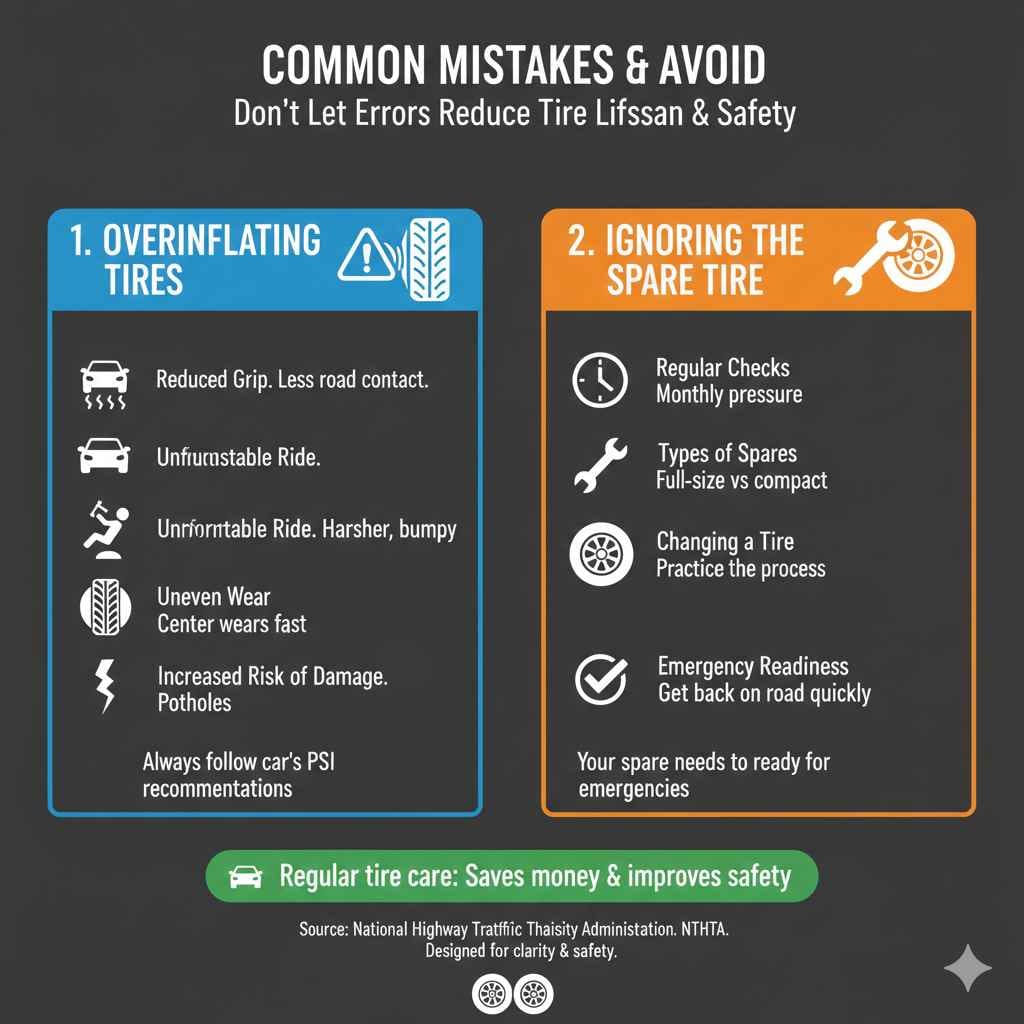
Overinflating Tires
Overinflating tires can seem like a good idea. However, it can cause problems with your tires. Always follow the tire pressure recommendations for your car. Overinflating can affect the tires’ contact with the road. This can reduce your car’s grip. It also results in an uncomfortable ride. Avoid this mistake. You can get the best performance from your tires.
- Reduced Grip. Overinflated tires have less contact with the road surface. This can reduce grip, especially in wet or icy conditions. Your car might not handle as well. It could slide more easily.
- Uncomfortable Ride. Overinflated tires absorb less road shock. This can make the ride harsher and less comfortable. You might feel every bump and pothole more.
- Uneven Wear. Overinflation can cause the center of the tire to wear out faster than the edges. This reduces the life of your tires. Regular checks can prevent this.
- Increased Risk of Damage. Overinflated tires are more susceptible to damage from potholes and other road hazards. You might end up with a blown tire.
Ignoring the Spare Tire
It’s easy to forget about the spare tire, but it is just as important as your other tires. Your spare tire needs to be ready to go in case of an emergency. Checking your spare tire is a simple step that could save you a lot of trouble. Make it a habit. This is an easy way to prepare for the unexpected and ensure your safety.
- Regular Checks. Check your spare tire’s pressure at least once a month. Ensure it is at the recommended PSI. If it’s stored in your trunk, inspect it for damage, too. This is an important step to take.
- Types of Spares. Some cars have full-size spares. Some have compact or temporary spares. Make sure you know what type of spare you have and how to use it.
- Changing a Tire. Make sure you know how to change a tire. This is important if you get a flat. The owner’s manual explains the process. Practice it once or twice.
- Emergency Readiness. Having a properly inflated spare tire ready can save you a lot of time. In an emergency, you’ll be able to get back on the road quickly. Being ready makes driving safer and more convenient.
Frequently Asked Questions
Question: How often should I check my tire pressure?
Answer: It’s best to check your tire pressure at least once a month and before any long trips. Also, remember to check it when the weather changes.
Question: Where can I find the correct tire pressure for my car?
Answer: You can find the recommended tire pressure on a sticker on the driver’s side doorjamb or in your car’s owner’s manual.
Question: What’s the difference between the maximum PSI and the recommended PSI?
Answer: The maximum PSI is the highest pressure your tire can handle. The recommended PSI is the ideal pressure for your car, as listed in your owner’s manual.
Question: What should I do if my tire pressure is too low?
Answer: Add air to your tires using an air compressor until they reach the recommended PSI. Gas stations and auto repair shops often have air compressors.
Question: Can I check my tire pressure when the tires are hot?
Answer: It’s best to check your tire pressure when your tires are cold, meaning you haven’t driven the car for at least three hours. If your tires are hot, the reading will be higher.
Final Thoughts
Now you have the knowledge to check your tires and determine How Do You Know If Your Car Tires Need Air? Remember that a visual inspection can identify issues like bulges, uneven wear, or cuts. Knowing your car’s handling, like a pulling sensation or increased braking distance, can also indicate tire pressure problems. You can use a tire pressure gauge to check your tires, and you will learn how to add or release air to reach the correct PSI. You have learned about common issues, like overinflating tires or overlooking your spare. You have the tools to ensure your tires are correctly inflated. Now, make a habit of checking your tire pressure regularly. Keeping your tires properly inflated will help you drive safely and efficiently. Make it a part of your regular car care routine.