
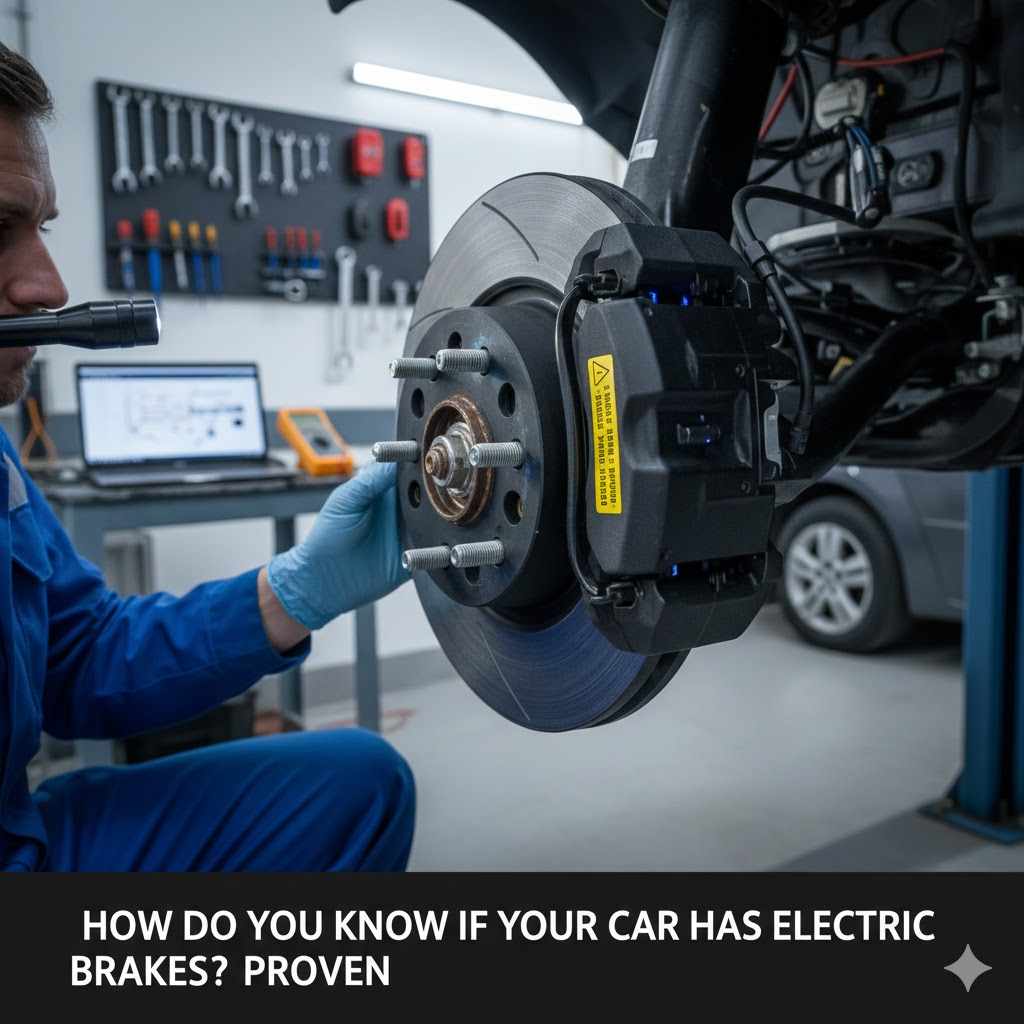
To know if your vehicle is equipped for electric trailer brakes, look for an electric brake controller mounted on or under your dashboard. Another key sign is a 7-pin trailer wiring connector at the rear of your vehicle. These two components are essential for operating electric brakes on a trailer and are the clearest indicators.
Figuring out your car’s features can feel like a puzzle. You might be wondering about your braking system, especially if you plan on towing a trailer. It’s a common question, and you’re in the right place to get a clear answer. Many drivers get confused between different types of “electric” brakes, but don’t worry. It’s much simpler than it sounds.
We will walk you through easy, proven steps to see if your car is set up for electric trailer brakes. You won’t need any special tools or confusing mechanic talk. Let’s solve this mystery together and give you the confidence you need for your next adventure.
What Are Electric Brakes, Anyway? (A Simple Explanation)
Before we start looking, let’s quickly clear up what we mean by “electric brakes.” In the world of towing, electric brakes refer to a system on the trailer, not the car itself. Your car or truck is simply equipped to control them.
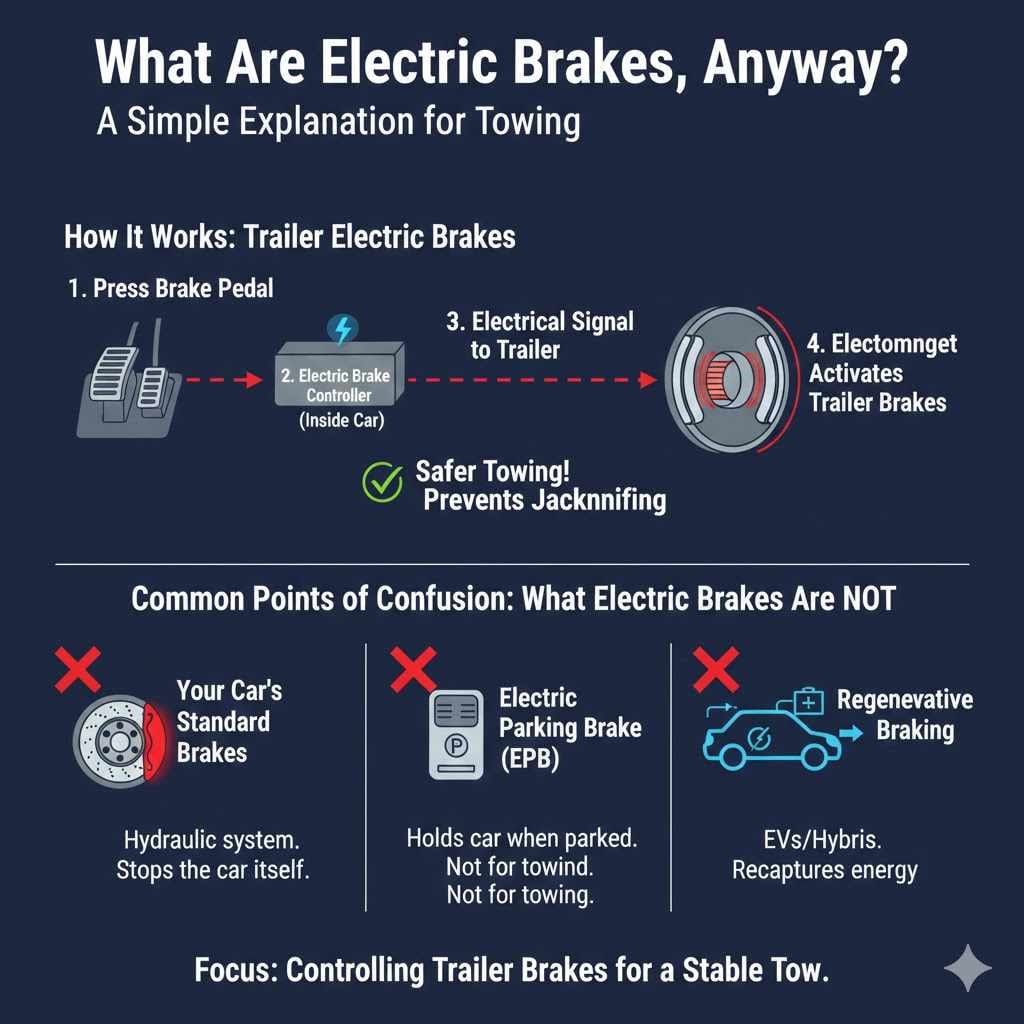
Here’s how it works in a nutshell:
- When you press the brake pedal in your car, a signal is sent to a small box called an “electric brake controller.”
- This controller then sends an electrical current back to the trailer’s brakes.
- The electricity powers an electromagnet inside the trailer’s brake drum, which activates the brakes.
The beauty of this system is that it allows the trailer to brake along with your vehicle, creating a much safer and more stable towing experience. It prevents the trailer from pushing your car, a situation known as “jackknifing.”
Common Points of Confusion: What Electric Brakes Are NOT
It’s easy to get mixed up because the word “electric” is used for a few different car parts. Let’s set the record straight. The electric brakes we are talking about are NOT:
- Your Car’s Standard Brakes: Nearly all cars, trucks, and SUVs use a hydraulic braking system. This system uses fluid pressure to stop your vehicle.
- An Electric Parking Brake (EPB): Many modern cars have a button or switch instead of a hand lever or foot pedal for the parking brake. This is an EPB. It only holds your car when parked and has nothing to do with towing.
- Regenerative Braking: This is a feature in hybrid and electric vehicles (EVs). It uses the electric motor to slow the car down, which recaptures energy and recharges the battery. It is part of the car’s main drive system, not for trailers.
Our focus here is only on the system that controls a trailer’s electric brakes. Now, let’s find out if your vehicle has this capability.
Method 1: The Easiest Check — Look for a Brake Controller
This is the most straightforward way to know if your vehicle is ready for electric brakes. An electric brake controller is the brain of the operation. If you have one, your vehicle is almost certainly set up for towing with electric brakes.
What to Look For
A brake controller is a small, box-shaped device, usually about the size of a garage door opener. It will typically have:
- A small screen or LED display.
- Buttons or a dial to adjust the braking power (often called “gain”).
- A manual override lever or switch that lets you apply the trailer brakes by hand.
Where to Look
Sit in the driver’s seat and look around your lower dashboard area. The most common spots to find a brake controller are:
- Under the Steering Wheel: Check the lower part of the dashboard, to the right or left of the steering column.
- Near Your Right Knee: It is often mounted within easy reach of the driver.
- In a Cubby or Pocket: Some installers place it neatly inside a small storage compartment on the dash.
- Integrated into the Dashboard: Some newer trucks come with a “factory” or integrated brake controller (IBC). It will look like a built-in part of the dash, often near the climate controls or 4×4 selector. It will have gain adjustment buttons (+ and -) and a slider to apply the brakes manually.
If you find a device that matches this description, you’re in luck! Your vehicle is equipped to handle electric trailer brakes.
Method 2: Inspect Your Trailer Connector at the Rear
No brake controller in sight? Don’t worry. The next place to look is at the very back of your vehicle where you’d hook up a trailer’s lights.
Your vehicle’s trailer wiring connector tells a big story. There are two common types of connectors, but only one is designed to handle electric brakes.
What to Look For: The 7-Pin Connector
You need to find a 7-pin connector (also called a 7-way connector). It looks like a round socket with seven metal contacts inside. One of these pins is specifically dedicated to sending the brake signal from the controller to the trailer.
In contrast, a 4-pin connector (also called a flat-4 connector) only has four metal contacts. It can only manage basic lighting functions: running lights, left turn/brake, and right turn/brake. It cannot operate electric brakes.
| Connector Type | Appearance | Functionality | Electric Brake Capable? |
|---|---|---|---|
| 7-Pin Connector | Round, with 7 metal contacts inside a protective cover. | Controls all lights, plus electric brakes, auxiliary power (for a battery), and reverse lights. | Yes |
| 4-Pin Connector | Flat, rectangular, with 4 exposed metal contacts. | Controls basic lights only (running, turn signals, brake lights). | No |
If you have a 7-pin connector, your vehicle has the necessary wiring for electric brakes. It may have a brake controller installed, or it might have a “factory tow package” with the wiring ready for a controller to be plugged in.
Method 3: A Quick Look Under the Dash
Let’s say you have a 7-pin connector but can’t find a brake controller. This often means the vehicle is “pre-wired” for one. The automaker makes it easy to add a controller later on.
Here’s how to check for the pre-wired connection:
- Get a Flashlight: It’s usually dark under the dashboard.
- Look Under the Driver’s Side Dash: Safely get down and look up behind the pedals and steering column.
- Find the Plug: You are looking for a loose plastic electrical connector that isn’t plugged into anything. It will often be taped to another wiring harness to keep it from rattling.
This plug is where a new brake controller would connect. If you find this plug, you can easily install an aftermarket brake controller without any complicated wiring. This is great news! According to the National Highway Traffic Safety Administration (NHTSA), proper equipment is key for safe towing.
Method 4: Consult Your Owner’s Manual
Your vehicle’s owner’s manual is a treasure trove of information. It’s one of the most reliable sources for understanding what your car came with from the factory.
What to Do
- Find Your Manual: If it’s not in your glove box, you can usually find a digital PDF version on the manufacturer’s website.
- Look in the Index: Search for terms like “Towing,” “Trailer,” or “Brake Controller.”
- Read the Towing Section: This section will detail your vehicle’s towing capacity and any special equipment it has. It will specifically mention if it includes a factory-installed Integrated Trailer Brake Controller (ITBC) or if it’s pre-wired for one.
The manual will give you a definitive answer straight from the people who built your car. It’s a simple, no-guesswork method.
Method 5: The Definitive Check — Inspect the Brakes Themselves
This method is for those who are comfortable getting a closer look and want a 100% positive identification. This involves looking at the trailer’s brakes, not the car’s. If you are shopping for a used trailer or are unsure what type you have, this is the best way to know.
Safety First: Make sure the trailer is on level ground and the wheels are chocked so it cannot roll.
How to Check the Trailer’s Brakes
- Look Behind the Wheel: Get down and look at the back side of the trailer wheel’s hub (the central part).
- Identify the Wires or Lines: You are looking for what is connected to the brake assembly.
- Electric vs. Hydraulic: Use the table below to tell the difference.
| Feature | Electric Brakes | Hydraulic (Surge) Brakes |
|---|---|---|
| What You’ll See | Two small electrical wires going into the brake backing plate. | A solid metal tube (brake line) and/or a flexible rubber hose connected with a metal fitting. |
| How They Work | Powered by an electromagnet. The wires carry electricity. | Powered by brake fluid pressure. The lines carry fluid. |
| Appearance | Thin, insulated wires, often in a protective sleeve. | Looks like the brake lines on your car. |
If you see wires, you have electric brakes. If you see metal tubes or hoses carrying fluid, you have hydraulic surge brakes, which work differently and do not need a controller in the car.
Putting It All Together: A Final Checklist
Feeling a little overwhelmed? Let’s simplify it. Here is a quick checklist to run through.
- Step 1: Is there a brake controller box on or under your dash? (Yes = You are equipped.)
- Step 2: Is there a round 7-pin trailer plug at the back of your vehicle? (Yes = You are likely equipped or pre-wired.)
- Step 3: If you have a 7-pin plug but no controller, can you find a loose wiring plug under the dash? (Yes = You are pre-wired and ready for a controller.)
- Step 4: Does your owner’s manual mention a “Tow Package” or “Integrated Brake Controller”? (Yes = You are equipped.)
By following these steps, you can be confident about your vehicle’s capabilities. Knowing this information is vital for towing safely and legally. Many states have laws requiring trailer brakes on trailers over a certain weight, and having the right equipment keeps you and everyone else on the road safe.
Conclusion: Confidence for the Road Ahead
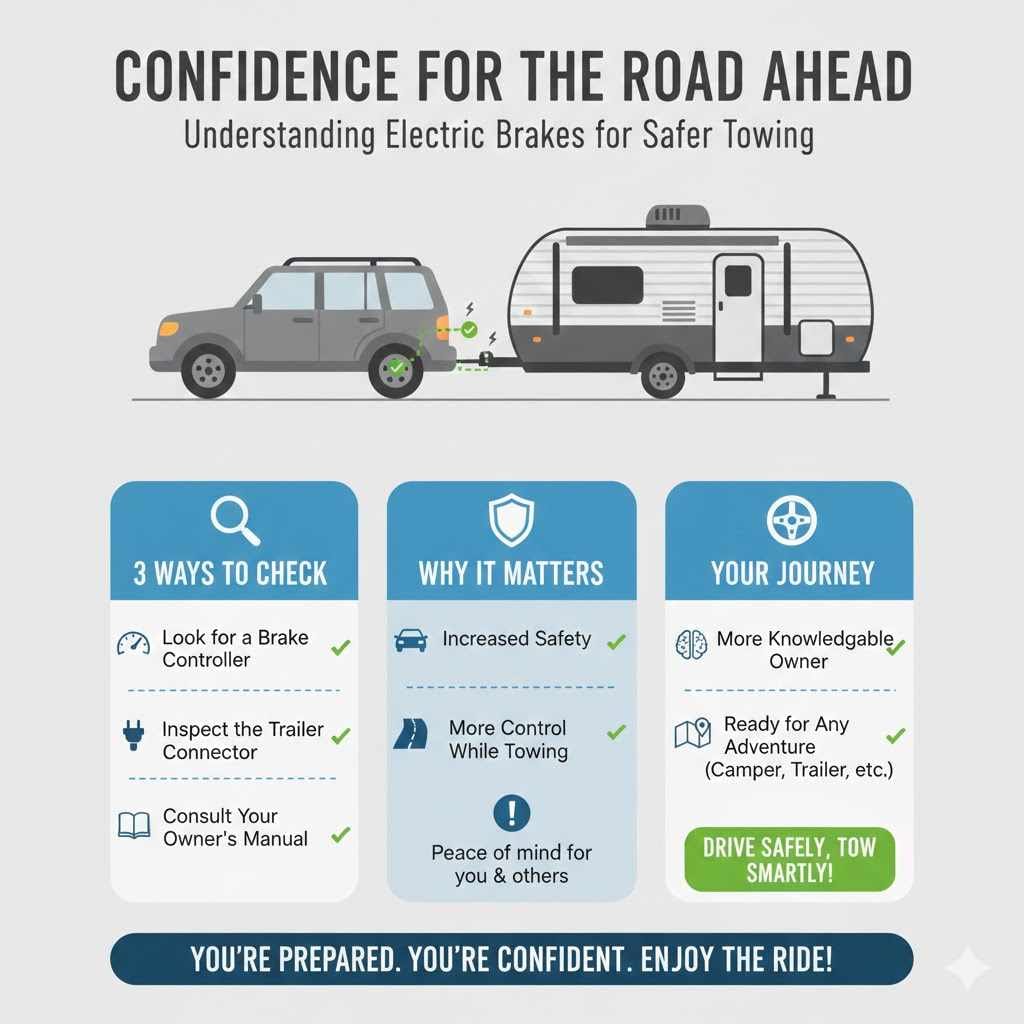
Figuring out if your car has electric brake capability doesn’t have to be complicated. By checking for a brake controller, inspecting your trailer connector, and consulting your owner’s manual, you now have the tools to get a clear answer. Remember, this system is all about making towing safer for you and everyone around you.
You’ve taken a great step in becoming a more knowledgeable and confident vehicle owner. Whether you’re planning to haul a camper for a family vacation or a trailer for a home project, you now understand a crucial piece of the towing puzzle. Drive safely, tow smartly, and enjoy the journey!
Frequently Asked Questions (FAQ)
1. Do all trucks come with electric brakes?
No, not all trucks come standard with an electric brake controller. Many trucks, especially heavy-duty models, come with a “tow package” that includes a 7-pin connector and pre-wiring for a controller. A factory-installed Integrated Brake Controller (IBC) is often an optional feature or standard only on higher trim levels.
2. What is an electric brake controller?
An electric brake controller is a device mounted in your vehicle that sends a precise amount of power to your trailer’s electric brakes when you press the brake pedal. It allows you to adjust the trailer’s braking force to match the load and driving conditions, ensuring smooth, synchronized stopping.
3. Can I add an electric brake controller to my vehicle?
Yes, absolutely. If your vehicle has a 7-pin trailer connector, it’s usually very easy to add an aftermarket brake controller. If your vehicle is “pre-wired,” you can often use a simple plug-and-play wiring adapter. If not, a professional installer can wire one for you.
4. What’s the difference between electric and hydraulic surge brakes on a trailer?
Electric brakes are controlled by the driver via an in-cab controller. Hydraulic surge brakes work automatically. They have a mechanism on the trailer tongue that detects when the tow vehicle is slowing down (surging) and uses that momentum to apply the trailer’s hydraulic brakes. Electric brakes offer more driver control.
5. My car has an electric parking brake button. Does this mean it has electric trailer brakes?
No, these are two completely different systems. An electric parking brake (EPB) is just a modern replacement for the traditional hand lever or foot pedal parking brake. It has no connection to or capability for controlling trailer brakes.
6. Why does my truck have both a 4-pin and a 7-pin connector?
Many trucks and large SUVs come with both to offer maximum flexibility. The 4-pin connector is for smaller utility trailers that only need basic lights. The 7-pin connector is for larger trailers that have their own brakes, reverse lights, or on-board power needs.
7. How do I know how much braking power to apply with the controller?
This is called setting the “gain.” You should do this in a safe, open area like an empty parking lot. Start with a low setting, drive slowly (about 25 mph), and manually apply the trailer brakes using the controller’s lever. You should feel a slight tug from the trailer. Increase the gain until the trailer’s brakes are strong but don’t lock up the wheels. Consult your controller’s manual for specific instructions.