
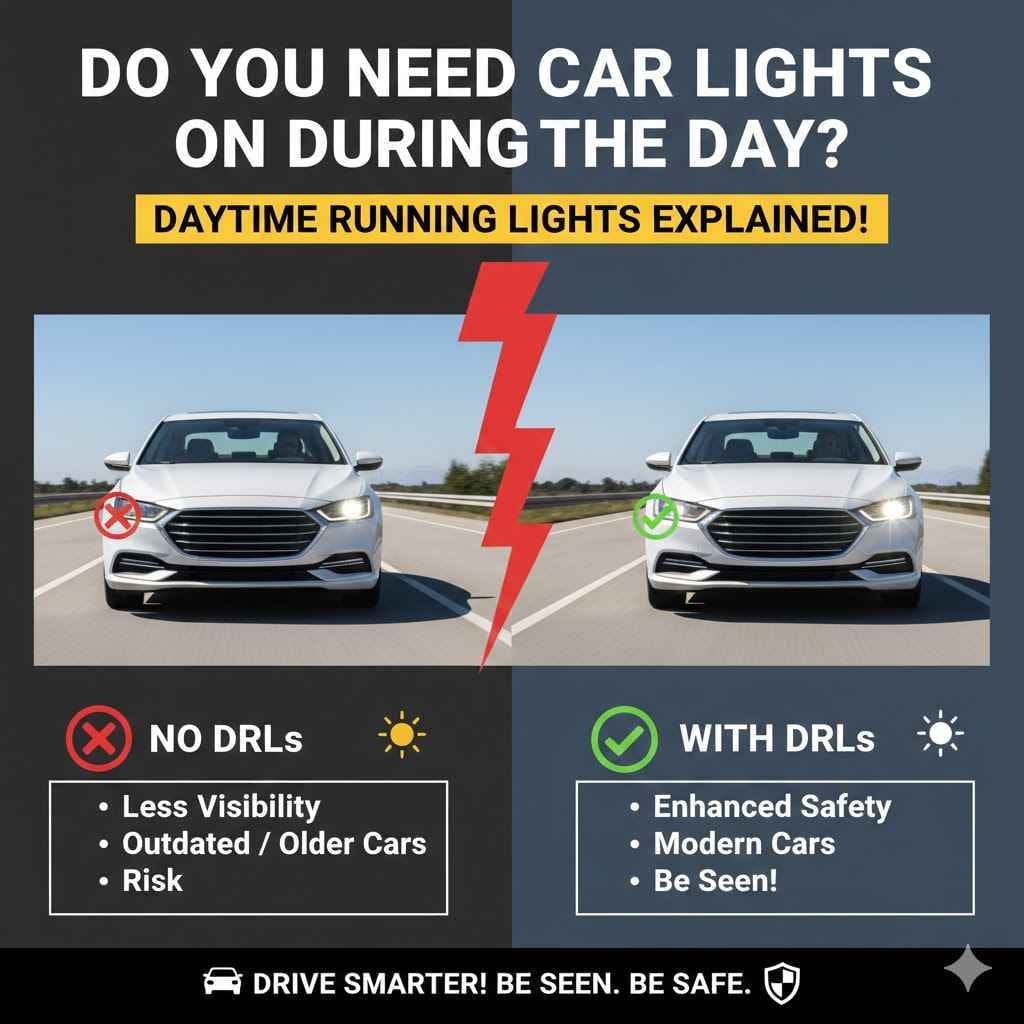
Many new drivers wonder about using car lights during the day. It can seem a little confusing, right? You might think lights are only for when it’s dark.
But sometimes, the answer is yes! This little question can make drivers pause. We’ll make it super simple.
Let’s walk through it step by step. Soon, you’ll know exactly when and why to turn on your lights for safety.
Why Turn On Headlights During the Day
Turning on your car’s headlights during the day might sound strange, but it’s a smart safety move. It helps other drivers see you better. This is especially true in certain weather conditions or when the sun is bright and can cause glare.
It’s not about seeing the road ahead; it’s about being seen by everyone else on the road. This simple action can prevent many accidents.
Improving Visibility to Other Drivers
The main reason to use headlights in daylight is to make your vehicle more noticeable. Many cars are painted in colors that blend in with the road, like gray or white. When your headlights are on, even in broad daylight, your car stands out more.
This is a key step in preventing collisions. It signals your presence to others who might not be paying close attention.
Think about a foggy morning. Visibility is very low. Turning on your headlights makes your car a bright spot that others can see from further away.
This gives them more time to react and avoid a potential crash. It’s a small effort with a big safety impact.
Consider a busy highway. Cars are moving fast. If your car is the same color as the asphalt or the sky, it can be hard for other drivers to judge your distance or even spot you.
Daytime running lights, or even your regular headlights, cut through this visual noise. They clearly mark your position and path of travel.
Daylight Driving Conditions
While the sun is up, it’s not always bright and clear. Factors like heavy rain, fog, snow, or even strong sunsets can significantly reduce how well other drivers can see you. In these situations, headlights are not optional; they become a necessity for safe driving.
Rain can create a shimmering effect on the road, making it harder to see vehicles. Dust storms or sandstorms can also reduce visibility drastically. Even on a clear day, if the sun is directly behind you or another driver, it can create blinding glare that masks approaching cars.
Many modern vehicles come equipped with Daytime Running Lights (DRLs). These are specifically designed to be on when the engine is running, improving visibility during the day. If your car has DRLs, they likely handle the basic need for being seen.
However, in some conditions, using your full headlights is still the better choice.
Legal Requirements and Recommendations
In many places, using headlights during the day is not just a recommendation; it’s the law. These laws are designed to improve road safety for everyone. Knowing these rules helps you drive legally and safely.
For example, many countries and states require headlights to be on during specific times or under certain conditions. These often include times when visibility is poor due to weather. Some regions also mandate DRLs or full headlights at all times.
Always check your local traffic laws.
The Governors Highway Safety Association (GHSA) reports that using headlights during the day can reduce crashes by up to 10%. This statistic highlights the significant impact of this simple safety measure. It’s a proven way to make roads safer.
When to Turn On Your Headlights During the Day
While you might not need headlights on during a perfectly sunny, clear afternoon, there are specific times when it’s a very good idea. These situations often involve reduced visibility, whether it’s due to the weather, the time of day, or your surroundings.
Adverse Weather Conditions
Bad weather is a primary reason to switch on your headlights. Rain, fog, snow, and sleet all make it harder for other drivers to see your vehicle. Using your headlights helps ensure you remain visible to them.
Heavy rain can create a curtain of water that makes it difficult to see through. Your headlights act like beacons, cutting through the spray. Fog reduces visibility to mere feet, making it essential to signal your presence with light.
Snow can also impair visibility, especially if it’s falling heavily or accumulating on the roads. Even if it’s not snowing hard, overcast skies and poor light conditions can make driving dangerous. In these instances, your headlights are your best tool for being seen.
Dawn and Dusk
The periods around sunrise and sunset can be tricky for drivers. The sun is low on the horizon, creating intense glare that can temporarily blind other drivers. This glare can make it hard to see approaching vehicles.
At dawn, as the world is just waking up, light levels are often low. Similarly, at dusk, as daylight fades, visibility decreases rapidly. Turning on your headlights during these transitional times is crucial for making sure other drivers spot you before they are affected by glare or fading light.
Imagine driving west at sunset. The sun is right in front of you. Even if your headlights aren’t strictly needed for you to see, having them on makes you more visible to oncoming traffic who might be struggling with the same glare.
Driving in Tunnels and Underpasses
Entering a tunnel or underpass causes a sudden and dramatic drop in ambient light. Even though it’s daytime outside, it becomes dark inside. Your headlights should automatically turn on in these situations.
Many modern cars have an “auto” setting for headlights, which is designed to detect the light change and switch on your lights. However, it’s always wise to be aware and double-check that your lights are indeed on when entering a tunnel.
Failing to turn on your headlights in a tunnel can make it hard for other drivers to see you, increasing the risk of an accident. It’s a simple action that significantly boosts safety in these enclosed spaces.
Areas with Poor Lighting or Obstructions
Sometimes, even during the day, certain areas can have reduced visibility. This can include areas with dense tree cover, construction zones, or winding roads where your vehicle might be hidden from view until the last moment.
Driving through a heavily wooded area can make it feel like twilight even in the middle of the day. Similarly, behind tall buildings or in a deep valley, the light can be significantly diminished. Using your headlights in these spots helps other road users anticipate your presence.
Construction zones often have flashing lights and reduced visibility due to temporary barriers and equipment. Being extra visible with your headlights on can prevent accidents in these unpredictable environments. It’s about making your vehicle a predictable and visible element on the road.
Understanding Daytime Running Lights DRLs
Many new cars come with Daytime Running Lights (DRLs). These are smaller, less intense lights that are designed to be on whenever the car is running during the day. They serve a specific purpose in enhancing road safety.
What Are DRLs?
Daytime Running Lights are lights that automatically turn on when the car’s engine is running. They are typically less bright than regular headlights and are often located on the front of the vehicle. Their primary goal is to make your car more visible to others.
They are not intended to help you see the road ahead. Instead, they are a passive safety feature that makes your vehicle more noticeable. This increased visibility can help prevent daytime accidents, especially in situations where natural light is less than ideal.
Most DRLs use LED technology, which is energy-efficient. They are designed to be seen from a distance, making your car stand out against various backgrounds and in different lighting conditions.
How DRLs Work
DRLs are wired to come on automatically when the ignition is turned on. They are usually controlled by a sensor or a simple electrical circuit. In some vehicles, they are a specific set of lights, while in others, they are a dimmed version of the main headlights.
The system is designed to be foolproof, meaning you don’t have to remember to turn them on. As long as the car is running, the DRLs are active. This ensures consistent visibility throughout your drive.
Some advanced DRL systems might also adjust their brightness based on ambient light conditions. For instance, they might become brighter as daylight fades or turn into full headlights when it gets darker.
Are DRLs Enough?
For many everyday driving situations on clear, sunny days, DRLs are often sufficient. They do a good job of making your car noticeable. However, there are times when you might still need to use your full headlights.
Think of situations like heavy rain, dense fog, or driving into a blinding sunset. In these cases, the DRLs might not provide enough illumination or visibility for other drivers to see you clearly. This is when switching to your regular headlights is the safer choice.
It’s also important to remember that DRLs are generally not as bright as full headlights. While they make you visible, they don’t light up the road ahead. If you need to see better in dim conditions, your regular headlights are necessary.
Legal and Safety Considerations
Understanding the laws and the safety implications surrounding daytime headlights is crucial for every driver. It ensures you are driving responsibly and protecting yourself and others on the road.
Local Traffic Laws
Traffic laws regarding headlights during the day vary significantly by location. Some places have strict mandates, while others offer recommendations. It’s vital to know the rules in your specific area.
For instance, some states in the US, like Minnesota, require headlights to be on from September 15 to April 30, and at any other time when visibility is less than 500 feet. Canada has federal laws requiring DRLs on all vehicles manufactured after a certain date.
Ignoring these laws can result in traffic tickets and fines. More importantly, it compromises safety by not being as visible as you should be. Always stay informed about your local regulations.
Safety Statistics and Studies
Numerous studies have shown that using headlights during the day can reduce crashes. The Insurance Institute for Highway Safety (IIHS) has conducted research indicating that DRLs can reduce the number of vehicle crashes.
One study by the IIHS found that DRLs reduced crashes by 5% for all vehicles and by 15% for daytime crashes involving at least one vehicle that was not a car. This suggests that even in daylight, enhanced visibility matters.
Another report from the National Highway Traffic Safety Administration (NHTSA) highlights that about 20% of all vehicle crashes happen during the day, and many of these could be prevented with better conspicuity. Using headlights is a simple way to improve this.
When to Override Automatic Settings
While automatic headlight settings are convenient, they are not always perfect. There might be situations where you need to manually turn on your headlights, even if the car thinks it’s bright enough.
For example, if you are driving through a very dusty or smoggy area, the air might be hazy, reducing visibility. Your car’s sensors might not detect this as quickly as you do, so manually turning on your headlights is a good idea.
Similarly, if you are driving towards a very bright, low sun, even if it’s technically daytime, it can be difficult for oncoming drivers to see you. Engaging your headlights in such scenarios is a proactive safety measure. It’s always better to be safe than sorry when it comes to visibility.
Making the Right Choice for Safety
Deciding whether to turn on your car lights during the day often comes down to simple common sense and prioritizing safety. It’s a small habit that can make a big difference.
Simple Rule of Thumb
A good rule of thumb is this: If you’re unsure if other drivers can see you, turn on your headlights. It’s better to be overly visible than not visible enough. This simple habit covers most situations.
Think about the light conditions. Is it bright and clear? Or is it hazy, foggy, rainy, or are you driving into the sun?
If there’s any doubt, switch them on. Your car becoming more visible helps everyone on the road.
Consider the color of your car. Lighter cars might be more visible than darker ones, but even a white car can blend in on a cloudy day. Headlights help all cars stand out more clearly.
Your Role as a Driver
As a driver, your primary responsibility is to operate your vehicle safely. This includes taking all reasonable steps to ensure you are seen by others. Turning on your headlights during the day is one of those easy steps.
It’s about being proactive rather than reactive. By making your car more visible, you reduce the chances of others not seeing you and potentially causing an accident. This conscious effort contributes to safer roads for everyone.
Being a responsible driver means being aware of your surroundings and potential hazards. Understanding when to use your headlights is part of that awareness. It’s a simple action that shows you care about the safety of yourself and others.
Frequently Asked Questions
Question: Do I always need my car lights on during the day?
Answer: Not always, but it’s often a good idea. You definitely should turn them on in bad weather, at dawn or dusk, and in tunnels to help other drivers see you better.
Question: What are DRLs and are they enough?
Answer: DRLs are Daytime Running Lights. They are designed to make your car more visible during the day. For most clear conditions, they are good, but you may need your full headlights in poor visibility.
Question: Is it illegal to not use headlights during the day?
Answer: It depends on where you are. Many places have laws requiring headlights in certain conditions or at certain times of the year. Always check your local traffic laws.
Question: Can my car lights help me see better at night?
Answer: Your headlights help you see the road ahead in the dark, but daytime use is mainly about making your car visible to others, not about you seeing better.
Question: Should I turn on my headlights if it’s just cloudy?
Answer: If it’s just a little cloudy, your DRLs might be enough. But if the clouds are very dark or it’s raining lightly, turning on your full headlights is a safer choice to be seen.
Conclusion
Deciding whether to use car lights during the day is simple. If you have any doubt that others can see you, turn them on. It’s a smart safety habit that makes your vehicle more visible in various conditions like rain, fog, or low sun.
This simple action helps prevent accidents and keeps everyone safer on the road. Make it a part of your routine.