
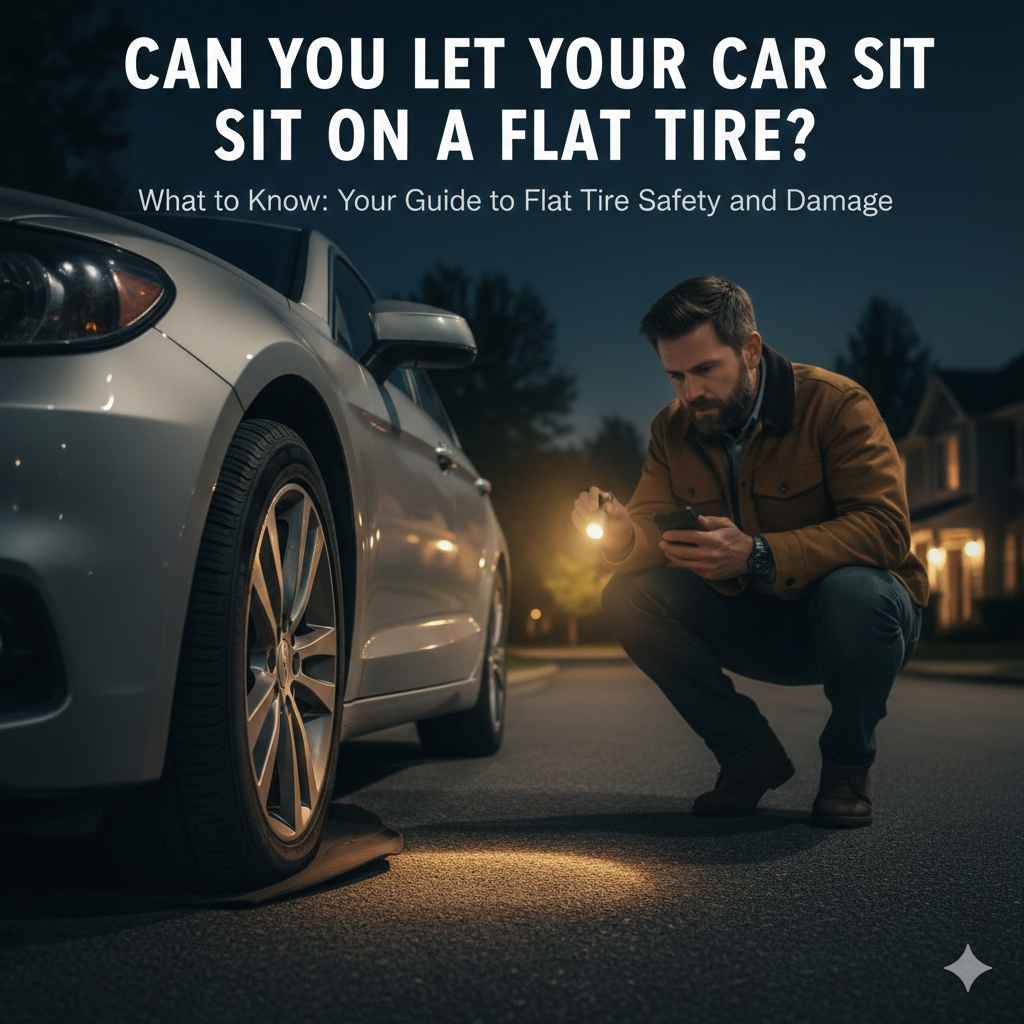
Figuring out what to do when you have a flat tire can feel tricky. You might wonder, Can You Let Your Car Sit on a Flat Tire? It’s a common question, especially if you’re new to driving. Don’t worry, it’s something everyone deals with. This article will break down what happens when your tire goes flat and what steps you can take. We’ll explore the impact of a flat tire and suggest simple solutions, so you’ll know exactly what to do.
The Immediate Impact of a Flat Tire
When you get a flat, the first thing you’ll probably notice is a change in how your car handles. The steering might feel different, and you might hear unusual noises. This is because the flat tire isn’t providing the support it should. A tire is filled with air to keep your vehicle at the proper height off the ground, and a flat tire loses that ability to properly disperse the weight of the vehicle. It’s like trying to walk with a deflated basketball under your foot – it’s going to throw you off balance.
This section will explore the immediate changes you experience with a flat tire, and examine the potential risks involved. We’ll discuss how a flat tire influences the handling of your car and explore the importance of recognizing the signs.
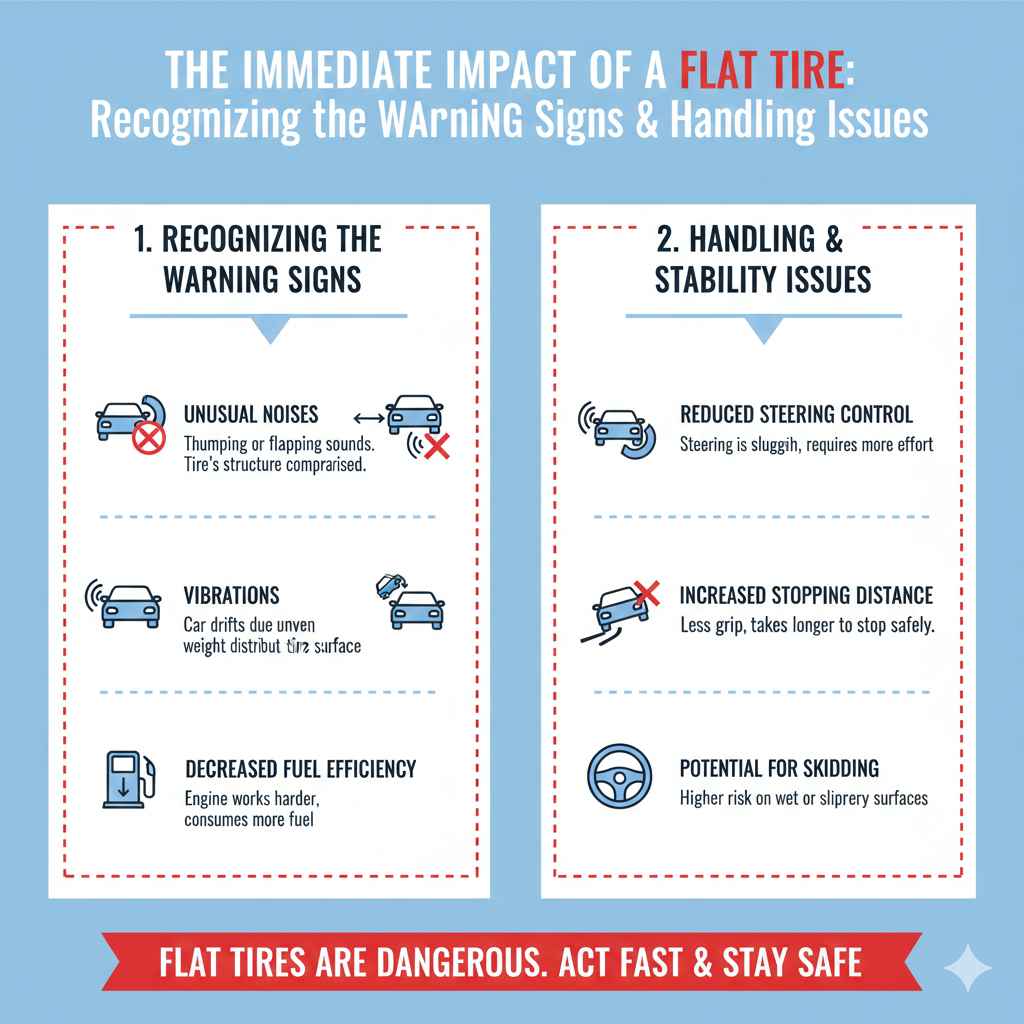
Recognizing the Warning Signs of a Flat
Knowing the early signs of a flat tire can prevent more damage and potential accidents. You might not always feel or hear it right away, so it’s good to pay attention. Several factors can give you a heads-up that a tire is losing air.
Unusual Noises: You might hear a flapping sound or a thumping noise. This often signals that the tire’s structure is compromised.
If you notice thumping or slapping sounds coming from your tires, the tire is likely damaged. The noise comes from the tire’s deflated portion as it hits the road, the wheel, or other parts of the undercarriage. This needs prompt attention to avoid significant problems. It might be due to a nail or another object piercing the tire, or sometimes it’s caused by a slow leak you haven’t yet addressed.
Pulling to One Side: The car might drift to the side with the flat tire. This is because the flat tire can’t support the weight as well, causing an imbalance.
When one tire loses pressure, the vehicle’s balance is significantly compromised, causing the car to pull towards the side with the flat tire. It’s an instinctive response from the vehicle to compensate for the reduction in contact surface. This pulling effect is more pronounced at higher speeds, requiring greater driver correction.
Vibrations: You might feel shaking or vibrations that you haven’t felt before. This is another indicator of a problem with your tire.
Vibrations can come from a number of problems, but a flat tire can often cause a notable vibration while driving. The uneven surface of the damaged tire causes the car to shake, especially as the flat tire rolls and compresses. This can vary from a subtle tremor to strong shaking, depending on the flat tire’s severity.
Decreased Fuel Efficiency: Your car’s gas mileage may decrease as the car struggles to drive on a tire that is low on pressure.
A flat tire increases rolling resistance, making your engine work harder, which consumes more fuel. You may not notice the drop immediately, but it’s important to keep an eye on your fuel economy to notice any sudden changes. Driving with a flat can significantly reduce your miles per gallon, as your vehicle strains to keep up with the road.
Handling and Stability Issues
A flat tire immediately changes how your car drives. Your car is less stable. You might find it harder to steer straight or handle turns. This is because the deflated tire isn’t supporting the vehicle as well. Also, the suspension system of the vehicle is impacted as the flat tire does not provide any support, and the vehicle’s body comes lower to the ground.
Reduced Steering Control: Steering might become sluggish or require more effort, because of the contact your wheel now has with the road.
With less air, your tire has more contact with the road, and this contact leads to reduced steering capabilities. This can make the vehicle difficult to control, particularly at faster speeds or during a sharp maneuver. The driver must exert extra effort to steer the car, making it tiring to drive. This may feel like your steering wheel doesn’t turn as smoothly, or like it requires more force to control the vehicle’s direction.
Increased Stopping Distance: The car may take longer to stop, since the flat tire is not providing a good grip.
A flat tire reduces the contact area between the tire and the road. This also increases the stopping distance of the vehicle. The tire’s compromised structure does not properly grip the surface. That is one reason why it takes longer for the vehicle to come to a halt. When the tire isn’t holding enough air, it can’t create the necessary friction to help slow the vehicle quickly.
Potential for Skidding: The risk of skidding increases, especially in wet or slippery conditions.
The tire’s compromised structure leads to a reduced contact surface, which decreases the tires’ capacity to grip the road. This reduced grip increases the chance of skidding, particularly in slippery conditions such as rain or ice. Skidding is when the tires lose traction, causing the car to slide uncontrollably. This issue becomes worse with more worn tires, as they have less tread to disperse water or provide grip.
Long-Term Effects of Letting a Car Sit on a Flat Tire
Leaving a car on a flat tire for a long time can lead to problems that go beyond just needing a new tire. The longer the vehicle sits, the more damage can happen. It’s like leaving a bruise untreated; it could get worse. This section delves into the lasting effects of a flat tire, revealing what can occur if the issue isn’t addressed.
This includes damage to the tire and to other components of your car. By focusing on the lasting impacts of a flat tire, you will understand why prompt action is key.
Tire Damage and Structural Degradation
A flat tire bears the brunt of the vehicle’s weight, causing significant structural changes. It compresses, and its internal components are stressed. This can lead to permanent changes. Let’s consider the tire’s main parts: the tread, sidewall, and bead.
Tread Wear: The side of the tire that touches the road can get damaged, and the rubber on the tread is especially vulnerable.
The tread, which makes contact with the road, can experience irregular wear patterns. The deflated section of the tire may be forced against the rim or the road surface, causing abrasive damage. This uneven wear compromises the tire’s ability to provide grip, making driving unsafe. The tread is essential for traction and stability, and damage reduces its capacity to perform effectively.
Sidewall Cracking: The side of the tire (the sidewall) may crack or get damaged. This can weaken the tire’s structure.
The sidewall is particularly vulnerable as it’s designed to flex. When a tire is flat, the sidewall is compressed and twisted, causing stress and potential damage. Over time, these stresses can lead to cracking or weakening of the sidewall’s rubber, increasing the risk of a blowout. The sidewall is key for maintaining tire pressure and supporting the vehicle’s weight, so damage compromises its performance.
Bead Separation: The bead, which secures the tire to the wheel, can separate. This may make it impossible to re-inflate the tire.
The bead is the part of the tire that fits against the wheel’s rim. A flat tire can cause the bead to come loose or separate from the rim. When the vehicle’s weight presses down on the tire, the bead can pull away from the wheel. This prevents the tire from sealing correctly when you attempt to inflate it. Bead separation usually means the tire must be replaced, as it’s nearly impossible to fix and inflate the tire safely.
Damage to the Wheel and Suspension
The wheel and suspension system of your car can also be negatively impacted when a vehicle is on a flat tire. The wheels help the tires stay connected to the car. Your suspension helps give you a smooth ride and the ability to control your car.
Wheel Rim Damage: The wheel rim might bend or get dented. If the tire loses pressure, the weight of the vehicle rests on the rim.
The wheel rim is often made of metal, and is designed to endure impacts. When driving on a flat tire, the wheel rim bears the vehicle’s weight and makes direct contact with the road surface. This can lead to bending, dents, and other forms of damage. These damages could lead to vibration when driving, reduced handling, and could cause further tire failures. Damaged wheel rims often require repair or replacement, which adds to the expense and time needed to get your car back on the road.
Suspension Misalignment: The suspension could become misaligned. This can affect how well the car handles and wears down tires.
A flat tire changes the car’s alignment and the weight distribution. The suspension, which controls the car’s ride height, absorbs bumps, and improves handling, must compensate for this shift. This can lead to misalignment of the wheels. Misalignment causes uneven tire wear, reduces fuel efficiency, and negatively impacts the car’s steering stability. Correcting misalignment generally needs a professional alignment, which involves adjusting the suspension components to make sure all wheels are correctly positioned for optimal contact with the road.
Bearing Wear: Sitting for extended periods puts extra stress on the wheel bearings. This increases the chance of failure.
Wheel bearings are designed to permit the wheels to spin freely. When the vehicle is on a flat tire, the bearings must carry the extra load and must compensate for the uneven distribution of weight. The increase in stress can speed up the wear and tear on the bearings, reducing their useful lifespan and potentially causing them to fail prematurely. Failing bearings can produce loud grinding noises, affect the handling of the vehicle, and may necessitate costly repairs. It is important to inspect the wheel bearings and have them replaced when they show signs of damage.
What to Do When You Find a Flat Tire
Finding a flat tire can be stressful, but there are clear steps you can take to make the situation better. Safety is always the most important thing. This section will guide you through the initial steps you must take. It will cover how to find a safe location and how to assess the damage. This will give you the confidence to handle a flat tire situation safely and effectively.
Ensuring Your Safety First
Your safety and the safety of any passengers is the most important thing when you have a flat tire. Before you begin to deal with the tire, you must take actions to avoid accidents. This section will walk you through how to deal with the situation in a safe manner.
Move to a Safe Location: If possible, drive slowly to a safe, level spot away from traffic. Use your turn signals to alert other drivers.
You can greatly reduce the chances of an accident by positioning your car in a safe place. Try to pull over onto the side of the road, if available. Use your turn signals to alert other drivers of your intentions. Be sure to park on a level surface if possible. This makes it easier to change the tire.
Activate Hazard Lights: Turn on your hazard lights to alert other drivers. This is essential to prevent collisions.
By activating your hazard lights, you alert other drivers that you have a problem. Hazard lights are a universal signal and tell other drivers to take caution. This is particularly important on roads with high speeds or low visibility. It helps other drivers to be aware and give you space.
Set the Parking Brake: Engage the parking brake to prevent the car from rolling while you are working.
The parking brake is a critical safety feature when working on a car, and is particularly important when changing a tire. Engaging the parking brake makes certain that the vehicle does not move unexpectedly while you’re lifting it or working close to the wheels. This is to avoid any sudden movements, which can cause serious accidents.
Assessing the Situation and Damage
Once your car is safe, carefully assess the situation to figure out what you’re dealing with. This will help you decide what to do next. It can help you determine the severity of the damage and if you can fix the tire, or if you will need help.
Check the Tire: Look for any visible damage like punctures, cuts, or bulges. Knowing the source of the problem is helpful.
Carefully check the tire to see what caused the flat. Look for any objects, such as nails or screws, that may have caused the puncture. Carefully examine the tire for any cuts, bulges, or other signs of damage. Knowing the source of the problem can help you decide if you can repair the tire. If the tire has severe damage, like a large cut or sidewall damage, it probably can’t be fixed and will need to be replaced.
Inspect the Wheel: Check the wheel for any damage. If the wheel rim is damaged, you may need professional help.
Take a good look at your wheel rim for any damage. Check for any bends, dents, or cracks. If the wheel is damaged, it can prevent a safe tire change. Damage to the wheel rim could necessitate professional help. A damaged wheel rim might lead to problems with the car’s steering or suspension. It can also cause a loss of tire pressure. If you are not sure, it’s best to have the car inspected by a professional.
Consider the Surroundings: Take note of your location, nearby traffic, and potential hazards. Knowing your surroundings is essential for your safety.
Take a look at your surroundings before you get started. Note any potential hazards like passing traffic, unstable ground, or inclement weather. Know what you are working with, such as available space, lighting, and any environmental conditions that could affect your work. If you’re near heavy traffic, you might want to call for help to ensure your safety. Remember, your safety is the most important part of the job.
Can You Let Your Car Sit on a Flat Tire: Immediate Actions
You’ve assessed the situation and now it’s time to take action. How do you respond to the flat tire? This part focuses on the immediate decisions you must make and the steps you can follow. These actions help to protect your car. This helps avoid further damage and guarantees your safety.
Options for Handling the Flat
You have a few choices when you have a flat tire, and the best choice depends on your situation and what tools you have available. This section explains the most common options and their key steps.
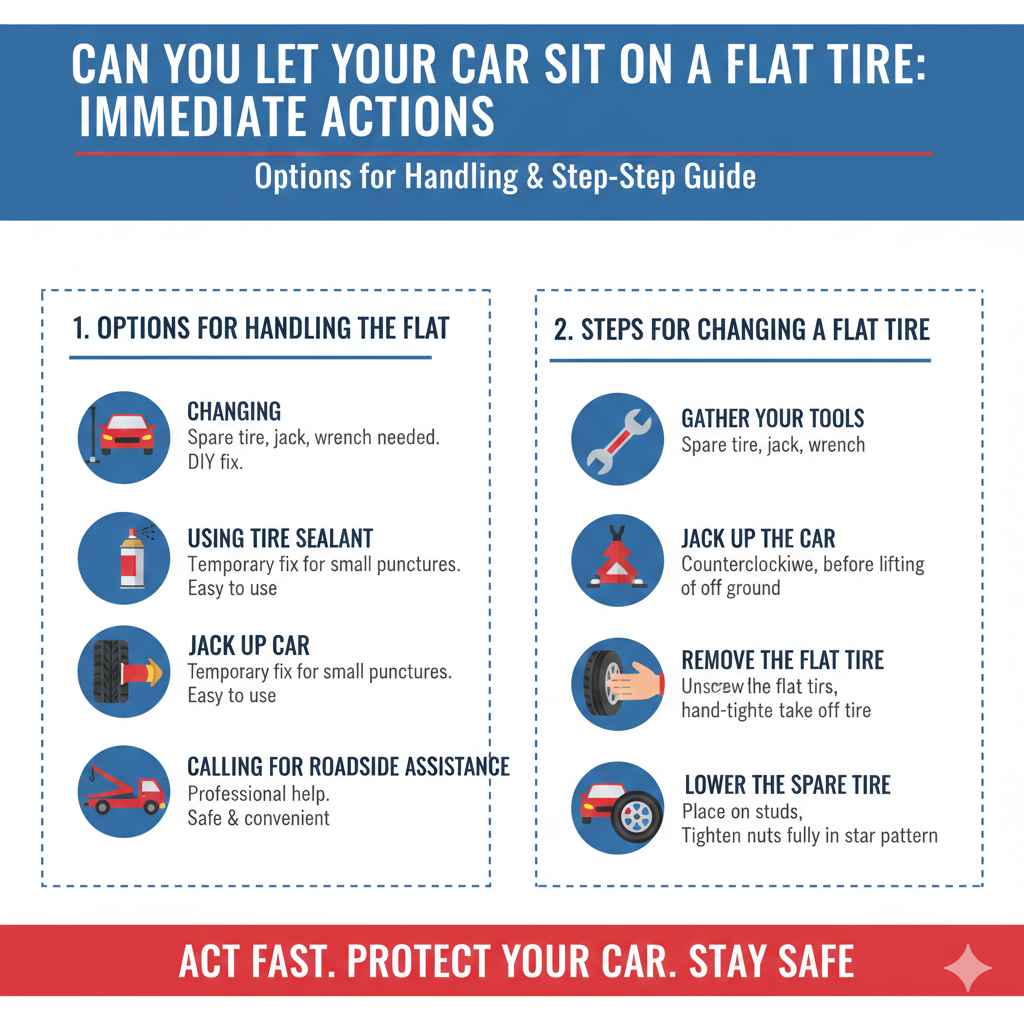
Changing the Tire: If you have a spare tire, jack, and lug wrench, you can change the tire yourself.
Changing a tire is the most common solution. This involves lifting the car with a jack, removing the flat tire, and installing the spare tire. Before you start, make sure you have all the necessary tools like a jack, lug wrench, and your car’s owner’s manual. The owner’s manual will tell you the locations of your car’s jack points. Loosen the lug nuts on the flat tire before you lift the car, then lift the car until the flat tire is off the ground. After removing the old tire, install the spare tire, tighten the lug nuts, and lower the car. Finally, tighten the lug nuts firmly.
Using Tire Sealant: If you have a small puncture, a tire sealant can be a temporary fix.
Tire sealant, or tire inflator, is a temporary fix that can be used to re-inflate a flat tire and seal small punctures. It is a canister that injects a sealant into the tire while simultaneously inflating it. This product is very easy to use, and is often included with cars that do not have a spare tire. This is not a long-term solution. It is just meant to allow you to drive to a nearby auto shop. Make sure that you read the instructions on the product label and that you wear eye protection.
Calling for Roadside Assistance: If you don’t feel comfortable changing the tire or if you have no tools, call for help.
Roadside assistance is a great option if you don’t feel comfortable changing a tire yourself. Roadside assistance services often include tire changes and other services like towing, jump starts, and fuel delivery. Roadside assistance can be obtained from your car insurance company or through a separate service. When you call for help, give your exact location, the type of assistance you need, and any additional details that the service should know. Always remain in a safe location until the service arrives.
Steps for Changing a Flat Tire
Changing a flat tire is a basic skill, and knowing how to do it can be very useful. Safety is paramount, and it’s essential to follow each step carefully. When you are ready to begin, make sure you have all the right tools on hand.
Gather Your Tools: Get your spare tire, jack, lug wrench, and owner’s manual ready.
Before you begin, make sure you have everything you need. This includes your spare tire, jack, lug wrench, and your car’s owner’s manual. The owner’s manual contains important details, such as the location of the jack points and instructions specific to your car’s model. Make sure you have the tools ready and accessible so you can work safely and efficiently.
Loosen the Lug Nuts: Use the lug wrench to loosen the lug nuts on the flat tire. Turn them counterclockwise.
Before lifting your car, use your lug wrench to loosen the lug nuts on the flat tire. Loosen the nuts by turning them counterclockwise. Don’t remove the nuts completely. Loosening the nuts before lifting the car makes the process easier, as the car’s weight helps to keep the wheel still. Make sure you are using the correct size lug wrench for your car’s lug nuts. This ensures you do not strip the nuts.
Jack Up the Car: Place the jack under the car’s frame, and lift the vehicle until the flat tire is off the ground.
Once the lug nuts are loosened, you can begin lifting the car. Follow the instructions in your car’s owner’s manual. Position the jack under the car’s frame at the designated jack point. Lift the car until the flat tire is completely off the ground. Make sure the car is stable and secure before continuing. Double-check to make sure the car is on a level surface. Be sure to engage the parking brake before lifting the car. This prevents any unwanted movement.
Remove the Flat Tire: Unscrew the lug nuts completely, and carefully remove the flat tire.
With the car lifted and the lug nuts loosened, you can remove the flat tire. Finish unscrewing the lug nuts and carefully pull the flat tire off the wheel studs. The flat tire might be heavy, so be ready to support its weight as you remove it. Once the flat tire is free, set it aside. Be sure to keep the lug nuts together and put them in a safe place so they do not roll away.
Mount the Spare Tire: Place the spare tire onto the wheel studs, and hand-tighten the lug nuts.
Carefully mount the spare tire onto the wheel studs. Line up the holes in the spare tire with the studs on the hub. Once you have it in place, hand-tighten the lug nuts. Make sure the spare tire is securely mounted. Hand-tightening the lug nuts makes sure that the tire is stable on the hub while you are tightening them completely.
Lower the Car: Slowly lower the car until the spare tire touches the ground. Then, tighten the lug nuts securely with the lug wrench.
Once the spare tire is in place, you can lower the car. Use the jack to slowly lower the vehicle until the spare tire just touches the ground. Now, you can securely tighten the lug nuts with the lug wrench. To make sure you tighten them correctly, use a star pattern (opposite nuts) to apply pressure evenly. This makes sure that the wheel is correctly secured to the hub. Tighten the nuts firmly, but do not over-tighten them. You may consider getting the lug nuts tightened further at a nearby tire shop.
Final Checks: Lower the car completely, double-check the lug nuts, and put away your tools.
After you have lowered the car, there are a few final checks you must do. Make sure the car is on the ground. Check the lug nuts again to make sure they are secure. Put all your tools and the flat tire back in your car. This ensures you are ready to continue on your trip. It also is a good idea to check your spare tire’s air pressure. You want to make sure the spare tire is properly inflated. Remember that a spare tire is a temporary solution, and you should have the flat tire repaired or replaced as soon as possible.
Frequently Asked Questions
Question: Can I drive on a flat tire for a short distance?
Answer: It is strongly advised to avoid driving on a flat tire, even for a short distance, as it can cause significant damage to your car and make the situation worse.
Question: How long can a car sit on a flat tire before causing damage?
Answer: Even a short amount of time can cause damage, so it’s best to address a flat tire as soon as possible. Prolonged periods will increase the risk of damage.
Question: Can a flat tire be repaired?
Answer: A flat tire may be repaired if the puncture is in the tread area and not too large. Sidewall punctures generally cannot be repaired.
Question: What’s the best way to prevent a flat tire?
Answer: Regularly check your tire pressure, inspect your tires for damage, and avoid driving on rough roads.
Question: Where should I take my car to get a flat tire fixed?
Answer: You can take your car to a local tire shop, auto repair shop, or a service center to get your flat tire repaired or replaced. These professionals can fix or replace a tire.
Final Thoughts
So, Can You Let Your Car Sit on a Flat Tire? The answer is no, it’s not a good idea. While it might seem like a simple issue, leaving your car on a flat tire can result in more serious issues. As we’ve explored, the risks range from tire damage to problems with the wheel and suspension. The longer you wait, the higher the chance of making the situation worse. The key is to act quickly. If you experience a flat, ensure your safety and then decide whether to change the tire, use tire sealant, or call for help. Remember, your safety is number one. Once you’ve handled the immediate problem, make sure to get the flat tire repaired or replaced. Taking these steps will help keep your car safe. You’ll be back on the road again soon!