Can-Am X3 Steering Rack Brace: Why You Need One Now
It’s a really common worry for many Can-Am X3 owners. You love hitting the trails, pushing your machine, and feeling that connection with the ride. But then, a thought creeps in: “What if something goes wrong with my steering?” You’ve heard stories, or maybe you’ve seen it happen.
That little worry can really take some joy out of your adventures.
The steering system on your X3 is amazing. It’s what lets you carve through tough terrain. But it also takes a lot of stress.
Over time, this stress can lead to problems. These problems can be costly to fix. They can also stop your fun dead in its tracks.
This article dives deep into the steering rack and why a special brace is so important. We’ll explore what can go wrong, why it happens, and what a brace can do. You’ll learn how it can save you money and keep you riding longer.
We’ll cover everything you need to know to make an informed choice.
A Can-Am X3 steering rack brace is a vital upgrade. It reinforces the steering rack, preventing flex and damage from hard impacts. This protects your steering components, reduces wear, and helps maintain precise steering control on challenging terrain. It’s a smart investment to avoid costly repairs and keep your X3 running smoothly.
Understanding Your Can-Am X3 Steering System
Your Can-Am Maverick X3 has a really sharp steering system. It helps you turn on a dime. It feels direct and responsive.
This is great when you’re flying through whoops or navigating tight trails. But this directness also means the steering rack itself takes a beating.
Think of the steering rack like the brain of your steering. It takes the input from your steering wheel. It then tells your wheels which way to turn.
It uses a series of gears and shafts to do this. On an X3, this system is built to be strong. But the forces it deals with are huge.
When you hit rocks, roots, or big jumps, there’s a shock that travels through your suspension. This shock doesn’t just stop at the shocks. It moves up the A-arms.
It reaches the steering knuckles. And then it goes right to the steering rack. This is where the problems can start.
The Stress on the Steering Rack
The steering rack mounts to the frame of your X3. It’s usually bolted in a few key spots. When your tires hit something hard, they can get pushed upwards or sideways suddenly.
This can make the whole steering rack unit flex. It can also twist.
Imagine holding a ruler. If you push on both ends, it stays straight. But if you push on the middle while holding the ends, it can bend.
The steering rack is similar. The frame is like your hands holding the ends. The forces from the trail are like pushing on the middle.
Over time, this constant flexing can cause several issues. The bolts holding the rack can loosen. The housing of the rack can crack.
The internal gears can get damaged. Even the tie rods, which connect the rack to the wheels, can bend or break.
Common Steering Problems in the Can-Am X3
Many X3 owners run into similar issues. These often stem from the stresses we just talked about. You might not even realize these problems are starting until they become serious.
One of the first signs can be a loose feeling in the steering wheel. It might feel vague or sloppy. You turn the wheel, but the front wheels don’t respond right away.
This is often called “play” in the steering. It means something is worn or bent.
Common Steering Woes
Loose Steering: Feels vague, delayed response from wheels.
Clicking or Knocking Sounds: Can happen when turning, especially at low speeds.
Bent Tie Rods: You might see a visible bend in the rods connecting the rack to the knuckle.
Damaged Rack Housing: Cracks or bends in the metal casing of the steering rack itself.
Worn Inner Tie Rod Ends: These small parts connect the rack to the tie rods and can wear out faster.
Another common symptom is hearing noises. You might hear a clicking, clunking, or knocking sound. This often happens when you are turning the steering wheel.
It can be especially noticeable at low speeds or when you’re stopped and turning.
Visually, you might see that your tie rods are not straight anymore. They can get bent from impacts. A bent tie rod means your alignment is off.
It can also put extra stress on the steering rack. In worse cases, the steering rack housing itself can get damaged. It might crack or get deformed from a hard hit.
The Role of a Steering Rack Brace
This is where a steering rack brace comes in. Its main job is simple: to make the steering rack assembly much stronger. It acts like a reinforcement.
It stops the rack from flexing and twisting when it takes a hit.
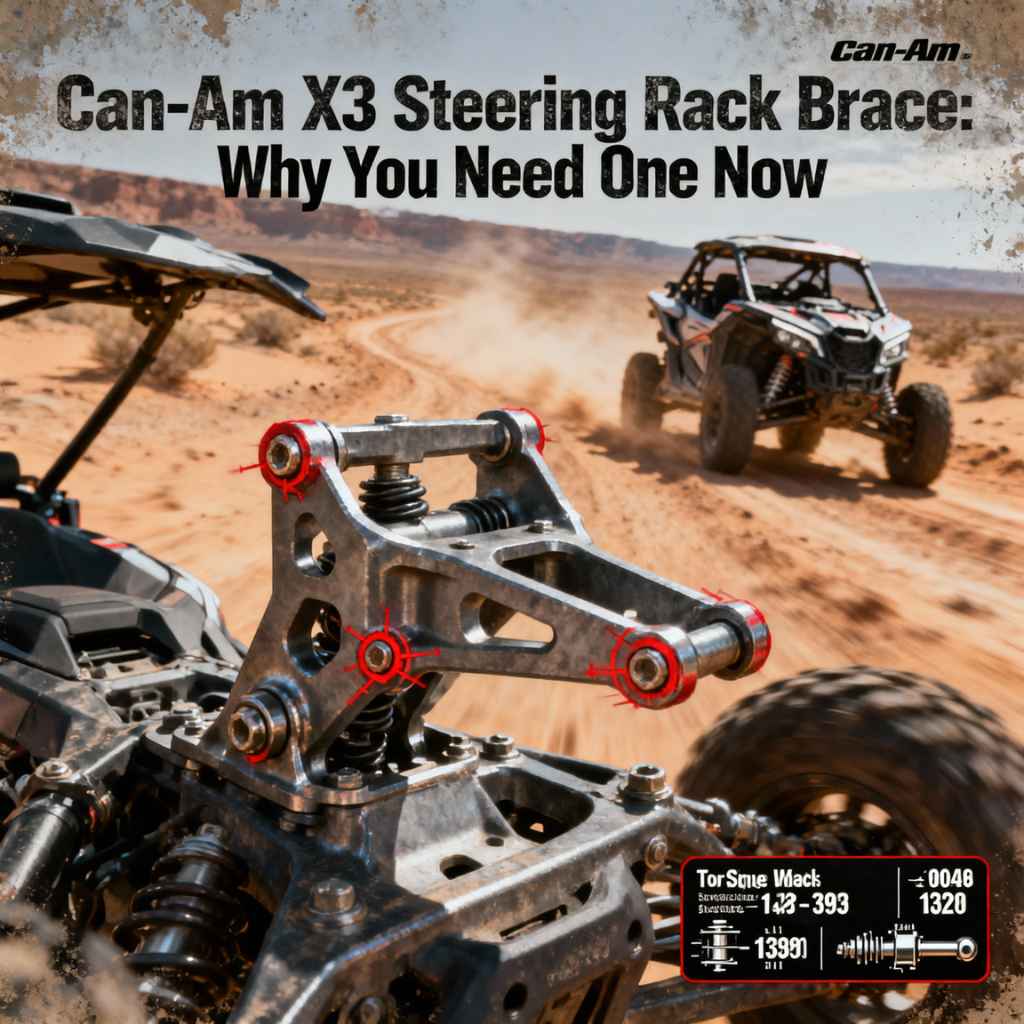
A typical brace is made of strong metal, usually steel or aluminum. It bolts onto the frame of your X3. It then clamps around the steering rack itself.
This creates a much more rigid unit. The brace essentially ties the steering rack more directly to the vehicle’s frame.
How a Brace Helps
Reduces Flex: Prevents the rack from bending under stress.
Prevents Twisting: Stops the rack from rotating when impacted.
Protects Components: Shields the rack housing, gears, and tie rods from damage.
Maintains Alignment: Helps keep your front-end alignment true.
Improves Steering Feel: Leads to a more direct and precise steering response.
When you install a brace, you’re adding support. This support absorbs some of the impact forces. Instead of the rack taking the full force, the brace helps spread it out.
This is especially important on the sides of the steering rack. These areas are often where the stress is highest.
The brace makes the whole steering assembly feel more solid. Many riders report that their steering feels tighter and more responsive after installing one. It’s like upgrading from a flimsy tool to a heavy-duty one.
You can feel the difference immediately.
My Own Experience with Steering Rack Issues
I remember one trip out in the desert with my X3. It was a tough, rocky trail. I was feeling pretty confident, picking my lines.
Then, I hit a rather large, square-edged rock at speed. It wasn’t a direct hit to a tire, but more of a glancing blow that sent a huge jolt through the front end.
The impact felt sickening. I heard a loud thwack and then a weird grinding noise. My steering wheel suddenly felt loose.
It was like I was connected to the wheels with a rubber band. I managed to limp back to camp, but I knew something was seriously wrong. The steering was all over the place.
When I got back and looked under the front end, I saw it. One of my tie rods was visibly bent. It looked like a pretzel.
But worse, when I wiggled the steering rack, there was definite movement. It wasn’t just the tie rod; the whole rack seemed to be shifting. I was lucky it hadn’t completely failed.
The repair bill was not fun, and I lost a whole riding day waiting for parts. That’s when I decided a steering rack brace wasn’t optional; it was essential.
Types of Can-Am X3 Steering Rack Braces
There are a few main types of braces out there for the Can-Am X3. They all aim for the same goal: reinforcement. But they achieve it in slightly different ways.
The material and design can also vary.
The most common type is a bolt-on brace. These usually clamp around the steering rack. They might have multiple attachment points to the frame.
Some are made from thick steel. Others use lighter but strong aluminum. Steel is generally stronger but heavier.
Aluminum offers a good balance of strength and weight savings.
Brace Styles & Materials
Clamp-Style Braces: These wrap around the steering rack. They are very common and effective.
Braces with Frame Mounts: Some braces also tie into different points on the vehicle’s frame for extra rigidity.
Material:
- Steel: Very strong, durable, but adds weight.
- Aluminum: Lighter, strong, good corrosion resistance.
One-Piece vs. Multi-Piece: Some braces are a single unit; others come in sections that bolt together.
You’ll also find braces that have integrated features. Some might be designed to work with aftermarket steering components. Others might offer additional protection for the boot covers on your tie rods.
When choosing a brace, consider your riding style. If you do a lot of aggressive off-roading, a heavy-duty steel brace might be best. If you’re focused on weight savings, a well-designed aluminum brace could be the way to go.
Always check reviews and manufacturer specs.
Benefits of Installing a Steering Rack Brace
The most obvious benefit is avoiding damage. A brace significantly reduces the risk of bending or breaking your steering rack. This alone can save you hundreds, if not thousands, of dollars in repairs.
It also means less downtime for your machine.
Beyond just preventing breakage, a brace makes your steering feel better. When the rack is reinforced, there’s less flex. This translates to a more direct connection between your steering wheel and the front tires.
Your inputs are more precise.
Key Advantages
- Cost Savings: Prevents expensive steering rack repairs.
- Reduced Downtime: Keeps your X3 on the trails, not in the shop.
- Improved Steering Precision: More direct feel and accurate response.
- Enhanced Durability: Protects crucial steering components.
- Peace of Mind: Ride harder without constant worry.
This improved steering feel is more than just a comfort thing. In technical terrain, precise steering is crucial for safety and performance. It allows you to make quick adjustments.
You can navigate obstacles more easily. It makes your ride more enjoyable and less stressful.
Also, consider the impact on your alignment. When the steering rack flexes, it can throw off your front-end alignment. This can lead to uneven tire wear.
It can also make your X3 pull to one side. A brace helps maintain proper alignment, saving you money on tires and ensuring your X3 tracks straight.
Installation: What to Expect
Installing a steering rack brace on your Can-Am X3 is usually a straightforward process. For most people, it’s a DIY job. However, it does require some basic tools and mechanical aptitude.
First, you’ll need to lift your X3. You want good access to the front underside. You might need jack stands for safety.
Then, you’ll locate the steering rack. It’s typically mounted near the front differential.
Installation Steps (General)
1. Lift Vehicle: Safely elevate the front of your X3.
2. Locate Steering Rack: Find the rack assembly under the front.
3. Clean Area: Wipe down the rack and mounting points.
4. Position Brace: Place the brace around the steering rack.
5. Secure Brace: Bolt the brace to the frame and tighten its clamps.
6. Check Movement: Ensure the rack is held firmly with no play.
7. Test Drive: Carefully test steering response.
Most braces come with detailed instructions. They will tell you exactly where to bolt the brace to your frame. You’ll also need to tighten clamps around the steering rack itself.
It’s important to follow the torque specifications if provided. Overtightening can damage components, but undertightening means the brace won’t be effective.
Make sure you clean the area where the brace will sit. Dirt and grime can prevent a good fit. After installation, it’s a good idea to give the steering wheel a few good turns.
Check for any binding or strange noises. A short test drive in a safe area is also recommended.
If you’re not comfortable working on your vehicle, it’s always best to have a qualified mechanic do the installation. The cost of professional installation is usually quite reasonable and can give you peace of mind.
Real-World Scenarios Where Braces Shine
Imagine you’re tackling a challenging rock garden. Your tires are bouncing and slamming against obstacles. Without a brace, that direct impact can cause the steering rack to flex and potentially bend.
A brace absorbs much of that shock, protecting the rack.
Or consider jumping your X3. The landing can be hard. That impact travels through the suspension and directly to the steering rack.
A brace helps the rack withstand these repeated heavy impacts without developing play or damage.
Scenarios That Test Steering
Rock Crawling: Constant, jarring impacts from uneven terrain.
Desert Racing: High-speed hits over whoops and rough patches.
Mud Riding: Sudden, forceful jolts when hitting hidden obstacles.
Jumping: The extreme force of landing.
Aggressive Trail Riding: Navigating roots, ruts, and debris at speed.
Even everyday trail riding can put a surprising amount of stress on the steering. Hitting a deep rut, a submerged log, or just rough, uneven ground can cause enough flex to eventually wear down the steering system. A brace acts as a constant protector, regardless of how extreme your ride is.
Many owners who ride in areas with deep mud or water also benefit. When tires hit submerged objects, the force can be sudden and violent. The brace helps ensure the steering rack can handle these unexpected jolts without compromising its integrity.
What This Means For You: When to Worry
If you’ve never experienced steering issues, you might think a brace is overkill. But it’s a preventative measure. Think of it like wearing a helmet when you ride a bike.
You hope you never need it, but it’s essential for safety.
When is it time to definitely consider a brace? If you notice any looseness in your steering. If you hear any new clunking or knocking noises when turning.
If you’ve hit anything particularly hard and your steering feels “off” afterwards. These are all signs that your steering rack is under stress.
Signs Your Steering Needs Attention
Play in the Steering Wheel: Wiggle in the wheel before the tires move.
Delayed Steering Response: Turning the wheel doesn’t immediately affect tire direction.
Noises: Clicking, popping, or clunking when turning.
Uneven Tire Wear: Front tires wearing out faster or unevenly.
Pulling to One Side: The vehicle drifts left or right when driving straight.
Bent Tie Rods: Visible damage to the rods connecting the rack to the wheels.
Even if you haven’t had a specific incident, if you ride aggressively, it’s worth considering. The forces on your X3 are immense. A brace is a small investment that protects a critical and expensive component.
What if you’ve already experienced damage? If your steering rack has been damaged in the past, installing a brace is even more crucial. It will help prevent further damage and ensure the repaired or replaced rack lasts as long as possible.
It’s about protecting your investment and your safety on the trail.
Quick Checks and Maintenance Tips
Regular checks of your steering system can help catch problems early. Before each ride, take a moment to wiggle your front tires. With the steering wheel held straight, try to rock each front wheel side-to-side.
You shouldn’t feel much, if any, play in the steering rack itself.
Also, visually inspect your tie rods. Look for any signs of bending or damage. Check the boots on your tie rod ends.
If they are torn, dirt can get in and cause premature wear. Greasing your tie rod ends regularly can also help.
Simple Maintenance Checks
- Visual Inspection: Look for bent tie rods or damaged boots.
- Steering Wheel Play: Check for looseness before tires respond.
- Lubrication: Grease tie rod ends as per your owner’s manual.
- Tightness: Periodically check that brace bolts are secure (don’t overtighten).
- Noise Check: Listen for any new sounds while turning.
If you have a steering rack brace installed, it’s also a good idea to check its bolts and clamps occasionally. Make sure everything is still snug. Vibrations can sometimes loosen fasteners over time.
This is especially true after a particularly rough ride.
Keeping your steering system clean and lubricated is key. Wash your X3 regularly, especially after riding in mud or dusty conditions. This helps prevent dirt from causing wear on seals and joints.
Proper maintenance can extend the life of your steering components.
Frequently Asked Questions
Is a steering rack brace really necessary for a Can-Am X3?
While not always strictly “necessary” for casual riding, it is highly recommended for anyone who rides aggressively or in rough terrain. It’s a preventative measure that protects a critical and expensive component from damage, saving you money and downtime in the long run.
Can I install a steering rack brace myself?
Yes, for most Can-Am X3 models, installing a steering rack brace is a manageable DIY project. You’ll need basic tools like wrenches and sockets. Many aftermarket braces come with clear instructions.
If you’re not comfortable with vehicle maintenance, professional installation is a good option.
What kind of damage can happen without a brace?
Without a brace, the steering rack can flex and twist under hard impacts. This can lead to bent tie rods, damaged internal gears within the rack, cracks in the rack housing, or loosened mounting bolts. In severe cases, the steering rack can fail completely.
How does a brace improve steering feel?
A brace reduces the amount of flex and movement in the steering rack assembly. This creates a more direct connection between the steering wheel and the front wheels, resulting in a tighter, more responsive, and precise steering feel. You’ll notice less “play” or vagueness.
Will a brace affect my suspension travel?
No, a properly designed steering rack brace should not affect your suspension travel. It mounts to the vehicle’s frame and clamps onto the steering rack, reinforcing it without interfering with the movement of your suspension components.
How often should I check my steering rack brace?
It’s a good idea to visually inspect your steering rack brace periodically, perhaps every few rides or after a particularly rough outing. Ensure that all bolts and clamps are still tight. Most braces are very durable and don’t require much ongoing maintenance beyond checking for tightness.
Final Thoughts on Steering Rack Protection
Your Can-Am X3 is built for adventure. Protecting its key components means more time out on the trails and less time dealing with costly repairs. A steering rack brace is a smart, proactive step for any owner who wants to push their machine.
It’s a relatively small investment for the peace of mind and protection it offers. Think of the money saved on potential repairs. Think about the lost riding days you’ll avoid.
It truly is one of the best upgrades you can make for the longevity and performance of your X3’s steering system.