
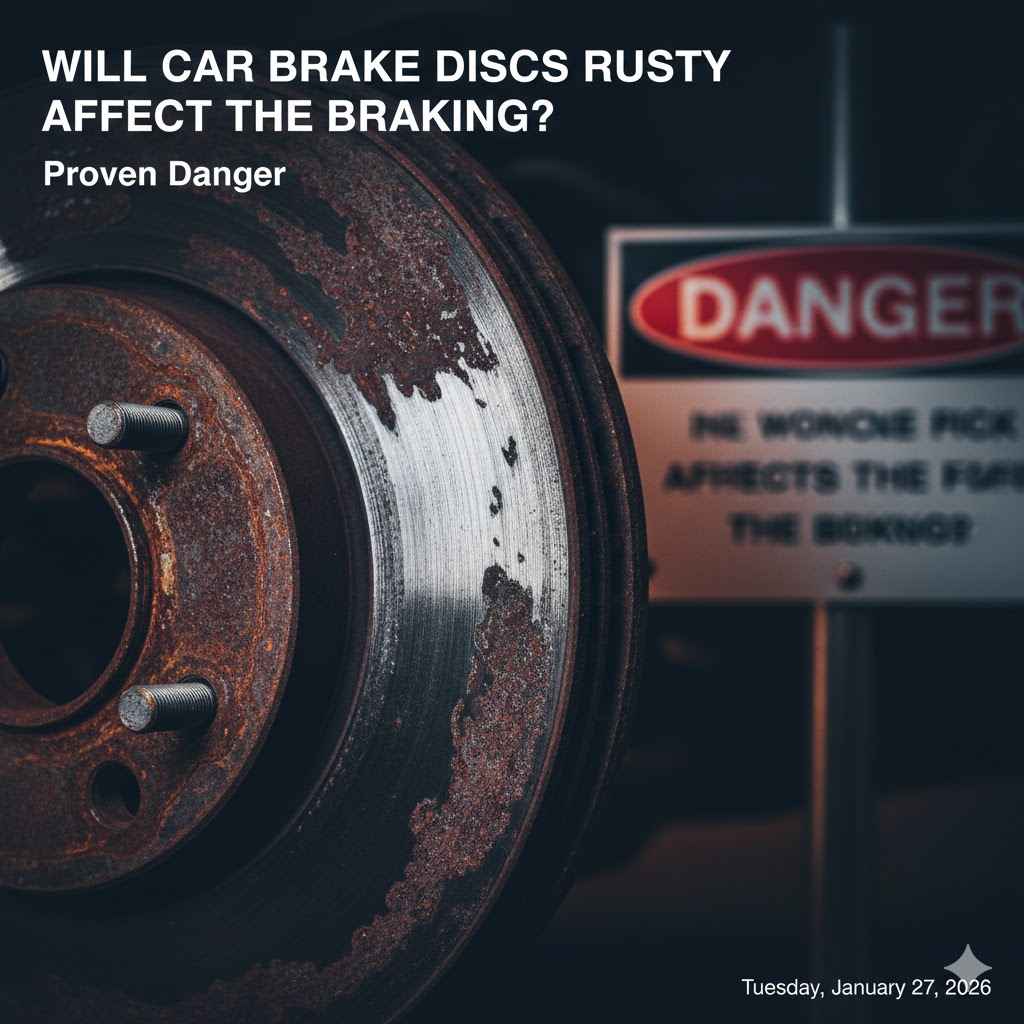
Yes, rusty car brake discs can dangerously affect braking, but it depends on the type of rust. Light surface rust that appears after rain is normal and harmlessly scrapes off with the first few brake applications. However, deep, pitted rust significantly reduces stopping power, causes vibrations, and can lead to brake failure.
Have you ever glanced at your wheels after a rainy day and felt a jolt of panic? Those shiny, metallic brake discs (also called rotors) that were perfectly fine yesterday are now covered in a layer of ugly, orange rust. It’s a common sight, but it leads to a very important question: will car brake discs that are rusty affect the braking? Is it safe to drive?
I’m Dustin Hall, and I’m here to clear things up for you. The short answer is: sometimes. A little bit of surface rust is totally normal and nothing to worry about. But deep, heavy rust is a serious safety issue that you can’t ignore. Don’t worry, I’ll show you exactly how to tell the difference and what you need to do. Let’s break it down in a way that’s easy to understand, so you can feel confident about your car’s safety.
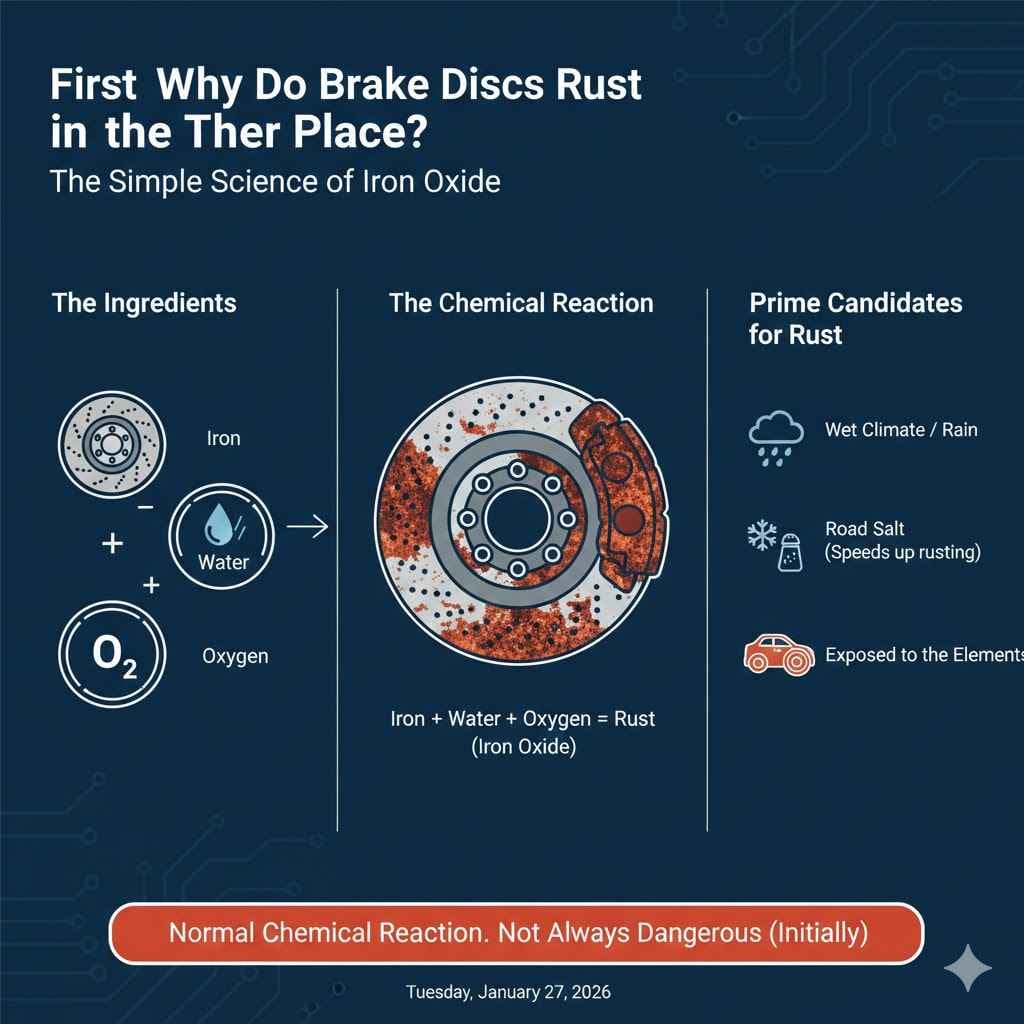
First, Why Do Brake Discs Rust in the First Place?
Before we dive into the dangers, it helps to know why your brakes rust at all. It’s actually simple science. Most brake discs are made of cast iron. Iron is strong and great at handling heat, but it has one major weakness: it rusts when it gets wet.
When you combine the three ingredients below, you get rust (which is officially called iron oxide):
- Iron: The main material of your brake discs.
- Water: From rain, car washes, or even just humidity in the air.
- Oxygen: Which is all around us.
Because your brake discs are exposed to the elements, they are prime candidates for rust. This is especially true if you live in a wet climate or an area where roads are salted in the winter. The salt actually speeds up the rusting process. So, seeing a thin layer of orange on your discs after they’ve been wet is a perfectly normal chemical reaction.
The Two Kinds of Rust: Harmless Surface Rust vs. Dangerous Deep Rust
This is the most important thing to understand. Not all rust is created equal. The key is learning to tell the difference between the harmless kind and the kind that signals a serious problem.
Type 1: Light Surface Rust (The Good Kind)
This is the rust you see after your car sits overnight in the rain or right after you wash it. It looks like a thin, even, dusty orange coating across the face of the brake disc. It might look alarming, but it’s only on the very top surface.
What it means: This is completely normal and harmless. In fact, it’s a sign that your brake discs are made of high-quality iron!
What to do: Just drive your car. The first few times you press the brake pedal, the brake pads will press against the discs and simply wipe that surface rust right off. You might hear a light scraping or grinding sound for a second or two, and then it will be gone. The disc will be shiny and silver again where the pad makes contact.
Type 2: Deep, Pitted Rust (The Bad Kind)
This is the rust you need to worry about. It doesn’t go away after a few minutes of driving. This type of rust has been there for a while, often because a car has been sitting unused for a long period (weeks or months). It has had time to eat into the metal of the brake disc.
What it looks like:
- Deep Pitting: The surface of the disc looks rough and has small craters or pits in it.
- Flaking: You might see pieces of metal flaking off.
- Deep Grooves: There are visible lines or scores cut into the disc.
- Uneven Color: Instead of a uniform orange, you might see dark brown or black spots and areas of thick, crusty rust.
This deep corrosion creates an uneven, rough surface that your brake pads can’t grip properly. This is where the real danger begins.
| Feature | Light Surface Rust (Normal) | Deep, Pitted Rust (Dangerous) |
|---|---|---|
| Appearance | Thin, even, dusty orange layer. | Thick, flaky, uneven. Dark brown or black spots. Pits and grooves. |
| When It Appears | After rain, a car wash, or high humidity. Disappears after driving. | Present all the time, even after driving. Gets worse over time. |
| Sound | A faint grinding or scraping sound for the first 1-2 stops. | Loud, persistent grinding, squealing, or scraping noises when braking. |
| Feel | Braking feels normal. | Brake pedal may pulse or vibrate. Steering wheel may shake when braking. |
| Action Needed | None. Just drive the car normally. | Immediate inspection by a qualified mechanic. |
The Proven Dangers: How Deep Rust Affects Your Braking
So, we’ve established that deep rust is bad news. But how exactly will car brake discs that are rusty affect the braking in a dangerous way? It’s not just about looks; it directly impacts the physics of how your car stops.
1. Severely Reduced Stopping Power
Your brakes work on a simple principle: friction. The brake pads clamp down on the smooth, flat surface of the brake disc, and the friction created converts your car’s motion into heat, slowing you down. Deep rust and pitting create a rough, uneven surface. The brake pads can no longer make full, solid contact. This drastically reduces the amount of friction, meaning your car will take much longer to stop. In an emergency, those extra feet could be the difference between a close call and a serious accident.
2. Brake Pulsing and Vibrations
When rust eats away at the disc unevenly, it creates high and low spots. As the disc spins, the brake pads move in and out over these imperfections. You will feel this as a pulsing sensation in your brake pedal or a shaking vibration in your steering wheel. This is more than just an annoyance—it’s a clear sign that your brakes are not operating smoothly and your control over the vehicle is compromised.
3. Loud and Persistent Grinding Noises
While surface rust makes a brief noise, deeply corroded rotors will cause a loud, harsh grinding or scraping sound every time you brake. This is the sound of your brake pads being destroyed as they scrape against the rough, pitted metal. It’s your car’s way of screaming for help.
4. Accelerated Brake Pad Wear
A rusty, pitted brake disc acts like coarse sandpaper on your brake pads. It will chew through the pad material at an alarming rate. This means you’ll have to replace your brake pads much more frequently, costing you more money. More importantly, if the pads wear down completely, you can get metal-on-metal contact, which can lead to total brake failure.
5. Risk of Rotor Failure
In the most extreme cases, rust can weaken the structural integrity of the brake disc. According to the National Highway Traffic Safety Administration (NHTSA), the entire braking system must be maintained for safe operation. A disc that is severely thinned out by rust is more prone to overheating and can even crack or shatter under the immense pressure and heat of hard braking. This is a catastrophic failure that would result in a complete loss of braking on that wheel.
How to Check Your Brakes for Dangerous Rust: A 3-Step Guide
You don’t need to be a mechanic to do a quick visual check. All you need are your eyes and a safe place to park.
- Park on a Level Surface: Park your car on flat ground and make sure the engine is off and the parking brake is on for safety.
- Get a Good Look: You don’t need to take the wheel off. Just crouch down and look through the spokes of your wheel. A flashlight can help you see more clearly, especially on the back side of the disc.
- Know What to Look For: Check the entire surface of the disc. Are you seeing just a light orange haze, or are you seeing the warning signs of deep rust we discussed? Look for deep lines, craters, flakes, and parts that look chewed up. If the disc looks more like a rusty old piece of scrap metal than a smooth, machined part, you have a problem.
| Warning Sign (What You See, Hear, or Feel) | What It Likely Means |
|---|---|
| Steering wheel shakes when you brake. | The brake discs are likely warped or have uneven rust buildup, causing “brake judder.” |
| A loud, metallic grinding sound that doesn’t go away. | The brake pads could be completely worn down, or the rusty disc surface is scraping heavily against them. |
| Your car pulls to one side when braking. | One brake is not working as effectively as the other, possibly due to severe rust on one disc. |
| The brake pedal feels spongy or goes down further than usual. | This can be a sign of several brake issues, and rusty components could be a contributing factor. |
| You see deep grooves or pits on the disc surface. | The rust has eaten into the metal, and the disc is no longer safe. It needs to be replaced. |
What To Do About Your Rusty Brakes
Your course of action depends entirely on what kind of rust you have.
If You Have Light Surface Rust:
The solution is simple and free!
- Find a safe, open area like an empty parking lot or a quiet road.
- Drive the car at a low to moderate speed (around 20-30 mph).
- Apply the brakes gently but firmly a few times.
- You’ll hear a slight scraping sound at first. After a few stops, that sound will disappear.
- Get out and look again. You should see a shiny, silver ring on the disc where the brake pad has wiped the rust clean. You’re good to go!
If You Suspect Deep, Pitted Rust:
Do not ignore it. Your safety is on the line. It’s time to see a professional mechanic.
A mechanic will remove the wheels and perform a thorough inspection. They will use a special tool called a micrometer to measure the thickness of the brake discs. Every disc has a minimum safe thickness stamped on it. If the disc is too thin due to rust and wear, it must be replaced. In some rare cases, if the rust isn’t too deep and the disc is thick enough, it can be “resurfaced” or “machined,” but with the low cost of new discs today, replacement is almost always the safer and more cost-effective option.
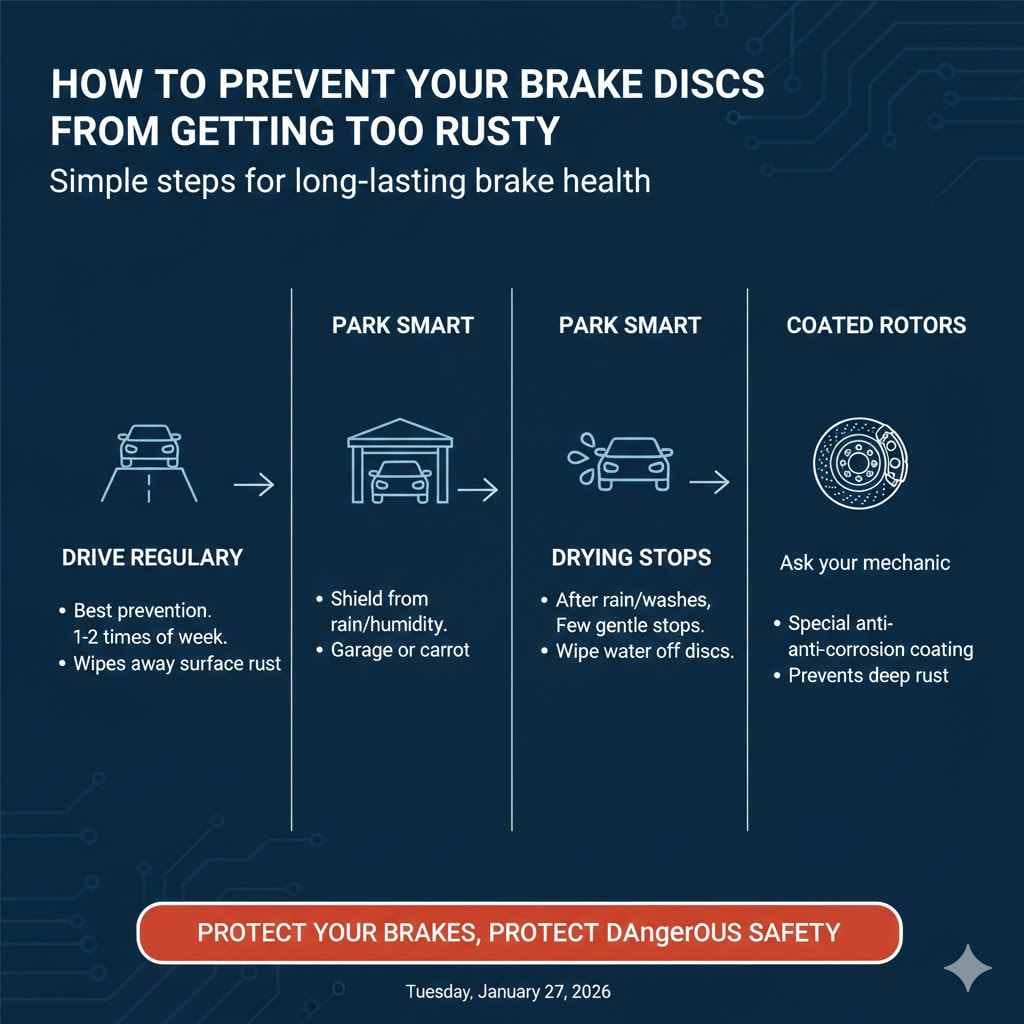
How to Prevent Your Brake Discs From Getting Too Rusty
While you can’t stop surface rust completely, you can prevent the dangerous deep rust from forming.
-
- Drive Your Car Regularly: This is the best prevention. Driving your car at least once or twice a week ensures that normal surface rust is wiped away before it has a chance to set in and cause damage.
- Park in a Garage if Possible: Shielding your car from rain and humidity will significantly slow down the rusting process. A carport is better than nothing, too.
–Try a “Drying Stop”: After driving in heavy rain or washing your car, make a few gentle stops on your way home to help wipe the water off the discs before parking.
- Consider Coated Rotors: When it’s time for a brake job, ask your mechanic about coated brake rotors. These have a special anti-corrosion coating on the non-contact areas (like the hub and edges) that helps prevent rust from spreading and keeps them looking better for longer.
Frequently Asked Questions (FAQ)
1. Is it normal for my brake discs to be rusty after washing my car?
Yes, it’s 100% normal. The water from the car wash instantly starts the oxidation process on the bare iron. This light surface rust will disappear within the first few times you use your brakes.
2. How long does it take for light surface rust to go away?
It usually goes away very quickly. In most cases, after 2-3 gentle stops from a low speed, the rust will be gone, and your brakes will be silent again.
3. Can I spray something like WD-40 on my brake discs to stop them from rusting?
Absolutely NOT! Never, ever spray any lubricant, oil, or grease on your brake discs or pads. This is extremely dangerous. Your brakes need friction to work. Lubricants eliminate friction and will cause your brakes to fail completely. The only thing that should touch your rotor’s friction surface is your brake pad and approved brake cleaner spray used during a brake job.
4. What does a loud grinding noise when I brake mean?
A loud, continuous grinding noise is a serious warning sign. It often means your brake pads are completely worn out and you have metal-on-metal contact, or that your brake discs are severely corroded. Stop driving the car and have it inspected by a mechanic immediately.
5. How much does it cost to replace brake discs?
The cost varies widely depending on your car’s make and model and local labor rates. Generally, you can expect to pay anywhere from $250 to $700 for a pair of new brake discs and pads on one axle (front or rear). It’s always a good idea to replace pads and discs at the same time.
6. Can rusty brake discs fail a vehicle safety inspection?
Yes, they absolutely can. Inspectors will check for deep rust, pitting, and grooves. They will also measure the rotor’s thickness. If the rust is severe or the rotor is below its minimum safe thickness, your vehicle will fail the inspection until the brakes are repaired.
7. Why do my rear brakes sometimes look rustier than my front brakes?
This is common. Most cars have a front-biased braking system, meaning the front brakes do about 70-80% of the work. Because the rear brakes aren’t used as aggressively, they don’t always wipe away surface rust as quickly or completely as the front brakes do.
Conclusion: A Little Rust Is Fine, A Lot Is Not
So, will car brake discs that are rusty affect braking? The answer is a definite “it depends.” Seeing that flash of orange on your brake discs after a storm can be unsettling, but now you know that light surface rust is just a normal part of owning a car—a temporary issue that fixes itself with a short drive.
The real lesson here is to be an observant car owner. The proven danger lies in ignoring the warning signs of deep, pitted rust that doesn’t go away. Vibrations, loud noises, and a car that pulls to one side are not things to put off. They are direct messages that your vehicle’s most critical safety system needs immediate attention.
By learning to spot the difference, you can save yourself from unnecessary worry and, more importantly, know exactly when to call a professional to keep yourself and others safe on the road. A quick look at your wheels now and then is all it takes to stay ahead of the problem. Drive safe!