
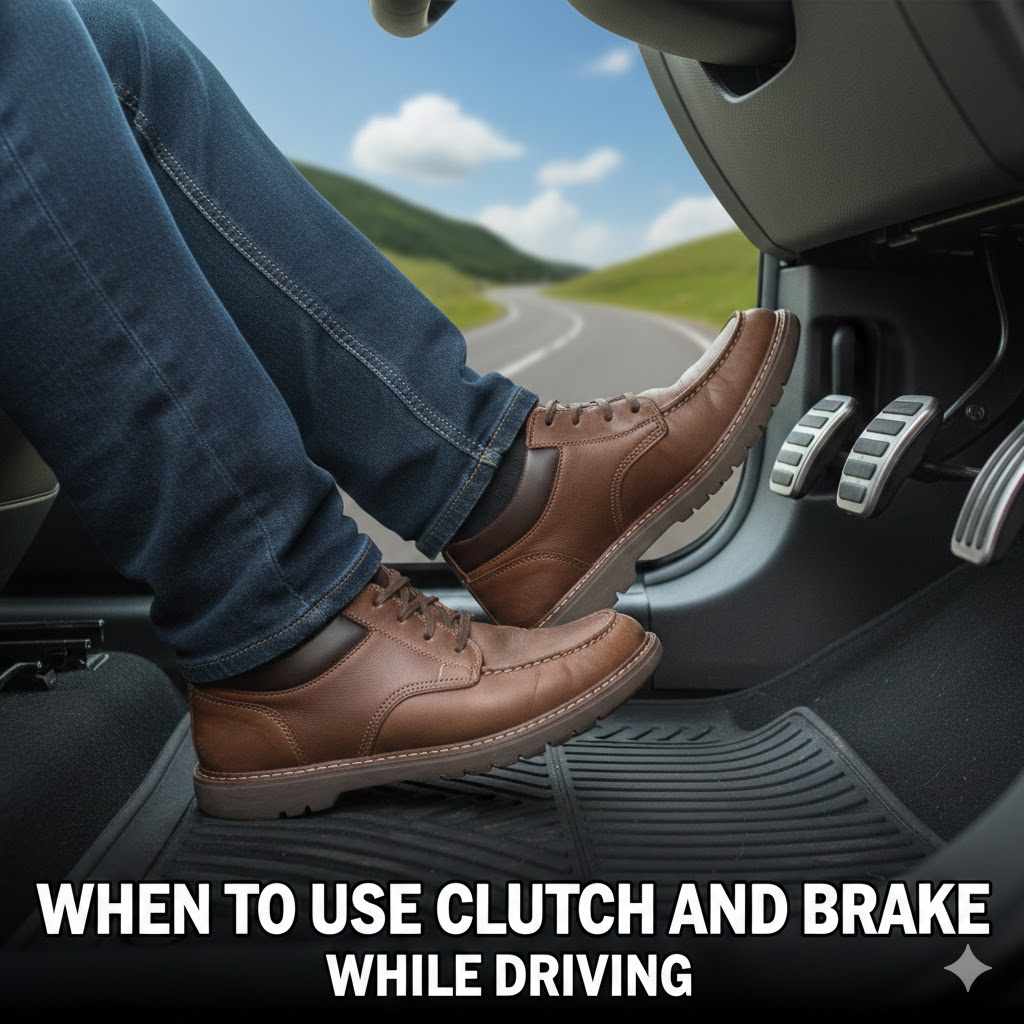
Driving a car with a manual transmission can feel tricky at first, especially when you’re learning When to Use Clutch and Brake While Driving. It’s totally normal to feel a bit unsure about which pedal to press and when. But don’t worry!
This guide will break it all down in a super simple way, step by step. We’ll make sure you feel confident behind the wheel in no time. Get ready to learn the easy way.
Understanding Clutch and Brake Pedal Use
Learning to drive a stick shift involves mastering the coordination of the clutch and brake pedals. This is a key skill that separates manual transmission driving from automatic. For new drivers, knowing precisely when to apply pressure to each pedal can be a source of confusion, leading to jerky starts, stalls, or even unintended movements of the vehicle.
This section aims to clarify the fundamental principles and common scenarios where these pedals are essential for safe and smooth operation. We will explore the role of each pedal and how they work together in various driving situations.
The Function of the Clutch Pedal
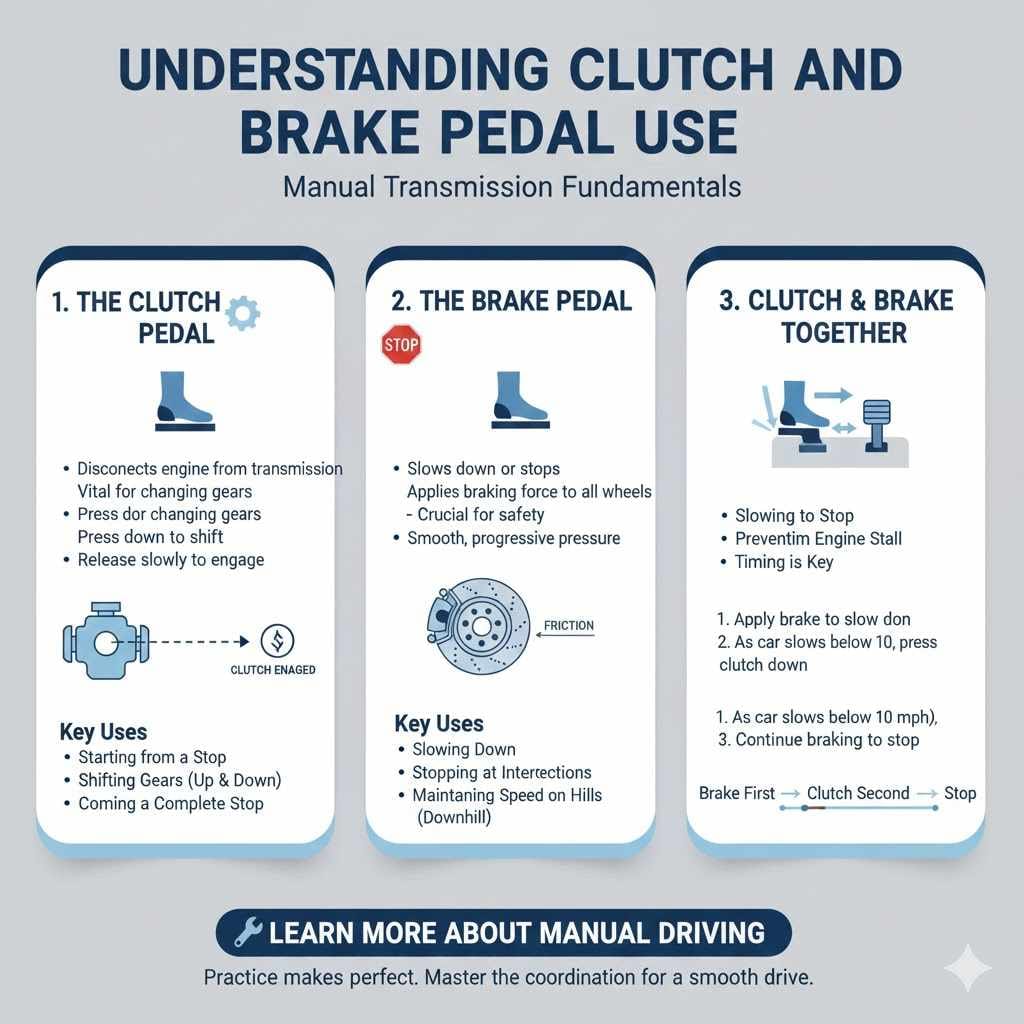
The clutch pedal is unique to manual transmission vehicles. Its primary job is to disconnect the engine from the transmission. Think of it like a switch that temporarily stops the power flow from the engine to the wheels.
This disconnection is vital for changing gears. When you press the clutch pedal down, you are essentially telling the car, “I need to shift gears now, so don’t send any power to the wheels.” When you release the pedal slowly, the engine’s power is gradually reconnected to the transmission, allowing you to move off smoothly or shift into a different gear without grinding. This gradual engagement is what prevents the car from lurching forward or stalling.
Understanding the clutch’s engagement point is critical. This is the spot where the clutch starts to connect the engine and transmission as you release the pedal. Finding this point allows for smooth starts.
If you release the pedal too quickly, the engine might stall because the sudden engagement is too much for it to handle. If you don’t release it enough, you might not be able to shift gears properly or the car might not move. Practicing finding this engagement point is a significant part of becoming comfortable with a manual transmission.
Here are some key times you’ll interact with the clutch pedal:
- Starting from a Stop: Before you can move the car from a complete standstill, you must press the clutch pedal all the way down, select first gear, and then slowly release the clutch pedal until you feel the engine begin to catch and the car wants to move. This is finding the engagement point.
- Shifting Gears: Whenever you change gears, whether it’s moving up to a higher gear or down to a lower one, you must press the clutch pedal down completely. This disengages the engine from the transmission, allowing you to move the gear stick into the desired position without resistance.
- Coming to a Complete Stop: When you know you’re going to stop the car entirely, like at a red light or a stop sign, you should press the clutch pedal down just before the car comes to a complete halt. This prevents the engine from stalling once the wheels have stopped turning.
The Role of the Brake Pedal
The brake pedal is your primary tool for slowing down or stopping the vehicle. Unlike the clutch, the brake pedal directly applies the braking system to all four wheels, reducing their speed. This is a straightforward but extremely important function for safety.
You use the brake pedal in situations where you need to reduce your speed, such as approaching a red light, a stop sign, traffic congestion, or when encountering an obstacle. The amount of pressure you apply to the brake pedal determines how quickly the car slows down. A gentle press results in gradual deceleration, while a firm press brings the car to a faster stop.
It’s essential to use the brake pedal smoothly and progressively. Sudden, hard braking can be uncomfortable for passengers and can even be dangerous, as it can surprise other drivers behind you. The goal is usually to slow down or stop in a controlled manner.
In emergency situations, of course, you’ll apply maximum force to stop as quickly as possible. Understanding the responsiveness of your car’s brakes is also important; some cars have very sensitive brakes, while others require more pressure.
The brake pedal is used in the following scenarios:
- Slowing Down: Any time you need to reduce your vehicle’s speed, whether it’s for a gentle curve, to match the flow of traffic, or to avoid an object, the brake pedal is your go-to control.
- Stopping: When you need to bring the car to a complete halt, you will use the brake pedal. This includes stopping at intersections, in parking spaces, or whenever required by road conditions or traffic signals.
- Maintaining Speed on Hills (Downhill): When driving downhill, gravity will naturally increase your speed. Lightly applying the brake pedal intermittently can help maintain a safe and controlled speed without constantly relying on the engine.
When to Use Clutch and Brake While Driving Together
The most critical time when you use both the clutch and brake pedals together is when you are slowing down to a stop in a manual transmission car. If you just use the brake, the car will slow down, but if you don’t press the clutch, the engine will eventually stall because the wheels are stopping and the engine is still trying to turn them through the transmission. Therefore, as you begin to brake and your car’s speed drops significantly, you need to press the clutch pedal down to disconnect the engine.
This allows the wheels to stop without stalling the engine. A common mistake for beginners is forgetting to press the clutch in time, leading to the engine stalling. The trick is to press the brake first to initiate slowing, and then press the clutch as the car slows to a crawl or a complete stop.
This coordinated action requires practice. The timing is key. You want to start braking first to reduce speed, and then engage the clutch to prevent stalling as you approach zero speed.
If you press the clutch too early, you lose engine braking, which helps slow the car, and you’ll have to rely solely on the brakes, potentially making the stop less controlled. If you press the clutch too late, the engine will stall, and you’ll have to restart the car and begin your stopping procedure again. Many drivers learn to gauge the correct moment through feel and experience.
Here’s a typical scenario:
- You see a red traffic light ahead.
- You begin to apply gentle pressure to the brake pedal to slow down.
- As the car’s speed decreases noticeably (e.g., you’re going below 10 mph or so), you press the clutch pedal all the way down.
- Continue braking until the car comes to a complete stop.
- Once stopped, you can shift into neutral or keep the clutch pedal pressed down while in first gear, waiting for the light to change.
Mastering Smooth Starts and Stops
The transition from a standstill to moving and the act of bringing a vehicle to a halt are often the most challenging aspects for new drivers of manual transmissions. Achieving a smooth start requires a delicate balance of clutch and accelerator control, while smooth stops depend on the right timing between braking and clutching. This section focuses on refining these two fundamental maneuvers, offering practical tips and techniques to ensure a more comfortable and confident driving experience.
We will explore the “friction point” or “bite point” of the clutch and how to use it effectively, as well as the art of feathering the brakes for a gentle stop.
Achieving Smooth Starts
A smooth start in a manual car is all about finding that sweet spot where the engine’s power is gently introduced to the wheels. This is often referred to as the clutch’s “friction point” or “bite point.” When you slowly release the clutch pedal from a stopped position, there’s a specific moment where you can feel the engine RPMs drop slightly and the car begins to creep forward. This is the friction point.
To make a smooth start, you typically want to apply a little bit of accelerator (gas pedal) before you reach the friction point, or as you feel the car start to move. The goal is to give the engine just enough fuel to prevent it from stalling as the clutch engages. If you give it too much gas, the car might lurch forward aggressively.
If you don’t give it enough gas, especially on an incline, the engine will struggle and likely stall. Practicing this balance is key to feeling in control.
Here’s a step-by-step guide to a smooth start:
- Ensure the car is in first gear.
- Press the clutch pedal all the way down.
- Gently press the accelerator pedal a little bit, just enough to raise the engine RPMs slightly (e.g., to about 1500 RPM).
- Slowly begin to release the clutch pedal.
- As you feel the clutch start to engage (the car will want to move forward), gradually increase the pressure on the accelerator pedal while continuing to slowly release the clutch pedal fully.
- Once the clutch is fully released, you can adjust the accelerator to move at your desired speed.
This process requires a lot of practice, especially in the beginning. Don’t be discouraged if you stall; it’s a very common part of learning. The more you practice finding the friction point and coordinating the pedals, the more intuitive it will become.
Eventually, you’ll be able to start from a stop smoothly without even thinking about it.
Executing Smooth Stops
Stopping smoothly in a manual car involves a coordinated effort between the brake and clutch pedals. The main objective is to slow down gradually and then disengage the engine from the wheels just before the car comes to a complete stop to avoid stalling. It’s not just about pressing the brake; it’s about how you time the brake and clutch engagement.
The process generally starts with the brake pedal. You apply pressure to the brake pedal to initiate deceleration. As the car slows down, and before its speed drops too low (typically below 10-15 mph), you will need to press the clutch pedal all the way down.
This disconnects the engine, allowing the car to coast to a stop without the engine struggling and potentially stalling. The key is timing: too early and you lose engine braking, too late and you stall.
Consider this common statistic: A survey of driving instructors revealed that approximately 75% of beginner manual transmission students report difficulty in timing clutch engagement for stops, often leading to stalls in the initial stages of learning. This highlights the importance of dedicated practice for this particular maneuver.
Here are the steps for a smooth stop:
- Assess your stopping distance and begin applying gentle pressure to the brake pedal.
- As the car slows down, keep an eye on your speed.
- When your speed is low enough (e.g., you are moving very slowly, or you estimate you will stop within the next few seconds), press the clutch pedal all the way down.
- Continue to use the brake pedal to bring the car to a complete stop.
- Once stopped, you can shift into neutral or keep the clutch pedal depressed if you plan to move off again soon.
Another scenario to consider is stopping on a hill. When stopping on an incline, you’ll brake as usual. As you approach the stop, press the clutch pedal down.
To prevent rolling backward when you’re ready to move again, you’ll need to use the handbrake or parking brake to hold the car in place while you find the clutch’s friction point and then release the handbrake as you gently apply the accelerator.
The Importance of Engine Braking
Engine braking is a valuable technique in manual transmission vehicles, and it plays a role in both slowing down and saving your brakes. When you lift your foot off the accelerator pedal in gear, the engine’s natural resistance starts to slow the car down. This is because the pistons are still moving within the cylinders, and the transmission is still connected to the wheels.
This resistance creates a braking effect without you having to press the brake pedal.
Using engine braking is beneficial for several reasons. Firstly, it reduces wear and tear on your physical brake pads and rotors, as you’re relying less on them to slow down. This can save you money on maintenance in the long run.
Secondly, it provides a more controlled deceleration, especially on downhill gradients. By downshifting (moving to a lower gear) and lifting off the accelerator, you can significantly increase the engine braking effect, helping you maintain a safe speed without overheating your brakes. Experienced drivers often use a combination of gentle braking and engine braking to manage their speed effectively.
Here are some benefits of engine braking:
- Reduced Brake Wear: By using the engine to slow down, you put less strain on your brake system, extending the life of your brake pads and rotors. This is particularly useful in stop-and-go traffic or on long descents.
- Enhanced Control on Downhill Slopes: On steep hills, relying solely on the brake pedal can lead to overheating and reduced braking effectiveness. Engine braking, especially when combined with downshifting, provides a consistent and reliable way to control your speed.
- Smoother Deceleration: For passengers, engine braking often provides a gentler deceleration than abrupt use of the brake pedal, making the ride more comfortable.
Navigating Different Driving Scenarios
The interplay between the clutch and brake pedals changes depending on the driving situation. From starting on a steep hill to navigating city traffic, knowing when and how to use these pedals is crucial for safety and smooth driving. This section will address specific scenarios that often cause concern for learners, providing clear guidance on pedal coordination.
We will look at how to handle uphill starts, manage traffic congestion, and understand the nuances of downshifting.
Starting and Stopping on Hills
Starting on a hill is one of the most intimidating tasks for new manual transmission drivers. The fear of rolling backward is real. When you’re stopped on an incline, you need a way to hold the car in place while you transition from the brake pedal to the accelerator and clutch.
The most common method involves using the handbrake (parking brake).
Here’s how to start on a hill:
- Come to a stop on the hill.
- Apply the handbrake firmly to hold the car.
- Press the clutch pedal all the way down.
- Select first gear.
- Gently apply the accelerator to raise the engine RPMs slightly.
- Slowly release the clutch pedal until you feel the friction point and the car starts to strain against the handbrake.
- As you feel the car wanting to move forward, release the handbrake.
- Simultaneously, gently apply more accelerator and continue to slowly release the clutch pedal fully.
This method ensures you don’t roll backward. Once you’re moving, you can then use your clutch and brake pedals as normal. Stopping on a hill is similar to stopping on a flat surface.
You’ll use the brake pedal to slow down, and as you approach a standstill, you’ll press the clutch pedal to prevent the engine from stalling. Once stopped, engage the handbrake before shifting into neutral or releasing the clutch.
A helpful statistic from driving schools indicates that mastering hill starts reduces learner driver anxiety by an estimated 60%, significantly boosting confidence.
Managing Traffic and Congestion
Driving in heavy traffic or congested areas presents unique challenges for manual transmission drivers. It often involves frequent stopping and starting, creeping forward, and managing a lot of pedal work in a short amount of time. The key here is smooth, controlled movements to avoid jerky acceleration and braking, which can frustrate other drivers and increase the risk of stalls.
When traffic is moving very slowly, you might find yourself in a situation where you’re barely moving. In these “creep” situations, you can often use a combination of a slightly engaged clutch and light accelerator. You press the clutch down partially, enough to control the car’s speed without it accelerating too quickly, and use very little gas.
This requires a good feel for the clutch’s friction zone. As you need to stop completely, you’ll press the clutch all the way down and use the brake pedal as you would for any stop.
Avoid holding the car on the clutch for extended periods. This can cause excessive wear to the clutch components due to the friction. It’s generally better to come to a complete stop, shift into neutral, and rest your foot.
When traffic starts moving again, re-engage first gear and proceed with a smooth start.
Here are some tips for traffic:
- Smooth Pedal Inputs: Gentle acceleration and braking are vital. Avoid sudden movements.
- Clutch Control: Learn to “feather” the clutch for slow creeping. This means holding it at the friction point with minimal accelerator.
- Neutral When Stopped: When stopped for more than a few seconds, shift into neutral and rest your foot off the clutch pedal to avoid unnecessary wear.
- Anticipate Stops: Look ahead and anticipate when you’ll need to slow down or stop to make your pedal actions smoother and more deliberate.
Understanding Downshifting
Downshifting involves moving to a lower gear, which increases the engine’s RPMs and provides more power. It’s used for a variety of reasons, including preparing to accelerate more quickly, slowing down the car, or navigating steep descents. When you downshift, you’ll typically press the clutch pedal, move the gear stick to the lower gear, and then release the clutch.
The key to a smooth downshift is matching the engine speed to the road speed.
When you downshift to slow down, it’s similar to stopping but you’re not coming to a complete halt. You’ll brake lightly, press the clutch, select a lower gear, and then release the clutch. As you release the clutch, the engine’s resistance will help slow the car further.
This is particularly useful on downhill slopes where you want to maintain a controlled speed without constantly using the brake pedal. If you downshift too aggressively or without matching the engine speed correctly, the car can feel like it jerks, which is uncomfortable. This is why sometimes a technique called “rev-matching” is used, where you briefly blip the accelerator as you release the clutch to match the engine speed to the new, lower gear.
Consider the following when downshifting:
- To Slow Down: Downshifting can assist in slowing the vehicle. For instance, if you’re in fourth gear and need to slow down, you might shift into third. You’ll press the clutch, select third, and release the clutch. The engine will naturally slow the car down more than it would in fourth gear.
- For Increased Power: If you’re in a higher gear and need to accelerate, such as to overtake a slower vehicle, downshifting to a lower gear will provide more power and quicker acceleration.
- On Downhill Slopes: As mentioned, downshifting helps maintain a safe speed on descents. This is a form of engine braking and reduces reliance on the friction brakes.
Common Mistakes and How to Avoid Them
Many drivers encounter similar hurdles when learning to operate a manual transmission. Recognizing these common pitfalls is the first step toward overcoming them. This section addresses frequent errors related to clutch and brake use and provides practical advice to help learners avoid them.
By understanding why these mistakes happen, drivers can develop better habits and gain more confidence in their ability to handle a manual car safely and efficiently.
Stalling the Engine
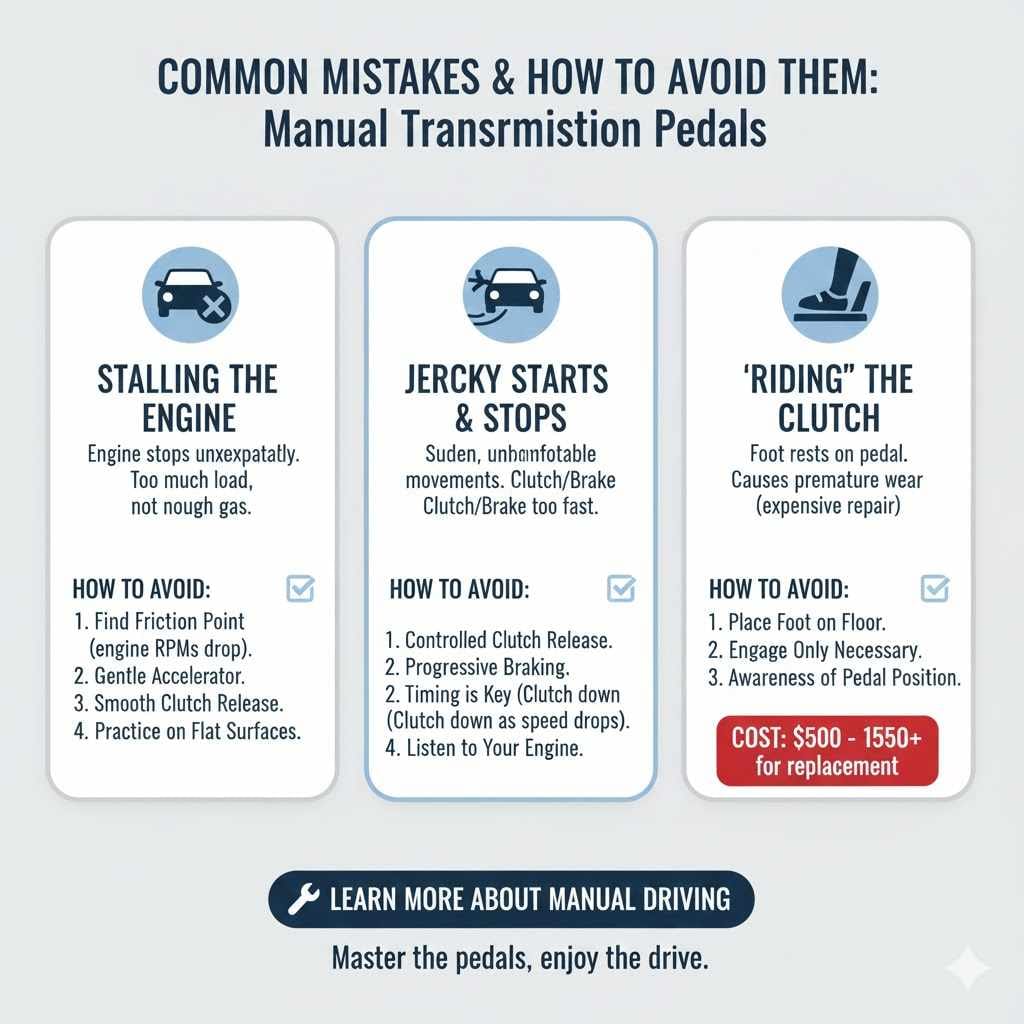
Stalling is probably the most common issue for new manual drivers. It happens when the engine is put under too much load and cannot keep running. In a manual car, this usually occurs when you try to engage the clutch too quickly without enough gas, especially when starting from a stop or when downshifting.
The engine essentially dies because the connection between the engine and the wheels is made too abruptly for it to cope.
To avoid stalling:
- Find the Friction Point: Practice slowly releasing the clutch pedal from a standstill to identify that specific point where the engine RPMs drop and the car starts to creep.
- Gentle Accelerator Input: As you feel the clutch engage, apply a little bit of accelerator. The amount of gas needed varies, but it’s usually not much when starting in first gear on a flat surface.
- Smooth Clutch Release: Once you’ve found the friction point and applied a little gas, continue to release the clutch smoothly and fully. Don’t just let it snap up.
- Practice on Flat Surfaces First: Master starts on flat ground before attempting hills, which require more precise coordination.
If you do stall, remain calm. Press the clutch pedal down, shift into neutral, and restart the engine. Then, re-apply the parking brake if you’re on a hill, and try again.
Jerky Starts and Stops
Jerky movements happen when the clutch engagement or brake application is too sudden. For starts, this is usually because the clutch is released too quickly, causing the car to lurch forward. For stops, it can be because the brake pedal is applied too abruptly, or the clutch is not pressed down in time as the car slows, leading to a lurch and potential stall.
To achieve smoother movements:
- Controlled Clutch Release: Always release the clutch pedal slowly and deliberately, especially when starting from a stop. Aim for a smooth transition from fully disengaged to fully engaged.
- Progressive Braking: Apply the brake pedal gradually. Start with light pressure and increase it as needed, rather than slamming on the brakes.
- Timing is Key for Stops: As you slow down, press the clutch pedal down at the right moment to prevent stalling. This timing is learned through practice and feeling the car’s speed.
- Listen to Your Engine: Pay attention to the engine’s sound. If it sounds like it’s struggling or about to stall, you may need to give it a little more gas or release the clutch more slowly.
A smooth driving experience is not just about comfort; it also indicates better control and a deeper understanding of the vehicle’s mechanics.
“Riding” the Clutch
“Riding the clutch” means resting your foot on the clutch pedal while driving, or holding it slightly depressed. This keeps the clutch partially engaged even when it’s not necessary. This constant slight pressure causes friction between the clutch plates, leading to premature wear and tear.
It’s a common habit for new drivers who are unsure when to fully release the pedal or who are nervous about stalling and try to keep the clutch “ready” to be pressed down.
To avoid riding the clutch:
- Place Foot on Floor: When the clutch is fully released and you’re driving normally, place your foot completely off the clutch pedal and rest it on the floor or the footrest. This simple habit prevents accidental engagement.
- Engage Only When Necessary: Only press the clutch pedal down when you need to shift gears or stop the car. Once the gear is selected or the car is stopped, you can then remove your foot from the pedal (or shift to neutral).
- Awareness of Pedal Position: Consciously check that your foot is not resting on the clutch pedal. This awareness will help break the habit over time.
The friction material on a clutch is not designed for constant engagement, and riding it can significantly shorten its lifespan, leading to expensive repairs. Statistics show that replacing a clutch can cost anywhere from $500 to $1500 or more, depending on the vehicle and labor costs.
When to Use Clutch and Brake While Driving Frequently Asked Questions
Question: What happens if I forget to press the clutch when stopping?
Answer: If you forget to press the clutch pedal when stopping your manual transmission car, the engine will likely stall. This happens because the wheels are no longer turning, but the engine is still connected through the transmission. The engine can’t handle being forced to stop by the stationary wheels, so it shuts off.
Question: Can I use the brake pedal without the clutch?
Answer: Yes, you can use the brake pedal without the clutch pedal. The brake pedal is designed to operate independently to slow down or stop the vehicle. However, if you brake hard and slow the car down significantly without also pressing the clutch, the engine will eventually stall.
Question: When should I shift into neutral?
Answer: You should shift into neutral when you are stopped for an extended period, like at a long red light or in heavy traffic where you are not moving. It’s also good practice to shift into neutral if you’re going to be stopped for more than 15-20 seconds. This allows you to rest your leg from holding the clutch pedal down.
Question: How do I know when I’ve found the clutch’s friction point?
Answer: You’ll feel the clutch’s friction point when you slowly release the pedal and the engine RPMs drop slightly, and you feel the car begin to creep forward. It’s like a gentle tug or a slight resistance before the car fully starts to move.
Question: Is it bad to press the clutch and brake at the same time?
Answer: It is not bad to press the clutch and brake at the same time when you are slowing down to a stop. In fact, this is the correct procedure. You use the brake pedal to slow the car and then press the clutch pedal as you get close to stopping to prevent the engine from stalling.
Summary
Mastering When to Use Clutch and Brake While Driving involves coordinating these pedals for smooth starts, stops, and gear changes. Always press the clutch when shifting or stopping to avoid stalling. Use the brake to slow and stop.
Practice makes perfect; focus on gentle transitions and understanding your car’s feel. You’ve got this!