
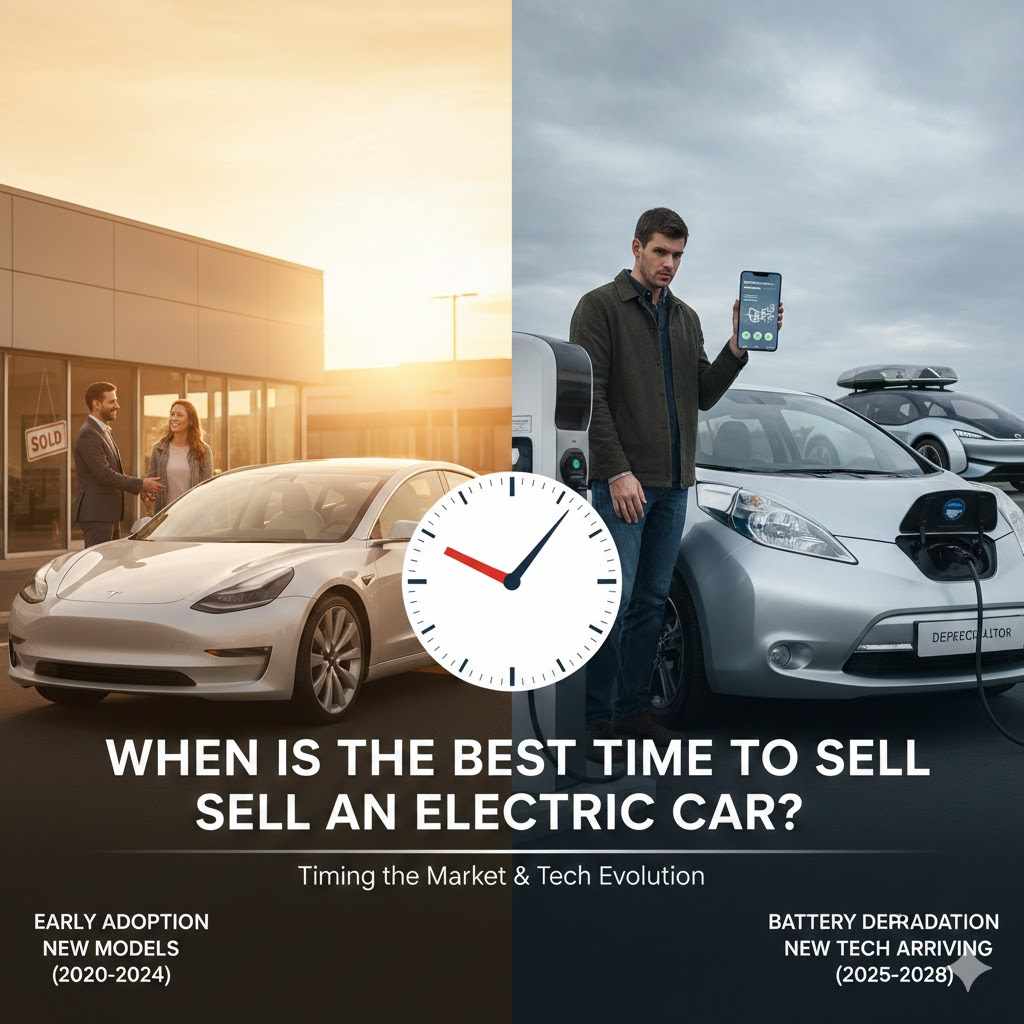
The best time to sell an electric car is typically in the spring, about 3 to 4 years into its life, and before a new model or major software update is announced. High gas prices also increase demand, making it a great time to sell. Focus on showcasing excellent battery health for the highest value.
Thinking about selling your electric car? You might be wondering if there’s a secret to getting the best price. Unlike gas cars, the value of an electric vehicle (EV) is tied to more than just mileage and age. Technology and battery health play a huge role.
It can feel a little confusing, but don’t worry. Timing the sale of your EV is easier than you think. I’m here to walk you through everything, step-by-step. We’ll look at the best seasons, key moments in the car’s life, and simple market trends. With these tips, you’ll feel confident and ready to get a great deal for your electric car.
Understanding the Key Factors That Influence Your EV’s Value
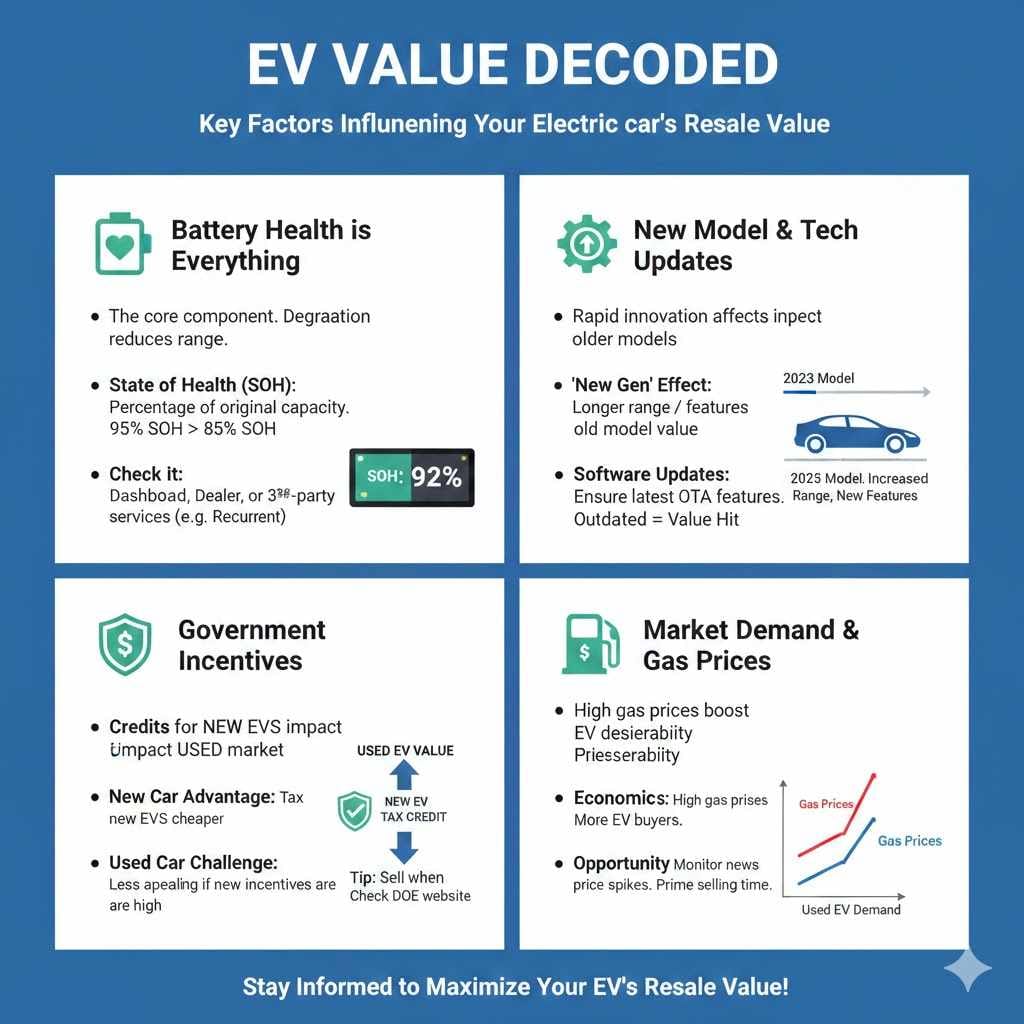
Selling an electric car is a bit different from selling a regular gas-powered car. With an EV, things like technology, software, and especially the battery, are what buyers care about most. Let’s break down the big four factors that will decide how much money you can get for your car.
Battery Health is Everything
The battery is the heart of your EV. Just like a phone battery, it loses a little bit of its ability to hold a full charge over time. This is called “battery degradation.” A buyer’s biggest question will be, “How much range does it still get?”
- State of Health (SOH): This is a percentage that tells you how healthy your battery is compared to when it was new. A car with a 95% SOH is much more valuable than one with an 85% SOH, even if they have the same mileage.
- How to Check It: Some EVs show the battery health right on the dashboard. For others, you might need to visit a dealer or use a third-party service like Recurrent to get a report. Having this report is a powerful tool when you sell.
New Model Releases and Tech Updates
The world of EVs moves fast. A new model or a major update can make older versions seem dated overnight. This can cause the value of your car to drop.
- The “New Generation” Effect: When a car company announces a brand-new version of your model with longer range or new features, demand for the older version goes down.
- Software Updates: Companies like Tesla can add major features through over-the-air updates. If your car no longer receives the latest updates, its value might take a hit. It’s smart to sell before your car is considered “the old model.”
Government Incentives and Tax Credits
Governments want people to buy new electric cars. They offer tax credits to make them cheaper. This is great for new car buyers, but it can make your used car a tougher sell.
Why? If a buyer can get a big discount on a brand-new EV, they might be less willing to pay a high price for your used one. Always be aware of the current federal and state incentives. You can check the latest information on government websites like the U.S. Department of Energy’s page on credits. Selling when incentives are low or non-existent can sometimes work in your favor.
Market Demand and Gas Prices
This one is simple economics. When gas prices shoot up, more people start thinking about buying an electric car to save money on fuel. This sudden increase in demand can raise the value of your used EV.
If you hear on the news that gas prices are climbing and you’re thinking of selling, that could be your golden opportunity. More buyers will be searching for EVs, and you’ll be in a great position to get a higher price.
The “When” Decoded: Timing Your Sale for Maximum Profit
Now that you know what affects your EV’s price, let’s pinpoint the absolute best times to sell. Timing is everything, and picking the right moment can mean thousands of extra dollars in your pocket. Here are the sweet spots to aim for.
The 3- to 4-Year Sweet Spot
For many EVs, the period between three and four years of ownership is a fantastic time to sell. Here’s why:
- Good Battery Health: By this point, the battery has likely seen only minor degradation and still offers great range. It hasn’t reached the point where major aging becomes a concern.
- Still Feels Modern: The technology and features in a 3-year-old EV are often still very current. It won’t feel outdated to a new buyer.
- Warranty Remaining: Many EVs come with an 8-year battery warranty. At 3-4 years, there is plenty of warranty left, which gives the next owner peace of mind and makes your car more attractive.
- Avoid Major Depreciation: After the 4- or 5-year mark, depreciation can start to accelerate as newer models with better tech become more common. Selling now helps you get ahead of that curve.
Before a Major Model Refresh Is Announced
Stay ahead of the news! Car manufacturers are always working on the next big thing. If you sell your car right before a new, improved version is announced, you can avoid a sudden drop in value.
- How to Stay Informed: Follow automotive news websites and blogs that cover your car’s brand. They often report on rumors and upcoming model changes months in advance.
- Example: If you own a “Model A” and you hear that the “Model A Gen 2” with 50 extra miles of range is coming out next year, the best time to sell your “Model A Gen 1” is now, before the official announcement makes your car the “old” version.
During Periods of High Gas Prices
This is a reactive strategy, but a powerful one. When the cost to fill up a gas tank skyrockets, interest in EVs naturally follows. Your car suddenly becomes a solution to a big, expensive problem.
- Increased Urgency: Buyers are more motivated. They aren’t just casually looking; they are actively trying to stop spending so much on gas.
- Higher Demand, Higher Price: With more people searching for used EVs, you can often list your car for a higher price and sell it more quickly. Keep an eye on the news, and if you see gas prices trending up, it might be time to get your car ready for sale.
Seasonal Selling: Why Spring is King
Just like with houses, there’s a selling season for cars. For EVs, spring and early summer are without a doubt the best times to sell. Winter is often the most challenging.
| Season | Pros for Selling an EV | Cons for Selling an EV |
|---|---|---|
| Spring (Best) | Warm weather means batteries perform at their best, showing maximum range. Tax refund season gives buyers more cash. People are planning summer road trips. | More cars might be on the market, creating more competition. |
| Summer | Good weather continues. Demand is still high from people wanting an EV for travel. | Families may be busy with vacations, potentially slowing down the process. |
| Fall | Weather is still mild. Less competition than in the spring. | Buyers start thinking about winter and how cold weather affects EV range, which can make them hesitant. |
| Winter (Worst) | Very little competition from other sellers. | Cold temperatures reduce an EV’s range, which is a major turn-off for buyers during a test drive. Bad weather makes car shopping less appealing. Holiday spending leaves less money for big purchases. |
A Step-by-Step Guide to Preparing Your EV for Sale
Getting your car ready to sell is about more than just washing it. For an EV, you need to highlight its strengths—like its battery and tech. Following these steps will help you attract serious buyers and get the best possible price.
Step 1: Get a Battery Health Report
This is the most important step. A buyer wants to know exactly what they are getting. A professional report removes all guesswork and builds trust instantly.
- How to get it: You can either visit a certified dealership for your car’s brand or use a third-party service that specializes in EV battery diagnostics.
- What to look for: The report should clearly show the “State of Health” (SOH) as a percentage. Anything above 90% is excellent for a used EV.
Step 2: Gather All Your Documents
Being organized shows you’re a responsible owner. Have everything ready in a neat folder for potential buyers to see.
- The Essentials: Car title (or loan information), maintenance records, and the original window sticker if you still have it.
- EV Specifics: Include any warranty documents, especially for the battery. Also, have records of any software updates or feature upgrades you purchased.
Step 3: Clean It Like You’re Selling a Smartphone
EVs are seen as high-tech gadgets, so they should look the part. A clean car feels like a well-cared-for car.
- Exterior: Give it a thorough wash and wax. Pay special attention to the wheels and glass. Clean the charging port area—it’s a detail many people overlook.
- Interior: This is crucial. Vacuum everything. Wipe down all surfaces, especially the large touchscreen. A clean, smudge-free screen makes the whole car feel more modern and valuable. Consider a professional detailer for around $150-$300; it’s often worth the investment.
Step 4: Take High-Quality Photos
Your photos are your first impression. Bad photos will get your ad skipped, even if the car is perfect.
- Location and Lighting: Find a nice, clean background. An empty parking lot or a park works well. The best time to shoot is during the “golden hour”—shortly after sunrise or before sunset—when the light is soft.
- Key Shots to Include: Get pictures from all angles (front, back, sides). Take detailed interior shots of the dashboard, seats, and the main touchscreen. Don’t forget to include a photo of the screen showing the current mileage and the battery’s state of charge (ideally at 100%).
Step 5: Write an Ad That Highlights EV Strengths
Your ad description should answer a buyer’s questions before they even ask them. Be clear, honest, and focus on what makes an EV great.
- The Headline: Include the year, make, model, trim, and battery range (e.g., “2021 Tesla Model 3 Long Range – 350-Mile Range, Excellent Condition”).
- In the Description, Mention:
- The exact mileage.
- The battery’s State of Health (SOH) percentage.
- Any special features like Autopilot, premium sound systems, or special wheels.
- What charging cables are included.
- If the battery warranty is still active.
Step 6: Price It Strategically
Pricing an EV can be tricky. You need to look beyond just your make and model and compare battery health and features.
| Factor to Check | Where to Look | Notes |
|---|---|---|
| Baseline Value | Kelley Blue Book (KBB), Edmunds | Get a general idea of your car’s value based on age, mileage, and condition. |
| Local Market Comps | Facebook Marketplace, Craigslist, Autotrader | Search for the exact same year, make, and model as your car in your area. See what others are asking for. |
| EV-Specific Comps | EV marketplaces (like FindMyElectric) | Compare your car to others with similar battery health (SOH) and software features. This is key. |
| Adjust for Your Car | Your own assessment | If your battery health is better than average, price it slightly higher. If it has desirable features, adjust accordingly. |
By following these steps, you present your car in the best possible light, justify your asking price, and make the entire selling process smoother and more profitable.
Where to Sell Your Electric Car for the Best Price
Once your EV is prepped and priced, you need to decide where to list it. Different platforms attract different types of buyers and offer different benefits. Choosing the right one can make a big difference in how much you get and how quickly you sell.
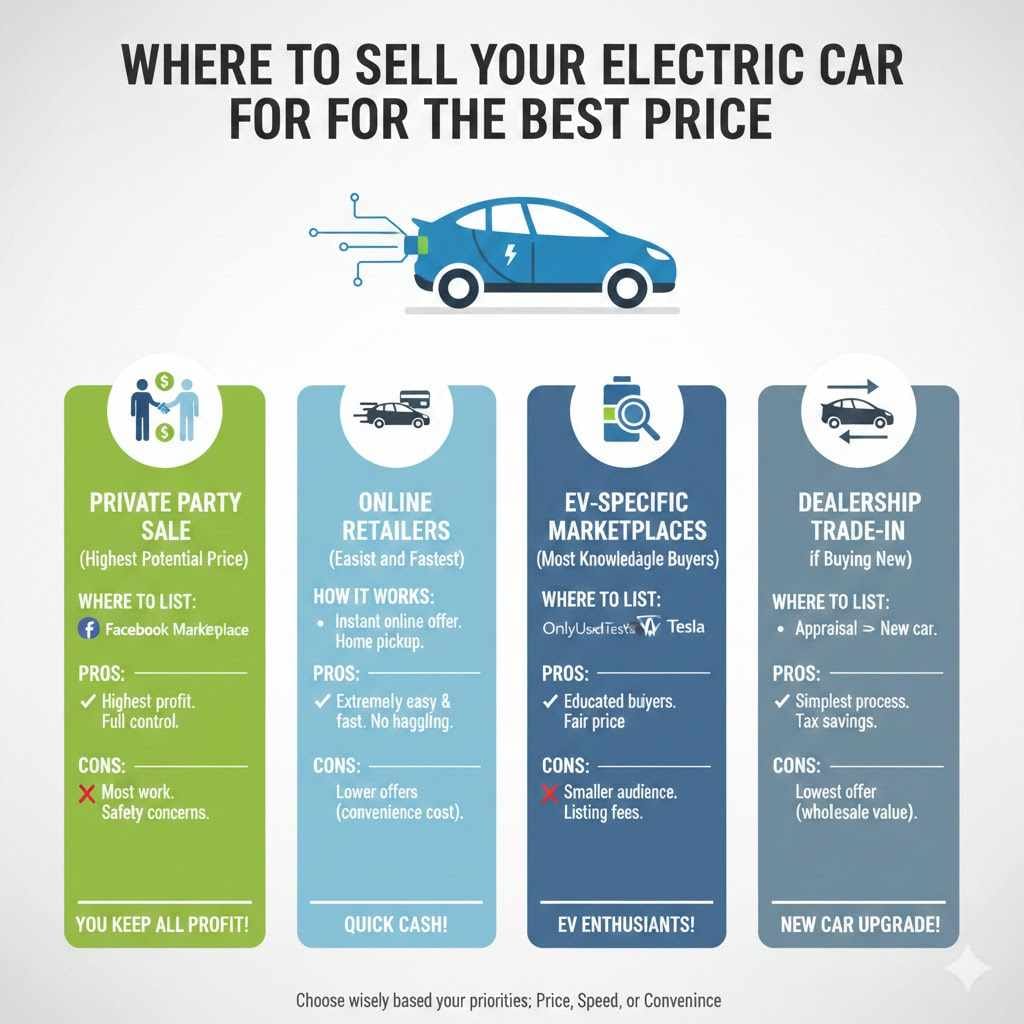
Private Party Sale (Highest Potential Price)
Selling the car yourself directly to another person will almost always get you the most money. You cut out the middleman.
- Where to List: Facebook Marketplace, Craigslist, Autotrader.
- Pros: You set the price and have full control over the sale. You keep all the profit.
- Cons: It’s the most work. You have to handle all inquiries, schedule test drives, and deal with paperwork and payment. There can also be safety concerns when meeting strangers.
Online Retailers (Easiest and Fastest)
Companies like Carvana, Vroom, and CarMax have made selling a car incredibly simple. You get an offer online in minutes.
- How it Works: You enter your car’s details on their website, and they give you an instant cash offer. If you accept, they come to you to inspect the car and pick it up.
- Pros: Extremely easy and fast. You can have the car sold and money in your account in a few days without ever leaving home. No haggling.
- Cons: Their offers are almost always lower than what you could get from a private sale. This is the price you pay for convenience.
EV-Specific Marketplaces (Most Knowledgeable Buyers)
There are websites built specifically for buying and selling electric cars. These are great places to find buyers who already understand and appreciate EVs.
- Where to List: Websites like FindMyElectric or OnlyUsedTesla.
- Pros: Your audience is already educated about things like battery health and charging. You won’t have to explain the basics. Buyers on these sites are often willing to pay a fair price for a well-maintained car.
- Cons: The audience is smaller than on general sites, so it might take a bit longer to find a buyer. Some sites may charge a listing fee.
Dealership Trade-In (Most Convenient if Buying New)
Trading your EV in at a dealership where you’re buying your next car is the traditional, straightforward option.
- How it Works: The dealer appraises your car and gives you a trade-in value, which is then subtracted from the price of your new car.
- Pros: It’s the simplest process of all. You handle both transactions at once. In some states, you only pay sales tax on the difference in price, which can be a significant saving.
- Cons: This will almost certainly be the lowest offer you receive for your car. Dealers need to resell it for a profit, so they offer you wholesale value.
Frequently Asked Questions (FAQ)
When is the best time of year to sell an EV?
Spring is the ideal season. The weather is warm, which means your EV’s battery will perform at its peak, showing its maximum possible range during test drives. Plus, many people receive tax refunds in the spring and are looking to make a big purchase.
Does high mileage matter as much on an electric car?
Not as much as it does on a gas car. For an EV, battery health (State of Health or SOH) is far more important than the number on the odometer. A higher-mileage EV with a very healthy battery is often more valuable than a lower-mileage one with significant battery degradation.
How can I prove my car’s battery health to a buyer?
The best way is to get a battery health report. You can get one from a dealership that services your car’s brand, or you can use a third-party service like Recurrent, which provides detailed reports. Some EVs also display a basic battery health indicator in their settings menu, and a photo of this can be helpful in your ad.
Should I fully charge the car before someone comes for a test drive?
Absolutely! You want to show the buyer the car’s maximum potential. A full charge demonstrates the best possible range, which is one of the most important factors for any EV buyer. It shows you’re a diligent owner and gives them confidence in the vehicle’s capabilities.
Do I sell my home charging station with the car?
Generally, no. The Level 2 home charging station (the box mounted on your garage wall) is considered part of your home and is usually not sold with the car. However, you should always include the mobile charging cord that came with the vehicle when you first bought it.
Is it harder to sell an electric car than a gas car?
It’s not harder, just different. The process requires you to highlight different features. Instead of talking about the engine or oil changes, you’ll be focusing on battery range, charging speed, and software features. As long as you provide clear information, especially about battery health, the process can be very smooth.
Conclusion
Selling your electric car for the best price isn’t about luck; it’s about smart timing and good preparation. By focusing on what truly matters to EV buyers—battery health, modern technology, and market demand—you can put yourself in the driver’s seat of the sale.
Remember the key takeaways: aim for the 3- to 4-year mark, sell in the spring, and keep an eye on gas prices and new model announcements. A little bit of prep work, from getting a battery report to taking great photos, goes a long way in building trust with buyers and justifying your asking price.
You now have the knowledge to navigate the selling process with confidence. Go ahead and get your car ready—you’re fully equipped to get a fantastic deal and make your transition to your next vehicle a smooth and profitable one.