
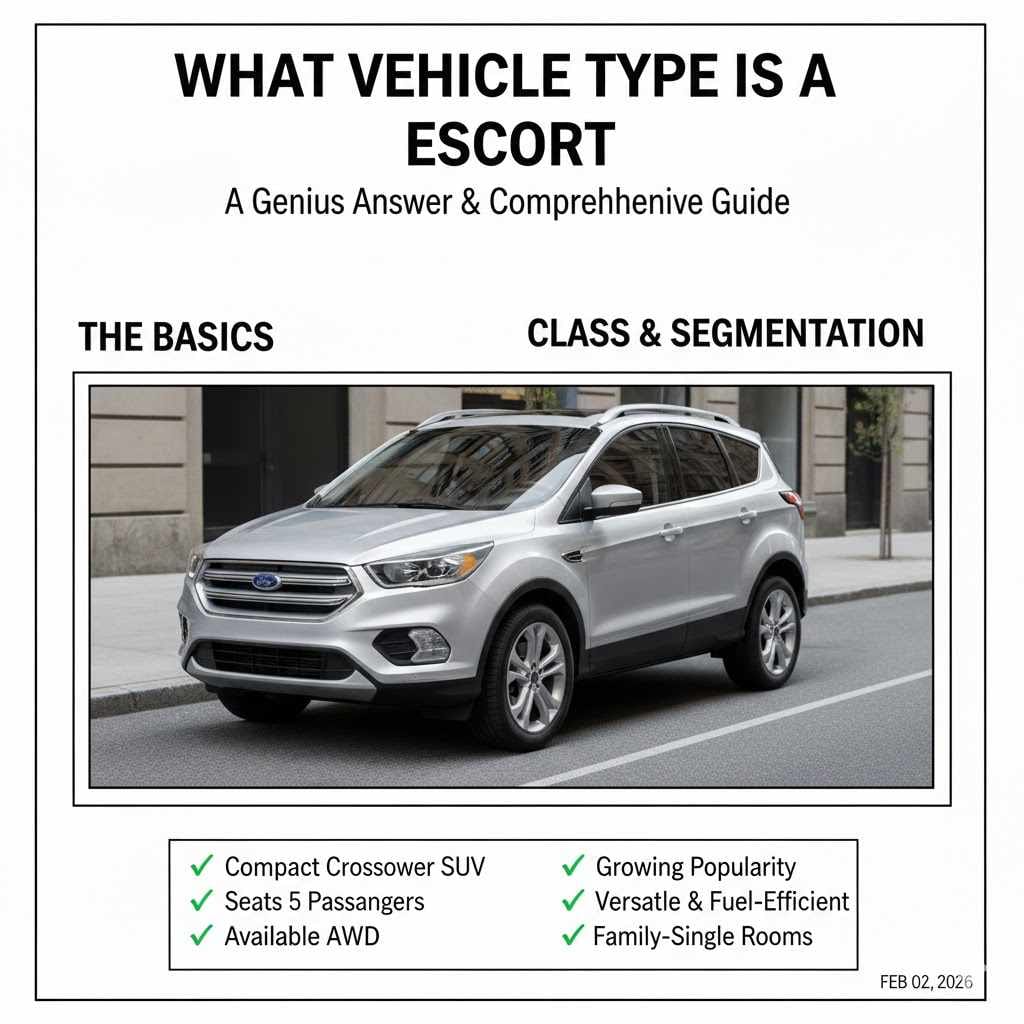
The Ford Escape is a compact crossover SUV. This means it combines the comfortable, smooth ride and fuel efficiency of a car with the higher seating position, extra cargo space, and available All-Wheel Drive (AWD) of a traditional SUV. It’s built on a car platform, making it a versatile and easy-to-drive vehicle for everyday life.
Have you ever looked at a Ford Escape and wondered, “What exactly is that?” It looks a bit like an SUV, but it drives more like a car. You are not alone in this confusion! Many drivers find the world of vehicle types like “crossover,” “SUV,” and “compact” a little tricky. But don’t worry, figuring this out is easier than you think.
Knowing your vehicle type helps you understand what it’s best for, from family trips to daily commutes. We are here to clear up all the confusion. In this guide, we’ll break down exactly what a Ford Escape is, what makes it a “crossover,” and how it has changed over the years. Let’s get you the simple, genius answer you’ve been looking for.
The Simple Answer: The Ford Escape is a Compact Crossover SUV
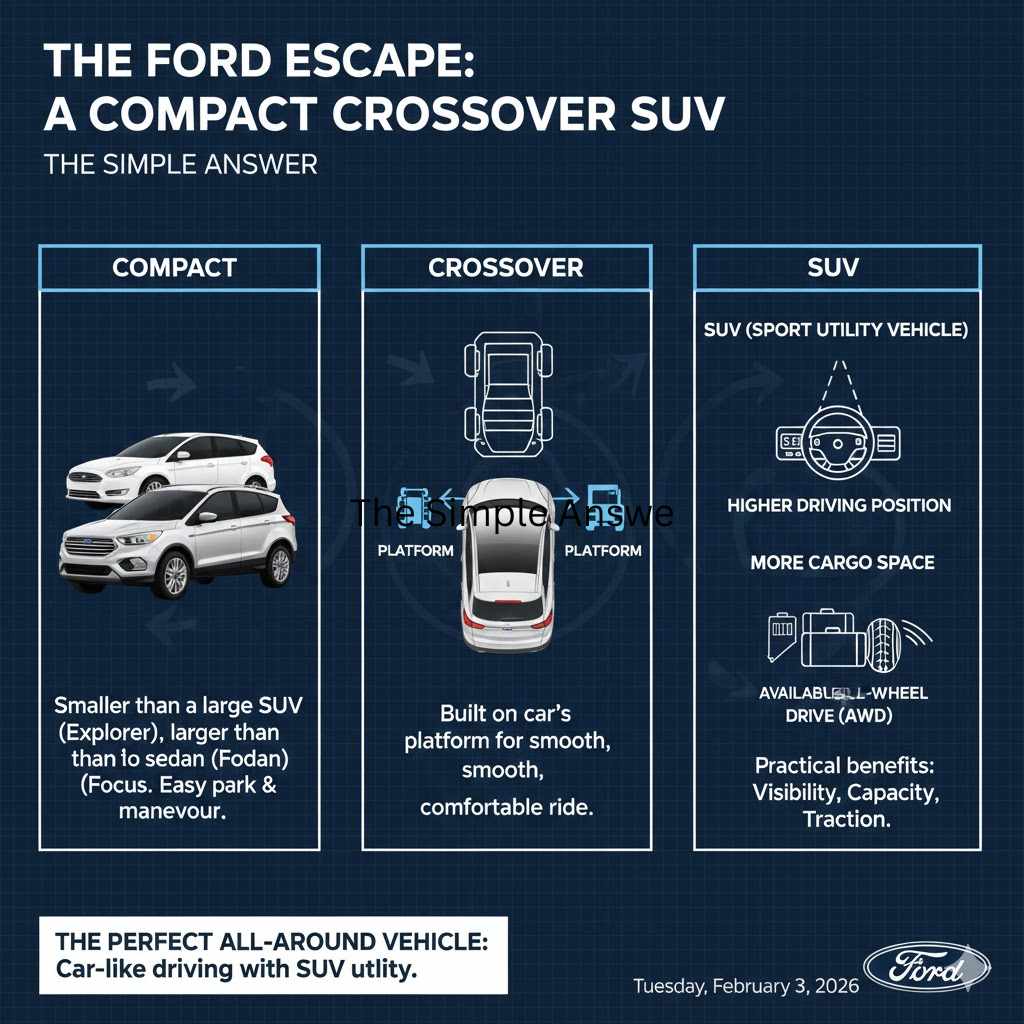
Let’s start with the most direct answer. The Ford Escape belongs to a very popular category of vehicles called compact crossover SUVs. This name might sound like a mouthful, but it’s actually very descriptive. Let’s break down what each part means for you as a driver.
- Compact: This refers to its size. It’s smaller than a large, three-row SUV like a Ford Explorer but bigger than a small sedan like a Ford Focus. This “just right” size makes it easy to park and maneuver in city traffic while still offering plenty of room for passengers and cargo.
- Crossover: This is the most important part of its identity. A crossover is a vehicle that is built on a car’s platform, not a truck’s. This is the secret to why the Escape feels so comfortable and smooth on the road. It “crosses over” the best features of a car and an SUV.
- SUV (Sport Utility Vehicle): This part of the name points to its utility features. Like an SUV, it offers a higher driving position for better visibility, more cargo space than a typical car, and often has the option for All-Wheel Drive (AWD) for better traction in rain or snow.
So, when you put it all together, a compact crossover SUV like the Ford Escape is designed to be the perfect all-around vehicle. It gives you the easy driving experience of a car with the practical benefits of a bigger, more rugged vehicle.
Why Is It Called a Crossover? Breaking Down the Jargon
To truly understand the Ford Escape, it helps to know the difference between a “crossover” and a “traditional SUV.” The main difference is hidden underneath the vehicle, in a part called the frame. This is the foundation of the entire vehicle, and it changes everything about how it drives.
Traditional SUVs: The Body-on-Frame Giants
Think of a classic, heavy-duty SUV or a pickup truck. These vehicles are built using a method called “body-on-frame.” This means the vehicle’s body is built separately and then bolted onto a strong, rigid ladder-like frame. This is the old-school way of building tough vehicles.
- How it feels: This construction is extremely strong and durable, which is great for towing heavy loads and handling rough off-road trails. However, it can make the ride feel a bit bumpy or truck-like on normal roads.
- Examples: Ford Expedition, Chevrolet Tahoe, Jeep Wrangler.
- Best for: Heavy towing, serious off-roading, and maximum durability.
Crossovers: The Unibody Innovators
The Ford Escape, on the other hand, is built using “unibody” construction. “Uni” means one, so the body and the frame are built together as a single, solid piece. This is the same way that nearly all modern cars are built.
- How it feels: This one-piece design is lighter and more rigid in different ways. It allows for a much smoother, quieter, and more comfortable ride. The handling feels more responsive and car-like, making it a pleasure to drive around town.
- Examples: Ford Escape, Honda CR-V, Toyota RAV4.
- Best for: Daily commuting, family errands, road trips, and light-duty utility.
This unibody design is the key to the Escape’s success. It gives drivers the SUV look and practicality they want without sacrificing the comfortable ride and fuel efficiency they need for everyday life.
| Feature | Crossover (like Ford Escape) | Traditional SUV (like Ford Expedition) |
|---|---|---|
| Construction | Unibody (Body and frame are one piece) | Body-on-Frame (Body is bolted to a separate frame) |
| Ride Comfort | Smooth, quiet, and car-like | Can feel stiff or bumpy, more like a truck |
| Handling | Agile and easy to maneuver | Can feel heavy and less responsive |
| Fuel Economy | Generally better due to lighter weight | Generally lower due to heavier weight |
| Towing Capacity | Good for small trailers or boats | Excellent for heavy-duty towing |
| Off-Road Ability | Capable on dirt roads or in snow (with AWD) | Built for challenging off-road trails |
A Quick History of the Ford Escape: From Boxy SUV to Sleek Crossover
The Ford Escape hasn’t always looked the way it does today. Its journey over the last two decades tells the story of how drivers’ needs have changed. Understanding its history helps explain why it is the perfect example of a modern crossover.
First Generation (2001–2007): The Beginning of an Icon
When the first Ford Escape arrived, it was a game-changer. At the time, most SUVs were big, truck-based vehicles. The Escape offered a fresh alternative. It had a boxy, rugged look that clearly said “SUV,” but it was smaller and built on a car platform. This made it easier to drive and more fuel-efficient than its larger competitors. It quickly became a hit with families and individuals who wanted SUV versatility without the truck-like ride. Ford also introduced a hybrid version during this generation, one of the very first hybrid SUVs on the market.
Second Generation (2008–2012): A Refined Classic
The second-generation Escape kept the popular boxy shape but gave it a tougher, more modern look inspired by the larger Ford Explorer. The inside was updated with better materials and new technology, like Ford’s SYNC infotainment system. While it looked like a traditional SUV, it kept its car-based platform, continuing to deliver a comfortable ride. The hybrid model became even more popular as gas prices rose, solidifying the Escape as a smart and practical choice.
Third Generation (2013–2019): The Big Change
This is when the Escape truly transformed into the sleek crossover we know today. Ford moved away from the boxy design and adopted a smooth, aerodynamic look based on its European model, the Ford Kuga. This new design was not just about style; it also improved fuel economy. This generation also introduced the efficient EcoBoost engines, which used turbocharging to provide a great mix of power and efficiency. This was the moment the Escape fully shed its mini-SUV image and embraced its identity as a modern, stylish crossover.
Fourth Generation (2020–Present): The Smart and Efficient Era
The latest generation of the Ford Escape is the most car-like yet. It features a rounded, sporty design that looks more like a tall hatchback than a rugged SUV. The focus is now heavily on efficiency and technology. Ford expanded its powertrain options to include a standard hybrid and a plug-in hybrid (PHEV), giving drivers more ways to save on fuel. Inside, the Escape is packed with advanced safety features, including the Ford Co-Pilot360™ suite, and a large, user-friendly touchscreen. This modern Escape is the ultimate expression of the crossover concept: smart, efficient, comfortable, and incredibly versatile.
How Does the Ford Escape Compare to Other Vehicle Types?
To help you see where the Escape fits in the automotive world, let’s compare it directly to other common vehicle types. This will show you its unique strengths and help you decide if it’s the right kind of vehicle for your needs.
Ford Escape vs. a Sedan (like a Ford Fusion)
A sedan is a traditional four-door car. Compared to a sedan, the Ford Escape offers several key advantages. Its biggest benefit is space. With its taller roof and large rear hatch, the Escape has significantly more cargo room, especially when you fold down the rear seats. You also get a higher seating position, which many drivers love because it gives them a better view of the road. Finally, the available All-Wheel Drive (AWD) provides extra confidence and traction in bad weather, something most sedans don’t offer.
Ford Escape vs. a Minivan (like a Chrysler Pacifica)
Minivans are the champions of carrying people. If you have a large family and need seating for seven or eight, a minivan is hard to beat. Its sliding doors make it incredibly easy for kids to get in and out in tight parking spots. The Ford Escape is a five-seater, so it’s better suited for smaller families. However, the Escape is more stylish, more fun to drive, and generally gets better fuel economy than a minivan. It’s a great choice for families who don’t need the massive space of a minivan.
Ford Escape vs. a Larger SUV (like a Ford Explorer)
A larger, three-row SUV like the Ford Explorer is built for bigger jobs. It offers more passenger room, a third row of seats, and a much higher towing capacity for heavy trailers or boats. The Ford Escape, as a compact crossover, is easier to park and drive in the city. It’s also much more fuel-efficient, which saves you money at the pump. For most daily driving and family needs, the Escape provides plenty of space and capability without the size and cost of a large SUV.
| Vehicle Type | Key Strengths | Best For… |
|---|---|---|
| Compact Crossover (Ford Escape) | Versatility, cargo space, easy to drive, good fuel economy, available AWD. | Individuals, couples, and small families needing an all-around vehicle. |
| Sedan | Excellent handling, often better fuel economy, lower purchase price. | Commuters and drivers who prioritize a sporty feel and efficiency over space. |
| Minivan | Maximum passenger and cargo room, sliding doors, family-friendly features. | Large families who need seating for 7-8 people and ultimate convenience. |
| Large SUV | Third-row seating, heavy-duty towing, powerful engines, off-road capability. | Large families who tow or need maximum space and power. |
What Makes the Ford Escape a Great Choice for Drivers?
The Ford Escape has been a best-seller for years because it does so many things well. It hits the sweet spot for what most people need from a vehicle. Here are some of the biggest reasons why it’s such a popular choice.
Versatility for Everyday Life
This is perhaps the Escape’s greatest strength. Need to pick up groceries? The cargo area is spacious and easy to load. Planning a weekend camping trip? Fold down the rear seats, and you have a huge space for all your gear. The sliding rear seats in recent models even let you choose between more legroom for passengers or more room for cargo. It adapts to your life, whatever you have planned for the day.
Comfortable and Easy to Drive
Because it’s built like a car, the Escape drives like one. The ride is smooth and quiet, soaking up bumps in the road without the jarring feeling of a truck-based SUV. Its compact size and responsive steering make it a breeze to navigate crowded parking lots and tight city streets. For long road trips or daily commutes, it’s a comfortable and relaxing place to be.
Safety and Technology
Modern Escapes come loaded with technology designed to keep you safe. Ford’s Co-Pilot360™ is a suite of driver-assist features that includes things like automatic emergency braking, blind-spot monitoring, and a lane-keeping system. These features act like an extra set of eyes on the road. The Escape consistently earns high safety ratings from organizations like the National Highway Traffic Safety Administration (NHTSA), giving you peace of mind.
Fuel Efficiency Options
With gas prices always a concern, the Escape offers several ways to save. Its EcoBoost engines are designed to be powerful yet efficient. But the real stars are the hybrid and plug-in hybrid (PHEV) models. The hybrid recharges its own battery as you drive, delivering excellent city mileage. The PHEV can be plugged in to drive on pure electricity for shorter trips, potentially saving you from visiting the gas station for weeks at a time. You can check official ratings on the U.S. Department of Energy’s FuelEconomy.gov website to see how much you could save.
Is the Ford Escape the Right Vehicle for You?
Now that you know exactly what a Ford Escape is, you can decide if it’s the right fit for you. It’s a fantastic vehicle, but no single car is perfect for everyone. Let’s see if your needs match up with the Escape’s strengths.
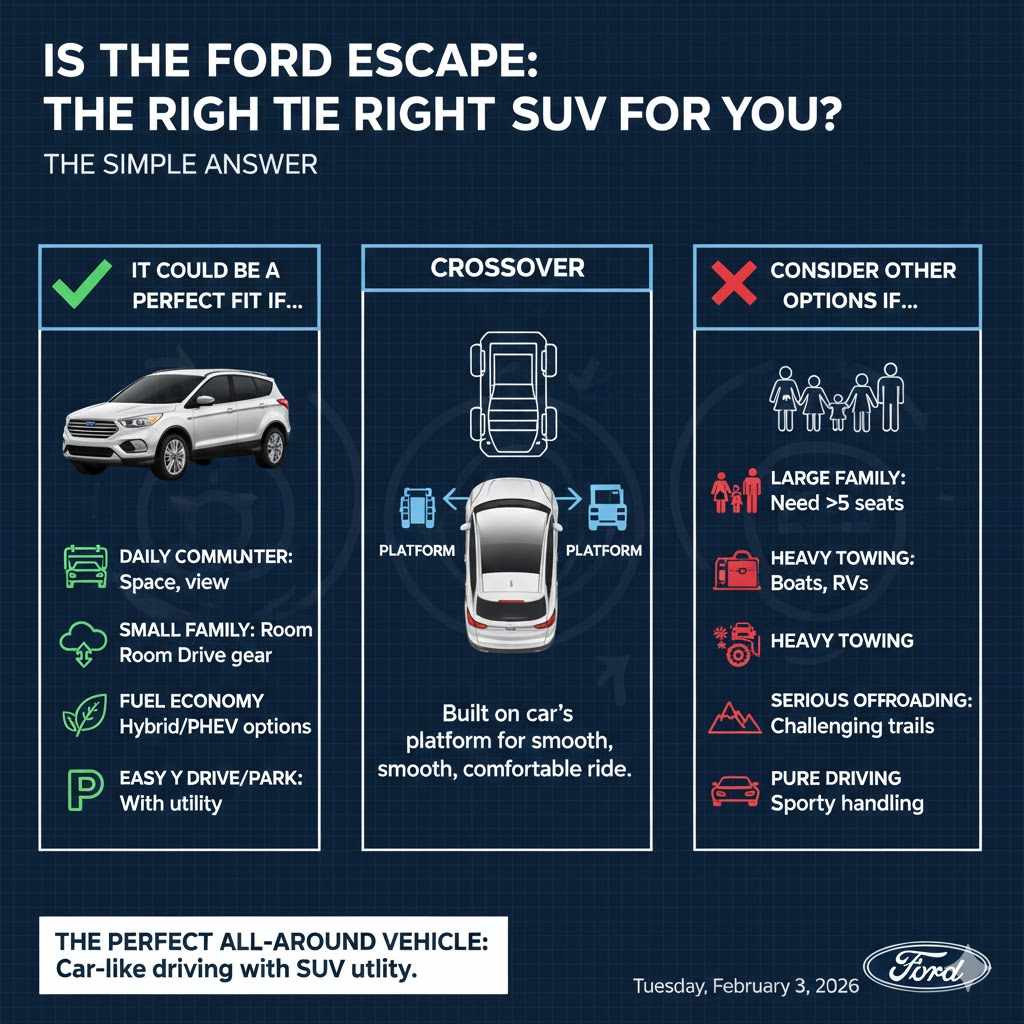
The Ford Escape could be your perfect vehicle if:
- You are a daily commuter who wants more space and a better view than a sedan offers.
- You have a small family and need room for car seats, strollers, and sports gear.
- You live in an area with rain or snow and want the extra security of All-Wheel Drive.
- You value good fuel economy and are interested in hybrid or plug-in hybrid technology.
- You want a vehicle that is easy to park and drive but still has plenty of utility.
You might want to consider a different type of vehicle if:
- You have a large family and regularly need seating for more than five people.
- You need to tow a heavy boat, RV, or work trailer.
- You are a serious off-road enthusiast who plans to tackle challenging trails.
- Your top priority is pure driving excitement and sporty handling.
Conclusion: Your Go-To Compact Crossover
So, what vehicle type is a Ford Escape? The genius answer is that it’s a compact crossover SUV—a brilliant blend of the best parts of a car and an SUV. It gives you the smooth, comfortable ride, easy handling, and great fuel economy of a car, all wrapped up in a practical package with extra space, a higher view of the road, and the utility you need for your busy life.
From its early days as a boxy pioneer to its current form as a sleek, tech-savvy, and efficient vehicle, the Escape has perfectly evolved to meet the needs of modern drivers. It proves you don’t have to choose between comfort and capability. Now that you understand what makes it a crossover, you can confidently see why it remains one of the most popular and smartest choices on the road today.
Frequently Asked Questions (FAQ)
Is a Ford Escape considered an SUV?
Yes, but more specifically, it’s a crossover SUV. While it has the “SUV” name and utility features, it’s built on a car’s unibody platform, which gives it a smoother ride and better fuel economy than a traditional, truck-based SUV.
Is the Ford Escape a good family car?
Absolutely. For small families of up to five people, the Ford Escape is an excellent choice. It has plenty of cargo space for strollers and gear, modern safety features to protect your loved ones, and a comfortable ride for everyone.
Do all Ford Escapes have All-Wheel Drive (AWD)?
No, not all of them. Front-Wheel Drive (FWD) is standard on most models, which is great for fuel economy. All-Wheel Drive (AWD) is available as an option, providing better traction and control in rain, snow, or on gravel roads.
How does the Ford Escape compare to the Toyota RAV4?
The Ford Escape and Toyota RAV4 are two of the biggest competitors in the compact crossover class. They are very similar in size, features, and price. The choice often comes down to personal preference in styling, driving feel, and specific features offered on different trim levels.
Is the Ford Escape expensive to maintain?
The Ford Escape generally has average maintenance costs for its class. Because it’s such a popular vehicle, parts are widely available and most mechanics are familiar with working on them, which helps keep repair costs reasonable.
What is the difference between a Ford Escape and a Ford Edge?
The Ford Edge is the Escape’s bigger sibling. It is a mid-size crossover SUV, while the Escape is a compact crossover. The Edge is wider, offers more passenger room, and typically comes with more powerful standard engines. The Escape is more nimble, fuel-efficient, and affordable.
Can a Ford Escape go off-road?
A Ford Escape with All-Wheel Drive is capable of handling light off-road situations like dirt roads, gravel paths, or driving through a snowy field. However, it is not designed for serious off-roading like rock crawling or deep mud. Its unibody construction and ground clearance are best suited for on-road driving.