
It’s a common worry for many drivers to wonder, “What to Do When Car Brakes Get Hot.” When your car’s brakes heat up more than usual, it can be a little scary, especially if you’re new to driving or car maintenance. This feeling of uncertainty is perfectly normal. But don’t worry, figuring out what to do is simpler than you might think. We’ll walk through it step by step, making it easy to understand. First, let’s look at why brakes get hot.
Understanding Why Car Brakes Get Hot
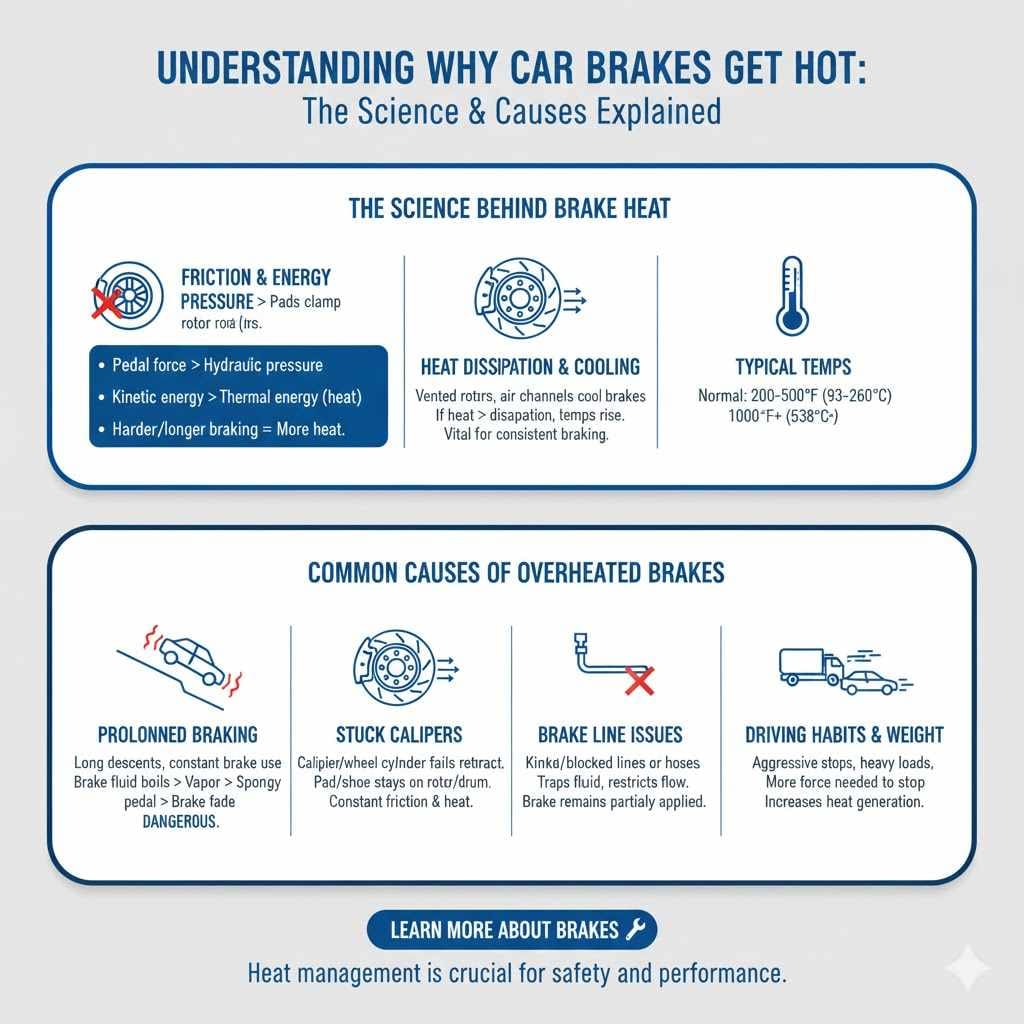
Brakes get hot because of friction. When you press the brake pedal, brake pads clamp down on a spinning disc called a rotor. This rubbing action slows your car down.
This friction creates a lot of heat, which is normal. However, when brakes get too hot, it can be a sign that something isn’t quite right or that you’ve been using them very hard. This excessive heat can make your brakes less effective, a situation known as brake fade.
It’s important to recognize the signs and know what actions to take.
The Science Behind Brake Heat
Friction is the main culprit behind brake heat. Imagine rubbing your hands together quickly; they start to feel warm. The same principle applies to your car’s brakes, but on a much larger scale and with much higher temperatures.
The energy from your car’s motion is converted into heat energy when the brake pads grip the rotors. This heat needs to be dissipated effectively to prevent the brakes from overheating.
The typical operating temperature for brakes can range from 200 to 500 degrees Fahrenheit (about 93 to 260 degrees Celsius) during normal driving. However, during heavy braking or downhill driving, these temperatures can climb much higher, potentially reaching over 1000 degrees Fahrenheit (about 538 degrees Celsius) for short periods. This is why proper brake cooling and material science are so important in brake design.
Friction and Energy Conversion
When you apply the brakes, the brake pedal activates a hydraulic system. This system pushes brake fluid, which in turn forces a caliper to squeeze the brake pads against the brake rotor. The brake pads are typically made of a composite material designed to create high friction.
The rotor is a metal disc attached to the wheel hub. As the rotor spins with the wheel, the stationary pads press against it, creating friction. This friction is what converts the kinetic energy (the energy of motion) of the vehicle into thermal energy (heat).
The amount of heat generated is directly related to how hard and how long you brake. Frequent, hard stops generate significantly more heat than gentle, gradual braking. This is why drivers are often advised to avoid riding the brakes, especially on long downhill stretches, as this can lead to dangerous overheating.
Heat Dissipation and Cooling
Cars are designed with cooling systems for their brakes. Most brake rotors have internal vanes or are vented, meaning they have channels or holes that allow air to flow through them. As the wheel spins, air is drawn through these channels, helping to cool the rotor.
The brake pads also have surfaces that allow for some air circulation.
However, if the heat generated is more than the brake system can dissipate, the temperature will rise beyond safe limits. This can happen under extreme conditions or if there’s a problem with the cooling system, such as blocked vents or damaged brake components. A properly functioning cooling system is vital for maintaining consistent braking performance and preventing overheating.
Common Causes of Overheated Brakes
Several scenarios can lead to brakes overheating. One of the most common is prolonged braking, such as driving down a steep mountain road. In this situation, you’re constantly applying light pressure to the brakes to control your speed, leading to continuous friction and heat buildup.
Another cause can be an issue with the braking system itself, like a stuck caliper.
A stuck caliper means the brake pad stays in contact with the rotor even when you’re not pressing the brake pedal. This creates constant friction and heat. Driving with your parking brake partially engaged is another way to overheat your rear brakes.
If a brake line is blocked or a component is worn out, it can also lead to excessive heat.
Prolonged Braking
This occurs when you apply the brakes for an extended period. Think of driving down a long, winding hill. To keep your speed from increasing too much, you have to keep your foot on the brake pedal.
Each application of the brakes generates heat, and over time, this heat has nowhere to go, causing the brake components to get very hot. This is a primary reason why instructors teach proper downhill driving techniques, like downshifting.
When brakes get too hot from prolonged use, the brake fluid inside the system can start to boil. Brake fluid is designed to withstand high temperatures, but boiling creates vapor. This vapor is compressible, unlike liquid.
So, when you try to brake, the pressure you apply is used to compress the vapor bubbles instead of pushing the brake pads against the rotors. This results in a spongy or soft brake pedal and a significant loss of braking power, a dangerous condition known as brake fade.
Stuck Brake Calipers or Wheel Cylinders
Your car’s braking system has several moving parts. In disc brakes, the caliper houses the brake pads and a piston. When you brake, the piston pushes the pads onto the rotor.
In drum brakes, wheel cylinders push brake shoes against the drum. If these parts become corroded, dirty, or damaged, they might not retract properly after you release the brake pedal.
A stuck caliper or wheel cylinder means the brake pads or shoes continue to press against the rotor or drum. This constant friction generates heat even when you’re not actively braking. This is why you might notice a burning smell or your wheels feeling unusually hot after a drive, even if you haven’t been braking heavily.
A stuck component can also cause uneven braking and premature wear of brake parts.
Issues with Brake Lines or Hoses
Brake fluid travels through a network of metal lines and flexible rubber hoses to reach the calipers or wheel cylinders. These lines are crucial for transmitting the force from your brake pedal to the braking mechanism. If a brake line or hose becomes kinked, collapsed internally, or is otherwise obstructed, it can trap brake fluid or restrict its flow.
When an obstruction occurs, it can prevent brake pressure from being fully released from a specific brake. This means the brake might remain partially applied, causing it to overheat. Drivers might notice a pulling sensation when braking or a persistent hot smell coming from one wheel.
These issues require immediate attention from a mechanic.
Immediate Steps When Your Brakes Feel Hot
If you suspect your brakes are getting too hot, the first and most important thing to do is stop driving if possible and let them cool down. Driving with overheated brakes is dangerous because they can lose their stopping power. Pull over safely to the side of the road or into a parking lot.
Avoid touching any brake components as they will be extremely hot and can cause severe burns.
Once you’ve pulled over, turn off the engine and let your car sit for at least 30 minutes, or until the brakes have cooled considerably. During this time, you can try to identify any unusual smells, like burning rubber or oil, which might give you a clue about the problem. Listen for any strange noises from your wheels.
If you notice smoke coming from your wheels, it’s a serious sign.
Safely Pulling Over
The immediate priority is safety for yourself and others. When you realize your brakes might be overheating, activate your hazard lights to alert other drivers. Look for a safe place to pull over, such as a shoulder, a parking lot, or a quiet side street.
Avoid stopping abruptly in traffic or on a blind curve.
If your steering feels strange or your car is pulling to one side, be extra cautious. Gently steer your car to the safest spot. Once stopped, engage your parking brake firmly.
This will help prevent the car from rolling while you assess the situation. Remember, your primary goal is to get off the road and let the brakes cool without further use.
Allowing Brakes to Cool
Cooling down overheated brakes is crucial for safety and to prevent further damage. This process takes time. The amount of time needed can vary depending on how hot the brakes got and the ambient temperature.
A minimum of 30 minutes is usually recommended, but sometimes an hour or more might be necessary.
While you wait for them to cool, do not try to splash water on the brakes. The sudden temperature change can warp or crack the metal components, leading to more expensive repairs. Just let nature take its course.
During this cooling period, you can check your owner’s manual for information about your car’s braking system or simply relax and wait.
Identifying Potential Issues
While the brakes are cooling, take a moment to think about what might have caused the overheating. Did you just drive down a very long, steep hill? Were you driving aggressively in heavy traffic with lots of stopping and starting?
Did you notice any unusual smells, like burning rubber or a metallic scent? Were there any strange noises before you pulled over, like grinding or squealing?
If you smell a strong burning odor, it could be the brake pads overheating and starting to wear down rapidly. A metallic smell might indicate metal-on-metal contact, meaning the brake pads have worn down completely. Any unusual sounds should be investigated.
These observations can be very helpful when you later speak with a mechanic.
Signs Your Brakes Are Overheating
Several signs can alert you to overheated brakes. The most common is a burning smell. This often smells like acrid rubber or hot metal.
You might also notice a change in how your brakes feel when you press the pedal. The pedal could feel softer, spongier, or you might need to press it down further than usual to get the same stopping power.
Visually, you might see smoke coming from your wheels, especially after a hard braking event. The wheels themselves will feel very hot to the touch (be careful not to touch them directly, use the back of your hand to test). If you have a tire pressure monitoring system or a vehicle health monitor, it might sometimes report unusually high temperatures for a wheel.
Burning Smells
The smell of burning brakes is usually the first sign for most drivers. This odor is caused by the extreme heat that the brake pads and rotors are subjected to. The friction materials in the pads can start to break down and burn at very high temperatures.
The smell is often described as acrid, like burning rubber, or sometimes like hot oil.
This burning smell is a clear indicator that your brakes are working very hard and generating excessive heat. It means that the brake components are being subjected to temperatures beyond their optimal operating range. If you detect this smell, it’s a strong signal to reduce braking as much as possible and find a safe place to stop and let them cool.
Ignoring this smell can lead to permanent damage.
Spongy or Soft Brake Pedal
When your brakes overheat, the brake fluid can start to boil. Brake fluid is supposed to remain liquid under high temperatures. However, if it boils, it turns into vapor.
Unlike liquids, gases are compressible. This means when you press the brake pedal, instead of the fluid directly pushing the brake pads, some of your effort is used to compress the vapor bubbles in the fluid.
This compressibility leads to a sensation where the brake pedal feels soft or spongy. You might have to push the pedal much further down than usual to achieve the same braking effect. In severe cases, the pedal can feel almost like it’s sinking to the floor.
This condition, known as brake fade, is incredibly dangerous as it significantly reduces your ability to stop the vehicle.
Reduced Braking Performance
Overheated brakes are less effective. This is the primary danger. The extreme heat can cause the brake pads to lose their friction properties.
This phenomenon is called thermal fade. The materials in the brake pads simply cannot generate enough grip when they are too hot.
You will notice that your car takes longer to stop. Even with firm pressure on the brake pedal, the vehicle won’t decelerate as quickly as it normally would. This reduced stopping power is particularly hazardous in emergency situations.
It’s crucial to understand that when brakes overheat, your car’s ability to stop is compromised, and this is why taking immediate action is vital.
Visual Signs Like Smoke
In extreme cases of brake overheating, you might actually see smoke coming from your wheels. This smoke is usually caused by the brake fluid boiling or the brake pad material burning off. If you see smoke, it’s a critical warning sign that your brakes are at their limit and potentially failing.
The smoke might be faint at first and then become more noticeable. It’s important to distinguish this from steam, which can sometimes be seen on wet brakes after driving through puddles. Brake smoke is typically darker and accompanied by the burning smell.
If you see smoke, pull over immediately and let the brakes cool. Do not continue driving if you see smoke.
What to Do When Car Brakes Get Hot and After Cooling
After your brakes have had sufficient time to cool down, you need to assess the situation before driving again. If the overheating was due to a single instance of heavy braking (like a long downhill drive) and there are no persistent smells or unusual brake feel, you might be able to drive cautiously. However, if the overheating was unexpected, persistent, or accompanied by other symptoms, it’s best to get your car checked by a qualified mechanic.
When you start driving again, apply the brakes gently at first. Listen for any unusual noises and feel the brake pedal. If the pedal still feels soft, or if you continue to smell burning, stop driving immediately.
It’s better to be safe than sorry. Ignoring persistent brake issues can lead to a breakdown or an accident.
Driving Cautiously After Cooling
Once the brakes have cooled, you can attempt to drive your car. However, you should do so with extreme caution. Avoid any situation that requires heavy braking.
Drive at reduced speeds and keep a greater distance from other vehicles. This will allow you to brake more gently and minimize stress on the cooling system.
Pay close attention to how the brakes are performing. Does the pedal feel firm and responsive? Are there any strange noises when you brake?
Is there any pulling to one side? Any of these symptoms returning means your brakes are not right. If the brakes feel normal, you might have simply pushed them too hard in a specific situation.
When to Seek Professional Help
If the overheating was sudden, unexpected, or if you experienced smoke or a severely compromised brake pedal, you should not drive the car. Call for a tow truck to take your vehicle to a repair shop. A mechanic can inspect your entire braking system.
They will check the brake pads, rotors, calipers, brake fluid, and brake lines for any damage or wear.
Even if the brakes seem to have returned to normal after cooling, it’s still a good idea to have them inspected. Overheating can cause subtle damage that might not be immediately apparent. Regular maintenance and prompt attention to any warning signs will keep your brakes in good working order and ensure your safety on the road.
Common Brake Repairs
Depending on the cause of the overheating, several repairs might be necessary. Worn-out brake pads are a common issue. If the pads are worn down too thin, they can overheat more easily and can lead to the backing plate of the pad making contact with the rotor, causing damage and noise.
Rotors can become warped or scored from excessive heat. Warped rotors can cause a pulsing sensation in the brake pedal. If the rotors are badly damaged, they will need to be replaced.
Stuck calipers or wheel cylinders will need to be repaired or replaced. Brake fluid might need to be flushed and replaced if it’s old or contaminated.
Replacing Brake Pads and Rotors
Brake pads and rotors are wear-and-tear items. They are designed to be replaced periodically. If your brakes overheated due to heavy use or a component failure, these parts might be damaged beyond repair.
Replacing worn or damaged brake pads and rotors is a standard maintenance procedure.
When brake pads are worn, they have less material to create friction, and the heat they generate is closer to the metal backing plate, which can transfer to the rotor more rapidly. Damaged rotors, from overheating or wear, cannot dissipate heat effectively and can cause braking issues. New pads and rotors ensure optimal braking performance and heat management.
Servicing Calipers and Lines
If a caliper is sticking, it means the piston within the caliper is not retracting properly. This can be due to corrosion, debris, or damage to the caliper seals. A mechanic will clean, lubricate, or replace the caliper as needed.
Similarly, brake lines and hoses can develop leaks or blockages and require repair or replacement.
A flexible brake hose that has collapsed internally can act like a one-way valve, allowing pressure to build but not release. This can cause a brake to remain partially applied, leading to overheating. Ensuring these components are in good condition is vital for a functional and safe braking system.
Brake Fluid Flush and Replacement
Brake fluid absorbs moisture from the air over time. This moisture lowers the boiling point of the fluid. As we discussed, lower boiling points mean the fluid can boil more easily, leading to brake fade.
A brake fluid flush involves draining the old fluid and refilling the system with new fluid.
This process is recommended every two years or as per your vehicle’s maintenance schedule. It ensures the brake fluid has a high boiling point and is free of contaminants that could damage the system. Fresh brake fluid is essential for consistent and reliable braking performance, especially under demanding conditions.
Preventing Your Brakes From Overheating
The best way to deal with brake overheating is to prevent it from happening in the first place. This involves driving habits and regular maintenance. Understanding how your brakes work and what stresses them can help you avoid situations that lead to excessive heat buildup.
Regular checks of your brake system are crucial. This includes visually inspecting the brake pads and rotors for wear, checking the brake fluid level, and listening for any unusual sounds. By taking care of your brakes, you ensure they perform reliably when you need them most.
Driving Techniques for Cooler Brakes
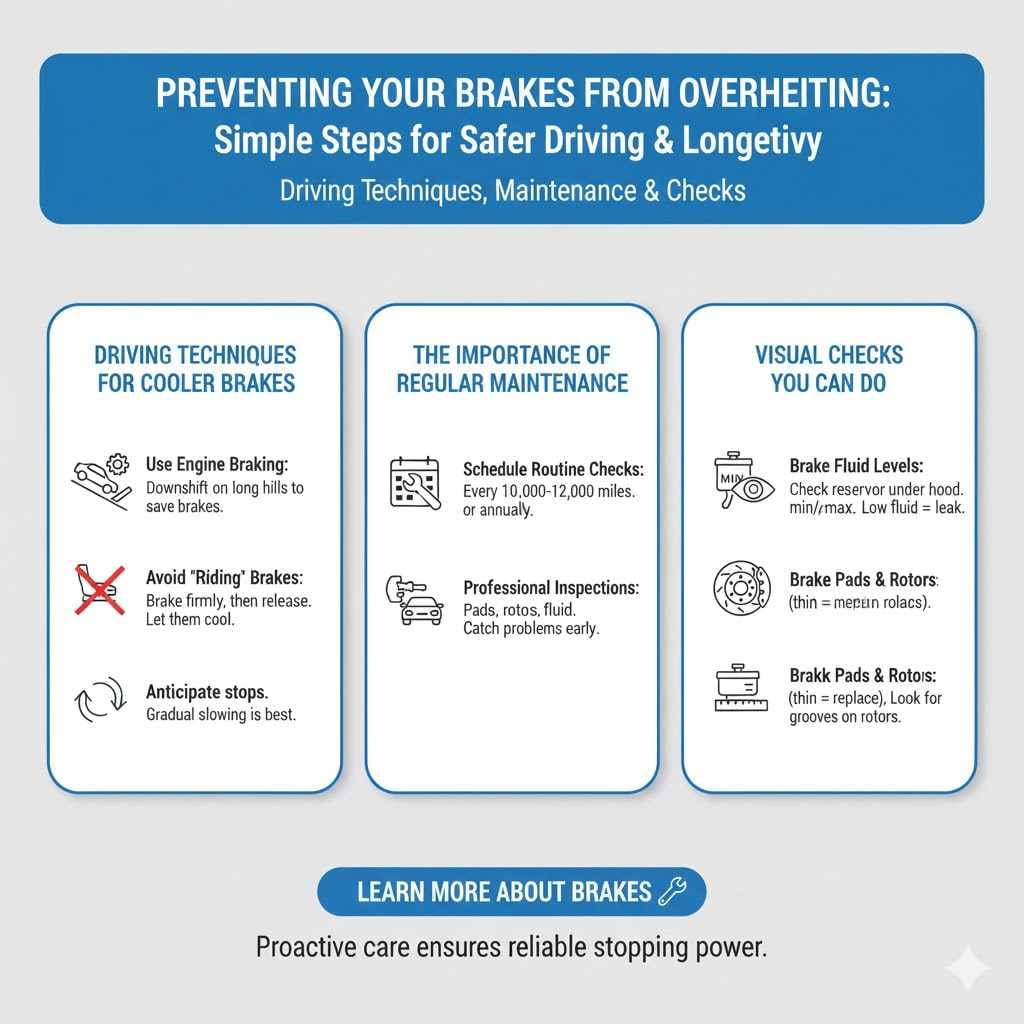
When descending long hills, use engine braking instead of relying solely on your brakes. Downshift to a lower gear. This uses the engine’s resistance to slow the car, saving your brakes.
Avoid “riding” the brakes, which means keeping your foot on the brake pedal for extended periods while driving.
Instead, brake firmly and release. Let the brakes cool down between braking events. If you notice your brakes are starting to get hot on a long downhill, find a safe place to pull over and let them cool completely before continuing your journey.
Smooth, controlled braking is always better than sudden, prolonged braking.
The Importance of Regular Maintenance
Your car’s braking system needs regular check-ups. Most manufacturers recommend brake inspections at least once a year, or every 10,000-12,000 miles. During these inspections, a mechanic will check the thickness of your brake pads, the condition of your rotors, and the level and quality of your brake fluid.
Catching wear or potential problems early can prevent minor issues from becoming major, expensive repairs. For example, replacing worn brake pads before they damage the rotors can save you money. A mechanic can also identify issues like a sticking caliper or a leaking brake line before they lead to a dangerous situation like overheating.
Checking Brake Fluid Levels
Brake fluid is a critical component of your braking system. It’s a hydraulic fluid that transmits the force from your brake pedal to the brake calipers or wheel cylinders. The brake fluid reservoir is usually located under the hood, near the brake master cylinder.
Check your owner’s manual for the specific location. The fluid level should be between the “min” and “max” marks on the reservoir. If the level is low, it could indicate a leak in the system or that your brake pads are worn down significantly (as the caliper pistons extend further to compensate for pad wear, which uses more fluid in the reservoir).
Low brake fluid is a serious issue that needs immediate attention.
Inspecting Brake Pads and Rotors
Brake pads are the friction material that presses against the rotors. They wear down over time with use. Most brake pads have a small metal tab that makes a squealing noise when the pad material is worn down to a critical level.
Rotors are the metal discs that the pads clamp onto. They can become grooved, warped, or worn thin.
Visually inspecting them involves looking through the spokes of your wheels (if possible) to see the thickness of the pad material and the surface of the rotor. A mechanic can use specialized tools for a more accurate measurement. If the pads are thin or the rotors are heavily grooved or scored, they will need to be replaced.
Frequently Asked Questions
Question: What should I do if I smell burning from my car’s brakes?
Answer: If you smell burning from your brakes, pull over safely as soon as possible and let them cool down for at least 30 minutes. Avoid touching brake parts. If the smell persists or you notice smoke, have your car towed to a mechanic.
Question: Can I drive if my brake pedal feels spongy?
Answer: No, a spongy brake pedal is a sign of serious brake system issues, likely due to overheated brake fluid or air in the lines. It means your brakes are not working effectively and could fail. Do not drive the car; have it towed to a repair shop.
Question: How often should I have my brakes inspected?
Answer: It’s recommended to have your brakes inspected at least once a year or every 10,000-12,000 miles. Your mechanic may recommend more frequent checks depending on your driving habits and conditions.
Question: What causes brakes to overheat when going downhill?
Answer: Going downhill for extended periods requires constant braking to control speed. This continuous friction generates excessive heat that the brakes may not be able to dissipate fast enough, leading to overheating. Using lower gears (engine braking) helps reduce reliance on the brakes.
Question: Will my car’s warranty cover brake repairs due to overheating?
Answer: Brake wear and damage from normal use or driving habits are usually not covered under standard vehicle warranties. However, if the overheating is due to a manufacturing defect in a brake component, it might be covered. It’s best to check your warranty policy and consult your dealer.
Conclusion
Understanding What to Do When Car Brakes Get Hot is about staying safe. If your brakes overheat, pull over and let them cool. If the problem happens often or feels serious, get them checked by a mechanic.
Regular brake checks and smart driving habits help keep your brakes working well.