
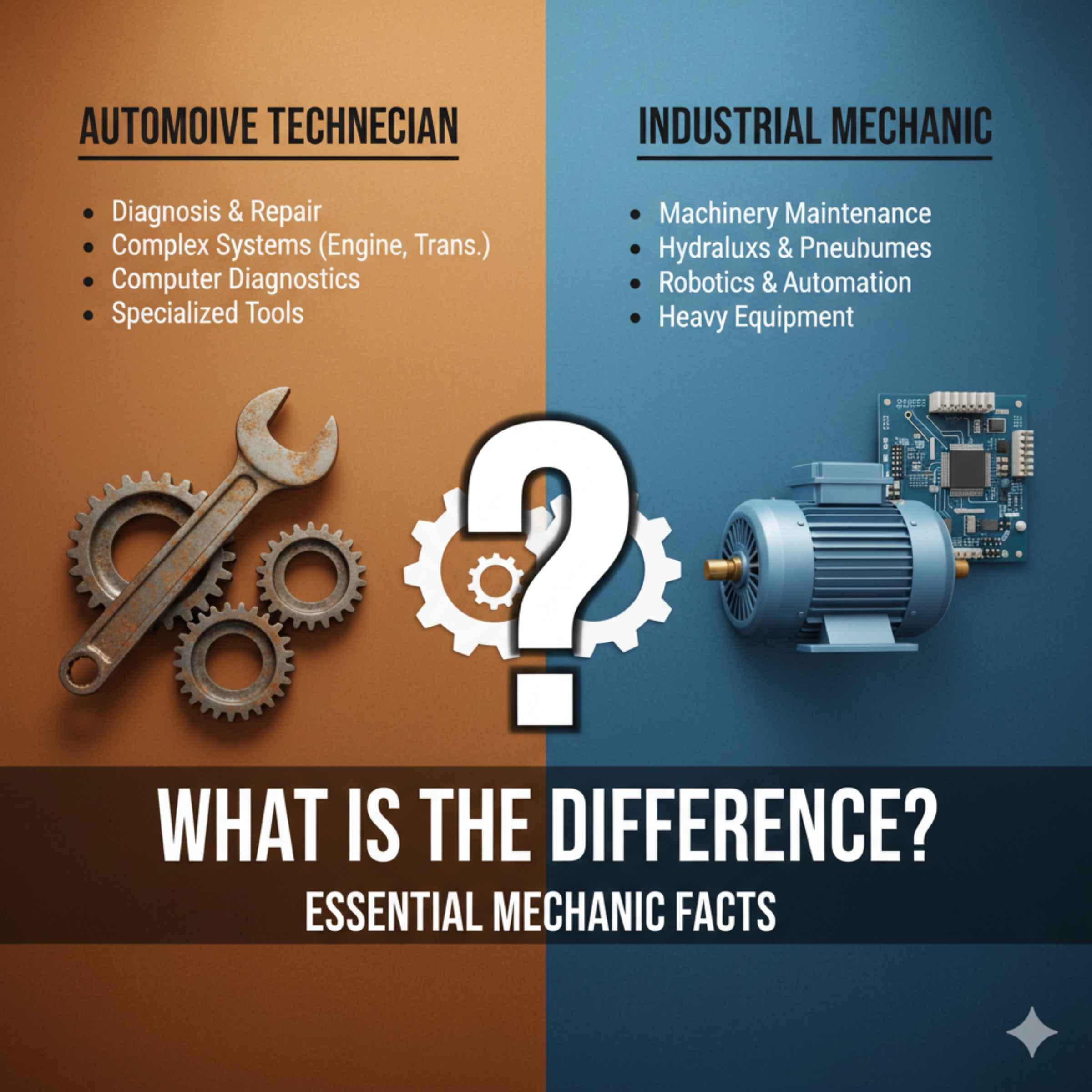
The main difference between a general mechanic and an auto electrician is specialization: a mechanic handles overall mechanical systems (engine, brakes, suspension), while an auto electrician focuses strictly on the vehicle’s complex electrical systems, wiring, charging, and computer diagnostics.
Welcome! Ever wondered who you should call when your car acts up—the general mechanic or maybe someone with a fancy title like an auto electrician? It is totally normal to feel confused. Car repairs often use lots of technical words that make simple issues seem huge. But don’t worry! I’m here to clear up the confusion. We will break down exactly what each professional does.
Understanding these roles means you save time and money by getting the right expert the first time. This guide will give you the plain-English facts you need to feel confident. Let’s dive into the essential mechanics you can understand!
What Is The Difference: Essential Mechanic Facts Explained Simply
When your car makes a funny noise or refuses to start, knowing who to call is the first hurdle. Think of your car like a team. Some people look after the body and muscles (the mechanical parts), and others look after the brain and nerves (the electric parts). While modern mechanics often do both, specialized roles still exist and knowing the difference is key for tricky problems.
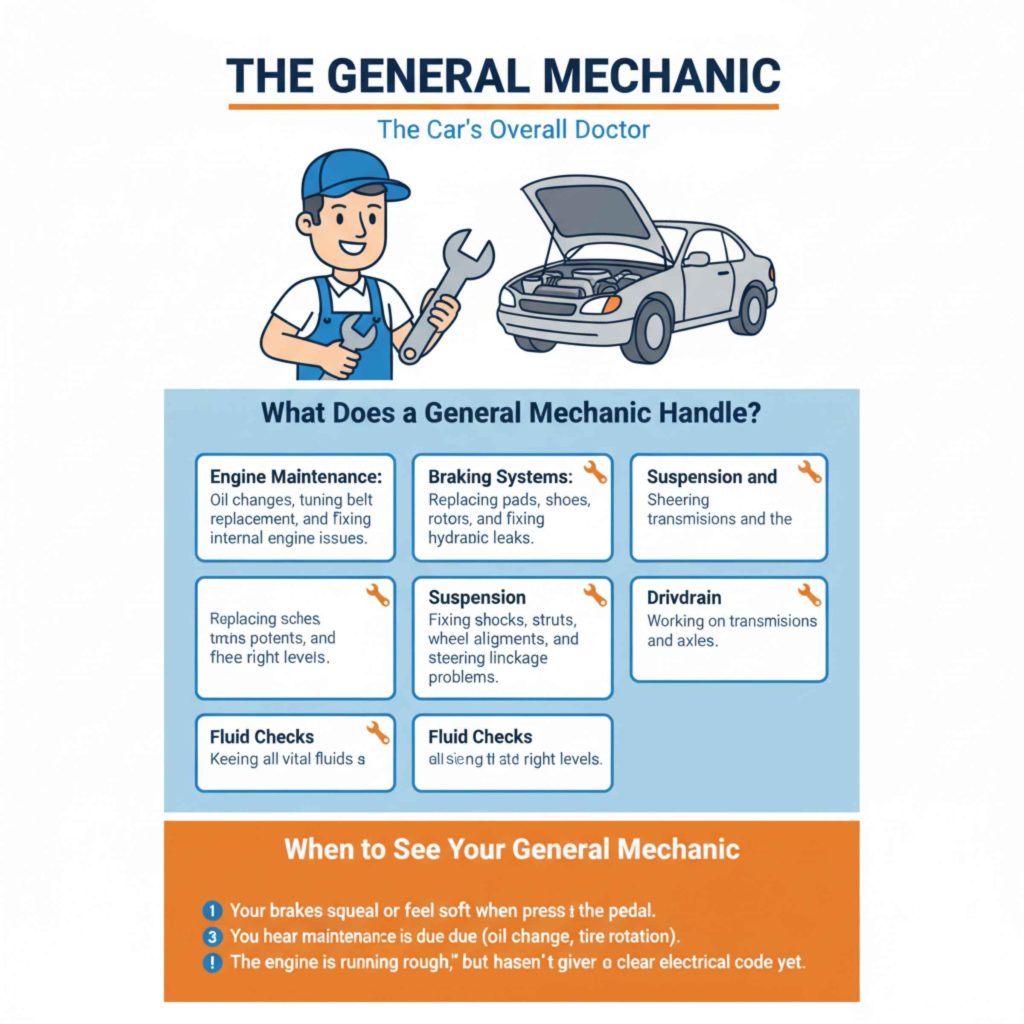
The General Mechanic: The Car’s Overall Doctor
A general mechanic, often called an automotive technician, is your go-to person for the vast majority of vehicle maintenance and repair needs. They are trained to diagnose and fix problems across nearly every major system in your car.
What Does a General Mechanic Handle?
These professionals deal with the components that allow your car to physically move, stop, and keep running smoothly. Think of them as the system integrators.
- Engine Maintenance: Oil changes, tuning, timing belt replacement, and fixing internal engine issues (when not overly specialized).
- Braking Systems: Replacing pads, shoes, rotors, and fixing hydraulic leaks.
- Suspension and Steering: Fixing shocks, struts, wheel alignments, and steering linkage problems.
- Drivetrain: Working on transmissions (though complex transmission repairs often go to specialists) and axles.
- Fluid Checks: Keeping all vital fluids (coolant, transmission fluid, brake fluid) at the right levels.
When to See Your General Mechanic
If you notice things changing in how your car drives, handles, or brakes, start here. These are common, feelable issues:
- Your brakes squeal or feel soft when you press the pedal.
- You hear clunking noises over bumps (suspension wear).
- Routine maintenance is due (oil change, tire rotation).
- The engine is running rough, but the “Check Engine Light” hasn’t given a clear electrical code yet.
The Auto Electrician: The Car’s Electrical Specialist
An auto electrician (or sometimes called an auto-electrician or electrical diagnostics specialist) is focused solely on the network of wires, sensors, computers, and power sources that manage everything digital and electronic in your vehicle. In modern cars, this is a huge job!
Modern vehicles rely heavily on Electrical Control Units (ECUs) and complex wiring harnesses. When the car’s “nervous system” fails, you need someone who speaks fluent electricity. They use specialized meters and diagnostic scanners to trace voltage drops, resistance issues, and computer communication errors.
What Does an Auto Electrician Fix?
If it uses a battery or needs a computer signal to function, it’s in their wheelhouse:
- Starting and Charging: Diagnosing battery failures, alternator issues, and starter motor problems that aren’t simple component swaps.
- Lighting Systems: Complex wiring faults in headlights, taillights, or interior lighting.
- Vehicle Computer Systems: Troubleshooting communication errors between sensors and the ECU (the main computer).
- Accessory Failures: Power windows, central locking, air conditioning controls, and infotainment systems when generalized diagnostics fail.
- Advanced Sensor Diagnostics: Testing ABS sensors, oxygen sensors, and other electronic feedback devices.
When to See the Auto Electrician
These problems usually present as strange, intermittent, or purely electronic failures:
- The battery keeps dying even after a new replacement.
- Warning lights flash on the dash that don’t correspond to a mechanical issue (like a specific sensor failure).
- Intermittent issues, such as a window only working sometimes, or the radio cutting out randomly.
- Trouble with complex aftermarket installations or alarms.
Key Comparison: Mechanic vs. Electrician
To make this crystal clear, let’s look at a side-by-side comparison. This table breaks down where these two experts focus their expertise. Notice how the mechanic handles bulk physical components, while the electrician deals with precision signals and power flow.
| System Area | General Mechanic Focus | Auto Electrician Focus |
|---|---|---|
| Power Source | Replaces battery or alternator visually. | Tests battery load capacity and alternator output voltage precisely; traces parasitic draws. |
| Engine Operation | Replaces spark plugs, filters, belts. | Diagnoses sensor failures (like a bad Crank Position Sensor signal) affecting timing. |
| Brakes | Replaces pads, checks fluid levels, checks calipers. | Diagnoses ABS module faults or complex communication errors in electronic stability control. |
| Diagnostics | Reads simple OBD-II codes; physical inspection. | Deep-dive diagnostics; tracing complex wiring shorts and software/module communication. |
Understanding the Overlap: Why Modern Cars Blur the Lines
Here is the crucial point for today’s drivers: the line between mechanical and electrical is constantly shrinking. A modern car is essentially a computer on wheels. For instance, the engine itself—a mechanical concept—is now controlled by the Engine Control Unit (ECU), which is purely electrical.
Because of this integration, most highly skilled general mechanics today are also skilled in basic electrical troubleshooting. They need to be! Most good shops invest in diagnostic tools capable of reading the standard On-Board Diagnostics (OBD-II) codes required by the EPA for emissions control and basic fault finding. You can learn more about vehicle emission standards and diagnostics from the U.S. Environmental Protection Agency (EPA).
However, when a problem is intermittent, involves complex modules, or requires specialized wiring diagrams that span dozens of feet through the car’s body, the auto electrician’s specialized knowledge of schematics and low-voltage electricity becomes necessary.
The Shift: From Mechanical to Mechatronics
Modern automotive repair is often called “Mechatronics”—the blend of mechanical, electronic, and computer engineering. This means:
- Mechanic Level: Usually handles common, physical failures easily identified by error codes (like routine maintenance or a clearly failed physical part).
- Electrician Level: Usually handles deep-level, complex failures, low-voltage issues, or repairs that require tracing complex, multi-layered wiring harnesses deep within the dashboard or firewall.
Beginner Tools: Can I Tell the Difference Myself?
As a beginner, you want to save money by identifying the problem before you even step into a shop. While you can’t perform professional diagnostics, you can often figure out if your issue leans mechanical or electrical based on what you observe.
Simple Checks to Gauge the Problem Type
Before calling anyone, try these simple steps. Your observations can guide your call:
- The Lights Test: Do the headlights work dimly or not at all? If the dashboard lights are flickering when you try to start the car, that usually points strongly toward a battery or charging (electrical) issue.
- The Sound Test: When you turn the key, do you hear a fast clicking sound? That’s almost always a low battery (electrical) or a struggling starter solenoid (mechanical/electrical overlap). If you hear a loud clunk followed by nothing, the starter motor itself might be seized (mechanical failure).
- The Smell Test: Do you smell something burning, like hot plastic or ozone? This is a massive red flag for an electrical short, and you should stop driving immediately.
- The Feel Test: Does the car pull to one side when you brake or steer? This is almost always purely mechanical (alignment, suspension, sticking calipers).
When a Mechanic Needs to Call an Electrician (And Vice Versa)
Sometimes, the initial diagnosis points to one area but the root cause is in the other. This is where communication between the different specialties becomes important, though a good general shop should handle most of these hand-offs internally.
The Cross-Over Scenarios
Here are common examples where the required fix crosses disciplines:
- Bad Sensor Readings: A mechanic might replace a fuel pump (mechanical), but if the ECU isn’t getting the proper signal to turn the pump on, an electrician must check the fuel pump relay and wiring harness.
- Engine Cranks But Won’t Start: A mechanic checks the fuel and compression, but if the timing light shows no spark, the electrician is needed to trace if the ignition module or crank sensor is sending a bad signal.
- Air Conditioning Failure: The mechanic can check the refrigerant levels, but if the compressor clutch doesn’t engage, an electrician must check the clutch fuse, relay, and the control module signals telling the clutch to lock up.
Focusing on Safety: Why Getting the Right Expert Matters
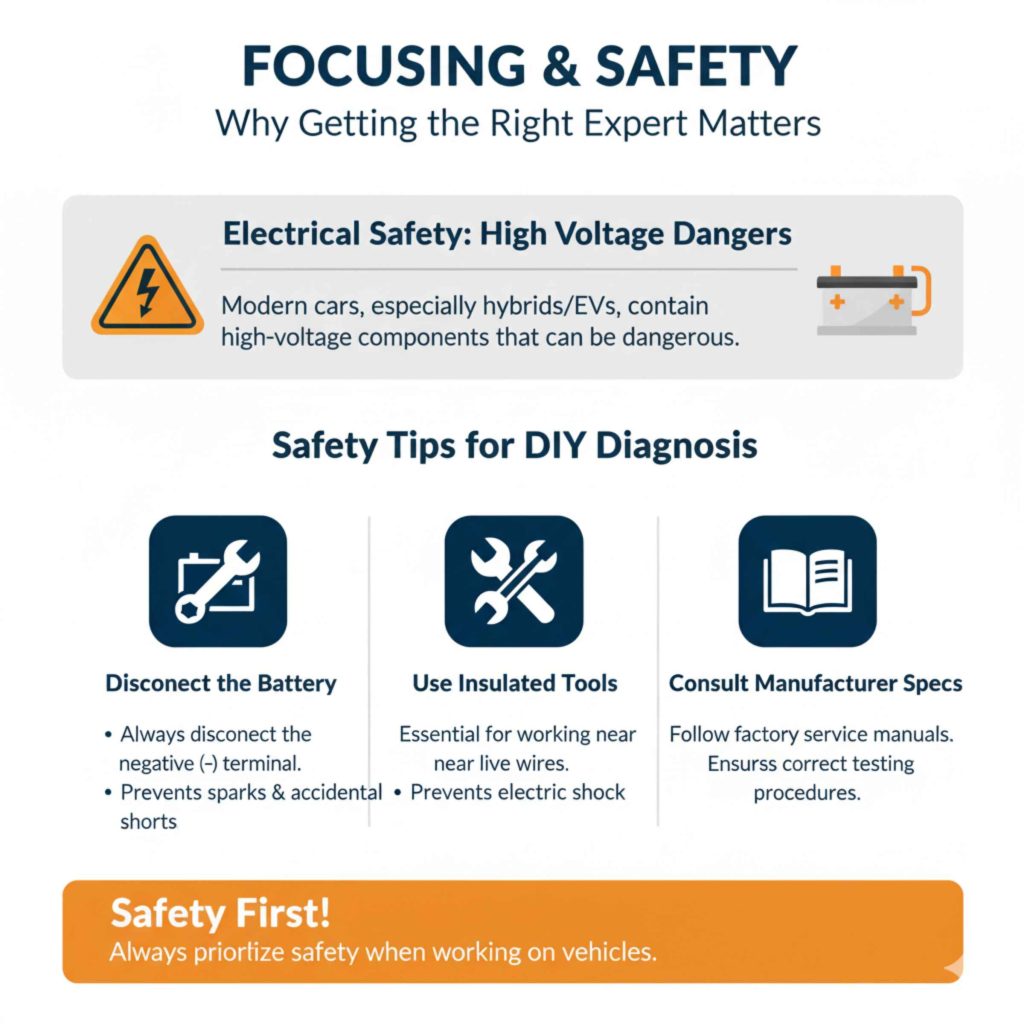
Whether you are working on your own vehicle or hiring a professional, safety cannot be overlooked. Electrical systems, especially on newer cars with high-voltage hybrid or electric components, can be dangerous if handled incorrectly.
Safety Tips for DIY Diagnosis
Never skip these safety steps, especially when working near the engine bay:
- Disconnect the Battery: Always disconnect the negative battery terminal before attempting to check or work near wiring harnesses or electronic modules. This prevents sparks and accidental shorts.
- Use Insulated Tools: If you intend to work near live wires (which I generally advise beginners against), always use tools rated for electrical work.
- Consult Manufacturer Specs: For complicated wiring, consulting a factory service manual ensures you are testing voltage or resistance at the correct points. You can sometimes find basic maintenance manuals through reputable online automotive resources or local libraries dedicated to technical reference materials.
FAQ: Quick Answers for New Drivers
Q1: If my Check Engine Light is on, should I see a general mechanic or an auto electrician first?
A: Start with a general mechanic who has an OBD-II scanner. Most mechanics can read the codes and diagnose the common causes. If the code points to a mysterious communication fault or intermittent sensor failure, they will refer you to an electrician.
Q2: Which professional is generally more expensive?
A: Auto electricians often charge slightly more per hour for diagnostic time. This is because their diagnostic equipment is specialized, and tracing complex electrical issues requires very focused, high-skill time that is harder to bill in simple increments than replacing a brake pad.
Q3: Which fix lasts longer: a mechanical fix or an electrical fix?
A: This depends entirely on the quality of the repair. A properly replaced mechanical part (like a new water pump) will last until its natural lifespan ends. A properly repaired electrical fault (like fixing a corroded ground wire) will also last, but minor electrical gremlins can sometimes recur if the root cause—like water ingress—isn’t fully fixed.
Q4: If my car won’t start, how do I know if it’s the battery (electrician’s job) or the starter motor (mechanic’s job)?
A: If the dashboard lights are bright, but you hear a single, loud click when turning the key, it’s likely the starter. If the lights dim significantly or you hear rapid clicking, it’s likely a low battery charge, which falls under the starting/charging system area, often handled by the mechanic initially, but deeper testing done by the electrician.
Q5: Do I need to take my car to a specialist for A/C repair?
A: Basic A/C recharge can often be handled by a general mechanic who is certified for refrigerant handling. However, if the compressor won’t engage—meaning the electrical signal isn’t reaching it—that requires the diagnostic skills of an auto electrician.
Conclusion: Building Confidence in Car Care
Navigating auto repair doesn’t have to feel like a guessing game. By understanding the core roles, you now know that the general mechanic tackles the bulk of visible, physical wear and tear, while the auto electrician dives deep into the invisible network of wires and computers that power your vehicle.
For everyday oil changes, brake jobs, and suspension squeaks, your trusted general mechanic is your best friend. But when your car starts behaving strangely—flickering lights, mysterious warning icons, or power accessories failing randomly—remember that the specialized knowledge of an auto electrician is designed specifically to solve those complex electrical puzzles. Use this knowledge to communicate clearly with your service provider. When you describe the symptoms accurately, you help them reach the correct diagnosis faster, saving you valuable time and keeping more money in your pocket. Keep learning, stay safe, and enjoy the confidence of being a well-informed car owner!