
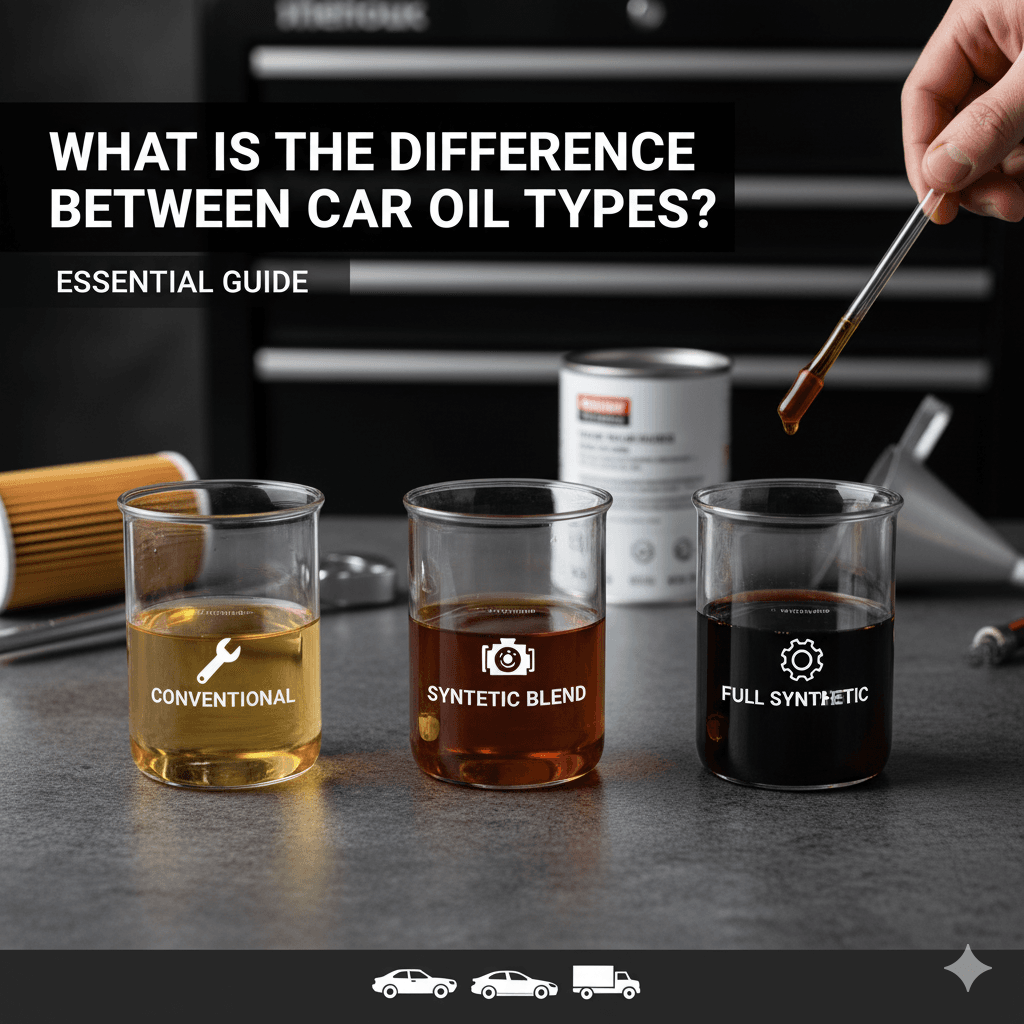
The main difference between car oil types lies in their base—conventional is refined crude, synthetic is chemically engineered, and blends are a mix. Choosing the right one depends on your car’s age, how you drive, and your budget, all detailed below.
If you’ve ever stood in the auto parts aisle staring at rows of colorful oil bottles, you know the confusion is real. You see names like “Full Synthetic,” “High Mileage,” and “Conventional,” and suddenly simple oil changes feel like rocket science. It’s frustrating when you just want to keep your car happy, but the choices are overwhelming! Don’t worry; picking the right engine oil is easier than you think once you know what these labels actually mean. I’m Dustin Hall, and I’m here to break down the core differences between these oil types simply and clearly. We will demystify the jargon so you can confidently choose the best protection for your engine on your next trip to the store.
Why Understanding Car Oil Types Matters So Much
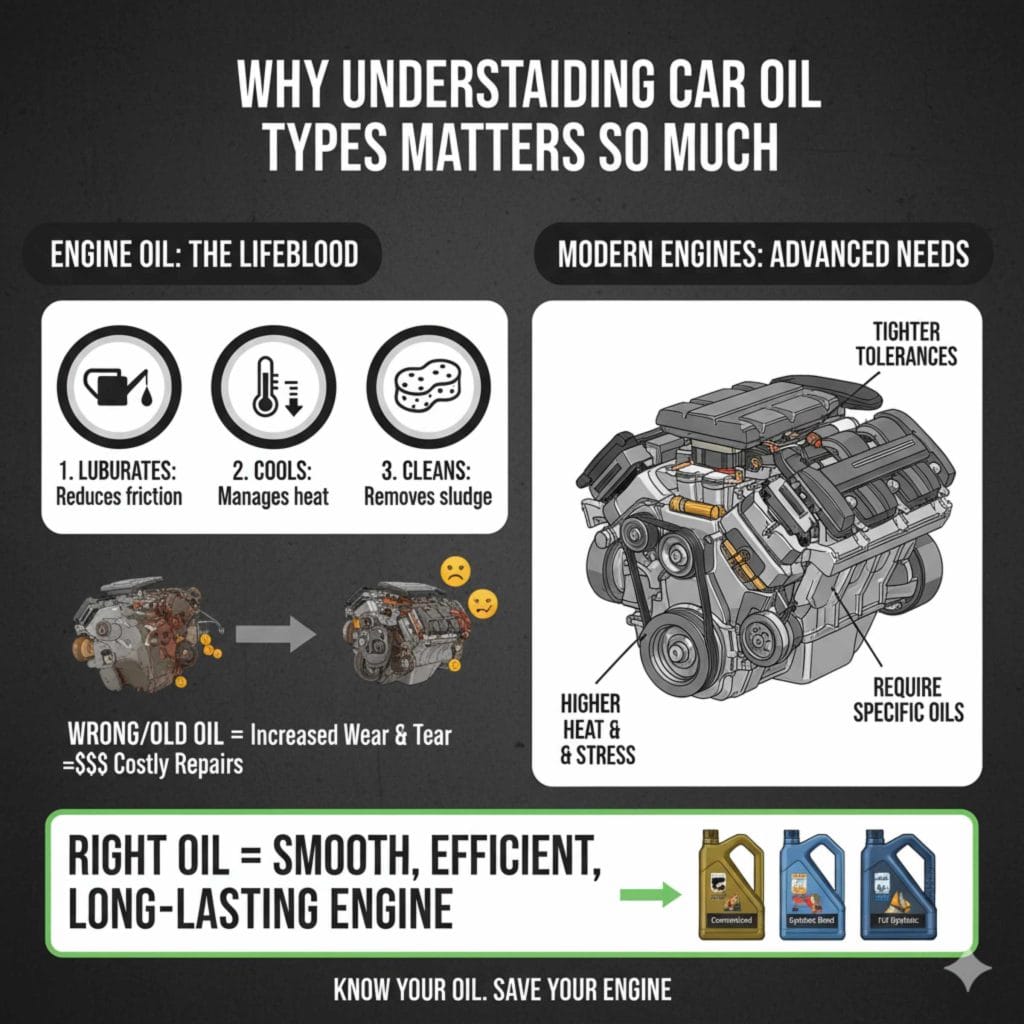
Think of your engine oil as the lifeblood of your car. It does three critical jobs: it lubricates moving parts to stop friction, it cools down hot spots, and it cleans up sludge and debris. When you use the wrong type of oil—or old, degraded oil—you increase wear and tear, which costs you money down the road. The right oil ensures your engine runs smoothly, efficiently, and lasts for many safe miles.
Modern cars are built with tighter tolerances—meaning the gaps between moving metal parts are tiny. These advanced engines often require specific oils to handle the higher heat and stress they endure. Ignoring these requirements can lead to poor performance or, worse, costly engine failure. Let’s dive into the three main categories that make up the world of motor oil.
The Three Main Types of Motor Oil Explained
When we talk about the difference between car oil types, we are primarily discussing what the base stock of the oil is made from. This foundation determines how well the oil resists heat, cold, and breakdown. Here are the big three you will encounter:
1. Conventional (or Mineral) Oil
Conventional oil is the oldest and most basic type. It comes directly from crude oil that has been refined in a refinery. Think of it as the original motor oil formula.
Pros and Cons of Conventional Oil
- Pros: It is the most affordable option. It works perfectly well for older vehicles with simpler engine designs that don’t run extremely hot or under heavy strain.
- Cons: It breaks down faster under high heat. It transfers heat less effectively than newer oils. It generally requires more frequent oil changes (usually every 3,000 to 5,000 miles). It’s not ideal for turbocharged engines or extremely cold weather starts.
2. Full Synthetic Oil
Synthetic oil is a chemically engineered lubricant. Instead of just being refined, its molecules are built in a lab to be extremely uniform. This uniformity gives synthetic oil superior resistance to breakdown, flow better in extreme temperatures, and offer better protection overall.
Pros and Cons of Full Synthetic Oil
- Pros: Offers superior engine protection, especially in tough conditions (very hot or very cold). It lasts much longer, easily going 7,500 to 15,000 miles between changes. It dramatically reduces friction, which can improve gas mileage slightly.
- Cons: It is significantly more expensive than conventional oil. For very old cars not designed for it, sometimes seals can develop minor leaks (though modern synthetic oils are made to be compatible with older seals too).
3. Synthetic Blend Oil
As the name suggests, a synthetic blend is a mixture of conventional mineral oil and synthetic base stocks. Manufacturers add synthetic ingredients to the conventional base to boost its performance at a lower cost than going full synthetic.
Pros and Cons of Synthetic Blends
- Pros: A great compromise. It offers better protection against engine heat and wear than conventional oil but costs less than full synthetic. It’s a good choice for moderate drivers or slightly older vehicles needing an upgrade.
- Cons: Protection is not as comprehensive as full synthetic. Change intervals are typically between those of conventional and full synthetic (e.g., 5,000 to 7,500 miles).
Understanding Viscosity Ratings: The Numbers on the Bottle
The other crucial piece of information on an oil bottle, besides the type, is the viscosity rating. This rating tells you how thick or thin the oil is, both when cold and when hot. You often see something like 5W-30 or 10W-40.
This is an essential concept governed by the Society of Automotive Engineers (SAE). Let’s break down what those numbers mean practically.
Decoding the Multigrade Oil Label (e.g., 5W-30)
- The “W” Number (e.g., 5W): The ‘W’ stands for Winter. This number indicates the oil’s viscosity (thickness) when the engine is cold—like when you start your car on a freezing morning. A lower number (like 0W or 5W) means the oil flows faster when cold, which is crucial for quickly lubricating engine parts during startup.
- The Second Number (e.g., 30): This number indicates the oil’s viscosity when the engine is at its normal operating temperature (usually around 212°F). A higher number means the oil stays thicker at high temperatures, providing a stronger protective film under heavy load.
The key takeaway: Your car manufacturer specifies the exact W-rating needed for your engine’s design and climate. Always check your owner’s manual first!
To learn more about how different climates affect motor oil performance, you can review general guidelines provided by organizations that study vehicle performance standards, such as those referenced by the U.S. Department of Energy regarding fuel economy and lubricants.
Specialty Oil Formulations (Mileage and High Temperature)
Beyond the three base types, you will see specialty oils designed for specific vehicle situations. These are often synthetic blends or full synthetics that have added additive packages to suit particular needs.
High Mileage Oil
High mileage oil is specifically designed for vehicles over 75,000 miles. As engines age, seals and gaskets can stiffen and shrink, leading to minor oil leaks. High mileage oils contain special conditioners that help revitalize these old seals, slowing down leaks and reducing oil consumption.
- Who needs it? Cars with over 75,000 miles that may be showing early signs of oil seepage or burning.
- Key additive: Seal conditioners and extra detergents.
Racing/Performance Oil
These oils are formulated for extreme stress, high RPMs, and very high operating temperatures often found in race or track vehicles. They prioritize shear stability (maintaining thickness under extreme mechanical stress) over long drain intervals.
- Who needs it? Specialized vehicles driven hard. It’s usually overkill and often too expensive for daily drivers.
- Key additive: High levels of anti-wear agents and shear stabilizers.
For the average driver, sticking to Conventional, Synthetic Blend, or Full Synthetic based on the owner’s manual recommendation is usually the best bet. Specialty oils are for specialty needs.
Comparison Table: Base Oil Type at a Glance
This table summarizes the primary differences in performance and cost you can expect between the three main base oils.
| Oil Type | Base Composition | Cost (Relative) | Max Protection Level |
|---|---|---|---|
| Conventional | Refined crude oil | Lowest ($) | Basic |
| Synthetic Blend | Mix of Conventional and Synthetic | Medium ($$) | Good |
| Full Synthetic | Chemically engineered base stock | Highest ($$$) | Excellent |
How to Choose the RIGHT Oil for Your Car (Step-by-Step)
Making the final choice doesn’t have to be guesswork. Follow these simple steps, and you will always pick the correct, safe oil for your vehicle right off the shelf.
Step 1: Consult Your Owner’s Manual (The Golden Rule)
This is the most important step. Your car manufacturer spent millions designing your engine and testing exactly what lubrication it needs to run perfectly. Look in the maintenance section of your manual. It will specify two things:
- Required Viscosity Grade: The specific numbers (e.g., 5W-20, 0W-40).
- Required API Service Category: This is a letter designation (e.g., API SN PLUS, or the newer SP). This confirms the oil meets current industry standards for engine protection.
Step 2: Determine Your Driving Conditions
Ask yourself honestly how you use your car:
- Light/Normal Driving: Mostly highway commutes where the engine stays at a consistent temperature. Conventional or Synthetic Blend might suffice if the manual allows.
- Severe/Hard Driving: Frequent short trips (where the engine never fully warms up), towing heavy loads, driving in sustained extremely hot or cold climates, or stop-and-go city traffic. Full Synthetic is almost always recommended here for maximum protection.
Step 3: Consider the Age of Your Vehicle
Engine age matters, but not always in the way people think:
- New Cars (under 3 years): Stick strictly to what the manual says. Usually, this means a high-quality synthetic or blend to maximize warranty coverage and fuel economy.
- Older Cars (over 10 years): If the car has always used conventional oil, switching to conventional or a blend is fine. If you want extra protection or suspect minor burning, a High Mileage Synthetic Blend is a smart upgrade.
- Important Note: You can usually switch down from synthetic to conventional oil if you really need to save money (as long as the manual allows it), but switching up from conventional to synthetic is almost always safe and beneficial.
Step 4: Finalizing the Purchase
Once you know the viscosity (e.g., 5W-30) and the API service rating (e.g., SP), you simply choose the type (Conventional, Blend, or Full Synthetic) based on your budget and driving severity (Step 2). If you drive hard, spend the extra money on synthetic; your engine will thank you!
Oil Additives: The Hidden Ingredients Making the Difference
The base oil (conventional, synthetic) is only half the story. The performance difference often comes down to the additives—chemicals mixed in to enhance specific properties. These additives are what truly separate a basic oil from a top-tier synthetic.
Here are a few major additives you should know about:
- Detergents: These keep engine parts clean by suspending soot and sludge so they can be carried away when the oil is drained.
- Dispersants: These stop sludge particles from clumping together and sticking to hot engine surfaces.
- Anti-Wear Agents (ZDDP): These create a sacrificial layer on metal surfaces to prevent friction and wear, especially crucial during startup before full oil pressure is achieved.
- Viscosity Index Improvers (VIIs): These are essential in multigrade oils (like 5W-30). They prevent the oil from thinning out too much when hot, allowing the oil to maintain its protective thickness.
- Anti-Foam Agents: These prevent air bubbles from forming in the oil, which can reduce lubrication efficiency.
Synthetic oils use higher-quality, more stable additive packages than most conventional oils, which is one reason they perform better under stress and last longer.
The Reality of Oil Change Intervals Based on Type
One area where drivers often get confused is how often they need to change their oil. While the old standard was 3,000 miles, modern oils and engines can go much further, provided you use the right type.
| Oil Type | Typical Change Interval (Miles) | Best For |
|---|---|---|
| Conventional | 3,000 – 5,000 miles | Budget maintenance, older engines |
| Synthetic Blend | 5,000 – 7,500 miles | Moderate drivers, slightly improved protection |
| Full Synthetic | 7,500 – 15,000 miles (Check Manual!) | Severe conditions, modern engines, long-term wear reduction |
A crucial reminder: Even if your synthetic oil can last 10,000 miles, if your owner’s manual recommends a 7,500-mile interval, always defer to the manufacturer. Furthermore, if you drive in what the manual classifies as “severe service” (like dusty conditions or heavy stop-and-go driving), you should always use the shorter interval, regardless of the oil type.
Debunking Common Oil Myths for Beginners
There are many old wives’ tales floating around the garage. Let’s clear up what is fact and what is fiction regarding choosing oil types.
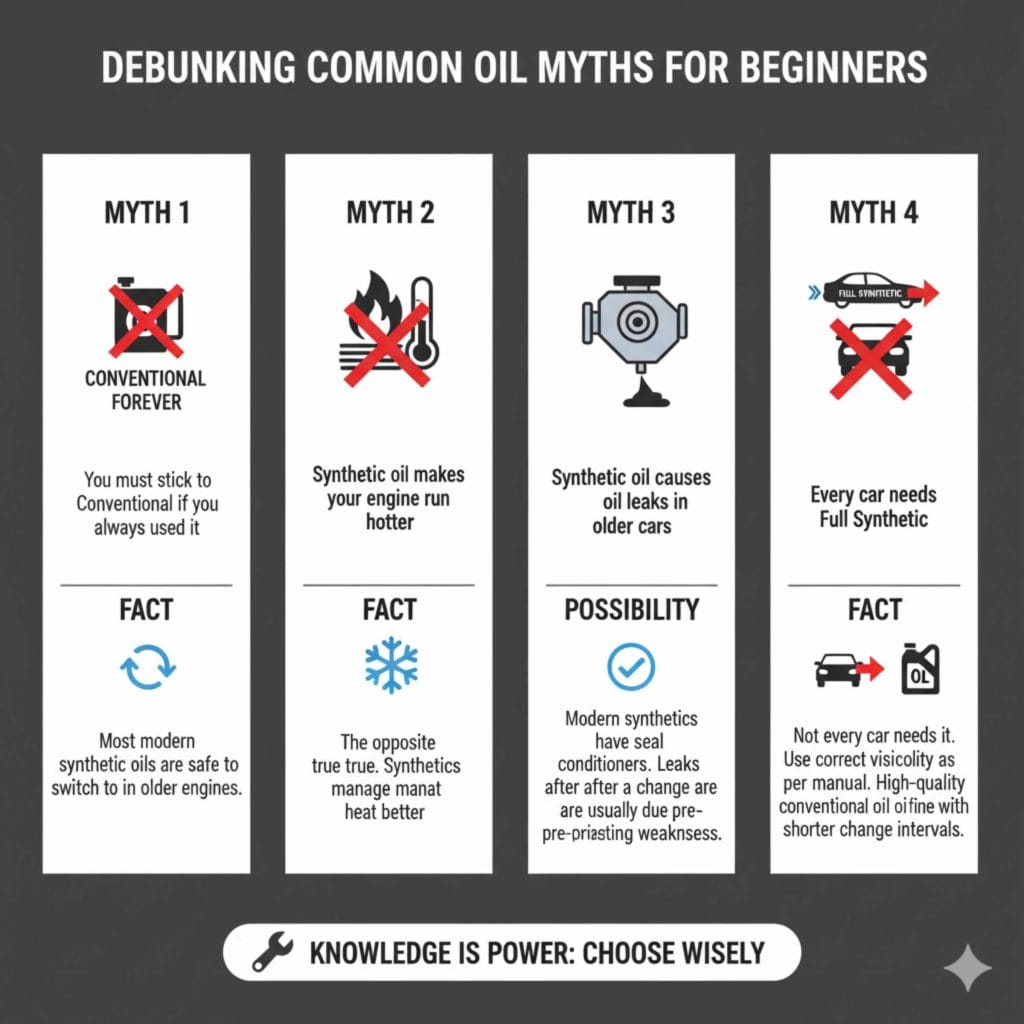
Myth 1: You must stick to Conventional if you always used it.
Fact: This is generally untrue. Most modern synthetic oils are perfectly safe to switch to in older engines. Switching from synthetic to conventional is often discouraged because the synthetic detergents might clean out deposits that the conventional oil can’t handle, potentially causing sludge buildup later.
Myth 2: Synthetic oil makes your engine run hotter.
Fact: The opposite is true. Synthetic oils manage heat much better than conventional oils. They resist thermal breakdown, meaning they stay effective at higher temperatures and help transfer heat away from critical components throughout the engine.
Myth 3: Synthetic oil causes oil leaks in older cars.
Possibility: This myth arose because early synthetic oils sometimes had seal swelling properties different from conventional oils. However, nearly all modern synthetic oils contain seal conditioners, making them safe for older cars. Leaks that appear after an oil change in an old car are usually due to the dirt and sludge holding a pre-existing leak together finally washing away, causing the seal to fail where it was already weak.
Myth 4: Every car needs Full Synthetic.
Fact: Not every car needs it, but many benefit from it. If your manual specifies a conventional or a blend, using the correct viscosity (like 5W-20) of a high-quality conventional oil will protect your engine just fine, especially if you adhere to the recommended shorter change intervals.
FAQ: Your Beginner Car Oil Questions Answered
Q1: Can I mix conventional oil and synthetic oil?
A: Yes, you absolutely can mix them in a pinch. If you are desperately low on oil and have to top up using a different type, it won’t cause immediate damage. However, mixing them results in a lubricant with performance somewhere between the two types—effectively creating a weaker blend. Do this only to get you to the next service station.
Q2: What happens if I use the wrong oil viscosity in my car?
A: Using the wrong viscosity can cause serious engine problems over time. If the oil is too thick, it may not flow quickly enough during cold starts, leading to increased wear. If it’s too thin, it may not provide enough protection at high temperatures, increasing friction and heat. Always follow the viscosity grade listed in your owner’s manual to avoid long-term damage.
Q3: Is more expensive engine oil always better?
A: Not necessarily. More expensive oils—like full synthetics—offer better performance and longer life, but that doesn’t mean they’re required for every car. If your manufacturer recommends conventional or synthetic blend oil, using full synthetic may provide extra protection but won’t always deliver noticeable benefits. The “best” oil is the one that meets your car’s specifications.
Q4: Can I switch back and forth between synthetic and conventional oil?
A: Yes, you can switch between oil types as long as the viscosity and API rating match your manufacturer’s recommendations. However, frequently switching may reduce consistency in engine protection. If you move to synthetic oil, it’s often best to stay with it for future oil changes to maintain optimal cleanliness and protection.
Q5: Does engine oil affect fuel economy?
A: Yes, it can. Lower-viscosity oils (such as 0W-20 or 5W-20) reduce internal engine friction, which can slightly improve fuel efficiency. Full synthetic oils also maintain their viscosity better over time, helping your engine run more efficiently—especially in cold starts and stop-and-go traffic.
Conclusion: Choosing the Right Car Oil Doesn’t Have to Be Complicated
Understanding the difference between car oil types ultimately comes down to knowing what your engine needs, how you drive, and how much protection you want to provide. Conventional oil offers basic, affordable lubrication for older or lightly driven vehicles. Synthetic blends strike a practical middle ground, delivering improved durability at a reasonable cost. Full synthetic oil stands at the top, offering the highest level of protection, cleaner performance, and longer service intervals—especially important for modern engines and demanding driving conditions.
Beyond oil type, viscosity and manufacturer specifications matter just as much. The numbers on the bottle aren’t marketing—they’re engineering requirements. Following your owner’s manual for viscosity grade and API rating ensures proper lubrication, fuel efficiency, and long-term engine health. Ignoring these details, even with a high-quality oil, can lead to unnecessary wear or costly repairs.
The truth is, there’s no universally “best” motor oil—only the best oil for your specific vehicle. If you drive in extreme temperatures, make frequent short trips, or want maximum engine longevity, investing in full synthetic oil is often worth the extra cost. If your driving is light and your car is older, a quality conventional or synthetic blend can still provide reliable protection when changed on time.
In the end, regular oil changes using the correct oil type, viscosity, and service rating matter far more than brand names or marketing claims. Make informed choices, follow your maintenance schedule, and your engine will reward you with smoother performance, better efficiency, and many more miles on the road!