
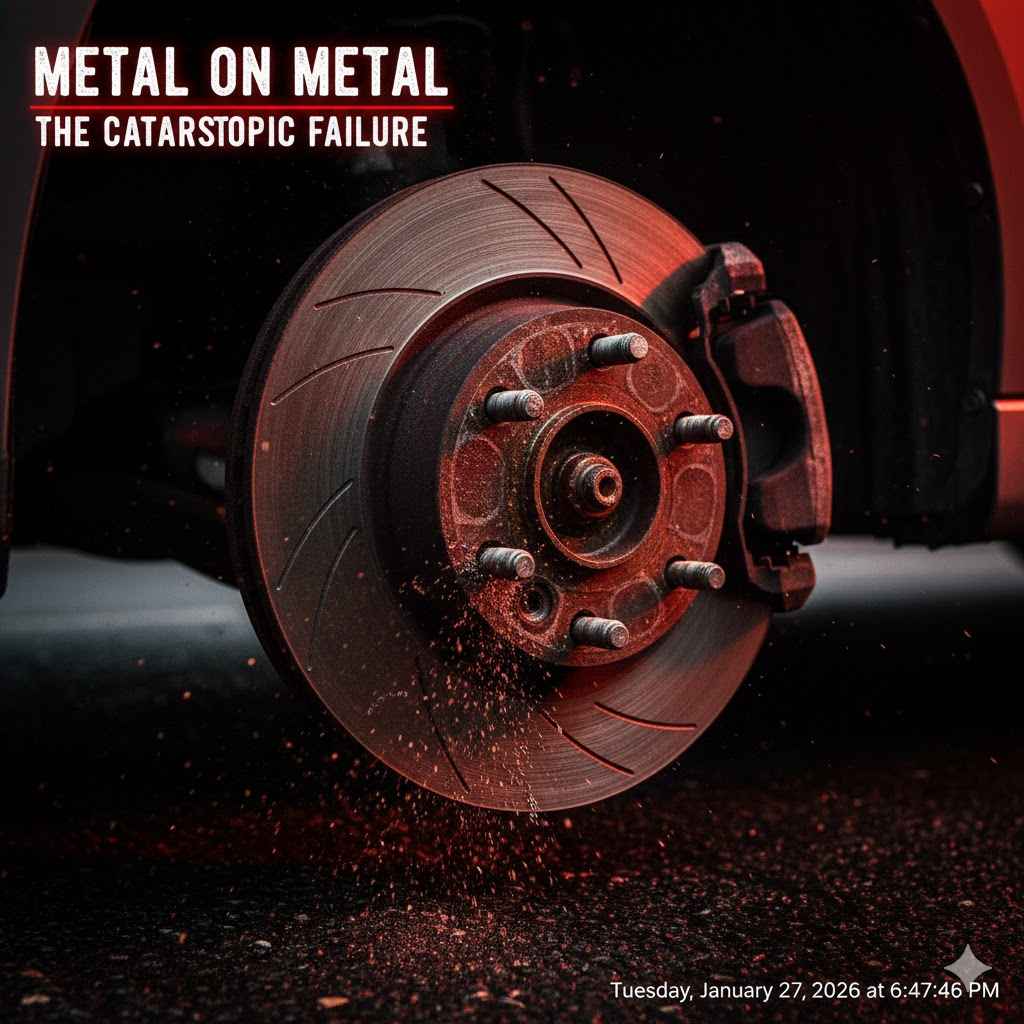
When car brakes are metal on metal, the brake pad’s friction material is completely gone, exposing the steel backing plate. This plate grinds directly against the metal brake rotor, causing severe damage, loud grinding noises, and dangerously reduced stopping power. You must stop driving immediately and get your brakes repaired to avoid brake failure.
Have you ever heard a horrible, gut-wrenching grinding sound when you press the brake pedal? It’s a noise that makes you cringe. It’s loud, sharp, and it feels completely wrong. That, my friend, is likely the sound of your brakes being “metal on metal.” It’s one of the most serious warning signs your car can give you.
Many drivers feel a sense of panic when this happens, and for good reason. It’s a clear signal that something is seriously wrong with your car’s most important safety system. But don’t worry. Understanding what’s happening is the first step to fixing it and getting back on the road safely. In this guide, we’ll walk through exactly what metal-on-metal brakes mean, the damage they cause, and what you need to do next.
First, What Does “Metal on Metal” Brakes Actually Mean?
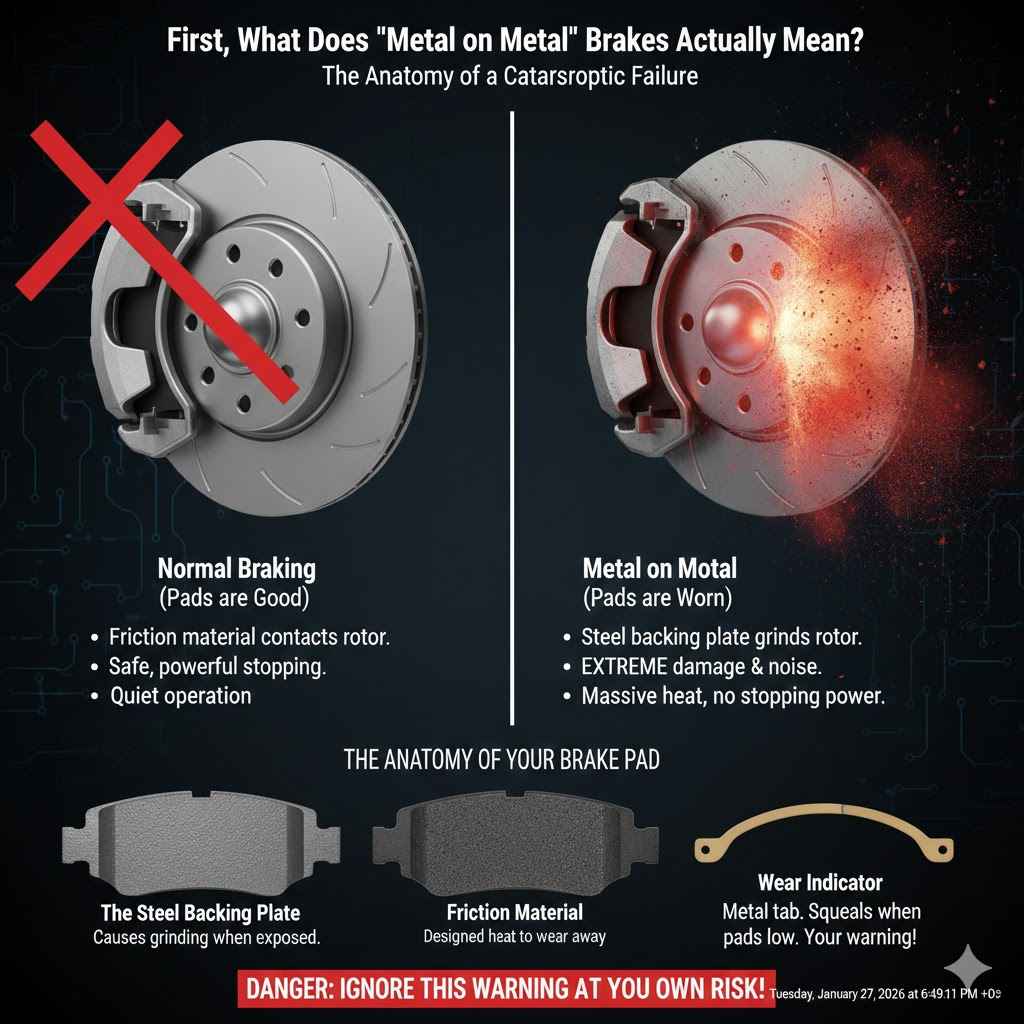
To understand the problem, let’s quickly look at how your brakes work. It’s simpler than you might think! When you push the brake pedal, a part called a brake caliper squeezes two brake pads against a spinning metal disc called a brake rotor. The friction between the pads and the rotor is what slows your car down.
Your brake pads are designed with a thick layer of special friction material bonded to a solid steel backing plate. This friction material is what does the hard work of stopping your car. Over time, with every stop you make, a tiny bit of this material wears away. This is completely normal.
The “metal on metal” situation happens when that friction material has completely worn off. Now, instead of the soft friction material pressing against the rotor, the hard steel backing plate of the brake pad is grinding directly against the steel brake rotor. It’s literally steel grinding against steel—a recipe for disaster.
The Anatomy of Your Brake Pad
Think of a brake pad like the eraser on a pencil. It’s designed to be used up over time. A typical brake pad has a few simple layers:
- The Steel Backing Plate: This is the solid foundation of the brake pad. It provides strength and is what the brake caliper pushes against. This is the “metal” that causes the grinding when exposed.
- Friction Material: This is the thick, workhorse layer of the pad. It’s made from a mix of materials designed to create friction and withstand high heat. This is the part that is supposed to touch the rotor.
- Wear Indicator: Most brake pads have a small metal tab called a wear indicator. When the pad material gets low, this tab scrapes against the rotor and makes a high-pitched squealing sound. This is your early warning to get your brakes checked!
The Top 5 Warning Signs You Can’t Ignore
When your brakes are grinding metal on metal, your car will give you very clear signs. Ignoring them is not an option if you value your safety and your wallet. Here are the key symptoms to watch for.
- The Horrible Grinding Sound: This is the most obvious sign. It’s a loud, low-pitched grinding or growling noise that happens when you apply the brakes. It sounds much harsher and more alarming than the light squealing of a wear indicator.
- Reduced Stopping Power: Steel grinding on steel doesn’t create the right kind of friction to stop your car effectively. You’ll notice that it takes longer to stop, and you may have to press the brake pedal much harder than usual. Your car may not feel responsive or safe when you try to slow down.
- Vibrations in the Steering Wheel or Brake Pedal: When the metal backing plate gouges the smooth surface of the brake rotor, it creates an uneven surface. This can cause a pulsing or vibrating feeling in your brake pedal or steering wheel when you apply the brakes. It can feel like the car is shuddering as it stops.
- A Burning Smell: The intense friction and heat created by metal-on-metal contact can cause a strong, acrid burning smell. This is the smell of overheating metal and can sometimes be accompanied by visible smoke from the wheels after hard braking.
- Visible Damage to the Rotors: If you look through your wheels at the brake rotors (the shiny metal discs), you might see visible damage. A healthy rotor is smooth and shiny. A rotor damaged by metal-on-metal grinding will have deep grooves, scoring, and possibly a bluish tint from extreme heat.
The Damage Report: What Gets Wrecked When Brakes Grind?
Allowing your brakes to grind is like letting a small, easily fixable problem turn into a major, expensive repair. The damage isn’t limited to just the brake pads; it creates a domino effect that harms other critical components.
Brake Rotors: The Primary Victim
The brake rotors are the first and most significant casualty. The steel backing plate of the worn-out pad acts like a cutting tool, carving deep grooves and scratches into the once-smooth surface of the rotor. This damage is almost always too severe to be repaired. While slightly worn rotors can sometimes be “resurfaced” (machined to be smooth again), a deeply scored rotor must be replaced. This means a simple brake pad replacement has now turned into a more expensive brake pad and rotor replacement.
Brake Calipers: The Next in Line
The brake caliper is the hydraulic clamp that squeezes the pads against the rotor. The extreme heat generated by metal-on-metal friction can travel from the pads and rotor directly into the caliper. This intense heat can boil the brake fluid, damage the rubber seals inside the caliper piston, and even cause the caliper itself to seize. A damaged caliper won’t apply or release pressure correctly, leading to even more braking problems and another expensive part to replace.
The Domino Effect: Wheels, Tires, and Beyond
The destructive heat doesn’t always stop at the caliper. In extreme cases, this heat can transfer to the wheel hub and damage the wheel bearings. A failed wheel bearing can cause a loud humming noise while driving and can eventually lead to the wheel wobbling or even detaching from the car. While less common, it highlights how a single neglected issue can cascade into a much larger safety crisis.
Is It Safe to Drive with Metal-on-Metal Brakes?
Let me be perfectly clear: NO. It is extremely dangerous to drive a car with metal-on-metal brakes. You should not drive it to the store, to a friend’s house, or even “gently” to the repair shop. Your car’s braking system is its most important safety feature, and when it’s in this condition, it is severely compromised.
The risk of brake failure is incredibly high. The intense heat can cause your brake fluid to boil, a condition known as “brake fade,” where the pedal suddenly goes soft and stopping power is lost almost completely. The damaged components can also break or seize at any moment. According to the National Highway Traffic Safety Administration (NHTSA), functioning brakes are critical to avoiding crashes. Driving with compromised brakes puts you, your passengers, and everyone else on the road in grave danger.
Fixing the Damage: What’s Involved in the Repair?
The good news is that the damage is fixable. However, the repair will be more involved than a routine brake job. A mechanic will need to perform a thorough inspection to see how far the damage has spread.
Standard Parts to Replace
At a minimum, you will need to replace the parts on both sides of the axle (both front wheels or both rear wheels) to ensure even braking.
- Brake Pads: The old, worn-out pads are the source of the problem and will be discarded.
- Brake Rotors: As we discussed, the rotors are almost certainly ruined and will need to be replaced.
Potential Additional Repairs
Depending on the severity of the damage, the repair might also include:
- Brake Calipers: If the caliper was damaged by heat or the piston was overextended, it will need to be replaced.
- Brake Fluid Flush: If the brake fluid boiled or became contaminated, the entire system will need to be flushed and replaced with fresh fluid.
- Brake Hoses: The intense heat can also damage the flexible rubber brake hoses, causing them to become brittle or weak. A mechanic will inspect these and recommend replacement if necessary.
The Big Question: How Much Will This Cost Me?
This is often the first question on everyone’s mind. The cost of a metal-on-metal brake repair is significantly higher than a routine brake service because you are no longer just replacing worn pads. You are now replacing parts that have been actively damaged. The final cost depends on your vehicle’s make and model, local labor rates, and the extent of the damage.
Here is a general cost comparison to show how ignoring the early warning signs can impact your wallet.
| Repair Stage & Description | Typical Parts Replaced | Estimated Professional Repair Cost (per axle) |
|---|---|---|
| Early Warning (Squealing) | Brake Pads Only | $250 – $400 |
| Metal-on-Metal (Grinding) | Brake Pads & Rotors | $500 – $800 |
| Severe Damage (Grinding Ignored) | Pads, Rotors & Calipers | $900 – $1,500+ |
Note: These are rough estimates. Costs can vary widely based on your car and location.
How to Avoid This Problem in the First Place: Simple Brake Checks
The best way to deal with a metal-on-metal brake problem is to never have one. Proactive maintenance is simple, saves you a ton of money, and keeps you safe. Here’s what you can do.
Listen for the Squeal
That high-pitched squeal from the brake wear indicator is your best friend. It’s your car’s way of saying, “Hey! I’ll need new brake pads soon!” When you hear it, don’t wait. Schedule a brake inspection.
Regular Visual Inspections
You don’t need to be a mechanic to do a quick visual check. Once a month, look through the spokes of your wheels at the brake pads. You should be able to see the thickness of the friction material. If it looks very thin (less than 1/4 inch, or the thickness of two pennies), it’s time for an inspection.
Pay Attention to Your Brake Pedal
Does your brake pedal feel soft, spongy, or does it sink closer to the floor than it used to? These are signs that there could be air or moisture in your brake lines or that your pads are extremely worn. Any change in the feel of your brake pedal warrants an immediate check-up.
Here is a simple checklist to follow:
| Check | Frequency | What to Look/Listen For |
|---|---|---|
| Listen for Squealing | Every time you drive | A high-pitched, metallic squeak when braking. |
| Visual Pad Check | Once a month | Pad material should be thicker than 1/4 inch. |
| Feel the Pedal | Every time you drive | Any sponginess, softness, or excessive travel. |
| Check Brake Fluid | Every 3 months | Ensure fluid is between the MIN and MAX lines. |
Step-by-Step: What to Do Right Now* If You Hear Grinding
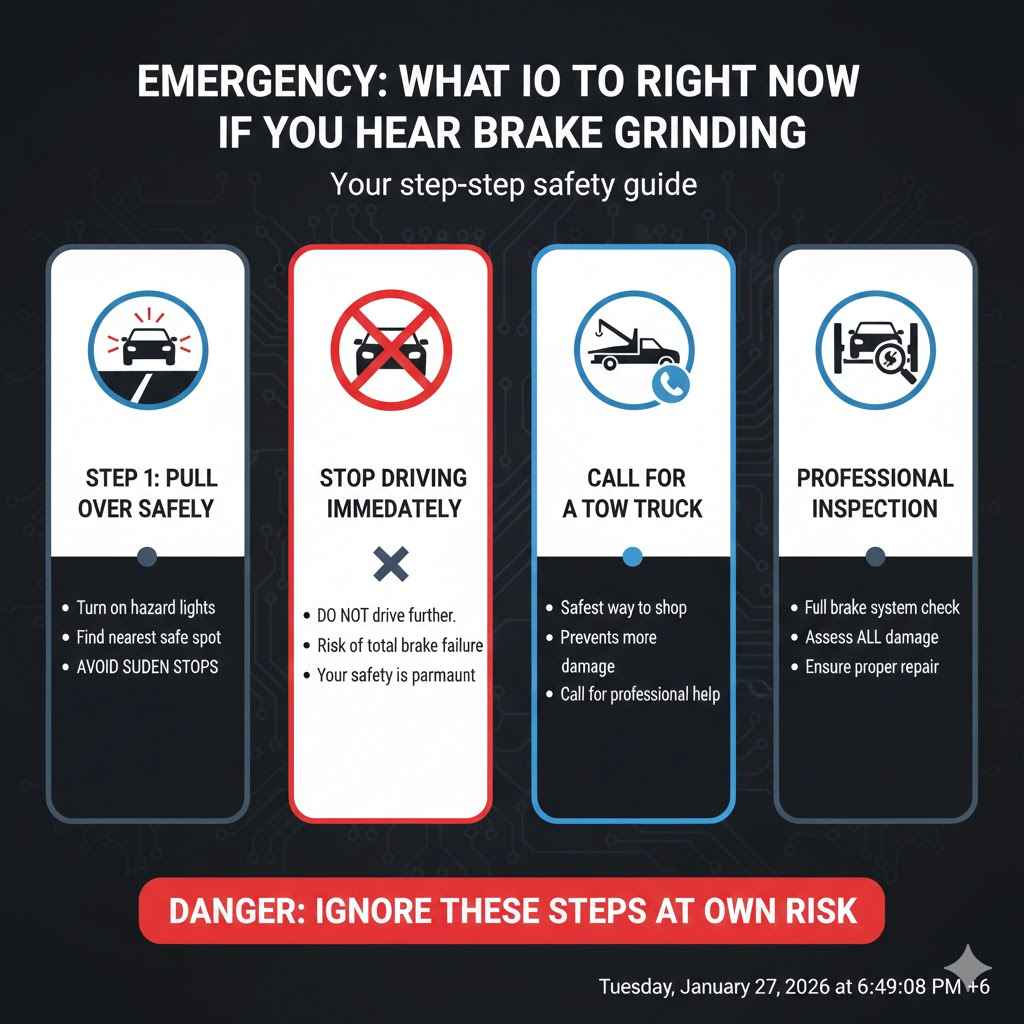
If you are driving and suddenly hear that awful grinding sound, do not panic. Follow these steps immediately.
- Pull Over Safely: Turn on your hazard lights. Find the nearest safe place to pull completely off the road, like a parking lot or a quiet side street. Avoid sudden, hard braking if possible.
- Stop Driving the Car: Do not try to “limp home” or drive to the mechanic. The risk of complete brake failure is too high. Your safety is worth more than a tow bill.
- Call for a Tow Truck: This is the safest way to get your vehicle to a trusted repair shop without causing further damage or risking an accident.
- Get a Professional Inspection: Have a qualified mechanic perform a full brake inspection to assess the total damage before authorizing any repairs.
Frequently Asked Questions (FAQ)
How long can I drive with metal-on-metal brakes?
You shouldn’t drive at all. Every stop causes more damage and increases your risk of total brake failure. The moment you confirm the noise is metal-on-metal grinding, the car should be parked until it can be towed for repair.
What does metal-on-metal brake grinding sound like?
It’s a deep, harsh, metallic grinding or growling sound. It is much louder and more abrasive than the light, high-pitched squeal of a brake wear indicator. Many people compare it to the sound of a snowplow scraping pavement.
Can metal-on-metal brakes cause a fire?
While rare, it is possible. The extreme friction generates immense heat, which can ignite leaking brake fluid, grease, or other flammable materials around the wheel assembly. You might also see smoke coming from the wheels.
Will my brakes completely fail if they are metal-on-metal?
Yes, they can. The condition can lead to catastrophic failure in several ways, including boiled brake fluid (brake fade), a seized caliper, or a fractured rotor. The risk of failure increases with every mile driven.
Can only one brake be metal-on-metal?
Yes, it’s very common. Brake pads don’t always wear perfectly evenly. One pad might wear out faster due to a sticking caliper pin or other mechanical issue. This is why you might hear the grinding from only one wheel.
Is replacing brake pads and rotors a good DIY job for a beginner?
For a beginner, it can be a challenging but achievable job with the right tools and a good tutorial. However, brakes are a critical safety system. If you have any doubt about your ability to do the job correctly and safely, it is always best to leave it to a professional mechanic.
Your Car’s Health is in Your Hands
Hearing your brakes grind metal on metal can be a scary experience, but now you know exactly what it means and why it’s so important to act fast. It’s not a sign that you have a bad car; it’s simply a very loud, very clear message that your brake pads have done their job and are completely worn out.
By listening for the early warning signs, like squealing, you can catch wear and tear before it becomes a major problem. A simple brake pad replacement is far easier and cheaper than rebuilding half your braking system. Think of your car’s warning sounds not as a problem, but as helpful communication.
Taking care of your car’s brakes is one of the most important things you can do as a driver. It keeps you, your family, and others on the road safe. Now that you’re armed with this knowledge, you can make confident, smart decisions about your car’s maintenance and drive with peace of mind.