
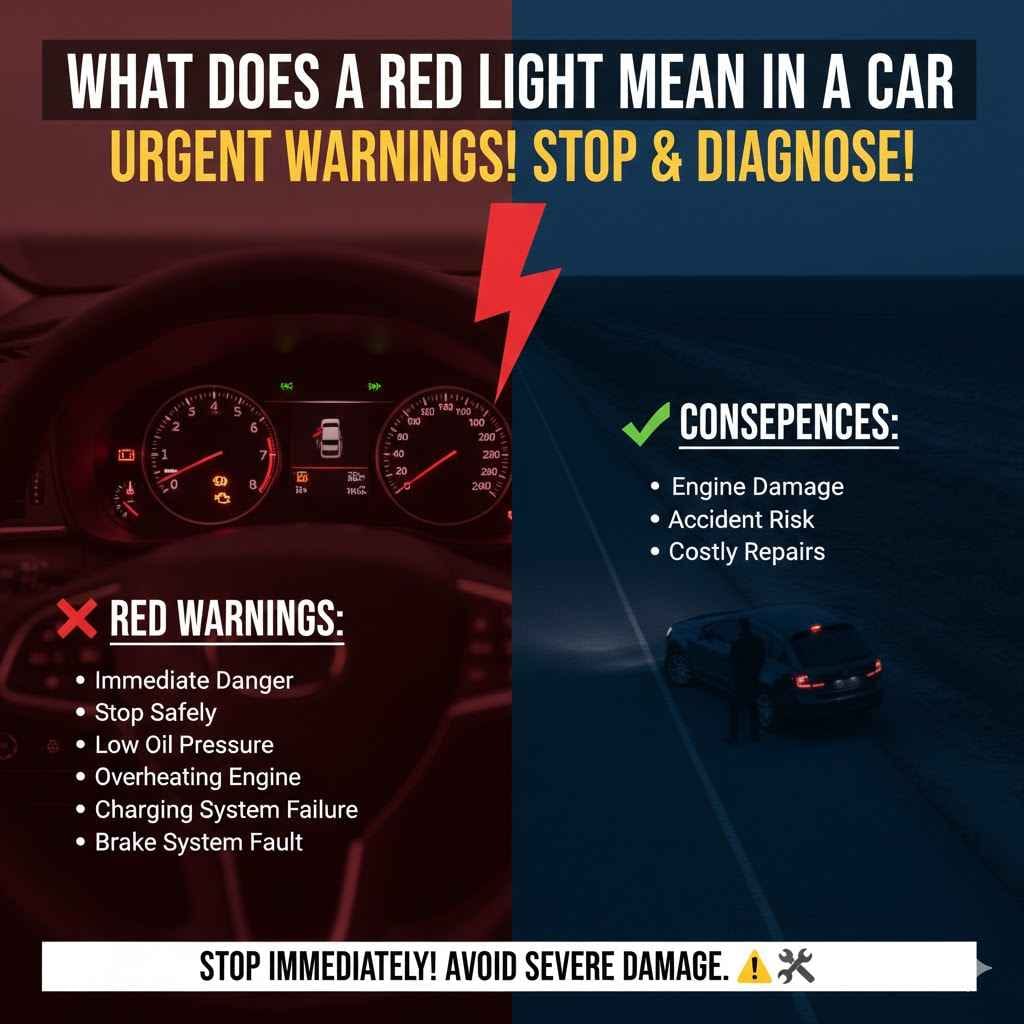
Learning to drive can feel a bit overwhelming at first, and one of the most common questions beginners have is What Does a Red Light Mean in a Car? It’s a simple question, but the answer is super important for staying safe on the road. Don’t worry if it seems confusing; we’re here to break it all down for you. We’ll go through everything step-by-step so you can feel confident.
Keep reading to find out exactly what that red light means and what you should do.
Understanding Your Car’s Warning Lights
Dashboard warning lights are your car’s way of talking to you. They alert you to problems, big or small. Knowing what these lights mean is key to keeping your car running well and staying safe.
When a light comes on, it’s like a little signal that something might need your attention. Ignoring them can lead to bigger issues down the road, so it’s best to understand what each one is telling you.
The Importance of Dashboard Indicators
Dashboard indicators are small icons that light up on your car’s dashboard. They use different colors, most commonly red, yellow, or amber, and green or blue. Red lights are usually the most urgent.
They signal a serious problem that needs immediate attention. Yellow or amber lights often indicate a less urgent issue, perhaps something that needs checking soon. Green or blue lights typically show that a system is active, like your headlights or turn signals.
When a warning light illuminates, your car’s computer has detected a malfunction or an unusual condition. This could be related to your engine, brakes, battery, or other critical systems. The purpose of these lights is to prevent damage to your vehicle and to alert you to potential safety hazards.
For example, a red brake light means your braking system might not be working correctly, which is a major safety concern.
The variety of lights can seem like a lot at first. Each symbol is designed to represent a specific part of your car. Your car’s owner’s manual is the best resource for understanding all the lights specific to your vehicle model.
It will detail what each symbol means and what steps you should take if a light turns on.
Common Dashboard Light Symbols and Their Meanings
Many dashboard lights are standardized across different car manufacturers, making them somewhat universal. However, it’s always wise to consult your owner’s manual for the exact meaning of each symbol on your specific car. Some of the most common lights you’ll encounter include the oil pressure warning light, the battery warning light, the check engine light, the tire pressure monitoring system light, and the brake system warning light.
The oil pressure warning light typically looks like an oil can with a drip. If this lights up, it means your engine is not getting enough oil, which can cause severe damage very quickly. The battery warning light often resembles a battery with positive and negative terminals.
This light indicates a problem with your car’s charging system, meaning the battery may not be charging properly.
The check engine light is one of the most frequently seen and often most confusing. It can look like an engine outline. This light can signify a wide range of issues, from a loose gas cap to a more serious engine problem.
The tire pressure monitoring system (TPMS) light usually looks like a flat tire with an exclamation mark inside. It alerts you when one or more tires are significantly underinflated.
- Oil Pressure Warning Light: This red light indicates critically low oil pressure. Driving with this light on can cause irreversible engine damage. It’s crucial to stop driving as soon as it’s safe and check your oil level. If the level is fine, there may be a problem with the oil pump or sensor.
- Battery Warning Light: This light signals an issue with the car’s electrical system, often related to the alternator not charging the battery. You might notice dimming lights or issues with electrical components. It’s important to get this checked to avoid being stranded with a dead battery.
- Check Engine Light: This is a generic warning that the car’s onboard computer has detected a problem with the engine, transmission, or emissions system. It could be as simple as a loose gas cap or as complex as a faulty oxygen sensor. It is recommended to have it diagnosed with a scan tool.
- Tire Pressure Monitoring System (TPMS) Light: This light means one or more tires have low air pressure. Proper tire pressure is vital for safety, fuel efficiency, and tire longevity. You should check your tire pressure immediately and inflate them to the recommended PSI found on the driver’s side doorjamb.
Red Lights Are Serious Alerts
When a red light illuminates on your dashboard, it’s a signal that your vehicle has a problem that requires immediate attention. These are not lights to ignore or put off. Red lights often indicate safety-critical issues that could affect your ability to drive safely or could cause significant damage to your car if not addressed promptly.
Think of red lights as an emergency alert from your car. They are designed to get your attention immediately. Unlike yellow or amber lights, which might suggest a need for future attention, red lights are a call to action.
They mean stop, assess, and take action to resolve the issue before continuing your journey.
Some of the most common red warning lights include the brake system warning light, the engine temperature warning light, and the oil pressure warning light. Each of these signifies a serious problem that can compromise your safety or the integrity of your vehicle. It is vital to understand what each of these means and how to respond to them appropriately to ensure your safety and the longevity of your car.
What Does a Red Light Mean in a Car Specifically
The question What Does a Red Light Mean in a Car? is a fundamental one for new drivers. When a red light appears on your dashboard, it’s generally a sign of a critical issue. The color red is universally used in warning systems to signify danger or an immediate problem that needs to be addressed without delay.
It’s your car’s way of saying, “Stop, something is seriously wrong!”
Different red lights represent different problems, but they all share the urgency. Ignoring a red light can lead to a breakdown, costly repairs, or even dangerous situations on the road. The first step is to identify which red light is on.
Your car’s owner’s manual is the ultimate guide for this. It will have diagrams of your dashboard and explain each symbol.
Common red lights include the brake warning light, which can indicate low brake fluid or a problem with the anti-lock braking system (ABS). The engine temperature warning light, often resembling a thermometer in waves, means your engine is overheating. The oil pressure warning light, shaped like an oil can, signals very low oil pressure.
All these require immediate attention.
The Brake System Warning Light
The brake system warning light is a critical red indicator. It often looks like an exclamation mark inside a circle or the letters “BRAKE” in capital letters. When this light comes on, it means there is a problem with your braking system.
This could be due to low brake fluid, a leak in the brake lines, or an issue with the anti-lock braking system (ABS).
Low brake fluid is a common cause. The brake fluid reservoir is usually located under the hood. If the fluid level is low, it could indicate a leak.
Driving with compromised brakes is extremely dangerous, as it significantly reduces your ability to stop. You should pull over safely as soon as possible and check your brake fluid level. If it is low, do not continue driving and seek professional help.
An ABS warning light is also a red light. While the regular brakes might still work, the ABS system, which helps prevent your wheels from locking up during hard braking, is not functioning. This can affect your steering and stopping control, especially in slippery conditions.
If both the brake warning light and the ABS light are on, it’s a very serious situation.
What to Do When the Brake Light Illuminates
If the brake system warning light illuminates while you are driving, it is essential to take immediate action. First, do not panic. Assess your surroundings and find a safe place to pull over.
This might be the side of the road, a parking lot, or a designated rest area.
Once you have safely stopped your vehicle, turn off the engine. Open the hood and locate the brake fluid reservoir. Check the fluid level.
If the level is significantly low, there is likely a leak in your braking system. In this case, it is not safe to continue driving. You will need to have your car towed to a qualified mechanic for inspection and repair.
If the brake fluid level appears normal, the light may be indicating an issue with the parking brake or the ABS. Some vehicles have a separate parking brake indicator light, but sometimes the main brake warning light can also signify an engaged parking brake. Ensure your parking brake is fully disengaged.
If it is disengaged and the light remains on, it is still advisable to have the vehicle inspected by a mechanic before driving further.
The Engine Temperature Warning Light
The engine temperature warning light is another crucial red indicator. It usually looks like a thermometer with wavy lines, symbolizing heat. This light signifies that your engine is overheating.
An overheating engine can lead to serious and expensive damage, including warped cylinder heads or a blown head gasket.
When this light comes on, it means the engine’s temperature has risen above its safe operating range. This can be caused by a variety of factors, such as low coolant levels, a malfunctioning thermostat, a faulty water pump, a blocked radiator, or a problem with the cooling fan. Driving an engine that is overheating can quickly turn a manageable problem into a catastrophic one.
It is vital to respond quickly and correctly when this light appears to prevent severe engine damage. The goal is to allow the engine to cool down safely and then diagnose the cause of the overheating. Continuing to drive an overheating engine will only exacerbate the problem.
Responding to Engine Overheating
If the engine temperature warning light turns red, your immediate priority is to cool down the engine. Turn off the air conditioning immediately, as this can add extra load to the engine. Then, find a safe place to pull over as soon as possible.
Turn off the engine and open the hood to allow heat to dissipate. Do not attempt to open the radiator cap while the engine is hot, as the pressurized hot coolant can spray out and cause severe burns.
Allow the engine to cool for at least 30 minutes. Once it has cooled down significantly, you can check the coolant level in the overflow reservoir. If the coolant level is low, you can add a 50/50 mixture of coolant and water.
Be aware that even if you add coolant, the underlying problem still needs to be addressed.
If the coolant level was low and you topped it off, you might be able to drive cautiously to a nearby service station. However, if the light comes back on quickly or if you cannot identify the cause, it is best to have your vehicle towed to a mechanic. Driving with an overheating engine is a risk you should not take.
The Oil Pressure Warning Light
The oil pressure warning light is one of the most serious red warning lights your car can display. It typically looks like an old-fashioned oil can with a drip coming from it. When this light illuminates, it means that the oil pressure in your engine is dangerously low.
This is a critical situation because engine oil is essential for lubricating all the moving parts of the engine.
Without adequate oil pressure, metal-on-metal contact occurs between engine components. This friction generates excessive heat and can lead to severe internal engine damage very rapidly. Prolonged driving with the oil pressure light on can result in catastrophic engine failure, requiring extremely expensive repairs or even a full engine replacement.
The causes of low oil pressure can vary. It might be due to a very low oil level in the engine, a malfunctioning oil pump, a clogged oil filter, a worn oil pump or bearing, or a leak in the oil system. Regardless of the specific cause, the result is insufficient lubrication, which is devastating to the engine.
Immediate Steps for Low Oil Pressure
If the oil pressure warning light comes on, you must stop driving your car immediately. Pull over to a safe location as soon as you possibly can. Turn off the engine right away.
The longer the engine runs with low oil pressure, the more damage it will sustain. Do not try to drive even a short distance to a mechanic; the risk is too great.
Once the engine is off, you can check the engine oil level. Locate the dipstick (usually with a bright yellow or orange handle), pull it out, wipe it clean, reinsert it fully, and then pull it out again to check the level. If the oil level is below the minimum mark, this is likely the cause of the low oil pressure.
If the oil level is low, you can add the correct type of engine oil as specified in your owner’s manual. However, even after adding oil, it is crucial to have the vehicle inspected by a qualified mechanic. A low oil level can be a symptom of an oil leak that needs to be repaired.
If the oil level is adequate, the problem is almost certainly with the oil pump or another internal engine component, requiring professional diagnosis and repair.
Other Red Warning Lights and Their Significance
While the brake, engine temperature, and oil pressure lights are among the most critical red warnings, your car might display other red lights that also demand attention. Understanding these less frequent but equally important indicators can help you react correctly and keep yourself and your vehicle safe. Each red light serves as an urgent message from your car’s systems.
These lights are designed with urgency in mind. They are not meant to be ignored or to be part of a to-do list for “someday.” They represent immediate issues that could affect your safety, the safety of others, or the immediate functionality and integrity of your vehicle. Being proactive when you see a red light is always the best approach.
Familiarizing yourself with all the potential red warning lights in your car’s manual will equip you to handle any situation that arises. It’s a small amount of effort that can prevent significant problems and ensure you are a more informed and safer driver.
The Airbag Warning Light
The airbag warning light typically looks like a person with a deployed airbag in front of them. When this red light stays on after you start your car, it indicates a problem with the vehicle’s airbag system. This means that the airbags may not deploy in the event of a collision, or they might deploy unexpectedly, which can be dangerous.
The airbag system is complex and involves various sensors, wiring, and the airbags themselves. A malfunction in any part of this system will trigger the warning light. Common causes include a faulty airbag sensor, a problem with the seatbelt pretensioners, a loose connection in the wiring harness, or an issue with the airbag control module.
While not an immediate safety hazard like a brake failure, a non-functioning airbag system significantly compromises your safety and the safety of your passengers in an accident. It is crucial to have this system checked and repaired promptly by a professional.
Why Airbag System Issues Need Prompt Attention
The primary function of airbags is to protect occupants during a collision. If the warning light is on, this critical safety feature is compromised. In a crash, the airbags might not deploy as intended, or they could deploy at the wrong time or with excessive force, potentially causing injury.
Moreover, a malfunctioning airbag system can sometimes be linked to other electrical issues in the vehicle. It’s important for a trained technician to diagnose the exact cause of the warning light. They have the specialized tools and knowledge to safely inspect and repair the airbag system without accidentally triggering the airbags or causing further damage.
Ignoring the airbag warning light is a gamble with your safety. It is highly recommended to get your vehicle inspected by a certified mechanic as soon as possible if this light remains illuminated after starting your car. Most repair shops can quickly identify the issue and ensure your airbag system is operational.
The Seatbelt Reminder Light
While often not a persistent red light, the seatbelt reminder light is a critical alert that typically flashes or stays illuminated red when the driver or a passenger has not fastened their seatbelt. The symbol usually depicts a person wearing a seatbelt.
This light is a direct reminder of a fundamental safety rule. Wearing a seatbelt is one of the most effective ways to prevent serious injury or death in a car accident. Its importance cannot be overstated, and the reminder light is a crucial safety feature designed to ensure compliance.
In most vehicles, this light is accompanied by an audible chime or beep, which continues until the seatbelt is fastened. This dual alert system is highly effective in encouraging occupants to buckle up.
The Importance of Wearing Seatbelts
Wearing a seatbelt is mandatory in most places for good reason. Statistics consistently show that seatbelts dramatically reduce the risk of death and serious injury in car crashes. They work by restraining occupants, preventing them from being thrown around inside the vehicle or ejected from it during a sudden stop or collision.
The force of impact in a car accident can be immense. Without a seatbelt, your body continues to move forward at the speed the car was traveling until it hits something hard, like the dashboard, windshield, or another passenger. Seatbelts distribute the force of the impact across the strongest parts of your body, significantly reducing the risk of severe injury.
The seatbelt reminder light is a simple but effective tool to promote this life-saving habit. Always ensure your seatbelt is securely fastened before driving, and encourage all passengers to do the same. It’s a small action that makes a world of difference.
Charging System Warning Light
Although sometimes displayed in amber, the charging system warning light can appear in red, indicating a more urgent issue with your car’s electrical system. This light usually looks like a battery. When it’s red, it suggests that the battery is not being charged properly, or there’s a significant problem with the alternator or other components of the charging system.
The charging system is responsible for replenishing the battery’s power as you drive. The alternator converts mechanical energy from the engine into electrical energy. If the alternator is failing or if there’s a bad connection, the battery won’t receive the necessary charge.
This means your car is running solely on battery power, which is limited.
If this red light comes on, you will gradually lose power to your vehicle’s electrical systems. Lights will dim, the radio might cut out, and eventually, the engine may stall as the battery dies completely. This can leave you stranded.
Consequences of Ignoring a Red Charging System Light
Ignoring a red charging system warning light can lead to a dead battery and a car that won’t start. If you continue to drive, the vehicle will eventually run out of electrical power. This can be particularly dangerous if it happens when you are driving at higher speeds or in heavy traffic, as your power steering and other essential systems might cease to function.
The problem could be as simple as a loose or corroded battery cable, or it could be a failing alternator. A failing alternator can also sometimes overcharge the battery, which can damage it and other electrical components. In either case, it’s a problem that needs professional diagnosis.
The typical lifespan of a car battery is 3-5 years, and alternators can last longer, but they do eventually wear out. When this warning light appears, it’s a signal to get your car’s charging system inspected by a mechanic to prevent a complete electrical failure.
Troubleshooting and What To Do Next
When any red warning light appears on your dashboard, the most important thing to remember is to stay calm and assess the situation. Your car is communicating a problem, and your reaction can prevent further damage or ensure safety. The exact steps you take will depend on which specific red light has illuminated.
Consulting your car’s owner’s manual is the first and most crucial step. It provides a detailed explanation of each warning light specific to your vehicle model. This manual is your best guide for understanding the meaning and recommended course of action for any light that appears.
In many cases, a red warning light indicates a serious issue that requires immediate professional attention. While you might be able to perform minor checks yourself, like checking fluid levels or tire pressure, complex system problems are best left to trained mechanics. Safety should always be your top priority.
Using Your Owner’s Manual
Your car’s owner’s manual is an invaluable resource for understanding all its features and functions, especially the dashboard warning lights. It contains a section dedicated to explaining the various symbols that can appear on your dashboard and what they signify. This is the most authoritative source of information for your specific vehicle.
When a red light illuminates, locate the relevant section in your owner’s manual. It will likely describe the function of the system related to the light and provide clear instructions on what you should do. For critical issues, such as brake or oil pressure warnings, the manual will strongly advise you to stop driving and seek immediate assistance.
For less critical red lights or those that might appear intermittently, the manual can offer guidance on whether it’s safe to continue driving for a short period to reach a service center or if you need to stop immediately. It’s a good practice to familiarize yourself with the contents of your owner’s manual even before you encounter any problems, so you are prepared.
Where to Find Professional Help
When a red warning light indicates a problem that you cannot resolve yourself, finding reliable professional help is essential. The best place to start is with a certified mechanic or a dealership service center. Dealerships often have technicians who are specifically trained on your car’s make and model, giving them an advantage in diagnosing and repairing issues.
When choosing a mechanic, look for one who is certified by organizations like the Automotive Service Excellence (ASE). This certification indicates that the technician has passed rigorous tests and has a proven level of knowledge and experience. Reading online reviews and asking for recommendations from friends or family can also help you find a trustworthy professional.
Be sure to clearly explain the warning light that illuminated, any symptoms you noticed (like strange noises, smells, or changes in driving performance), and when the light appeared. This information will help the mechanic diagnose the problem more efficiently. Don’t hesitate to ask questions about the diagnosis and the proposed repairs.
Sample Scenarios and Solutions
Let’s look at a couple of scenarios to illustrate how to handle red warning lights.
-
Scenario: You are driving on the highway and the engine temperature warning light (red thermometer symbol) suddenly illuminates. Your car starts to lose power.
Solution: Immediately turn off the air conditioning. Find the nearest safe exit or shoulder to pull over. Turn off the engine. Allow the engine to cool for at least 30 minutes before checking the coolant level in the overflow reservoir. If low, add coolant if you have it, but be prepared for further issues. If you cannot identify the cause or the light returns, call for a tow truck. -
Scenario: You start your car in the morning, and the airbag warning light stays on.
Solution: This indicates a potential fault in the airbag system. While it’s not an immediate roadside emergency, it’s crucial for your safety. Drive cautiously to your nearest certified mechanic or dealership. Inform them about the illuminated airbag light so they can inspect the system and repair it before your next journey.
Preventative Maintenance and Safety
Preventative maintenance is the cornerstone of ensuring your car runs smoothly and safely. Regularly scheduled check-ups and attention to minor issues can prevent major, costly repairs down the line. Understanding and responding to dashboard warning lights is a crucial part of this maintenance.
They are not just indicators of problems; they are proactive alerts that help you maintain your vehicle.
By staying on top of your car’s needs, you not only extend its lifespan but also ensure your safety and the safety of others on the road. A well-maintained car is a reliable car, and reliability is key to a stress-free driving experience. Paying attention to your car’s signals is the first step towards achieving this.
Making a habit of checking your dashboard when you start your car and understanding what the lights mean can save you a lot of trouble. It’s a small habit that pays big dividends in terms of your car’s health and your personal safety.
The Role of Regular Service Checks
Regular service checks are designed to identify potential issues before they become serious problems. During a routine service, a qualified mechanic will inspect various components of your car, including the engine, brakes, tires, and fluid levels. They have the expertise and tools to spot subtle signs of wear and tear that you might miss.
For example, during an oil change, a mechanic can check for any leaks or unusual wear in the oil filter or drain plug. When inspecting your brakes, they can check the pad thickness and the brake fluid level. These proactive measures can prevent issues like low oil pressure or brake failure.
Following your car manufacturer’s recommended service schedule, usually found in your owner’s manual, is vital. These schedules are based on mileage and time intervals, ensuring that critical components are inspected and serviced at the appropriate intervals. Skipping these services can lead to premature wear and potential failures.
Benefits of Proactive Car Care
The benefits of proactive car care are numerous and far-reaching. Firstly, it significantly enhances safety. A well-maintained car is less likely to break down unexpectedly, which can be particularly dangerous when driving at high speeds or in remote areas.
Systems like brakes and airbags, when properly maintained, function as intended, protecting occupants.
Secondly, proactive care saves you money in the long run. Addressing minor issues early on is almost always cheaper than repairing major damage caused by neglect. For instance, replacing a worn brake pad is far less expensive than repairing damaged rotors and calipers that result from driving with worn pads.
Finally, it preserves the value of your vehicle. A car with a consistent maintenance history will command a higher resale value. Potential buyers are more willing to pay a premium for a vehicle that has been well cared for, as it suggests reliability and fewer potential problems.
Understanding Your Car’s Fluids
Your car relies on several different fluids to operate correctly, and maintaining the proper levels and condition of these fluids is essential. The most common fluids you’ll interact with are engine oil, coolant, brake fluid, power steering fluid, and transmission fluid. Most of these have associated warning lights if their levels become critically low or if there’s a system issue.
Engine oil lubricates and cools the engine. Coolant prevents the engine from overheating and freezing. Brake fluid is vital for the hydraulic braking system.
Power steering fluid assists in turning the steering wheel, and transmission fluid lubricates the transmission components and enables gear changes.
Regularly checking these fluid levels (as outlined in your owner’s manual) and looking for any signs of leaks can help you identify problems early. For example, a red brake warning light can be triggered by low brake fluid, indicating a leak that needs immediate repair.
Key Fluids to Monitor
Here are some of the most critical fluids to keep an eye on:
- Engine Oil: This is the lifeblood of your engine. Check the oil level regularly using the dipstick. Low oil can cause the oil pressure warning light to illuminate, leading to severe engine damage.
- Coolant (Antifreeze): This fluid keeps your engine from overheating in hot weather and freezing in cold weather. Check the level in the coolant reservoir. Overheating can trigger the engine temperature warning light.
- Brake Fluid: Essential for your braking system’s hydraulic function. A low level, often indicated by the red brake warning light, can signal a leak or worn brake pads.
- Power Steering Fluid: If your car has hydraulic power steering, this fluid is crucial for easy steering. Low levels can make steering difficult and may trigger a warning light.
Remember that while you can check levels, the condition of the fluid also matters. Old, dirty, or contaminated fluid may need to be flushed and replaced by a mechanic.
Frequently Asked Questions
Question: What should I do if the red check engine light comes on
Answer: The check engine light can indicate many issues, from minor to serious. If it’s solid red, it’s usually more serious than flashing. Pull over safely when possible, turn off the engine, and check your owner’s manual for specific guidance.
If it’s solid and you suspect a major issue, it’s best to have the vehicle towed to a mechanic for diagnosis.
Question: Can I drive with a red brake light on
Answer: Driving with a red brake light on is highly dangerous and strongly advised against. It indicates a potential problem with your braking system, which is critical for safety. Pull over immediately to a safe location and do not drive the vehicle further.
Seek professional assistance to diagnose and repair the braking system.
Question: What does a flashing red light on my dashboard mean
Answer: A flashing red light generally signifies a more urgent and severe problem than a solid red light. For example, a flashing check engine light often means there is a severe misfire that could damage your catalytic converter. Always pull over safely as soon as possible and consult your owner’s manual or call for roadside assistance.
Question: How do I know if a red warning light is serious
Answer: Most red warning lights indicate a serious issue that needs immediate attention. Lights like the oil pressure, engine temperature, and brake system lights are always serious. If a red light illuminates, it’s best to err on the side of caution and stop driving or seek professional help promptly, as ignoring it can lead to severe damage or safety risks.
Question: Are all red dashboard lights critical
Answer: While most red dashboard lights indicate critical issues, it’s always best to refer to your owner’s manual for specific interpretations. However, as a general rule, red lights are meant to signal urgent problems that require your immediate attention and action to ensure safety and prevent damage to your vehicle.
Conclusion
Understanding What Does a Red Light Mean in a Car? is fundamental for safe driving. Red lights signal urgent issues requiring immediate attention. Always consult your owner’s manual and pull over safely when a red light appears.
Addressing these warnings promptly prevents further damage and ensures your safety on the road.