
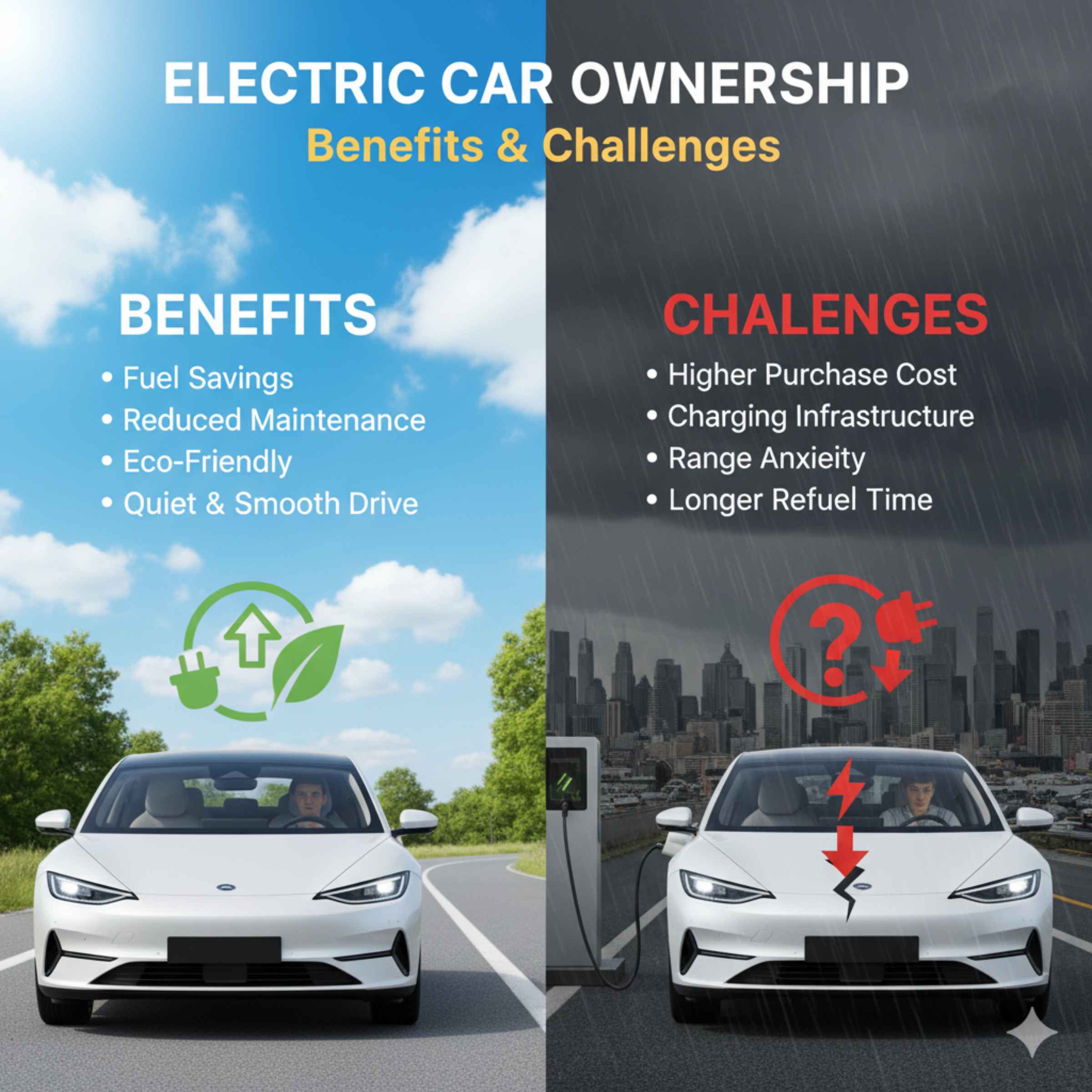
Electric car ownership offers major savings on fuel and maintenance while reducing emissions, but potential hurdles include higher initial cost, range anxiety, and the need for charging access. Understanding these pros and cons helps you make the smartest decision for your driving life.
Thinking about plugging in your next car instead of filling up the tank? You are not alone! Electric vehicles, or EVs, are changing how we drive. However, switching from gas to electric can feel like a big leap. You might wonder about the upfront cost, how far you can actually go, and what “fueling up” really means. Don’t worry—this guide cuts through the confusion. I’m Dustin, and we’ll look closely at the good parts and the tricky parts of owning an EV, using simple, everyday terms. By the end, you will feel confident about what EV life means for you.
Understanding Electric Vehicles: A Quick Refresher
Before we dive into the benefits and challenges, let’s ensure we are all on the same page. An electric car runs only on electricity stored in a large battery pack, unlike traditional cars that use gasoline. They power electric motors instead of gas engines. This key difference causes almost all the pros and cons we discuss today.
Think of it like this: A gas car needs frequent, quick stops at a gas station. An EV needs scheduled stops at a charging station—or, even better, it charges right where you park it overnight!
The Upside: What Are the Benefits of Electric Car Ownership?
The excitement around EVs isn’t just hype. These vehicles offer real, tangible advantages that save you money and make driving smoother. Let’s explore the biggest perks of plugging in.
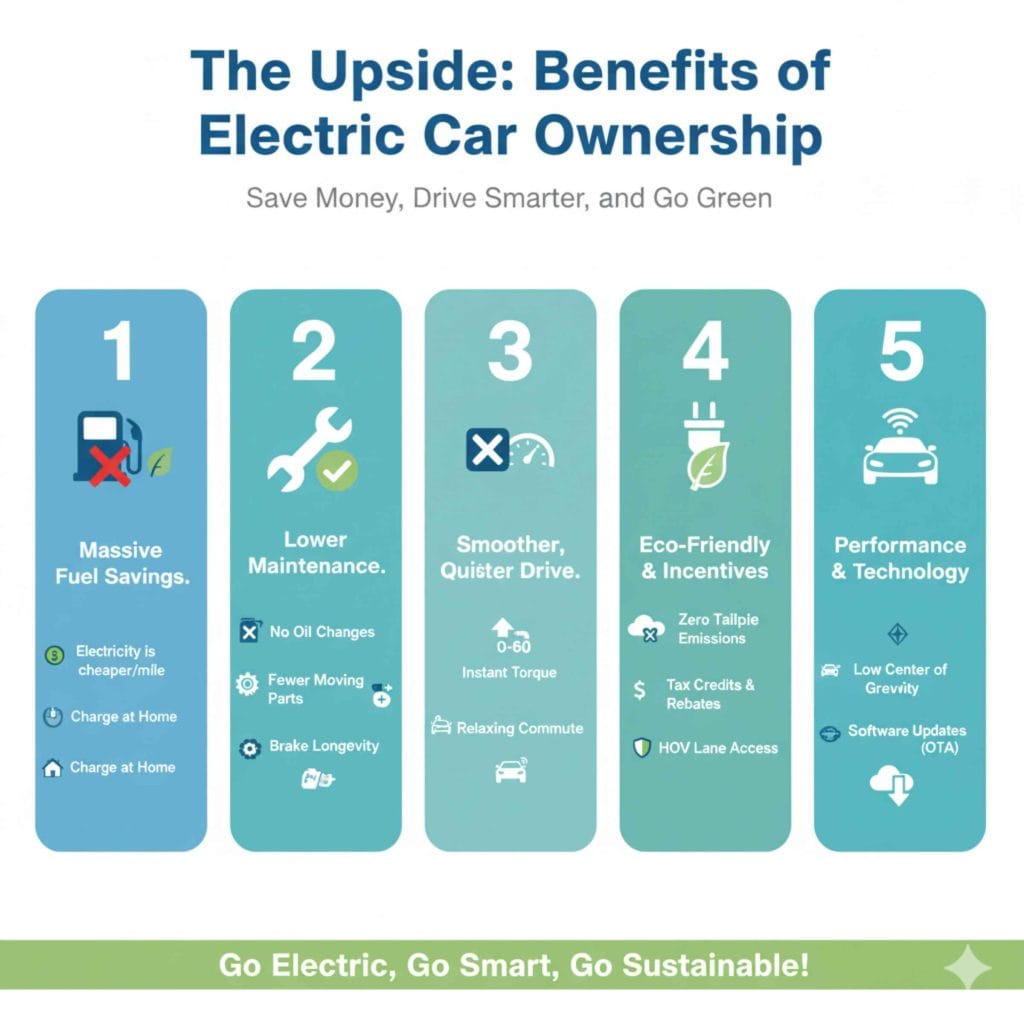
1. Massive Savings on Fuel Costs
This is often the first thing that grabs a buyer’s attention. Electricity is typically much cheaper per mile than gasoline. Imagine fueling your car overnight while you sleep, using rates that are often lower than peak gas prices.
Calculating Your Fuel Savings
The exact savings vary based on local electricity rates and gas prices, but the math usually favors electricity. You can usually calculate your energy cost by dividing the cost of electricity (in cents per kilowatt-hour, or kWh) by the efficiency of the car (miles per kWh).
- Gasoline: You pay per gallon, and prices fluctuate wildly.
- Electricity: You pay per kilowatt-hour, and rates are generally much more stable. Most home charging costs equate to roughly $0.03 to $0.05 per mile, whereas gasoline often costs $0.10 to $0.15 per mile, depending on where you live.
For many drivers racking up standard miles, these savings add up to hundreds of dollars per year.
2. Significantly Lower Maintenance Needs
This is where the mechanical simplicity of an EV really shines. Gas engines are complex, with hundreds of moving parts that require regular fluid changes, belts, and specialized service. EVs have far fewer parts.
What You Skip When You Drive Electric
When you own an EV, you can usually wave goodbye to these common maintenance tasks:
- Oil changes
- Transmission fluid flushes
- Spark plug replacements
- Exhaust system repairs
- Timing belt replacements
The essential maintenance usually involves checking tires, topping up washer fluid, and occasionally replacing cabin air filters. The braking system lasts much longer too, thanks to regenerative braking (using the motor to slow down, saving the physical brake pads).
3. A Smoother, Quieter Driving Experience
Step inside an EV, and you will immediately notice the difference. There is no engine rumble or vibration. The acceleration is instant and smooth because electric motors deliver maximum torque immediately.
It makes daily driving, especially in stop-and-go city traffic, much more relaxing. It’s a refined driving experience that many drivers who switch report they could never go back from.
4. Environmental Perks and Incentives
For many, the primary benefit is the reduced environmental footprint. Since EVs run on electricity, they produce zero tailpipe emissions. While the electricity generation source matters (coal vs. renewables), EVs generally result in lower overall greenhouse gas emissions across their lifespan compared to gasoline cars.
Governments often support this shift by offering financial incentives. These can take several forms:
- Federal Tax Credits: Check the latest rules, but substantial tax incentives may apply based on the vehicle and your tax situation. You can find current information on Federal clean vehicle tax credits through resources like the U.S. Department of Energy website.
- State and Local Rebates: Many states offer additional rebates or incentives for purchasing or installing home charging equipment.
- HOV Lane Access: In some congested metropolitan areas, EVs qualify for special access to high-occupancy vehicle lanes, saving commute time.
5. Performance and Technology
Modern EVs are packed with cutting-edge technology. Their design allows for a lower center of gravity due to the heavy battery pack being placed low in the chassis. This often translates to better handling and stability. Plus, updates are often delivered wirelessly (Over-The-Air updates), keeping your car’s software modern.
The Hurdles: What Are the Challenges of Electric Car Ownership?
While the benefits are compelling, switching to an EV requires preparation. It’s important to go in with your eyes wide open about the potential roadblocks. Addressing these challenges upfront removes major purchase anxiety.
1. Higher Initial Purchase Price
This is often the biggest barrier to entry. Currently, EVs generally have a higher sticker price than their comparable gasoline counterparts. This gap is narrowing, but it still exists.
While you save money on fuel and maintenance later, the initial investment is larger. Remember to factor in any tax credits or rebates you qualify for, as these significantly reduce the net cost.
2. Range Anxiety and Infrastructure Gaps
“Range anxiety” is the fear that your battery will run out before you reach a charging station. While manufacturers are constantly boosting battery range (many new EVs easily exceed 250 miles per charge), it’s a real concern for long road trips or in areas with sparse charging infrastructure.
Comparing Charging Access
Here is a simple comparison to illustrate where you might face challenges:
| Factor | Gasoline Vehicle | Electric Vehicle (EV) |
|---|---|---|
| Refueling Time | 5 minutes | 20 minutes to several hours (depending on charger speed) |
| National Coverage | Ubiquitous (Gas stations everywhere) | Growing quickly, but less dense in rural areas |
| Home Charging Capability | None | Yes (Primary advantage) |
If you live in a densely populated area with many public chargers, this is less of an issue. If you frequently drive across remote regions, planning charging stops becomes essential.
3. Charging Time and Convenience
Even the fastest DC fast chargers take time. While you can often grab a coffee or run errands during a 30-minute fast charge session, it’s not as instantaneous as a five-minute gas stop. For daily use, home charging solves this, but it requires a different mindset about “fueling.”
For routine charging, think of it as topping up: you plug in every night, letting the car charge slowly, so you wake up with a “full tank” every morning.
4. Battery Degradation and Replacement Costs
All batteries degrade over time and use, and EV batteries are no exception. Over 10–15 years, the maximum range of the battery will decrease slightly. While modern thermal management systems keep batteries healthy for a very long time, battery replacement (if it ever becomes necessary outside of warranty) is currently very expensive.
Reassurance: Most EV batteries come with extensive warranties, usually 8 years/100,000 miles, guaranteeing a certain percentage of original capacity. Research your specific model’s battery warranty before buying.
5. Dependence on Home Charging Access
The greatest convenience of an EV is waking up fully charged. However, this requires access to overnight charging. If you rent a home or live in an apartment building where installing a dedicated charger isn’t possible, or if you rely solely on street parking, daily charging becomes a major logistical challenge requiring heavy reliance on public infrastructure.
6. Charging Infrastructure for Long Trips
While local charging is improving, making a cross-country road trip still requires planning. You must use navigation apps that specialize in EV routing to map out reliable fast chargers along your route. This adds a layer of pre-trip preparation that gas car owners rarely need to consider.
Making the Switch: Practical Considerations for Beginners
If you are leaning toward an EV, here are the practical steps and items you need to prepare for. Think adoption, not just purchase.
Step 1: Assess Your Daily Driving Habits
Be honest about how far you drive in a typical day. Most drivers commute less than 40 miles daily. If your daily usage is low, even an EV with a modest 150-mile range will handle your needs easily, requiring charging only every few days.
Step 2: Investigate Home Charging Options
Installing a Level 2 charger (the fastest home option) usually provides a full charge overnight. This requires consultation with an electrician to ensure your garage or driveway panel can support the 240V circuit needed.
If a Level 2 installation isn’t feasible, most EVs come with a Level 1 charger (standard 120V outlet) which is slow but adequate for topping up if you drive very little daily. Always check local codes for installations.
Step 3: Master Public Charging Networks
Download apps for major charging networks (like Electrify America, ChargePoint, or Tesla’s app if applicable). Practice locating nearby public chargers now, even if you haven’t bought the car yet. Familiarity reduces anxiety later.
Comparing Upfront Costs and Long-Term Savings
To visualize the total picture, consider this simplified cost breakdown:
| Cost Factor | Gas Car (Estimate) | Electric Vehicle (Estimate) |
|---|---|---|
| Purchase Price (MSRP Mid-Range) | $32,000 | $38,000 (Before Incentives) |
| Annual Fuel Cost (12,000 Miles) | $1,800 | $550 (Based on $.15/kWh avg.) |
| Annual Maintenance Cost | $700 (Oil, fluids, brakes) | $150 (Tires, cabin filter) |
| Estimated 5-Year Savings (Fuel + Maintenance) | N/A | ~$6,250 |
While the EV has a higher starting line, the lower operational costs often lead to a lower Total Cost of Ownership (TCO) over several years.
Maximizing EV Ownership: Tips for New Owners
Once you have your EV, adopting a few new habits will make your experience seamless. Think of these as simple adjustments, not major lifestyle changes.
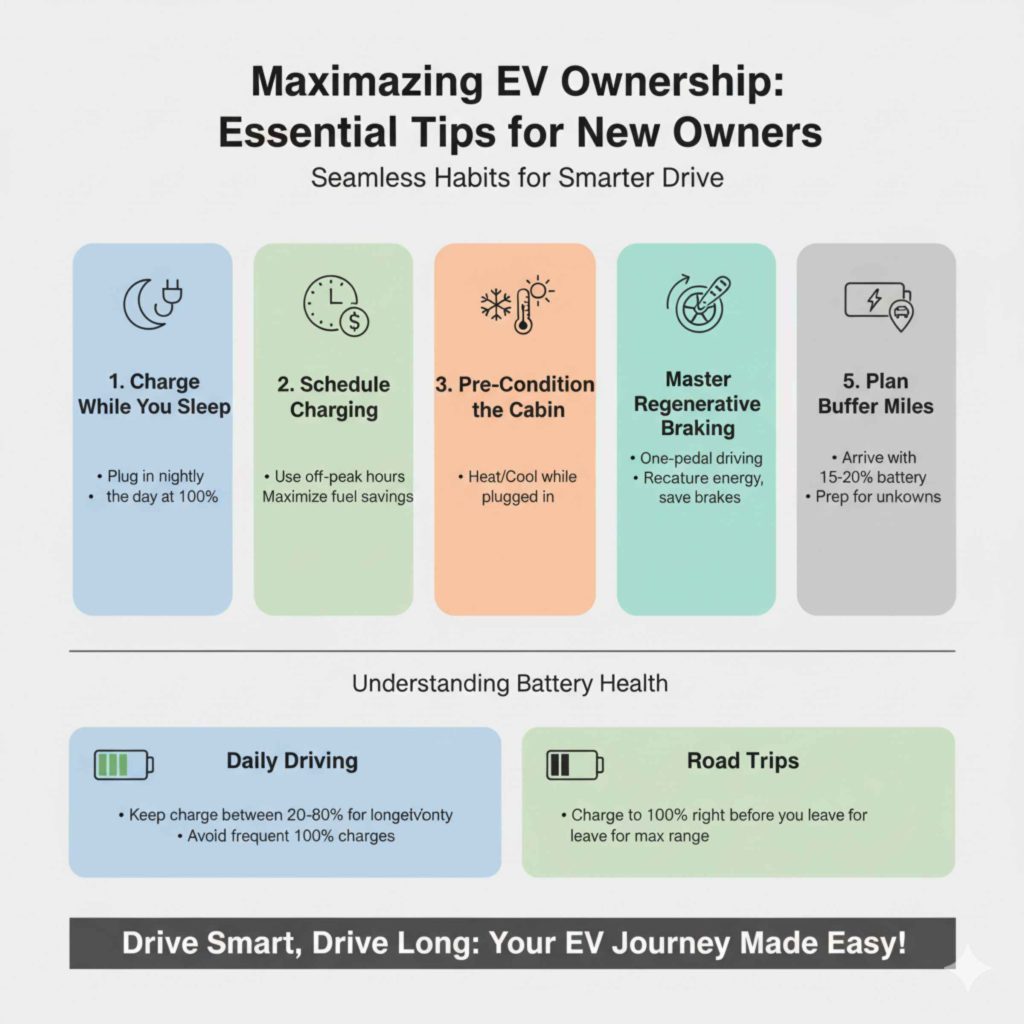
- “Fill Up” While You Sleep: Treat your home charging like your smartphone. Plug it in every night, regardless of the battery level. Always start the day at 100% state of charge (SOC).
- Use Scheduled Charging: If your electric utility charges different rates at different times of the day (Time-of-Use plans), set your car to only charge during the cheapest off-peak hours. This maximizes your fuel savings.
- Pre-Condition the Cabin: If it’s freezing or scorching outside, use the car’s app to warm up or cool the cabin while it is still plugged in. This uses grid power, not battery power, preserving your range for the drive.
- Learn Regenerative Braking: Get comfortable using one-pedal driving (if your vehicle supports it). Mastering this technique maximizes energy recapture and drastically reduces wear on your physical brake pads.
- Plan “Buffer Miles”: For road trips, aim to arrive at your next fast charger with at least 15–20% battery remaining. This buffer protects you if the charger is occupied, broken, or if you had to drive slightly farther than expected.
These small shifts in routine transform the EV ownership experience from something new and uncertain into something easy and automatic.
Understanding Battery Health and Charging Habits
One frequent point of confusion is how often you should charge to 100%. For daily driving, most experts recommend keeping the battery between 20% and 80% capacity. Charging to 100% frequently can slightly accelerate battery aging.
However, when taking a planned road trip, charge to 100% right before you leave. The key is consistency for daily use, and flexibility for long journeys.
Frequently Asked Questions for Beginner EV Owners
Here are the common questions I hear most often from drivers making the jump to electric.
Q1: Do electric cars work well in very cold or very hot weather?
A: Yes, they work well, but efficiency drops. Extreme cold temporarily reduces battery range because the battery chemistry is less effective and energy must be used to heat the battery. Extreme heat can cause the car to slow down fast charging to protect the battery. Modern EVs manage this using built-in thermal management systems.
Q2: How long does it take to charge an EV at home?
A: Using a standard wall outlet (Level 1), you might get 3–5 miles of range added per hour. Using a dedicated Level 2 charger (recommended for daily use), you can typically add 25–30 miles of range per hour, usually achieving a full charge overnight for average drivers.
Q3: What happens if I run out of battery on the road?
A: If you completely run out of charge, the car stops. You will need to call roadside assistance. However, most EVs have sophisticated navigation that automatically guides you to the next closest charger once you drop below a certain range threshold, making running completely dry very rare if you pay attention to alerts.
Q4: Are EV batteries heavy?
A: Yes, the battery pack is the heaviest single component of the car. This weight is usually placed low in the chassis, which improves stability and handling, making the car feel planted on the road, even if it weighs more than a comparable gas car.
Q5: Do electric cars need routine inspections like gas cars?
A: They require fewer inspections. You skip engine/transmission checks, but you still need inspections for tires, suspension components, lights, wipers, and safety systems, just like any other vehicle.
Q6: Can I still get roadside assistance if my EV battery dies?
A: Yes. Major roadside programs (like AAA) offer towing services for EVs, often specializing in providing a temporary charge or arranging tow to the nearest fast charger. Always confirm your roadside plan covers electric vehicles specifically.
Conclusion: Making the Right Choice
Deciding whether an electric vehicle fits your life is a balance. The question, “What are the benefits and challenges of electric car ownership?” doesn’t have one single answer—it depends entirely on your driving pattern, your home setup, and your local infrastructure.
The benefits—dramatic fuel savings, near-silent operation, and vastly reduced maintenance complexity—are game-changers for daily commuting. They offer a genuinely better driving experience for the typical driver who plugs in nightly.
The challenges—higher upfront cost, the learning curve of charging planning, and infrastructure gaps in very rural areas—require mindful ownership. By ensuring you have reliable home charging and by viewing long trips as opportunities for planned relaxation stops rather than stressful dashes, these hurdles become manageable.
Take the next step: If you are curious, test drive an EV. Experience that instant torque and quiet ride for yourself. If your driving tends to be local, and you can charge where you park overnight, switching to electric might be the easiest, most rewarding automotive decision you make this decade. You’ve got this!