
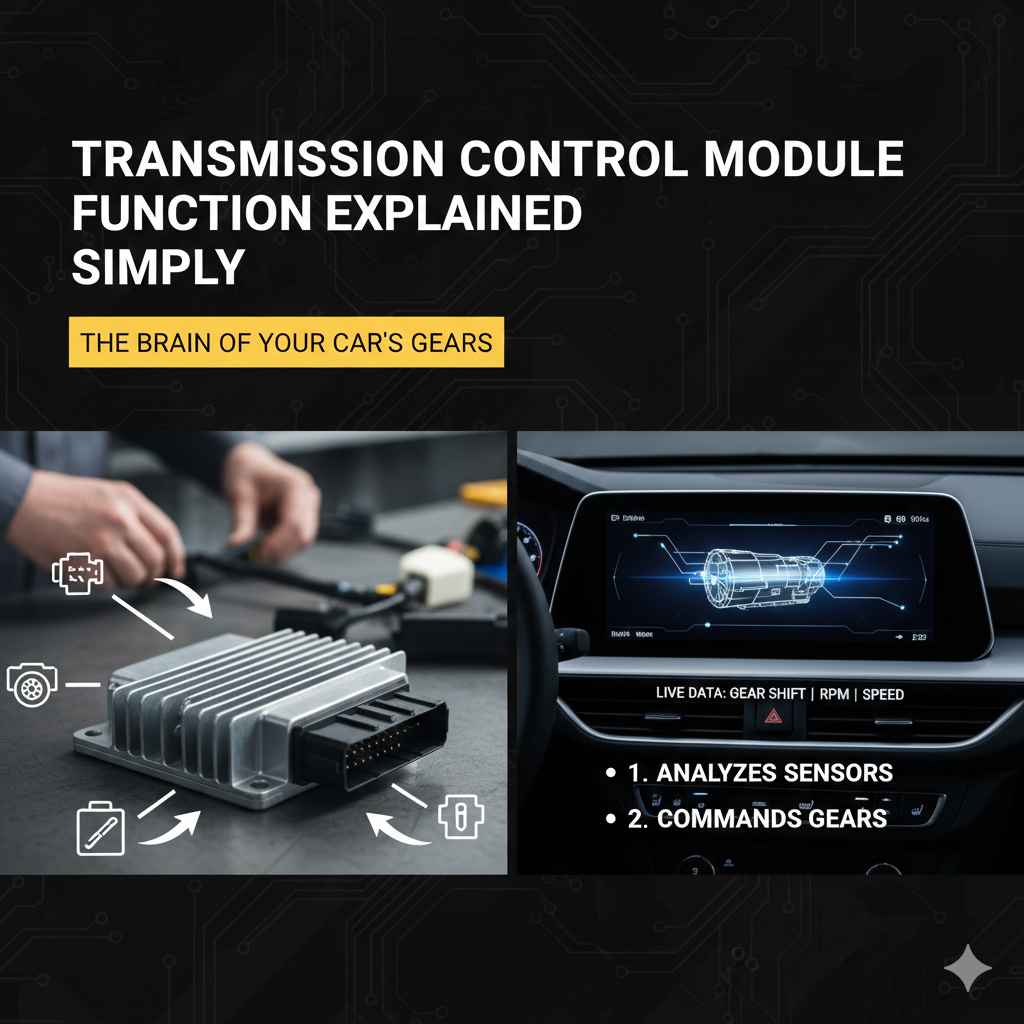
Figuring out what the Transmission Control Module Function: What It Does can be tricky. It’s like learning a new language – there are a lot of unfamiliar terms! Don’t worry, you are in the right place. We’ll break it down into easy steps, so you can easily grasp what’s happening. Ready to see how this important component operates in your vehicle? Let’s explore!
What Exactly Is a Transmission Control Module (TCM)?
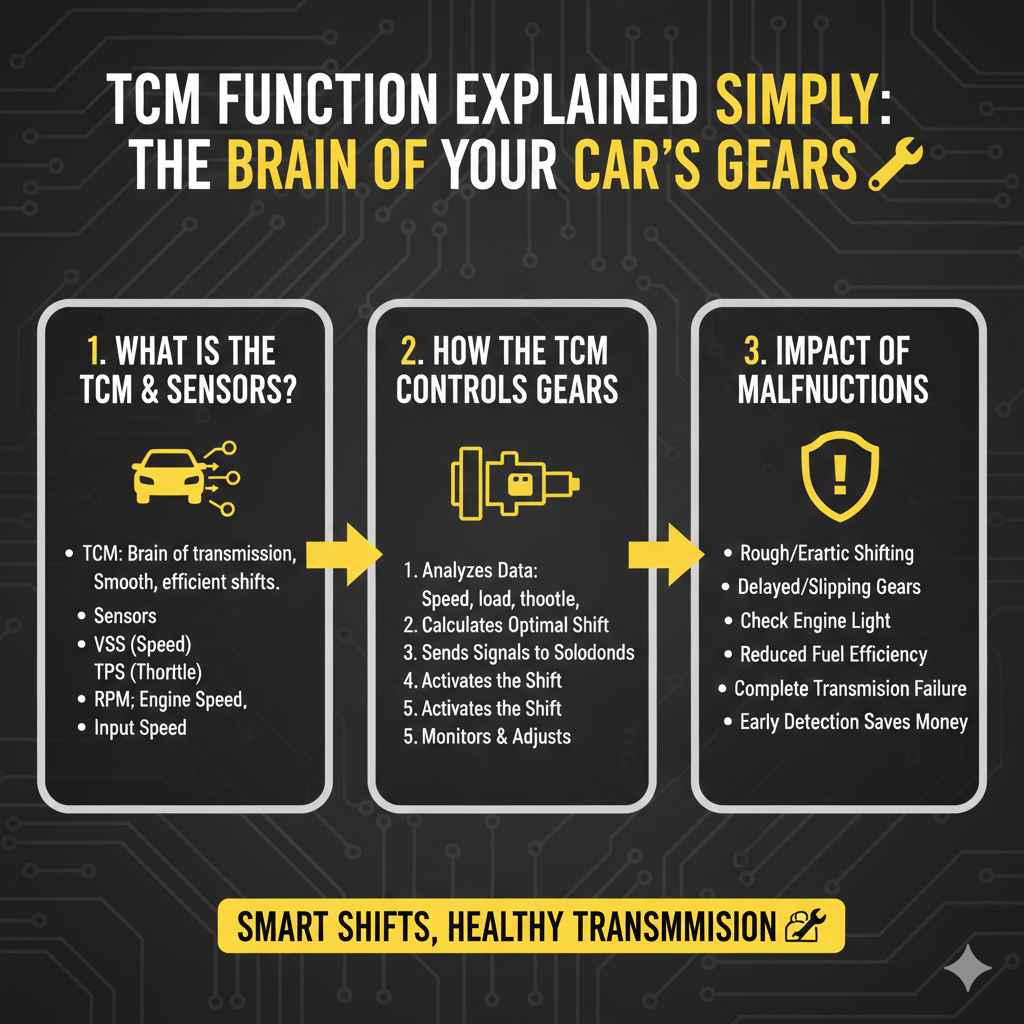
The Transmission Control Module (TCM) is basically the brain of your car’s transmission. It’s a small computer that oversees all the different parts of your transmission to make sure everything works correctly. It receives signals from different sensors around your car. This data informs the TCM about things such as your speed, how hard you’re pressing the gas pedal, and the engine’s RPMs. Based on this, the TCM makes decisions about when to shift gears. It ensures smooth gear changes and helps your car run efficiently. A properly functioning TCM is vital for a good driving experience and to protect your transmission from damage.
The Role of Sensors in TCM Operations
Your car is filled with sensors! These sensors act as the TCM’s eyes and ears. They provide vital information, such as vehicle speed, engine speed, throttle position, and gear selection. The TCM uses this data to make smart decisions about gear changes. It’s like a coach who analyzes the game and then tells the players what to do. Without accurate sensor information, the TCM can’t work correctly, which could lead to transmission problems. Sensor failures are often the cause of strange shifting behaviors or warning lights on your dashboard. Having these sensors in good working order is essential for overall vehicle performance.
- Vehicle Speed Sensor (VSS): This sensor tells the TCM how fast your car is going. This is important for smooth gear changes and accurate speedometer readings.
- Engine Speed Sensor (Crankshaft Position Sensor): It measures how fast the engine is spinning. This information is key for calculating the best time to shift gears and to provide correct engine output.
- Throttle Position Sensor (TPS): This sensor tells the TCM how far down you’ve pushed the gas pedal. This helps the TCM choose the right gear for acceleration or cruising.
- Transmission Input Speed Sensor: This sensor helps measure the rotational speed of the transmission’s input shaft. It is key to optimizing shift points and overall performance.
These sensors are not just independent pieces; they work together to provide a complete picture of your car’s status to the TCM. A failure in any one of these sensors can lead to problems with the transmission and, eventually, impact the vehicle’s performance and fuel efficiency.
How the TCM Controls Gear Changes
The TCM doesn’t just watch; it acts! Once the TCM receives all the data from the sensors, it makes decisions on when and how to shift gears. It sends signals to the transmission solenoids. These solenoids control the flow of hydraulic fluid, which then physically shifts the gears. Think of it like a conductor leading an orchestra. The TCM is the conductor, the solenoids are the musicians, and the hydraulic fluid is the music that makes the transmission work. This careful orchestration of gear changes is why modern automatic transmissions feel so smooth and responsive. The system is designed to provide seamless transitions between gears, which greatly affects ride quality.
- Analyzing Data: The TCM uses the sensor data to determine the current driving conditions, such as vehicle speed, engine load, and throttle position.
- Calculating the Optimal Shift Point: Based on the data, the TCM determines the best time to shift gears to provide the best performance and fuel economy.
- Sending Signals to Solenoids: The TCM sends electrical signals to the transmission solenoids, instructing them to change the flow of hydraulic fluid.
- Activating the Shift: The solenoids move, controlling the hydraulic fluid that engages the correct gears in the transmission.
- Monitoring the Shift: The TCM monitors the process to ensure the shift is smooth and efficient, and adjusts if needed.
These steps are repeated constantly while you drive, making it a continuous cycle. The TCM is constantly adapting to your driving habits and changing road conditions to provide the best possible performance.
The Impact of TCM Malfunctions
When the TCM starts to malfunction, it can create a range of issues. The most common symptom is harsh or erratic shifting. You might feel the car lurch or hesitate between gears. Some common problems include the check engine light coming on. You could experience a loss of fuel efficiency. In severe cases, a failing TCM can lead to complete transmission failure. Ignoring these warning signs can lead to more significant and more expensive repairs later. Regular maintenance and addressing any unusual behaviors are key to keeping your transmission in good condition and avoiding costly issues.
- Rough Shifting: The car struggles to shift smoothly between gears, causing jerking or bumping.
- Delayed Shifting: The transmission takes longer than usual to change gears.
- Gear Slipping: The transmission doesn’t hold the selected gear, which may lead to loss of power.
- Check Engine Light: The car’s computer detects a problem with the TCM and turns on the warning light.
- Reduced Fuel Efficiency: The car might start using more fuel due to improper gear changes.
Identifying these symptoms early is very important. Getting a diagnostic check at a local mechanic is important if you notice any unusual behavior. Regular check-ups can help find problems early, saving money and helping avoid more serious damage.
Advanced Functions of the Transmission Control Module
The Transmission Control Module Function: What It Does involves more than just shifting gears. Modern TCMs include advanced features. These features enhance the driving experience. They can also improve performance and protect the transmission. These advanced features make the TCM a sophisticated component in modern vehicles. It plays a key role in the overall driving experience.
Adaptive Learning and Its Benefits
Adaptive learning is a great feature. It enables the TCM to “learn” how you drive. As you drive, the TCM monitors your driving style. It remembers your acceleration habits and braking patterns. The TCM then adjusts the shifting strategy to match your driving style. This adjustment helps to improve the driving experience. It provides more seamless gear changes and a more responsive feel. This learning process is continuous. The TCM constantly adapts to your driving habits. This helps to provide the best possible performance for your driving style. This feature contributes significantly to both efficiency and the driving experience.
- Personalized Shifting: The TCM adapts to your unique driving habits, providing a custom feel.
- Improved Smoothness: Adjustments are made to reduce harsh shifting and provide smoother gear changes.
- Better Fuel Efficiency: The TCM’s learning helps to optimize gear changes, potentially saving fuel.
- Transmission Protection: It minimizes wear and tear on the transmission, increasing its lifespan.
- Enhanced Performance: The car responds better to your driving inputs, providing a more engaging driving experience.
Adaptive learning is a clear illustration of how technology is used to enhance the driving experience. It makes each vehicle unique to the driver. This is a great advantage of modern automatic transmissions. The continuous adaptation ensures that the transmission is always working to match your style.
Electronic Stability Control Integration
The TCM often works with the Electronic Stability Control (ESC) system. ESC helps to keep your car stable and prevent skidding, especially in difficult driving conditions. The TCM can also provide critical information about vehicle speed and gear selection. ESC uses this data to react to potential instability. For instance, if the ESC detects that a wheel is slipping, the TCM might adjust the gear or reduce engine power to regain control. This collaboration between the TCM and ESC is key for driving safely. This teamwork also helps improve overall safety and control on the road. This integration is vital in maintaining the vehicle’s handling characteristics.
- Preventing Skidding: The TCM can coordinate with the ESC to reduce wheel spin, maintaining control.
- Improved Handling: The combined systems enhance the car’s ability to maintain its intended direction.
- Increased Safety: The collaboration helps to prevent accidents by quickly correcting instability.
- Enhanced Stability: The system can apply brakes or reduce engine power to stabilize the vehicle.
- Seamless Operation: The integration happens without you feeling it, quietly working in the background.
The integration of the TCM with ESC shows a commitment to safety. The systems work together seamlessly to help keep the driver safe. This integration is common in modern cars and shows how complex vehicle systems work. This shows how modern technology is changing how we drive.
TCM Communication with Other Vehicle Systems
The TCM doesn’t work alone. It interacts with other key systems in your car. This communication allows for better coordination and improved overall performance. For example, the TCM exchanges data with the engine control unit (ECU). The ECU manages the engine’s functions. The TCM shares information about gear selection and transmission status with the ECU. The ECU can adjust the engine’s fuel injection and ignition timing. These types of communication are essential for ensuring that all systems work in sync. This synchronization also helps optimize performance. This also helps improve fuel efficiency. Vehicle systems working together makes for a better driving experience.
- Engine Control Unit (ECU): They work together for optimal engine performance and fuel efficiency.
- Anti-lock Braking System (ABS): Sharing data enhances braking performance and safety.
- Body Control Module (BCM): The BCM can receive information about the gear position to control the dashboard.
- Powertrain Control Module (PCM): The PCM coordinates the engine and transmission operations.
- Infotainment System: The TCM may display information on the car’s display, such as the current gear.
The level of integration highlights the complexity of modern vehicle designs. Each system depends on others to operate effectively. This interconnected approach allows for better overall control. This collaboration creates a more efficient and safer driving experience.
Transmission Control Module Function: Diagnostics and Repair
When there’s a problem with your TCM, understanding the process of diagnostics and repair is useful. It is best to take your vehicle to a mechanic. They will have the tools and experience to diagnose any issues. They will give you the best steps to fix any problems. You can also explore steps that are easy for you to do. Taking action quickly will help prevent larger problems.
Diagnostic Tools and Procedures
Diagnosing problems with the TCM requires special tools and procedures. Your mechanic can use a diagnostic scan tool. This tool connects to the car’s computer system and reads trouble codes stored by the TCM. These codes provide clues about what’s gone wrong, such as a sensor failure or a communication issue. Using this tool, the mechanic can check the various sensors and components related to the transmission. This will help them find the source of the problem. They will also look for any issues. The diagnostic process can include checking wiring, connectors, and fluid levels. This helps to pinpoint the precise area that requires attention. This detailed approach is very important to get an accurate diagnosis. The scan tool is a necessary piece of equipment in the diagnostic process.
- OBD-II Scan Tool: This tool reads diagnostic trouble codes (DTCs) from the TCM.
- Live Data Monitoring: The scan tool can show real-time data from the sensors to check performance.
- Circuit Testing: This involves checking wiring and connections for any problems.
- Component Testing: Mechanics can test individual sensors and solenoids to ensure they work correctly.
- Fluid Inspection: Checking the transmission fluid for contamination or leaks.
The scan tool is an important device that offers valuable insights into your car’s operations. The data that is gathered is used to create a repair plan. This will help get your car back on the road in top shape. The diagnostic process is precise and methodical, ensuring accurate problem identification.
Common TCM Problems and Their Solutions
Several common problems may appear with the TCM. Knowing these issues can help you prepare for a visit to your mechanic. You might experience sensor failures. The transmission might shift erratically. It could show a loss of communication. These problems require expert attention for repairs. The approach to solving these problems depends on the issue.
Replacing a faulty sensor may solve one problem. Another problem might require a complete TCM replacement. Addressing these problems immediately is key to keep your transmission safe. This will prevent bigger damage.
- Sensor Failures: Replacing the faulty sensor usually fixes the problem.
- Solenoid Issues: Replacing or repairing the solenoid can restore proper shifting.
- Wiring Problems: Fixing the damaged wiring or connectors is very important.
- Software Glitches: Sometimes, a software update is necessary to resolve the issue.
- TCM Replacement: If the TCM is damaged, complete replacement is often required.
These solutions show the importance of a qualified mechanic. They will provide the correct method for the specific issue. It is recommended to have a professional repair your TCM. This ensures the correct repair and avoids any more issues.
Preventative Maintenance for Your TCM
To keep your TCM running smoothly, a few preventive maintenance steps can make a big difference. These steps can help you protect your transmission and extend its lifespan. It also means you might avoid costly repairs in the future. Following these steps helps keep your car performing at its best for years. Regular maintenance is important for the car and its components.
- Regular Transmission Fluid Changes: Changing your transmission fluid helps keep the components clean and operating correctly.
- Checking Fluid Levels: Keep an eye on your transmission fluid levels to ensure there are no leaks.
- Avoiding Harsh Driving: Sudden acceleration and braking can put more stress on the transmission.
- Addressing Problems Quickly: If you notice any unusual shifting or warning lights, it is best to get it checked out quickly.
- Professional Inspections: Periodic inspections by a qualified mechanic can help spot problems early.
Preventative maintenance is the best approach to ensure longevity. This will help you keep your car in top shape and help you avoid future problems. Regular maintenance is an investment that pays off over time by maintaining your car’s value.
Transmission Control Module Function: Practical Examples and Scenarios
Understanding the Transmission Control Module Function: What It Does can become clear. Reading about real-life situations is very helpful. By examining these examples, you can see how the TCM works. These scenarios show how the TCM affects real-world driving. These examples will help you realize the significance of a functional TCM.
Real-Life Case Study: Shifting Issues
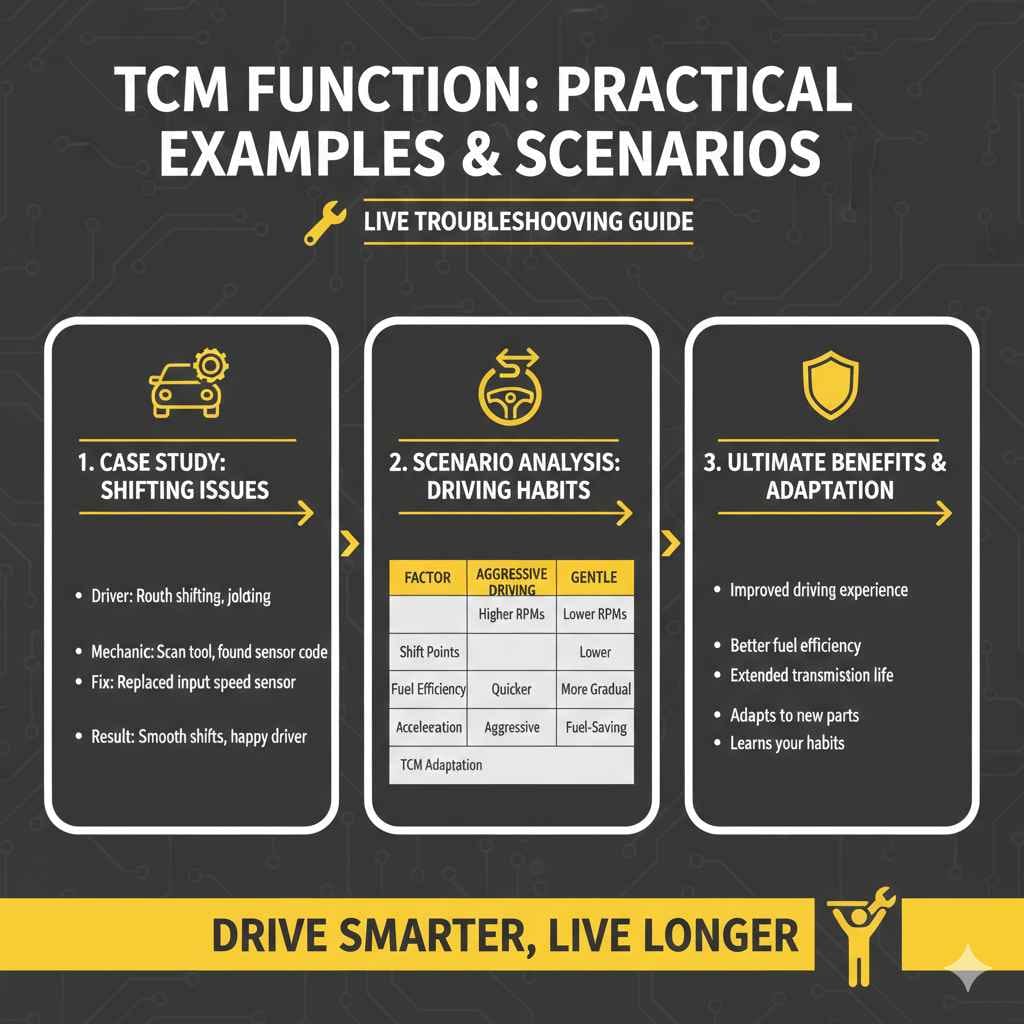
A driver brought their car to a mechanic because the car was shifting roughly. The car would jerk and hesitate between gears. The mechanic used a diagnostic scan tool and found a trouble code. This code pointed to a problem with the transmission input speed sensor. The mechanic replaced the sensor. The car’s shifting became smooth again. The driver had no problems. The mechanic’s quick actions helped the driver avoid extensive transmission damage. This is a common situation that shows the value of early diagnostics and repairs.
- The driver noticed rough shifting and brought the car to the mechanic.
- The diagnostic scan tool identified a faulty input speed sensor.
- The mechanic replaced the sensor, fixing the issue.
- The car began shifting smoothly and all issues disappeared.
- The driver was happy the issue was resolved quickly, saving potential future expenses.
This case shows that an efficient repair can resolve common problems. The cost and downtime were kept low. The quick resolution highlights the critical role of diagnosis in keeping a vehicle running well. It provides another great example of how the TCM directly affects everyday driving experiences. Having the right tools and knowing how to use them is a key factor in such results.
Scenario Analysis: Acceleration and Fuel Efficiency
Imagine two drivers. Both cars have automatic transmissions. One driver constantly accelerates quickly, and the other driver drives more gently. The first driver’s TCM is constantly learning and adapting. It will adjust the shift points to match their driving style. This will likely reduce fuel efficiency. The second driver’s TCM will learn a more efficient shift pattern. This will lead to better fuel economy.
These two scenarios emphasize how the TCM’s adaptive learning function affects performance. They highlight how driving habits affect fuel consumption. This scenario helps us to know the value of the TCM. It showcases the importance of how the TCM adjusts to improve the driving experience.
- Scenario 1 (Aggressive Driving): Frequent hard acceleration causes the TCM to shift gears at higher RPMs.
- Scenario 2 (Gentle Driving): Smooth, gradual acceleration causes the TCM to shift gears earlier for improved fuel economy.
- Result: The first driver experiences lower fuel economy.
- Benefit: The second driver experiences better fuel economy.
- Overall: The TCM adapts to match driver habits, affecting both performance and efficiency.
This example demonstrates the importance of driving habits. It shows how the TCM adjusts shifting patterns. The adaptive nature of the TCM is a great advantage. It works to improve performance and fuel efficiency. Drivers can optimize their experience through how they drive. Drivers can make choices that affect the vehicle’s performance and fuel economy.
| Factor | Aggressive Driving | Gentle Driving |
|---|---|---|
| Shift Points | Higher RPMs | Lower RPMs |
| Fuel Efficiency | Lower | Higher |
| Acceleration | Quicker | More Gradual |
| TCM Adaptation | Aggressive shift patterns | Fuel-saving shift patterns |
Frequently Asked Questions
Question: What happens if my TCM fails completely?
Answer: If your TCM fails completely, your transmission may not function properly. You may find that your car will not shift gears. This can render your car undrivable until you get it repaired.
Question: Can I replace the TCM myself?
Answer: While it is possible to replace a TCM yourself, it’s not always recommended. The TCM needs to be programmed and calibrated to your vehicle. It is best to have a qualified mechanic perform the replacement.
Question: How often should I change my transmission fluid?
Answer: The frequency of transmission fluid changes varies by vehicle. Check your car’s owner’s manual for recommended maintenance schedules. It’s usually a good idea to change the fluid every 30,000 to 60,000 miles.
Question: What are the signs of a faulty TCM?
Answer: Common signs include rough or erratic shifting, delayed gear changes, the check engine light coming on, and reduced fuel efficiency.
Question: Can a TCM be repaired, or does it always need to be replaced?
Answer: In some cases, a TCM can be repaired. This depends on the specific problem. Many times it involves component replacement or software updates. It is always recommended that a professional makes a diagnosis and provides advice.
Final Thoughts
Knowing about the Transmission Control Module Function: What It Does is very important for all car owners. It is the central computer of your car’s transmission. The TCM makes the gear-shifting smooth and efficient. It gets information from sensors, makes smart decisions, and adapts to your driving style. If something goes wrong, you might face some issues, such as jerky shifting or the check engine light turning on. Keeping up with regular maintenance, like changing transmission fluid and watching for any changes in how your car drives, can keep your TCM working well and avoid costly repairs.
If you notice any problems, don’t delay – get your car checked out by a professional. By being aware of how the TCM works and how to take care of it, you can keep your car running smoothly for a long time.