
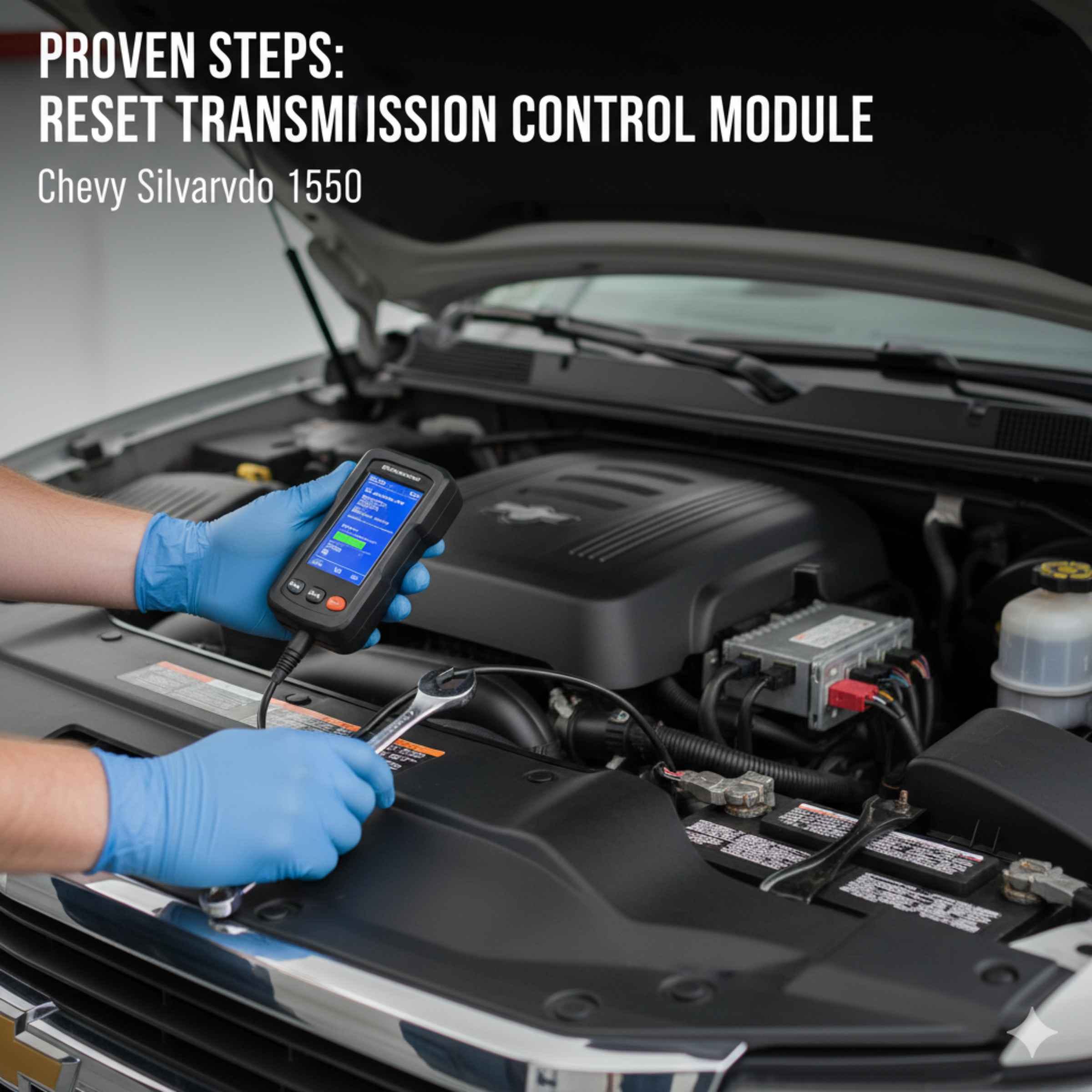
Quick Summary: To safely reset the Transmission Control Module (TCM) on your Chevy Silverado 1500, you should first disconnect the negative battery terminal for at least 15 minutes to clear the short-term memory. For a full hard reset, you may also need to clear learned driving habits using a capable OBD-II scanner tool, which is the most reliable method.
What’s up, Silverado owners! Dealing with weird transmission shifts, hesitation, or warning lights can be frustrating. Often, these hiccups point to the Transmission Control Module (TCM), the little computer that manages how smoothly your gears change. Sometimes, the TCM just needs a fresh start—a “reset.”
It’s easy to think this job requires a trip to the mechanic already, but many times, a simple electronic reboot is all it takes to get your truck shifting like new again. We’re going to walk through the proven, safe ways to perform this reset yourself. You’ll learn the battery trick and understand when you need a specialized tool. Let’s boost your DIY confidence and get your Silverado running smoothly!
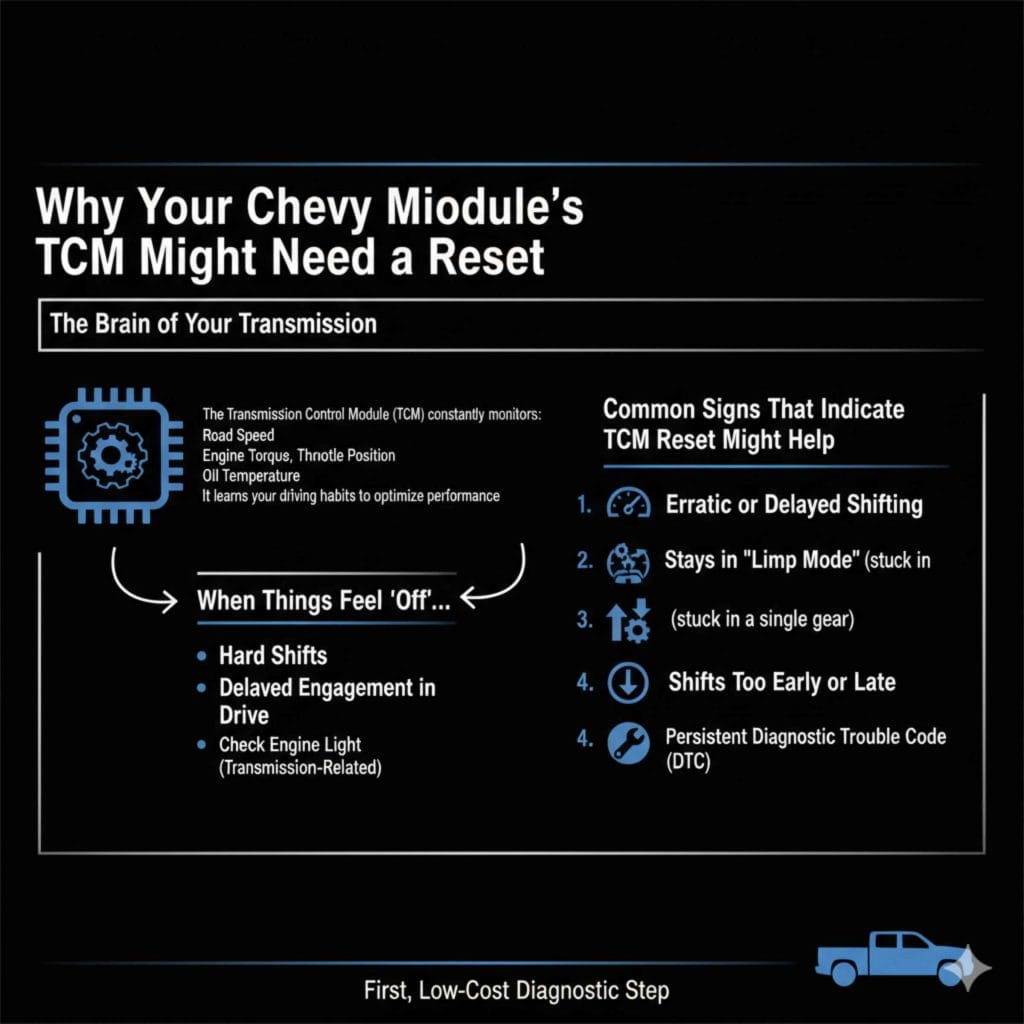
Why Your Chevy Silverado’s TCM Might Need a Reset
The Transmission Control Module (TCM) is essentially the brain for your automatic transmission. It constantly monitors road speed, engine torque, throttle position, and oil temperature to decide exactly when to shift gears. It learns your driving habits—aggressive stopping, gentle cruising—so it can optimize performance and sometimes, fuel economy.
When things feel “off”—like hard shifts, delayed engagement when putting it in Drive, or maybe a Check Engine Light pops up that seems transmission-related—the TCM might have stored bad data or an error code that needs clearing.
Common Signs That Indicate a TCM Reset Might Help
If you notice any of these symptoms, resetting the TCM could be your first, low-cost diagnostic step:
- Erratic or delayed shifting, especially under load.
- The transmission stays in a “limp mode” (stuck in a single gear).
- The transmission shifts too early or too late compared to normal.
- A persistent, unaddressed transmission-related Diagnostic Trouble Code (DTC).
Understanding the Two Types of TCM Resets
When we talk about resetting an electronic module, we are usually talking about two different things. For your Silverado 1500, understanding the difference is key to choosing the right approach.
1. Soft Reset (Clearing Short-Term Adaptive Data)
This is the easiest and often most successful reset for everyday shifting quirks. The TCM stores “adaptive” data, meaning it learns how you drive. A soft reset clears this immediate memory, forcing the module to start learning again from a clean slate. Think of it like clearing your browser cache.
2. Hard Reset (Clearing All Codes and Power Loss)
A hard reset involves cutting all power to the TCM completely. This wipes out all stored trouble codes and forces the module to reload its factory default programming before re-learning. This is what most people mean when they ask “how to reset transmission control module chevy silverado 1500.
Method 1: The Simple Battery Disconnect (Soft/Hard Reset Hybrid)
This is the homeowner’s go-to method. By disconnecting the battery, you cut power not just to the radio, but to every control module in the truck, including the TCM.
Tools You Will Need
Before you begin, gather these simple items. You likely already have them!
- Safety Glasses
- Gloves (optional, but recommended)
- Wrench set (usually 10mm or 13mm for battery terminals)
- A metal object (like a thick screwdriver) to touch the terminals together (advanced users only—see step 4!)
Step-by-Step Guide for Battery Reset
Follow these steps carefully. Safety first is always my rule when working with vehicle electronics.
- Park Safely and Power Down: Park your Chevy Silverado 1500 on a level surface. Engage the parking brake securely. Turn off the ignition completely and remove the keys.
- Locate the Battery: The battery is usually under the hood, near the front passenger side on many Silverado models.
- Disconnect the Negative Terminal: Using your wrench, loosen the nut on the negative (-) battery terminal. The negative cable is usually black and marked with a minus sign. Wiggle the cable clamp off the battery post and secure it away from any metal surface so it cannot accidentally touch the post again.
- Perform the Discharge (The Crucial Wait): This is where many people fail. You must wait long enough for the capacitors inside the TCM to fully drain. We recommend waiting a minimum of 15 minutes. For a deeper drain, some experts suggest waiting 30 minutes or more. Expert Tip: To speed up the discharge process, you can briefly touch the disconnected negative battery cable end to the positive battery post (the one still connected to the battery). This uses any residual current in the system to drain the capacitors instantly. Only do this briefly (a few seconds) and ensure you are only touching the metal parts of the cable clamp to the terminal posts, not the battery itself.
- Reattach the Negative Terminal: After the required wait time, securely connect the negative cable back onto the negative battery post. Tighten the nut firmly but do not overtighten.
- Test Drive and Relearn: Start your truck. You will likely notice that the radio presets and clock are reset. Now, drive your truck normally for about 10 to 20 miles. The TCM will begin its “relearn” process, adapting to your current driving style.
Important Note on Battery Reset Success Rate
While the battery disconnect is very helpful, it does not always clear complex trouble codes or deeply embedded software issues. For deeper resets, we move to Method 2.
Method 2: The Professional Approach Using an OBD-II Scanner
For true, controlled reset and code clearing, nothing beats a proper scan tool. Modern vehicles like the Silverado 1500 rely heavily on these tools for comprehensive diagnostics.
What is an OBD-II Scanner and Why Use It?
OBD-II (On-Board Diagnostics, second generation) ports are standard on all vehicles sold in the US since 1996. These scanners plug into a port usually located under the dashboard (near the driver’s knees). A professional-grade scanner allows digital communication with the TCM to erase its memory banks entirely.
You can purchase basic code readers for under $50, but for resetting modules, you need one capable of “Module Clear” or “Relearn Procedures.” Many advanced options exist, such as those made by Autel or Innova. You can also look up resources from organizations like the SAE International to understand the specific data protocols used in these systems.
Steps to Reset the TCM with a Scan Tool
If you have access to a decent scanner or are visiting an auto parts store that offers free scanning (though clearing functions are often restricted on free scanners), here is the process:
- Connect the Scanner: Turn your Silverado off. Plug the scanner device securely into the OBD-II port under the dash.
- Cycle to ‘ON’ Position: Turn the ignition key to the ‘ON’ position, but DO NOT START THE ENGINE. The dashboard lights should come on.
- Scan for Codes: Navigate the scanner menu to “Read Codes” or “View Diagnostics.” Check to see if any transmission codes (often starting with P07xx) are present.
- Navigate to Module Reset: Find the specific menu option, often labeled “Module Reset,” “TCM Clear Adaptives,” or “Clear All DTCs” (Diagnostic Trouble Codes). Be cautious here—some scanners reset the entire vehicle computer, not just the TCM. Look for options specific to the Transmission Control System.
- Execute the Reset Command: Select the appropriate command and confirm the action. The scanner will communicate directly with the TCM and wipe its stored data.
- Power Cycle and Test: Turn the ignition key completely off, disconnect the scanner, and then restart the truck. Drive it again for a required learning period. The shift points should immediately feel smoother or revert to factory settings.
Table: Comparing Reset Methods for the Silverado 1500 TCM
Knowing which method is best for your situation can save time and effort.
| Method | Complexity | Time Required | Effectiveness for Minor Issues | Cost |
|---|---|---|---|---|
| Battery Disconnect | Very Easy | 15–30 minutes wait time | High | Free |
| OBD-II Scanner Reset | Moderate (Requires Tool) | 5–10 minutes active time | Very High (Clears specific codes) | Cost of Scanner or Shop Fee |
The Importance of Relearning After a Reset
This is the step that separates a successful reset from a frustrating one! When you reset the TCM, you’re taking away all its experience. It no longer knows whether you accelerate gently or rapidly stomp the pedal.
What Happens During Relearn?
The TCM needs to establish new learned parameters for smooth operation. This process is often called “Adaptive Learning.”
- Initial Phase: Immediately after the reset, your shifting might feel firm or slightly rough. This is normal; the computer is using its base map.
- Learning Phase: Over the next 10 to 50 miles of varied driving (city, highway, some stops), the TCM monitors sensor feedback continually.
- Stabilization: After the learning phase, the shifts should smooth out and match your typical driving style better than ever.
Tips for an Effective Relearn Drive Cycle
To help your Silverado 1500 learn correctly and quickly, try to vary your driving conditions:
- Drive at least 5 miles in stop-and-go city traffic.
- Drive at least 5 miles on a highway, using steady cruising speeds.
- Make a few full stops, allowing the truck to come to a complete standstill before accelerating again.
- Avoid overly aggressive acceleration during the first 20 miles, as the TCM might mistakenly tag aggressive driving as your default.
When Resetting the TCM Isn’t Enough
It’s an awesome feeling to fix an issue yourself, but sometimes the problem is deeper than a simple memory glitch. If you perform a full reset (either method) and the transmission problems return within a short period (say, 100 miles), the root cause is likely physical hardware failure or sensor issues, not just bad data.
Hardware Issues Requiring Professional Help
If resetting fails, these components might be the culprit:
- Solenoid Malfunction: Solenoids are electronic valves that direct fluid pressure to engage clutches. If one fails, shifting is impossible or inconsistent.
- Input/Output Speed Sensors: These sensors tell the TCM how fast the transmission shafts are spinning. Faulty sensors send bad data, causing poor shift timing.
- Internal Mechanical Failure: Rarely, worn clutches or bands requiring serious internal transmission repair will manifest as erratic electronic behavior first.
- Wiring Harness Issues: Corrosion or damage to the wiring connecting the TCM to the transmission sensors can mimic internal electronic failure. This is a common source of intermittent problems in older trucks.
If multiple hard shifts return immediately after a relearn, it is wise to seek professional help and have a technician check the sensor readings against manufacturer specifications, perhaps using advanced software like the GM factory diagnostic tool, GM Tech2 or GDS2 software access.
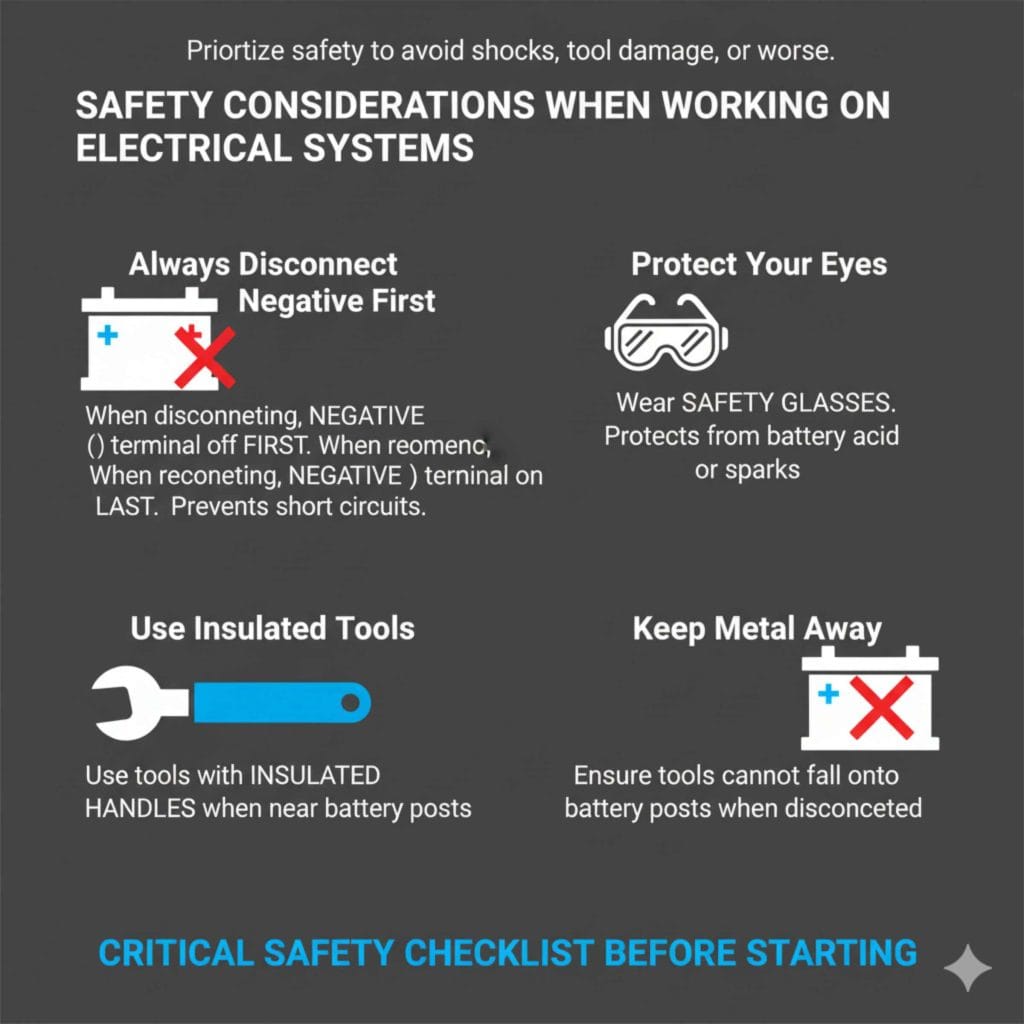
Safety Considerations When Working on Electrical Systems
Working around car batteries and control modules requires a bit of respect for electricity. Always prioritize safety to avoid minor shocks, tool damage, or worse.
Critical Safety Checklist Before Starting
Always Disconnect Negative First: When disconnecting the battery, the negative (-) terminal must come off first. When reconnecting, the negative (-) terminal must go on last. This prevents short-circuiting the system through the chassis ground if the positive wrench accidentally touches metal.
Protect Your Eyes: Wear safety glasses. Battery acid or sparks can cause harm.
Use Insulated Tools: If you are working near the battery posts, use tools with insulated handles when possible.
Keep Metal Away: When the negative terminal is off, ensure the wrench or tool you used cannot fall back onto the battery posts.
Frequently Asked Questions (FAQ) for Silverado TCM Reset
Q1: How long should I leave the battery disconnected to reset the TCM?
For a reliable reset, wait at least 15 minutes. Waiting 30 minutes is safer if you suspect deep memory retention, ensuring all residual electrical charge drains from the control modules.
Q2: Will resetting the TCM fix my Check Engine Light?
It will clear the light if the light was caused by a temporary, stored error in the TCM’s memory. However, if the underlying sensor or hardware issue causing the code still exists, the light will likely return shortly after driving.
Q3: Do I need a special tool to reset the TCM on a newer Silverado 1500 (2014+)?
For a simple soft reset of adaptive learning, the battery disconnect may work. But for a permanent, comprehensive reset of all codes across all modules, a capable OBD-II scanner that allows module-specific clearing is usually required for modern trucks.
Q4: My truck shifts perfectly right after the reset but shifts poorly again tomorrow. Why?
This means the relearn process failed or the TCM is relearning bad habits. Ensure you complete a proper, varied 20-mile relearn drive cycle immediately following the reset. If the problem persists, suspect a faulty sensor sending incorrect data to the TCM.
Q5: Is resetting the TCM bad for my transmission in any way?
No, resetting the TCM is generally harmless. It’s equivalent to rebooting a computer. You are simply wiping the memory where it stored learned driving patterns, forcing it back to baseline programming. It does not cause physical wear.
Q6: Can I reset the TCM without touching the main battery?
Yes, if you have an advanced scan tool, you can often communicate with and reset the TCM directly through the OBD-II port without disconnecting the battery. This is often cleaner as it leaves other vehicle settings (like radio presets) intact.
Conclusion: Taking Control of Your Silverado’s Shifting
You’ve successfully learned the proven steps for how to reset the transmission control module Chevy Silverado 1500. Whether you opted for the straightforward 15-minute battery pull or used a sophisticated scanner, you’ve taken the essential first step in diagnosing and potentially fixing sluggish or rough transmission performance.
Remember, the key takeaway is the drive afterward. Give your Silverado time and varied road conditions to complete its relearn cycle. For most minor software hiccups, this simple electronic reboot is often all that’s needed to restore that smooth, confident shifting feel you expect from your truck. If the issues persist, you now know the next diagnostic steps involve checking sensors or internal components. Keep up the great work taking control of your own vehicle maintenance!