
The most effective way to control the transmission of infection involves a layered approach: excellent hand hygiene, staying home when sick, proper respiratory etiquette, and keeping high-touch surfaces clean. Consistency across these simple daily habits is your best defense.
Mastering Vehicle Transmission Care: Your Simple Guide to Reliability
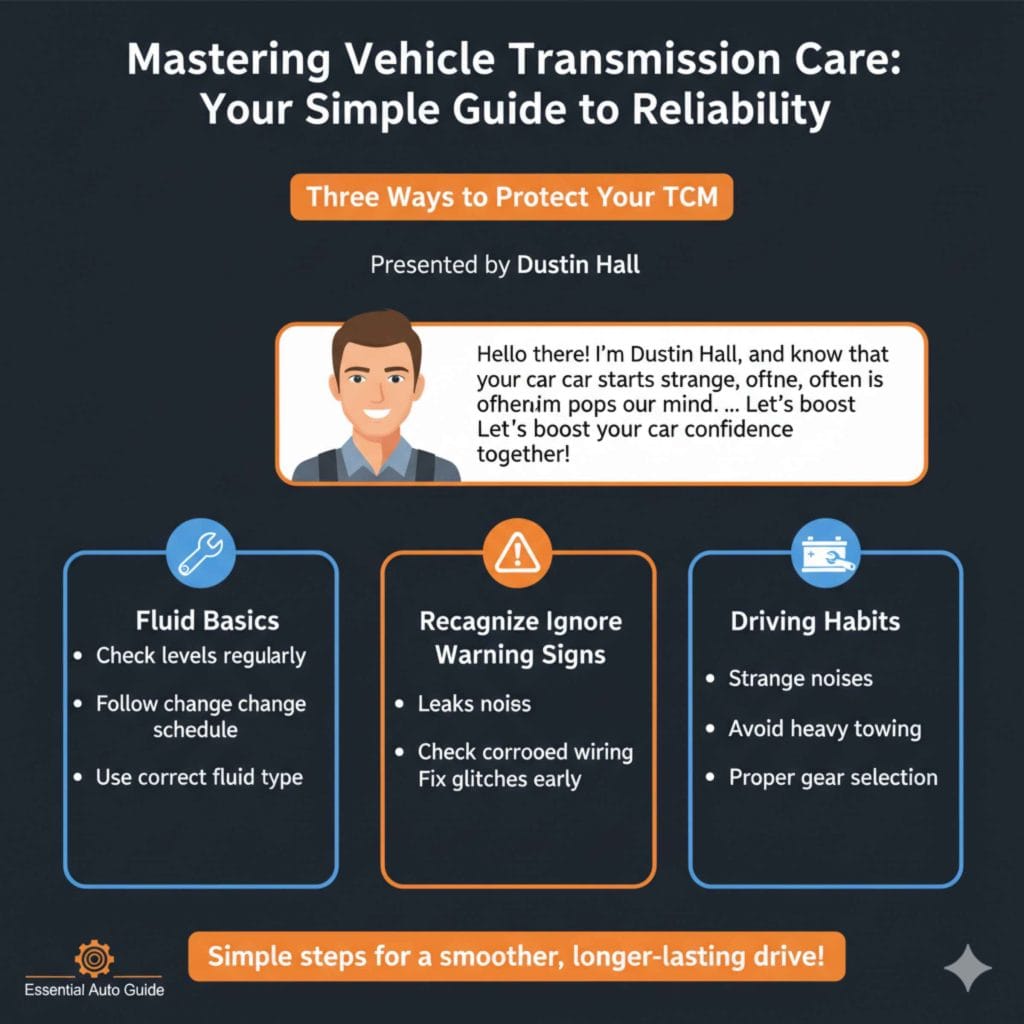
Hello there! I’m Dustin Hall, and I know that when your car starts acting strange, the transmission is often the first thing that pops into your mind. It sounds complicated, expensive, and maybe even a little scary. But don’t worry! Understanding how to keep your transmission happy isn’t just for professional mechanics. It’s essential for keeping your car running smoothly and saving you big repair bills down the road. We are going to break down the absolute best, most effective ways to manage and protect your transmission using easy, everyday steps. Let’s boost your car confidence together!
This guide will show you the simple maintenance checks that make the biggest difference. We’ll cover fluid basics, recognizing warning signs, and how driving habits play a huge role. By the end, you’ll feel much more in control of this vital part of your vehicle.
Why Transmission Control Matters for Every Driver
Your car’s transmission is the powerhouse that shifts power from the engine to the wheels. It lets you move at different speeds without stalling. Think of it as the gearbox of your car’s energy system. When the transmission struggles, your whole ride suffers.
Ignoring transmission issues leads to two main problems:
- Poor Performance: Jerky shifting, slipping gears, or strange noises make driving stressful and unsafe.
- Expensive Repairs: Transmission fixes are often among the costliest repairs a car can face. Small preventative steps save thousands later.
The “most effective way to control” your transmission isn’t one big repair; it’s a series of small, consistent habits. We’ll focus on making these habits easy for you to adopt.
Pillar 1: The Non-Negotiable Role of Transmission Fluid
If your transmission were a human body, the fluid would be the blood. It lubricates moving parts, cools the system, and helps hydraulic pressures build up for smooth shifting. This is, hands down, the most critical element for control.
Understanding Fluid Levels and Quality
You must regularly check the fluid. How you do this depends on your car type:
Automatic Transmissions (ATF)
Most traditional automatic transmissions have a dipstick—just like your engine oil. You check this while the engine is warm and the car is level.
- Park on a flat surface and let the engine run for a few minutes (check your owner’s manual for exact starting instructions).
- Pull out the dipstick, wipe it clean, reinsert it fully, and pull it out again.
- Check that the fluid level falls between the “Full” and “Add” marks.
- Observe the color: Healthy fluid is usually bright red or pink.
Continuously Variable Transmissions (CVT) and Manuals
CVTs often do not have a friendly dipstick for the average driver. Manual transmissions generally require checking a side-level plug, which is best left to a trusted professional to avoid a huge, messy spill.
Warning Sign: If the fluid looks dark brown or black, or smells burnt (like toast), it’s badly degraded and needs immediate attention. Do not wait.
When to Change Transmission Fluid
This is where many drivers slip up. Transmission fluid breaks down over time from heat and friction. While older wisdom suggested very long intervals, modern driving conditions often demand more frequent service. Always consult your owner’s manual first, as manufacturers provide the most accurate schedule for your specific vehicle.
| Driving Condition | Typical Fluid Change Interval (Miles) | Why This Matters |
|---|---|---|
| Normal Driving (Highway/City Mix) | 60,000 – 100,000 miles | Maintains lubrication properties. |
| Heavy Towing or Mountain Driving | 30,000 – 60,000 miles | Extreme heat breaks down fluid much faster. |
| Stop-and-Go City Traffic (Hot Climates) | 40,000 – 75,000 miles | Frequent shifting creates more heat build-up. |
For expert advice on fluid types and performance, resources like the Society of Automotive Engineers (SAE) provide standards that guide fluid manufacturers, ensuring you select the correct product for optimal performance (Visit SAE for technical standards).
Pillar 2: Adopting Smart Driving Habits
The most effective control often starts right under your right foot. How you drive directly impacts how hard your transmission has to work.
Avoid Aggressive Driving
Quick take-offs and slamming the brakes create immense stress on transmission clutches and components. These sudden demands generate excess heat, which is the sworn enemy of transmission fluid.
Simple Habit Change: Accelerate gently from a stop. Give the car time to smoothly engage the gears. Think of it as giving your transmission a slight, courteous nod instead of a forceful shove.
The Right Way to Shift (Automatic vs. Manual)
For Automatic Drivers:
- Never shift into Reverse (R) or Drive (D) while still moving backward or forward rapidly. Come to a near-complete stop first.
- If you are waiting for a long period (like a long train crossing), shifting into Neutral (N) can slightly reduce strain, though modern automatics handle short stops fine in Drive.
For Manual Drivers: The “Clutch-in, Clutch-out” Rule
The clutch pedal should be pressed down just enough to disengage the engine from the transmission, held smoothly, and then released smoothly. Linger on the clutch pedal (riding the clutch) causes premature wear on the expensive clutch disc.
The Importance of Cooling
Overheating is a major cause of transmission breakdown. If you notice your temperature gauge creeping up, pull over safely. Towing or continuing to drive an overheating transmission can lead to immediate, catastrophic failure.
Ensure your radiator and transmission cooler (often integrated near the radiator) are clean and free of debris. A clogged external cooler prevents necessary heat transfer.
Pillar 3: Recognizing Early Warning Signs
Controlling potential problems means catching them before they turn into major repairs. Your car gives you clues—you just need to know how to listen and feel for them.
Common Warning Signs to Watch For
- Delayed Engagement: When you put the car in Drive or Reverse, there is a noticeable pause (more than a second or two) before the gear actually engages.
- Slipping Gears: You accelerate, the RPMs rise, but the car doesn’t speed up proportionally, or the gear seems to “float” before finally catching.
- Rough or Hard Shifting (Clunking): Shifts feel harsh, like you’ve been bumped from behind, particularly when accelerating moderately.
- Strange Noises: Whining, humming, or clunking sounds that change pitch with vehicle speed, not engine RPMs.
- Fluid Leaks: Puddles under the car that are reddish or brownish, especially under the middle or front section of the car.
When to Contact Dustin (Your Trusted Mechanic)
If you notice any of the above symptoms, it is crucial to seek professional diagnosis promptly. Delaying often makes the required repair more complex or damages other components.
Actionable Step: If you suspect slippage, stop driving aggressively immediately. Driving a slipping transmission causes severe overheating and friction damage very quickly.
Advanced Control: Understanding Transmission Filters
In most automatic transmissions, the fluid passes through a filter that catches any debris, metal shavings, or sludge before it can circulate and cause internal damage. Think of it as the transmission’s kidneys.
Filter Replacement vs. Fluid Flush
This is a hotly debated topic among mechanics. Here is the simple truth for beginners:
- Drain and Fill: This procedure removes only the fluid currently in the pan (usually 40–60% of the total volume). Changing the filter is usually done during this service. This is the safest, least disruptive method for maintenance.
- Full Flush: This uses specialized equipment to push all old fluid out and replace it with new fluid.
The Cautionary Tale: If a transmission has been neglected for years and is filled with gunk, a full flush can sometimes dislodge large pieces of debris that then clog the narrow fluid passageways or the valve body, causing immediate failure. For older, poorly maintained transmissions, a simple drain-and-fill is often the safer maintenance choice.
When do you change the filter? Many shops recommend changing the filter every time the fluid is serviced (drain-and-fill). If the pan needs to be dropped to access the filter, it’s a perfect time to visually inspect for excessive metal shavings.
Manual Transmission Control: Mastering the Linkage
Manual transmissions require more direct driver input, which means vehicle control is heavily dependent on your physical connection to the gearbox.
Gear Linkage and Shifter Bushings
Feel is everything in a manual car. If shifting becomes sloppy, stiff, or vague, the problem is often not inside the transmission itself but in the linkage—the rods or cables connecting your gear stick to the transmission box.
These connections use rubber or plastic bushings that wear out. When they wear, you get:
- Inability to firmly select a gear (it pops out).
- Excessive sloppiness in the shifter movement.
Replacing worn shifter bushings is a relatively inexpensive fix that dramatically improves the feeling of control and precision.
Synchronizers (Synchros)
Synchros are small brass rings inside the transmission that match the speed of the gear you are selecting to the speed of the shaft inside the transmission. This allows for smooth engagement.
Sign of a Bad Synchro: Grinding noises when shifting into a specific gear (often 2nd or 3rd). This means the synchro isn’t doing its job. If you hear grinding, avoid that gear until it can be inspected.
The Role of Aftermarket Parts and Fluids
When it comes to transmission control, you must stick to what your vehicle designer intended. This vehicle part is precision-engineered.
Fluid Compatibility is Crucial
This is not the place to experiment. Modern transmissions, especially those with 8, 9, or 10 speeds, or CVTs, use highly specialized fluids. Using the wrong viscosity or specification can cause immediate friction problems and overheating.
Always Verify: Cross-reference the fluid required by your OEM (Original Equipment Manufacturer) with the fluid you purchase. Reputable manufacturers label their products clearly, often noting which OEM specs they meet, adhering to guidelines such as those provided by the National Transportation Business standards for quality assurance.
When to Upgrade: Torque Converters (Automatics)
The torque converter connects the engine to the transmission in automatics. For drivers engaging in performance driving (heavy towing or hauling), an upgraded or heavy-duty torque converter might be beneficial as it handles heat and load better than the factory version. For the average driver, however, sticking with OEM quality parts is the most effective way to maintain reliability.
Troubleshooting for Maximum Control: A Quick Chart
When something feels off, use this quick reference to guide your next step toward maintaining control.
| Symptom Observed | Likely Cause Area | Immediate Action to Gain Control |
|---|---|---|
| Slight jerking during shifting. | Low fluid or slightly old fluid. | Check fluid level immediately. If full, schedule a drain-and-fill soon. |
| Loud clunk when shifting into Drive. | Worn-out transmission mount or severe internal wear. | Inspect mounts visually. Avoid driving until checked professionally. |
| RPMs rise, but car won’t accelerate fully. | Significant fluid slippage. | Stop aggressive driving. Check fluid condition; if burnt, tow to shop. |
| Hard to get the gear stick into 1st or R (Manual). | Linkage issue or clutch adjustment needed. | Inspect clutch pedal height; adjust or check exterior linkage bushings. |
The Easiest Form of Control: Gentle Driving
It might sound too simple, but the most preventative maintenance you can perform costs zero dollars and requires only a slight shift in mindset: gentle driving control.
Warm-Up Procedure
Just like your engine needs a moment to wake up, so does your transmission fluid. Especially in cold weather, allow a few seconds after starting your car before shifting out of Park. This lets the pump circulate the thick, cold fluid throughout the system.
Pro Tip for Cold Starts: If the day is freezing, shift through all the gears (P, R, N, D, L, or 1, 2, 3) while remaining parked, pausing for a second in each gear. This pressurizes and warms the fluid in those paths before you put a heavy load on them by moving.
Using Lower Gears Wisely (L or 1/2/3 Settings)
When driving down long, steep hills, always shift your automatic transmission into a lower gear setting (L, 2, or 3). This is engine braking.
Why this matters: If you ride your brakes down a long hill, your brake pads will overheat and fade (lose stopping power). Using engine braking preserves your brakes and keeps the transmission from excessive downshifting and upshifting, which saves wear and tear.
Long-Term Confidence: When to Rebuild vs. Replace
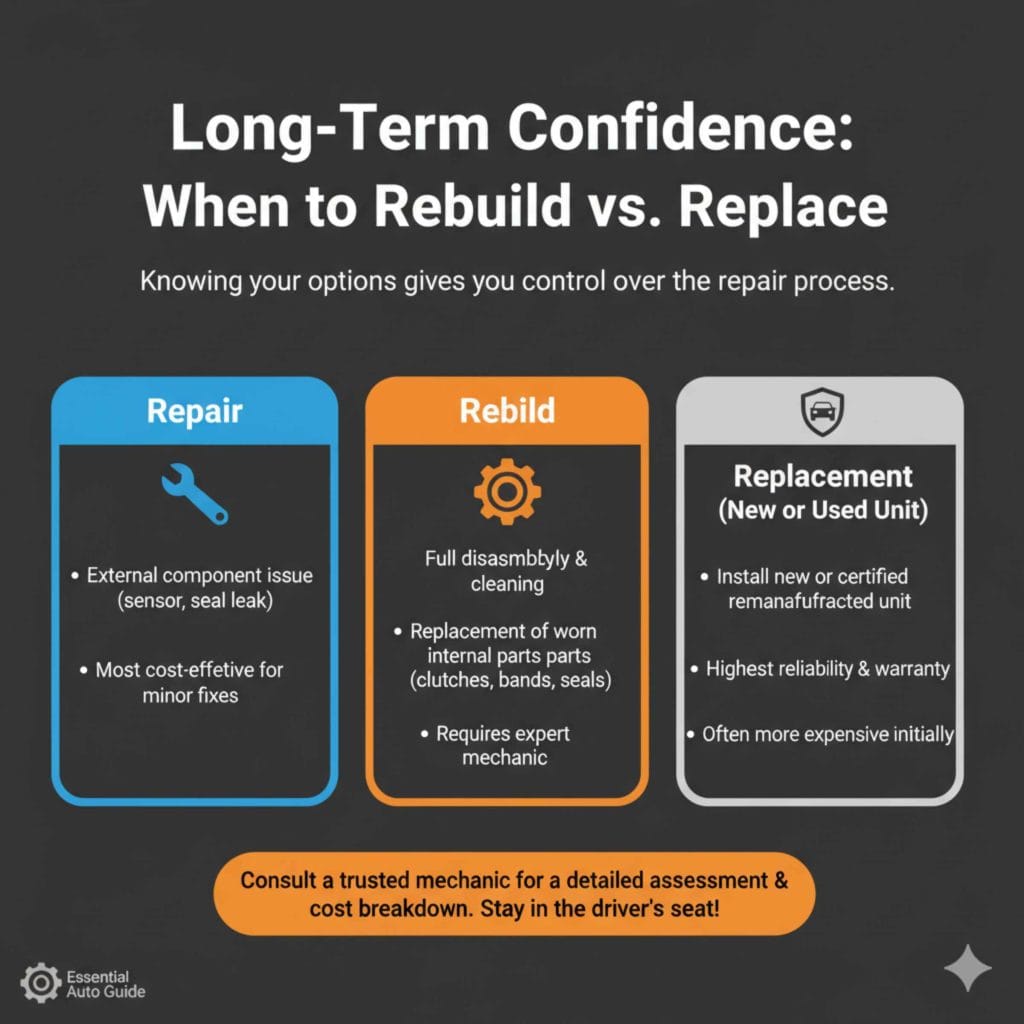
Sometimes, despite the best care, transmissions fail. Knowing your options gives you control over the repair process.
- Repair: If the issue is confined to an external component (like a sensor or a seal leak), a focused repair is often the most cost-effective solution.
- Rebuild: A shop takes the transmission out, completely disassembles it, cleans it, replaces worn internal parts (clutches, bands, seals), and puts it back in. Expertise matters here—a bad rebuild is worse than a breakdown.
- Replacement (New or Used Unit): Installing a completely new or certified remanufactured unit. This generally offers the most guaranteed reliability, often coming with a solid warranty.
Your mechanical advisor—the mechanic you trust—will guide you based on the diagnosis. A good mechanic will always present you with accurate cost breakdowns so you remain in the driver’s seat regarding your budget. Always ask for a detailed assessment first.
Frequently Asked Questions (FAQ)
Q1: Can I fix transmission slipping just by adding fluid?
A: Adding fluid can correct problems caused by low fluid levels. However, if the fluid is burnt or extremely dark, simply adding more fluid won’t fix the internal damage that heat and friction have already caused. Always check the quality of the fluid, not just the level.
Q2: How often should I get my manual transmission fluid checked?
A: Manual transmission fluid generally lasts longer than automatic fluid because there is less complex internal heat generation. Most manufacturers suggest checking it every 30,000 miles and changing it between 60,000 and 100,000 miles, depending on your driving intensity.
Q3: Is it safe to shift my automatic car into Neutral on the highway to save gas?
A: No, this is generally not recommended and can actually harm your transmission. Modern transmissions are designed to run most efficiently in Drive (or Overdrive). Coasting in Neutral can cause the transmission to run without proper lubrication, especially if you coast for very long distances, leading to unnecessary wear.
Q4: What exactly causes transmission fluid to smell burnt?
A: A burnt smell means the friction material (clutch material) inside the transmission is overheating and burning up. This is a sign of excessive slipping or internal mechanical failure. It requires immediate professional attention, as the contamination is spreading throughout the system.
Q5: How can I test if my transmission mounts are bad?
A: With your foot firmly on the brake, gently shift from Park to Reverse, pause, and then shift to Drive. If you feel a loud clunk, excessive vibration, or notice the engine lurching noticeably in the engine bay, worn or broken transmission mounts are likely the cause. Bad mounts allow the transmission and engine to move too much under load, which can damage internal components over time. A visual inspection by a mechanic will confirm cracked rubber or separated mounts.
Q6: Does towing or hauling heavy loads damage my transmission?
A: Yes—if not done properly. Towing heavy loads significantly increases heat and stress inside the transmission. If your vehicle isn’t rated for the weight, or if you tow without proper cooling, fluid breakdown and clutch damage can occur quickly.
Final Conclusion: The Most Effective Way to Control Your Transmission
The most effective way to control and protect your transmission isn’t complicated—it’s consistent care, smart driving habits, and early attention to warning signs. Transmission failures rarely happen overnight; they develop slowly when heat, old fluid, and aggressive driving are allowed to stack the odds against you. By:
- Maintaining clean, correct transmission fluid
- Driving smoothly and avoiding unnecessary strain
- Responding quickly to leaks, noises, or shifting changes
- Using the right parts and fluids specified by your vehicle manufacturer
—you stay in control of one of the most expensive and critical systems in your vehicle.
Think of transmission care like defensive driving: calm, proactive, and intentional. These small habits dramatically extend lifespan, improve performance, and save thousands in avoidable repairs. Stay ahead of problems, and your transmission will reward you with years of smooth, reliable operation—mile after mile.