
Quick Summary: Is it safe to drive with a squeaky clutch pedal? Generally, a squeaky clutch pedal is not immediately dangerous, but it signals needed lubrication or a minor wear issue. You should drive cautiously and address the sound soon. Ignoring it can lead to bigger, more expensive transmission problems down the road.
That annoying squeak when you press the clutch pedal can really take the fun out of driving. You hear that little groan every time you shift gears, and you wonder if your car is about to turn into a very expensive paperweight. Don’t worry! Many drivers experience this common little annoyance in manual transmission cars. It is usually just a sign that something needs a little bit of oil, not a sign of total transmission failure. We are here to clear up the confusion, explain what causes that sound, and tell you exactly when you must worry. Let’s get your driving experience quiet and confidence-boosting again by figuring out the source of that noise and how to fix it simply.
As an everyday driver, your main concerns are safety and reliability. When a strange noise pops up, it’s natural to worry about safety first. If your clutch pedal squeaks, it’s generally safe for short trips, but it’s a definite sign something needs attention. Think of it like a smoke detector—it doesn’t mean the house is on fire right now, but it means you should check the batteries immediately.
Ignoring a persistent squeak is like ignoring a loose screw on a ladder. It might hold fine for a bit, but eventually, it will cause a bigger problem. This guide will walk you through the easy cause-and-effect relationship of a squeaky pedal, the safe speed at which you should address it, and simple steps you can take right now.
Understanding How Your Clutch Pedal Works (The Simple Version)
Before we fix the squeak, let’s quickly look at what your clutch pedal does. The clutch is the bridge between your engine (which is always spinning) and your wheels (which need to stop spinning sometimes). When you push the clutch pedal down, you are temporarily disconnecting the engine power from the wheels so you can safely shift gears.
This whole system involves many moving parts, pivots, and linkages near the pedal inside the driver’s footwell, and hydraulic or mechanical connections going down to the transmission itself. The squeak almost always comes from the part you touch—the pedal assembly.
Common Causes of a Squeaky Clutch Pedal
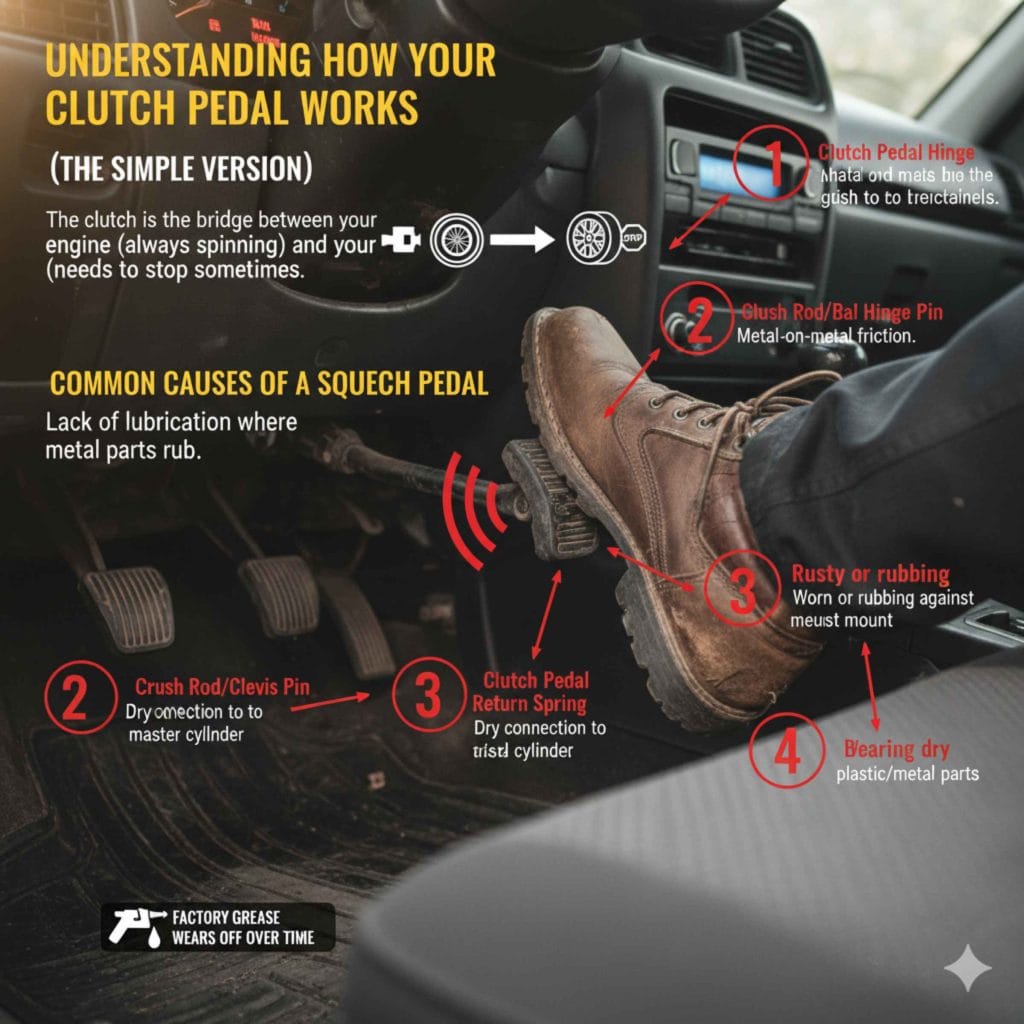
Most clutch pedal noises come from lack of lubrication where metal parts rub against each other. These parts are doing a lot of work every single day, and the factory grease wears off over time.
Here are the top culprits for that squeaking sound:
- The Clutch Pedal Hinge Pin: This is the main pivot point where the pedal arm swings. Metal rubbing on metal without grease is the number one cause of squeaking.
- The Push Rod/Clevis Pin Connection: This is where the pedal assembly connects to the master cylinder push rod (in hydraulic systems). If the connection point or the bushing here is dry, it squeaks loudly.
- Clutch Pedal Return Spring: Some cars have a spring that helps push the pedal back up. If this spring is rusty or rubbing against its mount, it can chirp or squeak.
- Bearings or Bushings: Inside the assembly, small plastic or metal bushings can wear down or dry out, causing friction and noise.
Immediate Safety Assessment: When to Worry?
So, is it truly safe or not? We need to distinguish between a simple noise and a sign of failure. This table helps you quickly categorize your sound:
| Symptom Level | What It Sounds Like | Safety Implication |
|---|---|---|
| Level 1: Annoying & Minor | A simple, high-pitched “squeak” or “creak” only when pressing the pedal. | Safe for now, needs lubrication soon. |
| Level 2: Concerning & Changing | The squeak is getting louder, or you hear a grinding noise alongside the squeak. Shifting feels slightly rougher than normal. | Reduce driving distance. You may have worn plastic bushings that need replacement. |
| Level 3: Serious Failure Warning | The pedal feels spongy, sticks to the floor, pops back up slowly, or you hear a loud ‘clunk’ when engaging gears. | Do not drive long distances. This could indicate a critical failure in the clutch master cylinder or hydraulic system. Call a mechanic. |
For Level 1 and 2 issues, remember that clutch components are covered by standards that ensure general vehicle reliability. For instance, the National Highway Traffic Safety Administration (NHTSA) emphasizes proper maintenance for all critical safety systems, and the clutch is essential for controlled stopping and starting.
Step-by-Step: How to Quiet That Squeaky Clutch Pedal Yourself
The good news is that a simple squeak is perhaps the easiest noise to fix in your entire car! We often save time and money by tackling these small issues ourselves. All you need is a flashlight, a rag, and some good lubricant.
Tools and Materials You Will Need:
- Flashlight or headlamp
- Protective gloves (optional, but recommended)
- White Lithium Grease (Best choice for metal pivots) OR Silicone Spray Lubricant
- A clean rag or paper towels
- A small brush or cotton swab (for precise application)
Procedure (For Lubricating the Pedal Assembly):
This entire process happens under the dashboard on the driver’s side—you will be working with your feet!
- Park Safely and Find Good Light: Place your car on a level surface, engage the parking brake firmly, and turn the ignition off. Lie on the floor mat facing the pedals, using your flashlight to see up behind the pedal assembly.
- Locate the Pivot Points: Look for the main hinge where the clutch pedal pivots. You are looking for any metal pin (the hinge pin) or any small rod connecting the pedal to the metal bracket above it.
- Identify the Source of Noise: Have a helper slowly press the clutch pedal while you watch carefully. Note exactly where the motion causes the noise—is it the main pin? Is it where the rod enters the firewall?
- Clean the Area (Important Step!): Before applying new lubricant, gently wipe away any visible dirt, dust, or old, crusty grease from the pivot points using your rag. This ensures the new grease makes direct contact with clean metal.
- Apply the Lubricant:
- If using White Lithium Grease, apply a small dab directly onto the hinge pin and any visible bushings or connections. Grease stays put longer, making it ideal for pivot points.
- If using Silicone Spray, hold the straw tip close to the joint and spray a quick burst, aiming only for the moving parts. Be careful not to spray too much onto the carpet.
- Work the Pedal: Have your helper slowly press the clutch pedal up and down about 10 to 15 times. This helps the new lubricant spread evenly across all the contact surfaces.
- Test and Reassess: Press the pedal yourself. If the squeak persists, check if you missed a connection point. Sometimes the return spring rubbing against its mount needs a light spray of silicone. Reapply if necessary, but less is more!
Congratulations! If the sound was due to dryness, your pedal should now operate smoothly and quietly. This simple lubrication can often solve the problem for months or even years.
When Lubrication Isn’t Enough: Deeper Issues
If you followed the lubrication steps perfectly and the squeak persists, the problem is likely slightly more complex than just dry metal. This moves us into Level 2 or 3 territory, which might require a visit to a trusted professional mechanic.
Worn Bushings or Bearings
The little plastic or rubber sleeves (bushings) that allow the metal pins to rotate smoothly can wear down. When they wear out, the metal starts rubbing against the housing, causing a crunching or grinding squeak that lubricant cannot fix.
What to expect: Bushings are usually inexpensive parts, but replacing them requires removing the pedal assembly from the firewall, which is a more involved job.
Hydraulic System Issues (Master/Slave Cylinder)
If your clutch uses hydraulic fluid (like your brakes), the squeak near the pedal could be coming from the clutch master cylinder. This component converts the force of your foot into hydraulic pressure sent to the transmission.
A dry seal or a worn piston inside the master cylinder can cause a squeak when it moves. More importantly, if the seals are failing, you might notice:
- The pedal gradually sinking toward the floor.
- Your clutch fluid reservoir level dropping (check this near your brake fluid reservoir).
- Difficulty shifting gears, particularly into first or reverse.
Hydraulic issues directly affect your ability to disengage the engine from the gearbox. If you suspect hydraulic trouble, stop driving immediately, as you could get stranded if the system completely fails. Reputable sources like those at automotive engineering departments often stress the importance of paying attention to hydraulic feedback mechanisms.
Can I Drive on the Highway With a Squeaky Clutch?
For the average, simple squeak (Level 1), driving short distances—like running errands around town or going home—is generally acceptable. However, prolonged highway driving or heavy stop-and-go traffic puts constant, repetitive stress on the pedal assembly and the systems connected to it.
If you must drive, follow these guidelines to minimize risk:
- Minimize Shifting: Plan your routes to avoid heavy traffic. The more you use the clutch, the more strain you put on the source of the sound.
- Avoid Hard Launches: When starting from a stop, be gentle. Don’t dump the clutch quickly; ease off the pedal slowly to reduce friction and sudden noises.
- Listen Intently: Keep your radio down. If the squeak changes pitch, becomes a grind, or is accompanied by a change in how the car shifts, pull over safely at the first opportunity and call for a tow if necessary.
Remember, even if the squeak stays the same, you are risking an abrupt failure under load. Proactive maintenance is always cheaper than emergency repairs. Fixing a simple squeak costs next to nothing; replacing an entire clutch assembly because a worn bushing damaged the pressure plate can cost hundreds or even thousands of dollars.
Preventing Future Clutch Pedal Noises
Once you have quieted your pedal, you want to keep it quiet! Prevention is the core of good car ownership. A little preventive care goes a long way toward building confidence in your vehicle.
Regular Clutch Checks:
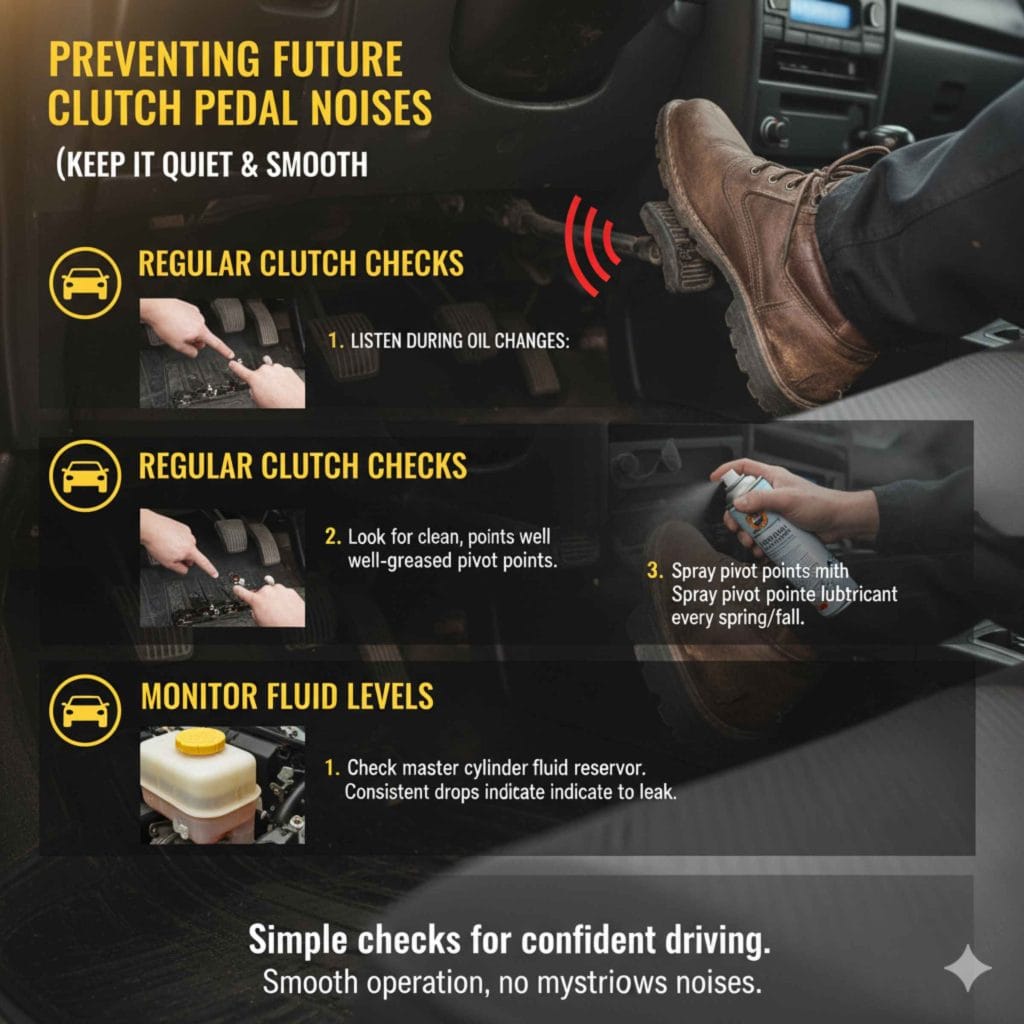
- Listen During Oil Changes: When your car is on a lift for an oil change or tire rotation, take a moment (or ask your technician to check) the clutch pedal hinge and rod connections. They should look clean and well-greased.
- Annual Lubrication Check: If your car gets driven daily (especially in dusty or wet conditions), consider treating those pivot points with a quick spray of silicone lubricant every spring or fall. You don’t need to take anything apart; just spray the exposed moving joints.
- Monitor Fluid Levels: If your car has a hydraulic clutch, check the master cylinder fluid reservoir level simultaneously with your brake fluid when you check your washer fluid. Consistent drops signal a leak to investigate immediately.
By incorporating this simple preventative check into your routine, you ensure smooth operation and avoid those mysterious noises that suddenly appear.
Frequently Asked Questions (FAQ) About Squeaky Clutches
Q1: Can a squeaky clutch pedal cause my car not to start?
A: No, typically not directly. Cars with manual transmissions often have a clutch safety switch that keeps the starter from engaging unless the pedal is fully depressed. A squeak means the switch is likely working, but if the pedal sticks or fails to disengage the switch properly, it could prevent starting. However, the squeak itself isn’t the cause of starting failure.
Q2: Is the noise coming from inside the cabin or under the hood?
A: Almost always, a squeaky clutch pedal noise originates inside the cabin where you press it. If you hear a loud squeal or groan when you shift gears while the car is running, but the pedal feels fine, the noise is coming from the transmission components (like the throw-out bearing), which is a more serious issue.
Q3: What is the best lubricant to use on the clutch pedal hinge?
A: White Lithium Grease is generally the best choice for metal-on-metal pivots because it is thick and resists running off or drying out quickly. Silicone spray lubricant is a great, cleaner alternative if you are worried about grease dripping onto your carpet.
Q4: How long can I safely drive with a squeaky pedal?
A: If it is a simple squeak (Level 1), you can usually drive for a week or two while you arrange for a quick fix. If the squeak is accompanied by any grinding, poor shifting, or a mushy pedal feel, you should limit driving immediately to the nearest service center.
Q5: My clutch feels really stiff and squeaks. Is this related?
A: Yes. Stiffness, often called “hard pedal feel,” plus a squeak, strongly indicates a problem with the clutch master cylinder or the linkage attached to it. The system is struggling to move fluid or overcome friction, making the effort much harder for your foot.
Q6: Do automatic cars have a clutch pedal that can squeak?
A: No. Automatic transmissions use a torque converter instead of a clutch to manage the power transfer between the engine and transmission. Therefore, you will not have a clutch pedal on an automatic car that can squeak.
Conclusion: Quiet Confidence on the Road
Dealing with unexpected noises in your vehicle can definitely test your confidence, but we hope this guide has shown you that a squeaky clutch pedal is usually a minor, fixable issue. For most drivers, the solution is often as simple as applying a bit of White Lithium Grease to the pivot points behind the pedal. This small act of maintenance can save you headaches and expense down the line.
Remember the safety checklist: If the noise is just a squeak, you’re likely fine for short trips while you plan a quick lube session. If you detect grinding, sponginess, or a loss of pedal function, treat it as a serious warning and minimize driving until a professional has inspected the hydraulic system or worn bushings. By listening to these subtle cues and performing basic upkeep, you ensure your manual transmission car remains reliable and, just as importantly, quiet. Keep enjoying smooth, confident shifts!