
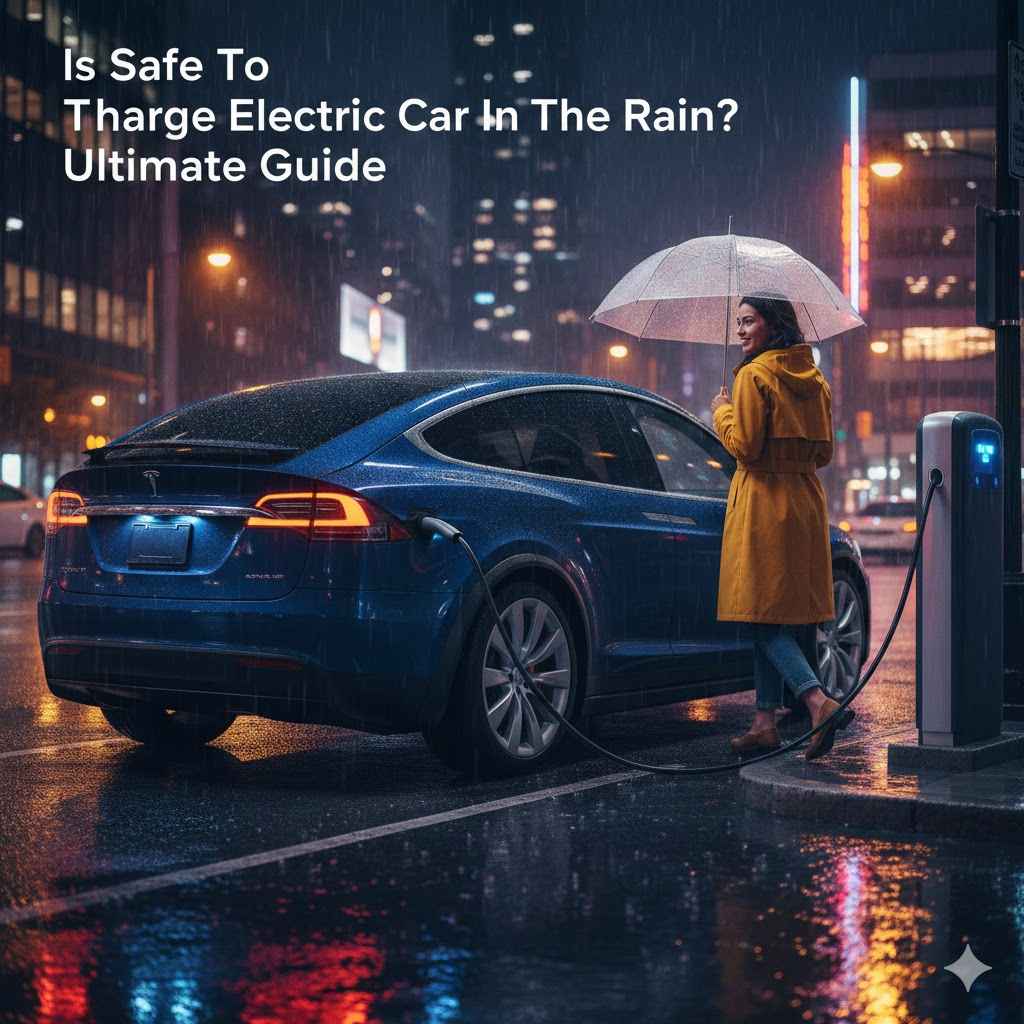
Yes, it is completely safe to charge your electric car in the rain. EVs and charging stations are specifically designed and engineered with multiple layers of safety features, including weatherproof seals and automatic shut-offs. The system ensures electricity only flows when a secure, watertight connection is made, protecting you from any risk of electric shock.
You pull into your driveway after a long day, and just as you grab your charging cable, the clouds open up. A downpour starts, and you pause, wondering, “Is it really safe to charge my electric car in the rain?” It’s a common worry. We all learned from a young age that water and electricity are a dangerous mix. The thought of plugging a high-voltage cable into your car during a storm can feel scary.
But here’s the good news: you can relax. Your electric vehicle (EV) and its charger were built by expert engineers who thought about this exact scenario. They are designed to handle rain, snow, and all sorts of weather. In this guide, I’ll walk you through exactly why it’s safe, how the technology protects you, and the simple steps you can take to charge your car with total confidence, no matter what the weather is doing.
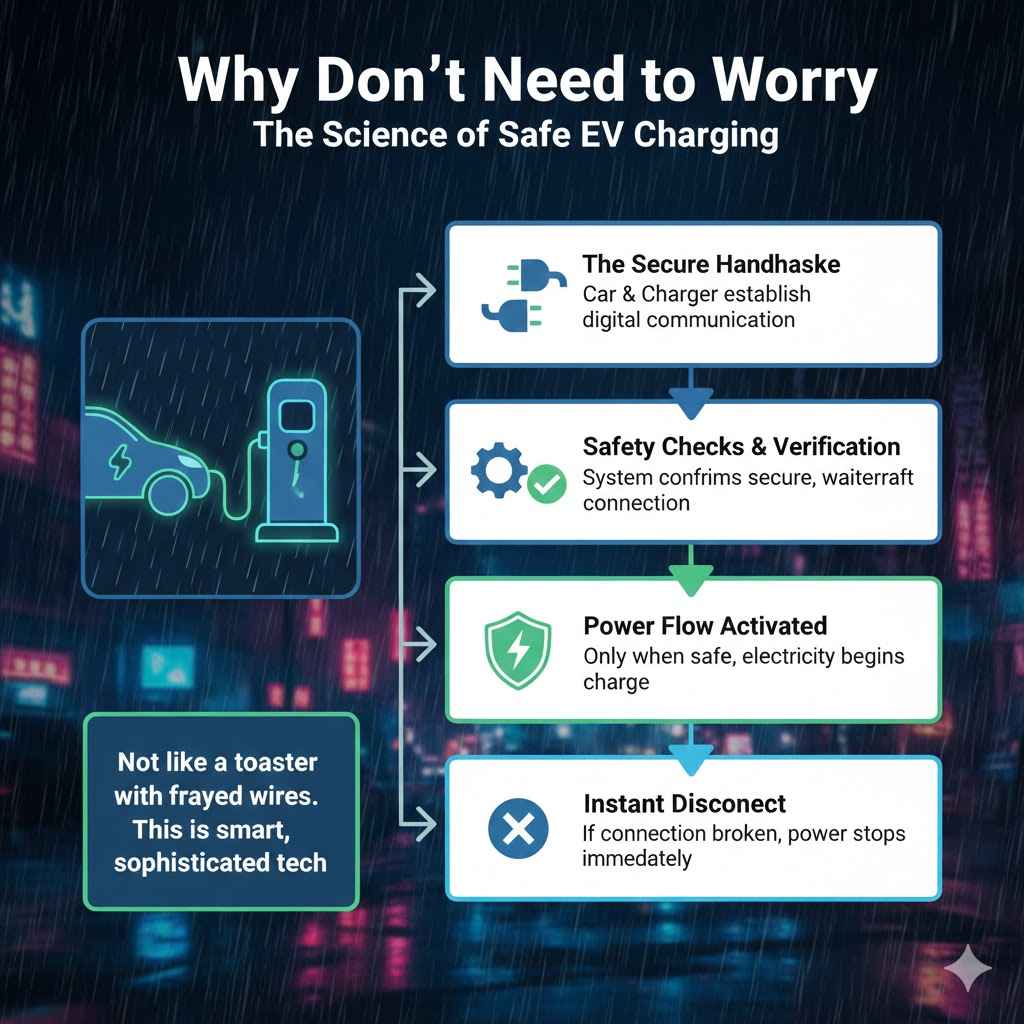
Why You Don’t Need to Worry: The Science of Safe EV Charging
Charging your EV isn’t like plugging in a toaster with frayed wires. It’s a smart, sophisticated process. The real magic happens before a single jolt of electricity enters your car’s battery. Think of it less like a simple plug and more like a secure, digital handshake between your car and the charger.
When you connect the charging handle to your car, it forms a sealed, watertight connection. But the power doesn’t turn on yet. Instead, the charger and the car start communicating. They run a series of safety checks to make sure everything is perfectly connected and secure. Only after both the car and the charger agree that the connection is safe and properly locked in does the electricity begin to flow. If at any point that secure connection is broken, the power flow stops instantly—long before you could ever be at risk.
Built-In Safety Features That Protect You and Your Car
EV charging systems are packed with safety features that make charging in the rain completely routine. These aren’t just suggestions; they are industry-wide standards. Let’s look at the key players that keep you safe.
Ground Fault Circuit Interrupter (GFCI)
You might already have GFCI outlets in your kitchen or bathroom. They are the ones with the little “test” and “reset” buttons. A GFCI monitors the flow of electricity constantly. If it detects even a tiny imbalancelike electricity trying to go somewhere it shouldn’t, such as through water—it shuts off the power in a fraction of a second. EV chargers have this technology built right in, providing a powerful line of defense against electrical faults.
The Pilot Signal (The Digital Handshake)
As we mentioned, the charger and your car talk to each other through a low-voltage connection called the pilot signal. This signal confirms several things before charging begins:
- Is the plug correctly inserted into the car?
- Is the connection locked and secure?
- Is the system ready to accept power safely?
If the answer to any of these questions is no, the main power will not turn on. This “handshake” ensures that high-voltage electricity never flows through an open or insecure connection.
Weatherproof and Insulated Components (IP Ratings)
EV charging connectors, cables, and ports are designed to be weatherproof. They have what’s known as an Ingress Protection (IP) rating. This rating tells you how well the equipment is sealed against things like dust and water. Most charging equipment has a rating of at least IP44 when unplugged, which protects against splashing water. When plugged in, the connection is typically rated even higher, often IP55 or more, making it watertight and safe even in heavy rain. For more information on these standards, you can look into the SAE J1772 standard that governs EV charging in North America.
Automatic Power Cut-Off
If the charging cable is ever damaged or if the connection to the car is compromised, the system is designed to immediately stop the flow of electricity. This fail-safe prevents any potential for electrical shock. The same is true when your car is finished charging; the station automatically stops sending power.
A Step-by-Step Guide to Charging Your EV Safely in the Rain
Even though the system is designed to be safe, following a few simple steps can give you extra peace of mind. Here’s how to charge your car confidently in wet weather.
- Inspect Your Equipment: Before you do anything, take a quick look at your charging cable and the charger itself. Check for any signs of damage, like cracks in the casing or exposed wires. If you see anything that looks wrong, do not use it.
- Keep Connectors Dry (If Possible): While the connection is weatherproof, it’s always good practice to keep things as dry as you can. Give the charging handle a quick shake to remove any excess water before you plug it in. Try to stand between the rain and the car’s charging port to shield it as you connect.
- Plug the Handle into the Car First: Always connect the charging handle securely to your car’s charging port before you activate the charger or plug it into the wall. You should hear a “click” to confirm it’s locked in place. Your car will then begin its safety check with the charger.
- Activate the Charger: Once the handle is locked into your car, you can plug the other end into the power outlet (for Level 1) or ensure the public charging station is activated. Since the digital handshake has already confirmed a safe connection, the electricity will begin to flow.
- Confirm Charging Has Started: Check your car’s dashboard or the charging station’s indicator lights to make sure the charging session has begun successfully.
- Unplugging Safely: When you’re ready to unplug, first stop the charging session through your car’s interface or the charging station app. Then, unlock the connector from your car and pull it out. Aim the connector downward so any water on the handle drips out, and put the protective caps back on.
Quick Safety Checklist: What to Look For Before You Plug In
A quick visual check can prevent most potential issues. Use this table as your go-to checklist before charging in bad weather.
| Check Item | What to Look For |
|---|---|
| Charging Cable | Check for cracks, exposed wires, or heavy wear and tear. Ensure the cable is not sitting in a deep puddle. |
| Charging Handle (Connector) | Look for any debris or damage inside the connector pins. Make sure the locking mechanism works properly. |
| Car’s Charging Port | Ensure the port is clear of debris like leaves or dirt. Check that the protective cover is intact. |
| Charging Station or Outlet | For public chargers, check for visible damage or error messages on the screen. For home outlets, ensure they are GFCI-protected and in good condition. |
| Surrounding Area | Avoid standing in deep puddles of water. While the risk is extremely low, it’s always smart to be on stable, well-drained ground. |
Common Myths About Charging an EV in the Rain: Busted!
There’s a lot of misinformation out there. Let’s clear up a few common myths so you can feel totally confident.
Myth 1: You can get electrocuted just by touching the charger in the rain.
Fact: This is false. The charging handle is not “live” with high voltage until it is securely locked into the car and all safety checks have passed. The exterior is fully insulated. You can handle it safely in the rain without any risk of shock.
Myth 2: Rain will short-circuit the car’s battery and cause a fire.
Fact: Your EV’s battery and all high-voltage components are housed in a completely sealed, watertight container. The charging port itself is also designed to drain water away from the electrical pins. According to the U.S. Department of Energy, charging systems are designed with multiple safety features to prevent short circuits, even in wet conditions.
Myth 3: You need a special “rain-proof” charger or cover.
Fact: You do not need any special covers or extra equipment. The charger and cable that came with your car (or any standard public charger) are already designed to be used in the rain. While some people sell covers for charging ports, they are not necessary for safety.
Comparing Charger Types in Wet Weather
All standard charging levels are safe in the rain, but it’s helpful to know how they work. Here’s a quick comparison.
| Charger Type | Typical Location | Weather Safety Notes |
|---|---|---|
| Level 1 Charger | Home (uses a standard 120V outlet) | Safe to use outdoors, but you must plug into a GFCI-protected, weather-rated outdoor outlet. Never use a standard indoor extension cord. |
| Level 2 Charger | Home (installed) and Public Stations | These units are permanently installed and built to withstand the elements. Both the station and the connector are fully weatherproof and very safe. |
| DC Fast Charger | Public Charging Networks | These high-powered chargers have the most robust safety protocols. The thick, heavy-duty cables and connectors are designed for all-weather public use. They will not activate until the connection is perfect. |
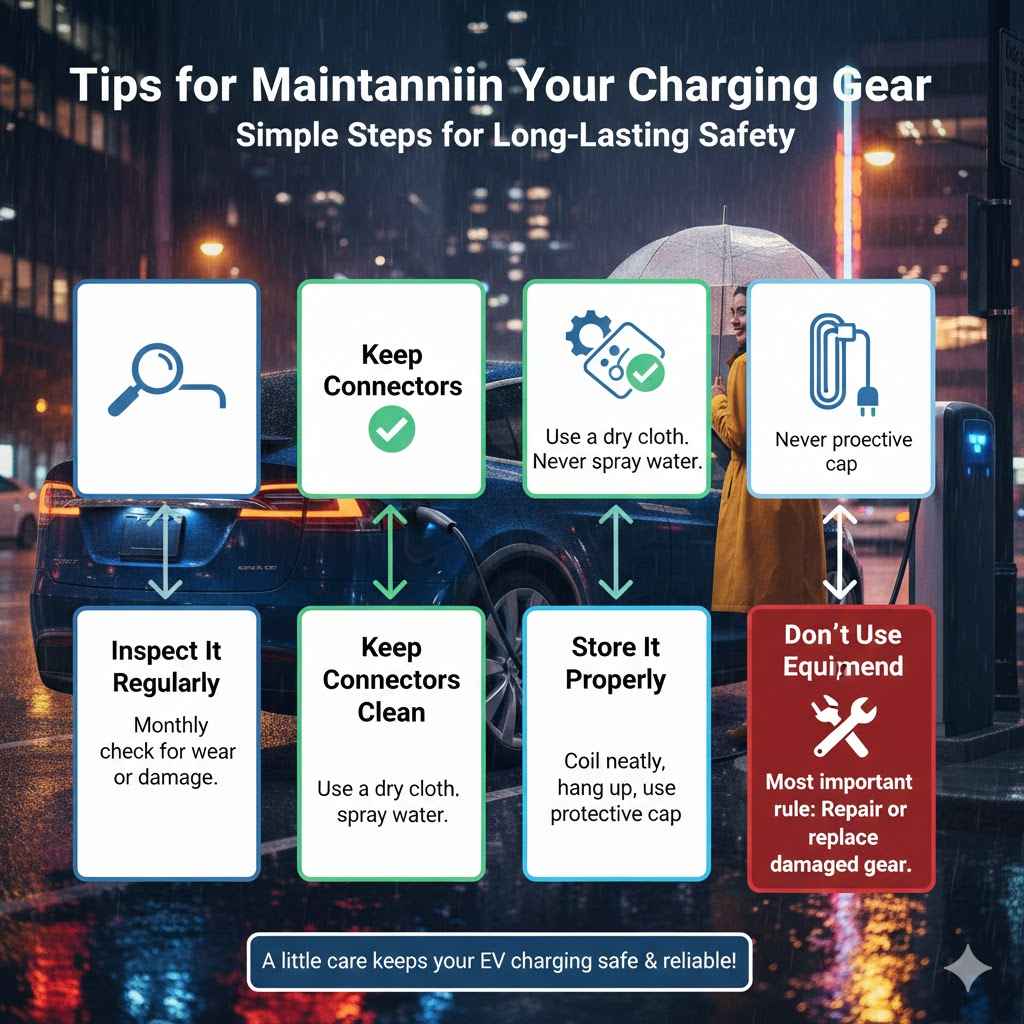
Tips for Maintaining Your Charging Gear
Your charging equipment is tough, but a little care goes a long way in keeping it safe and reliable for years to come.
- Inspect It Regularly: Once a month, give your home charging cable a quick look-over for any signs of wear or damage.
- Keep Connectors Clean: If you notice dirt or grime on the charging handle, wipe it out with a dry cloth. Never spray water or cleaning products directly into the connector.
- Store It Properly: When you’re not using your charger, coil the cable neatly and hang it on a hook. Place the protective cap back on the connector to keep it clean and dry. Avoid leaving it on the ground where it can be run over or sit in water.
- Don’t Use Damaged Equipment: This is the most important rule. If your charger, cable, or outlet is damaged in any way, do not use it. Get it repaired or replaced by a professional.
Frequently Asked Questions (FAQ)
Is it safe to charge my electric car during a thunderstorm?
While charging in the rain is safe, charging during a severe thunderstorm with frequent lightning is a different matter. The risk is not electrocution from the rain, but a power surge caused by a nearby lightning strike. The National Weather Service recommends avoiding contact with corded electronics during a thunderstorm. To be extra safe, it’s wise to pause charging and unplug your car until the worst of the storm passes.
What should I do if the charging handle is full of water?
Modern charging handles are designed with drainage holes to let water escape. If you pick one up and notice it’s very wet, simply turn it so the connector end points down and give it a gentle shake. This will clear out any pooled water. It is still safe to use.
Can I use a regular extension cord to charge my EV in the rain?
No, you should never use a standard indoor or light-duty outdoor extension cord for charging your EV, especially in the rain. These cords are not rated for the sustained power draw and lack the necessary weatherproofing, which creates a serious fire and safety hazard. If you must use an extension cord for Level 1 charging, use a heavy-duty one specifically rated for EV charging.
What do the IP ratings on chargers actually mean?
An IP rating consists of two numbers. The first number (0-6) rates protection against solids (like dust), and the second number (0-9) rates protection against liquids (water). For example, a rating of IP55 means the device is protected from dust and can withstand low-pressure water jets from any direction—perfect for rain.
Is it safe to use a public charging station in the rain?
Yes, absolutely. Public charging stations are built for commercial, outdoor use and are designed to be extremely durable and weatherproof. They undergo rigorous testing to ensure they are safe to operate in all conditions, including heavy rain and snow.
What happens if I drop the charging handle in a puddle?
If you accidentally drop the charging handle in a puddle, don’t worry. It is not live with electricity. Simply pick it up, point the connector down to let the water drain out, and give it a quick wipe with a cloth before plugging it into your car. The safety checks will ensure it only works if the connection is secure.
Conclusion: Charge with Confidence, Rain or Shine
The idea of mixing electricity and water is rightly a cause for concern, but when it comes to charging your electric car, you can put those fears to rest. EVs and their charging systems are marvels of modern engineering, designed from the ground up with your safety as the top priority. With multiple redundant safety features like weatherproof seals, GFCI protection, and a smart communication system that only activates power when a secure connection is made, charging in the rain is as safe and routine as charging on a sunny day.
By following a few simple best practices—like giving your equipment a quick visual check and handling it with care—you can charge with complete confidence, no matter the weather. So next time it’s raining, don’t hesitate. Plug in, power up, and know that you and your car are well-protected.