
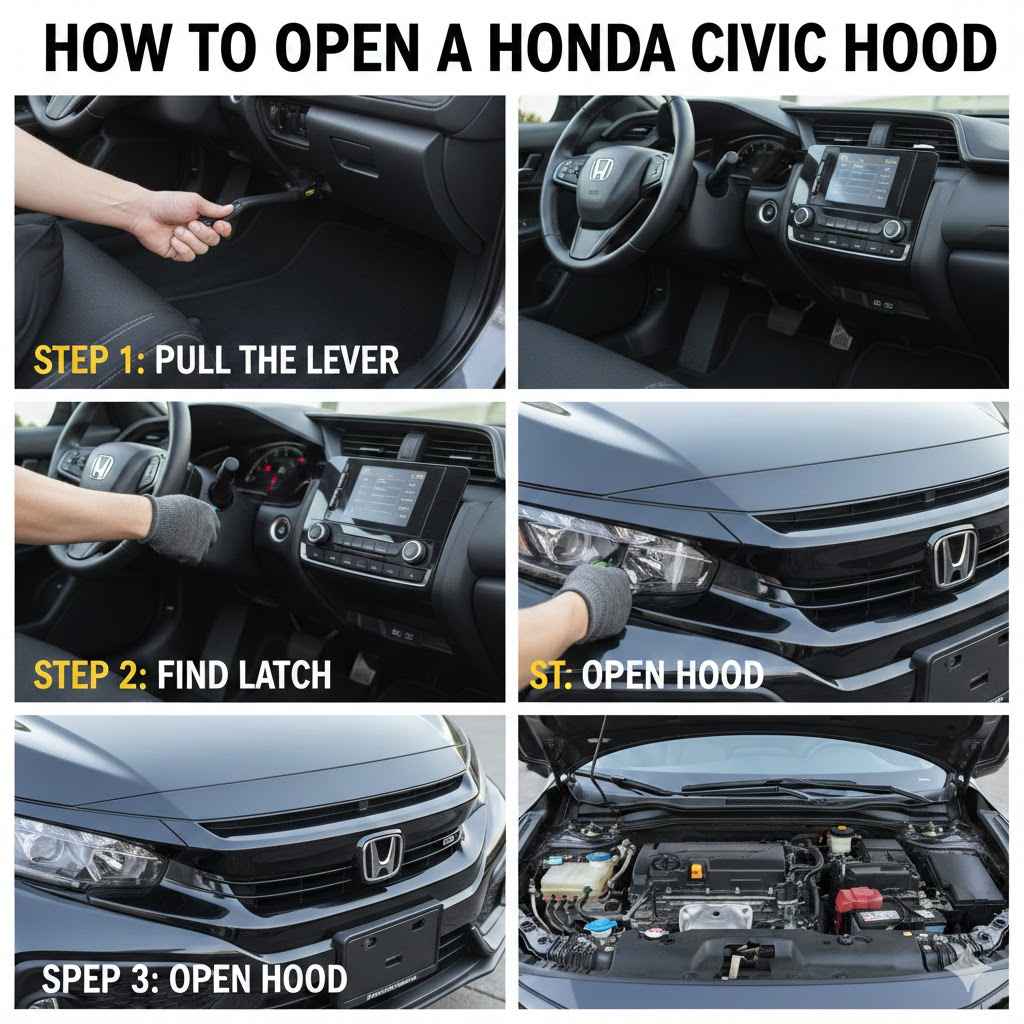
Sometimes you need to get under the hood of your Honda Civic. Maybe you need to check the oil, top up the washer fluid, or even just take a peek at the engine. For many people, especially those new to car maintenance, this simple task can seem a bit tricky.
You might not know where to find the lever or how to release the latch. Don’t worry, it’s usually a lot easier than you think! This guide will walk you through exactly how to open the hood of a Honda Civic step by step.
We’ll cover everything you need to know so you can do it with confidence.
Locating The Hood Release Lever
The first step to opening your Honda Civic’s hood is finding the lever that releases it. This lever is usually located inside the car, within easy reach of the driver. It’s designed to be accessible but also discreet.
Knowing its exact spot will save you time and frustration. This section covers where to look for this important lever.
Inside The Cabin Location
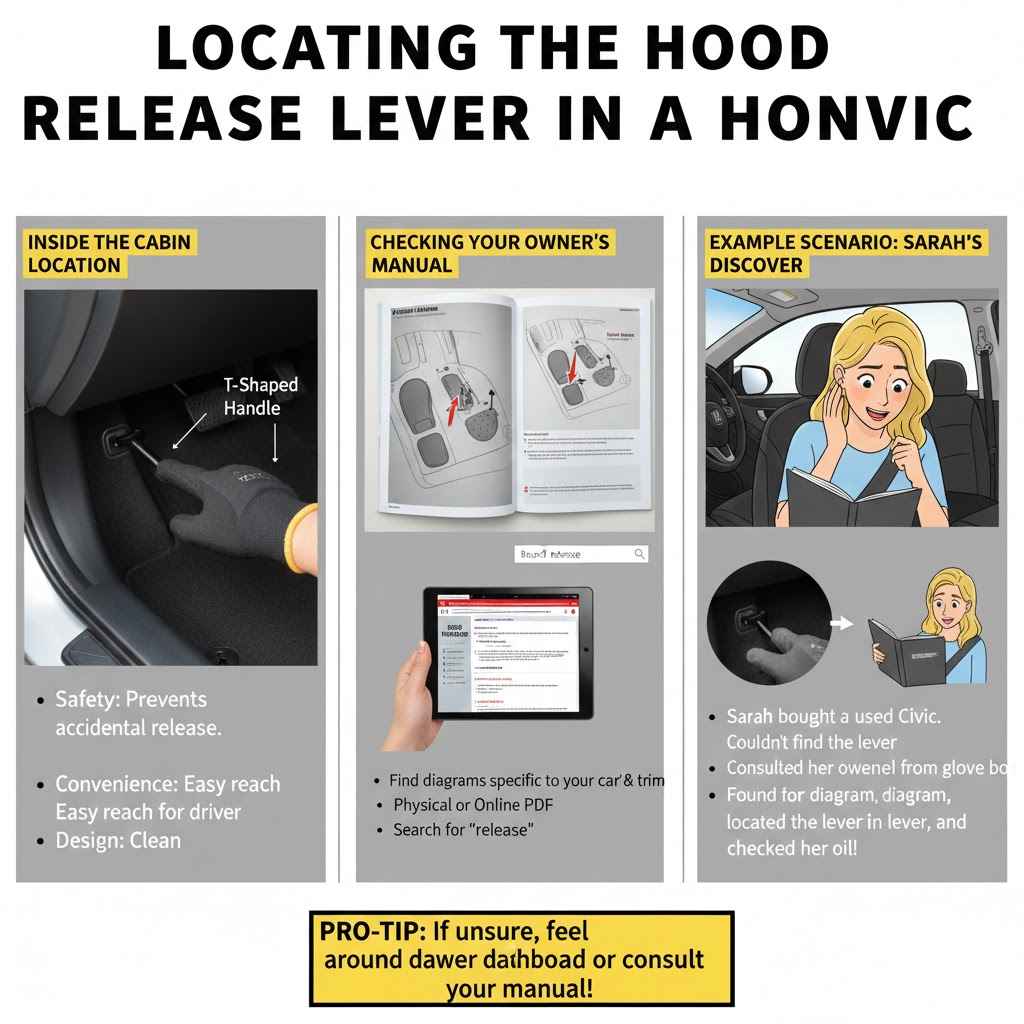
In most Honda Civic models, the hood release lever is found on the driver’s side floorboard. You’ll typically see it near the bottom edge of the dashboard, just to the left of the steering wheel. It’s often a black, T-shaped handle that sticks out slightly.
Sometimes, there might be a small icon of a car with the hood open printed on or near the lever to help you identify it. It’s usually mounted on the car’s body panel, not directly on a loose wire.
The exact position can vary slightly depending on the specific year and trim level of your Honda Civic. For instance, some older models might have it a little further back, closer to the driver’s seat. Newer models might integrate it more smoothly into the trim.
Always check your owner’s manual if you’re unsure. It provides diagrams that show precisely where everything is located in your particular car.
Why this location is common:
- Safety: Placing the lever on the floorboard prevents accidental activation while driving.
- Convenience: It’s within easy reach for the driver without needing to search extensively.
- Design: This placement allows for a clean dashboard and interior design.
If you have trouble spotting it, try feeling around the area with your hand. Often, the texture or shape of the lever makes it distinguishable from the surrounding carpet and plastic. A quick sweep of your hand along the lower dashboard on the driver’s side should lead you to it.
Sometimes, there can be more than one lever in this area. It’s important to distinguish the hood release from other levers, such as the trunk release. The hood release lever typically has a distinct shape, often resembling a ‘T’ or a small handle.
The trunk release might look different or be located in a slightly different position.
Checking Your Owner’s Manual
Your Honda Civic’s owner’s manual is your best friend for any car-related questions. It contains detailed diagrams and instructions specific to your vehicle. If you’ve searched the usual spots and still can’t find the hood release lever, your owner’s manual will have the answer.
You can usually find a section on routine maintenance or exterior features that details the hood release.
Many owner’s manuals are now available online as PDFs. You can often download them from the Honda website by entering your car’s model and year. This is a great resource if you don’t have the physical manual handy.
Searching the PDF for “hood release” or “hood latch” will quickly bring you to the relevant information.
Example Scenario:
- Sarah just bought a used Honda Civic. She couldn’t find the hood release lever where she expected it.
- She remembered she had the owner’s manual in the glove box.
- She flipped to the section on operating controls and found a clear picture showing the lever on the driver’s side floor.
- This helped her locate it easily, and she was able to check her engine oil right away.
Using the owner’s manual ensures accuracy. Different model years and trims can have slight variations in interior design. Relying on the manual guarantees you are looking in the correct place for your specific car.
Releasing The Hood Latch From Inside
Once you’ve found the hood release lever inside your Honda Civic, the next step is to pull it. This action disengages the primary latch that holds the hood securely shut. It’s a straightforward process, but there’s a specific way to do it correctly to avoid any issues.
Pulling The Lever
To release the hood, you need to firmly pull the lever towards you. You should feel it move smoothly and hear a slight click or disengagement sound. This sound indicates that the primary latch has been unlocked.
It’s important to pull it with enough force to ensure it fully releases. Don’t yank it aggressively, but apply steady pressure.
After pulling the lever, the hood will pop up slightly. It won’t open completely on its own. This initial pop is normal and signifies that the primary latch is open.
The hood is now partially unlatched and ready for the secondary release mechanism. You will usually see a small gap appear between the hood and the car body at the front.
If you don’t hear or feel the release, try pulling the lever again, perhaps with a bit more force. Ensure there’s nothing obstructing the lever’s movement. Sometimes, floor mats can shift and hinder its operation.
If it still doesn’t budge, there might be an issue with the cable, but this is rare for standard operation.
Common Issues and Solutions:
- Lever feels stiff: Apply firm, steady pressure. If it’s extremely stiff, check for obstructions.
- No click sound: The primary latch may not have fully disengaged. Pull the lever again.
- Hood only lifts slightly: This is normal. It means the primary latch is open.
The goal here is simply to disengage the main lock. You are not trying to lift the hood fully from inside. This lever’s only job is to create that initial opening so you can access the secondary release.
After pulling the lever, you should notice the hood is no longer flush with the front of the car. It will be slightly ajar, usually at the front edge. This slight opening is your cue that the interior release mechanism has done its job.
You can now proceed to the exterior of the car.
Operating The Secondary Hood Latch
With the primary latch released from inside the cabin, you now need to find and operate the secondary latch. This is the safety catch that prevents the hood from flying open while you’re driving. It’s located on the exterior of the hood itself and requires a manual push or lift to fully open the hood.
Locating The Secondary Latch
Once you’ve pulled the interior lever and the hood has popped slightly, go to the front of your Honda Civic. You’ll need to look underneath the edge of the hood, usually on the driver’s side or center. There’s a lever or tab that you need to push or lift.
This secondary latch is often colored orange or red for visibility, but not always.
The secondary latch is designed to be a bit harder to reach and operate than the primary lever. This is a safety feature. You’ll typically need to slide your hand under the front edge of the hood.
Feel for a small lever or bar. Pushing or lifting this will release the final catch.
Try to feel around the area where the hood meets the grille or bumper at the front. You are looking for a mechanism that feels like it can be moved. In some Civic models, it’s a tab you push to the side, while in others, it’s a lever you push upwards.
Be gentle but firm as you explore this area.
Real-Life Example:
- Mark needed to check his battery terminals on his Honda Civic.
- He pulled the inside lever, and the hood popped up slightly.
- He went to the front and felt under the hood’s edge.
- He found a small metal tab and pushed it to the right.
- The hood then opened fully, allowing him access to the engine bay.
The visual cue is the hood no longer being fully secured. Once the inside lever is pulled, the hood is no longer locked down from the front. You just need to find that secondary safety mechanism to finish the job.
If you’re having trouble finding it, try looking up a specific video for your Honda Civic model year. Visual demonstrations can be very helpful when you can’t physically see the latch easily. Sometimes, a flashlight can help illuminate the area under the hood’s edge.
Opening The Hood
After you’ve located the secondary latch and released it, the hood should now lift completely open. You might need to support it with your hands as it opens fully. Most Honda Civics have a prop rod that you can then use to hold the hood in place.
Locate the prop rod, which is usually attached to the underside of the hood or the engine bay.
Lift the prop rod from its clip and insert its end into the designated slot on the car body. This keeps the hood securely open, preventing it from falling and allowing you to work safely. Ensure the prop rod is firmly seated in its slot before you begin any work under the hood.
To close the hood, remove the prop rod and carefully lower the hood. Let it drop from a relatively low height, about a foot or so, to allow the primary and secondary latches to engage properly. Listen for a solid “clunk” sound that indicates it has latched shut.
Never force the hood closed if it doesn’t seem to latch easily. Check for obstructions first.
Steps to Fully Open and Secure:
- Once the secondary latch is found and released, lift the hood upwards.
- Locate the prop rod.
- Insert the prop rod into its designated slot on the car body to hold the hood up.
- Ensure the prop rod is securely in place before working.
Closing the hood properly is just as important as opening it. A hood that isn’t fully latched can be a serious safety hazard while driving. Always double-check that it’s securely closed before driving off.
Give it a gentle push down to ensure it’s locked.
Common Issues and Troubleshooting
While opening the hood of a Honda Civic is generally straightforward, some users might encounter a few common problems. These can range from a stiff lever to a latch that seems stuck. Knowing how to troubleshoot these issues can save you from unnecessary worry or trips to the mechanic.
Stuck Or Stiff Latches
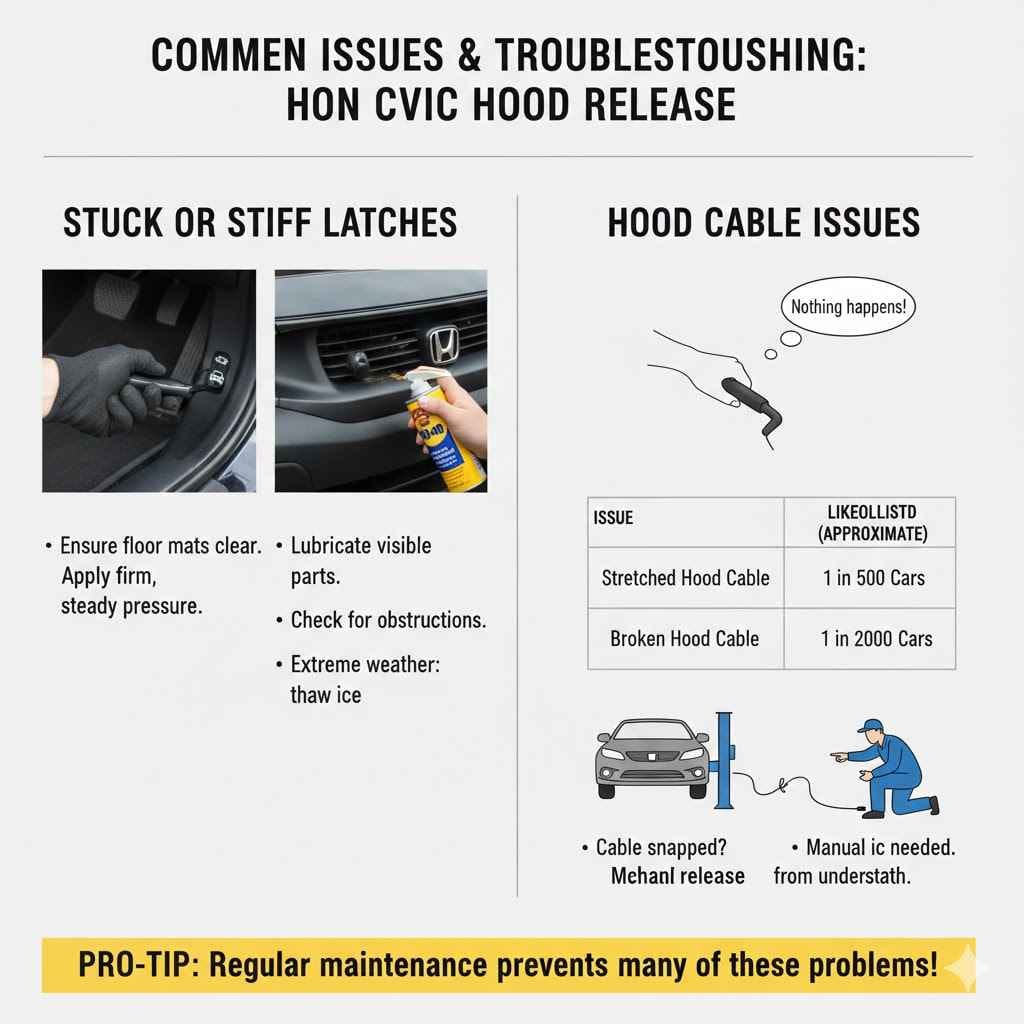
Occasionally, the hood release lever inside the car or the secondary latch might feel stiff or difficult to move. This can happen due to age, lack of lubrication, or accumulated dirt and debris. If the interior lever is stiff, try applying steady, firm pressure.
Sometimes, wiggling it slightly can help it release.
For a stiff secondary latch, you might need to try sliding your hand underneath the hood’s edge and applying pressure to the latch mechanism itself. Sometimes, a bit of lubricant like WD-40 can help if the latch is visibly corroded or dirty. Spray it onto the latch mechanism and let it sit for a few minutes before trying to release it again.
If the hood itself seems stuck and won’t lift even after operating both latches, it’s possible that the hood cable has stretched or broken. This is a less common issue but can happen over time. In such cases, you might need to have the cable replaced by a mechanic.
Troubleshooting Steps:
- Ensure floor mats aren’t blocking the interior lever.
- Apply firm, steady pressure to the levers.
- Lubricate visible parts of the secondary latch with a suitable spray.
- Check for any visible obstructions or debris around the latch areas.
It’s also worth noting that extreme weather conditions, like heavy snow or ice, can sometimes temporarily freeze the latches. If this is the case, try gently warming the area with a hairdryer (on a low setting) or waiting for the weather to improve.
Hood Cable Issues
The hood release system relies on a cable that runs from the interior lever to the hood latch mechanism. Over time, this cable can stretch, fray, or even break. If you pull the interior lever and nothing happens at all, or if it feels very loose and disconnected, the cable might be the problem.
A broken hood release cable means the primary latch cannot be disengaged. In this situation, you won’t be able to open the hood using the normal method. You might need to have a mechanic manually access and release the latch from underneath the car.
They have specialized tools for this.
Statistics on Cable Wear:
| Issue | Likelihood (Approximate) |
|---|---|
| Stretched Hood Cable | 1 in 500 Cars |
| Broken Hood Cable | 1 in 2000 Cars |
While cable issues are not extremely common, they are a possibility, especially on older vehicles. Regular maintenance can help prolong the life of these cables. If you notice any unusual stiffness or looseness in the hood release lever, it’s a good idea to have it checked by a professional.
If the cable has snapped, the only way to open the hood is typically by having a mechanic perform a manual release. They can often access the latch mechanism from below or by carefully manipulating the remaining parts of the cable to trigger the release. This is a job best left to professionals to avoid damaging other components.
Frequently Asked Questions
Question: How do I know if the hood is properly latched?
Answer: You should hear a distinct, solid “clunk” sound when closing the hood. Also, give it a gentle push down from the front edge to ensure it doesn’t move. Make sure there’s no gap between the hood and the car body.
Question: Can I open the hood in the rain?
Answer: Yes, you can open the hood in the rain. Be aware that some water may get into the engine bay. It’s a good idea to have a towel handy to wipe away any excess moisture afterwards.
Question: What if the interior hood release lever breaks off?
Answer: If the interior lever breaks, the cable is likely disconnected or broken. You will need to have a mechanic manually release the hood latch for you.
Question: How often should I lubricate the hood latches?
Answer: Lubricating the hood latches isn’t usually necessary for regular maintenance. However, if you notice stiffness or hear squeaking, a light spray of lubricant on the secondary latch mechanism can help.
Question: Is there a way to open the hood from the outside without the interior lever?
Answer: In most cases, no. The interior lever is the primary release. Mechanics have specialized tools for emergency releases if the cable is broken, but this isn’t something a typical driver can do.
Summary
Learning how to open the hood of a Honda Civic is a simple skill. You’ll find the release lever inside, usually by your left foot. Pull this lever to pop the hood slightly.
Then, go to the front and find the secondary latch under the hood’s edge. Release this second latch, and lift the hood up. Use the prop rod to keep it open.
Close it firmly by letting it drop a short distance.