
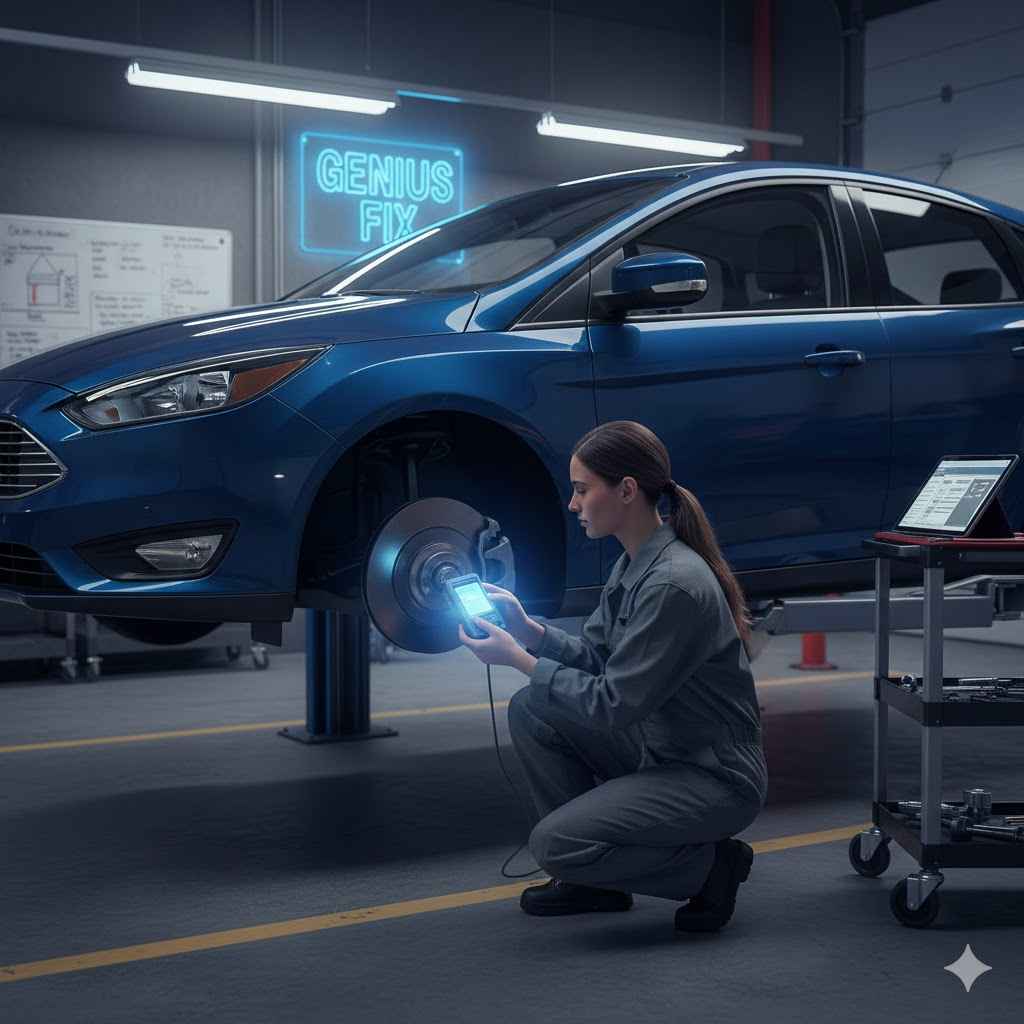
Fixing the ESP light on a Ford Focus often involves a simple, genius fix: cleaning or replacing a faulty wheel speed sensor. This sensor gets dirty or fails, triggering the warning. You can diagnose the issue with an OBD-II scanner, locate the specific sensor behind the wheel, and replace it with basic tools, saving you a trip to the mechanic.
Seeing a new warning light flash on your dashboard can be stressful. When the “ESP” light appears on your Ford Focus, it’s easy to feel worried. What does it mean? Is it safe to drive? Will it cost a fortune to fix?
Take a deep breath. This is a very common issue for Ford Focus owners, and the fix is often surprisingly simple. You don’t need to be a master mechanic to handle this. In this guide, I’ll walk you through everything, step-by-step.
We will uncover the mystery behind the ESP light and show you a genius, easy fix that you can likely do yourself. Let’s get your car back to feeling safe and sound.
What Is the ESP System and Why Does It Matter?
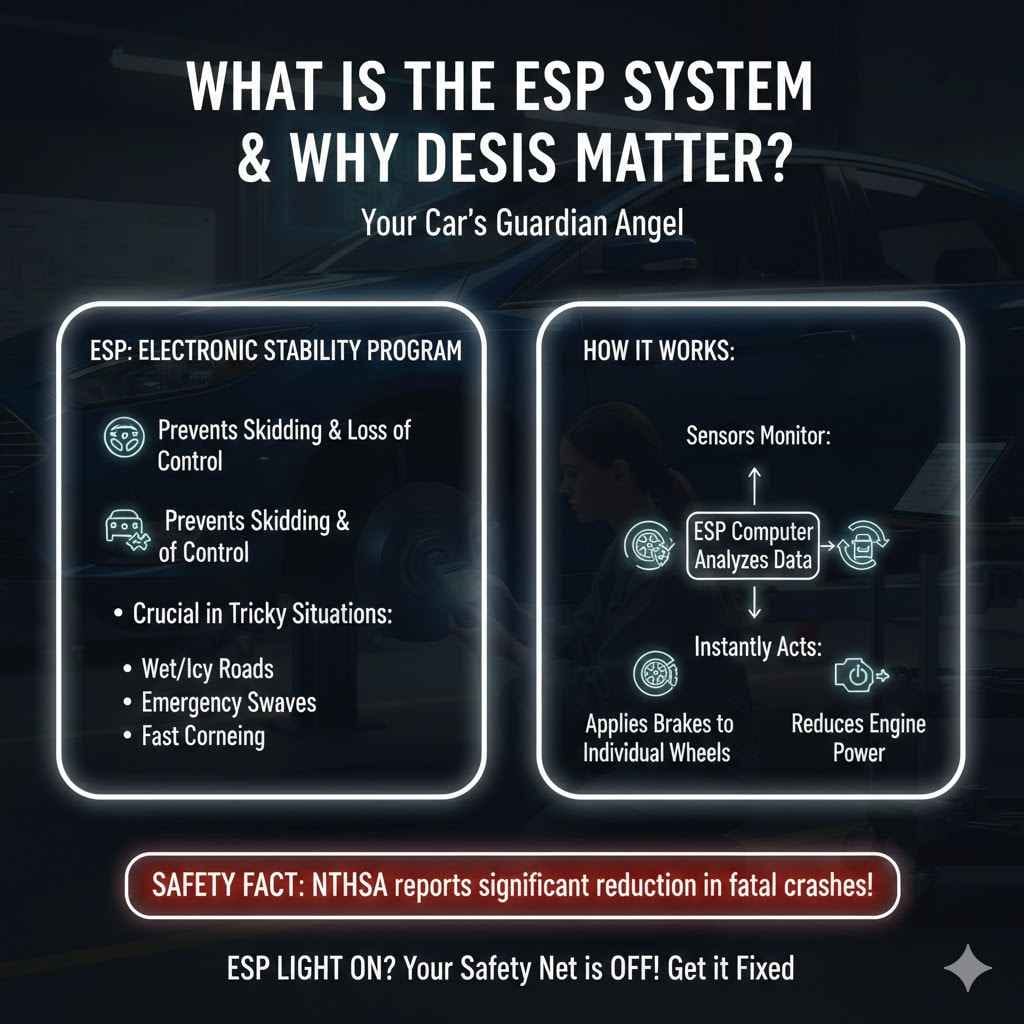
Before we dive into the fix, let’s quickly understand what the ESP system is. ESP stands for Electronic Stability Program. Think of it as a guardian angel for your car, always working in the background to keep you safe.
Its main job is to prevent your car from skidding or losing control, especially in tricky situations like:
- Swerving to avoid an obstacle
- Driving on wet or icy roads
- Taking a corner a little too fast
The ESP system uses a network of sensors to monitor how your car is moving. It constantly checks your steering angle, wheel speed, and the car’s rotation. If it senses that the car is about to skid or spin out, it instantly jumps into action. It can apply the brakes to individual wheels and even reduce engine power to help you regain control. According to the National Highway Traffic Safety Administration (NHTSA), this technology is a major lifesaver, significantly reducing the risk of fatal single-vehicle crashes.
So, when the ESP light comes on and stays on, it means the system has detected a fault and has turned itself off. While your car will still drive normally in most conditions, that crucial safety net is gone. That’s why it’s important to get it fixed.
Common Reasons the ESP Light Is On in Your Ford Focus
The good news is that the cause of the ESP light is usually not a huge, expensive problem. More often than not, it’s a small sensor issue. Here are the most common culprits, starting with the most likely.
- A Faulty Wheel Speed Sensor: This is, by far, the most common reason for an ESP fault in a Ford Focus. Each wheel has a sensor that tells the car’s computer how fast it’s spinning. If one of these sensors gets dirty, damaged, or fails, the ESP system gets confused and shuts down.
- A Malfunctioning Brake Light Switch: This small switch, located by your brake pedal, tells the car’s computer when you’re braking. The ESP system relies on this information. If the switch is faulty, it can trigger the ESP light.
- Low Battery Voltage: Modern cars are full of sensitive electronics. If your car battery is old or weak, it might not provide enough stable power, causing various systems, including the ESP, to report errors.
- A Worn ABS Ring: Each wheel has a toothed ring (called an ABS ring or tone ring) that the wheel speed sensor “reads.” If this ring is cracked, rusty, or covered in grime, the sensor can’t get a clear signal.
- Steering Angle Sensor Issues: This sensor tells the computer which way you are steering. If it’s out of alignment or failing, the ESP system won’t know your intentions and will flag an error.
While other, more serious issues can exist, these five are responsible for the vast majority of ESP light problems. We’re going to focus on the #1 cause—the wheel speed sensor—because it’s the easiest and most likely fix you can do yourself.
Before You Start: Essential Tools and Safety Checks
Getting ready is the key to a smooth and safe repair. You don’t need a professional garage, but you do need a few basic tools and a safe space to work. Let’s get everything in order.
Safety First!
Your safety is the most important part of any car repair. Always follow these rules:
- Work on a Flat, Level Surface: Never work on a slope or uneven ground.
- Use the Parking Brake: Engage your parking brake firmly.
- Chock the Wheels: Place wheel chocks behind the wheels that will stay on the ground to prevent the car from rolling.
- Wear Protective Gear: Safety glasses and gloves are a must.
- Never Work Under a Car Supported Only by a Jack: Always use jack stands for support. A jack can fail without warning.
Tools You’ll Need
Here is a list of the tools and supplies that will make this job much easier. You can find most of these at any auto parts store.
- OBD-II Scanner: This is your most important tool. It reads the error codes from your car’s computer and tells you exactly where the problem is. You can buy an affordable one online or even borrow one from many auto parts stores.
- Jack and Jack Stands: To safely lift your car.
- Lug Wrench: To remove the wheel nuts.
- Socket Wrench Set: You will need a small socket (often 8mm or 10mm) or a Torx bit to remove the sensor’s mounting bolt.
- Brake Cleaner: A spray can of brake cleaner works wonders for cleaning grime off sensors and parts.
- Clean Rags or Paper Towels: For wiping parts clean.
Having these tools ready will make the process go smoothly and help you feel confident as you work.
The “Genius & Easy Fix”: Checking and Replacing the Wheel Speed Sensor
Ready to get your hands dirty? Don’t worry, this process is very straightforward. We’ll break it down into simple, manageable steps. This is the fix that works for most Ford Focus owners with an ESP light issue.
Step 1: Use an OBD-II Scanner to Confirm the Problem
This step takes all the guesswork out of the repair. Instead of just assuming it’s a sensor, let’s prove it.
- Find the OBD-II port in your Ford Focus. It’s usually located under the dashboard on the driver’s side.
- Plug the scanner in and turn your car’s ignition to the “On” position (without starting the engine).
- Follow the scanner’s instructions to read the Diagnostic Trouble Codes (DTCs).
- You are looking for a code that points to a specific wheel speed sensor. It will likely say something like “Front Left Wheel Speed Sensor Circuit Malfunction” or “Rear Right Wheel Speed Sensor Signal Erratic.” Write down the code and which wheel is affected.
Now you know exactly which wheel to work on. No guessing needed!
Step 2: Safely Lift the Car and Remove the Wheel
It’s time to get access to the sensor. Follow these safety steps carefully.
- Before lifting the car, use your lug wrench to slightly loosen the lug nuts on the wheel you identified in Step 1. Just “break them free”; don’t unscrew them yet.
- Place your jack in the correct jack point on the car’s frame (check your owner’s manual for the exact location).
- Raise the car until the wheel is a few inches off the ground.
- Place a jack stand securely under the frame near the jack. Lower the car slowly until its weight is resting on the jack stand.
- Now you can fully unscrew the lug nuts and remove the wheel.
Step 3: Locate and Inspect the Sensor and ABS Ring
With the wheel off, you can see the brake assembly. The wheel speed sensor is a small, plastic part with a wire coming out of it. It’s mounted near the center of the wheel hub, right behind the brake rotor.
Follow the wire from the back of the hub—it will lead you right to the sensor. It is usually held in place by a single, small bolt.
Before you remove anything, take a look around.
- Is the sensor covered in thick brake dust, mud, or grease?
- Is the wire leading to it frayed, cracked, or damaged?
- Look behind the sensor at the toothed ABS ring. Is it rusty, dirty, or does it have a visible crack?
Sometimes, the fix is as simple as cleaning!
Step 4: Clean Everything Thoroughly
If you noticed a lot of grime, this might solve your problem.
- Spray brake cleaner generously on the sensor and the ABS ring.
- Use a clean rag to wipe away all the dirt and brake dust. Be gentle with the sensor itself.
- Make sure the ABS ring’s teeth are completely clean so the sensor can get a good reading.
If the area was very dirty, you can try reassembling everything now, clearing the code with your scanner, and taking a test drive. If the light stays off, you’ve just fixed it for free! If not, proceed to the next step.
Step 5: Replace the Wheel Speed Sensor
If cleaning didn’t work or if the sensor looked damaged, replacing it is the next logical step. It’s incredibly easy.
- Follow the wire from the sensor to its electrical connector. Unclip the connector. It usually has a small tab you need to press.
- Use your socket wrench to remove the single bolt holding the sensor in place.
- Gently wiggle and pull the old sensor out. It might be a little stuck, but it should come out with a bit of twisting.
- Take your new sensor and slide it into the hole. Make sure it’s seated properly.
- Reinstall the mounting bolt. Don’t overtighten it—just snug is fine.
- Plug the new sensor’s electrical connector back in until it clicks.
That’s it! You’ve just replaced a car part.
Step 6: Reassemble, Clear the Code, and Test Drive
You’re on the home stretch.
- Put the wheel back on and hand-tighten the lug nuts.
- Raise the car with the jack, remove the jack stand, and lower the car back to the ground.
- Use your lug wrench to fully tighten the lug nuts in a star pattern to ensure the wheel is seated evenly.
- Plug your OBD-II scanner back in and use its function to “Clear Codes” or “Erase Codes.” This will turn off the ESP light.
- Start the car and go for a short test drive. The light should stay off. If it does, congratulations—you’ve successfully fixed your ESP system!
What If the Easy Fix Doesn’t Work? Other Simple Checks
If you’ve replaced the sensor and the light is still on, don’t be discouraged. There are a couple of other simple things you can check before heading to a mechanic.
Check Your Battery Health
A weak battery can cause all sorts of strange electrical problems. Most auto parts stores will test your battery for free. It only takes a few minutes and can rule out a very common issue.
Inspect the Brake Light Switch
This switch is located on a bracket right above your brake pedal arm. Look under your dashboard and you’ll see it. Ensure it’s plugged in securely and doesn’t look broken. Sometimes these switches fail, and they are typically inexpensive and easy to replace.
Check Tire Pressure
The ESP system compares wheel speeds. If one tire is significantly lower on air than the others, it will spin at a different rate, which can sometimes confuse the system. Make sure all your tires are inflated to the pressure listed on the sticker inside your driver’s door jamb.
Understanding Ford Focus ESP Trouble Codes
An OBD-II scanner gives you codes, but what do they mean? Here is a simple table of common codes related to the ESP/ABS system on a Ford Focus. This can help you feel more informed about what your scanner is telling you.
| DTC Code | Common Meaning | What It Could Mean for Your Focus |
|---|---|---|
| C1145 | Right Front Wheel Speed Sensor Input Circuit Failure | The problem is with your front right wheel speed sensor, its wiring, or the ABS ring. |
| C1155 | Left Front Wheel Speed Sensor Input Circuit Failure | The problem is with your front left wheel speed sensor, its wiring, or the ABS ring. |
| C1165 | Right Rear Wheel Speed Sensor Input Circuit Failure | The problem is with your rear right wheel speed sensor, its wiring, or the ABS ring. |
| C1175 | Left Rear Wheel Speed Sensor Input Circuit Failure | The problem is with your rear left wheel speed sensor, its wiring, or the ABS ring. |
| U0428 | Invalid Data From Steering Angle Sensor | The steering angle sensor may be faulty or need to be reset. This often requires a more advanced scan tool. |
When to Call a Professional Mechanic
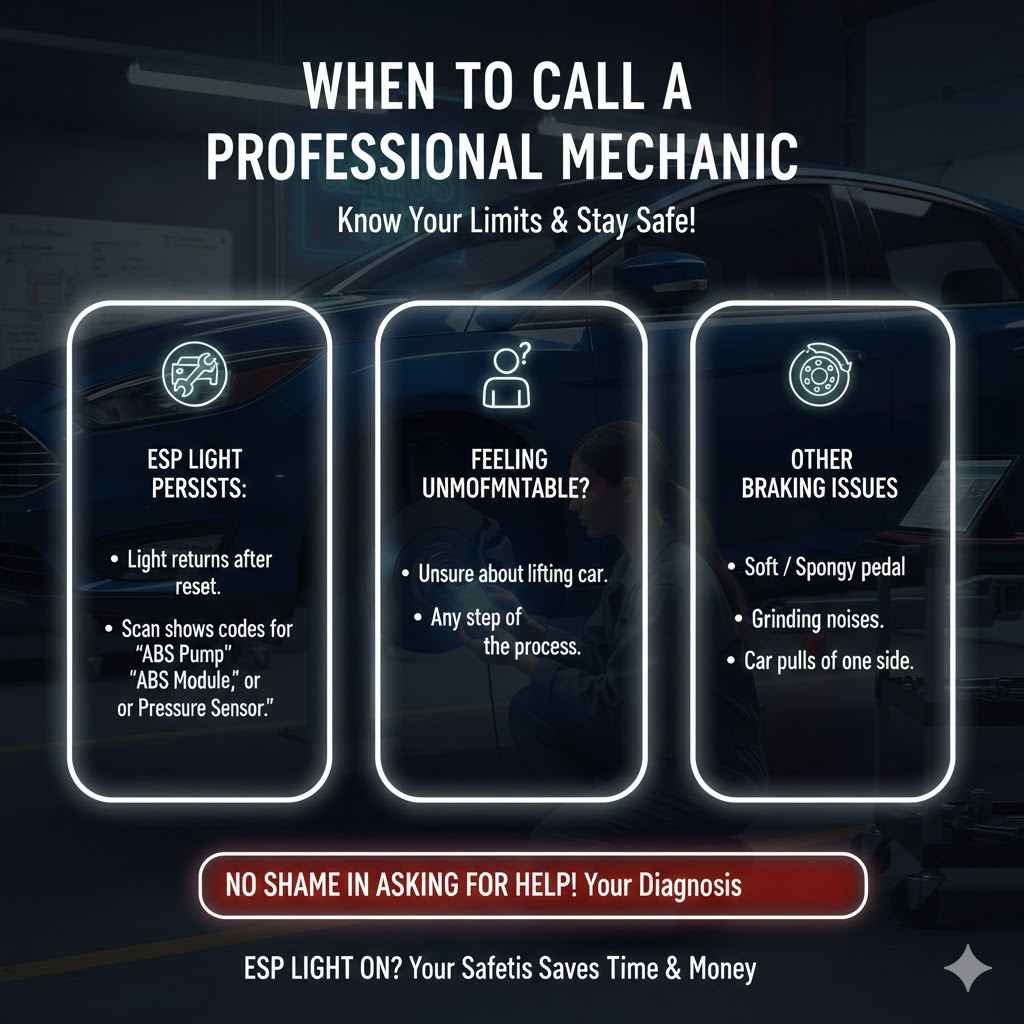
Doing your own repairs is empowering, but it’s also important to know your limits. You should consider taking your Ford Focus to a trusted mechanic if:
- The ESP light comes back on immediately after replacing the sensor and clearing the code.
- Your OBD-II scanner shows codes related to the “ABS Pump,” “ABS Module,” or “Pressure Sensor.” These are more complex components.
- You feel uncomfortable with any step of the process, especially lifting the car.
- You notice other braking issues, like a soft or spongy brake pedal, grinding noises, or the car pulling to one side when you brake.
There is no shame in asking for help. You’ve already done the valuable work of diagnosing the likely problem, which will save the mechanic time and save you money on diagnostics.
Frequently Asked Questions (FAQ)
Can I drive my Ford Focus with the ESP light on?
Yes, you can generally drive the car. It will operate like an older car without this safety feature. However, you should drive more cautiously, especially in wet or slippery conditions, because the anti-skid safety system is disabled. It’s best to get it fixed as soon as you can.
How much does it cost to fix an ESP sensor?
If you do it yourself, the only cost is the part. A new wheel speed sensor for a Ford Focus typically costs between $20 and $50. If you take it to a mechanic, you can expect to pay for the part plus one hour of labor, usually totaling between $150 and $250.
What’s the difference between ESP, ESC, and Traction Control?
They are all related! ESP (Electronic Stability Program) and ESC (Electronic Stability Control) are different names for the same system that prevents skids. Traction Control is part of the ESP system; its specific job is to prevent wheel spin during acceleration (like when you’re starting on ice).
Do I need to reset the ESP system after replacing a sensor?
Yes. After you replace the faulty part, you must use an OBD-II scanner to clear the stored trouble codes from the car’s computer. This will reset the system and turn off the warning light. The light will not turn off on its own.
Can a bad wheel alignment cause the ESP light to come on?
Yes, it’s possible. A bad alignment can cause the steering angle sensor to think the car is turning when it’s going straight. This conflict with the data from the wheel speed sensors can confuse the ESP system and trigger the warning light.
Is the ABS light the same as the ESP light?
They are different lights but are part of the same system. The Anti-lock Braking System (ABS) and the ESP system share the same wheel speed sensors. It is very common for both the ABS and ESP lights to come on at the same time for a faulty wheel speed sensor.
Where can I buy a replacement wheel speed sensor?
You can purchase a replacement sensor from any major auto parts store (like AutoZone, O’Reilly Auto Parts, or NAPA) or from numerous online retailers. Just be sure to provide your car’s year, make, and model to get the correct part.
Keeping Your Ford Focus Safe and Stable
You did it! By following these steps, you’ve learned what the ESP light means, how to find the cause, and how to perform the most common fix yourself. Tackling a car repair like this can feel intimidating at first, but as you’ve seen, it’s often just a matter of having the right information and a little bit of confidence.
Taking control of your car’s maintenance not only saves you money but also empowers you with valuable knowledge. You now understand a critical safety system in your Ford Focus better than ever before. Remember to always prioritize safety, and don’t hesitate to ask for professional help if you need it. Happy driving!