
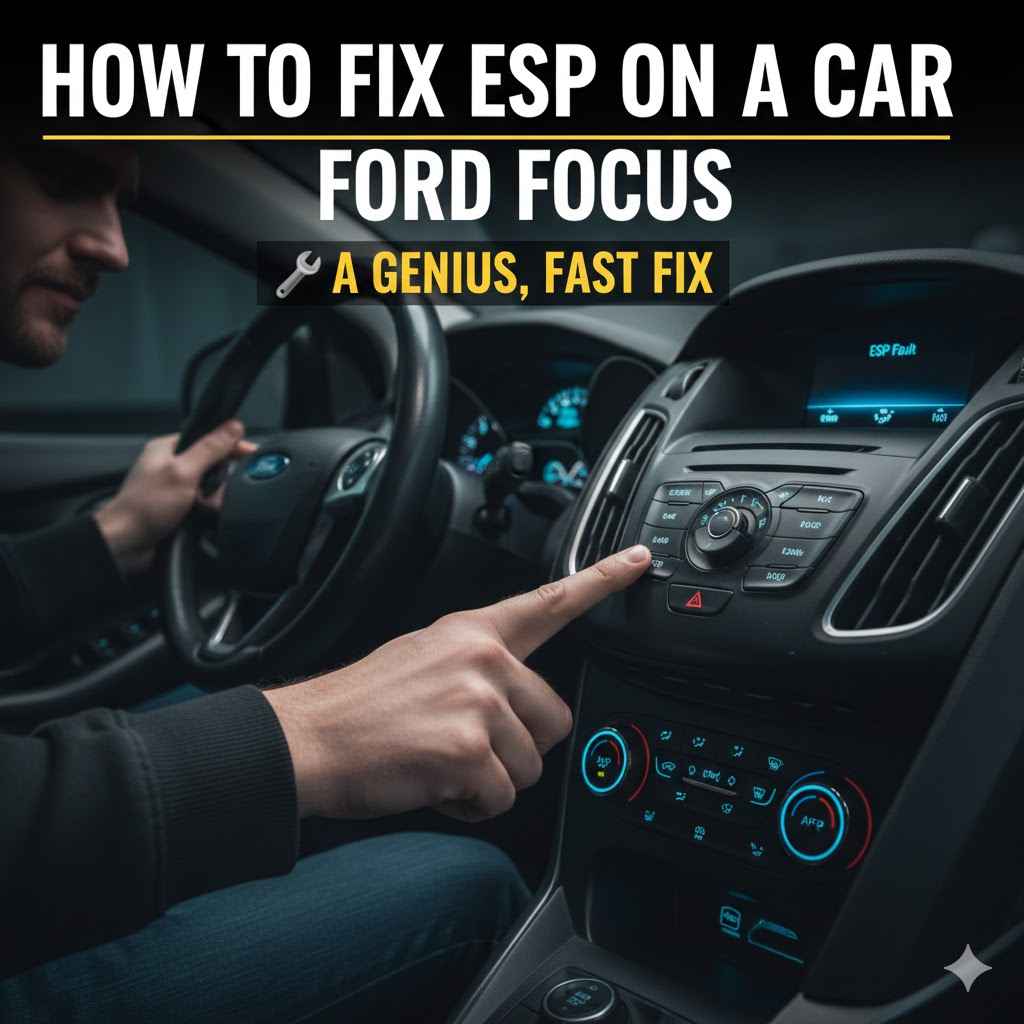
Quick Summary: To fix the ESP light on a Ford Focus, the fastest and most common solution is to replace the brake light switch located above the brake pedal. This inexpensive part often fails, triggering the warning. The fix requires no special tools and can be completed in under 15 minutes, restoring your car’s stability control system.
Seeing a warning light pop up on your dashboard can be stressful. The “ESP” light on your Ford Focus is one of those warnings that might seem confusing. What does it even mean? And more importantly, is it going to cost a fortune to fix? Don’t worry. This is a very common issue with the Ford Focus, and the fix is often surprisingly simple and cheap. You likely don’t need a trip to the mechanic. In this guide, I’ll walk you through exactly how to solve this problem yourself, step by step. Let’s get that light turned off and get you back on the road with confidence.
What is the ESP System on Your Ford Focus?
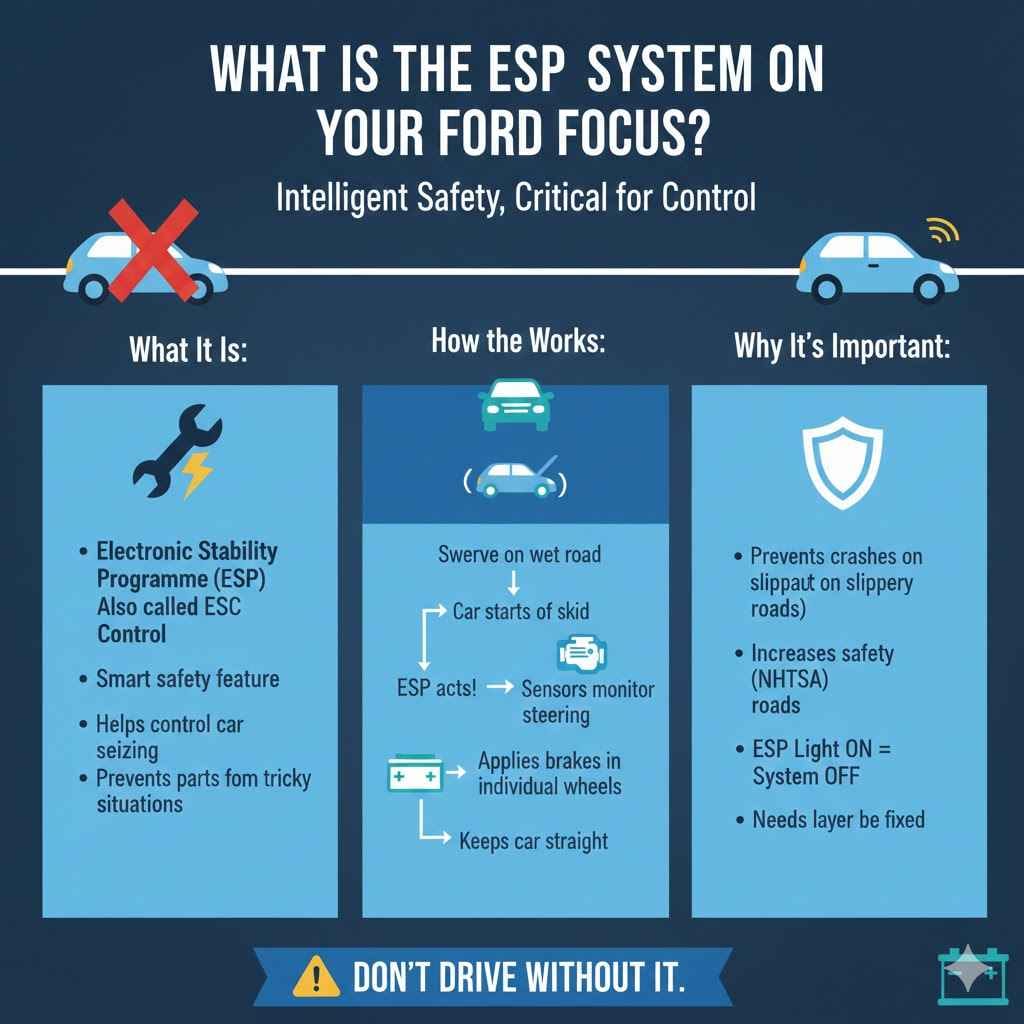
Before we dive into the fix, let’s quickly understand what we’re working with. ESP stands for Electronic Stability Programme. You might also see it called ESC (Electronic Stability Control). Think of it as a smart safety feature that helps you control your car in tricky situations.
Imagine you’re driving on a wet or icy road and you swerve suddenly. Your car could start to skid or spin. ESP is the system that jumps into action to prevent that from happening. It uses a bunch of sensors to monitor your steering and the car’s direction. If it senses you’re losing control, it will automatically apply the brakes to individual wheels to straighten the car out and keep you on your intended path.
According to the National Highway Traffic Safety Administration (NHTSA), this technology is incredibly effective at preventing crashes. So, when the ESP light comes on and stays on, it means the system has detected a fault and has turned itself off. While you can still drive the car, you won’t have that extra layer of safety. That’s why it’s important to get it fixed.
Why Is My ESP Light On? Common Culprits
Several things can cause the ESP light to activate on your Ford Focus. While it could point to a complex issue, more often than not, it’s something very simple. Let’s look at the most common reasons, starting with the biggest one.
Suspect: A Faulty Brake Light Switch
This is the “genius, fast fix” we’re talking about. It might sound strange, but a tiny, inexpensive plastic switch connected to your brake pedal is the leading cause of ESP faults in the Ford Focus. The ESP system needs to know when you are braking. The brake light switch sends this signal. If the switch starts to fail, it sends incorrect or no information. The car’s computer gets confused, assumes there’s a major problem with the stability system, and turns on the ESP warning light. This is, by far, the most common and easiest problem to solve.
Faulty Wheel Speed Sensors
Each wheel on your car has a sensor that measures how fast it’s spinning. These are also called ABS (Anti-lock Braking System) sensors. The ESP system relies on this information to detect a skid. If one of these sensors gets dirty, damaged, or fails, the system can’t get an accurate reading. This will trigger the ESP light. A bad wheel speed sensor is another common issue but is slightly more involved to replace than the brake light switch.
Steering Angle Sensor Problems
Your car has a sensor that tells the computer which way you are steering. The ESP system compares your steering input with the direction the car is actually going. If there’s a mismatch, it kicks in to help. If the steering angle sensor is faulty or needs to be recalibrated (sometimes this happens after wheel alignment), it can cause the ESP warning to appear.
Low Battery Voltage
Modern cars are packed with electronics, and they all need a steady supply of power. If your car’s battery is old or weak, the low voltage can cause all sorts of strange electrical gremlins, including false warnings from systems like the ESP. Before you dive into replacing parts, it’s always a good idea to make sure your battery is in good health.
| Potential Cause | DIY Difficulty Level | Estimated Cost | Common Symptoms |
|---|---|---|---|
| Faulty Brake Light Switch | Very Easy | $10 – $25 | ESP light on, cruise control may not work, gear shifter may be stuck. |
| Bad Wheel Speed Sensor | Easy to Moderate | $20 – $60 per sensor | ESP and ABS lights are often on together. |
| Steering Angle Sensor Issue | Moderate to Hard | $50 – $200+ | ESP light on, sometimes after hitting a pothole or getting an alignment. |
| Low Battery Voltage | Very Easy | Free to test, $100 – $250 for a new battery | Multiple warning lights, slow engine crank, dim lights. |
The Genius, Fast Fix: Replacing the Brake Light Switch
Ready for the good news? We’re going to tackle the most likely problem first, which is also the easiest and cheapest. Replacing the brake light switch is a perfect job for a beginner. It requires very few tools and can be done in your driveway in about 15 minutes. Let’s get it done!
Tools and Parts You’ll Need
You don’t need a fancy mechanic’s toolkit for this job. You can get everything you need easily and affordably. The brake light switch itself is available at most auto parts stores or online.
| Item | Purpose | Notes |
|---|---|---|
| New Brake Light Switch | The replacement part. | Make sure you get the correct one for your Ford Focus model year. |
| Flashlight or Headlamp | To see under the dashboard. | The footwell area is dark, so good light is essential. |
| Flathead Screwdriver (Optional) | To help release a retaining clip. | You might be able to do it with just your fingers. |
| Comfortable Mat or Pad | To lie on while working. | This will save your back and knees! |
Step-by-Step Guide to Replacing the Switch
Follow these steps carefully. It’s a simple process, but paying attention to the details will ensure you do it right. Take your time, and don’t be afraid to pause and double-check your work.
Prepare Your Workspace
Park your car on a flat, level surface and put it in Park (or in gear for a manual) with the parking brake on. Turn the engine off and remove the key from the ignition. This ensures the car is safe and there’s no power going to the electrical components you’ll be working with.
Locate the Brake Light Switch
You’ll be working in the driver’s side footwell. Get your flashlight and your mat. Look up above the brake pedal arm. You will see a small plastic switch with a wiring harness connected to it. When you press the brake pedal, you’ll see it push against a plunger on this switch. That’s your target!
Disconnect the Electrical Connector
Before you remove the switch, you need to unplug it. There is a small plastic tab on the connector that you need to press to release it. Gently squeeze the tab and pull the connector straight off the switch. Don’t yank on the wires themselves, as this could damage them.
Remove the Old Switch
The switch is held in place by a simple twist-and-lock mechanism. To remove it, you’ll need to turn it counter-clockwise about a quarter of a turn (90 degrees). It might be a little stiff. Once you’ve twisted it, it should come right out of its mounting bracket. Some models may have a small clip you need to release first, which is where the flathead screwdriver might come in handy.
Compare the Old and New Switches
Take a moment to hold the old switch and the new one side-by-side. Make sure they look identical. Check that the electrical pins and the plunger design match up. This quick check prevents you from installing the wrong part.
Install the New Switch
This is just the reverse of removal. Line up the new switch with the hole in the mounting bracket. Push it in gently and then turn it clockwise about a quarter of a turn until it clicks or locks firmly into place. You’ll feel it seat properly.
Reconnect the Electrical Connector
Take the wiring connector you removed earlier and plug it back into the new switch. It should click securely into place. Give it a gentle tug to make sure it’s on tight.
Test Your Work
Now for the moment of truth! Put the key in the ignition and start your car. The ESP light should now be off. To double-check, have a friend stand behind the car while you press the brake pedal. They should confirm that your brake lights are working correctly. Also, test your cruise control if you have it, as a faulty switch can disable it too.
Congratulations! You’ve just performed a car repair that a garage might have charged you $100 or more to do. You saved money and learned a new skill.
What If the Fast Fix Doesn’t Work? Next Steps
In most cases, replacing the brake light switch will solve the problem. But what if the ESP light is still on? Don’t panic. This just means the cause is likely one of the other issues we mentioned. Here are a few things you can check next.
Checking the Wheel Speed Sensors
A faulty wheel speed sensor is the next most likely culprit. The sensor itself is located at the wheel hub, behind the brake rotor. They can get covered in brake dust and road grime, which can interfere with the signal.
- Visual Inspection: You can sometimes see the sensor by turning your steering wheel all the way to one side and looking behind the wheel. Check for any obvious damage to the sensor or its wiring. The wire can sometimes get frayed or broken.
- Cleaning the Sensor: Sometimes, simply cleaning the sensor and the toothed ring it reads from (the reluctor ring) can solve the problem. This is a bit more involved as it may require removing the wheel.
- Checking with a Code Reader: The best way to diagnose a bad wheel speed sensor is with an OBD-II scanner that can read ABS codes. These scanners can tell you exactly which wheel sensor is reporting a fault, taking all the guesswork out of the equation. Many auto parts stores will scan your codes for free.
Calibrating the Steering Angle Sensor
Sometimes, the steering angle sensor just needs to be reset. This can happen after a wheel alignment, disconnecting the battery, or hitting a large pothole. The reset procedure can vary by Ford Focus model year, but a common method is:
- Start the car.
- Turn the steering wheel all the way to the left lock.
- Turn the steering wheel all the way to the right lock.
- Return the steering wheel to the center position.
- Turn the car off and then back on.
If this simple reset doesn’t work, the sensor may need to be calibrated with a more advanced diagnostic tool, which is usually a job for a mechanic.
When to See a Mechanic
You’ve tried the fast fix, and you’ve looked into the other common issues. If the light is still on, it might be time to call in a professional. The problem could be more complex, such as a faulty ABS module or a wiring issue that is difficult to trace. There is no shame in knowing your limits. A good mechanic will have the advanced diagnostic tools to pinpoint the exact problem quickly and safely. You’ve already ruled out the simplest and most common issue, which is a huge step in saving money on diagnostic time.
Preventing ESP Problems in the Future
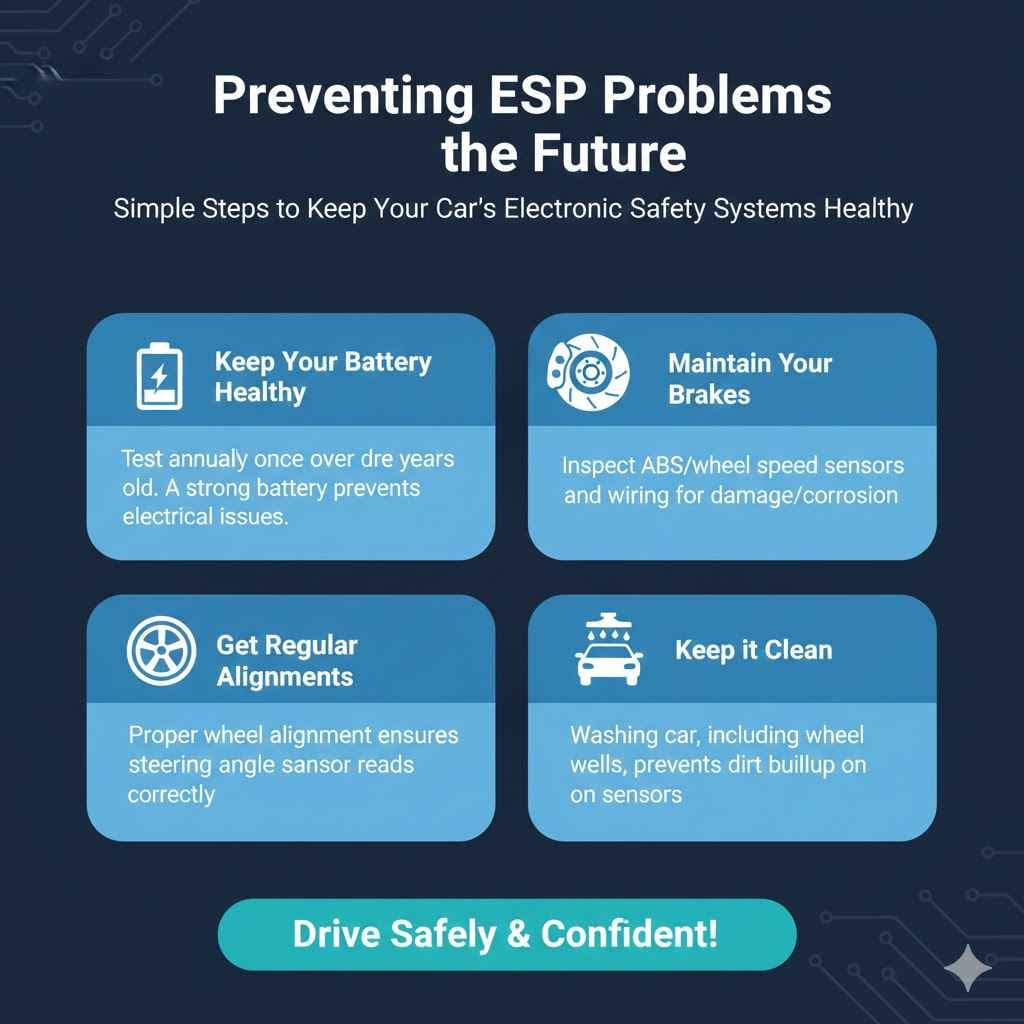
While some parts, like the brake light switch, simply wear out over time, you can take a few steps to keep your car’s electronic safety systems happy.
- Keep Your Battery Healthy: Test your battery annually once it’s over three years old. A strong battery prevents a host of electrical issues.
- Maintain Your Brakes: When you get your brakes serviced, ask the mechanic to inspect the ABS/wheel speed sensors and wiring for any signs of damage or corrosion.
- Get Regular Alignments: Proper wheel alignment not only saves your tires but also ensures your steering angle sensor is reading correctly.
- Keep it Clean: Regularly washing your car, including the wheel wells, can help prevent a buildup of dirt and grime that could interfere with sensors.
Frequently Asked Questions (FAQ)
Is it safe to drive my Ford Focus with the ESP light on?
Yes, it is generally safe to drive. Your regular brakes will still work perfectly. However, the electronic stability control safety feature will be disabled. This means you will not have the system’s assistance in an emergency skid or sharp turn. It’s best to drive more cautiously, especially in wet or slippery conditions, until you can get it fixed.
How much does it cost to fix an ESP fault?
The cost can vary widely. If it’s the brake light switch, you can fix it yourself for under $25. If it’s a wheel speed sensor, the part might cost between $20 and $60, plus labor if you take it to a shop. More complex issues like a faulty ABS module could cost several hundred dollars. Always start with the cheapest and most common fix first.
Can I turn the ESP system off myself?
Most Ford Focus models have a button that allows you to temporarily disable the ESP system (sometimes labeled as traction control). This is useful if you’re stuck in snow or mud and need the wheels to spin freely. However, if the ESP warning light is on due to a fault, the system is already off and pressing the button will do nothing.
Will a weak battery really cause the ESP light to come on?
Absolutely. The ESP system is a sensitive electronic module that requires a stable voltage to operate correctly. When a battery is weak or failing, the voltage can drop when you start the car or use other electronics, causing the ESP computer to register a fault and turn the system off as a precaution. It’s one of the first things to check for any weird electrical issues.
What’s the difference between ESP, ESC, and Traction Control?
They are all related parts of the same vehicle stability system. Traction Control primarily prevents your wheels from spinning during acceleration (like on a wet road). ESP (Electronic Stability Programme) or ESC (Electronic Stability Control) is a more advanced system that also prevents skidding during turns and swerves. They work together using the same sensors.
Does the ESP light mean my brakes are failing?
No, an ESP fault does not mean your primary braking system is failing. Your brakes should work normally. The light specifically refers to a problem within the electronic stability system, which uses the brakes to help control the car. The most common link, as we’ve discussed, is the brake light switch, which tells the system when you are braking.
Why did my ESP light come on after I changed my tires?
This could happen for a couple of reasons. The technician might have accidentally bumped or damaged a wheel speed sensor or its wiring while changing the tire. It’s also possible that the new tires have a slightly different diameter than the old ones, which can temporarily confuse the system until it recalibrates. If the light stays on, have the wheel speed sensors checked.
Conclusion: You’ve Got This!
Dealing with a warning light on your dashboard doesn’t have to be an intimidating or expensive experience. As you’ve seen, the ESP fault on a Ford Focus is often caused by a tiny, simple part that you can replace yourself in minutes. By taking a calm, step-by-step approach, you can diagnose the issue, perform the repair, and save a significant amount of money.
Even if the “genius, fast fix” of replacing the brake light switch doesn’t solve your specific problem, you are now armed with the knowledge to investigate the next steps confidently. You understand what the system does, what the other common causes are, and when it might be time to ask for professional help. Taking control of your car’s maintenance is empowering. You’ve learned a valuable skill and ensured your car’s important safety systems are working properly. Great job!