
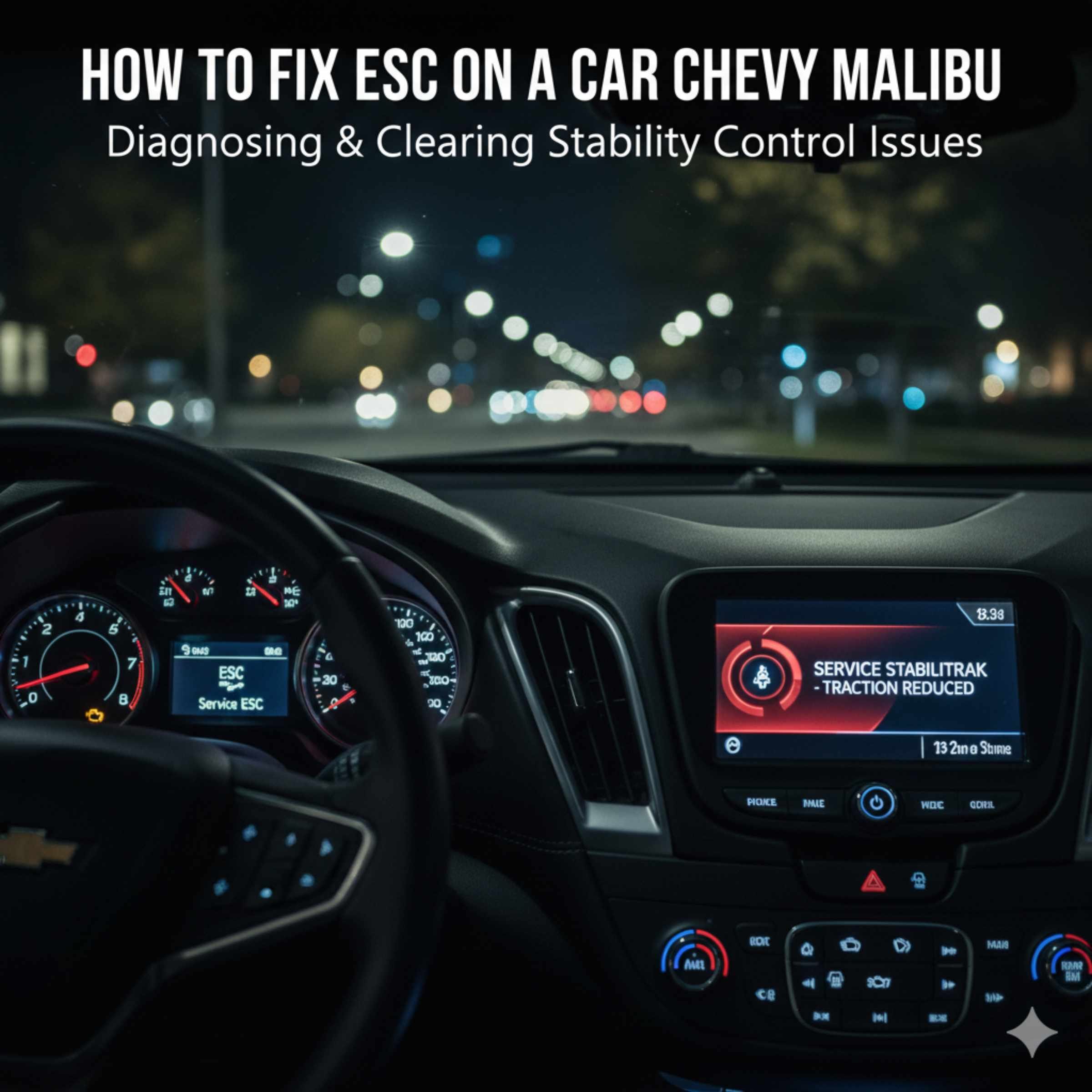
To fix the ESC light on your Chevy Malibu, start by checking simple things—low brake fluid or a loose battery connection. If those fail, the issue often points to a faulty wheel speed sensor, which requires scanning diagnostics codes for precise replacement. Safety comes first, so address this promptly!
It is frustrating when that little light pops up on your dashboard. Seeing the Electronic Stability Control (ESC) warning light on your Chevy Malibu means your car’s safety system needs attention. This warning often shows up alongside the ABS (Anti-lock Braking System) light. While a flashing light means the system is actively working during a skid, a steady light means there is a fault. Don’t worry! Many common causes are simple fixes you can handle yourself. This guide will walk you step-by-step through diagnosing and fixing how to fix ESC on a car Chevy Malibu, saving you a trip to the mechanic. Let’s get your safety system back online the easy way.
Understanding the ESC System in Your Chevy Malibu
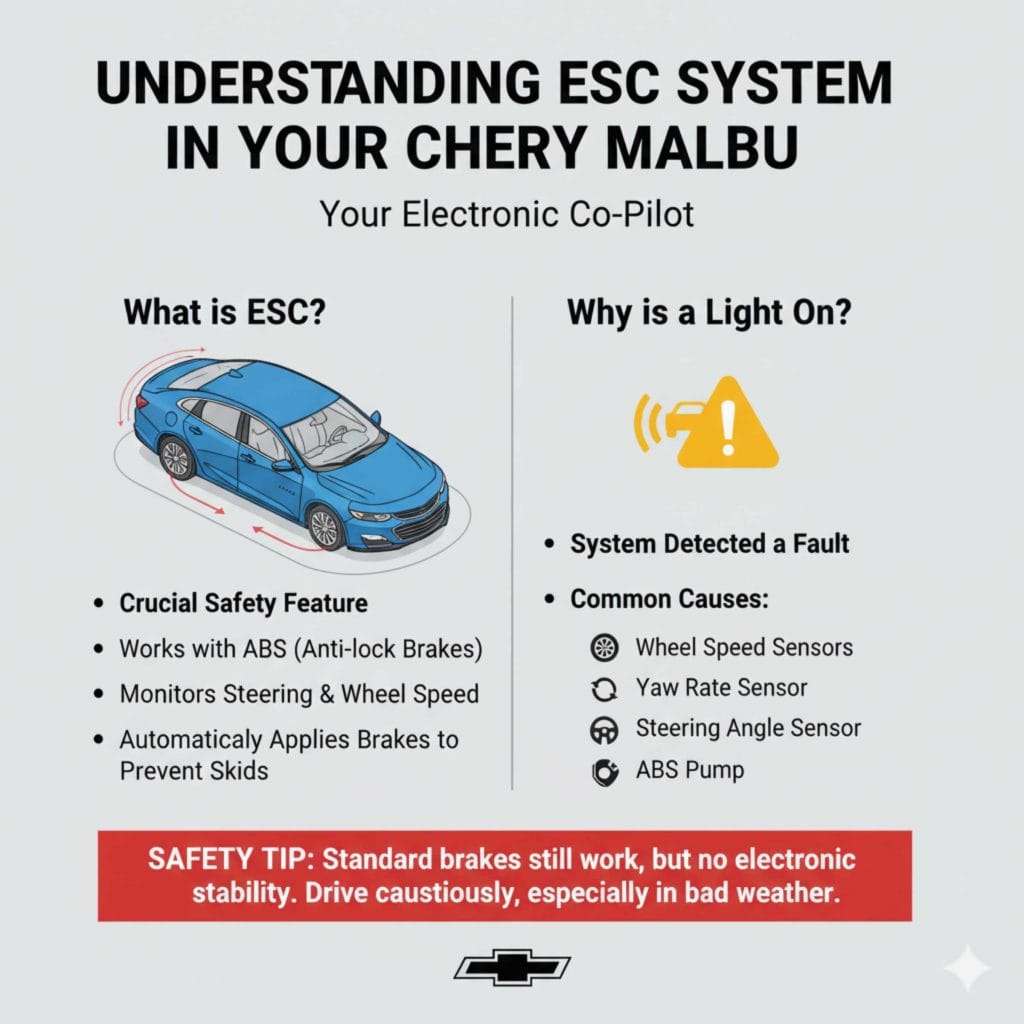
The Electronic Stability Control (ESC) system is a crucial safety feature, especially on modern vehicles like the Chevy Malibu. It works closely with your Anti-lock Braking System (ABS). Think of it as an electronic co-pilot constantly watching your steering and wheel speed. If the system detects that you are losing control—like sliding in a turn—it can automatically apply the brakes to individual wheels to help you regain traction and stay on course.
When the ESC light stays on, it means this vital system is disabled. This usually happens because the system detected a fault in one of its related components, such as wheel speed sensors, the yaw rate sensor, steering angle sensor, or the ABS pump itself. Because it relies on precise data, even a small issue can trigger the warning.
Safety Tip: While the ESC system is offline, your standard brakes still work fine. However, you lose that extra layer of electronic stability control, making driving in bad weather (rain, snow) much riskier. Addressing the light quickly is essential for safe driving.
Initial, Easy Checks: Starting with the Basics (No Tools Needed)
Before diving under the car or getting complex scanners, we always start with the quickest and easiest checks. About 30% of the time, the issue is something very simple that reset the computer.
1. Re-Start and Test Drive
The simplest fix is often a temporary glitch. Sometimes, the Module Control Unit (MCU) just needs a quick reboot. Turn your Chevy Malibu completely off, remove the key (if applicable), wait about five minutes, and then restart the car. If the light goes off immediately, you might have had a temporary communication error. If the light returns after driving a short distance, you need to investigate further.
2. Check the Battery and Electrical Connections
The ESC system relies on steady voltage. If your battery is weak, dying, or if the terminals are corroded or loose, the control module might throw a fault code because it isn’t receiving consistent power. This is especially true if you recently had other electrical issues.
- Visually inspect the battery terminals. Look for white or blue chalky buildup (corrosion).
- Gently try to wiggle the cables. They should be tight enough that you cannot turn them by hand.
- If corrosion is present, clean it using a mixture of baking soda and water, followed by a wire brush designed for battery posts, and rinse with clean water. Ensure terminals are dry before reconnection.
3. Inspect Brake Fluid Level
Since the ESC system is intrinsically linked to the braking system (it uses the hydraulic pressure), a low brake fluid level can trigger the warning light. If the fluid is too low, it can affect the ABS/ESC module’s ability to sense pressure correctly.
Locate the brake fluid reservoir under the hood (usually near the firewall on the driver’s side). It has a cap marked with a brake symbol. The fluid level should fall between the MIN and MAX marks. If it is low, top it up with the correct DOT fluid specified for your Malibu model. Do not overfill. If it is very low, it implies you have a leak or your brake pads are extremely worn, both of which need professional attention.
Diagnosing Deeper: Reading the Trouble Codes
If the simple checks above didn’t solve your how to fix ESC on a car Chevy Malibu problem, the next step is gathering data. The car’s computer stores specific Diagnostic Trouble Codes (DTCs) when the ESC light illuminates. You need an OBD-II scanner to read these codes.
Required Tools for Code Reading
You don’t need a professional scanner to start; there are affordable options available.
| Tool | Purpose |
|---|---|
| Basic OBD-II Scanner (Code Reader) | Reads generic codes (P0xxx). Look for codes starting with C (Chassis/ABS). |
| Advanced Scanner (Recommended) | Required to read ABS/ESC specific codes, which often begin with C (e.g., Bosch diagnostic systems often interface well). |
| Safety Gloves and Glasses | Protects hands and eyes during inspection. |
Where to Find the OBD-II Port
On most Chevy Malibus (especially models made after 1996), the port is located under the driver’s side dashboard, usually near the steering column or kick panel. Plug the scanner in firmly. Turn the ignition key to the “ON” position (engine off) and run the scan command.
Pay close attention to codes that start with ‘C’ (Chassis) or ‘U’ (Network Communication). ESC/ABS codes are critical. Common codes include:
- C0035: Left Front Wheel Speed Sensor Circuit Malfunction.
- C0040: Right Front Wheel Speed Sensor Circuit Malfunction.
- C0045: Left Rear Wheel Speed Sensor Circuit Malfunction.
The Most Common Culprit: Faulty Wheel Speed Sensors
In the vast majority of cases where the ESC/ABS light illuminates on a Malibu, the culprit is a malfunctioning Wheel Speed Sensor (sometimes called an ABS sensor). These sensors tell the ESC control module exactly how fast each wheel is spinning. If one sensor sends bad information, the system assumes it cannot safely control stability and shuts down, triggering the light.
Step-by-Step Inspection of Wheel Speed Sensors
This is the most achievable DIY repair for a beginner, assuming you have correctly identified the faulty sensor via the code reader.
Tools You Might Need:
- The correct OBD-II scanner that reads ABS codes.
- Basic socket set (often 10mm or 12mm).
- Brake cleaner.
- Jack and jack stands (safety first!).
- Torque wrench (if replacing).
Procedure:
- Safety First: Park on a flat surface, engage the parking brake, and use wheel chocks if you are lifting the vehicle. Always use quality jack stands rated for the weight of your Malibu.
- Locate the Sensor: The sensors are usually nestled near the hub assembly, often attached with one small bolt. Consult your Malibu’s repair manual or search vehicle-specific forums for exact locations, as they differ based on the model year (e.g., 2010 Malibu vs. 2018 Malibu).
- Visual Inspection: Start with the sensor indicated by the code. Look closely at the wiring harness leading to the sensor. Is it frayed, cut, or chewed (rodents love wires)? Sometimes, simply reattaching a loose connector fixes the problem.
- Cleaning: Dirt and metal shavings from the brake rotor can sometimes build up around the magnetic tip of the sensor, causing inaccurate readings. Use brake cleaner and a soft rag to gently wipe the sensor tip clean.
- Testing (Advanced): If cleaning doesn’t work, you usually need a multimeter capable of testing AC voltage (or an advanced scan tool) to check the sensor output while spinning the wheel manually. However, for most beginners, replacement is simpler if the code points directly to the sensor.
- Replacement: If inspection fails, unbolt the old sensor. Unplug the connector (this can sometimes be tricky; watch for release clips). Install the new sensor, ensuring it seats correctly against the spindle or hub. Reattach the mounting bolt and plug in the harness securely.
- Road Test and Reset: Once replaced, start the car. The light may stay on. Drive the car slowly (5-10 mph) for a short distance, stopping and starting a few times. Many vehicle computers will clear the ESC/ABS code themselves after detecting the new sensor is working correctly. If not, use your OBD-II scanner to manually clear the stored codes.
Addressing Sensor Wiring and Connections
If the sensor itself seems fine, or if replacing it didn’t work, the fault lies in the wiring leading back to the control module. This is a common area of failure because wiring exposed to road grime, salt, and heat breaks down over time.
Common Wiring Fault Areas
The wiring harness for the wheel speed sensors runs along the suspension components, making it vulnerable.
- Chafing Points: Check anywhere the harness rubs against sharp metal edges on the frame or suspension arms. A small hole in the insulation can cause a short or open circuit.
- Connector Integrity: Ensure the plastic electrical connectors snap tight. Moisture ingress here causes corrosion, leading to resistance and false readings.
- Rodent Damage: Mice and rats frequently chew on wiring insulation during the colder months. Look for actual bite marks in the plastic sheath.
Repairing damaged wires should always involve soldering the connection after cutting out the damaged section, sealing it with marine-grade heat shrink tubing. Simply taping a cut wire rarely holds up to the heat and vibration inside a wheel well.
When the Problem is the Control Module (The Expensive Fix)
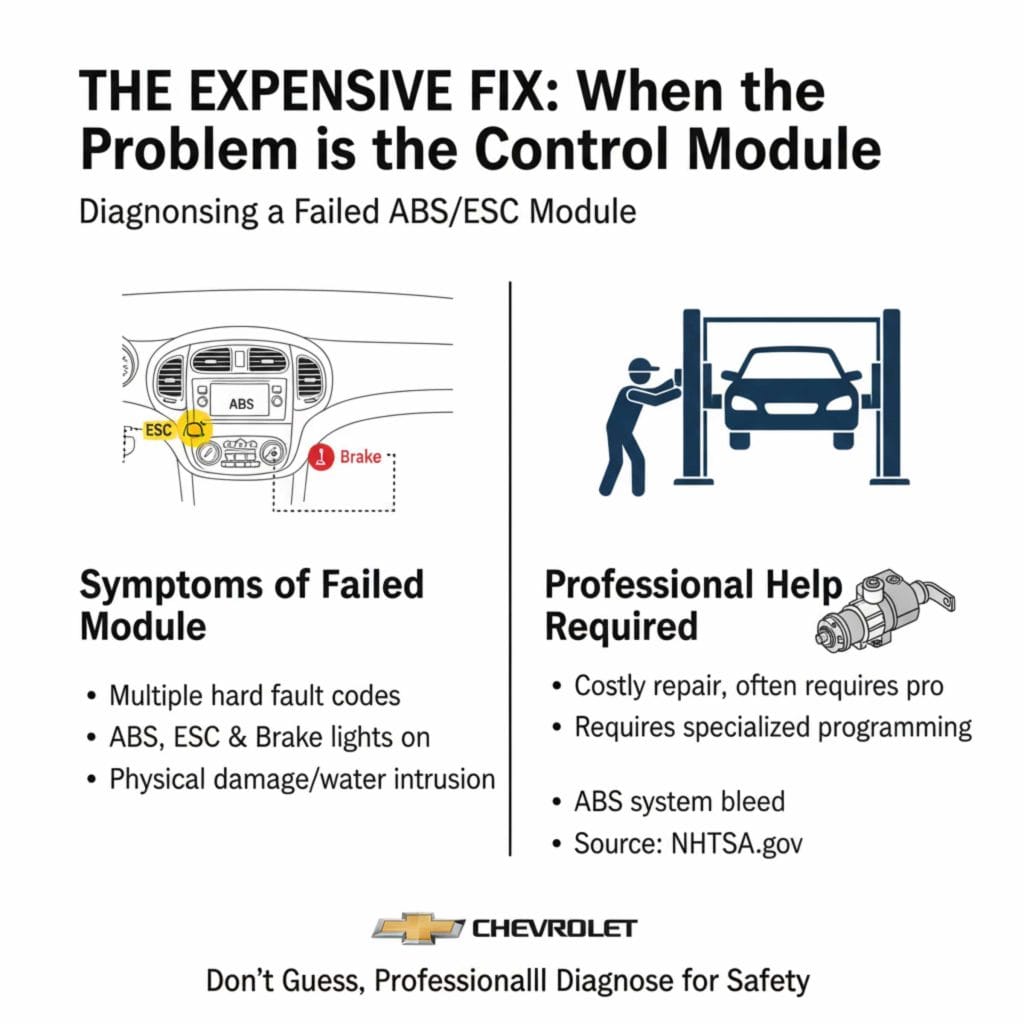
If you have thoroughly checked the battery, all four wheel speed sensors, and their corresponding wiring harnesses, the fault may lie with the main Electronic Control Unit (ECU) responsible for managing the ESC/ABS system. This is usually the most costly repair and often requires professional help.
Symptoms of a Failed ABS/ESC Module:
- Multiple hard codes pointing to communication errors between sensors, even after replacing suspect parts.
- The ESC light is accompanied by a primary ABS light, and sometimes a brake warning light that won’t clear.
- The module casing appears physically damaged or shows signs of water intrusion (though this is rare unless due to a prior accident or flood damage).
If you suspect a module failure, it is highly recommended to seek a professional diagnosis. Replacing the module often requires programming and “bleeding” the ABS system on a specialized level that standard home tools cannot perform. For reference on maintaining proper automotive systems, organizations like the National Highway Traffic Safety Administration (NHTSA) stress the importance of these systems being correctly calibrated.
Summary of ESC Troubleshooting Flowchart for Chevy Malibu
When troubleshooting how to fix ESC on a car Chevy Malibu, follow this logical, confidence-building sequence:
| Step | Action | Likelihood of Success |
|---|---|---|
| 1 | Restart vehicle and check battery connections. | Moderate (for glitches/low voltage) |
| 2 | Check and top off brake fluid reservoir. | Low to Moderate |
| 3 | Scan for DTCs using an ABS-capable reader. | High (Essential diagnostic step) |
| 4 | Inspect, clean, and test the indicated Wheel Speed Sensor. | Very High (Most common fix) |
| 5 | Inspect sensor wiring harness for damage. | Moderate |
| 6 | If all else fails, consider professional diagnosis for ABS Module failure. | Low (Last resort) |
Frequently Asked Questions (FAQ) About ESC Lights
Q1: Can I safely drive my Chevy Malibu with the ESC light on?
A: You can drive it carefully, as your regular brakes still work. However, the Electronic Stability Control system is disabled. Do not drive aggressively or in slippery conditions until the issue is resolved, focusing only on necessary trips.
Q2: Does turning the traction control off often fix the ESC light?
A: Sometimes, pressing the traction control/ESC button will turn the light off temporarily, but usually, this action only disables a feature; it doesn’t fix the underlying problem that caused the warning light to appear in the first place. The warning will likely return.
Q3: How much does it usually cost to fix a faulty wheel speed sensor?
A: If you do the sensor replacement yourself, a quality aftermarket sensor often costs between $30 and $75. Professional replacement, including labor and diagnostics, might range from $150 to $350, depending on your shop’s rates.
Q4: Why did my ESC light come on right after a tire rotation?
A: If you recently had tires changed or rotated, the mechanic might have nicked a sensor wire or if the wheels were installed improperly, it could have stressed a sensor connection. It is worth checking the wheel sensors nearest where work was done first.
Q5: Is it related to the Check Engine Light (CEL)?
A: Not usually directly. The CEL manages emissions and engine function. The ESC light is related to the chassis and braking system. However, sometimes a major engine issue can cause a communication fault that triggers multiple warning lights, including the ESC.
Q6: How do I know if my Malibu sensor is bad or if it’s just dirt?
A: If the car has been driven through heavy mud or deep snow, dirt is likely. If the light came on suddenly after hitting a pothole or during normal quiet driving, an internal failure in the sensor or wiring is more probable than simple dirt buildup.
Conclusion: Regaining Control and Confidence
Fixing the ESC light on your Chevy Malibu is a very achievable goal for the determined DIY driver. By following this systematic process—starting with the simple electrical checks, moving to brake fluid levels, and finally using a scan tool to pinpoint a faulty wheel speed sensor—you dramatically increase your chances of resolving the issue cheaply and quickly. Remember, safety is paramount. Never let a warning light intimidate you; view it as a friendly notification from your car asking for specific attention. With simple tools and clear guidance, you have taken the most important steps toward understanding how to fix ESC on a car Chevy Malibu. Drive safe, and enjoy the confidence that comes from tackling car mysteries head-on!