
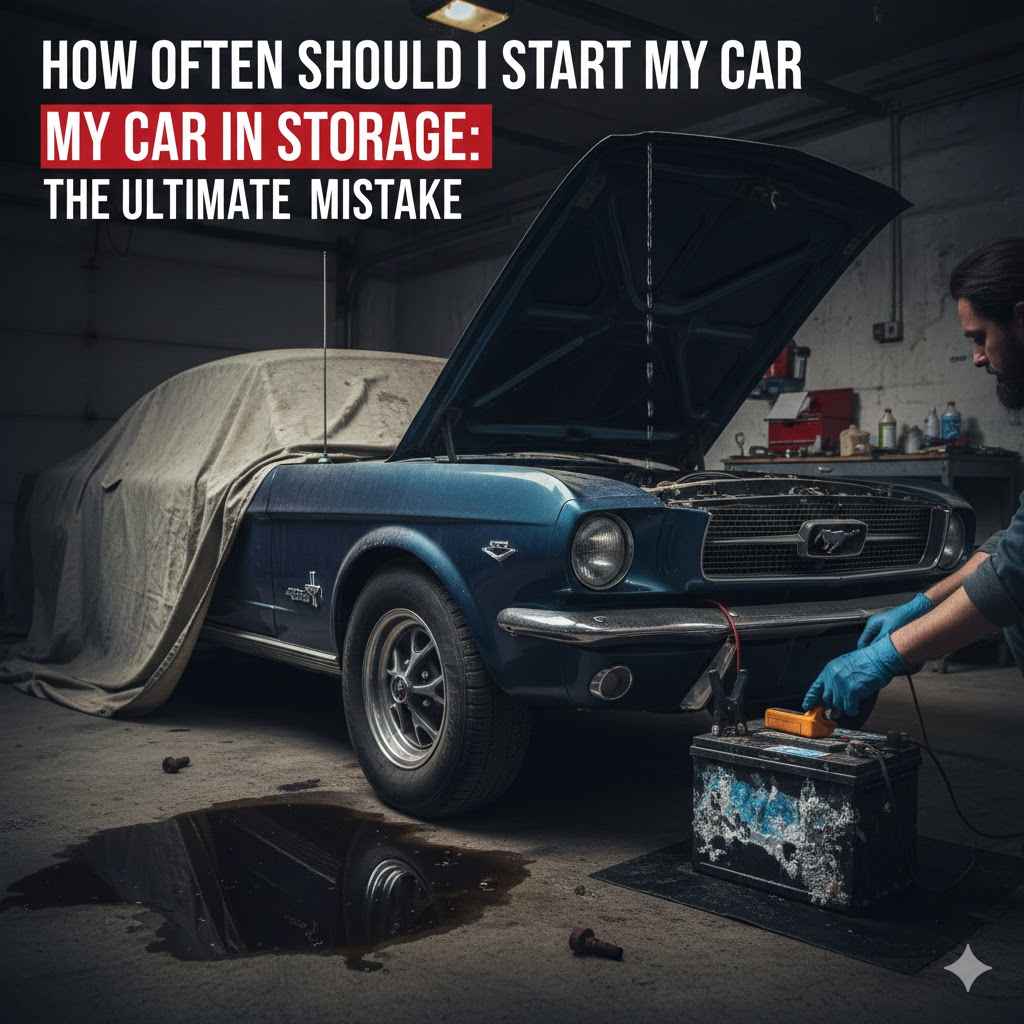
Starting a car in storage for just a few minutes is a common mistake that causes more harm than good. It drains the battery without fully recharging it and creates harmful condensation in the engine and exhaust. The best practice is to properly prepare your car for storage and leave it undisturbed until you’re ready to drive it again.
Putting your car away for the season? You might have heard that you should start it up every week or two to “keep things lubricated.” It sounds like good advice, but it’s actually one of the biggest myths in car care. This simple mistake can lead to a dead battery, rusty parts, and other frustrating problems.
Don’t worry, I’m here to help you avoid that headache. We’ll walk through why you should stop starting your stored car. More importantly, I’ll show you the simple, correct steps to put your car away safely. This guide will give you the confidence to store your car the right way, saving you time and money down the road.
Let’s get straight to the point: the answer to “how often should I start my car in storage?” is never. It goes against everything we think we know about cars, but letting it sit peacefully is far better than starting it for short periods.
When you start your car and only let it idle for 10-15 minutes in the driveway, you’re kicking off a chain reaction of problems. Let’s break down exactly why this is a bad idea.
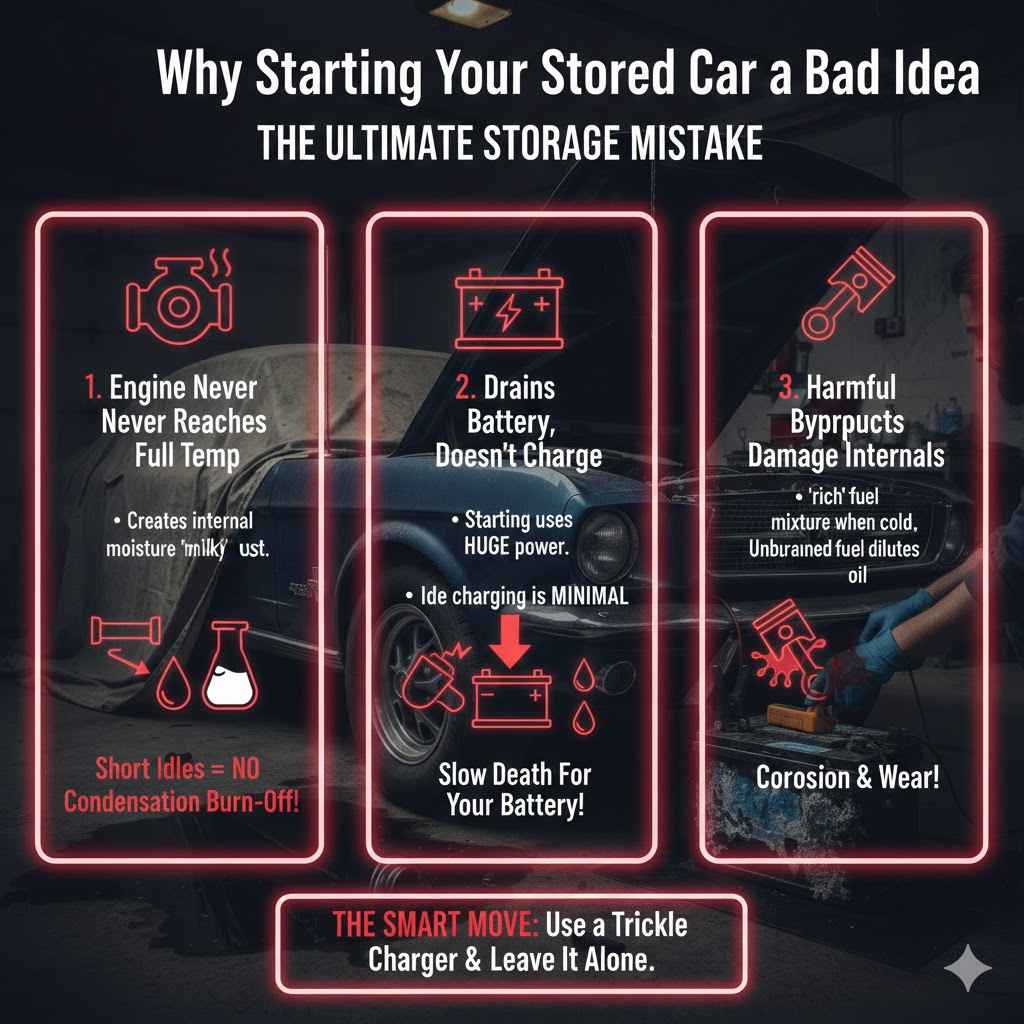
Why Starting Your Stored Car Is a Bad Idea
The intention behind starting a stored car is good. You want to keep the battery charged and the engine parts moving. Unfortunately, a short idle does the exact opposite of what you hope to achieve. Here are the three main reasons to leave that ignition key alone.
1. The Engine Never Reaches Full Temperature
When your car runs, the engine and exhaust system get very hot. This heat is important because it burns off condensation (water) that naturally collects inside. When you only run the engine for a few minutes, it never gets hot enough to evaporate all that moisture.
Instead, you’re creating a warm, damp environment inside your engine and exhaust pipes. This is a perfect recipe for:
- Internal Rust: Moisture settling in the exhaust system can cause it to rust from the inside out.
- Contaminated Oil: Water can mix with your engine oil, turning it into a milky sludge. This sludge doesn’t lubricate properly and can cause significant engine damage over time.
To properly warm up a car and burn off condensation, you need to drive it for at least 20-30 minutes, not just let it idle.
2. You’re Draining the Battery, Not Charging It
Starting a car takes a huge jolt of electricity from the battery. Your car’s charging system, the alternator, is designed to recharge the battery while you drive. However, at idle, the alternator produces very little power.
Think of it like this: starting the car takes a big scoop of power out of the battery bucket. Idling for 15 minutes only puts a few drips back in. If you do this every week, you are slowly but surely draining the battery until it’s completely dead. A deeply discharged battery can suffer permanent damage and may never hold a full charge again.
3. Harmful Byproducts Damage Engine Internals
When an engine is cold, it runs on a “rich” fuel mixture, meaning there’s more gasoline than air. This is normal and helps it start. However, this excess, unburned fuel can cause problems during a short idle.
- Washed Cylinder Walls: Unburned gasoline can seep past the piston rings and wash away the thin film of oil that protects the cylinder walls. This can cause premature wear.
- Diluted Oil: The same fuel that washes the cylinder walls ends up in your oil pan, diluting the engine oil and reducing its ability to protect vital engine parts.
Essentially, each short start-up introduces moisture and raw fuel into your engine oil, slowly turning it into a corrosive, ineffective liquid.
The Right Way: How to Prepare Your Car for Storage
Now that you know what not to do, let’s focus on the right way to put your car to bed. Proper preparation is the key to ensuring your car starts right up and is ready to go when you are. The steps depend on how long you plan to store it.
Short-Term Storage (Under 30 Days)
If you’re only going away for a few weeks, you don’t need to do much. Modern cars are very resilient. Here are a few simple tips:
- Clean It Up: Give your car a quick wash to remove things like bird droppings or tree sap that can damage the paint.
- Find a Good Spot: If possible, park it indoors in a garage or covered carport to protect it from the elements.
- Consider a Battery Tender: It’s not essential for short-term storage, but connecting a battery tender is the best way to keep your battery healthy and fully charged.
Long-Term Storage (30 Days or More): Your Step-by-Step Guide
For storage longer than a month, a little preparation goes a long way. Follow these steps, and you can rest easy knowing your car is safe and sound.
Find the Right Storage Spot
The ideal location is a climate-controlled, dry, and secure garage. This protects your car from temperature swings, moisture, sun damage, and potential theft. If you don’t have a garage, consider renting a dedicated car storage unit.
Give It a Thorough Clean, Inside and Out
Before you put the cover on, make your car sparkle. Wash and wax the exterior to protect the paint. Thoroughly vacuum the interior, making sure to remove any food wrappers or crumbs. A clean car is less inviting to pests like mice and insects.
Change the Oil and Filter
Used engine oil contains contaminants that can become acidic over time and eat away at engine components. Draining the old oil and replacing it with fresh, clean oil before storage ensures your engine is protected. When you take the car out of storage, the oil will be fresh and ready to go.
Fill the Gas Tank (and Add a Stabilizer)
Fill your gas tank until it’s about 90% full. A full tank leaves less room for air, which helps prevent moisture from condensing and causing rust inside the tank. More importantly, add a quality fuel stabilizer to the gasoline. According to the U.S. Energy Information Administration, gasoline can degrade in as little as 30 days. A stabilizer prevents the fuel from breaking down, gumming up your fuel system, and causing starting issues later.
Take Care of the Battery
This is the most critical step. A dead battery is the #1 problem for stored vehicles. You have two good options:
The Best Option: Use a Battery Tender. A battery tender (or smart charger) is a small device that monitors your battery’s charge. It automatically delivers a slow, steady charge only when needed, keeping the battery topped off without overcharging it. This is the “set it and forget it” solution.
The Good Option: Disconnect the Battery. If you don’t have access to a power outlet, you can disconnect the negative battery terminal. This will prevent the car’s electronics from slowly draining the battery. Be aware that this will reset your radio presets, clock, and other onboard computer settings.
Protect Your Tires
Tires can develop flat spots when a car sits in one place for months. To prevent this, inflate your tires to the maximum recommended pressure listed on the tire’s sidewall (not the door jamb). This extra pressure helps the tires maintain their round shape. If you’re storing the car for a year or more, consider putting the car on jack stands to take the weight off the tires completely.
Keep Pests Out
A stored car can look like a luxury hotel to mice and other critters. They can chew through wiring and build nests, causing thousands of dollars in damage. To keep them out:
Place mothballs or peppermint oil-soaked cotton balls in the trunk, cabin, and engine bay. Rodents dislike the smell.
Gently stuff a rag or some steel wool into the exhaust pipe and air intake snorkel. CRITICAL: Leave a bright, can’t-miss reminder note on your steering wheel to remove these before starting the car!
Release the Parking Brake
If you leave the parking brake engaged for months, the brake pads can fuse to the rotors, especially in damp conditions. Instead of using the parking brake, secure the car with a set of quality wheel chocks.
Choose the Right Car Cover
Avoid cheap, plastic tarps. They trap moisture against the car’s paint, which can cause rust and other damage. Invest in a high-quality, breathable car cover. It will keep dust and dirt off while allowing air to circulate, preventing moisture buildup.
Check Your Insurance
Call your insurance provider and let them know your car will be in storage. You may be able to reduce your coverage to a comprehensive-only policy, which covers theft, fire, and other damage but not collisions. This can save you a significant amount of money.
Storage Prep: Quick Reference Table
Here’s a simple table to help you remember the key steps for different storage durations.
| Task | Short-Term Storage (< 30 Days) | Long-Term Storage (> 30 Days) |
|---|---|---|
| Clean Car (Inside & Out) | Recommended | Essential |
| Change Oil | Not Necessary | Essential |
| Fill Gas Tank | Good Idea | Essential |
| Add Fuel Stabilizer | Not Necessary | Essential |
| Manage Battery | Optional (Tender Recommended) | Essential (Tender is Best) |
| Over-inflate Tires | Not Necessary | Essential |
| Use a Car Cover | Recommended | Essential (Use a breathable one) |
| Address Pests & Parking Brake | Not Necessary | Essential |
Battery Care: Tender vs. Disconnecting
Choosing how to care for your battery is a big decision. Here’s a breakdown to help you decide.
| Feature | Battery Tender | Disconnecting Negative Terminal |
|---|---|---|
| Effectiveness | Excellent. Keeps battery at 100% health and ready to go. | Good. Prevents slow drain but battery will still self-discharge over many months. |
| Convenience | Very high. Just plug it in and forget about it. | Medium. Requires a wrench. Resets all onboard electronics (radio, clock). |
| Cost | One-time purchase of the device ($30 – $70). | Free. |
| Requirement | Needs access to a standard electrical outlet. | Needs a basic wrench (usually 10mm). |
| Best For | Anyone storing a car for over a month with access to power. The ideal solution. | Storage situations without access to power, or as a no-cost alternative. |
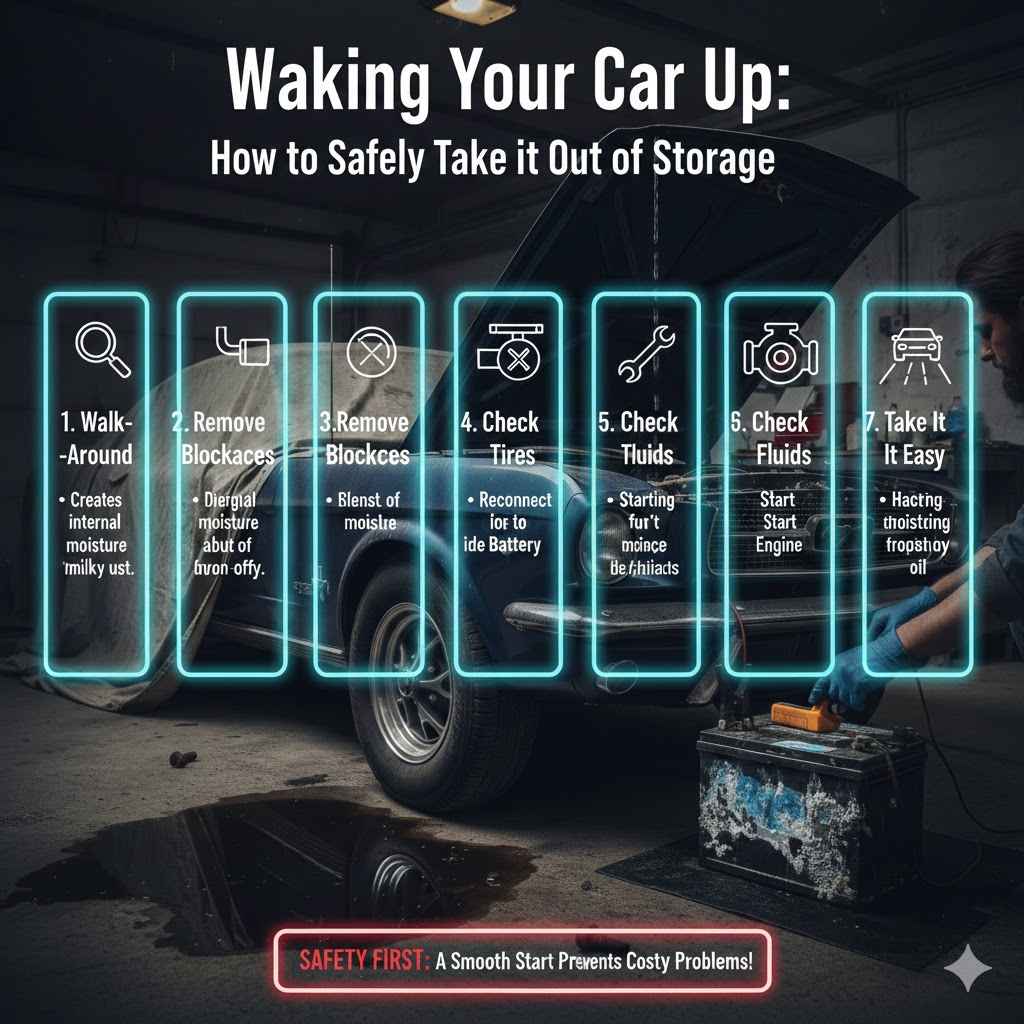
Waking Your Car Up: How to Safely Take it Out of Storage
When the time comes to drive your car again, don’t just hop in and turn the key. Follow this quick checklist to wake it up safely.
- Do a Walk-Around: Check for any visible issues. Look under the car for any signs of fluid leaks or nests.
- Remove All Blockages: This is the most important step! Take the rags or steel wool out of the exhaust and air intake. Remove your reminder note from the steering wheel.
- Check the Tires: Check the tire pressure and inflate or deflate them back to the normal recommended pressure listed on the sticker inside your driver’s door jamb.
- Reconnect the Battery: If you disconnected the battery, reconnect the negative terminal and ensure it’s tight. If you used a tender, simply unplug it.
- Check Fluids: Pop the hood and check your oil, coolant, and brake fluid levels just to be safe.
- Start the Engine: Start the car and let it idle for a minute or two. Don’t be alarmed by a little smoke from the exhaust at first; it’s likely just burning off condensation. Listen for any unusual sounds.
- Test the Brakes: Before you pull out onto the road, pump the brake pedal a few times to make sure it feels firm. As you slowly roll forward, test them to ensure they are working properly. There might be a light layer of rust on the brake rotors that will scrape off with the first few stops.
- Take It Easy: For the first drive, avoid hard acceleration or high speeds. Give the car 15-20 minutes of gentle driving to allow all the fluids to circulate and the systems to get back to normal operation.
Frequently Asked Questions (FAQ)
1. So, I should never start my car in storage?
That’s right. Unless you plan to drive the car for a solid 20-30 minutes on the open road to get it fully up to operating temperature, it’s best to leave it off. Properly preparing it for storage is always the better choice.
2. How long can a car sit without being started before the battery dies?
It depends on the age of the battery, the car’s electronics, and the temperature. A new battery in a modern car can still be drained in as little as 2-3 weeks due to onboard computers. An older battery might die even faster. It’s not worth the risk; always use a tender or disconnect it for storage over 30 days.
3. What is a battery tender and is it really worth it?
A battery tender is a smart charger that keeps your battery at its optimal charge level without overcharging it. It’s absolutely worth the investment. It dramatically extends the life of your battery, saves you from the hassle of jump-starts, and ensures your car is ready to go whenever you are.
4. Do I really need to fill the gas tank?
Yes, especially for long-term storage. A full tank prevents moisture from accumulating and causing rust inside the tank. Combining a full tank with a fuel stabilizer is the best way to protect your entire fuel system.
5. Can I just disconnect the battery instead of using a tender?
Yes, you can. It’s a good free alternative if you don’t have access to an electrical outlet. It will stop the car’s electronics from draining the battery. However, the battery will still slowly lose its charge over many months, and a tender is a superior method for keeping the battery in peak condition.
6. What happens if I don’t prepare my car for storage at all?
You’re rolling the dice. You will almost certainly come back to a dead battery. You also risk developing flat spots on your tires, getting rust in your fuel tank and exhaust, and having your engine oil become contaminated with moisture and fuel.
7. Is it better to drive the car or let it sit?
If you have the choice, driving the car is always better than letting it sit. A 30-minute drive once every couple of weeks will keep the battery charged, the tires round, and the fluids circulated. If you can’t commit to driving it regularly, then proper storage preparation is your best bet.
Conclusion: Store It Right, Drive with Confidence
The old advice to start a stored car every week comes from a good place, but modern cars and our understanding of them have changed. We now know that this practice creates more problems than it solves, from killing your battery to promoting internal rust.
By following the simple preparation steps—cleaning the car, managing the fuel and oil, caring for the battery, and protecting the tires—you are doing the absolute best thing for your vehicle’s health. It may seem like a bit of work upfront, but it guarantees peace of mind. When you’re ready to hit the road again, your car will be waiting for you, healthy and ready for the next adventure. You’ve got this!