
Starting a car in storage weekly or monthly is a harmful myth. For storage longer than 30 days, do not start it at all. A short idle builds up damaging moisture in the engine and exhaust and drains the battery more than it charges. The best practice is to properly prepare the car for storage and leave it off.
Putting your car away for a while seems simple, right? Maybe you’re deploying, going on a long vacation, or just storing your classic car for the winter. A common piece of advice you’ll hear is to go out and start it every week or two. Let it run for a few minutes, and everything will be fine. But what if I told you this well-meaning advice could be one of the worst things you can do for your vehicle?
It’s a frustrating and confusing topic, with advice pulling you in different directions. You just want to protect your car and make sure it starts right up when you need it again. I understand completely. That’s why we’re going to bust this dangerous myth once and for all. In this guide, I’ll walk you through exactly why you shouldn’t start your stored car and show you the simple, correct steps to keep it safe and sound. Let’s get your car stored the right way!
Why We Think Starting a Stored Car Is a Good Idea (The Myth)
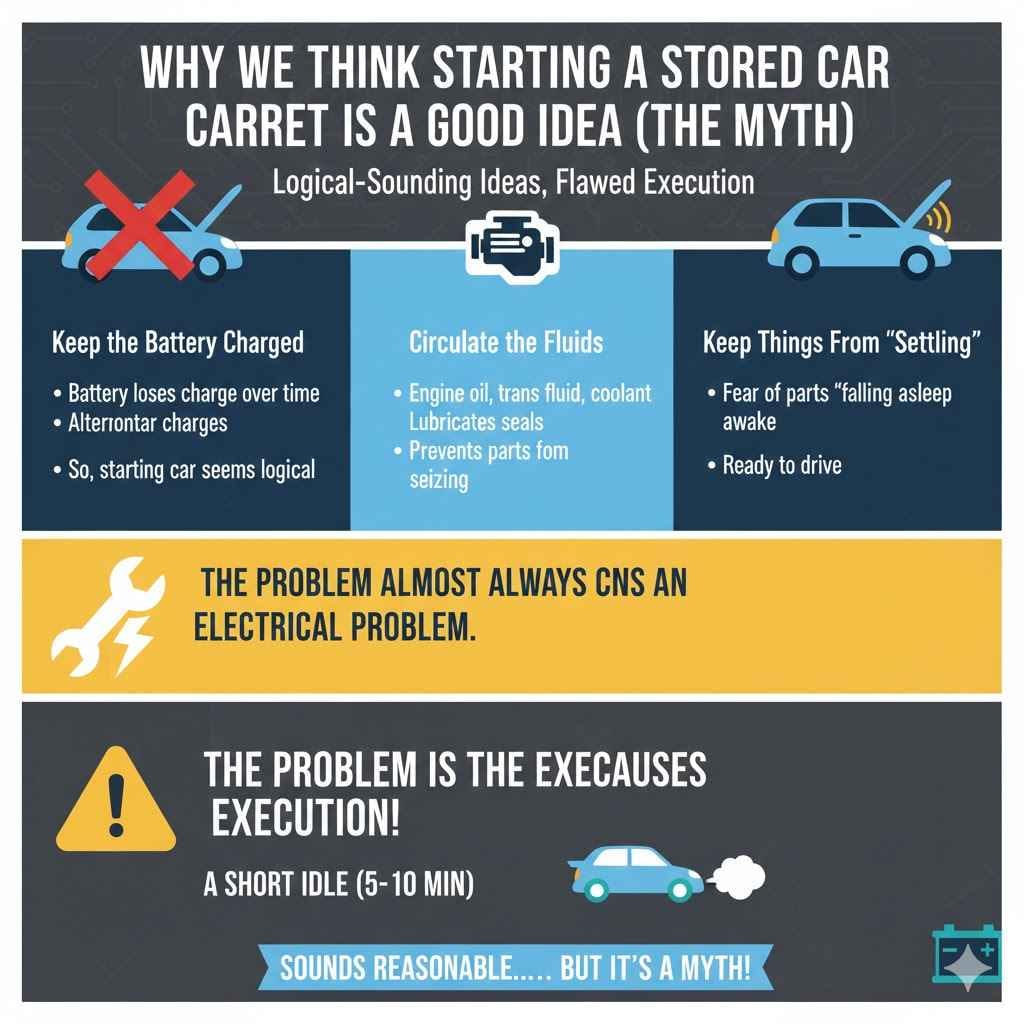
The idea of starting a stored car comes from a good place. It’s rooted in a few logical-sounding ideas that have been passed down for generations. Most of us have heard it from a parent, a neighbor, or a friend who knows a thing or two about cars. The thinking usually goes like this:
- Keep the battery charged: A car battery slowly loses its charge over time. The alternator, which charges the battery, only works when the engine is running. So, starting the car seems like a good way to top up the battery.
- Circulate the fluids: Cars are full of important fluids like engine oil, transmission fluid, and coolant. The idea is that running the engine will move these fluids around, keeping seals lubricated and preventing parts from seizing up.
- Keep things from “settling”: There’s a general fear that if a car sits for too long, things will just… stop working. Starting it feels like you’re keeping the mechanical parts “awake” and ready to go.
These points sound reasonable on the surface. After all, cars are designed to be driven, not to sit still. However, the problem isn’t with the logic itself, but with the execution. The way we typically follow this advice—a short idle in the driveway for 5-10 minutes—is what causes all the trouble.
The Hidden Dangers: Why Starting Your Car in Storage Does More Harm Than Good
Here’s the hard truth: that weekly 10-minute startup is causing more damage than a month of sitting silently. When you start your car for just a few minutes without driving it, you introduce a trio of problems that can lead to expensive repairs down the road. Let’s break them down in simple terms.
The Enemy Inside – Engine Condensation
Think about a cold glass of water on a hot day. What happens? Water droplets, or condensation, form on the outside. A similar thing happens inside your engine and exhaust system when you start it for a short time.
When your engine runs, it gets hot, and one of the byproducts of combustion is water vapor (steam). For this water to be harmlessly expelled, the entire system, including the exhaust pipes and muffler, needs to get fully hot—hot enough to turn all that water into steam and push it out the tailpipe. This only happens after driving for about 20-30 minutes.
When you only run the engine for 5-10 minutes, it doesn’t get hot enough. The water vapor condenses back into liquid water inside the cool engine components and exhaust system. This water then mixes with your engine oil, creating a milky, corrosive sludge that damages engine parts. It also pools in your muffler and exhaust pipes, causing them to rust from the inside out.
The Slow Drain – Your Battery Isn’t Charging
This is probably the most surprising part for many people. You start the car to charge the battery, but you’re actually draining it more. Starting an engine requires a massive amount of electrical power from the battery.
Your car’s alternator is designed to recharge the battery and power the electronics while you are driving at normal speeds. At idle, the alternator produces very little electrical current. The amount of power your alternator generates during a 10-minute idle is not enough to replace the huge amount of energy used to start the engine in the first place. So, each time you start it and let it idle, you create a net loss of battery charge. Do this every week, and you’ll end up with a dead battery faster than if you had just left it alone.
Incomplete Lubrication
While the intention to circulate fluids is good, a short idle doesn’t do the job properly. Engine oil needs to heat up to flow correctly and reach every tiny nook and cranny of the engine. Transmission fluid in an automatic car doesn’t circulate properly at all unless the car is put into gear and driven.
Letting the car idle in park for a few minutes only moves some of the oil around the bottom half of the engine. The top parts, like the camshafts and valve train, remain relatively dry. This can cause unnecessary wear and tear on critical components over time.
The “Set It and Forget It” Solution: How to Properly Store Your Car
So, if starting the car is a bad idea, what’s the right way to do it? The secret is all in the preparation. By taking a few simple steps before you store your car, you can let it sit peacefully for months and have it start right up when you return. Proper preparation protects your car from every threat: a dead battery, bad fuel, moisture damage, pests, and flat-spotted tires.
The level of preparation depends on how long you plan to store the car. Here’s a simple breakdown.
| Task | Short-Term Storage (1-3 Months) | Long-Term Storage (3+ Months) |
|---|---|---|
| Clean the Car | Recommended | Essential |
| Change the Oil | Optional (but a good idea) | Essential |
| Gas Tank & Stabilizer | Fill tank, add stabilizer | Fill tank, add stabilizer |
| Battery Care | Use a battery tender | Use a battery tender (best) or disconnect battery |
| Tire Care | Inflate to max recommended PSI | Inflate to max PSI and consider jack stands |
| Pest Prevention | Recommended | Essential |
| Choose a Cover | Breathable cover recommended | High-quality breathable cover is essential |
Step-by-Step Guide to Perfect Car Storage
Follow these steps, and you can walk away from your car with total peace of mind, knowing it will be safe and sound until you get back.
Step 1: Find the Perfect Spot
Where you store your car matters. The ideal location is a dry, temperature-controlled garage that protects your car from sun, rain, and extreme temperature swings. If that’s not possible, a covered carport or even a secure outdoor space with a high-quality car cover is better than nothing.
Step 2: Give It a Deep Clean
Before storage, wash and wax your car thoroughly. Bird droppings, tree sap, and dirt can eat away at your paint over time. Don’t forget the interior! Clean out any food wrappers, crumbs, or trash. These are an open invitation for rodents and insects. A clean car is an uninviting home for pests.
Step 3: Change the Oil and Top Off Fluids
Used engine oil contains contaminants that can damage internal engine components if left to sit. It’s best to store your car with fresh, clean oil. While you’re at it, top off your other fluids like coolant, brake fluid, and windshield washer fluid.
Step 4: Handle the Fuel System
This is a critical step. Gasoline can go bad in as little as 30 days, leaving behind gummy deposits that can clog your fuel lines and injectors. To prevent this:
- Fill the gas tank to about 90% full. A full tank leaves less room for air, which reduces the chance of moisture building up and causing rust.
- Add a fuel stabilizer. Purchase a quality fuel stabilizer, follow the instructions on the bottle to add the correct amount for your tank size, and then drive the car for 10-15 minutes. This circulates the stabilized fuel through the entire system, from the tank to the injectors.
Step 5: Take Care of the Battery
A battery will naturally lose its charge over time, a process called self-discharge. According to the U.S. Department of Energy, even when a car is off, modern vehicle electronics can slowly drain the battery. You have two great options to prevent a dead battery:
- Use a battery tender: This is the best option. A battery tender (also called a battery maintainer) is a smart device that monitors your battery’s charge. It will deliver a slow, steady trickle of electricity only when needed to keep it at an optimal level without overcharging it.
- Disconnect the battery: If you don’t have access to a power outlet, you can disconnect the negative battery terminal. This will stop the slow drain from your car’s electronics. Just be aware that you may lose your radio presets and other settings.
Step 6: Protect Your Tires
When a car sits in one spot for months, the tires can develop flat spots from the vehicle’s weight. To prevent this:
- Inflate the tires to the maximum recommended pressure listed on the tire sidewall. This helps them hold their shape.
- For very long-term storage (6+ months), consider placing the car on jack stands to take the weight completely off the tires. Make sure to position the stands on strong frame points, not on suspension components.
Step 7: Keep Pests Out
A quiet, dark car is a perfect home for mice and other critters who love to chew on wires and build nests in air filters. Block them out by stuffing a rag or steel wool in the exhaust pipe and the engine’s air intake snorkel. Just remember to put a bright, visible note on your steering wheel to remind yourself to remove them before you start the car again!
Step 8: The Final Touch – The Right Cover
Finally, protect your car with a cover. Avoid cheap plastic tarps, which trap moisture and can ruin your paint. Invest in a high-quality, breathable, multi-layer car cover. It will keep dust and debris off while allowing any moisture to evaporate, keeping your car dry and safe.
Myths vs. Facts: A Quick Guide to Car Storage
Let’s clear up some confusion with a simple chart.
| The Myth | The Fact |
|---|---|
| You should start your car once a week in storage. | This causes moisture buildup and drains the battery. Proper preparation is the key. |
| You should store a car with an empty gas tank. | An empty tank invites rust-causing moisture. Store it with a full tank and fuel stabilizer. |
| Any car cover will do the job. | Plastic tarps trap moisture and can damage paint. Use a breathable, soft car cover. |
| You don’t need to do anything for just a month of storage. | Gas can start to degrade in 30 days and batteries will drain. A battery tender and full tank are still recommended. |
Waking Your Car Up: How to Safely Bring It Out of Storage
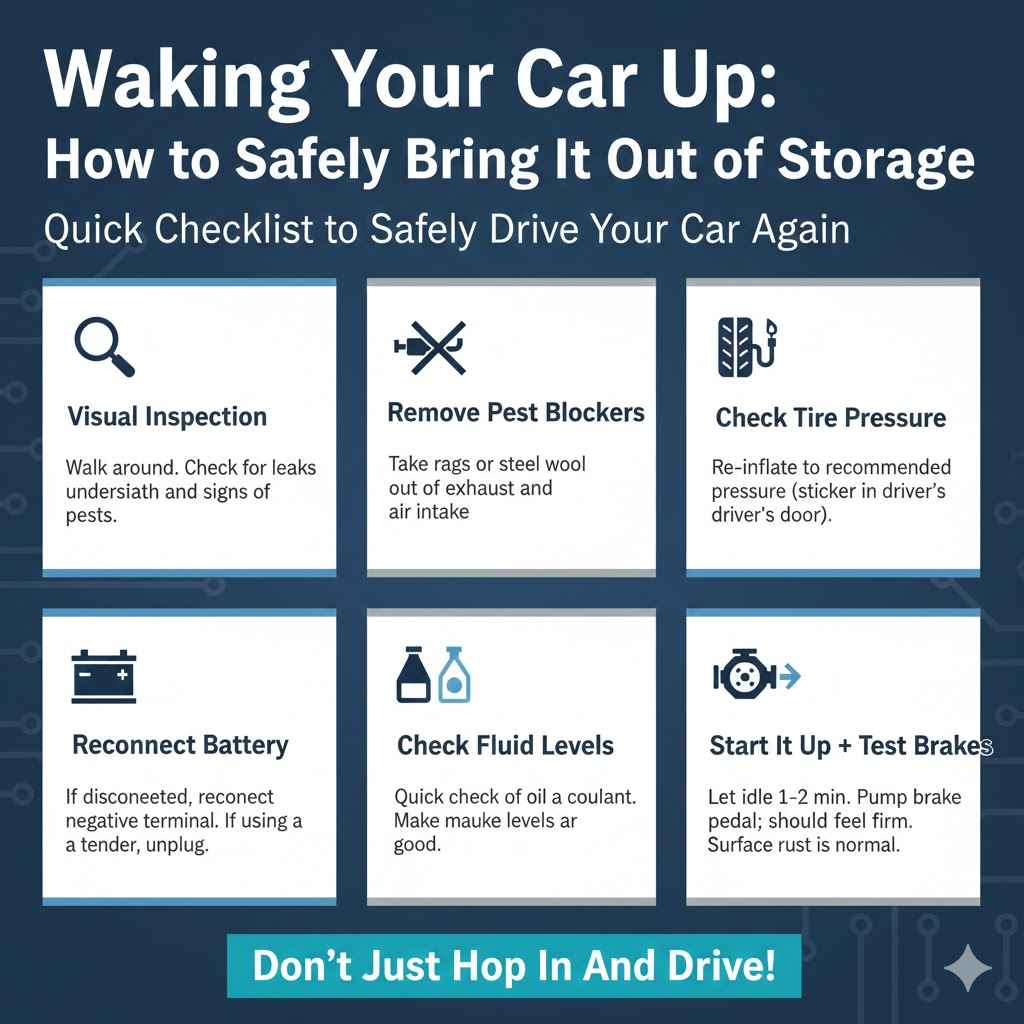
When you’re ready to drive your car again, don’t just hop in and turn the key. Follow this quick checklist to wake it up safely:
- Do a visual inspection: Walk around the car. Look underneath for any leaks. Check for any signs of pests.
- Remove pest blockers: This is critical! Take the rags or steel wool out of your exhaust and air intake.
- Check tire pressure: Re-inflate your tires to the normal recommended pressure found on the sticker inside your driver’s door jamb.
- Reconnect the battery: If you disconnected it, reconnect the negative terminal and ensure it’s tight. If you used a tender, simply unplug it.
- Check fluid levels: Do a quick check of your oil and coolant levels to make sure everything looks good.
- Start it up: Turn the key and let the engine idle for a minute or two to let the fluids circulate. Listen for any unusual noises.
- Test the brakes: Before you hit the road, pump the brake pedal a few times. It should feel firm. Your brake rotors may have a thin layer of surface rust, which will come off after the first few stops and may make a light grinding noise. This is normal.
Frequently Asked Questions (FAQ)
Is it bad to not start your car for a month?
No, it is not bad to let a car sit for a month, provided it was in good working order beforehand. However, for periods longer than a month, it’s wise to connect a battery tender to prevent the battery from draining completely.
How long can a car sit without being started?
A modern car can typically sit for about two to three months without needing to be started. The biggest concern is the battery, which will slowly drain. If you prepare it for storage with a battery tender and fuel stabilizer, a car can sit for a year or even longer without issue.
Should I disconnect my car battery for storage?
Disconnecting the battery is a good option if you don’t have access to a power outlet for a battery tender. It will prevent the car’s computers and clocks from slowly draining the battery. Just remember to disconnect the negative terminal first.
Do I need a fuel stabilizer for 3 months of storage?
Yes, it’s highly recommended. Gasoline can start to break down and oxidize in as little as 30-60 days. Adding a fuel stabilizer will keep the fuel fresh for up to two years, preventing clogged injectors and fuel lines.
What is a battery tender?
A battery tender, or battery maintainer, is a smart charger that you leave connected to your car battery during storage. It monitors the battery’s voltage and delivers a small amount of current only when needed to keep it fully charged, preventing both undercharging and overcharging.
Can I just leave my car in the driveway for the winter?
You can, but it’s not ideal. Exposure to snow, ice, and freezing temperatures is hard on your car’s paint, rubber seals, and battery. If you must store it outside, be sure to follow all the preparation steps, especially using a high-quality, weather-resistant car cover.
Will my tires get flat spots from sitting?
Yes, tires can develop temporary or even permanent flat spots after sitting for a few months. You can minimize this by inflating the tires to the maximum pressure listed on the tire’s sidewall before storage. For storage longer than six months, using jack stands is the best way to prevent flat spots.
Your Car Deserves a Good Rest: A Final Word
The old habit of starting a stored car is one of those things that feels right but is actually secretly hurting your vehicle. By understanding what’s really happening inside your engine, you can see why proper preparation is so much better. It saves your engine from harmful condensation, protects your battery, keeps your fuel fresh, and ensures your car is truly ready to go when you are.
Putting your car away shouldn’t be a source of worry. With the right steps, it’s a simple and straightforward process. You don’t need to be a master mechanic to do this—you just need a good plan. Follow this guide, and you can rest easy knowing you’re giving your car the care it deserves. When the time comes to hit the road again, your car will be just as ready as you are.