
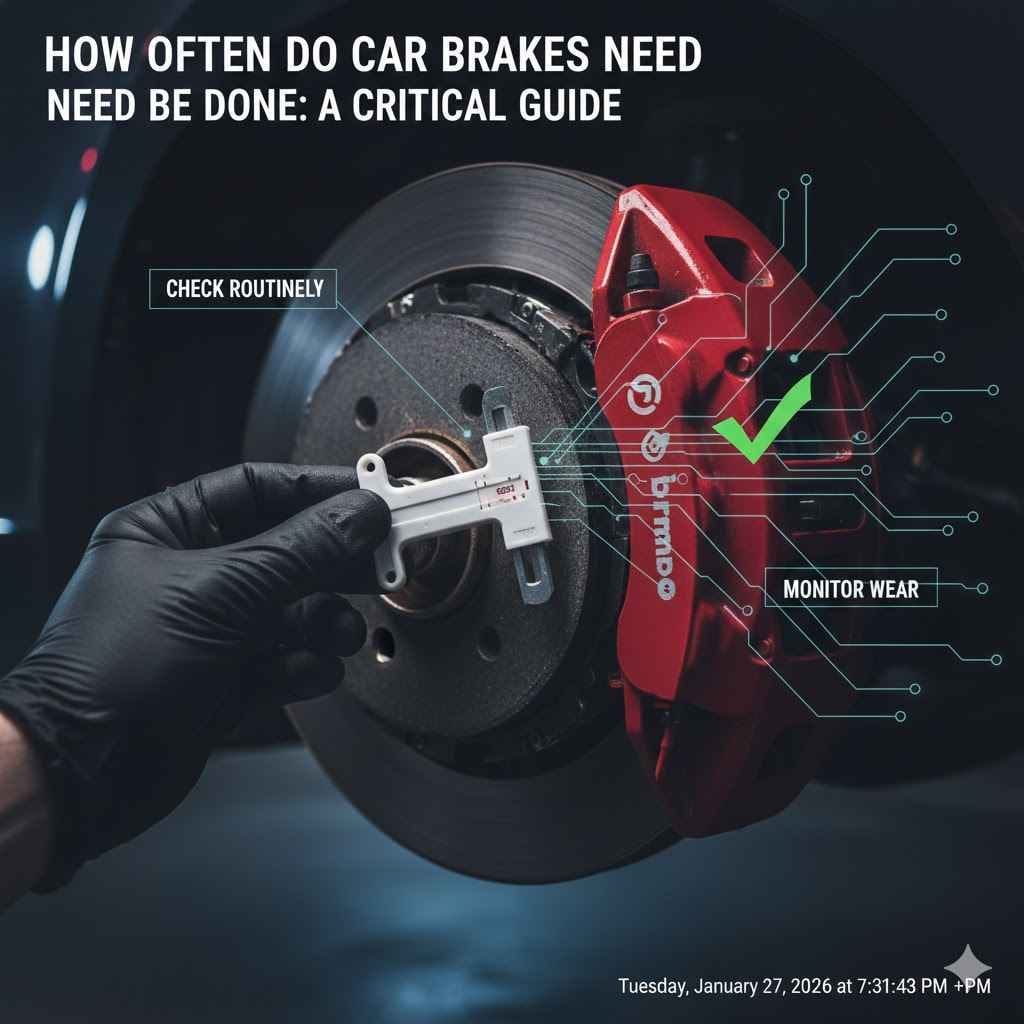
Car brakes generally need to be replaced every 25,000 to 70,000 miles. This wide range depends heavily on your driving style, vehicle type, and the quality of the brake components. The best practice is to have them inspected annually and pay attention to warning signs like squealing, grinding, or a pulsating pedal.
Hearing a strange squeal or feeling a shudder when you press the brake pedal can be unsettling. Your mind immediately jumps to safety concerns and costly repairs. Is my car safe to drive? How much will this cost? It’s a common worry for every car owner, but I’m here to tell you that it doesn’t have to be a mystery.
Your car’s brakes are one of its most important safety features, and understanding them is easier than you think. You don’t need to be a master mechanic to know when they need attention. This guide will walk you through everything, step by step. We’ll cover the warning signs, what affects brake life, and how you can stay on top of this critical maintenance task. Let’s build your confidence and keep you safe on the road.
Understanding Your Brakes: A Simple Breakdown
Before we dive into how often to change them, let’s quickly cover what your brakes are and how they work. Think of it like a bicycle brake, but much stronger. When you push the brake pedal, you’re telling a powerful system to slow your car down safely.
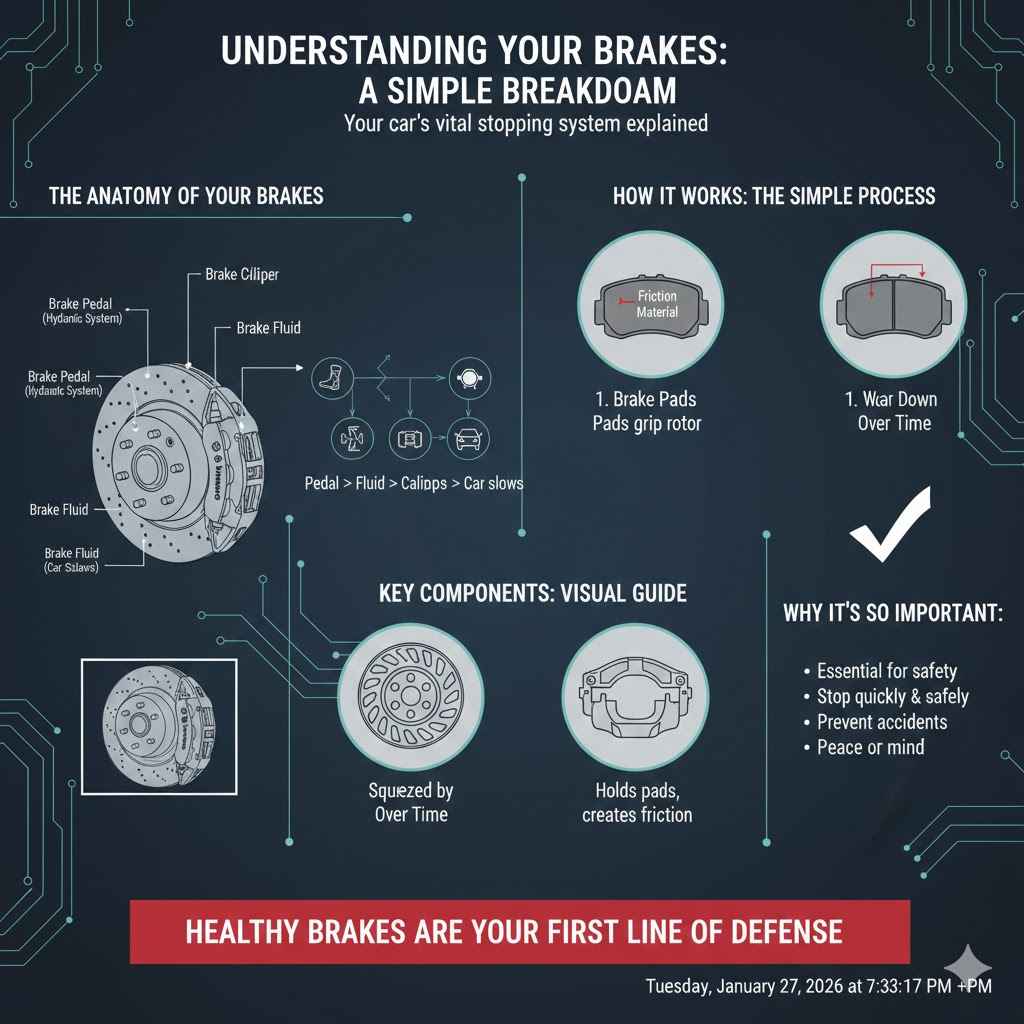
Your car most likely has a disc brake system, especially for the front wheels. Here are the main parts you should know:
- Brake Pads: These are the workhorses. They are blocks of a special friction material that press against the rotor to create the friction needed to stop. They are designed to wear down over time.
- Brake Rotors (or Discs): These are the shiny, heavy metal discs you can see behind your wheels. The brake pads squeeze against the rotors to slow the wheel’s rotation.
- Brake Calipers: The calipers are like a clamp. They hold the brake pads and, using hydraulic pressure from the brake fluid, squeeze them against the rotor when you hit the brake pedal.
- Brake Fluid: This is the hydraulic fluid that transfers the force from your foot on the pedal to the calipers. It’s a closed system, but the fluid needs to be changed periodically.
When you press the brake pedal, brake fluid is pushed through the lines to the caliper. The caliper then squeezes the brake pads against the spinning rotor, and the friction slows your car down. It’s a simple but powerful process that happens every time you need to stop.
How Long Do Brakes Really Last? The 4 Key Factors
The 25,000 to 70,000-mile range is huge for a reason. There isn’t a single, magic number for every car. How long your brakes last depends entirely on a few key factors. Understanding these will help you better predict when you might need a brake service.
1. Your Driving Habits
This is the single biggest factor. Are you an aggressive driver who speeds up to red lights and slams on the brakes at the last second? Or are you a gentle driver who coasts to a stop and maintains a safe following distance? Hard, sudden braking generates a lot of heat and friction, wearing down your pads and rotors much faster.
- Aggressive Driving: Frequent hard stops, tailgating, and high-speed braking can cut the life of your brakes in half.
- Defensive Driving: Coasting to stops, anticipating traffic, and gentle braking can significantly extend the life of your brake components.
2. Where You Drive (Your Environment)
The environment you drive in plays a massive role. City driving with constant stop-and-go traffic is much harder on brakes than long, open highway driving where you rarely touch the pedal.
- City Driving: Constant starting and stopping puts a lot of stress on your brakes. Expect them to wear out faster if you’re a city commuter.
- Highway Driving: If your daily commute is mostly on the freeway, your brakes will last much longer because you use them less frequently.
- Hilly or Mountainous Areas: Driving in hilly terrain requires constant braking to control your speed on descents. This builds up a lot of heat and causes accelerated wear.
3. Your Vehicle’s Weight and Type
The size and weight of your vehicle directly impact how hard the brakes have to work. A heavy SUV or truck requires much more force to stop than a small, lightweight sedan. Heavier vehicles naturally wear through brake pads and rotors more quickly.
- Heavy Vehicles (Trucks, SUVs): The increased weight means the brakes must work harder, leading to a shorter lifespan.
- Light Vehicles (Compact Cars): Lighter cars are easier to stop, so their brake components tend to last longer.
- Towing and Hauling: If you frequently tow a trailer or carry heavy loads, you are adding significant weight and putting extra strain on your braking system.
4. The Quality of Your Brake Parts
Not all brake parts are created equal. When it’s time for a replacement, you’ll have a choice between different types and qualities of brake pads and rotors. The materials used can make a big difference in both performance and longevity.
- Organic Pads: These are often the cheapest and are made from a mix of materials like rubber, glass, and resins. They are quiet but wear out the fastest and create a lot of dust.
- Semi-Metallic Pads: A mix of metal fibers and other materials. They offer good performance and are durable but can be noisy and wear down rotors faster.
- Ceramic Pads: These are typically the most expensive. They are quiet, produce very little dust, and are very durable, offering a long lifespan and excellent performance.
Choosing a higher-quality part might cost more upfront, but it can save you money in the long run by lasting longer and performing better.
The Telltale Signs: When Your Brakes Are Asking for Help
Your car is great at telling you when something is wrong. You just have to know what to look, listen, and feel for. Never ignore these warning signs, as they are your car’s way of telling you it needs attention before a small issue becomes a major safety problem.
Sounds to Listen For
Brake noises are often the first sign of a problem. Your ears are one of your best diagnostic tools.
- High-Pitched Squealing: This is one of the most common signs. Most brake pads have a small metal tab called a “wear indicator.” When the pad material wears down to a certain point, this tab scrapes against the rotor, creating a loud squeal. It’s your audible alert that it’s time for new pads.
- Deep Grinding or Growling: This is a serious warning sign. A grinding noise usually means your brake pads have worn down completely, and now the metal backing plate of the pad is grinding against the metal rotor. This can cause severe damage to the rotor and significantly reduce your stopping power. If you hear this, get your car inspected immediately.
- Clicking or Clunking: A clicking noise when you press or release the brake pedal could indicate that the brake pads are loose in the caliper or that the hardware holding them is worn.
Feelings in the Pedal or Steering Wheel
How your car feels when you brake is another critical indicator of its health.
Vibrating or Pulsating Pedal: If you feel a shaking or pulsing in the brake pedal or steering wheel when you brake, it’s often a sign that your brake rotors are warped. Warping happens from excessive heat, causing the rotor’s surface to become uneven. The vibration you feel is the brake pads grabbing the uneven surface.
Spongy or Soft Pedal: If your brake pedal feels mushy or goes down further than usual, it could mean there is air or moisture in the brake lines, or a leak in the brake system. This is a major safety concern as it can lead to a loss of braking power.
– Car Pulling to One Side: When you brake, does your car pull to the left or right? This could be caused by a stuck brake caliper, a collapsed brake hose, or unevenly worn brake pads. It’s unsafe because it affects your steering control during braking.
Visual Signs to Look For
Sometimes you can see the problem before you hear or feel it.
- Brake Warning Light: If a brake warning light (often saying “BRAKE” or showing an exclamation point in a circle) illuminates on your dashboard, don’t ignore it. It could indicate anything from low brake fluid to a serious issue with the hydraulic system. Check your owner’s manual for what the specific light means.
- Thin Brake Pads: You can often do a quick visual check yourself. Look through the spokes of your wheel at the brake caliper. You should be able to see the brake pad pressing against the rotor. If the friction material looks very thin—less than a quarter of an inch (about the thickness of a new pencil)—it’s time to get them inspected professionally.
Here is a table summarizing these common warning signs:
| Warning Sign | What It Likely Means | Urgency Level |
|---|---|---|
| High-Pitched Squeal | Brake pads are worn down and nearing the end of their life. | Medium: Schedule an inspection soon. |
| Loud Grinding Noise | Brake pads are completely worn out; metal is grinding on metal. | High: Stop driving and get it inspected immediately. |
| Vibrating/Pulsating Pedal | Brake rotors are likely warped or uneven. | Medium: Affects performance; get it checked. |
| Spongy/Soft Pedal | Air or a leak in the brake fluid system. | High: This is a major safety risk. Do not drive. |
| Car Pulls to One Side | Stuck caliper, bad brake hose, or uneven pad wear. | High: Affects control of the vehicle. Inspect promptly. |
| Brake Warning Light is On | Could be low fluid or a system malfunction. | High: Consult your manual and get it checked. |
How to Do a Quick Visual Brake Check
You don’t need to be a mechanic to get a general idea of your brake pad’s health. This simple check can give you peace of mind or confirm that it’s time to visit the shop. All you need is a flashlight.
- Park on a Level Surface: Make sure your car is in park and the engine is off. For safety, engage the parking brake.
- Look Through Your Wheels: You don’t need to remove the wheel. Kneel or squat down and look through the spokes of your front wheel. The front brakes do most of the stopping, so they wear out faster.
- Locate the Brake Components: You’ll see the large, metal brake rotor. Clamped around it is the brake caliper. Inside the caliper, you’ll see the brake pad pressed against the rotor.
- Check the Pad Thickness: Shine your flashlight on the brake pad. You are looking for two things: the outer pad (between the caliper and you) and the inner pad (between the rotor and the rest of the car). Focus on the thickness of the friction material, which is pressed against the metal backing plate.
- Estimate the Remaining Life: As a rule of thumb, new brake pads are about 10-12mm thick. If your pads look like they are 3-4mm thick (about the thickness of two dimes stacked together), it’s time to start planning for a replacement. If they are less than 3mm, you should schedule service right away.
This quick check isn’t a substitute for a professional inspection, but it’s a great way to stay informed about your vehicle’s condition.
Brake Pads vs. Rotors: Do I Need to Replace Both?
This is one of the most common questions people have during a brake service. The answer is: it depends.
Brake Pads
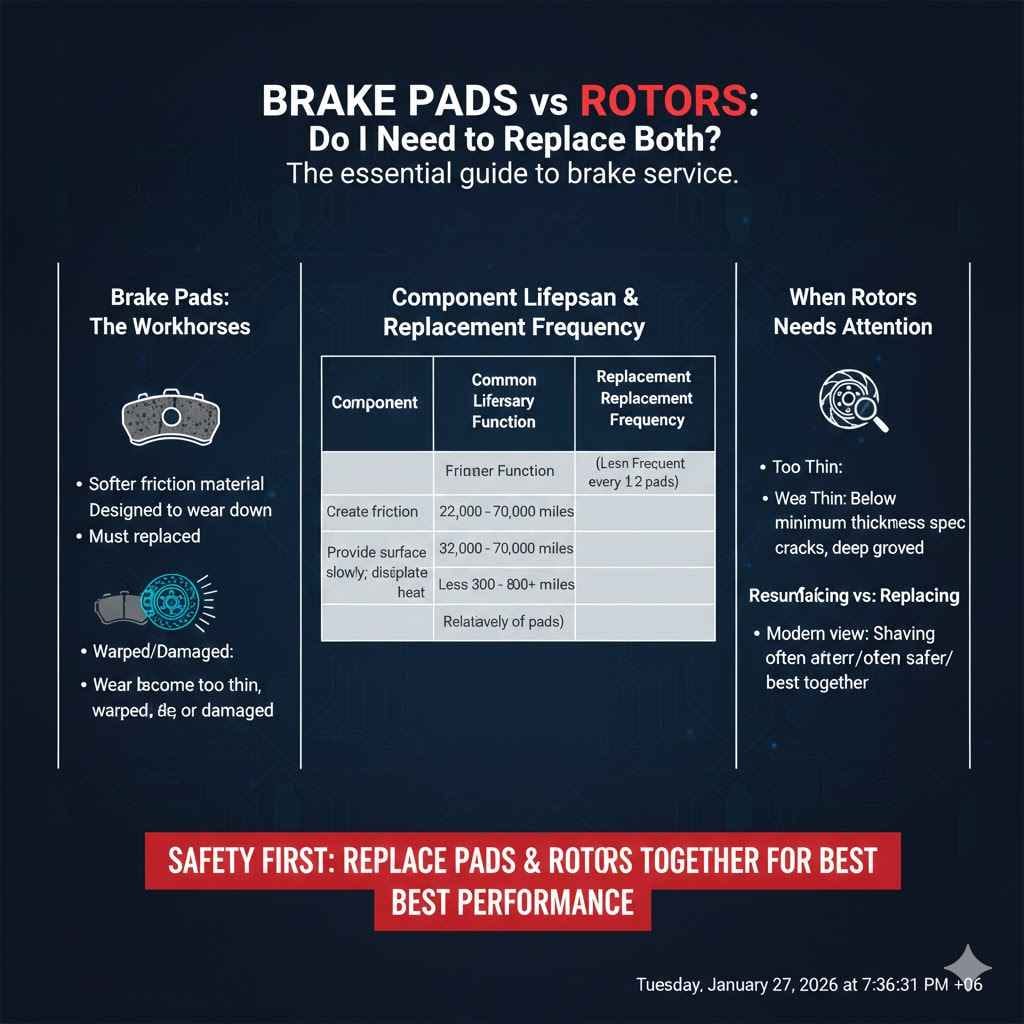
As we’ve discussed, these are designed to be the wearing component. They are made of a softer material than the rotors and will always need to be replaced, typically multiple times throughout the life of your car.
Brake Rotors
The rotors are much more durable, but they are not invincible. Every time the pads press against them, a tiny amount of metal is worn away. Over time, they can become too thin to effectively dissipate heat. They can also develop “hot spots” or become warped from excessive heat, leading to that pulsating feeling.
Here’s when rotors typically need attention:
- They are too thin: Every rotor has a “minimum thickness” specification stamped on it. A mechanic will measure the rotor, and if it’s at or below this thickness, it must be replaced for safety.
- They are warped or damaged: If the rotor surface is uneven, cracked, or has deep grooves, it needs to be replaced to ensure smooth, effective braking.
- Resurfacing vs. Replacing: In the past, it was common to “resurface” or “turn” rotors. This process shaves a thin layer of metal off the surface to make it smooth and flat again. However, modern rotors are often thinner and lighter to save weight, leaving less material to be safely shaved off. In many cases today, especially with affordable aftermarket parts, replacing the rotors is often more cost-effective and safer than resurfacing them.
Most mechanics today recommend replacing the pads and rotors together. This ensures all the new components work perfectly with each other, providing the best possible braking performance and preventing issues like noise or vibration from mismatched parts. According to the National Highway Traffic Safety Administration (NHTSA), proper brake function is critical for avoiding accidents, so ensuring all components are in top condition is a wise investment.
| Component | Primary Function | Common Lifespan | Replacement Frequency |
|---|---|---|---|
| Brake Pads | Create friction by pressing against the rotor. Designed to wear down. | 25,000 – 70,000 miles | Relatively Frequent |
| Brake Rotors | Provide the surface for pads to press against; dissipates heat. | 30,000 – 80,000+ miles | Less Frequent (often replaced with every 1 or 2 sets of pads) |
Frequently Asked Questions (FAQ)
1. How much does a typical brake job cost?
The cost can vary widely depending on your vehicle, the quality of parts used, and labor rates in your area. Replacing brake pads and rotors on one axle (front or rear) can range from $250 to over $700. Luxury or high-performance vehicles will be on the higher end of that scale.
2. Can I just replace the brake pads and not the rotors?
You can, but it’s often not recommended. If the old rotors are worn, grooved, or slightly warped, putting new pads on them can lead to noise, vibration, and uneven pad wear. Replacing both together ensures a perfectly matched, smooth surface for optimal performance and longevity.
3. What is a “brake fluid flush” and do I need one?
Brake fluid is hygroscopic, meaning it absorbs moisture from the air over time. This water can lower the boiling point of the fluid, reducing braking performance, and can also cause corrosion inside the brake system. Most manufacturers recommend a brake fluid flush every 2-3 years to replace the old, contaminated fluid with fresh fluid.
4. Why are my brakes squeaking even though they are new?
New brakes can sometimes squeak during the “bedding-in” period as the pads and rotors create a matched surface. This usually goes away after a few hundred miles. Squeaking can also be caused by brake dust, moisture (especially in the morning), or improper installation. If the noise persists, have them re-inspected.
5. Is it safe to drive with the brake warning light on?
No. The brake warning light signals a potential problem with a critical safety system. It could be as simple as the parking brake being engaged or as serious as a loss of hydraulic pressure. You should safely pull over, check your parking brake, and consult your owner’s manual. If it stays on, it is best to have your vehicle towed to a mechanic rather than risk brake failure.
6. Do rear brakes wear out as fast as front brakes?
No, they do not. When you brake, your car’s weight shifts forward, forcing the front brakes to do most of the work (typically 60-70% of the stopping). Because of this, front brake pads and rotors almost always wear out faster than the rear ones.
Your Brakes, Your Confidence
Knowing how often your car brakes need to be done isn’t about memorizing a mileage number. It’s about learning to listen to your car and understanding the factors that affect its most important safety system. By paying attention to the sounds, feelings, and visual cues, you can move from being a worried passenger to a confident and informed driver.
Don’t wait for a loud grinding noise to tell you something is wrong. Perform a quick visual check every few months, especially when you rotate your tires. Be mindful of your driving habits and remember that regular inspections are your best defense against unexpected and costly repairs. Taking a proactive approach to your brakes will not only save you money in the long run but will give you priceless peace of mind every time you get behind the wheel.