

Figuring out How Much Is a Transmission Control Module? Full Cost Guide can feel tricky, especially if you’re new to car repairs. It’s like trying to understand a new language – there are lots of terms and factors involved. Don’t worry, though! This guide breaks down everything simply, step-by-step. You’ll explore what these modules do, what impacts the cost, and how to make smart choices. Let’s explore!
What Is a Transmission Control Module (TCM)?
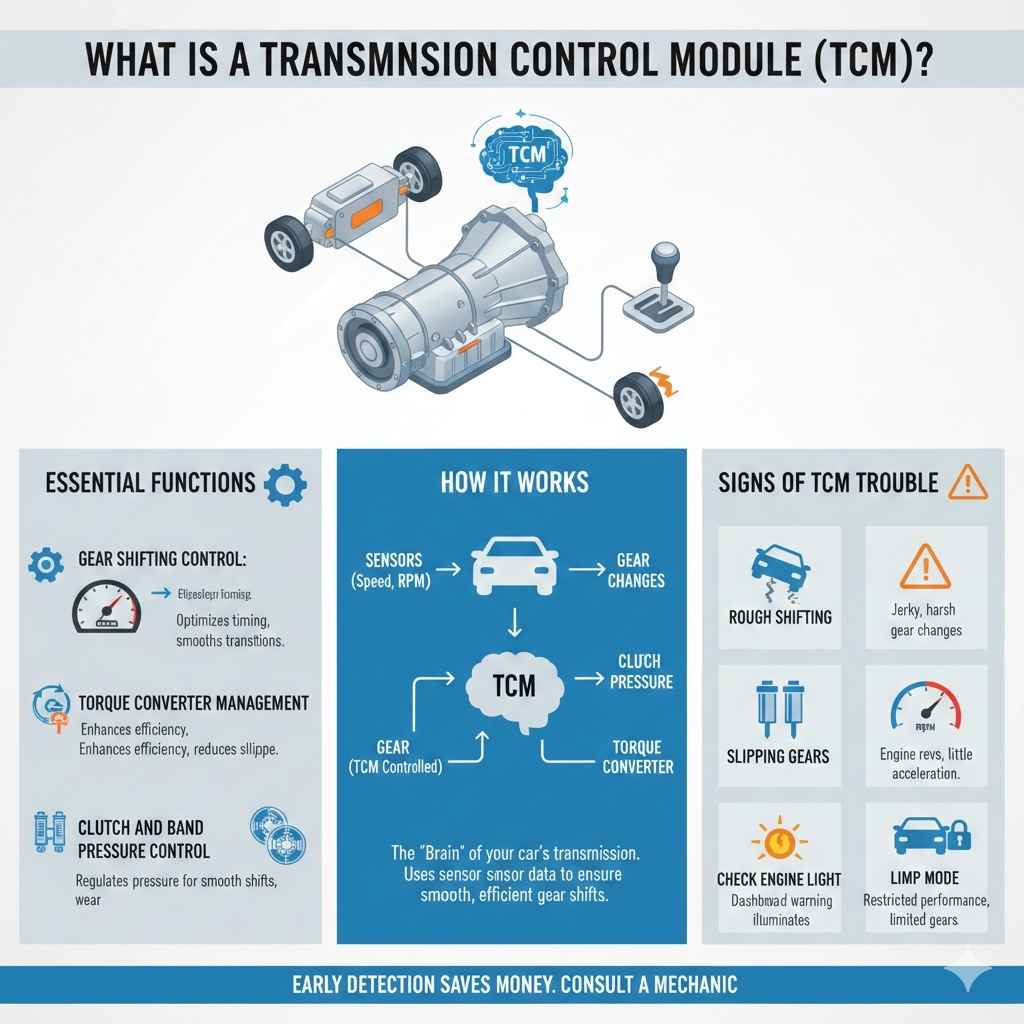
A Transmission Control Module (TCM) is basically the brain of your car’s transmission. It’s a small computer that makes sure your transmission shifts gears smoothly and efficiently. The TCM works by receiving information from various sensors throughout the car. It uses this data to adjust things like gear changes, clutch pressure, and torque converter lockup. If the TCM is malfunctioning, it can cause problems like rough shifting, slipping gears, or even the transmission failing entirely. These issues often light up the check engine light on your dashboard, signaling a potential problem with the transmission system.
Essential Functions of the Transmission Module
The TCM oversees many important processes within your transmission. Its primary goal is to ensure the transmission works flawlessly. It receives data from multiple sensors, including speed sensors, throttle position sensors, and engine RPM sensors. Based on this information, the TCM then makes decisions about when to shift gears and how much pressure to apply to the clutches and bands inside the transmission. This results in smooth, efficient gear changes, helping you get the best possible performance and fuel economy from your vehicle.
Gear Shifting Control: The TCM manages when and how the transmission shifts gears, optimizing for performance and fuel economy. It analyzes vehicle speed, engine load, and throttle position to determine the perfect time to shift.
Gear shifting is essential for optimal engine performance. The TCM constantly analyzes data from different sensors to determine the ideal moment to change gears. It ensures a smooth transition between gears, minimizing jolts and maximizing fuel efficiency. Without this control, your car might struggle to accelerate or use fuel efficiently. This automated process minimizes wear and tear on the transmission, prolonging its lifespan.
Torque Converter Management: The TCM controls the torque converter, which helps transfer engine power to the transmission. By locking and unlocking the torque converter, the TCM enhances efficiency and reduces slippage.
The torque converter is like a fluid coupling between the engine and the transmission. The TCM’s management of this component ensures that power is delivered smoothly and efficiently. When the TCM locks the torque converter, it connects the engine and transmission directly, which is more efficient. When unlocked, it allows some slippage, which is useful during gear changes and at low speeds. Proper control of this process minimizes energy loss and maximizes fuel economy.
Clutch and Band Pressure Control: It regulates the hydraulic pressure applied to the clutches and bands within the transmission. Precise control ensures smooth gear changes and prevents wear and tear.
Clutches and bands are essential components in automatic transmissions. They engage and disengage different gear sets to change the gear ratio. The TCM sends signals to hydraulic valves to adjust the pressure applied to these components. Precise control of this pressure is key for making smooth gear changes and preventing slipping, which can cause significant damage. Maintaining the proper pressure extends the lifespan of the transmission.
Signs of TCM Trouble
Detecting transmission problems early can save you money and headaches. The TCM can malfunction, leading to various issues. Recognizing the early symptoms can prevent more severe damage and expensive repairs. Be vigilant for any changes in your car’s performance to catch a potential TCM issue. If you observe any of the following, consult with a mechanic.
Rough Shifting: Experiencing jerky or harsh gear changes.
When the TCM isn’t working correctly, gear shifts can become noticeably rough. Instead of smooth transitions, you may feel jolts or thumps when the transmission changes gears. This can be caused by the TCM misinterpreting sensor data or failing to properly control the clutches and bands. Rough shifting not only makes the driving experience unpleasant but also puts extra stress on the transmission components.
Slipping Gears: The transmission fails to hold gears under acceleration.
Slipping gears mean that the engine revs up without a corresponding increase in speed. This occurs because the clutches and bands inside the transmission are not engaging properly. A faulty TCM can cause this, leading to inefficient power transfer and decreased fuel economy. It’s a clear sign that something is not right, and the problem can escalate if left unattended. This symptom requires immediate attention.
Check Engine Light: The check engine light illuminates on the dashboard.
The check engine light is a warning signal indicating that something is amiss with your car’s systems. When the TCM detects a problem, it often triggers the check engine light. A diagnostic tool can retrieve specific trouble codes related to the transmission, providing clues about the exact issue. Ignoring this light can lead to more complex and costly problems. Addressing the issue promptly can prevent further damage to your transmission.
Limp Mode: The vehicle enters a restricted performance mode to protect the transmission.
When the TCM detects a severe problem, it may put the car into “limp mode”. This is a protective mode that limits the car’s performance to prevent further damage. In limp mode, the car may only be able to use a few gears, and acceleration will be significantly reduced. This is a sign of a serious issue, and you should have it inspected by a mechanic as soon as possible. Limp mode is a sign that the TCM has already detected a critical fault.
Factors That Impact TCM Costs
Several variables will affect the price of a replacement transmission control module. These include the make and model of your vehicle, the type of TCM required, and whether you choose a new, remanufactured, or used unit. Labor costs also add to the overall expense, as a mechanic must install the part and potentially reprogram it. To get an accurate estimate, it’s beneficial to get quotes from multiple shops and be aware of the different options available to you.
Vehicle Make and Model
The cost of a TCM can vary significantly depending on your car’s make and model. Luxury vehicles and those with advanced features often have more sophisticated and expensive TCMs. Older models or less common vehicles may have fewer available options, which can sometimes increase costs. Research the specific TCM for your car’s year, make, and model to get an accurate estimate. Compatibility is crucial, so always confirm that the replacement TCM is designed for your vehicle.
Luxury vs. Economy Vehicles: Premium cars and SUVs often have more complex systems, leading to higher TCM prices.
Luxury vehicles tend to have more advanced technology, which often translates to higher component costs, including the TCM. These vehicles might have more features integrated into the TCM, such as adaptive shifting programs or advanced diagnostics. Conversely, economy cars generally have simpler, more affordable TCMs. The difference can be substantial, so consider this factor when budgeting for repairs.
Age of the Vehicle: Newer models may have more expensive, but technologically advanced, TCMs.
The age of the car can significantly affect TCM costs. Newer cars typically have more integrated electronic systems and can often require more specialized TCMs. Older cars might have more readily available and sometimes less expensive TCMs, though finding a compatible unit can sometimes be difficult. Newer models often benefit from better performance and fuel efficiency, but the price of replacement parts might be higher.
Rarity of the Vehicle: Less common vehicles might have fewer TCM options, which could impact price.
If you own a rare or discontinued vehicle, finding a replacement TCM can be challenging, and prices may be higher due to limited availability. The scarcity of parts can drive up the cost, as specialized suppliers may be needed. Before purchasing, check the availability of TCMs for your vehicle, and consider the potential cost differences between new, used, or remanufactured parts. Research the market carefully.
TCM Type: New, Remanufactured, or Used
The type of TCM you choose greatly influences the price. New TCMs are the most expensive but come with a warranty and offer the longest lifespan. Remanufactured TCMs are a more cost-effective option, having been restored to factory specifications. Used TCMs are the cheapest but come with the most risk, as their lifespan and reliability are uncertain. The best choice depends on your budget and tolerance for risk.
New TCMs: Brand-new units provide the best performance and include a warranty.
New TCMs are the most reliable option, as they haven’t been previously used and are built to the latest specifications. They typically come with a manufacturer’s warranty, which protects you if there are any defects or failures. The higher price tag is a trade-off for the peace of mind that comes with knowing the TCM is in excellent condition and the longest lifespan.
Remanufactured TCMs: Refurbished to factory specifications, offering a balance of cost and reliability.
Remanufactured TCMs are a good compromise between cost and reliability. These units are inspected, cleaned, and tested. Worn or defective parts are
Used TCMs: The least expensive option, but with the highest risk of failure.
Used TCMs are the cheapest, but they also have the highest risk of failure. The history and condition of a used TCM are often unknown, and there’s no guarantee of its longevity. While the initial cost may be appealing, you could end up paying more in the long run if the used unit fails soon after installation. Consider the potential for additional repair costs before opting for a used TCM. It is essential to ensure the used TCM is compatible.
Labor Costs for Replacement
Labor costs are a significant part of the overall expense of replacing a TCM. The complexity of the job varies depending on the vehicle, but it usually involves accessing the TCM, removing the old one, installing the new one, and potentially reprogramming it. The price is influenced by the mechanic’s hourly rate and the time it takes to complete the work. Get estimates from several shops to compare pricing and ensure you’re getting a fair deal. Labor can add hundreds to the final bill.
Hourly Rates: Mechanic rates vary based on location and experience.
The hourly rate charged by mechanics can significantly affect the labor costs. Rates are influenced by factors like the shop’s location (urban areas often have higher rates), the mechanic’s experience and expertise, and the shop’s overhead costs. Before authorizing the work, get an estimate from the shop, ensuring the rate is competitive and transparent. Comparing rates from several shops can help you find a reasonable price.
Installation Complexity: Some cars have TCMs that are easier to access than others.
The complexity of installing the TCM depends on the vehicle’s design. In some cars, the TCM is easily accessible, while in others, it may be located in a hard-to-reach area. More complex installations take more time, increasing labor costs. When getting an estimate, ask about the estimated time required for the installation, as this directly affects the labor charges. If the car requires significant disassembly, expect higher costs.
Reprogramming Needs: Certain replacements require reprogramming the new TCM.
After installing a new TCM, it often needs to be reprogrammed to work correctly with your car’s systems. Reprogramming involves connecting the TCM to a diagnostic tool and uploading the appropriate software. This step is essential for ensuring the TCM functions correctly. The need for reprogramming adds to the labor cost, as the mechanic must have the tools and expertise to perform this task. Confirm if programming is included in the initial estimate.
Steps to Determine the Cost of a TCM
Determining the exact cost of a TCM involves several steps. Start by gathering information about your car, including its make, model, and year. Next, research the different TCM options available to you, considering the price of new, remanufactured, and used units. Obtain quotes from local mechanics, including the cost of parts and labor. This helps you compare prices and make a well-informed decision. Always compare quotes. Consider the warranty and reputation.
Vehicle Information Gathering
The first step is gathering detailed information about your car. This includes the make, model, year, engine size, and any specific options your vehicle has. This information is essential for finding the correct TCM for your car and getting an accurate price estimate. Having the VIN (Vehicle Identification Number) ready can also help identify the exact specifications needed for your vehicle. The more information you provide, the more accurate the quotes you receive will be.
Make, Model, and Year: Crucial for part compatibility and pricing.
The make, model, and year of your car are key factors in determining the correct TCM and its cost. Different car models use different TCMs, so this is the starting point. The year of manufacture is essential because even within a model line, there can be changes to the TCM’s design and functionality from one year to the next. Providing precise details will ensure that you get compatible parts.
Engine Size and Options: Impact the complexity and the TCM type needed.
The engine size and any optional features your car has can also influence the type of TCM your vehicle needs. For example, cars with more powerful engines or special transmission systems might require more advanced TCMs. Knowing any specific features or extras your vehicle has will help determine the correct part number. Providing complete information will allow for a more precise assessment.
VIN (Vehicle Identification Number): Provides detailed vehicle specifications.
The VIN is a unique 17-digit code that contains detailed information about your vehicle. Sharing your VIN with potential mechanics or parts suppliers ensures that they can identify the exact specifications for your car, making sure you get the correct TCM. The VIN can help avoid ordering an incorrect or incompatible part. It is the most reliable way to confirm all the specifications.
Researching TCM Options and Prices
Once you have your car’s information, begin researching the different TCM options. This involves checking prices for new, remanufactured, and used units from various suppliers. Compare prices from local auto parts stores, online retailers, and mechanic shops. Make sure to consider the warranty offered with each option, as this provides a level of protection against potential defects. Check reviews, which can offer insight into supplier reliability and customer service. Always compare prices.
Online vs. Local Suppliers: Compare prices and shipping costs.
There are benefits to shopping both online and at local auto parts stores. Online retailers often offer a wider selection and competitive pricing, but you may have to pay for shipping. Local suppliers might have slightly higher prices, but you can see the part in person and get it quickly. Weigh the convenience, availability, and overall cost to make an informed decision. Check if there are any local pickup options.
New, Remanufactured, and Used Prices: Determine which option fits your budget.
Comparing the prices of new, remanufactured, and used TCMs will help you determine the best option for your budget. New TCMs are the most expensive but offer the longest lifespan and a manufacturer’s warranty. Remanufactured TCMs are more affordable and have a good balance of cost and reliability. Used TCMs are the cheapest, but the risk of failure is higher. Consider the cost-benefit analysis.
Warranty and Reviews: Check for warranties and read customer reviews.
Always review the warranty details before purchasing a TCM. A good warranty can protect you from potential defects or failures. Customer reviews provide valuable insight into the supplier’s reliability and customer service. Look for suppliers with positive reviews and a solid warranty to minimize the risk of a bad purchase. Consider the supplier’s reputation. Reviews can often highlight any issues with the product.
Obtaining Quotes from Mechanics
Contacting local mechanics is essential for getting accurate estimates. Describe the problem, the make and model of your vehicle, and the symptoms you’re experiencing. Ask for a detailed quote, including the cost of the TCM, labor, and any additional fees. Compare the quotes you receive and ask questions if you don’t understand something. This step ensures transparency. Make sure all quotes include everything. Make a list of all your questions.
Provide Vehicle Details: Share all necessary car information.
When you contact mechanics for quotes, provide all the vehicle details, including the make, model, year, and VIN. This information allows mechanics to identify the correct part and provide an accurate estimate. Including information about the symptoms your car is experiencing will help the mechanic understand the scope of the needed work. The more information provided, the more specific the quote will be.
Request a Detailed Quote: Ask for a breakdown of costs.
Ask for a detailed quote that separates the cost of the TCM from the labor charges. The quote should include a breakdown of all associated costs, such as diagnostic fees, reprogramming, and any other parts or services needed. Ask for a written quote to ensure clarity and to have a reference for comparison. Detailed quotes help you spot any hidden costs and make it easier to compare offers.
Compare Quotes and Ask Questions: Compare offers and clarify any confusion.
After obtaining quotes from several mechanics, compare them to ensure you are getting a fair price. Look for any discrepancies in the quote, and ask questions if you don’t understand something. Don’t be afraid to ask for clarification on the labor charges or the type of TCM being used. Selecting the right mechanic is essential, so don’t hesitate to ask anything. Always choose the most transparent and fair quote.
Sample Scenarios for TCM Replacement Costs
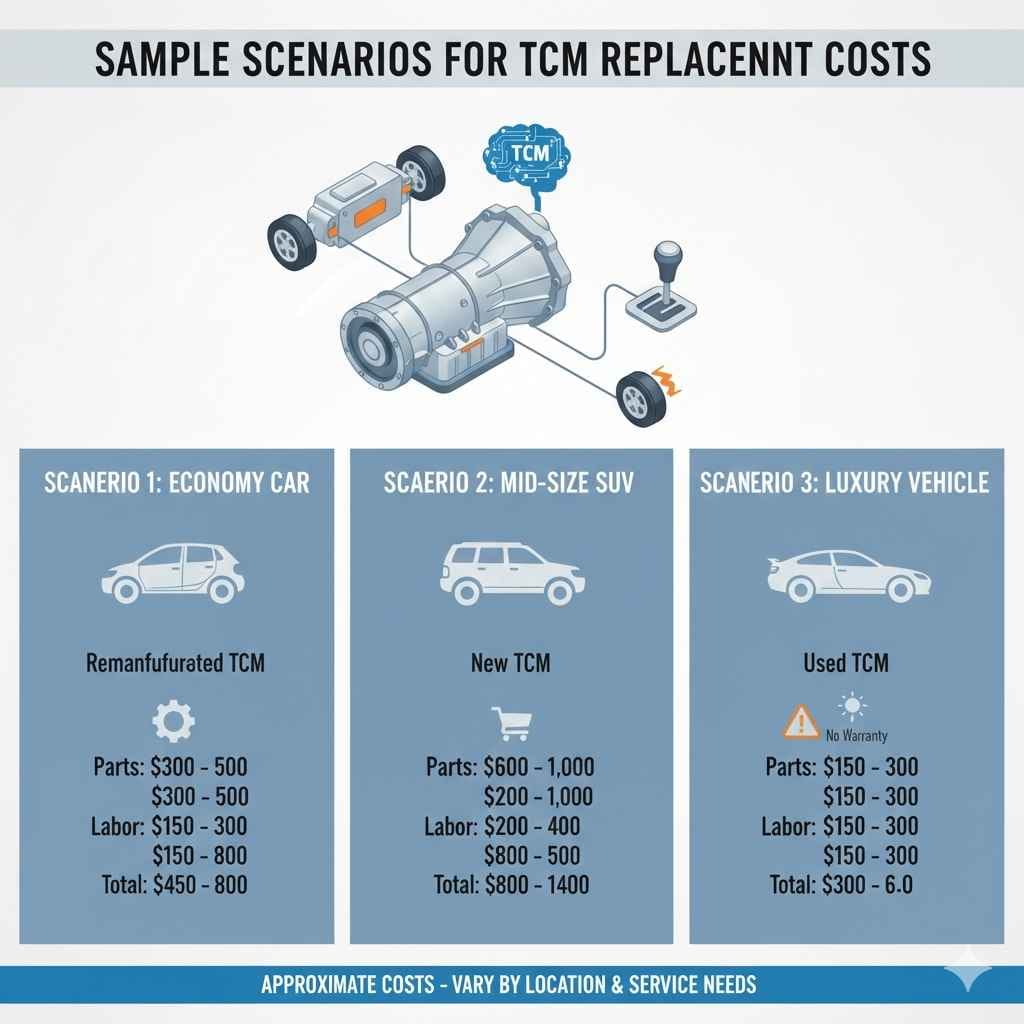
Understanding potential costs for TCM replacement can help you plan your budget. Here are some sample scenarios showing how costs can vary depending on factors such as vehicle type and the type of replacement part used. Keep in mind that these are approximate costs, and the actual price may vary based on your location and the specific services your car requires.
- Scenario 1: Economy Car – Remanufactured TCM
For an economy car, such as a compact sedan, the cost of a remanufactured TCM might range from $300 to $500. Labor costs could be around $150 to $300, depending on the complexity of the installation and any necessary reprogramming. The total cost, including parts and labor, would be between $450 and $800. This option provides a balance between cost and reliability. - Scenario 2: Mid-Size SUV – New TCM
Replacing the TCM in a mid-size SUV with a new unit could be more expensive. The TCM itself might cost between $600 and $1,000. Labor costs for installation and any reprogramming could range from $200 to $400. The total cost is estimated to be between $800 and $1,400. The new component provides assurance, but it comes at a higher price. - Scenario 3: Luxury Vehicle – Used TCM
Using a used TCM in a luxury vehicle is often the most cost-effective. The used TCM might cost $150 to $300, and labor could be between $150 and $300. This could put the total around $300 to $600. Keep in mind that used components often offer no warranty. Proceed with caution.
Frequently Asked Questions
Question: What happens if I don’t replace the TCM?
Answer: If you don’t replace a faulty TCM, your car might experience severe transmission problems. These problems include rough shifting, slipping gears, and even complete transmission failure, which will result in expensive repairs or even require replacing the entire transmission.
Question: Can I replace a TCM myself?
Answer: Replacing a TCM can be challenging, as it requires knowledge of automotive systems, electronics, and potentially reprogramming. While it is possible for experienced DIY mechanics, it is often best to let a professional do it, especially if reprogramming is required.
Question: What is the average lifespan of a TCM?
Answer: The lifespan of a TCM depends on factors such as driving habits and the vehicle’s operating conditions, but they typically last many years. New units usually last for a longer time than remanufactured or used modules, and the vehicle’s maintenance also affects longevity.
Question: Does a faulty TCM affect fuel efficiency?
Answer: Yes, a faulty TCM can impact fuel efficiency. A malfunctioning TCM can cause the transmission to shift improperly, leading to wasted fuel. Correct TCM operation helps ensure the transmission functions efficiently, maximizing fuel economy.
Question: How do I know if my TCM needs reprogramming?
Answer: Generally, any time you
Final Thoughts
Figuring out How Much Is a Transmission Control Module? Full Cost Guide involves considering several key factors, including the make and model of your car, the type of TCM, and labor costs. Prices vary based on whether you choose new, remanufactured, or used units, with new TCMs being the most reliable but also the most costly. Always gather detailed information about your vehicle, research your TCM options, and get quotes from trustworthy mechanics to ensure you get a fair price and quality service. By knowing what to anticipate, you can avoid surprises. When in doubt, seek a professional’s assistance to keep your car functioning properly.