
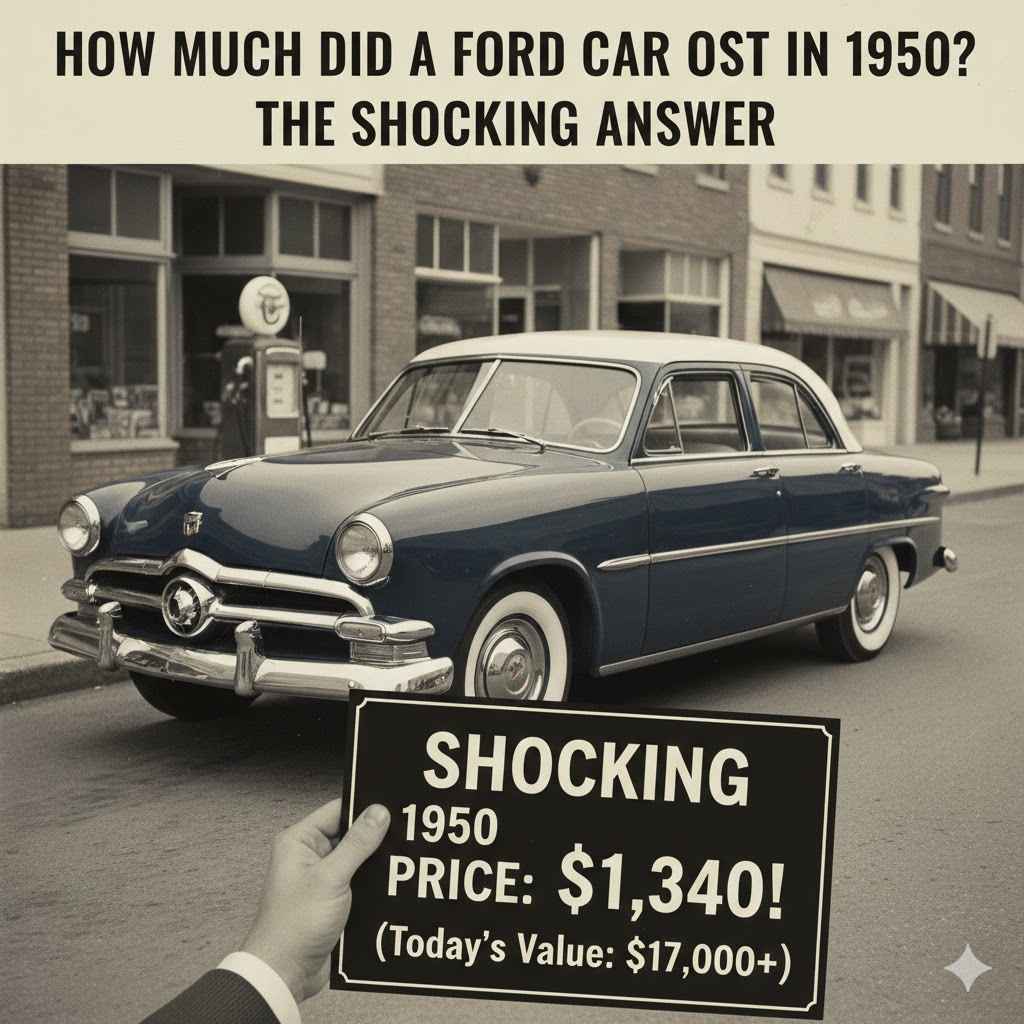
In 1950, a new Ford car cost between $1,300 and $2,000, depending on the model. A popular Ford Custom Deluxe sedan was about $1,550. While that sounds cheap, the average American family earned only around $3,300 per year, making a new car a major investment that cost nearly half a year’s salary.
Have you ever looked at old photos and wondered what things used to cost? It’s fun to imagine buying a brand-new car for what seems like pocket change today. The price of a Ford in 1950 often surprises people. But the real story isn’t just the low sticker price. It’s about what that money meant to the average family.
Thinking about old car prices can feel like a history lesson, but it’s more than that. It helps us understand the value of cars and how much things have changed. We’re going to break down exactly what a 1950 Ford cost, why the price is so shocking when you look closer, and what you actually got for your money back then. Let’s dive in!
The 1950 Ford: A Snapshot of a Post-War Classic
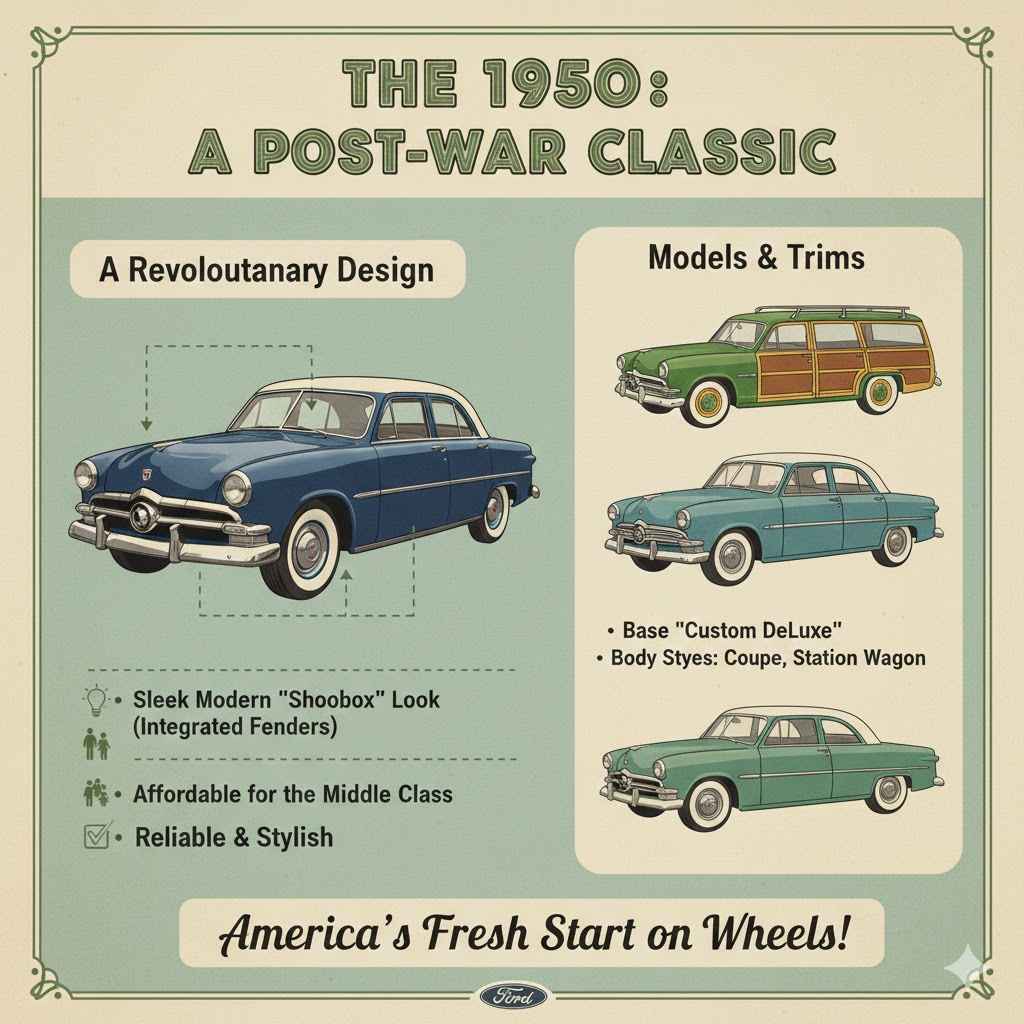
To understand the price, we first need to appreciate the car. The 1950 Ford was a very big deal. After World War II, car designs in the early post-war years were mostly warmed-over pre-war models. But in 1949, Ford introduced a revolutionary new design. It was sleek, modern, and got rid of the bulging separate fenders that were common on older cars. This integrated, smooth-sided look earned it the nickname “the shoebox Ford.”
The 1950 model was a refinement of that groundbreaking 1949 design. It represented a fresh start and a hopeful future for millions of Americans. It was a symbol of new prosperity. People were excited to buy new things again, and a new car was at the top of many wish lists. The 1950 Ford was reliable, stylish, and, most importantly, affordable for the growing middle class.
Ford offered the car in two main trim levels: the base “DeLuxe” and the slightly fancier “Custom DeLuxe.” These came in various body styles, from two-door business coupes to four-door family sedans and even a classic “woodie” station wagon.
So, What Was the Sticker Price in 1950?
The exact price of a 1950 Ford depended heavily on which model you chose. Just like today, there was a range from the most basic, no-frills model to the top-of-the-line family wagon. The goal was to have a car for every type of buyer and every budget.
The simplest model was often the Business Coupe, a two-door car with a huge trunk for a traveling salesman’s samples and no back seat. The most expensive was the Country Squire station wagon, with its real wood panels that required special care.
Ford’s 1950 Lineup: A Price Breakdown
Here’s a look at what some of the most popular 1950 Ford models cost when they were brand new. These are the factory retail prices before any options, taxes, or delivery fees.
| Ford Model | Engine Type | Original 1950 Price (Approx.) |
|---|---|---|
| DeLuxe Business Coupe | 6-Cylinder | $1,330 |
| DeLuxe Tudor Sedan | 6-Cylinder | $1,400 |
| Custom DeLuxe Fordor Sedan | V8 | $1,625 |
| Custom DeLuxe Convertible | V8 | $1,950 |
| Crestliner (Special Two-Tone) | V8 | $1,775 |
| Country Squire Station Wagon | V8 | $2,100 |
Seeing prices like “$1,400” for a new car is jarring! But that number doesn’t tell the whole story. To truly understand if that was cheap or expensive, we have to look at what people were earning and what that money could buy.
The “Shocking” Part: Putting the Price in Perspective
This is where the true answer to our question lies. The shocking part isn’t the $1,500 price tag; it’s what that $1,500 meant to someone in 1950. A number on its own is meaningless until you give it context.
What Was the Average Income in 1950?
According to the U.S. Census Bureau, the median family income in 1950 was approximately $3,319 per year. That’s for the entire family. The average individual male worker earned closer to $2,992 per year.
Now, let’s look at the car prices again. A standard family sedan, the Custom DeLuxe Fordor, cost around $1,625. This means that a brand-new, reliable family car cost about half of a family’s entire annual income. Can you imagine spending half of your yearly salary on a car today? For many, that would be like spending $30,000 to $40,000 on a Ford Fusion or Escape. Suddenly, it doesn’t seem so cheap anymore. It was a massive financial decision.
Calculating the Cost in Today’s Dollars
Another way to understand the cost is to adjust for inflation. We can use a tool like the U.S. Bureau of Labor Statistics CPI Inflation Calculator to see what those 1950 dollars are worth today. The results are eye-opening.
Let’s take our table from before and add a new column to show what you would pay for that same car in modern money.
| Ford Model | 1950 Price | Price in Today’s Dollars (Approx.) |
|---|---|---|
| DeLuxe Business Coupe | $1,330 | $17,100 |
| DeLuxe Tudor Sedan | $1,400 | $18,000 |
| Custom DeLuxe Fordor Sedan | $1,625 | $20,900 |
| Custom DeLuxe Convertible | $1,950 | $25,100 |
| Country Squire Station Wagon | $2,100 | $27,000 |
When you look at it this way, the prices feel much more familiar. A basic family car for around $21,000 is very similar to the price of a basic, modern compact car. The difference is that today, financing is much more common and accessible, with loans often stretching for five to seven years. In 1950, car loans were shorter, and many people saved up to pay in cash or with a very large down payment.
Did That Price Include Everything? The World of Optional Extras
Just like today, the base price was only the beginning. The cars on the showroom floor were often equipped with optional extras that made them more comfortable, stylish, and enjoyable. But every single one of those extras added to the final cost.
Things we consider absolutely standard today were considered luxuries back then. You had to pay more for them. Not having them was the default.
Common Options and Their Costs in 1950
Here are some popular add-ons you could get for your new Ford and what they might have cost:
- AM Radio: Having music in your car was a real treat. A factory-installed radio could cost around $60 (about $770 in today’s money).
- Heater and Defroster: This is the most shocking for modern drivers. A heater was not standard equipment! If you lived in a cold climate, you had to pay about $45 extra (around $580 today) to stay warm.
- Whitewall Tires: For an extra touch of class, you could get tires with a white stripe on the side. This stylish upgrade was a popular choice.
- Two-Tone Paint: Models like the Crestliner were specifically created to show off stylish two-tone paint jobs, a feature that cost extra but gave the car a custom look.
- Oil Filter: Believe it or not, even an oil filter, which is crucial for engine longevity, was sometimes considered an optional extra you had to pay for.
- Turn Signals: While becoming more common, you couldn’t always assume your car came with turn signals. Hand signals were still very much in use.
When you started adding on a radio, a heater, and a few other nice touches, the price of your “affordable” family sedan could easily climb by 10-15%. That pushed the cost even further into the territory of a major life expense.
How Did Ford’s Prices Compare to the Competition?
Ford wasn’t operating in a vacuum. It was locked in a fierce battle for sales with its two biggest rivals: Chevrolet (made by General Motors) and Plymouth (made by Chrysler). Together, they were known as the “Low-Priced Three.”
Their business model was simple: offer good, reliable cars at a price the average American could afford. As a result, their prices were always very competitive and often within just a few dollars of each other for similar models. A 1950 Chevrolet Styleline or Plymouth Deluxe was priced very closely to a Ford DeLuxe.
A Quick Look at the “Low-Priced Three” in 1950
Each brand had its own selling points to try and win over buyers:
- Ford: Ford’s big advantage was the availability of its famous Flathead V8 engine. While you could get a six-cylinder, the V8 offered more power and a great sound. It made the Ford feel a bit more special and was very popular with buyers.
- Chevrolet: Chevy’s reputation was built on its reliable six-cylinder “Stovebolt” engine. It was known for being smooth, quiet, and incredibly durable. Many buyers felt it was a more sensible and dependable choice.
- Plymouth: Plymouth also focused on solid engineering and durability. They were seen as well-built, conservative cars that offered great value for the money.
Ultimately, the choice often came down to brand loyalty, a slight difference in features, or simply which local dealer gave you the best deal. But in terms of price, they were all playing in the same ballpark.
Why We Still Love the 1950 Ford Today
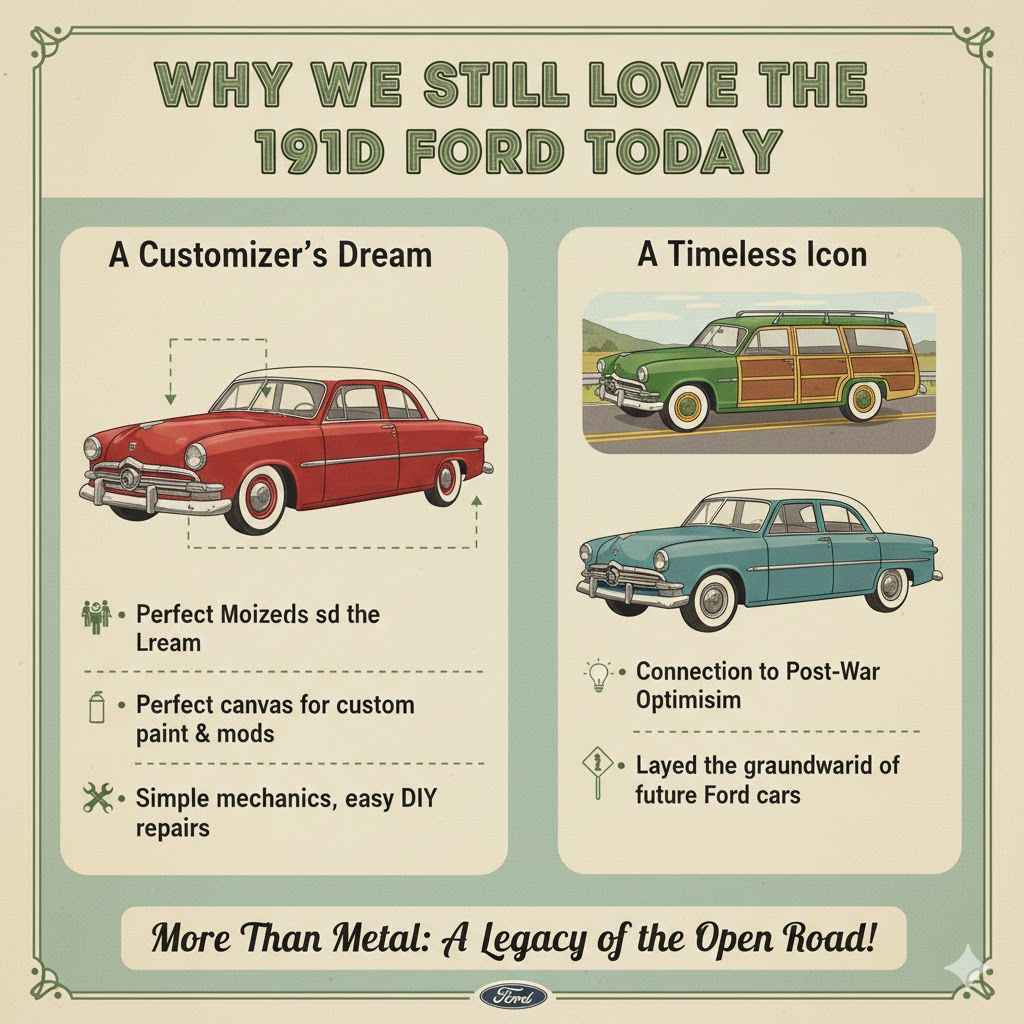
More than 70 years later, the 1950 Ford remains an icon. Its clean “shoebox” design became a favorite of collectors, customizers, and hot-rodders. The simple shape was a perfect canvas for custom paint, lowered suspension, and engine swaps.
For a DIY enthusiast, these cars are a dream to work on. Their mechanics are straightforward and simple compared to modern cars packed with computers and electronics. You can open the hood and see every part of the engine. This simplicity is a huge part of their appeal. They come from a time when a determined owner with a set of basic tools could perform most of the maintenance themselves.
This car represents more than just a piece of metal. It’s a connection to a different era—a time of post-war optimism, booming suburbs, and the open road. It laid the groundwork for decades of Ford cars to come and holds a special place in automotive history.
Frequently Asked Questions (FAQ)
How much was the most expensive Ford in 1950?
The most expensive standard production Ford in 1950 was the Custom DeLuxe Country Squire station wagon. With its real wood side panels, it cost around $2,100 before options, which is over $27,000 in today’s money. It was the choice for large, well-to-do families.
Was a car a major purchase in 1950?
Yes, absolutely. A new car cost about half of what a typical family earned in an entire year. It was one of the biggest purchases a family would ever make, similar to buying a small house or paying for a college education today.
What was the most popular car in 1950?
Chevrolet was the best-selling brand in 1950, just edging out Ford. The battle between Ford and Chevy for the #1 spot was incredibly intense throughout the entire decade. Both sold well over a million cars that year.
Did 1950 Fords have V8 engines?
Yes! This was one of Ford’s biggest selling points. While they offered a standard L-head six-cylinder engine, buyers could upgrade to the famous Ford Flathead V8 engine, which gave the car more power and a distinctive rumble.
How much is a 1950 Ford worth today?
The value varies wildly depending on the condition, model, and originality. A rough, non-running project car might be found for a few thousand dollars. A nicely restored Custom DeLuxe sedan could be worth $15,000 to $25,000, while a rare convertible or a perfect Country Squire wagon could fetch over $50,000 or much more.
What colors did the 1950 Ford come in?
Ford offered a wide range of conservative but pleasant colors. Popular choices included Hawaiian Bronze, Sportsman’s Green, and Palisades Green. Two-tone paint schemes, like a green body with a white top, were also very fashionable and popular.
Conclusion: More Than Just a Number
So, how much did a Ford car cost in 1950? The simple answer is around $1,500. But the shocking and more meaningful answer is that it cost half a year’s hard work for the average American family. It represented sacrifice, savings, and the achievement of a dream.
Looking back at these prices reminds us that while the numbers on the sticker have changed, the value of a reliable car has not. It has always been a key to freedom, opportunity, and family life. The 1950 Ford wasn’t just an affordable car; it was a well-built, stylish, and powerful machine that delivered real value for the money—a principle that still defines a great car today.