
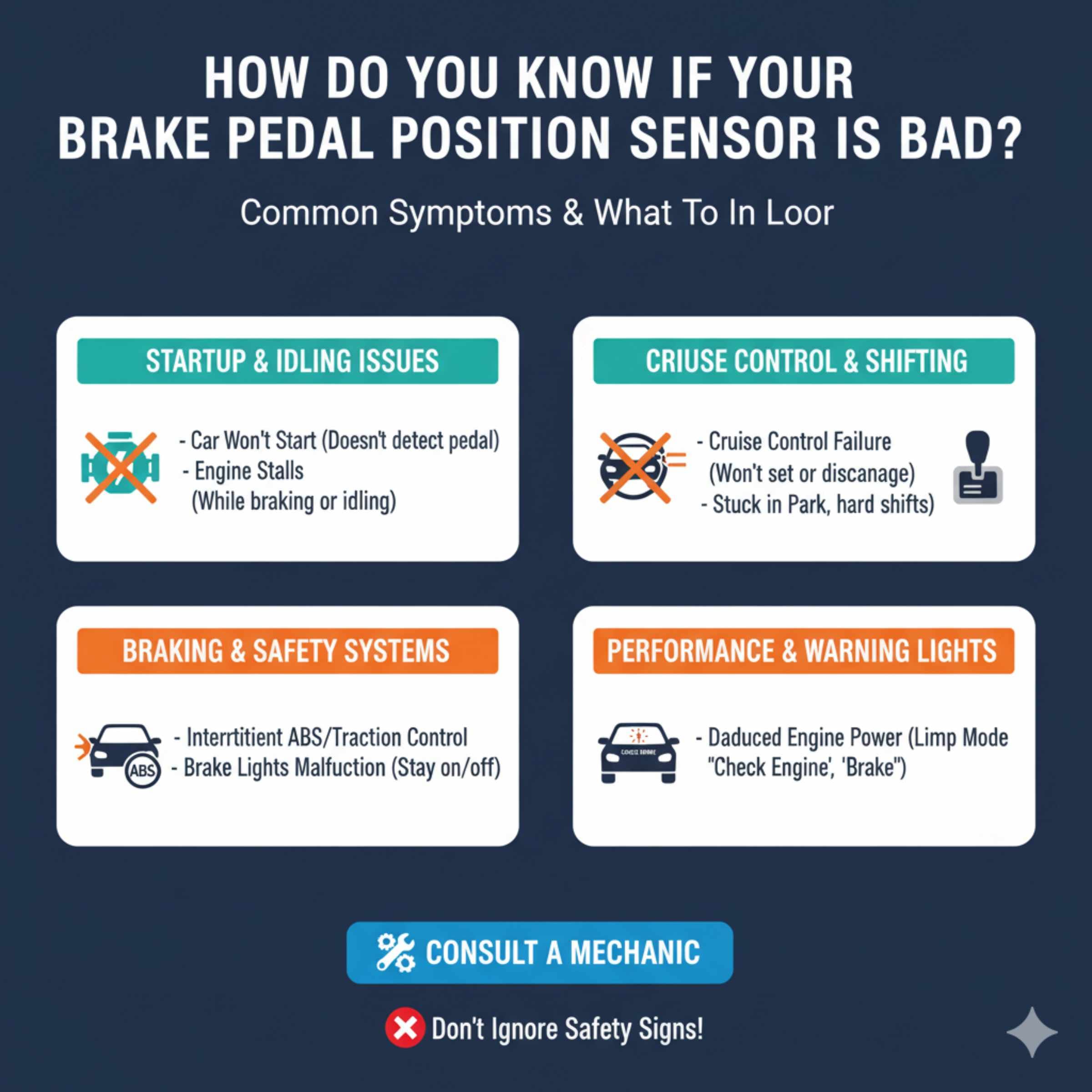
If your brake pedal position sensor (BPPS) is failing, you might notice erratic cruise control, brake lights staying on, or trouble starting the car. Look for dashboard warning lights, especially ABS or stability control, as these are the clearest signs that this small but crucial sensor needs attention.
Hey there! I’m Dustin, and I know dealing with car quirks can be frustrating. Your car’s brakes are important, and when something feels “off,” it’s natural to worry. Today, we are tackling a small part with a big job: the Brake Pedal Position Sensor (BPPS). This sensor tells your computer when you press the brakes—it’s vital for safety systems like ABS and cruise control. If it goes bad, you get weird symptoms. Don’t sweat it! We’re going to break down exactly how to spot the signs, understand what they mean, and determine if this sensor is the culprit helping you keep your car running safely and smoothly.
What Exactly is the Brake Pedal Position Sensor (BPPS)?
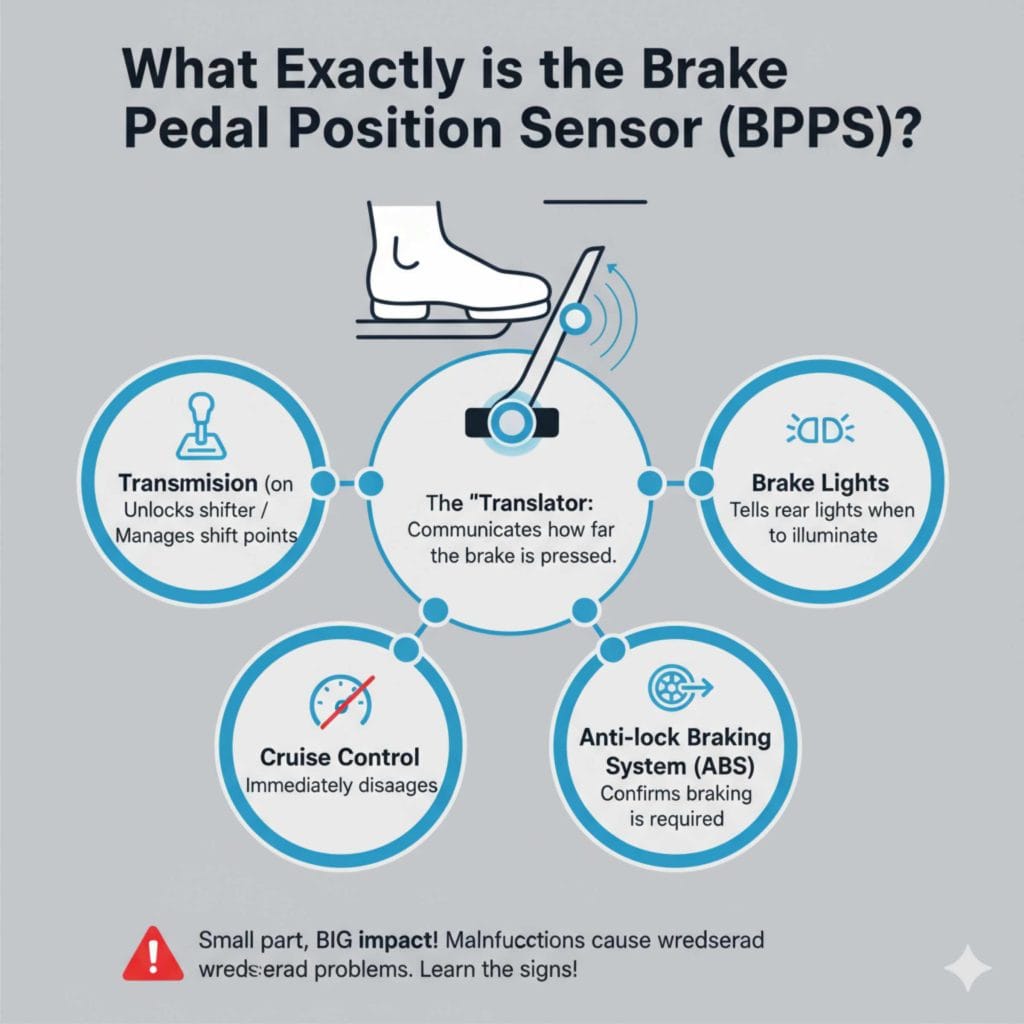
The Brake Pedal Position Sensor, sometimes called the Stop Light Switch, is more than just a switch. Think of it as a translator. It sits near or on the brake pedal arm and tells the various electronic systems in your car exactly how far down you’ve pushed the pedal—or if you haven’t touched it at all.
This little part communicates with several major systems:
- Brake Lights: It lets the rear lights know when to illuminate.
- Anti-lock Braking System (ABS): It confirms when braking action is required.
- Cruise Control: It immediately disengages cruise control the moment you touch the brake pedal.
- Transmission (on some models): It might signal the car to unlock the shifter or manage shift points.
Because it serves so many critical functions, a small hiccup in the sensor can cause some surprisingly widespread problems. Learning the signs is the first step toward a quick fix!
The Top 7 Essential Signs: How Do You Know If Your Brake Pedal Position Sensor Is Bad?
When the BPPS starts acting up, it sends confusing signals to your car’s brain. For the everyday driver, these issues might seem random, but they often point right back to this one component. Here are the most common and tell-tale signs that your brake pedal position sensor might be failing.
1. Your Brake Lights Stay On (or Don’t Come On At All)
This is often the most obvious physical sign. The primary job of the BPPS is signaling the brake lights. If the sensor is stuck in the “pressed” position, your brake lights will remain illuminated constantly, even when your foot is off the pedal. This is dangerous because it confuses drivers behind you.
Conversely, if the sensor has failed completely or is stuck in the “off” position, your brake lights may not light up at all when you press the pedal. This is an immediate safety hazard and requires immediate attention. If you notice this, have a friend follow you or check your reflection in a storefront window while you gently press the pedal.
2. Cruise Control Acts Erratic or Won’t Engage
Modern cruise control systems rely heavily on the BPPS. The system needs confirmation that you are not applying the brakes before it will engage. If the faulty sensor sends a sporadic or incorrect “brake applied” signal, the cruise control will either refuse to turn on, or it will suddenly shut off without warning while you are driving.
If you’re setting your speed and the system immediately flashes an error or disengages, check the sensor. This is a clear indicator that the computer is getting conflicting input regarding your brake pedal status.
3. Dashboard Warning Lights Appear (ABS or Traction Control)
This is one of the most reliable digital clues. Since the BPPS feeds data to the Anti-lock Braking System (ABS) and Electronic Stability Control (ESC/Traction Control) modules, a bad signal often triggers their warning lights. You might see the ABS light, the traction control light, or sometimes both, illuminate on your dash.
While these lights often mean there’s an issue within the main braking system, the BPPS is a common, simple starting point for diagnosis. For more background on why these lights matter, you can review general safety information provided by governmental automotive safety resources, such as the National Highway Traffic Safety Administration (NHTSA) guidelines on vehicle safety systems.
4. Your Car Refuses to Start (Interlock Issue)
Many newer vehicles have a safety interlock programmed into the starting system. Just like some cars require you to press the clutch pedal to start (manual transmission), many automatics require you to press the brake pedal slightly before the ignition will turn over. This ensures the car won’t jump forward when you start it.
If your BPPS is completely dead, the car thinks you are never pressing the brake pedal while turning the key. Consequently, the vehicle will crank but refuse to start. If your car starts fine when you shift into Neutral but not in Park, the issue might actually be the Neutral Safety Switch, but a faulty BPPS can mimic a similar failure in Park mode.
5. Transmission Shifter is Stuck in Park (Shift Lock Failure)
This is closely related to the starting issue. The mechanism allowing you to move the gear selector out of Park often requires the brake pedal to be depressed. This is known as the brake-shift interlock.
If the sensor fails to provide that “brake applied” signal, the solenoid that releases the shifter locks up. You press the brake, but the shifter won’t budge. If you can bypass this by pressing the small physical release button near the shifter (if your car has one), it confirms that the electronic signal telling the car the brake is active is missing.
6. Strange Transmission Behavior or Shifting Issues
In some cars, the Engine Control Unit (ECU) monitors brake input to manage fuel cut-off during deceleration or to optimize shift points. If the sensor provides erratic data, the transmission might shift harshly, hunt for gears, or delay important gear changes.
This is less common than brake light issues but certainly noticeable if you pay attention to how your transmission feels during normal driving and slowing down.
7. Inconsistency and Randomness
One of the most frustrating signs is pure randomness. The lights work sometimes, the cruise control works other times, and the car starts on the third or fourth try. Intermittent failure is a classic symptom of a sensor that is starting to wear out internally. The internal contact points are becoming dirty or worn, meaning the signal breaks down under varying conditions (vibration, temperature changes within the engine bay).
Troubleshooting Your Brake Pedal Position Sensor: A Beginner’s Guide
Feeling confident you have a bad sensor? Great! Now, let’s talk about how to confirm the suspicion without diving into complex wiring diagrams. We’ll focus on simple checks a beginner can perform.
Tools You Might Need
For basic checks, you might not need much, but for a full diagnosis, keep these handy:
- A helper (essential for checking brake lights).
- A small flashlight.
- A multimeter (for advanced testing—very helpful!).
- Basic hand tools (screwdrivers or socket set, depending on sensor location).
Step 1: The Visual Inspection and Wiggle Test
Locate the sensor. On most vehicles, the BPPS is mounted directly above the brake pedal arm, closer to the firewall. You may need a flashlight and perhaps a mirror to clearly see it. It usually has a plastic lever or plunger that the brake pedal pushes against when released.
- Check the Connection: Ensure the electrical connector harness is firmly plugged in. Sometimes, vibrations can loosen the plug. Push it in firmly until you hear a click.
- Look for Damage: Inspect the plastic housing for cracks or signs of overheating.
- The Wiggle Test: With the ignition on (but the engine off), have your helper watch the brake lights. Gently wiggle the sensor housing and the wiring harness by hand. If the brake lights flicker on and off while you wiggle it, you have found a loose connection or a failing sensor body.
Step 2: Testing Brake Light Operation (The Helper Method)
This confirms the most basic function:
- Park on a flat surface with the parking brake engaged.
- Have your helper stand behind the car while you sit in the driver’s seat.
- Press the brake pedal slowly, then release it fully. Ask your helper to confirm that the brake lights turn on immediately when you press and turn off immediately when you release.
- If they stay on, tap the brake pedal a few times quickly. If they don’t turn off, suspect the sensor is stuck “on.”
- If they never come on, the fuse, the bulbs, or the sensor are the primary suspects.
Step 3: Testing with a Multimeter (The Advanced Check)
If you have a multimeter, you can test the continuity (the flow of electricity) right at the sensor itself. This is the most definitive DIY check. Safety Note: Always disconnect the negative battery terminal before disconnecting sensor wires to prevent short circuits.
Because sensor designs vary widely (some are simple on/off switches, others are variable resistors), you must consult your vehicle’s service manual for the exact voltage/resistance specifications. However, the general principle is:
Testing Simple On/Off Switches (Most Common):
- Disconnect the electrical plug from the sensor.
- Set your multimeter to the continuity or resistance (Ohms) setting.
- Touch the probes to the corresponding terminals on the sensor side (not the wiring harness).
- Pedal Released: You should read an open circuit (infinite resistance, or “OL” on some meters).
- Pedal Pressed: You should read a closed circuit (near zero Ohms or low, steady resistance).
If the readings are reversed, inconsistent, or don’t change between the two positions, the sensor is definitely bad. Here is a quick comparison:
| Brake Pedal State | Expected BPPS Reading (Continuity Test) | What a Bad Sensor Shows |
|---|---|---|
| Foot Off Pedal (Released) | Open Circuit (No Connection) | Closed Circuit (Stuck On) |
| Foot On Pedal (Applied) | Closed Circuit (Connection Made) | Open Circuit (No Connection) |
Why Does This Sensor Fail Over Time?
The BPPS is a mechanical/electrical component subjected to repeated stress. It’s not immune to wear and tear. Understanding the failure modes can help you appreciate why replacement is necessary.
Physical Wear and Tear
Every time you push the brake pedal, a small plastic plunger or lever moves inside the sensor housing. Over thousands of cycles, this plastic wears down, leading to:
- Looseness, causing play in the pedal travel.
- Worn internal contacts that fail to make a solid electrical connection.
Environmental Factors
The sensor is usually mounted near the floorboard, exposing it potentially to moisture, road salt residue, and dust. This contamination can corrode wires or enter the switch mechanism, causing resistance issues.
Voltage Spikes
While less common with modern sensors, sudden electrical fluctuations in the vehicle’s charging system can sometimes damage sensitive electronics within the sensor, causing premature failure.
BPPS vs Other Brake-Related Sensors
It’s easy to confuse the symptoms of a bad BPPS with issues from other related components. Here is how to differentiate:
| Component | Primary Symptom | Key Difference from BPPS |
|---|---|---|
| Brake Pedal Position Sensor (BPPS) | Cruise control issues, Brake lights stuck on/off, Shift lock failure. | Impacts digital communication and safety interlocks directly. |
| Wheel Speed Sensor (ABS) | ABS/Traction Control light only, often accompanied by grinding or pulsing when braking hard. | Usually does not affect standard brake light function or cruise disengagement. |
| Brake Light Bulb/Fuse | Brake lights fail to work, sometimes only on one side. | Will not cause cruise control failure or transmission shifting lockouts. |
Replacing the Brake Pedal Position Sensor: Confidence Step-by-Step
Replacing the BPPS is a fantastic entry point into DIY auto repair! It’s generally inexpensive and requires minimal specialty tools. Remember, always source a high-quality replacement part specific to your vehicle’s make and model for the best, lasting results.
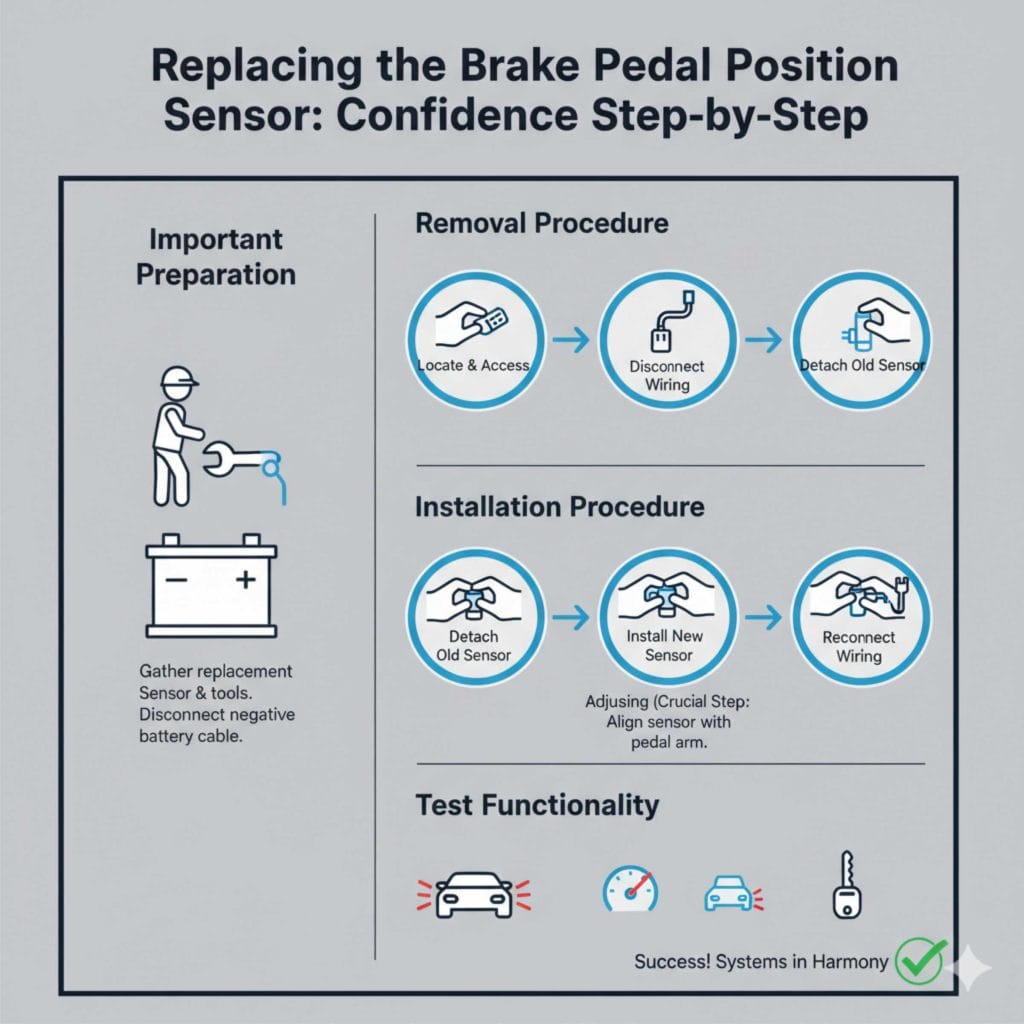
Important Preparation
Before starting, gather your replacement sensor and any necessary tools. Disconnect the negative battery cable if you are working near wiring that might short out.
Removal Procedure
- Locate and Access: Climb under the dash and locate the sensor assembly near the top of the brake pedal arm.
- Disconnect Wiring: Gently squeeze the locking tab on the electrical connector and pull the harness free.
- Detach the Sensor: Most sensors are held in place by a simple twist-lock mechanism (about a quarter turn counter-clockwise) or sometimes by a small retaining clip or screw. If it twists, turn it until it loosens.
- Remove: Pull the old sensor straight out. Note the position of the plunger or lever—it should be slightly depressed when installed.
Installation Procedure
- Install New Sensor: Insert the new sensor and turn it clockwise until it locks securely into place.
- Adjusting (Crucial Step): Some sensors require minor adjustment to align the switch correctly with the pedal arm. If your sensor has threads or a movable bracket, you might need to turn it slightly until the alignment tab is perfectly set against the pedal arm when the pedal is fully released. Many modern sensors are self-aligning—they click into place when installed correctly.
- Reconnect Wiring: Plug the electrical harness firmly back into the new sensor until it clicks.
- Test Functionality: Reconnect the battery. Have your helper test the brake lights. Then, test that cruise control engages and disengages properly. Finally, test that the car starts when you press the brake.
If all systems return to normal, you’ve done a great job! This small replacement often brings several systems back into perfect harmony.
Frequently Asked Questions (FAQ) About Brake Pedal Sensors
Q1: Can I safely drive with a bad brake pedal position sensor?
A: It depends on the failure. If only your cruise control is affected, it’s annoying but usually safe to drive short distances. However, if your brake lights do not work correctly, or if the ABS/Stability Control lights are on, it is unsafe. Driving without working brake lights is illegal and dangerous for others.
Q2: How much does it cost to replace a brake pedal position sensor?
The BPPS is one of the least expensive safety-related sensors on your vehicle.
- Part cost: Typically $15–$60
- Labor cost: $0 (DIY) to $80–$150 at a shop
- Total average repair cost: $50–$200
Because of its low cost and simple replacement, this sensor is often fixed quickly once diagnosed.
Q3: Is the brake pedal position sensor the same as the brake light switch?
On many vehicles, yes—they are either the same component or combined into a single unit.
On newer vehicles, the BPPS may be more advanced and provide variable pedal position data instead of a simple on/off signal. This allows better control of ABS, stability control, and transmission logic.
Q4: Can a bad BPPS drain my battery?
Yes—this is very common.
If the sensor fails in the “brake applied” position, your brake lights may stay on even when the car is off. This can drain the battery overnight or over a few days, often confusing owners into thinking the battery itself has failed.
Final Conclusion: Small Sensor, Big Responsibility
The Brake Pedal Position Sensor may be small, but it plays a massive role in how safely and smoothly your vehicle operates. From brake lights and cruise control to ABS, traction control, and even starting the car, this single component quietly keeps multiple systems in sync.
When it fails, the symptoms can feel random—warning lights, shifting problems, or electrical oddities—but they usually point back to this one part. The good news?
✔ It’s inexpensive
✔ It’s easy to diagnose
✔ It’s one of the most DIY-friendly safety repairs you can tackle
If something feels “off” with your brakes, don’t ignore it. A quick inspection or replacement of the BPPS can restore confidence, safety, and proper vehicle function—all without a costly repair bill.
You’re absolutely on the right track by learning the signs and understanding what your car is telling you. Stay safe, stay curious, and keep wrenching smarter!