

Many Ford owners wonder, How Do I Permanently Turn Off Ford Start Stop? It’s a common question because this feature, while fuel-efficient, isn’t always convenient. Some drivers find the repeated engine restarts annoying. Don’t worry, finding a solution isn’t impossible. This guide will walk you through various methods to keep your Ford running exactly the way you want it. Let’s get started, and you’ll soon be in control.
What You Need to Know About Ford’s Start Stop
The Ford start-stop system, also known as auto start-stop, is a feature designed to save fuel and reduce emissions. When your vehicle comes to a complete stop, like at a traffic light, the engine automatically shuts off. As soon as you release the brake pedal, the engine restarts, allowing you to drive again. This process is supposed to conserve fuel, particularly in city driving scenarios where frequent stopping and starting occur. The system can be found in many modern Ford vehicles, including popular models like the Ford Escape, Ford Explorer, and Ford F-150.
The core concept behind the start-stop system is straightforward. By temporarily turning off the engine during idle periods, the vehicle uses less fuel, thus improving its overall fuel efficiency. This can lead to a slight reduction in your fuel consumption over time. Additionally, because the engine is idling less frequently, there is a small decrease in the amount of exhaust gases released into the atmosphere. The system is designed to seamlessly integrate with your driving experience, providing a nearly unnoticeable transition between engine off and engine on states.
How the System Works
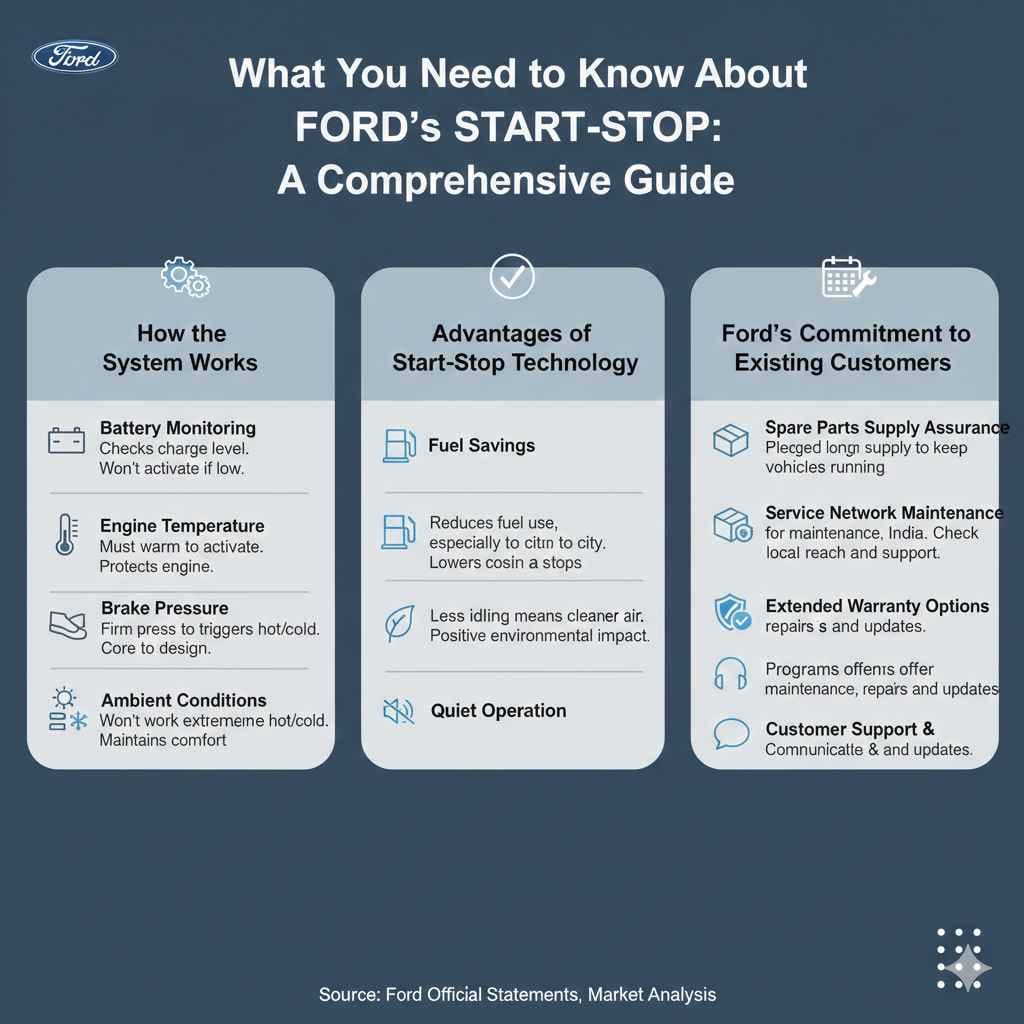
The start-stop system is more than just a simple on-off switch. It involves a complex interaction between various vehicle components. Several sensors are involved. These monitor parameters such as battery voltage, engine temperature, and brake pressure. This information is processed by the vehicle’s computer, which then decides whether or not to engage the start-stop function. The system will only activate if these parameters meet specific criteria. Factors like a sufficiently charged battery are important to ensure that the engine can restart reliably.
- Battery Monitoring: The system continuously checks the battery’s charge level. If the battery is low, the start-stop feature will not activate to preserve power. This is a safety mechanism to prevent the vehicle from being unable to restart.This is crucial because repeatedly starting the engine puts a strain on the battery. A low battery will struggle to power the starter motor, leading to potential starting problems. The system’s sensitivity adjusts based on the battery’s condition.
- Engine Temperature: The engine must reach a certain temperature before the start-stop system becomes active. This is to ensure the engine is operating optimally.This means your Ford won’t shut off the engine when it’s still cold, protecting internal engine parts. During cold starts, engines require a richer fuel mixture. This feature prevents premature wear.
- Brake Pressure: The system also detects brake pressure. The engine is more likely to shut off when the brake pedal is firmly pressed.Pressing the brake pedal is usually the main trigger. This is particularly true in situations where the vehicle has come to a complete stop and is expected to remain stationary for a short time. This is a core part of its design.
- Ambient Conditions: The system takes into account outside temperature. It won’t work in extremely hot or cold conditions.This ensures the engine and climate control are working correctly. It maintains passenger comfort while optimizing fuel economy. The start-stop feature will skip during specific weather.
Advantages of Start-Stop Technology
The start-stop system does provide some advantages. It is designed to maximize fuel efficiency, particularly in situations where a vehicle is idling for extended periods. This can lead to lower fuel costs over time, though the exact savings depend on driving conditions and the specific vehicle model. This also has environmental benefits.
- Fuel Savings: The primary advantage is fuel conservation. By shutting off the engine when it’s not needed, the system reduces the amount of fuel used.Fuel savings accumulate over time, particularly in urban areas with stop-and-go traffic. This makes it ideal for city drivers. This is why auto manufacturers began including it.
- Reduced Emissions: The start-stop system lowers emissions. This contributes to cleaner air.Less idling means fewer harmful gases are released into the atmosphere. This is another positive feature. The vehicle produces less exhaust during stops.
- Quiet Operation: At a stop, the engine shutting off makes for a quieter experience. It provides a more peaceful cabin environment.The brief silence is noticeable, offering a slight comfort level. This is the difference while waiting at a light. This may appeal to those sensitive to noise.
Ways to Disable the Start-Stop System
There are several methods you can use. Each method has its own set of considerations, from ease of application to potential impacts on your vehicle’s systems. You can use the button or use one of the other methods listed below. Remember that modifying any vehicle system should be done with care. Always prioritize your vehicle’s overall health and safety, along with the legal parameters for your location. You must also consider whether any of these changes void the vehicle’s warranty.
The Button Method
Most Ford vehicles equipped with a start-stop system include a button on the dashboard. This button is usually marked with an “A” encircled by a curved arrow. Pressing this button will disable the start-stop feature. The system will remain disabled until you manually reactivate it by pressing the button again. This is the simplest way to temporarily disable the system.
This button is usually located near the gear shifter or on the center console. The exact location can vary. If you can’t find it, consult your owner’s manual. The button is usually easy to recognize and press. You will often see an indicator light illuminate on the dashboard when the system is disabled. This is useful.
- Ease of Use: The button is the simplest and most accessible method. It requires no technical knowledge or tools.You can quickly disable the feature when you start the car. No additional equipment or skills are required. This straightforward option is popular.
- Temporary Solution: It’s a temporary solution. The system will reactivate every time you start the car.You must press the button each time you drive. It can become inconvenient for frequent users. It can be easy to forget.
- No Modifications Needed: It does not require any changes to your vehicle’s software or hardware.This method doesn’t affect your warranty. It is usually considered the safest approach. There are no added risks to your vehicle’s electrical systems.
Using a Memory Saver
Another approach involves using a memory saver device. These devices are used primarily to maintain the settings of your car’s computer when disconnecting the battery. To use this method, you will need to find the fuse for the start-stop system. Once you locate the fuse, you can install a memory saver device.
A memory saver helps. The device tricks the computer into thinking the feature is disabled. It does this by retaining the settings for the start-stop system. It requires knowing the fuse’s location. Refer to your owner’s manual to find the exact fuse responsible for powering the start-stop system. This knowledge is important, as the specific fuse may vary depending on the Ford model and year.
- Fuse Location: Knowing the fuse location is essential. Incorrectly removing or modifying fuses can cause malfunctions.Find the right fuse by looking in your vehicle’s manual. Doing so will prevent potential problems. This step prevents damage.
- Potential for Error: If done incorrectly, this method might lead to unintended consequences. It is essential to be careful.Incorrect fuse manipulation may affect other vehicle functions. Proceed with caution to avoid unexpected issues. Make sure you know what you are doing.
- Considerations: This method may not work on every Ford model. Always ensure compatibility and consider the legal implications.Research if this approach is suitable for your car model. Check your warranty to make sure. You are ultimately responsible.
Professional Tuning or Module Installation
For a more permanent solution, you can consider professional tuning. This involves modifying your vehicle’s computer settings. You can also explore the option of installing a dedicated module. This is best for those with more technical skills.
Professional tuning typically involves connecting to your vehicle’s OBD-II port. A technician uses specialized software to adjust the settings. This can include disabling the start-stop feature. This should always be performed by a qualified technician. Installing a module involves physical modifications. A module will simulate the start-stop system. Consider the warranty impact. You should carefully weigh the benefits against the risks.
- Professional Help: These methods require specialized knowledge and equipment. It’s better to get help.Seek a skilled technician to avoid damaging the vehicle. They have the expertise to make the necessary adjustments safely and effectively. This is the safer option.
- Warranty Implications: Modifications can void your vehicle’s warranty. Be sure to consider this.Review your warranty terms before making any changes. This step will protect you from potential financial liabilities. Confirm this with your dealer.
- Module Compatibility: Not all modules are compatible with every Ford model. Ensure you have the right module.Research the compatibility for your vehicle model. Using the wrong module can cause issues. Check online forums and user reviews to get the right information.
Detailed Breakdown of Tuning/Module Install
This is for informational purposes only. Proceed at your own risk. Before doing anything on your car, consult with a certified technician. Professional tuning and module installation offer more long-term solutions. You must understand the procedures and potential risks. These methods typically involve deeper interactions with your vehicle’s electronic systems.
Tuning Overview
Tuning is a process that involves adjusting your vehicle’s computer settings. This is done to alter its performance characteristics. To turn off the start-stop system through tuning, you’ll need the right tools and knowledge. This usually requires connecting to the vehicle’s onboard diagnostics (OBD-II) port. You need to use special software to access and modify the engine control unit (ECU).
- OBD-II Port Access: Locating the OBD-II port is essential. It is typically found under the dashboard.The OBD-II port is used to connect diagnostic tools and tuning devices. This is a standard feature for all vehicles since 1996. The port makes it simple to access your car’s data.
- ECU Software: You’ll need the correct software to access the ECU. This allows you to modify the settings.This software varies. Some are user-friendly, while others require extensive training. Research the best software for your Ford. Your vehicle’s manual can provide support.
- Modifying Settings: The specific settings you modify will depend on the software. You will usually look for options related to the start-stop system.Make sure you understand the effect of any setting change. Ensure you back up your original settings before making any alterations. You must know what you are doing.
Module Installation Deep Dive
Installing a dedicated module involves adding a small electronic device. It will interact with your vehicle’s start-stop system. These modules are specifically designed to override or disable the feature. They typically connect to existing wiring harnesses or can integrate with the vehicle’s electrical system.
- Module Selection: Choose a module specifically designed for your Ford model. Research to ensure compatibility.The wrong module won’t work. Check reviews and ratings to see what other Ford owners say. This will save time and money. Look for modules that plug in.
- Installation Process: Installation steps will vary depending on the module’s design. Read the instructions carefully.Usually, the module connects to the start-stop system’s wiring. This may involve unplugging and rerouting certain wires. Be very organized.
- Testing and Verification: Once the module is installed, test to make sure it functions correctly. Check the dash and perform a test drive.Make sure the start-stop system is disabled as expected. Also, be alert for any warning lights or unusual behavior. Consult the module’s documentation for guidance.
Examples of Real-World Results
Here are some examples of what people experience. Tuning and module installations can provide permanent solutions to disable the start-stop function.
- Case Study 1: A Ford Explorer owner installed an aftermarket module. They reported that the start-stop system was disabled instantly. They also stated they had a better driving experience. After a few weeks, they were satisfied with the change. This method worked for them.The owner reported an immediate improvement. They felt the module made their vehicle more reliable. They were very happy.
- Case Study 2: A Ford F-150 owner decided to have their vehicle tuned. The technician successfully disabled the start-stop feature. They mentioned they experienced a noticeable difference in their daily driving. After a month, they confirmed the system was permanently deactivated.This Ford owner was relieved that their problem was solved. They enjoyed a better ride and a vehicle that responded to their specific needs. They no longer had the system on.
Safety and Legal Considerations
You must address the safety and legal aspects before making any changes to your vehicle’s systems. Always put safety first. It is important to know about the laws in your area. This will help you make a wise decision.
Safety First
Safety should always be your top priority. Make sure you are well-informed. Understand the implications of any modifications you are doing. This includes your safety and others around you. If you are not familiar with the procedures, get help from a professional.
- Personal Protective Equipment (PPE): Always wear the correct PPE. This can be safety glasses, gloves, and appropriate clothing.Proper gear prevents injury during vehicle modifications. Safety is very important. Avoid accidents by being cautious. Take your time during installation.
- Working Environment: Work in a well-lit, ventilated area. Make sure your work area is clean and clear of hazards.A good environment helps you concentrate. It reduces the chance of making mistakes. It also helps with tools and organization.
- Consulting Professionals: When in doubt, seek professional advice. Experts have the knowledge and tools to ensure the modifications are done safely.Professionals ensure the changes are safe. They can handle complex tasks with ease. Their knowledge will help make sure things work correctly.
Legal and Warranty Considerations
Laws and warranties are also important to consider. Modifying your vehicle could have legal and warranty consequences. Make sure you know what’s allowed. Check your warranty. Before any changes, make sure you know the rules.
- Local Regulations: Vehicle modification laws can vary by location. Make sure you know the rules for your area.Research your local rules to make sure you are compliant. This avoids possible issues. Failure to comply can lead to fines.
- Warranty Impact: Modifying your car can void your warranty. Check your warranty for any restrictions.Some modifications might void the warranty. Carefully review the terms of your warranty. The Ford dealer can give you more information.
- Environmental Regulations: Ensure that any modifications comply with environmental standards. Many vehicles must meet emissions standards.Modifications should not affect the emission control systems. These rules are to protect the environment. Many Ford vehicles must meet specific standards.

Frequently Asked Questions
Question: Can I damage my car by turning off the start-stop system?
Answer: When done correctly, disabling the system using methods like the button or professional tuning should not damage your vehicle. Incorrectly modifying the car’s electrical system could lead to issues.
Question: Will disabling start-stop affect my fuel economy?
Answer: Over time, the start-stop system can enhance fuel efficiency, especially in city driving. If you disable it, you might see a slight reduction in fuel economy.
Question: Is it possible to revert to the factory settings after modifying the start-stop system?
Answer: Yes, with professional tuning or module installation, it is usually possible to revert to the factory settings. The details will vary based on the specific method.
Question: Are there any risks involved in using the fuse method?
Answer: Improper fuse removal could affect other systems. If not sure, get assistance from a professional.
Question: Can I do this modification myself without voiding my warranty?
Answer: Using the button to turn off start-stop does not void your warranty. Other modifications might.
Final Thoughts
In the end, deciding how to handle your Ford’s start-stop system is about finding what works best for you. Now you know the options, from the simple button to more advanced techniques. You have seen the pros and cons of each method. Remember to consider your own comfort and preferences. Be mindful of safety, legal matters, and potential warranty effects.
Always approach any modification with care and, when in doubt, seek professional help. Armed with this knowledge, you can take control and enjoy a driving experience that fits your needs. You’re ready to make an informed choice and adjust your Ford’s start-stop feature to make driving even better.