
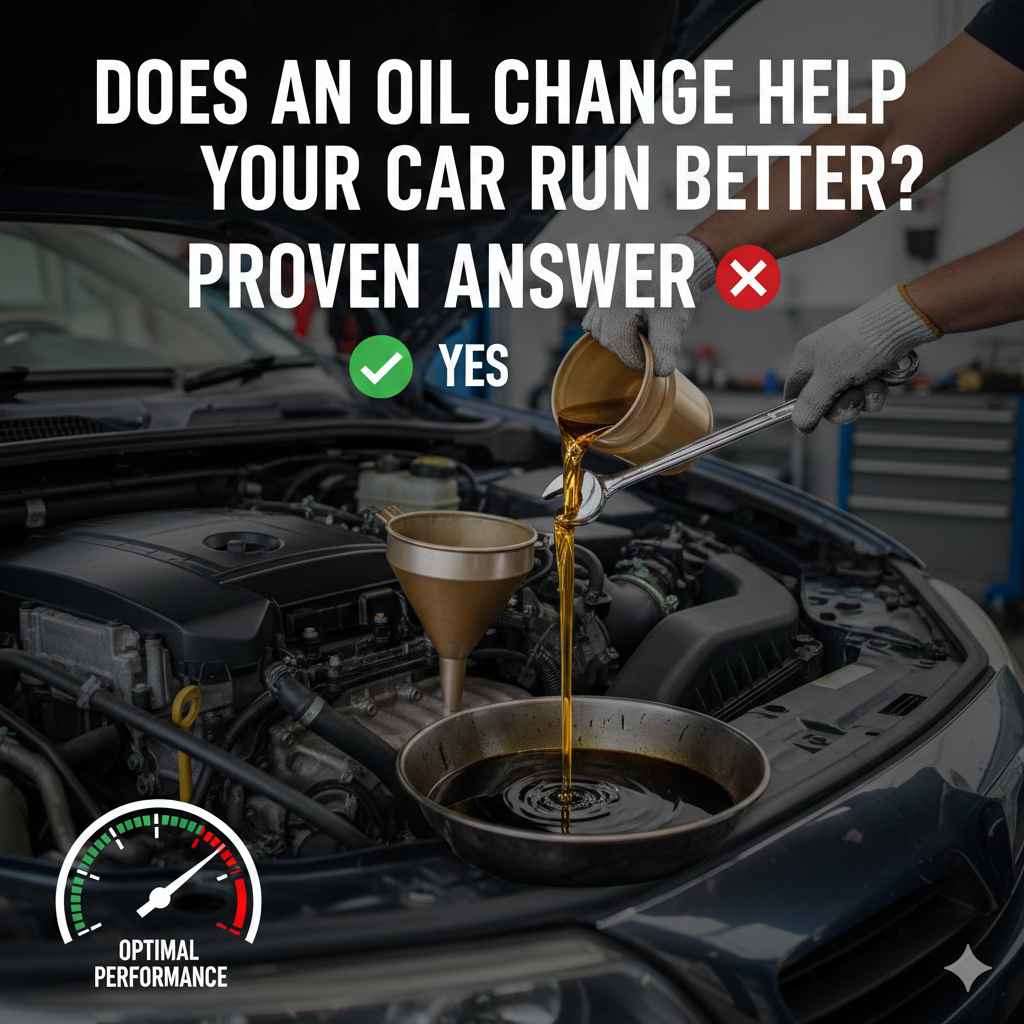
Yes, an oil change absolutely helps your car run better. Fresh oil properly lubricates, cleans, and cools your engine, leading to a smoother ride, improved fuel economy, and quieter operation. It is one of the most effective and affordable ways to boost your car’s immediate performance and long-term health.
Have you ever felt like your car is just… off? Maybe it sounds a little louder, feels a bit sluggish, or just doesn’t have that same get-up-and-go it used to. It’s a common feeling, and often, the fix is simpler and cheaper than you think. One of the most common questions I get is whether a basic oil change can really make a difference.
You’re not alone in wondering this. Many drivers see an oil change as just another chore on a long list of car maintenance tasks. But I’m here to tell you it’s so much more than that. It’s a refresh button for your engine. In this guide, we’ll break down exactly how fresh oil transforms your car’s performance and why it’s the best friend your engine will ever have.
What Does Engine Oil Actually Do? The Four Key Jobs
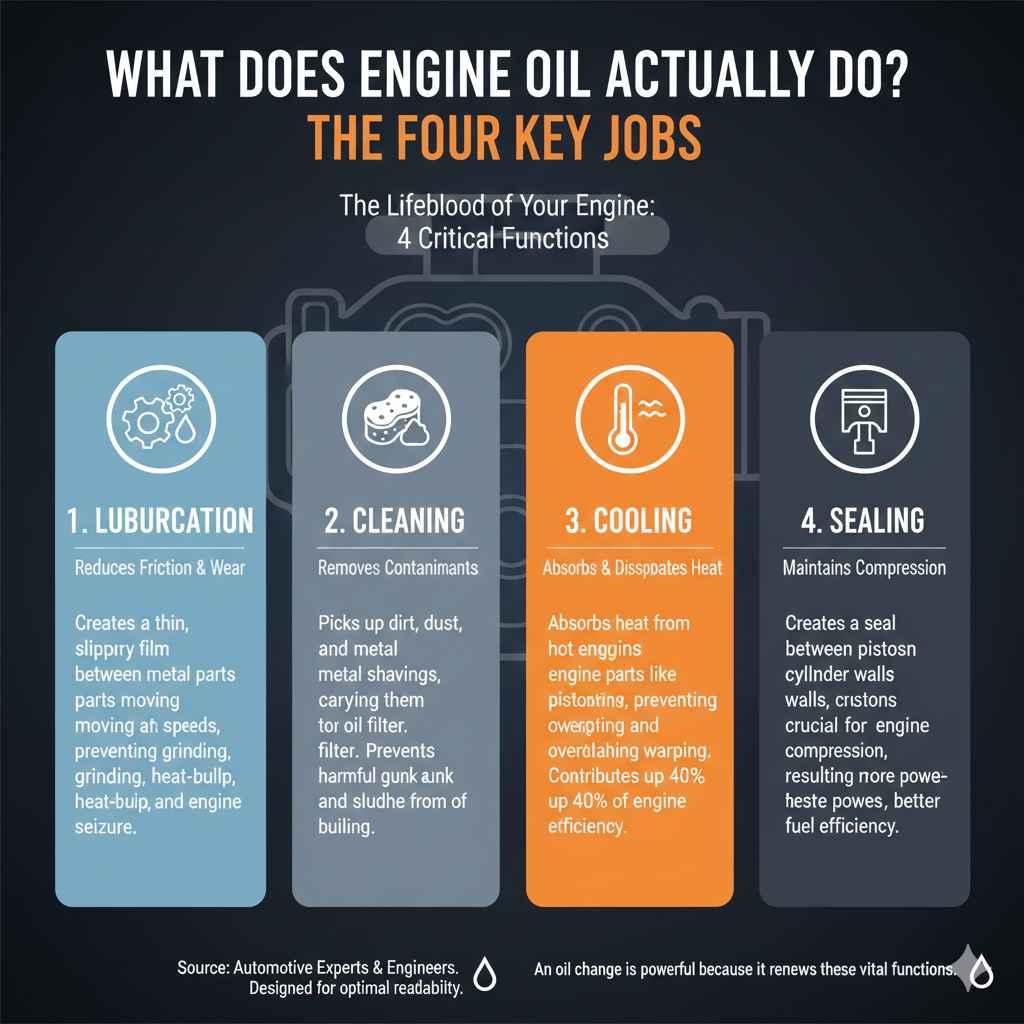
To understand why an oil change is so powerful, we first need to know what oil does in the first place. Think of it as the lifeblood of your engine. It circulates through all the moving parts, performing four critical jobs that keep your car running smoothly.
- Lubrication: Your engine is full of metal parts moving against each other at incredibly high speeds. Oil creates a thin, slippery film between these parts, preventing them from grinding together. Without it, the friction would create so much heat that the engine would quickly seize up and destroy itself.
- Cleaning: As your engine runs, it creates tiny particles of dirt, dust, and metal shavings. Oil is designed to pick up these contaminants and carry them away to the oil filter. It acts like a cleaning crew, keeping the inside of your engine free of harmful gunk and sludge.
- Cooling: While your car’s cooling system does most of the heavy lifting, engine oil plays a vital supporting role. It absorbs heat from hot spots like the pistons and carries it away, preventing parts from overheating and warping. It’s responsible for up to 40% of your engine’s cooling!
- Sealing: Oil helps create a seal between the pistons and the cylinder walls. This is crucial for maintaining good compression, which is where your engine gets its power. A good seal means more power and better fuel efficiency.
The Problem with Old, Dirty Oil
Over time and with every mile you drive, your engine oil starts to break down. The intense heat and pressure cause it to lose its ability to lubricate effectively. It also gets saturated with dirt, sludge, and acidic byproducts from combustion. When this happens, it can no longer do its four jobs properly.
Old, dirty oil becomes thick and sludgy. Instead of a slick, protective fluid, it turns into something more like molasses. This sludge can clog narrow oil passages, starving critical engine parts of the lubrication they desperately need. This is where you start to notice problems—your car feels sluggish, sounds noisy, and doesn’t perform like it should.
5 Proven Ways an Oil Change Makes Your Car Run Better
So, you’ve replaced that old, worn-out oil with a fresh, clean supply. What happens next? You’ll feel the difference almost immediately. Here are the five key ways a simple oil change revitalizes your car.
1. Smoother and Quieter Engine Operation
This is often the first thing drivers notice. Old, thin, or dirty oil can’t cushion the moving parts of your engine effectively. This leads to more metal-on-metal contact, causing vibrations and noises like ticking, tapping, or even a low rumbling sound. You might feel these vibrations through the steering wheel or pedals.
Fresh oil restores that essential lubricating film. It’s clean, has the right thickness (viscosity), and is full of active additives. It immediately reduces friction, allowing pistons, bearings, and camshafts to glide smoothly and quietly. The result? Your engine sounds happier and the ride feels noticeably smoother.
2. Improved Fuel Economy
Did you know that a simple oil change can save you money at the gas pump? It’s true. When your engine is forced to work with old, sludgy oil, it faces more internal friction. To overcome this extra resistance, the engine has to burn more fuel to produce the same amount of power.
Fresh, clean oil minimizes this friction. According to the U.S. Department of Energy, using the manufacturer’s recommended grade of motor oil can improve your gas mileage by 1-2%. While that might not sound like a lot, it adds up over thousands of miles. A well-lubricated engine is an efficient engine.
3. Restored Horsepower and Performance
While an oil change won’t turn your family sedan into a race car, it can help restore lost performance. The same friction that hurts your fuel economy also robs your engine of power. The engine has to waste energy just to move its own parts, leaving less power available to turn the wheels.
By reducing that internal drag, an oil change allows your engine to operate more freely. It can deliver more of its engineered power to where it matters. You’ll feel this as better acceleration and responsiveness, especially when pulling away from a stoplight or merging onto the highway.
4. Better Engine Cooling and Protection
As oil ages, it loses its ability to transfer heat effectively. It also gets filled with contaminants that can act as insulators, trapping heat inside the engine. An engine that runs too hot is at risk for serious damage, including warped heads and failed gaskets, which can lead to thousands of dollars in repairs.
Fresh oil is a fantastic heat conductor. It efficiently pulls heat away from the hottest parts of your engine and carries it to the oil pan, where it can cool down. This helps maintain a stable operating temperature, protecting your engine from the damaging effects of overheating, especially during hot weather or stop-and-go traffic.
5. A Cleaner, Healthier Engine
New motor oil is packed with detergents and dispersants. These additives are designed to clean the inside of your engine. They scrub away existing sludge and prevent new deposits from forming. They also keep contaminants suspended in the oil so they can be trapped by the oil filter.
When you drain the old oil, you’re not just removing a worn-out lubricant; you’re performing an internal cleanse for your engine. You’re physically removing all the dirt, metal particles, and sludge that have built up over time. A clean engine is a happy engine that will last much, much longer.
Signs Your Car is Begging for an Oil Change
Your car is great at giving you hints when it needs attention. You just have to know what to look (and listen) for. Here are the most common signs that you’re overdue for an oil change:
- Oil Change Light or Check Engine Light: This is the most obvious sign. If a light on your dashboard illuminates, don’t ignore it. The oil change light is a simple reminder, but the check engine light can indicate a more serious oil pressure problem.
- Dark and Dirty Oil: Fresh oil is a transparent, amber color. Over time, it picks up dirt and turns dark brown or black. Pull out the dipstick (with the engine off and cool) and wipe it on a clean paper towel. If the oil is black, gritty, or sludgy, it’s time for a change.
- Loud Engine Noise or Knocking: If your engine seems louder than usual or you hear a ticking or knocking sound, it’s a sign that the oil isn’t lubricating the parts properly. This is your engine’s cry for help.
- Exhaust Smoke: If you see blue or gray smoke coming from your tailpipe, it could mean oil is leaking into the combustion chamber. This is a serious issue that often starts with poor engine health from neglected maintenance.
- Smell of Oil in the Cabin: The smell of burning oil inside your car usually means you have an oil leak. It can also indicate that the engine is overheating. Either way, it’s a sign that your oil system needs immediate attention.
Old Oil vs. New Oil: A Clear Comparison
Sometimes seeing the difference side-by-side makes it all click. Here’s a simple table that shows just how much changes when you swap old oil for new.
| Feature | Old, Dirty Oil | Fresh, Clean Oil |
|---|---|---|
| Lubrication | Poor. Thin and gritty, causing increased friction and wear. | Excellent. Creates a strong, slick film that protects parts. |
| Cleaning Power | None. Saturated with contaminants, it adds to sludge buildup. | High. Contains active detergents that clean engine internals. |
| Heat Transfer | Inefficient. Can trap heat, leading to higher engine temperatures. | Efficient. Actively pulls heat away from critical components. |
| Engine Noise | Increases engine noise, ticking, and knocking sounds. | Quiets the engine for a smoother, more pleasant ride. |
| Fuel Efficiency | Decreases fuel economy due to high internal friction. | Improves fuel economy by reducing friction and drag. |
| Engine Protection | Offers minimal protection, accelerating engine wear. | Provides maximum protection, extending engine life. |
Choosing the Right Oil for Your Car
When you get an oil change, you’ll be asked what kind of oil you want. It can be confusing, but it’s actually pretty simple. Your owner’s manual is your best guide, but here’s a quick rundown of the common types.
Three Main Types of Motor Oil
- Conventional Oil: This is the most basic and affordable option. It’s refined from crude oil and works well for many older cars with simple engine designs and for drivers with low-mileage, regular driving habits.
- Synthetic Blend Oil: This is a mix of conventional and synthetic oils. It offers better protection and performance than conventional oil but at a lower price point than full synthetic. It’s a great middle-ground for many vehicles.
- Full Synthetic Oil: This is a man-made oil that has been chemically engineered for the highest levels of performance and protection. It flows better in cold temperatures, resists breakdown at high temperatures, and lasts longer. It’s required for most modern, high-performance, and turbocharged engines.
Here’s a table to help you decide which might be best for you:
| Oil Type | Best For | Typical Change Interval | Relative Cost |
|---|---|---|---|
| Conventional | Older vehicles, low-mileage driving, simple engines. | 3,000 – 5,000 miles | $ |
| Synthetic Blend | Everyday commuters, SUVs, and trucks in moderate conditions. | 5,000 – 7,500 miles | $$ |
| Full Synthetic | High-performance, turbocharged, and modern engines. Extreme temperatures and heavy-duty use. | 7,500 – 15,000+ miles | $$$ |
Remember: Always follow the oil type and change interval recommended in your vehicle’s owner’s manual. Using the wrong oil can harm your engine and may even void your warranty.
The Long-Term Payoff: More Than Just a Better Ride
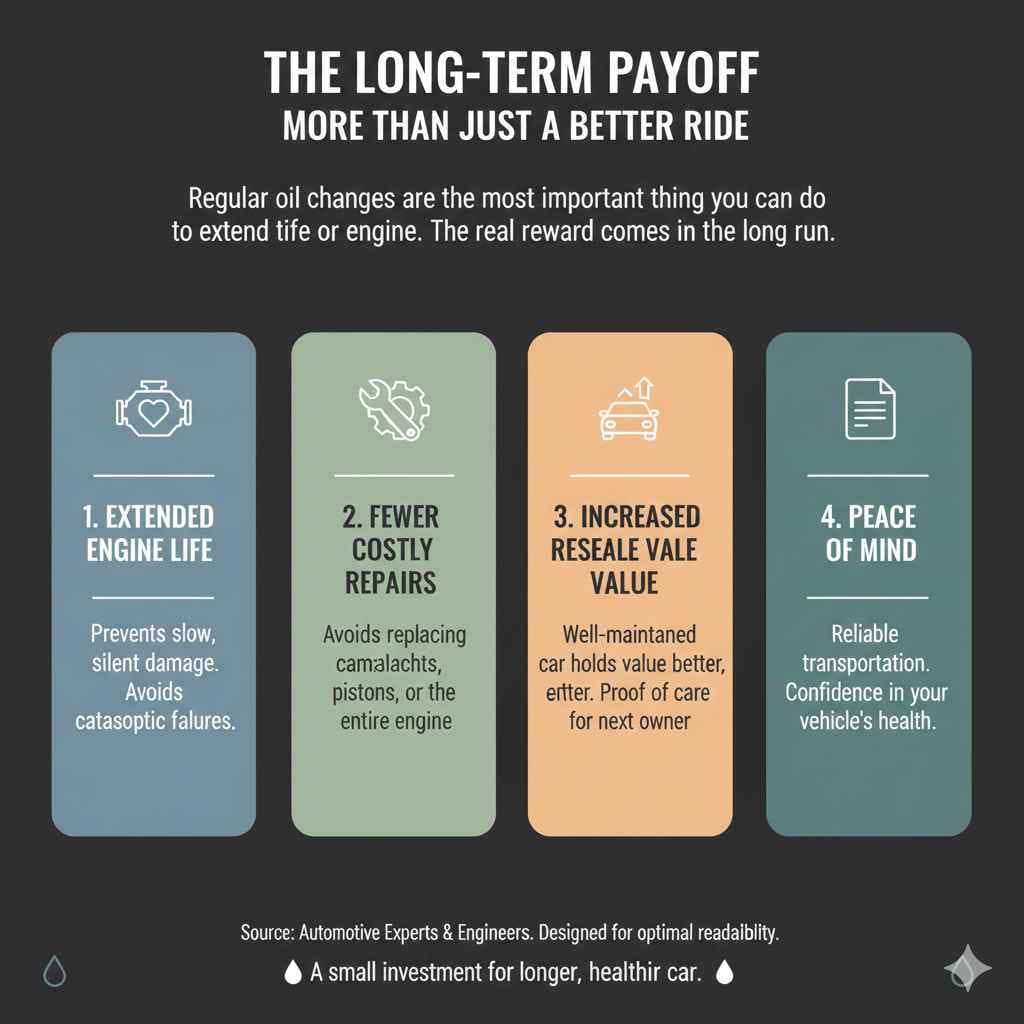
The immediate benefits of an oil change—a quieter engine, smoother ride, and better performance—are fantastic. But the real reward comes in the long run. Regular oil changes are the single most important thing you can do to extend the life of your engine.
By keeping your engine clean and well-lubricated, you are preventing the slow, silent damage that leads to catastrophic failures. You’re avoiding costly repairs like replacing camshafts, pistons, or even the entire engine. A well-maintained car not only lasts longer but also holds its resale value much better. When it comes time to sell or trade in your vehicle, a thick stack of maintenance records showing regular oil changes is proof to the next owner that the car was well cared for.
Frequently Asked Questions (FAQ)
1. How often should I really change my oil?
The old rule of “every 3,000 miles” is outdated for most modern cars. Your best bet is to check your owner’s manual. Many newer vehicles using synthetic oil recommend intervals of 7,500, 10,000, or even 15,000 miles. Your driving habits also matter—if you do a lot of short trips, towing, or stop-and-go driving, you should change it more often.
2. Can I just top off my oil instead of changing it?
No, topping off is not a substitute for a full oil change. While you should absolutely add oil if the level is low, doing so doesn’t remove the dirt, sludge, and contaminants floating around in the old oil. A full oil change drains out all that harmful gunk and replaces it with fresh, clean lubricant and a new filter.
3. What happens if I wait too long for an oil change?
Waiting too long allows sludge to build up, which can clog oil passages and starve parts of lubrication. This leads to increased friction, overheating, and accelerated engine wear. In the worst-case scenario, it can cause severe, irreversible engine damage that requires a complete rebuild or replacement.
4. Is it really worth paying more for synthetic oil?
For most modern cars, yes. If your manufacturer recommends or requires it, you must use it. Even if it’s optional, synthetic oil offers superior protection against heat and wear, performs better in extreme temperatures, and allows for longer change intervals. The extra cost upfront can save you money on repairs and extend the life of your engine.
5. Can an oil change fix a knocking engine?
It depends. If the knocking is caused by poor lubrication from old, thin oil, a fresh oil change can sometimes quiet it down. However, a persistent knocking sound often indicates serious internal wear or damage that has already occurred. An oil change is a great first step, but if the noise continues, you should have a trusted mechanic diagnose it immediately.
6. How do I check my car’s oil level?
It’s easy! Park on a level surface and turn off the engine, letting it cool for at least 10 minutes. Open the hood and locate the oil dipstick (it usually has a brightly colored handle, often yellow or orange). Pull the dipstick out, wipe it clean with a rag, re-insert it all the way, and then pull it out again. Check the oil level against the markings at the end—it should be between the “MIN” and “MAX” or “ADD” and “FULL” lines.
Conclusion: The Simplest Upgrade for Your Car
So, does an oil change help your car run better? The answer is a resounding yes. It’s not just a myth or something mechanics say to get you in the door. It’s a scientifically proven fact. Fresh oil is the foundation of a healthy, efficient, and reliable engine.
By reducing friction, cleaning out harmful deposits, and keeping things cool, a simple oil change restores performance, improves fuel economy, and quiets your engine. More importantly, it is the most crucial investment you can make in your vehicle’s long-term health, preventing wear and tear that leads to expensive and frustrating breakdowns down the road. It’s the easiest, most affordable way to show your car some love and ensure it keeps running smoothly for years to come.