

Yes, a bad tire is one of the most common causes of a shaking steering wheel. Problems like tire imbalance, uneven wear, or physical damage can create vibrations that travel up through your car’s steering system, causing the wheel to shake in your hands, especially at higher speeds.
Feeling your steering wheel start to shake can be unsettling. One minute you’re driving smoothly, and the next, a strange vibration takes over. It’s a common problem, and it often leaves drivers wondering what’s wrong. Is it a huge, expensive issue? Or something simple?
The good news is, you’ve come to the right place. Most of the time, that annoying shake is coming from a problem with your tires—an issue that’s often straightforward and affordable to fix. In this guide, I’ll walk you through why a bad tire causes steering wheel shake, how to spot the signs, and what you can do about it. We’ll make this simple, clear, and worry-free.
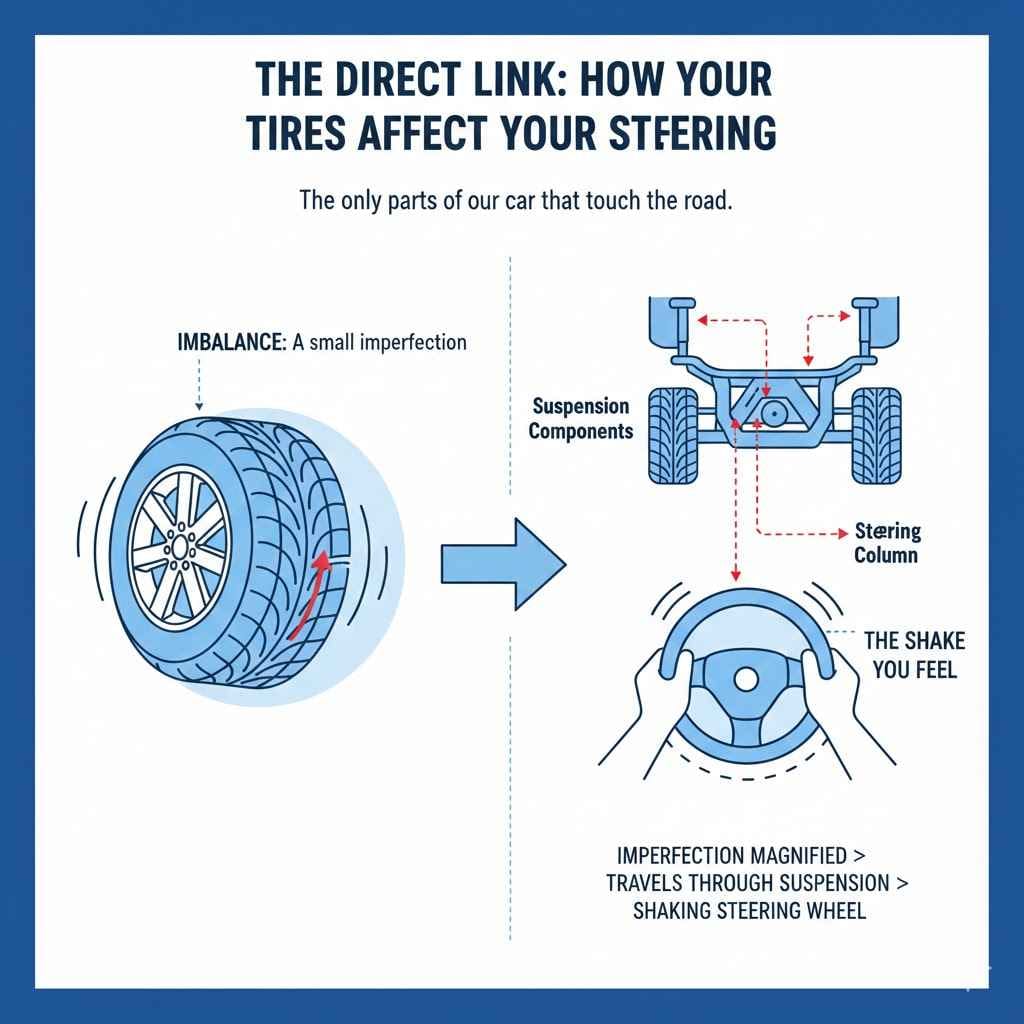
The Direct Link: How Your Tires Affect Your Steering
Think of your tires as the foundation of your car’s ride. They are the only parts that touch the road. For a smooth, stable drive, all four tires need to be in perfect harmony—balanced, round, and rolling evenly. When even one tire is out of sync, it creates an imbalance.
As the wheel spins faster and faster, that small imperfection gets magnified. It creates a vibration, or a “wobble.” This vibration doesn’t just stay at the wheel; it travels up through your car’s suspension and steering components, right into the steering wheel you’re holding. That’s the shake you feel.
Top 5 Tire Problems That Cause Steering Wheel Shake
While several things can cause a steering wheel to shake, tire issues are the leading culprit. Let’s break down the most common problems so you know what to look for.
1. Tire Imbalance
This is the number one cause of steering wheel shake. A tire isn’t just rubber; it’s a combination of rubber and steel belts. Sometimes, one area of the tire is slightly heavier or lighter than another. It might only be a tiny difference of half an ounce, but at 60 miles per hour, that small imbalance can feel like a hammer hitting your car with every rotation.
How it happens:
- Normal wear and tear can change the weight distribution over time.
- Losing a wheel weight (those small metal squares clipped to your wheel rim).
- Manufacturing imperfections, even in new tires.
The Fix: A tire shop can easily fix this with a service called wheel balancing. A technician places your wheel on a special machine that spins it and identifies the heavy spots. They then attach small, precise weights to the rim to counteract the imbalance, making the wheel spin smoothly again.
2. Uneven Tire Wear
If your tires are wearing down unevenly, the surface of the tire is no longer smooth and uniform. This creates a bumpy, inconsistent contact with the road, leading to vibrations.
Common types of uneven wear include:
- Cupping or Scalloping: Worn spots that look like scoops or dips in the tread. This is often a sign of worn-out shocks or struts.
- Center Wear: The middle of the tread wears down faster than the edges, usually due to over-inflated tires.
- Edge Wear: The inner or outer edges of the tread wear down too quickly, which is a classic sign of a wheel alignment problem.
The Fix: A tire rotation can help even out the wear, but it won’t fix the underlying cause. The real solution is to identify why the tires are wearing unevenly. This usually means getting a wheel alignment or having your suspension checked by a professional.
3. Tire Damage (Bubbles and Bulges)
Hitting a pothole, curb, or road debris can damage the internal structure of your tire. This can cause the air to leak between the inner layers of the tire, creating a noticeable bubble or bulge on the sidewall.
A tire with a bulge is no longer perfectly round. As it rotates, that lump creates a very distinct thump or shake that you can feel in the steering wheel. This is a serious safety hazard. A bulge means the tire’s structural integrity is compromised, and it could lead to a sudden and dangerous blowout.
The Fix: There is no safe repair for a tire bulge. The tire must be replaced immediately. Do not continue to drive on a tire with a visible bubble on the sidewall.
4. Separated Belts or Tread
Inside your tire are layers of steel and fabric belts that give it strength and shape. Over time, or due to a manufacturing defect, these layers can start to separate from each other. This is called a tread separation.
When a belt separates, it creates a lump or a raised section in the tread. This causes a vibration that can range from a minor annoyance to a violent shake, especially at higher speeds. Like a sidewall bulge, a separated belt is extremely dangerous and drastically increases the risk of a blowout. You might also hear a thumping noise that gets faster as you speed up.
The Fix: A tire with a separated belt is unsafe and cannot be repaired. It needs to be replaced as soon as possible.
5. Out-of-Round Tires
Sometimes, a tire isn’t perfectly circular. This can be a defect from the factory or it can happen if a car sits in one spot for a very long time, causing flat spots to develop. An out-of-round tire will create a consistent shake that often gets worse with speed.
The Fix: A technician can check if your tire is out-of-round. Sometimes, they can use a special machine to true the tire (shave it down to be round again), but in most cases, the tire will need to be replaced.
How to Tell If Your Tires Are the Problem
A shaking steering wheel can also be caused by brake problems, worn suspension parts, or a bad wheel bearing. So, how do you know if your tires are the likely culprit? Here’s a quick guide to help you narrow it down.
| When the Shaking Occurs | Likely Tire-Related Cause | Other Potential Causes |
|---|---|---|
| Shakes only at certain speeds (e.g., 50-65 mph) and then smooths out. | Tire Imbalance | Driveshaft imbalance |
| Shakes at low speeds and gets worse as you go faster. | Out-of-round tire, tire damage (bulge), or separated belt. | Bent wheel rim, worn suspension parts. |
| Shakes only when you apply the brakes. | This is usually NOT a tire issue. | Warped brake rotors (most common), sticky brake caliper. |
| You feel the shake in the seat or floor more than the steering wheel. | Could be a rear tire issue (imbalance or damage). | Driveshaft or U-joint problems (on rear-wheel or all-wheel drive cars). |
Key Risks: Why You Should Never Ignore a Shaking Steering Wheel
It might start as a minor annoyance, but ignoring a shaking steering wheel can lead to serious safety risks and expensive repairs down the road. Here’s why you should get it checked out right away.
1. Major Safety Hazard
This is the most important reason. A shaking steering wheel is a warning sign that something is wrong with a critical component of your vehicle.
- Loss of Control: Severe vibrations can make it harder to control your car, especially during an emergency maneuver.
- Risk of a Blowout: Problems like tire bulges or tread separation mean the tire is structurally failing. A blowout at high speed can be catastrophic. The National Highway Traffic Safety Administration (NHTSA) emphasizes that proper tire maintenance is crucial for vehicle safety.
- Increased Stopping Distance: Worn or damaged tires don’t grip the road as well, which can increase the distance it takes to stop your car.
2. Damage to Other Car Parts
That constant vibration is like a small earthquake for your car. It sends shockwaves through the suspension and steering systems, causing premature wear and tear on other expensive components.
- Suspension Components: The constant shaking can wear out your shocks, struts, ball joints, and tie rod ends much faster than normal.
- Wheel Bearings: Wheel bearings are designed for smooth rotation. Vibrations put extra stress on them, leading to failure. A bad wheel bearing can make a grinding noise and is a costly repair.
- Steering System: The vibration can also damage sensitive parts of your steering rack or power steering system.
3. Poor Fuel Economy and Performance
When your tires aren’t rolling smoothly, your engine has to work harder to move the car forward. This is due to increased rolling resistance. While it might not be a huge difference day-to-day, it adds up over time, costing you more at the gas pump.
4. An Uncomfortable and Stressful Drive
Finally, a constantly shaking steering wheel is just plain unpleasant. It makes driving stressful and tiring. Your car should feel safe and reliable, not like it’s about to fall apart. Fixing the issue will restore your peace of mind and make your daily commute much more enjoyable.
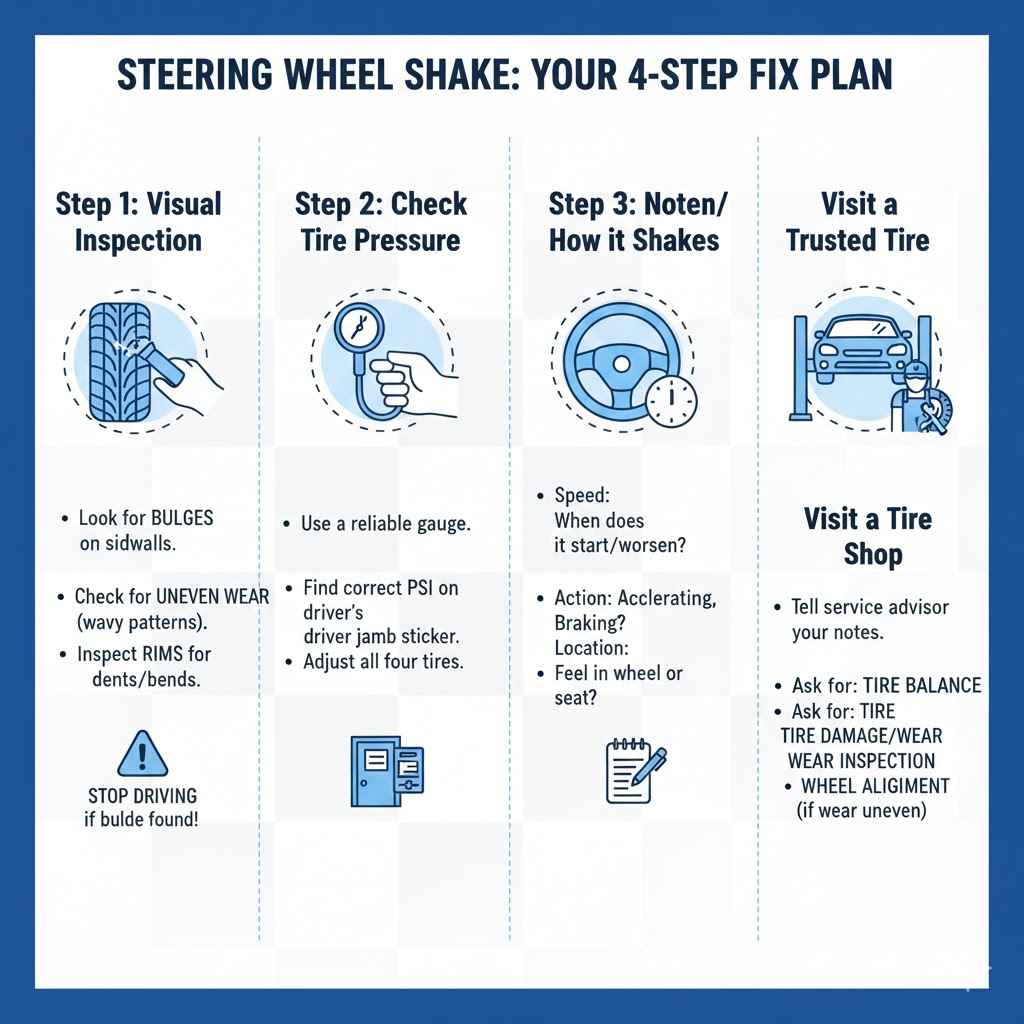
Your Step-by-Step Action Plan to Fix the Shake
Ready to solve the problem? Here are the simple steps you can take to diagnose and fix your shaking steering wheel.
Step 1: Perform a Safe Visual Inspection
Before you go anywhere, park your car on a level surface and take a close look at your front tires. Make sure the car is in park with the emergency brake on.
What to look for:
- Look for Bulges: Carefully inspect the inner and outer sidewalls of each tire. Do you see any bubbles or lumps? If you do, stop driving the car and call for service.
- Check for Uneven Wear: Run your hand over the tread (be careful of any sharp objects). Does it feel smooth, or can you feel wavy, uneven patterns (cupping)? Look at the tread depth. Is one side of the tire more worn than the other?
- Inspect the Rims: Look at the metal wheels (rims). Do you see any major dents or bends, especially on the lip? A bent rim can also cause a shake.
Step 2: Check Your Tire Pressure
This is a quick and easy check that everyone should do regularly. Under-inflated or over-inflated tires can cause handling problems and uneven wear. Use a reliable tire pressure gauge to check the pressure in all four tires. The correct pressure is listed on a sticker inside your driver’s side door jamb, not on the tire itself. Adjust the pressure as needed.
Step 3: Note When and How the Shaking Happens
The next time you drive, pay close attention to the vibration. Being able to give a mechanic specific details will help them diagnose the problem much faster.
-
- At what speed does the shake start?
- Does it get better or worse at higher speeds?
-Does it happen when you accelerate, brake, or just cruise?
- Can you feel it more in the steering wheel or in the seat?
Step 4: Visit a Trusted Tire Shop
For most causes of steering wheel shake, the solution requires specialized equipment. It’s time to visit a professional. When you get to the shop, tell the service advisor exactly what you’re experiencing using the notes you took in Step 3.
Ask them to:
- Check the Tire Balance: This should be the first thing they check.
- Inspect for Tire Damage or Wear: Have them do a thorough inspection of all four tires.
- Check Your Wheel Alignment: If your tires show signs of uneven wear, an alignment is likely needed.
A good shop will be able to pinpoint the problem and recommend the right solution, whether it’s a simple tire balance, a rotation, or a new tire.
Frequently Asked Questions (FAQ)
Can a bad rim cause steering wheel to shake?
Yes, absolutely. A bent, cracked, or damaged wheel rim will not roll smoothly, creating a significant vibration that feels very similar to an unbalanced tire. This often happens after hitting a large pothole or curb.
Can I just ignore a slight steering wheel shake?
It’s never a good idea to ignore it. A slight shake is often the first sign of a problem that will only get worse. Ignoring it can lead to more significant tire wear, damage to your car’s suspension, and, most importantly, create a safety risk.
Why does my steering wheel shake more at high speeds?
This is a classic symptom of tire imbalance. A small weight difference on a tire is barely noticeable at low speeds. But as the wheel spins faster, the centrifugal force magnifies that imbalance, turning a tiny wobble into a very noticeable shake, typically between 50 and 70 mph.
How much does it cost to balance a tire?
Tire balancing is a very affordable service. It typically costs between $15 to $30 per tire. Some shops may offer a package deal for all four wheels, often including a tire rotation at the same time.
What’s the difference between tire balancing and a wheel alignment?
They are two different services that solve different problems. Tire balancing corrects the weight distribution of the tire and wheel assembly to ensure it spins smoothly. Wheel alignment adjusts the angles of the wheels themselves so they are perpendicular to the ground and parallel to each other, ensuring your car drives straight and your tires wear evenly.
How often should I have my tires balanced?
It’s a good practice to have your tires balanced every time you get them rotated, which is typically every 5,000 to 7,000 miles. You should also have them re-balanced any time you buy new tires or if you notice a new vibration.
Will a wheel alignment fix a shaking steering wheel?
Sometimes, but usually not directly. A bad alignment is the primary cause of uneven tire wear. That uneven wear then causes the tire to roll unevenly, creating a shake. So, while an alignment itself won’t stop the shake from a currently damaged tire, it’s essential to prevent the problem from happening again with your new or rotated tires.
Conclusion: Drive Safe and Smooth
Feeling a shake in your steering wheel is your car’s way of telling you something needs attention. And more often than not, the message is coming from your tires. From a simple imbalance to more serious damage, these issues are not only annoying but can also be genuine safety concerns.
By taking a few moments to inspect your tires and understanding the common causes, you can approach the problem with confidence. Don’t let a steering wheel shake ruin your drive or your peace of mind. A quick trip to a tire shop can often provide an affordable and simple fix, getting you back on the road safely and smoothly. Taking care of your tires is taking care of your car—and everyone in it.