
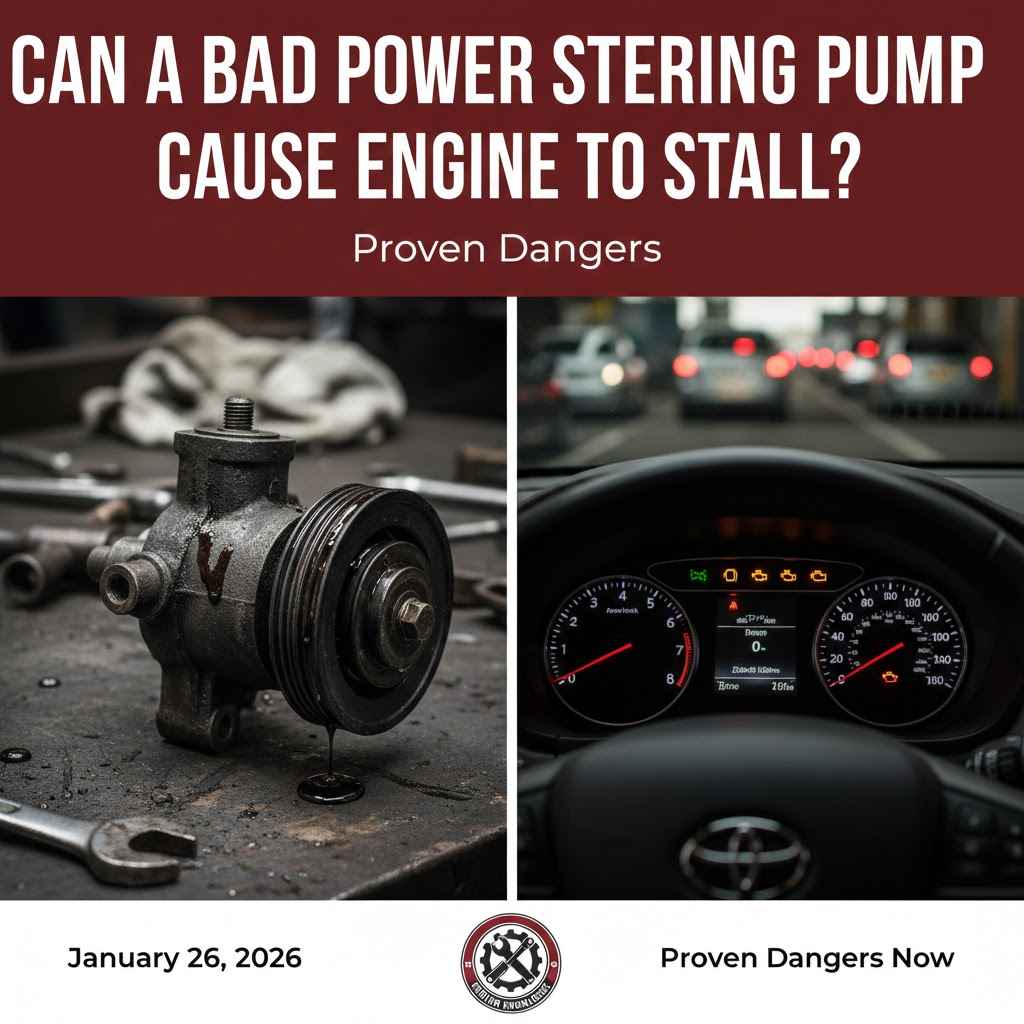
Yes, a bad power steering pump can cause an engine to stall. When the pump is failing or seizing, it puts a heavy load on the engine’s serpentine belt. This extra strain can be enough to stall the engine, especially at low speeds or when turning the steering wheel sharply.
There are few things more stressful than your car’s engine stalling. One moment you’re driving along, and the next, everything goes quiet. If this happens while you’re turning, it can be especially confusing and scary. You might wonder if it’s a major engine problem, but the cause could be something you least expect: your power steering pump.
It sounds strange, right? How can a part that helps you turn the wheel shut down your entire engine? Don’t worry, you’re not alone in thinking this. In this guide, I’ll walk you through exactly how this happens. We’ll explore the connection, identify the warning signs, and figure out the next steps in simple, easy-to-understand terms. Let’s get you back on the road with confidence.
What a Power Steering Pump Does (The Simple Version)
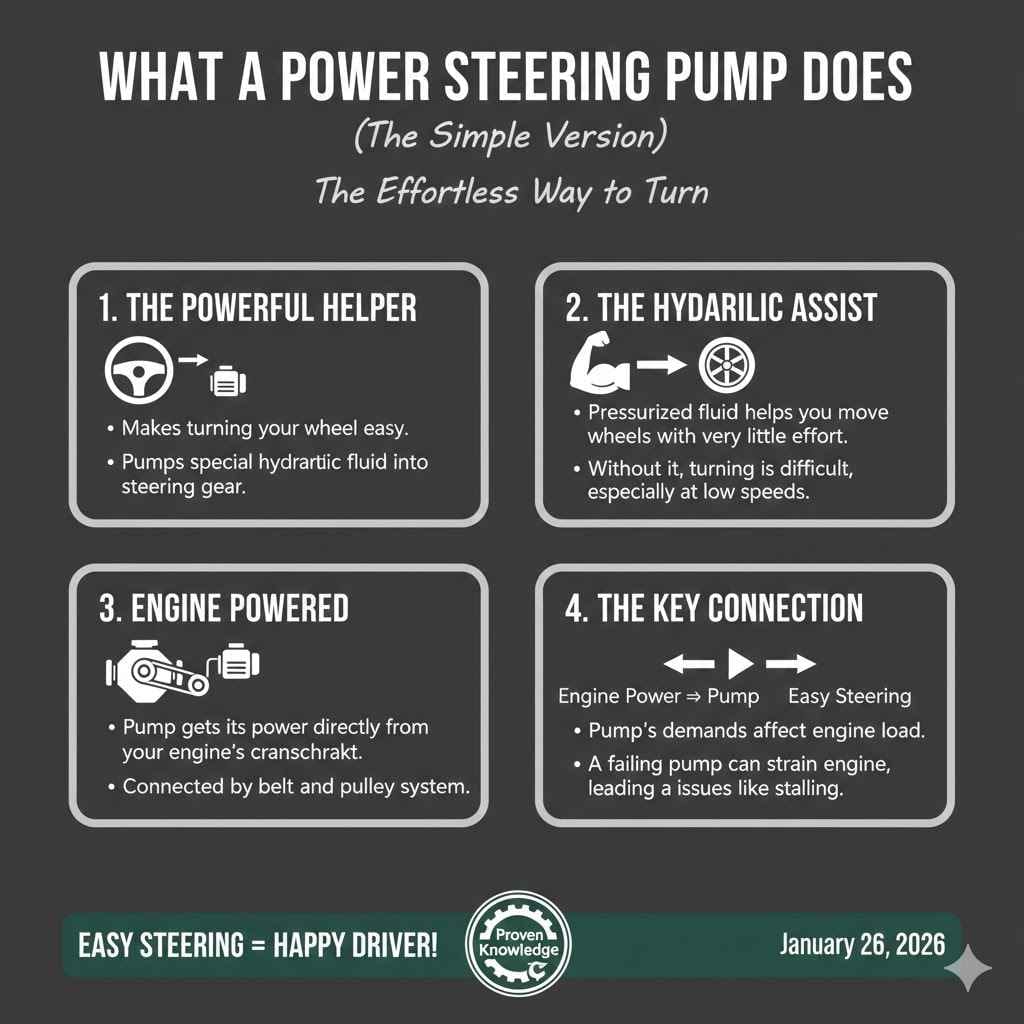
Before we connect the dots to a stalling engine, let’s quickly talk about the power steering pump itself. Think of it as a small, powerful helper. Its only job is to make turning your steering wheel easy. It does this by pumping a special hydraulic fluid, called power steering fluid, into the steering gear.
This pressurized fluid helps you move the wheels with very little effort. Without it, turning the wheel would feel like a tough workout, especially when you’re parking or driving slowly. The pump doesn’t have its own motor; instead, it gets its power directly from your engine. And that’s the key to our mystery.
The Big Question: Can a Bad Power Steering Pump Stall Your Engine?
You already know the short answer is yes. Now, let’s uncover the “how.” The connection between your steering and your engine all comes down to a single, important part: the serpentine belt.
The Main Culprit: The Serpentine Belt and Engine Load
The serpentine belt is a long, rubber belt that snakes around several pulleys on the front of your engine. Your engine’s crankshaft turns this belt, and the belt then powers several accessories, including:
- The alternator (which charges your battery)
- The air conditioning compressor
- The water pump (which cools your engine)
- And, of course, the power steering pump
These parts all create a normal, expected amount of work, or “load,” for the engine. Your car’s computer is programmed to handle this load and keep the engine running smoothly. However, when a power steering pump starts to fail, it can get very difficult to turn. Its internal parts might be grinding or seizing up.
When this happens, the pump puts an enormous, unexpected load on the serpentine belt. The engine has to work much harder just to turn the pump’s pulley. This sudden, heavy strain can be more than the engine can handle at low speeds, causing it to stumble and stall completely.
When Stalling Is Most Likely to Happen
A stall caused by a bad power steering pump usually doesn’t happen when you’re cruising down the highway. It’s most common in these situations:
- At Idle: When your engine is idling, it’s at its lowest and weakest RPM. A struggling pump can easily overwhelm it.
- During Sharp Turns: Turning the wheel, especially all the way to one side (like when parking), demands the most work from the power steering pump. If the pump is already failing, this extra demand can be the final straw that stalls the engine.
- At Low Speeds: Similar to idling, driving slowly in a parking lot or in stop-and-go traffic means your engine isn’t producing much power. A heavy load from the pump can stall it out.
Telltale Signs of a Failing Power Steering Pump (Beyond Stalling)
Engine stalling is a dramatic symptom, but a failing power steering pump usually gives you other warnings first. If you notice any of these signs, it’s time to pay attention. Catching the problem early can save you from a surprise stall.
- Whining or Groaning Noises: This is the most common sign. You’ll hear a distinct whining or moaning sound when you turn the steering wheel. The noise might get louder as you turn and quieter when you’re driving straight. It’s often caused by low fluid or a pump that’s working too hard.
- Stiff or Heavy Steering: Does turning the wheel suddenly feel difficult, like you’re driving an old car without power steering? This means the pump isn’t providing enough hydraulic pressure to help you out.
- Slow Steering Response: You might feel a delay between when you turn the wheel and when the car actually responds. This can feel unsettling and is a clear sign the system isn’t working correctly.
- Visible Fluid Leaks: Check under your car where you normally park. Power steering fluid is typically red or light brown and has a thin, oily feel. A leak means your system is losing fluid, which will eventually cause the pump to fail from running dry.
- A Squealing Belt: If the pump’s pulley is hard to turn or seized, the serpentine belt might slip over it, causing a loud, high-pitched squeal, especially when you start the engine or turn the wheel.
Sometimes, these symptoms can be confused with other car problems. This table can help you tell the difference.
| Symptom | Could Be the Power Steering Pump | Could Be Something Else |
|---|---|---|
| Engine Stalls at Low Speed | Yes, if the pump is seizing and overloading the engine. | Could also be a bad alternator, vacuum leak, or dirty fuel filter. |
| Loud Whining Noise When Turning | Very likely. This is a classic symptom of a failing pump or low fluid. | Less likely, but could be related to other suspension components. |
| Stiff Steering Wheel | Almost certainly related to the power steering system (pump, fluid, or rack). | Could be a problem with the steering column or low tire pressure, but less common. |
| Squealing Noise from Engine Bay | Yes, if the pump pulley is causing the serpentine belt to slip. | Could also be a worn-out belt, a bad belt tensioner, or a failing alternator pulley. |
How to Confirm the Power Steering Pump is the Problem: A Step-by-Step Check
If you suspect your power steering pump is the culprit, you can do a few simple checks at home to gather more evidence. You don’t need to be a mechanic for this! Just remember to always put safety first.
- Safety First: Park on a Flat Surface. Before you do anything, park your car on level ground and put it in Park (or in gear with the parking brake on for a manual). Let the engine cool down completely before touching anything in the engine bay. Your safety is always the number one priority. For more tips, check out the NHTSA’s guide on car maintenance.
- Check the Power Steering Fluid. Open the hood and find the power steering fluid reservoir. It’s usually a small plastic container with a black or gray cap, often with a steering wheel symbol on it. Most have “hot” and “cold” fill lines on the side or on a dipstick attached to the cap.
- Is the fluid low? If it’s below the “cold” line, you might have a leak. Low fluid is a leading cause of pump failure.
- What color is the fluid? Healthy fluid is usually reddish or clear. If it looks dark brown, black, or has shiny metal flakes in it, that’s a bad sign. It means the fluid is old and contaminated, or the pump is grinding itself apart internally.
- The “Turn the Wheel” Listening Test. With the car safely parked, start the engine. Stand outside the vehicle (or have a friend help) and listen carefully as you turn the steering wheel from side to side.
- Do you hear a loud whining, groaning, or squealing?
- Does the sound get louder when you turn the wheel and quieter when it’s straight?
- If the answer is yes, that noise is almost certainly coming from a struggling power steering pump.
- A Quick Visual Inspection. With the engine off and cool, take a look at the power steering pump and the hoses connected to it. Do you see any signs of fluid leaking? Look for wet spots, grime buildup (leaking fluid attracts dirt), or drips on the ground beneath the pump.
If you’ve found low, dark fluid and heard a loud whining noise when turning, you can be fairly certain the power steering pump is the source of your problems.
What to Do If Your Power Steering Pump Is Failing
Okay, so you’ve diagnosed the problem. Now what? You have two main paths forward: replacing it yourself or taking it to a professional. Let’s look at both.
Option 1: DIY Replacement (For the Confident Beginner)
Replacing a power steering pump is considered a moderately difficult job. If you have some experience working on cars and have the right tools, it’s definitely achievable. However, it’s not the best project for a first-timer.
Tools You’ll Typically Need:
- Socket and ratchet set
- Wrenches (including flare nut wrenches for the fluid lines)
- Serpentine belt tool (to release tension on the belt)
- Pulley puller/installer tool (many pumps don’t come with a new pulley)
- Drain pan
- Fresh power steering fluid
The process generally involves removing the serpentine belt, disconnecting the high-pressure and low-pressure fluid lines, unbolting the old pump, swapping the pulley to the new pump, and then installing everything in reverse order. The final, critical step is to bleed the air out of the system by turning the wheel back and forth with the engine running. An improper bleed can damage the new pump!
Option 2: Taking It to a Trusted Mechanic
For most people, this is the recommended route. A professional mechanic has the tools, experience, and knowledge to get the job done quickly and correctly. They can also properly diagnose if any other parts, like the high-pressure hoses or the steering rack, have been damaged.
Here’s a general idea of what you can expect to pay. Keep in mind that costs vary widely based on your car’s make and model, as well as local labor rates.
| Cost Component | Estimated Price Range | Notes |
|---|---|---|
| Power Steering Pump (Part) | $150 – $400 | Prices can be higher for European or luxury vehicles. Rebuilt pumps are a cheaper option. |
| Labor | $150 – $350 | This typically covers 1.5 to 3 hours of work at a professional shop. |
| Fluid and System Flush | $50 – $100 | It’s always a good idea to flush the old, contaminated fluid out of the system. |
| Total Estimated Cost | $350 – $850 | This is a general estimate. Always get a quote from your mechanic first. |
Preventing Future Power Steering Problems
Once you’ve fixed the issue, you’ll want to keep it from happening again. Luckily, power steering maintenance is pretty simple.
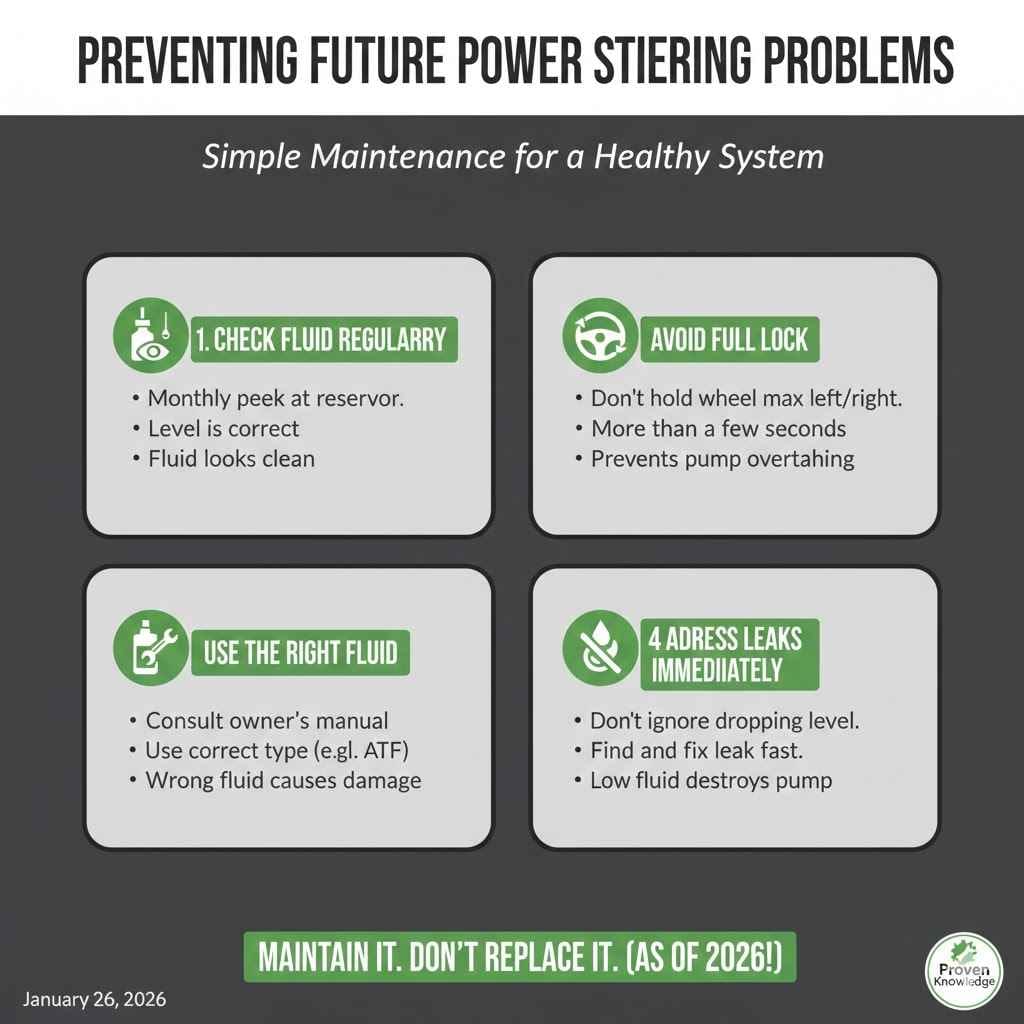
- Check Your Fluid Regularly: Once a month, take a quick peek at the power steering fluid reservoir. Make sure the level is correct and the fluid looks clean.
- Don’t Hold the Wheel at Full Lock: Avoid holding the steering wheel turned all the way to the left or right for more than a few seconds. This puts maximum strain on the pump and can cause it to overheat.
- Use the Right Fluid: Always use the type of power steering fluid recommended in your vehicle’s owner’s manual. Using the wrong kind can damage the system. Some modern cars use automatic transmission fluid (ATF), so it’s important to be sure.
- Address Leaks Immediately: If you notice the fluid level dropping, find and fix the leak right away. Running the pump on low fluid is the fastest way to destroy it.
Frequently Asked Questions (FAQ)
Can a bad power steering pump cause a car to shake?
Yes, it can. If the pump’s pulley is damaged or bent, or if the pump is failing internally, it can cause a vibration that you might feel through the steering wheel or even the whole car. This shaking can also be caused by a worn serpentine belt that is wobbling because of the bad pump.
Is it safe to drive with a failing power steering pump?
It is not recommended. While you can technically drive without power steering (it will just be very hard to turn), the main danger is the risk of the pump seizing completely. If the pump seizes, it can shred the serpentine belt, which will cause your alternator to stop charging the battery and your water pump to stop cooling the engine. This can leave you stranded and cause serious engine damage.
How long does a power steering pump last?
Most power steering pumps are designed to last for a long time, often over 100,000 miles. However, their lifespan can be shortened by fluid leaks, contaminated fluid, or consistently driving with low fluid levels. Regular maintenance is key to helping it last.
Can I just add fluid if it’s low and noisy?
Adding fluid can be a temporary fix if the only problem is a low fluid level. If the pump is whining because it’s starved for fluid, topping it off might quiet it down. However, you need to ask yourself: where did the fluid go? It almost always means you have a leak that needs to be repaired. Ignoring the leak will just lead to the problem coming back.
What does bad power steering fluid look like?
Healthy power steering fluid is clear or has a reddish tint. Bad fluid will look dark brown or black. It may also look foamy or bubbly if air has gotten into the system, or you might see tiny, shiny metal flakes in it, which is a sign of severe internal pump wear.
Can a power steering problem drain my battery?
Not directly. The power steering pump itself is mechanical and doesn’t draw electrical power. However, if the failing pump seizes and breaks the serpentine belt, the belt will no longer be able to turn the alternator. The alternator is what charges your battery, so without it, your car will only run until the battery dies, which won’t be very long.
Your Next Steps for a Healthy Car
Finding out that a failing power steering pump can stall your engine can be a surprise, but it also gives you a clear path forward. You now know the warning signs to look for—the whining noises, the stiff steering, and the dreaded stall at low speeds. You’ve learned how a simple part can have such a big impact on your engine’s performance through the serpentine belt.
Whether you decide to tackle the repair yourself or hand it over to a trusted mechanic, you’re now armed with the knowledge to make a confident decision. Don’t ignore the warning signs. Addressing a failing power steering pump early not only prevents the stress of a sudden stall but also protects other critical parts of your engine.
By taking these simple steps, you’re not just fixing a problem; you’re taking control of your car’s health and ensuring it stays reliable for years to come. Happy driving!