

Figuring out the Best Time to Cycle in Vietnam: Ultimate Guide can feel a bit tricky when you first start planning. Vietnam has a long, skinny shape, which means the weather can be quite different from north to south. This makes it hard to pick one perfect time that works for the whole country.
But don’t worry! We’ll walk you through it step-by-step. We’ll look at the best months for cycling so you can have a fantastic trip.
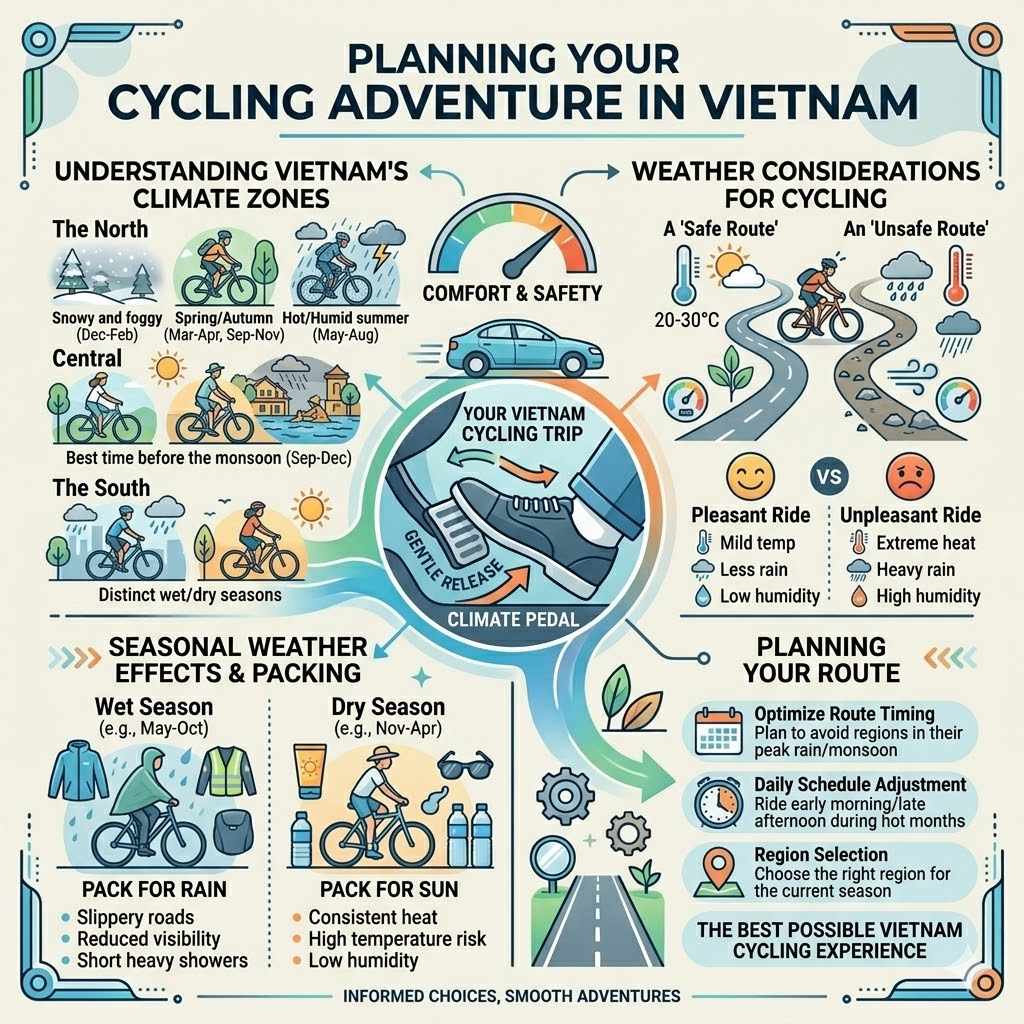
Planning Your Cycling Adventure in Vietnam
Choosing when to cycle in Vietnam is key to a great experience. This section helps you understand why picking the right month matters. It covers how weather impacts your ride and what to expect in different regions.
We want you to have the best possible cycling trip.
Understanding Vietnam’s Climate Zones
Vietnam has three main climate zones: North, Central, and South. Each has its own weather patterns throughout the year. This means the ideal cycling time can vary.
- The North experiences distinct seasons. Winters are cool and can be foggy, especially from December to February. Summers, from May to August, are hot and humid with heavy rainfall, often leading to typhoons.
- Spring (March-April) and Autumn (September-November) offer the most pleasant weather here, with moderate temperatures and less rain. Cyclists often prefer these shoulder seasons.
- Central Vietnam, home to popular destinations like Hue and Hoi An, has a slightly different pattern. It’s generally hot and dry from January to August. The monsoon season here typically runs from September to December, bringing significant rainfall and potential flooding.
- Therefore, the dry months before the monsoon hit are often considered the best time for cycling tours in this region.
- The South, including Ho Chi Minh City and the Mekong Delta, has a more consistent tropical climate. There’s a distinct wet season from May to October, characterized by short, heavy downpours, usually in the afternoon. The dry season, from November to April, is generally warm and less humid.
Many cyclists find the dry season more comfortable for riding, though the rain showers in the wet season can be refreshing.
Seasonal Weather Considerations for Cycling
Weather plays a huge role in cycling comfort and safety. Extreme heat, heavy rain, or strong winds can make your ride unpleasant or even dangerous. Understanding the seasonal weather helps you pack appropriately and plan your route.
- Temperature: Vietnam can get very hot, especially in the summer months. High temperatures can lead to dehydration and heat exhaustion. Riding during the cooler parts of the day, like early morning or late afternoon, is essential during hot periods.
- Many cyclists aim for months where temperatures are mild, typically between 20-30 degrees Celsius.
- Rainfall: While rain can be a welcome relief from heat, heavy downpours can create slippery roads, reduce visibility, and cause delays. In areas prone to flooding, like the Mekong Delta, heavy rain can make cycling impossible. Choosing months with less rainfall significantly improves the cycling experience and reduces the risk of disruption.
- Humidity: High humidity can make the heat feel much worse and lead to discomfort. Even if temperatures aren’t extremely high, high humidity can make cycling feel more strenuous. The dry season generally offers lower humidity levels, making it more comfortable for long rides.
The Best Time to Cycle in Vietnam Ultimate Guide
This is the core of our guide. Here we pinpoint the optimal months for cycling across Vietnam, considering all regions. We break it down to help you make the best decision for your trip.
Overall Best Months for Cycling Vietnam
When considering the Best Time to Cycle in Vietnam: Ultimate Guide, several months stand out as generally favorable across the country. These months often strike a balance between comfortable temperatures, lower humidity, and reduced rainfall.
- February to April: This period is often considered ideal. In the North, spring is blooming, and temperatures are mild. Central Vietnam is dry and pleasant before the intense heat of summer.
- The South is also entering its drier, less humid phase. This window provides a great climate for exploring diverse landscapes without extreme weather challenges.
- September to November: This autumn period offers another sweet spot. The North typically experiences its most beautiful weather with clear skies and moderate temperatures. Central Vietnam is just beginning its rainy season, but early September can still be good, and late November is often clear and pleasant.
The South is transitioning from its wet season to its dry season, offering manageable conditions.
Regional Recommendations for Cycling
While general periods are good, specific regional needs might influence your choice. Fine-tuning your plans based on local weather patterns ensures a smoother ride.
- Northern Vietnam Cycling
For the North, including destinations like Hanoi, Sapa, and Ha Long Bay, spring (March-April) and autumn (September-October) are highly recommended.
Spring (March-April): Temperatures are mild, ranging from 18°C to 25°C. The landscape is green and fresh.This is perfect for cycling through rice terraces and mountainous regions.
Autumn (September-October): Similar to spring, this period offers pleasant temperatures and low humidity. The skies are often clear, providing excellent visibility for scenic rides.Avoid the peak of summer (June-August) due to heat and rain, and the colder, foggier winter months (December-February). - Central Vietnam Cycling
Central Vietnam, from the Hai Van Pass to Hoi An, has a drier climate for a longer stretch.
January to August: This is the dry season for Central Vietnam. Temperatures can be high, especially from May to August, but rain is minimal.Early in this period (January-April) offers the best combination of warmth and manageable temperatures, ideal for coastal routes and historical sites.
September to December: This is the rainy season, with a high risk of typhoons and flooding, particularly from October to December. Cycling during these months is generally not advised for comfort and safety. - Southern Vietnam Cycling
The South, including the Mekong Delta and Ho Chi Minh City, is best cycled during its dry season.
November to April: This is the prime time. Temperatures are warm but humidity is lower than in the wet season.Expect average temperatures between 25°C and 32°C. This period is perfect for exploring the vibrant Mekong Delta and its waterways by bike.
May to October: This is the wet season.While rain showers are often short and intense, they can disrupt cycling plans and make roads muddy. However, if you don’t mind occasional rain, the landscapes are lush and green, and there are fewer tourists.
When to Avoid Cycling in Vietnam
Knowing when not to cycle is as important as knowing when to go. Avoiding peak harsh weather conditions ensures a safer and more enjoyable trip.
- Peak Rainy Seasons: In Central Vietnam, October to December is peak monsoon season. Heavy rains and potential flooding make cycling extremely difficult and hazardous. Cyclists should plan their trips to avoid this period altogether or be prepared for significant disruptions.
- Extreme Heat and Humidity: The hottest months in Vietnam are typically June, July, and August. Combined with high humidity, these months can be very draining for cyclists, especially those unaccustomed to such conditions. Heatstroke and dehydration are serious risks during this time.
- Northern Winters: While not as severe as some other countries, Northern Vietnam can experience cold temperatures and persistent fog from December to February. This can make cycling uncomfortable and reduce visibility. For those seeking pleasant riding weather, these months are less ideal.
Preparing for Your Vietnam Cycling Tour
Once you have your ideal dates, proper preparation is essential. This includes your gear, fitness, and understanding local conditions.
Essential Gear for Vietnam Cycling
Having the right equipment can make a huge difference in your comfort and safety. Consider the climate and terrain you’ll be encountering.
- Bike and Maintenance Tools: Ensure your bicycle is in excellent condition. Carry essential repair tools like a multi-tool, tire levers, spare tubes, and a pump. Understanding basic bike maintenance will save you time and trouble on the road.
- For longer tours, consider a bike that is robust and comfortable for long distances.
- Clothing: Pack lightweight, moisture-wicking clothing. Cycling shorts and jerseys are a must. Include rain gear, even in the dry season, as sudden showers can occur.
- A good windbreaker is also useful. Sun protection, like long-sleeved shirts and hats, is vital.
- Hydration and Nutrition: Water bottles or a hydration pack are essential. Electrolyte supplements can help replace lost salts during strenuous rides. Carry energy bars, gels, or other easily accessible snacks to keep your energy levels up between meals.
- Safety Equipment: A good helmet is non-negotiable. Lights for your bike, both front and rear, are important, especially if you anticipate riding in low-light conditions. A first-aid kit with personal medications is also recommended.
Fitness and Training
Cycling in Vietnam can involve varied terrain, from flat coastal roads to hilly mountain passes. Being physically prepared will enhance your enjoyment.
- Build Endurance: Gradually increase your cycling distance in the weeks and months leading up to your trip. Aim for longer rides to build stamina.
- Hill Training: If your route includes mountainous areas, incorporate hill training into your routine. This will help you tackle inclines more comfortably.
- Heat Acclimation: If you are cycling during a warm period, try to train in similar conditions to get your body used to the heat and humidity.
Cultural and Practical Tips
Beyond the physical aspects, being aware of local customs and practicalities will make your trip smoother.
- Respect Local Customs: Dress modestly when not cycling, especially when visiting temples or religious sites. Learn a few basic Vietnamese phrases; locals appreciate the effort.
- Stay Hydrated: Always drink plenty of water. Be mindful of where you refill your bottles, opting for sealed bottled water or purified sources.
- Traffic Awareness: Vietnamese traffic can be chaotic. Always be alert and ride defensively. If possible, cycle on quieter roads or during off-peak hours.
- Food Safety: Eat at reputable places and be cautious with street food if you have a sensitive stomach. Stick to freshly cooked meals.
Case Studies and Real-Life Scenarios
Looking at how others have experienced cycling in Vietnam can offer valuable insights. These examples highlight the importance of timing and preparation.
Scenario 1: The Disrupted Mekong Delta Tour
A group of cyclists planned a two-week tour of the Mekong Delta in late September. They chose this time hoping for fewer crowds. However, they encountered continuous heavy rain for most of their trip.
Roads became muddy, and several ferry crossings were suspended due to high water levels. They had to cut their tour short, spending a lot of time waiting for weather improvements and rerouting. This experience underscored the unpredictability of the shoulder season in that region and the risks of not planning for potential heavy rainfall.
Scenario 2: A Perfect Northern Highlands Expedition
Another cyclist, Sarah, visited Northern Vietnam in early October for a week-long cycling trip through Ha Giang province. She experienced crisp, clear days with temperatures around 20-22°C. The autumn foliage was stunning, and the skies were a brilliant blue, offering incredible views of the mountain passes.
She encountered minimal rain and enjoyed pleasant riding conditions. Her experience highlighted how well-chosen timing in the North can lead to breathtaking scenery and comfortable cycling.
Scenario 3: Central Coast Cycling Success
Mark and his partner decided to cycle from Da Nang to Nha Trang in late April. They enjoyed warm, sunny days with temperatures averaging 28°C. The humidity was moderate, and they encountered only brief, light showers in the late afternoons, which were easy to manage.
They found the coastal roads beautiful and relatively quiet, making for an enjoyable ride with ample opportunities to stop and explore. This shows the benefit of targeting the end of the dry season in Central Vietnam.

Frequently Asked Questions
Question: What is the absolute best month to cycle across all of Vietnam
Answer: There isn’t one single month that is perfect for cycling the entire length of Vietnam due to its varied climate zones. However, February to April and September to November are generally the most favorable periods, offering a balance of good weather across most regions.
Question: Is it too hot to cycle in Vietnam during July and August
Answer: Yes, July and August are typically the hottest and most humid months in Vietnam, especially in the North and Central regions. While possible, cycling during this time can be very challenging and increase the risk of heat-related illnesses. It’s advisable to cycle during cooler months if possible.
Question: Can I cycle in Vietnam during the rainy season
Answer: Cycling during the rainy season is possible but can be challenging. Expect heavy downpours, reduced visibility, muddy roads, and potential flooding, particularly in the Mekong Delta. If you choose to cycle then, be prepared for delays and altered plans.
Many prefer to avoid the peak of the rainy season.
Question: What are the biggest weather risks for cyclists in Vietnam
Answer: The biggest risks include extreme heat and humidity, heavy monsoon rains, potential typhoons in the Central region, and fog in the North during winter. These conditions can impact comfort, safety, and the feasibility of cycling routes.
Question: How can I find quieter cycling routes in Vietnam
Answer: Opting for smaller towns and rural areas away from major tourist hubs can lead to quieter routes. Cycling during weekdays rather than weekends can also mean less traffic. Local guides can often suggest less-traveled paths, and detailed maps can help identify secondary roads.
Summary
The Best Time to Cycle in Vietnam: Ultimate Guide involves balancing regional climates. Aim for spring or autumn for a pleasant experience across most of the country. Prepare your gear and fitness for varied conditions.
By choosing your dates wisely and planning ahead, you’ll ensure a fantastic cycling adventure in Vietnam.