
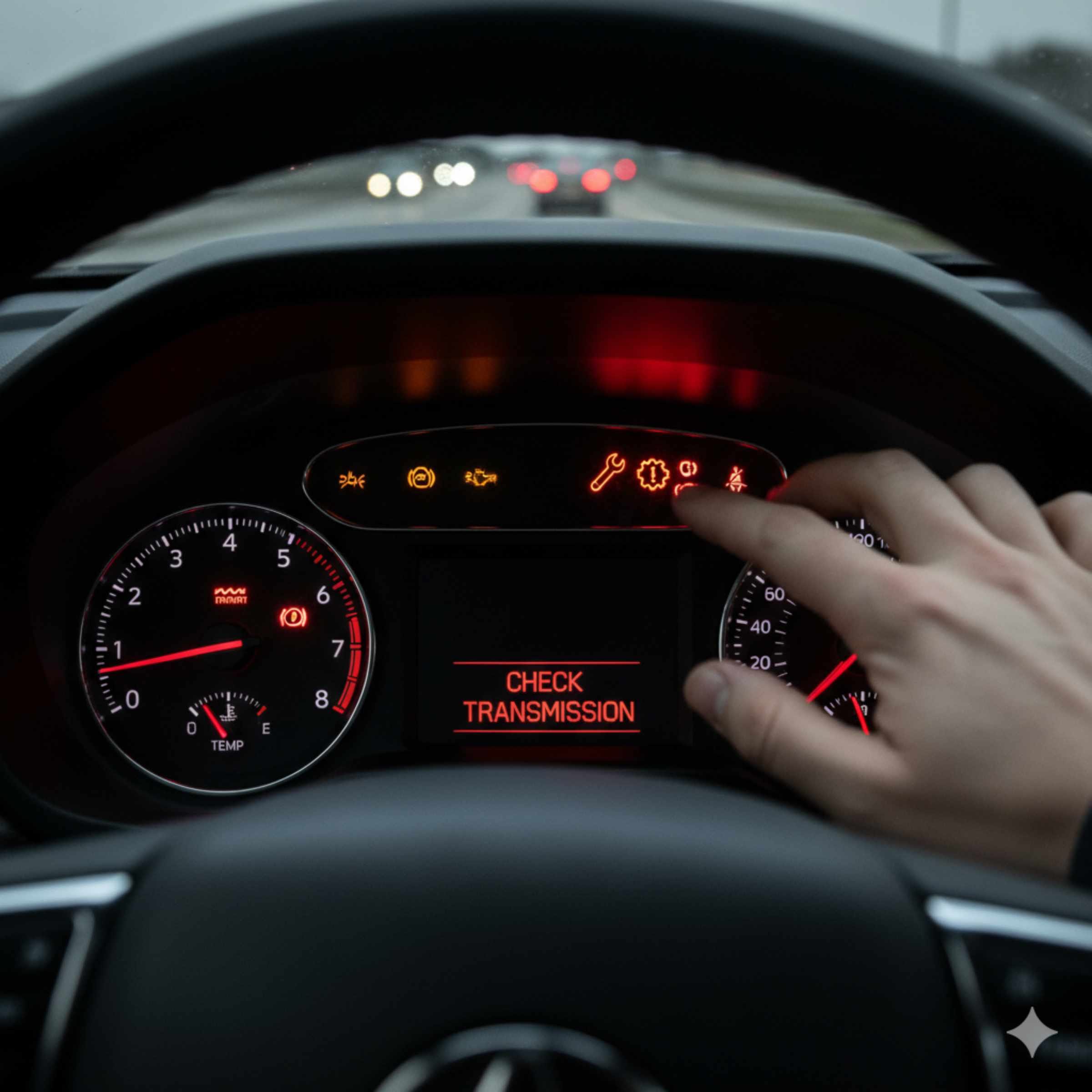
If you suspect a bad transmission, look for slipping gears, strange grinding noises, delays when shifting, burnt smells, or leaking red/brown fluid. These are the most essential signs you need a professional check immediately to prevent further damage and costly repairs.
Hearing a new, scary noise from your car can send anyone straight to the panic button. That worry is doubled when the sound seems to come from the transmission—the powerhouse that keeps your wheels moving smoothly. Transmission trouble is frustrating because it stops you in your tracks. But don’t worry! Knowing what to listen for, feel for, and look at can help you catch the problem early.
As your guide in all things automotive, I’m Dustin Hall. We are going to break down these signs into simple, easy-to-spot clues. You don’t need a mechanic’s toolbox to notice these things. By learning these essentials, you gain confidence and can talk to your repair shop knowing exactly what’s happening under the hood. Let’s explore the key warning signs that tell you your transmission needs attention.
The Essential Warning Signs of a Failing Transmission
Your car’s transmission works hard, dealing with tons of friction and heat every time you drive. Over time, wear and tear happen. While some small hiccups are normal, major changes signal trouble. Think of these signs as your car sending you little distress signals. Recognizing them quickly can save you from a complete breakdown on the side of the road.
We’ll look at these signs based on what you see, what you hear, and how the car feels when you drive it. Keep your safety in mind: If you notice a severe issue, pull over somewhere safe immediately.
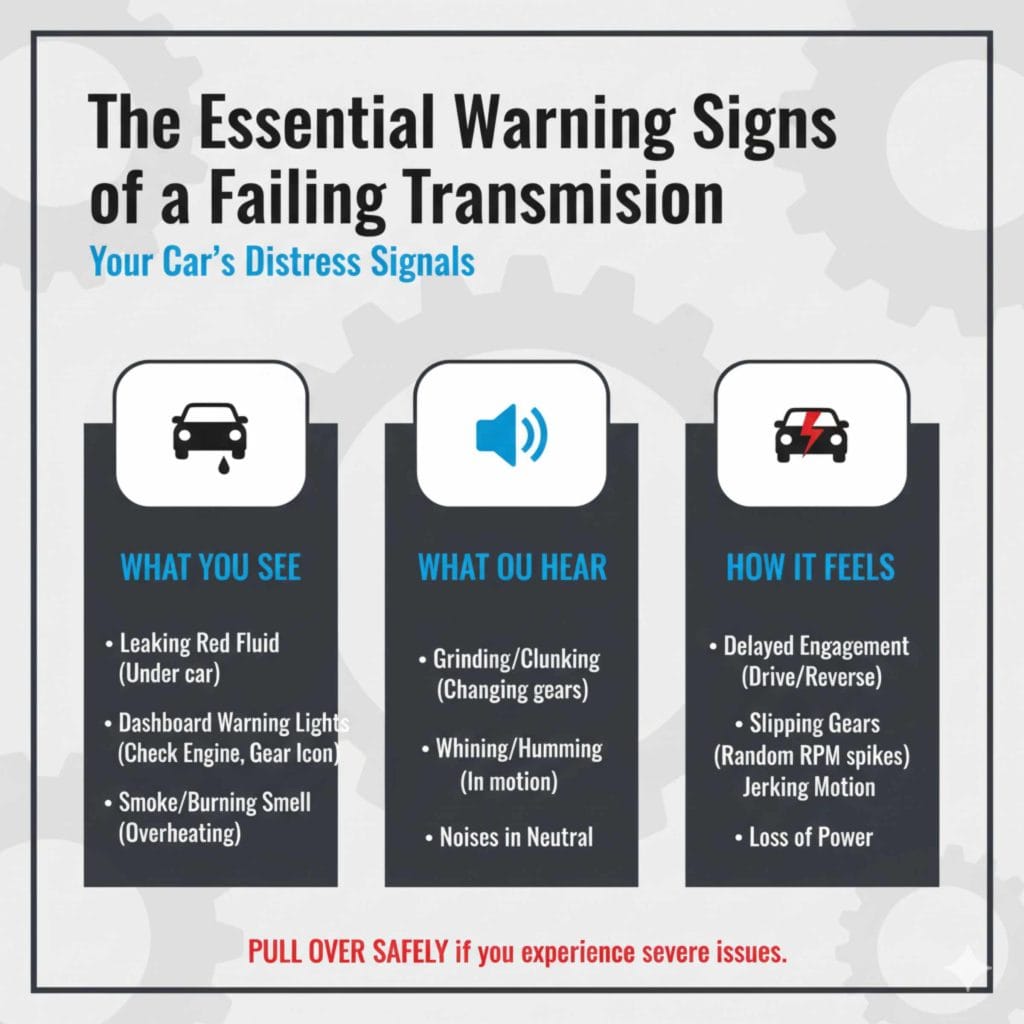
Sign 1: Strange Noises—What You Hear in Your Cabin
The sounds your car makes are often the first clue that something is wrong. A healthy transmission should operate quietly. When noises start appearing, it means internal parts are likely rubbing, grinding, or failing to engage properly.
Grinding or Clunking Sounds
This is a classic red flag, especially when shifting gears. If you drive a manual transmission, grinding usually means the synchronizers (parts that help gears mesh smoothly) are wearing out. For automatic transmissions, a loud “clunk” when shifting from Park to Drive or Reverse often points to internal hydraulic issues or worn-out mounts.
- Grinding During Shifts: Gear teeth aren’t lining up correctly.
- Clunking When Starting or Stopping: Something internal is loose or hitting hard due to pressure problems.
- Whining or Humming: This often relates to low fluid levels leading to metal parts not running smoothly in oil.
Buzzing or Whirring Noises
A constant, high-pitched whine or whirring sound that changes pitch as you speed up or slow down usually points directly to low transmission fluid or issues with the torque converter (the fluid coupling that connects the engine to the transmission). If the noise happens only when the car is in neutral, it might stem from the bearings.
Sign 2: Fluid Leaks—What You See Under the Car
Transmission fluid is the lifeblood of your transmission. It lubricates moving parts, cools the system, and provides the hydraulic pressure needed for shifting. A leak means less protection, leading quickly to overheating and major failure. Checking your fluid level and appearance is one of the easiest checks you can perform.
Where to Look for Leaks
Transmission fluid leaks are usually dark red or brownish-red. They tend to be found beneath the middle or front section of your car, near where the engine meets the transmission casing. Brake fluid and coolant can sometimes be confused with transmission fluid, so knowing the difference is important:
| Fluid Type | Color (When New) | Consistency / Smell | Location of Leak |
|---|---|---|---|
| Transmission Fluid (ATF) | Bright Red | Slightly oily, thin | Middle/front of the car |
| Engine Oil | Amber/Brown | Thicker, smells distinctively like oil | Front/Engine area |
| Coolant (Antifreeze) | Green, Pink, or Orange | Watery or slightly slimy, often sweet-smelling | Front, near radiator/hoses |
Checking the Fluid Level and Condition
If you see spots on your driveway, pull out the dipstick (if your car has one—many modern cars do not have user-serviceable dipsticks and require a shop visit). Checking the fluid condition is crucial:
- Check the Level: Always check the fluid when the engine is warm and running, following your owner’s manual instructions precisely. Low levels cause overheating quickly.
- Check the Color: Fresh fluid is bright red. If it looks dark brown or black, it means it is old, dirty, and has been overheated.
- Check the Smell: Burnt-smelling fluid is a huge warning sign. This smell means the clutches inside the transmission are slipping and overheating rapidly. If it smells burnt, stop driving the car immediately.
Sign 3: Performance Issues—How the Car Feels on the Road
This category covers all the things you feel through the steering wheel, gas pedal, or seat while driving. These shifts in performance are difficult to ignore.
Gear Slippage
This is perhaps the most concerning symptom. Gear slippage occurs when you press the gas pedal, the engine RPMs rise as if the car should be accelerating, but the car hesitates or stays in the current gear before finally catching. It feels like a pause or a sudden jump.
Slippage means the transmission isn’t holding one gear before moving to the next. This can be caused by worn bands, low fluid pressure, or internal mechanical failure. It puts incredible stress on all components.
Delayed Engagement
When you shift from Park to Drive (or Reverse), there should be an immediate, though slight, response. If there is a noticeable lag—say, a three or four-second delay before the gear finally engages—it often points toward hydraulic issues. The transmission needs proper fluid pressure to select a gear, and a delay means that pressure isn’t building fast enough.
Rough or Hard Shifting
A healthy automatic transmission shifts so smoothly you barely notice it. If you feel a harsh “thunk,” “slam,” or noticeable jerk when the car shifts gears, the transmission control unit (TCU) or internal solenoids (electronic valves controlling fluid flow) might be failing. For manuals, overly stiff or notchy shifting can mean worn linkages or clutch issues.
Sign 4: Dashboard Indicators and Warning Lights
Modern vehicles are equipped with sophisticated computers that monitor everything, including the transmission health. Ignoring a warning light is never advised, especially when dealing with transmission components.
The Check Engine Light (CEL)
While the Check Engine Light usually signals an emissions problem, it is frequently triggered when the Powertrain Control Module (PCM) detects an issue within the transmission’s electronic control system. A common code linked to this is the P0700 Diagnostic Trouble Code (DTC). This code often means there is a general transmission-related fault being reported, and the next step is usually diagnosing the specific secondary code it is reporting.
The Transmission Temperature Light
Some cars, especially trucks or those designed for heavy towing, have a dedicated transmission temperature warning light (often looks like a gear with a thermometer). This light means the fluid is dangerously hot—a direct precursor to total transmission burnout. If this comes on, pull over safely and let the car cool down completely. Do not keep driving.
Diving Deeper: The Role of the Transmission Control Module (TCM)
For many modern automatic transmissions, the computer brain running the show is the Transmission Control Module (TCM), which works closely with the main engine computer (PCM). A failure here can mimic mechanical failure, or vice versa.
How to Know If You Have A Bad Transmission Control Module (P0700)
When diagnosing electronic transmission faults, technicians look for specific codes. As mentioned, P0700 is the general alert. If you scan your car and see P0700, the scanner will usually report another code alongside it (like P0750 for a solenoid issue). Here is how TCM issues manifest:
- Inconsistent Shifting: The car skips gears randomly or won’t shift until you completely let off the gas pedal.
- Limp Mode: The car enters “limp mode,” where it locks itself into a single gear (usually second or third) to prevent further damage. This is a protective measure, often triggered by a TCM fault.
- No Response to Shifter: You move the shifter, but nothing happens, even though the engine runs fine. This suggests the TCM isn’t sending the signal to engage.
If you are checking the fluid, gears, and noise levels, and everything seems okay mechanically, an electronic scan tool is essential to determine if the TCM or its associated sensors/solenoids are the true culprit behind the transmission problems.
DIY Inspection Checklist: What You Can Safely Check First
You don’t need to be an expert to perform a basic diagnostic check at home. These simple steps can help you gather crucial information before calling the shop, saving you diagnostic time and money.
Tools You Might Need (For Fluid Check Only):
- Owner’s Manual (Crucial for checking fluid procedure!)
- Rags or paper towels (for wiping dipsticks)
- Flashlight
- Safety glasses
Step-by-Step Home Inspection Guide:
- Park Safely: Park the car on a level surface. Engage the parking brake.
- Warm Up the Car: Run the engine for about 10 minutes to get the transmission fluid up to operating temperature (this is critical for an accurate automatic fluid check).
- Locate the Dipstick: Consult your manual to find where the transmission dipstick is located (it may be hidden or absent in newer models).
- Check Level and Color: Slowly pull the stick out, wipe it clean, reinsert it fully, and pull it out again to read the level. Note the color and smell as described above.
- Look for Leaks: Shine a flashlight under the car, particularly where the engine meets the transmission housing and around the transmission pan bolts. Note any drips or wet spots.
- Test Shifting: While stopped and safe, gently shift through all gears (P-R-N-D), noting any delays or harshness. Pay attention to how long it takes to go from Park to Drive.
When to Stop Driving Immediately
Not all transmission symptoms require an immediate stop, but some indicate that continued driving will destroy the unit entirely. Know these boundary lines:
| Symptom Severity | Action Required | Why? |
|---|---|---|
| High Severity (Stop Now) | Pull over immediately and turn off the engine. Call for a tow. | Burnt fluid smell, complete inability to move (stuck in gear or slipping constantly), bright red warning light on dash. Driving risks catastrophic failure. |
| Medium Severity (Drive to Shop) | Drive cautiously to the nearest trusted local repair shop. Avoid highways. | Hard shifts, noticeable grinding when accelerating, slow engagement between Park and Drive. These need attention soon. |
| Low Severity (Monitor Closely) | Schedule an appointment for the next service rotation, but monitor daily. | Slight hesitation on bumps, very minor whirring that goes away after warming up. |
Understanding the Differences: Manual vs. Automatic Transmission Signs
While the core issue is usually related to lubrication or internal wear, how the signs present themselves can differ based on your transmission type. Understanding this aids in accurate diagnosis.
For Automatic Transmissions (AT):
Automatics rely heavily on fluid pressure and electronics. Therefore, the most common failure indicators are:
- Fluid leaks (since they use hydraulic pressure).
- Clunky or delayed shifting.
- Dashboard warning lights (due to the TCM).
For Manual Transmissions (MT):
Manuals rely more on direct driver input and mechanical linkage. Common signs include:
- Difficulty putting the car into gear when stopped.
- Grinding noises during shifts (synchro wear).
- Clutch problems (though this is technically separate, it’s often confused with transmission issues).
- Inability to stay in gear while driving (worn gear selection forks).
If you have a manual and feel like the clutch pedal is spongy or low to the ground, that’s a clutch system issue, not necessarily the transmission itself, though sometimes they get repaired together.
Preventative Care: Protecting Your Investment
The absolute best way to avoid the panic associated with a bad transmission is through preventative maintenance. Most major transmission failures in vehicles under 150,000 miles are due to neglected fluid changes.
Fluid Service Intervals
Manufacturers have drastically extended recommended service intervals, but this is often based on “ideal” driving conditions, which most of us don’t meet. Ideal driving means no towing, no extreme heat, and short-distance city driving. If you drive in any stressful condition, service sooner.
For most modern automatics, a Transmission Fluid and Filter Exchange (not just a drain and fill) should be scheduled between 60,000 and 90,000 miles. For heavy-use vehicles, consider 30,000 to 50,000 miles. Consult reliable service guides, such as those provided by the Insurance Institute for Highway Safety (IIHS) safety resource center for broader vehicle maintenance benchmarks.
Avoid Overheating
Heat is the number one killer of automatic transmissions. Ensure your transmission cooler (often integrated with the radiator) is functioning well and free of leaks or blockages. If you frequently tow heavy trailers, consider adding an external, auxiliary transmission cooler.

Frequently Asked Questions (FAQ) for Beginners
Q1: Can I fix a bad transmission myself?
A: For most drivers, major internal transmission repair is beyond the scope of simple DIY. However, you can safely check the fluid, look for leaks, and reset basic electronic codes if you have a scanner. If you suspect internal damage, replacement or professional rebuilding is typically needed.
Q2: How much does it cost to fix a transmission when it starts failing?
A: Costs vary wildly based on the vehicle and the problem. A simple solenoid replacement or fluid flush might cost a few hundred dollars. However, a full transmission rebuild or replacement can easily range from $3,000 to $6,000 or more. Catching issues early keeps repair costs down.
Q3: My car is slipping gears, but the check engine light is NOT on. Should I still worry?
A: Yes, absolutely. Gear slippage is a serious mechanical symptom, even without an illuminated dashboard light. Electrical codes (like those related to the P0700 code) often trigger the light, but severe internal mechanical issues might not immediately set an electronic code.
Q4: What is the difference between simply topping off the fluid versus getting a transmission flush?
A: Topping off only replaces the fluid that has leaked out—it doesn’t clean the system. A transmission flush (or exchange) pumps out the majority of the old, dirty fluid and replaces it entirely, often including a new filter. For a failing transmission, a careful drain-and-fill (which swaps less fluid but is gentler) is often recommended over a pressurized flush.
Q5: If I ignore the signs, how long before my transmission dies completely?
A: This depends on the severity. If you smell burnt fluid or are slippng severely, you might only have a few hundred miles before the core components weld themselves together, turning a rebuild into a total replacement. Small issues can sometimes go months, but it’s a huge risk.
Q6: Why does my transmission feel rough right after I start my car, but gets better as I drive?
A: This points strongly toward a lubrication or pressure issue that improves once the fluid heats up and thins out slightly, allowing the internal components (like valve bodies or solenoids) to move more freely. Low fluid level is a common cause for this warm-up hesitation.
Conclusion: Listen Early, Act Smart, Save Big
Your transmission doesn’t usually fail without warning—it talks to you first. Slipping gears, strange noises, fluid leaks, delays in shifting, warning lights, or a burnt smell are all your vehicle’s way of asking for help. The key takeaway from this guide is simple: early awareness leads to cheaper, safer outcomes.
You don’t need to be a mechanic to protect your transmission. By paying attention to what you hear, feel, and see—and by performing basic checks like fluid inspection—you put yourself in control. Whether the issue is mechanical wear, low fluid, or an electronic fault like a failing Transmission Control Module (TCM), catching it early can mean the difference between a minor repair and a full transmission replacement.
If symptoms are severe, stop driving and get professional help immediately. If they’re mild, don’t ignore them—schedule an inspection. Preventative maintenance, especially regular fluid service and avoiding overheating, remains the most effective way to extend transmission life!