
Quick Summary: Carbon ceramic brakes are usually NOT worth the high cost for everyday drivers; standard brakes offer excellent performance and value for daily use. They shine only in extreme, high-performance racing or specialized driving where heat management is critical.
Are Carbon Ceramic Brakes Worth It: Essential Value for Your Daily Drive
When you look at a high-performance car, you often see huge, impressive-looking brakes. Sometimes, the advertisement mentions “Carbon Ceramic Brakes” (CCBs). You hear they are amazing, but they also cost a fortune to replace. This leaves many drivers wondering: are carbon ceramic brakes worth it for my daily commute? It’s a tricky question because they sound high-tech, but that tech might not help you stop for coffee any better than your current brakes.
Don’t worry if the technology sounds confusing. You don’t need to be a mechanic to figure out if an upgrade makes sense for your wallet and your driving style. We’re going to break down exactly what CCBs are, how they compare to the trusted steel brakes you likely already have, and help you decide if that hefty price tag actually brings you essential value.
Understanding the Basics: What Are Carbon Ceramic Brakes?
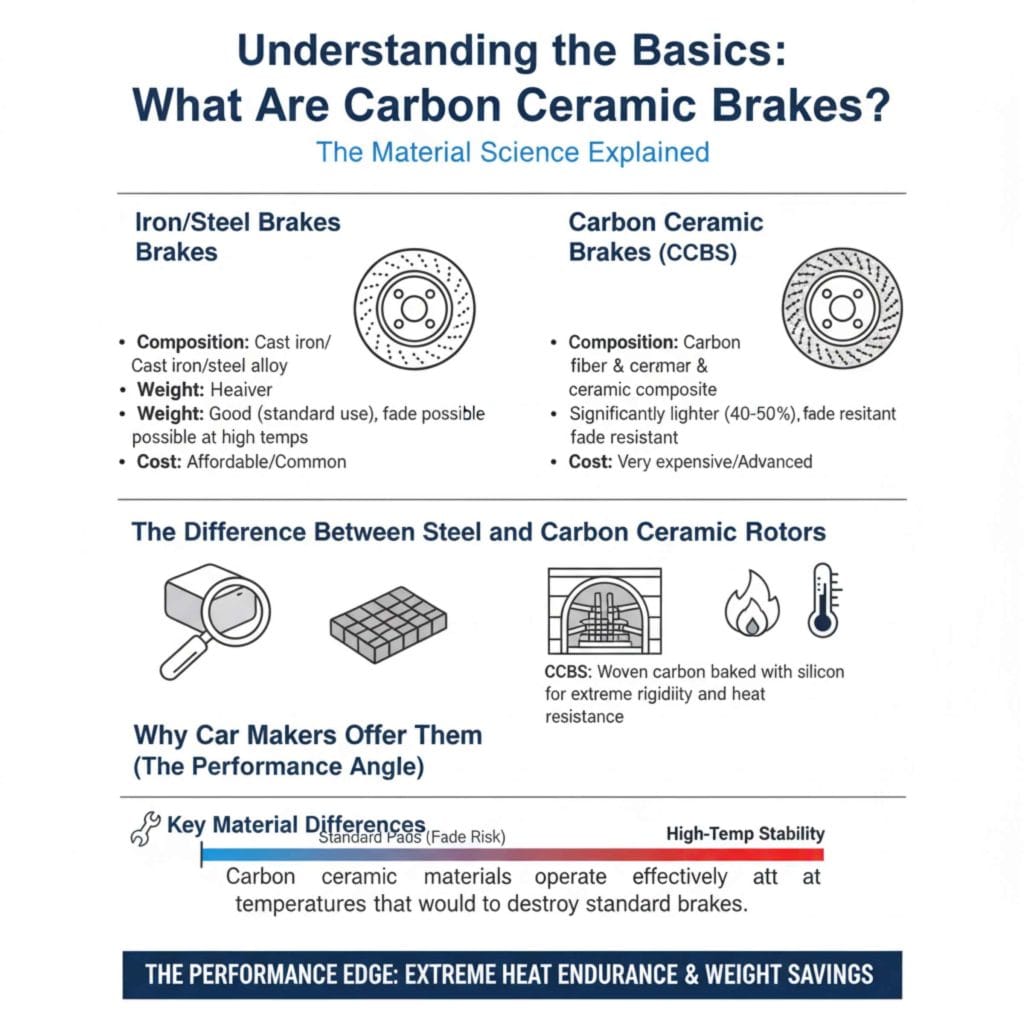
To know if something is worth buying, we first need to know what it is. Think of brakes as the part of your car that turns motion into heat through friction. Standard brakes use a steel rotor and brake pads. Carbon ceramic brakes replace that heavy steel rotor with something much more complex and lighter.
The Difference Between Steel and Carbon Ceramic Rotors
Your car probably has Iron/Steel Brakes. These are the reliable workhorses of the braking world. They are affordable, easy to find parts for, and work great in most weather conditions.
Carbon Ceramic Brakes (CCBs) are a highly advanced material. They are made from carbon fiber woven together and baked under intense heat with silicon to create a very hard, lightweight, and heat-resistant composite material. This material isn’t just painted on; it is the rotor.
Key Material Differences
- Composition: Steel rotors are cast iron; CCBs are a carbon fiber and ceramic composite.
- Weight: CCBs are significantly lighter—sometimes 40% to 50% lighter than an equivalent steel rotor.
- Heat Tolerance: This is where CCBs shine. They can handle much higher temperatures before they start to fade (lose braking power).
Why Car Makers Offer Them (The Performance Angle)
Why would anyone pay thousands extra for these brakes? It boils down to performance under extreme stress. In racing, high-speed driving, or continuous mountain driving, traditional steel brakes heat up so much that they struggle to slow the car down effectively. This is called “brake fade.”
CCBs resist this fading because they can operate at much higher temperatures—often over 1,800°F (almost 1,000°C)!
For a race car driver pushing the limits on a track day, this difference in heat management is the difference between winning and a scary moment at the braking zone. For a daily driver going to the grocery store, those high-temperature capabilities are almost never needed.
The Head-to-Head Showdown: CCBs vs. Standard Steel Brakes
Let’s compare these two systems side-by-side so you can see where your money is best spent. We are focusing on what matters to the average driver: stopping power today, cost tomorrow, and feel.
Stopping Power and Feel
In normal, cool, or warm driving conditions, properly maintained standard steel brakes provide fantastic stopping power. For everyday speeds around town or cruising on the highway, a modern, good quality set of steel brakes will stop your car just as quickly as CCBs.
Where CCBs feel different is under duress. If you are driving very fast and need to slow down hard repeatedly, the CCB pedal will feel firm and consistent. A steel brake setup might start feeling “spongy” as the heat builds up.
The Weight Advantage (Unsprung Mass)
The big technical advantage of CCBs is weight savings. These are considered “unsprung weight“—meaning weight that isn’t supported by the car’s suspension (like wheels, tires, and brakes). Reducing unsprung weight is great for handling.
When you reduce this weight, the suspension can react faster to bumps in the road. This means better handling, a smoother ride, and marginally better acceleration because the engine isn’t spinning a heavy rotor.
For a regular sedan driver, while technically true, the smoothness improvement from lighter brakes is usually impossible to feel compared to the improvements made by better tires or suspension tuning. You can learn more about vehicle dynamics and unsprung weight from automotive engineering resources like those found at many university transportation centers, such as those studying vehicle dynamics.
Brake Dust: A Cleanliness Factor
One immediate, visible benefit of CCBs is cleanliness. Standard brake pads (especially performance ones) wear down and create a lot of black, gritty dust that coats your expensive wheels. This means more frequent washing to keep your car looking sharp.
Carbon ceramic systems produce almost no visible brake dust. This is a massive plus for drivers who value keeping their wheels spotless with minimal effort.
A Comparison Table: CCB vs. Steel Brakes
Here is a simple way to visualize the trade-offs when deciding if carbon ceramic brakes are worth it for you:
| Feature | Standard Steel Brakes | Carbon Ceramic Brakes (CCBs) |
|---|---|---|
| Initial Cost (New Car or Conversion) | Low to Moderate | Extremely High (Often $10,000+ option) |
| Replacement Cost (Parts Only) | Low ($300 – $800 per axle) | Very High ($5,000 – $15,000+ per axle) |
| Brake Fade Resistance | Good, but susceptible under extreme, prolonged use. | Excellent; resists fade in almost all conditions. |
| Weight Reduction | None significant. | Significant reduction in unsprung mass. |
| Brake Dust Production | Moderate to High (Requires frequent wheel cleaning). | Virtually None (Keeps wheels cleaner). |
| Noise/Chirping | Minimal when maintained. | Can sometimes squeal or chirp when cold or lightly used. |
| Ideal Use Case | Daily driving, highway use, light spirited driving. | Track use, hypercars, extreme high-speed environments. |
The Hard Truth: Replacement Costs – Where CCBs Hurt the Wallet
This is often the deciding factor for the everyday driver. While the upfront cost of a car equipped with CCBs is high, the true shock comes when it’s time for replacement.
Understanding Rotor Longevity
In theory, CCBs are supposed to last much longer than steel rotors. Some manufacturers claim they can last 100,000 miles or more under normal driving conditions, far exceeding the 30,000–60,000 miles you might get from a great set of steel rotors.
However, that excellent longevity only applies if you drive like a normal person. If you take a car with factory CCBs to the racetrack for a few hard days, you can wear them out very quickly!
The Shocking Replacement Bill
When steel rotors wear out, you replace the pads and perhaps the rotors cheaply. When CCBs wear out, you often have to replace the entire rotor and often the specialized pads that go with them, usually through an authorized dealer because specialized equipment is needed.
Imagine paying $600 to replace your front brakes on a standard car. Now imagine paying $8,000 to $12,000 for the same job on a CCB setup. Let that sink in. For most drivers, an $8,000 maintenance item on a car that is otherwise normal is simply not financially justifiable.
This maintenance cost often dictates the resale value, too. A used supercar with worn-out CCBs might scare off potential buyers who know they have a massive repair bill looming.
When ARE Carbon Ceramic Brakes Worth the Extra Money?
So, if they aren’t worth it for me commuting, when are they worth the massive investment? Think of CCBs as specialized tools built for a specific job that the standard tool just can’t handle.
Here are the only scenarios where the investment arguably makes sense:
- Track Day Enthusiasts: If you frequently drive your car at its absolute limit on road courses, the reduced fade and consistent performance of CCBs provide a major safety and performance advantage.
- Hypercar Ownership: If you own a vehicle costing $300,000 or more, the brake system is generally matched to the extreme power level. In this case, CCBs are necessary equipment, not a luxury add-on.
- Zero Dust Preference (And Budget is No Issue): For a very wealthy daily driver who absolutely cannot stand brake dust on their high-end polished wheels, the cleanliness factor might be the primary “worth it” feature, assuming the replacement cost is negligible to them.
- Coastal/Extreme Environments: In extremely humid or corrosive environments, the ceramic aspect can sometimes offer better resistance to certain types of corrosion compared to raw iron, though this is a minor factor compared to performance.
Making the Smart Choice for Your Car
As a trusted automotive guide, my goal is to help you spend your money wisely on what actually impacts your driving experience now and down the road. For 99% of drivers, the answer to “are carbon ceramic brakes worth it?” is a clear No.
Factors to Consider Before Upgrading
Before you even think about spending money on CCBs, run through this simple checklist. If you answer “No” to more than one, stick to high-quality steel brakes.
- Do I regularly drive over 130 MPH?
- Do I take my car to dedicated racetracks multiple times a year?
- Is the immediate replacement cost of $5,000+ trivial to my budget?
- Am I using the car in situations where steel brakes demonstrably failed me due to overheating?
The Better Value Upgrade Path for Everyday Drivers
If you want better braking performance than stock but cannot justify carbon ceramics, there are fantastic, value-packed alternatives. These options give you great feel and stopping power without the astronomical life-cycle cost:
- High-Quality Pads: Switching to performance street-oriented brake pads (like those from Hawk, EBC, or Akebono) on your existing steel rotors drastically improves bite and fade resistance for spirited driving.
- Two-Piece Slotted/Drilled Rotors: These alloy steel rotors help dissipate heat and gas buildup slightly better than plain steel rotors and often cost less than high-end OEM replacement steel rotors.
- Performance Fluid: Upgrading your brake fluid to a high-temperature DOT 4 or DOT 5.1 fluid prevents your fluid from boiling under hard use, addressing one of the main causes of brake pedal fade. (Remember to flush this fluid regularly—check safety guidelines from trusted sources like the National Highway Traffic Safety Administration (NHTSA) for proper fluid handling.)
Final Verdict: Value is About Application
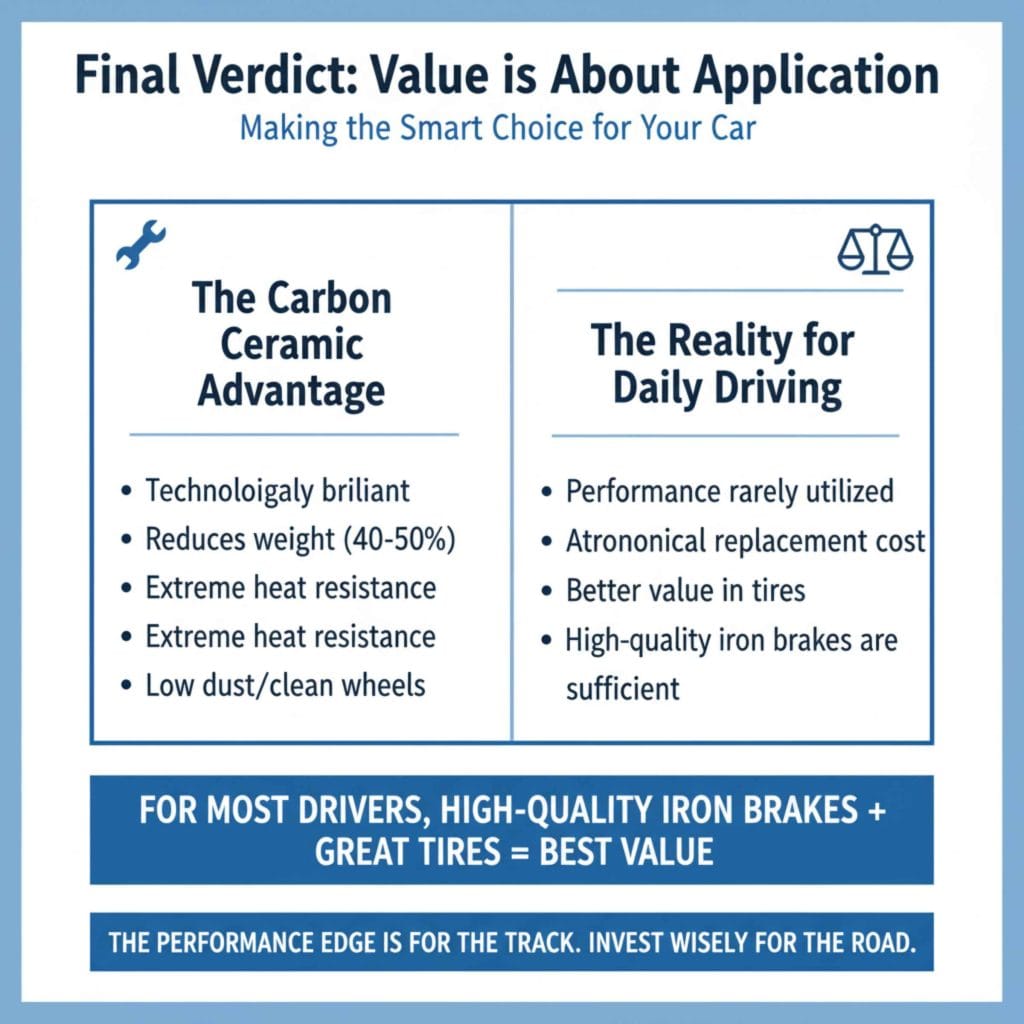
Carbon ceramic brakes are technologically brilliant. They reduce weight, resist heat better than anything else, and keep your wheels clean. They are the pinnacle of braking technology for extreme performance.
However, value is determined by need. For the vast majority of us who drive on public roads, the exceptional performance features of CCBs are never utilized. The cost saving associated with long service life is completely wiped out by the astronomical, non-negotiable replacement cost when they finally do wear out.
If you’re seeking reliable stopping power, save your money. Invest in great tires first—that’s where you feel the most traction and safety benefit for your dollar. You’ll be much better off sticking with modern, high-quality iron brake components and reserving the carbon ceramic hype for the professional racers.
Frequently Asked Questions (FAQ) About Carbon Ceramic Brakes
Q1: How much more do carbon ceramic brakes cost than steel brakes?
A: Generally, ordering a car from the factory with CCBs adds between $8,000 and $15,000 to the total price. A replacement set for a used car can easily run $10,000 or more for parts alone.
Q2: Do I need special pads for carbon ceramic rotors?
A: Yes, absolutely. You cannot use standard steel brake pads on ceramic rotors. CCBs require pads specifically designed to match the complex ceramic material to ensure proper friction and prevent damage.
Q3: Are CCBs noisy when driving normally?
A: Sometimes. When the brakes are cold or when you are braking at very low speeds (like parking), CCBs can sometimes produce a slight squeak or groan sound that standard brakes usually don’t make. This is often normal for the material.
Q4: Can carbon ceramic rotors ever be resurfaced or machined?
A: No. Unlike steel rotors, which can be machined smooth if they warp, CCBs cannot be resurfaced. Once the ceramic material wears down past its minimum thickness specification, the entire rotor assembly must be replaced.
Q5: Will I feel a difference in stopping distance in traffic with CCBs?
A: No, you will likely not feel a difference in stop distance during normal city or highway driving. The superior stopping power difference only appears under conditions of extreme, sustained heat and sustained high speeds.
Q6: Do carbon ceramic brakes wear out faster than steel brakes?
A: Under normal driving, they are designed to last significantly longer (sometimes 2–3 times longer). However, if a driver takes the car to a racetrack, CCBs can wear out much, much faster than steel rotors would in the same punishing environment.
Q7: Are CCBs okay to drive in the rain?
A: Yes, they work fine in the rain. They might feel slightly different initially compared to very hot, dry steel brakes, but modern CCBs are engineered to handle wet conditions safely.
Conclusion: Making the Smart Maintenance Decision
Deciding if carbon ceramic brakes are worth it truly comes down to one question: Are you using your vehicle at the absolute limit of its performance envelope on a regular basis? If the answer is no—if your biggest challenge is rush hour traffic or a winding back road—then spending thousands on CCBs is an unnecessary expense that hedges against a risk you will likely never face.
For confidence, safety, and true value, focus your maintenance budget on the components you use every single day: good tires, fresh brake fluid, and quality standard steel pads and rotors. These affordable components will provide reliable, predictable, and powerful stopping performance for every mile you drive, leaving you with more money in your pocket for fuel or insurance. Stick with the tried-and-true technology unless performance driving is your primary focus. You’ve got this!