
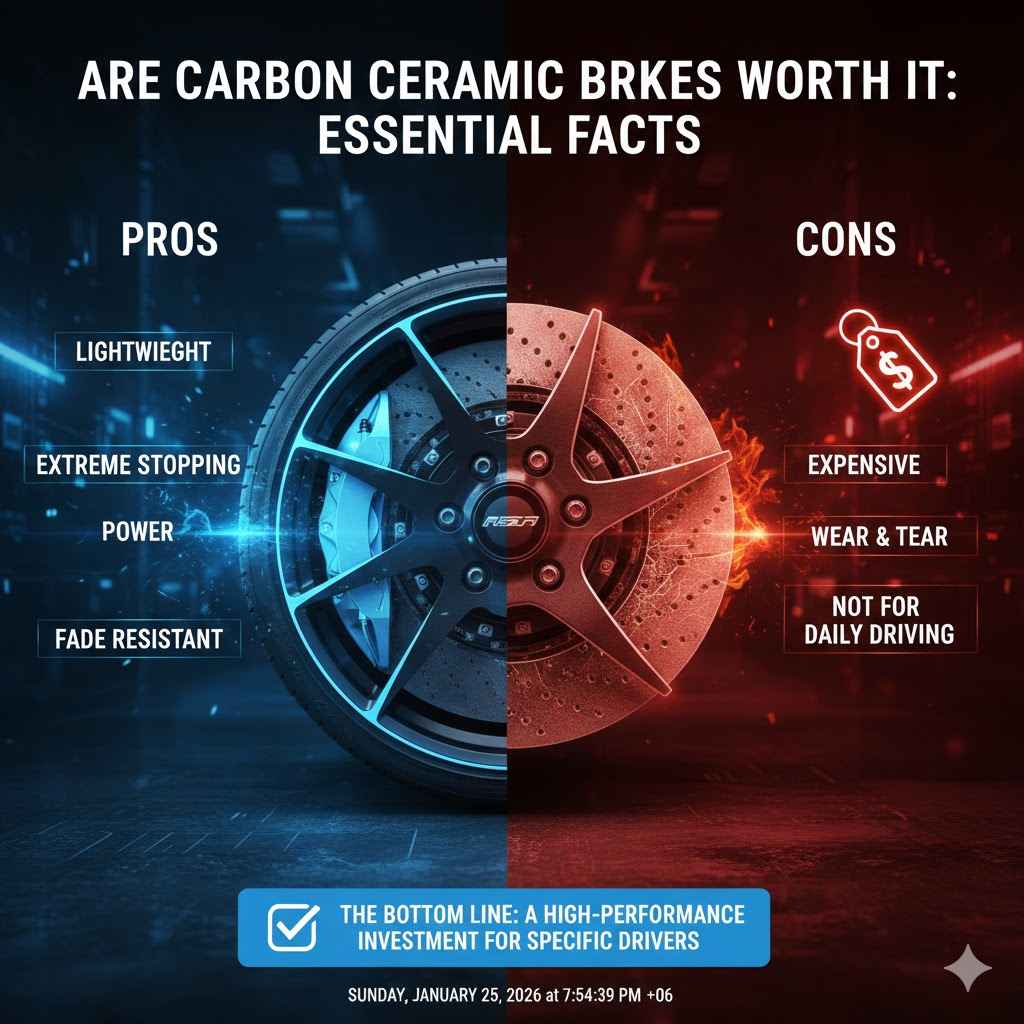
For most drivers, carbon ceramic brakes are not worth the high cost. They are designed for extreme track performance, offering incredible stopping power at high temperatures and a long lifespan under racing conditions. However, for daily driving, their poor cold performance, potential for noise, and astronomical replacement costs make standard steel brakes a much more practical and affordable choice.
Hey there, it’s Dustin. Have you ever seen a high-end sports car and noticed those huge, often colorful brake calipers peeking through the wheels? Chances are, you were looking at a set of carbon ceramic brakes. They sound impressive, and you might wonder if they’re something you should consider for your own car. It’s a common question, especially with all the buzz about high-performance parts.
But what are they, really? And more importantly, are they worth the stunningly high price tag for an everyday driver like you or me? It can be confusing, but don’t worry. I’m here to break it all down in simple terms. We’ll look at what makes them special, where they shine, and where they fall short. By the end of this guide, you’ll know exactly if they’re the right choice for your car and your wallet.
What Exactly Are Carbon Ceramic Brakes?
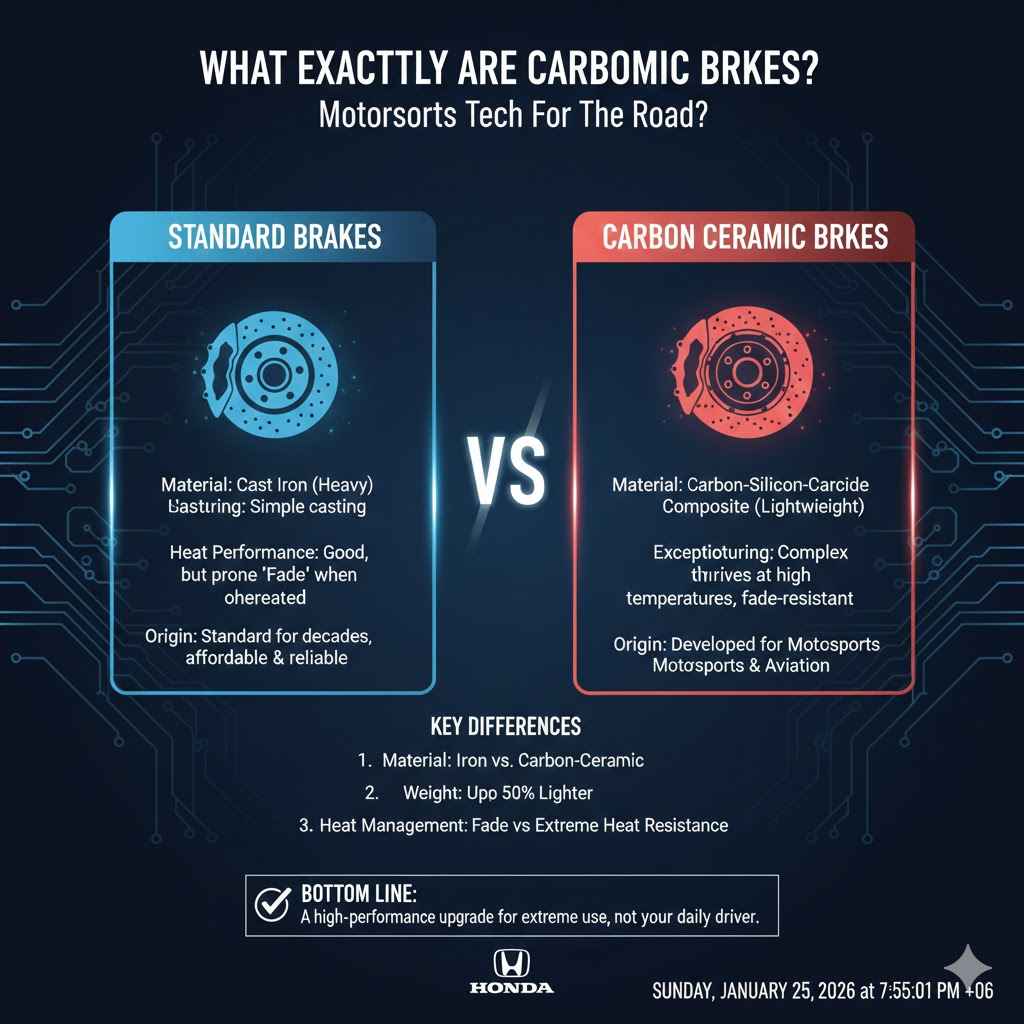
Before we can decide if they’re worth it, let’s quickly understand what we’re talking about. Think of your regular brakes. They are most likely made of cast iron—heavy, strong, and great at their job. They’ve been the standard for decades for a good reason: they work well and are affordable.
Carbon ceramic brakes are a different beast entirely. They aren’t made of metal. Instead, they’re created from a special composite material. The process involves mixing carbon fiber with silicon carbide and baking it at extremely high temperatures. This creates a brake rotor (the disc part) that is incredibly hard, lightweight, and resistant to heat.
This technology wasn’t originally designed for your daily trip to the grocery store. It came from the world of motorsports and aviation—places where stopping power under extreme conditions is a matter of life and death. The goal was to create a brake that wouldn’t fail or lose effectiveness even after getting incredibly hot, lap after lap on a racetrack.
How Are They Different from Standard Brakes?
The biggest differences come down to three things: material, weight, and heat management.
- Material: Standard brakes use a heavy iron disc. Carbon ceramic brakes use a lightweight carbon-silicon carbide composite.
- Weight: A carbon ceramic rotor can be up to 50% lighter than a standard iron rotor of the same size. This might not sound like a big deal, but we’ll get into why it matters so much later.
- Heat Management: Iron brakes can get overwhelmed by heat, leading to a scary situation called “brake fade.” Carbon ceramic brakes are designed to thrive in high-heat environments and actually perform better when they’re hot.
The Powerful Pros: Why Supercar Owners Love Them
When you see a price tag that can be more than a used car, you expect some serious benefits. And carbon ceramic brakes deliver—in the right environment. Here’s where they truly excel.
1. Incredible Stopping Power and Fade Resistance
This is the number one reason they exist. Have you ever driven down a long, steep hill and had to keep your foot on the brake? You might have noticed the brakes feeling a bit “spongy” or less effective by the bottom. That’s a mild form of brake fade. It happens when your brakes get so hot that they can no longer grab the rotor effectively.
On a racetrack, where drivers brake hard from over 150 mph again and again, brake fade can be a massive problem. Carbon ceramic brakes are virtually immune to this. They are designed to dissipate heat so efficiently that they provide consistent, powerful stopping force lap after lap. For a race car driver, that consistency is a huge confidence booster.
2. A Massive Reduction in Weight
Dropping 20-40 pounds of total weight from a car might not seem like a game-changer, but where that weight is located is critical. Brakes, wheels, and tires are part of what engineers call “unsprung mass.” This is the weight that isn’t supported by the car’s suspension.
Reducing unsprung mass has a huge positive impact on a car’s handling. It allows the suspension to work more effectively, keeping the tires in better contact with the road. This leads to:
- Sharper steering response: The car feels more agile and quicker to turn.
- Improved ride quality: The suspension can better absorb bumps and imperfections in the road.
- Better acceleration: Less rotational mass for the engine to spin up.
For a performance car, these improvements in handling and feel are just as important as raw power.
3. Extremely Long Lifespan (with a Catch)
One of the most talked-about benefits is their longevity. Because the material is so incredibly hard, carbon ceramic brake rotors can last much longer than traditional iron rotors—some manufacturers even claim they can last the lifetime of the vehicle. However, this comes with a huge asterisk. This long life is only achieved under ideal conditions, meaning mostly street driving without damage.
If you use them on a racetrack, which is what they are designed for, they will wear out much faster. And any physical damage, like from a rock getting kicked up or a clumsy wheel installation, can chip or crack the rotor, requiring an immediate and very expensive replacement.
4. Almost Zero Brake Dust
If you have beautiful alloy wheels, you know the pain of brake dust. That black, grimy powder is a byproduct of your standard brake pads wearing away against the iron rotor. It can make your shiny wheels look dirty just a day or two after washing them.
Carbon ceramic brakes produce very little visible dust. The dust they do create is light-colored and far less noticeable. For owners of expensive cars who value aesthetics, this is a major selling point. Your wheels stay cleaner for much, much longer.
The Harsh Cons: Why They Aren’t for Everyone
Now for the reality check. For all their amazing performance benefits, carbon ceramic brakes come with some significant downsides that make them impractical for the vast majority of drivers.
1. The Astronomical Cost
This is the biggest hurdle by far. Adding carbon ceramic brakes as an option on a new car can cost anywhere from $8,000 to over $20,000. For that price, you could buy a reliable used car!
And it doesn’t stop there. The replacement costs are even more shocking. A single carbon ceramic rotor can cost $4,000 or more, and the specialized brake pads are also incredibly expensive. A full brake job can easily cost upwards of $15,000. Compare that to a few hundred dollars for a standard brake job on most cars.
2. Poor Performance When Cold
Remember how we said these brakes love heat? The flip side is that they don’t work very well when they are cold. On your first few stops of the day, especially in colder weather, they can feel weak and unresponsive. They need to build up some heat to reach their optimal operating temperature.
This can be unsettling for a daily driver. You expect your brakes to work perfectly from the moment you back out of your driveway. While they will still stop the car, they lack the initial “bite” you’re used to with standard brakes until they’ve warmed up a bit.
3. They Can Be Noisy
Despite their high-tech nature, carbon ceramic brakes are known for being noisy, especially at low speeds. It’s common for them to squeal, groan, or scrape when you’re pulling up to a stoplight or navigating a parking lot. This noise is often a result of the pad material vibrating against the super-hard rotor surface at low temperatures.
While this is considered normal for this type of brake system, the average driver would find the constant noise irritating and might even think something is wrong with their brakes.
4. They Are Fragile
Iron is a tough, durable metal. You can bang it around a bit, and it will be fine. Carbon ceramic composite is incredibly hard, but it’s also brittle, a bit like a ceramic plate. A sharp impact from a rock kicked up on the road or a technician accidentally dropping a wheel against the rotor during a tire change can cause a chip or a crack.
Unlike an iron rotor that might get a scratch, any crack in a carbon ceramic rotor compromises its structural integrity, meaning it must be replaced immediately for safety. This turns a minor mishap into a multi-thousand-dollar repair.
Carbon Ceramic vs. Standard Steel Brakes: A Head-to-Head Comparison
To make it even clearer, let’s put them side-by-side. This table breaks down the key differences for the everyday driver.
| Feature | Carbon Ceramic Brakes | Standard Steel Brakes |
|---|---|---|
| Initial Cost | Extremely High ($8,000 – $20,000+ option) | Low (Standard on most vehicles) |
| Replacement Cost | Astronomical ($15,000+ for a full set) | Affordable ($400 – $1,000 for a full set) |
| High-Temp Performance | Exceptional; virtually no brake fade | Good, but can fade under extreme use |
| Cold Performance | Poor; requires heat to work effectively | Excellent; works great immediately |
| Weight | Very Light | Heavy |
| Brake Dust | Very Little | Moderate to High |
| Noise | Can be noisy (squealing) at low speeds | Generally Quiet |
| Durability | Very long-lasting but brittle and prone to impact damage | Durable and resistant to impact |
| Ideal Use Case | Dedicated track driving, supercars | Daily driving, commuting, spirited street driving |
So, Who Are Carbon Ceramic Brakes Actually For?
After looking at the pros and cons, a clear picture emerges. These brakes are a specialized piece of equipment for a very specific type of driver.
The Dedicated Track Enthusiast
If you spend many weekends a year at the racetrack, pushing your car to its absolute limits, then the benefits of carbon ceramic brakes start to make sense. The fade resistance and consistent performance can make you a faster, more confident driver on the track. For these individuals, the high cost is part of the price of a serious, performance-oriented hobby.
Supercar and Hypercar Owners
These brakes come standard on many high-end exotic cars for a reason. When a car has 700, 800, or even 1,000 horsepower, it needs a braking system that can handle that level of performance. For owners of these vehicles, the $15,000 replacement cost is relative to the car’s overall value. Plus, the clean wheels and prestige factor are big selling points in this market.
Who They Are NOT For: The Daily Driver
If you use your car for commuting, running errands, and the occasional road trip, carbon ceramic brakes are almost certainly not worth it. You will be paying a massive premium for performance you will never use. The downsides—poor cold performance, potential noise, and the constant worry of an expensive repair bill—far outweigh any benefits for street driving. As the National Highway Traffic Safety Administration (NHTSA) emphasizes, a properly functioning standard brake system is more than adequate and safe for all public road conditions.
Smarter Upgrades for Your Everyday Car
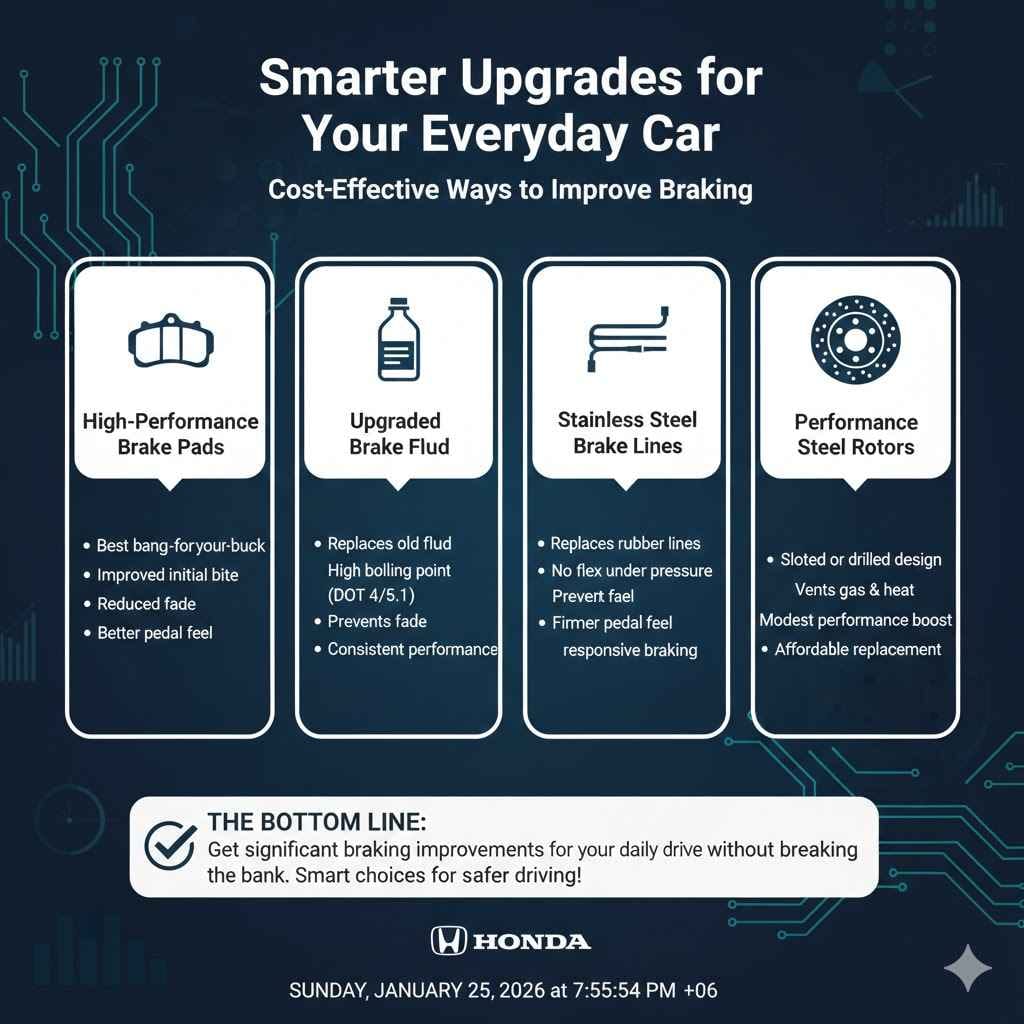
So you want better braking performance but don’t want to spend a fortune? I get it! The good news is there are several fantastic, cost-effective upgrades that can make a real difference for your daily driver.
- High-Performance Brake Pads: This is the single best bang-for-your-buck upgrade. A good set of performance-oriented street pads can improve initial bite, reduce fade, and provide a much better pedal feel for a fraction of the cost.
- Upgraded Brake Fluid: Brake fluid can absorb water over time, which lowers its boiling point and can lead to fade. Flushing your system with a high-quality, high-boiling-point fluid (like a DOT 4 or DOT 5.1) is a cheap and effective way to improve braking consistency.
- Stainless Steel Brake Lines: Your stock rubber brake lines can flex under pressure, leading to a “mushy” pedal feel. Stainless steel braided lines don’t flex, providing a firmer, more responsive brake pedal.
- Performance Steel Rotors: If your rotors are due for replacement, consider a set of quality slotted or drilled steel rotors. They can help vent gasses and heat more effectively than plain rotors, providing a modest improvement in performance without the downsides of carbon ceramics.
Frequently Asked Questions (FAQ)
1. Do carbon ceramic brakes last forever?
No, they do not. While they can last much longer than steel rotors in normal street driving (potentially over 100,000 miles), they do wear out. On the racetrack, they can wear out much more quickly. They are a wear item, just a very expensive one.
2. Why do my carbon ceramic brakes squeal?
Squealing is common, especially at low speeds and when the brakes are cold. It’s caused by high-frequency vibrations between the very hard pad material and the composite rotor. While annoying, it’s generally considered normal for this type of brake system and not a sign of a problem.
3. Can I put carbon ceramic brakes on my regular car?
Technically, kits are available for some popular models, but it is almost never a good idea. The cost is prohibitive, and the car’s master cylinder and ABS system are not designed for them. You would be better off spending that money on high-quality pads, rotors, and tires for a more balanced and practical upgrade.
4. Are carbon ceramic brakes better in the rain?
They can actually be slightly worse in the rain, at least initially. A film of water can form between the pad and rotor, which needs to be cleared before the brakes can bite effectively. Many cars with these brakes have a system that lightly applies the pads periodically in the rain to keep the rotors dry and ready.
5. How much do carbon ceramic brakes cost to replace?
This is the scariest part. A full replacement for all four corners, including rotors and pads, can easily cost between $15,000 and $25,000, depending on the vehicle. A single rotor can cost $4,000 or more.
6. Is there really less brake dust?
Yes, significantly less. This is one of the main cosmetic benefits. The minimal dust they produce is also a lighter color, so it doesn’t show up as much on your wheels, keeping them looking clean for longer.
7. What’s the biggest advantage of carbon ceramic brakes?
Their resistance to brake fade. For a car on a racetrack, the ability to brake hard, lap after lap, without any loss in performance is their single greatest advantage. All other benefits, like weight savings and low dust, are secondary to this core function.
The Final Verdict: Amazing Tech, but Not for the Street
So, are carbon ceramic brakes worth it? After looking at all the facts, the answer is a clear “no” for about 99% of drivers.
They are a phenomenal piece of engineering, a true game-changer for the world of motorsports and high-end supercars. Their ability to withstand incredible heat and provide consistent, powerful stopping force is unmatched. But that performance comes at a cost—a cost that is not just financial, but also practical.
For your daily commute, the downsides like poor cold performance, potential for noise, and the ever-present fear of an absurdly expensive repair bill make them a poor choice. Your car’s standard braking system is more than capable of handling any situation you’ll encounter on public roads safely and reliably.
Instead of dreaming about carbon ceramics, focus on practical upgrades that will truly benefit your everyday driving experience. A good set of tires, high-quality brake pads, and fresh brake fluid will give you a safer, more confident drive without forcing you to remortgage your house. Keep your car in great shape, make smart choices, and you’ll have all the stopping power you’ll ever need. Drive safe!