
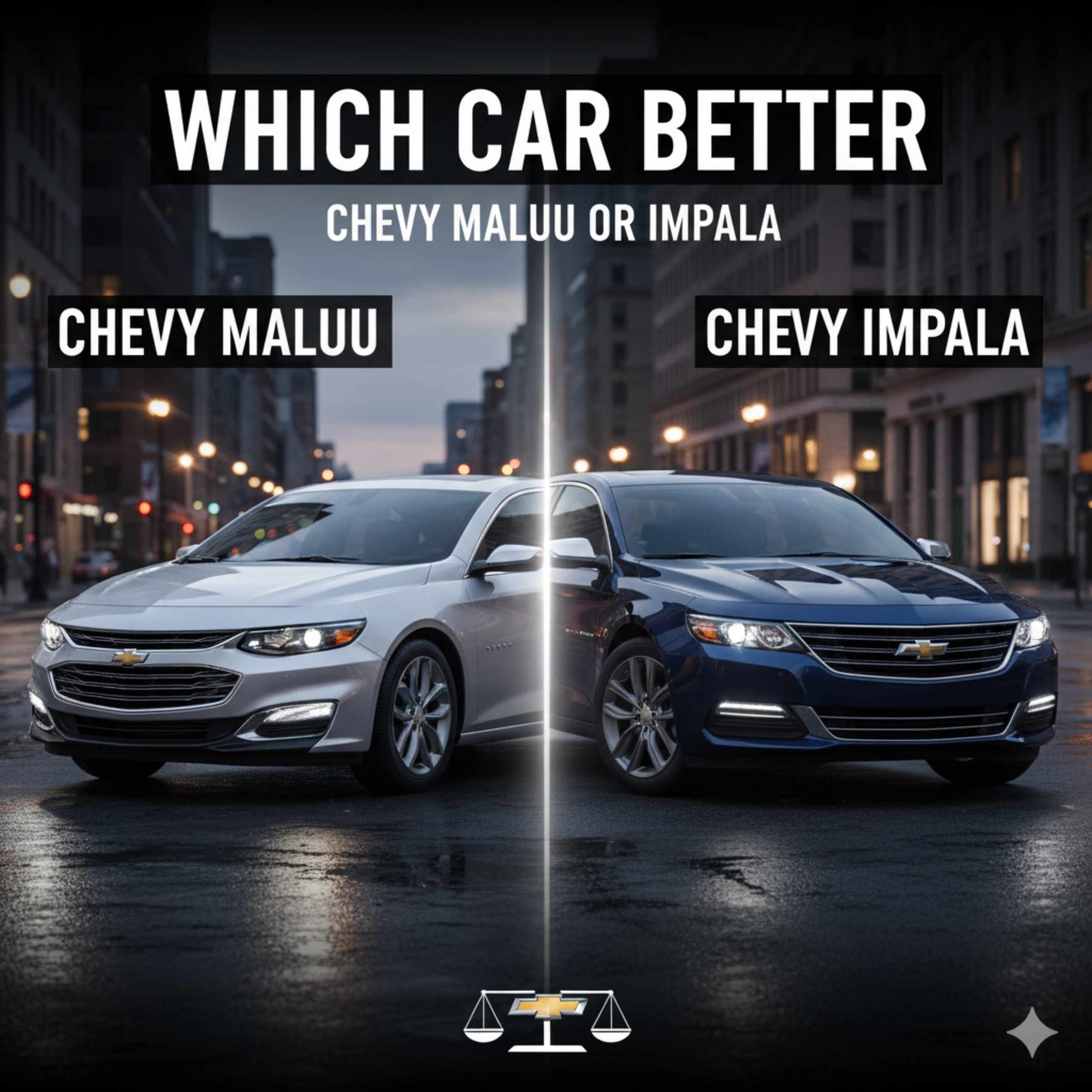
For most drivers seeking a reliable, efficient daily commuter, the Chevy Malibu is the better choice due to its modern features and better gas mileage. However, if sheer size, backseat space, and V6 power are your priorities, the older, larger Chevy Impala might still be worth considering on the used market.
Choosing between two great cars from the same family, like the Chevy Malibu and the Chevy Impala, can feel tricky. You wonder which one offers the best ride for your hard-earned money. Maybe you are looking at used models or trying to decide which nameplate fits your lifestyle better. It’s easy to feel stuck when comparing size, power, and features.
Don’t worry! I’m Dustin Hall, and I believe every driver deserves confidence when choosing a vehicle. We will break down the Malibu and the Impala side-by-side. We will look at what makes each one special, focusing on real-world driving, space, and long-term costs. By the end of this guide, you will know exactly which car is the proven essential for you.
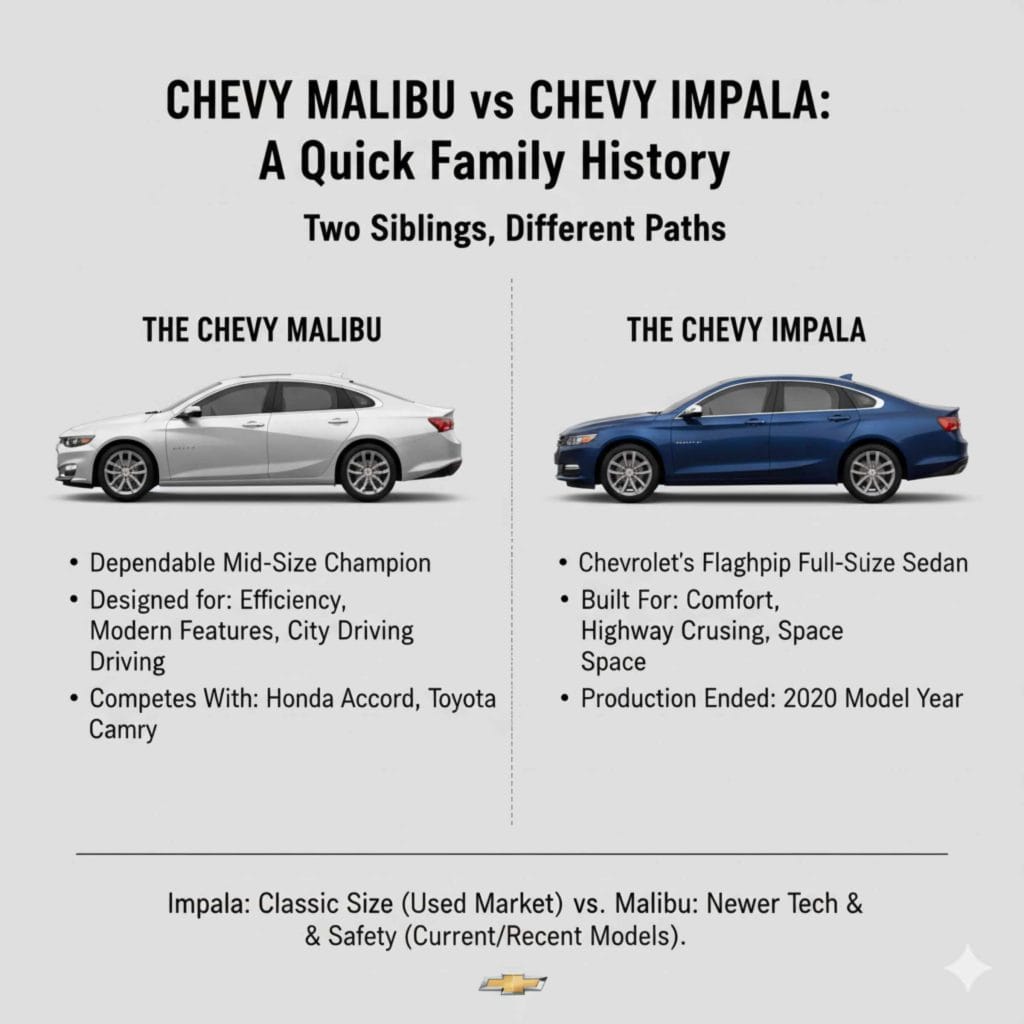
Chevy Malibu vs Chevy Impala: A Quick Family History
Before we dive into specs, it helps to know where these cars fit in Chevrolet’s lineup. Think of them as siblings with different jobs.
- The Chevy Malibu: This is the dependable mid-size champion. It’s designed for efficiency, modern driving features, and fitting easily into city parking spots. It competes directly with cars like the Honda Accord or Toyota Camry.
- The Chevy Impala: This was Chevrolet’s flagship—the full-size sedan. It was built for comfort, highway cruising, and offering a lot of space. The Impala production ended after the 2020 model year, meaning any comparisons are primarily between a current/recent Malibu and used Impalas.
Because the Impala is no longer in production, the comparison heavily favors the newer Malibu for safety features and technology. Still, the Impala offers a certain classic size that many drivers miss.
The Core Differences: Size, Comfort, and Power
The most significant factor separating these two is size. The Impala is bigger in every dimension. Let’s explore how that size affects your daily drive.
Cabin Space and Passenger Comfort
If you often carry adult passengers in the back seat, space matters a lot. The Impala was famous for being a true “large sedan.”
Chevy Impala (Focusing on 2014–2020 Models)
The Impala offers true spaciousness. It has legroom and shoulder room that compete with luxury cars. It’s excellent for long road trips with four or five adults.
- Front Seat Comfort: Wide, plush seats designed for long-haul comfort.
- Rear Seat Comfort: Excellent legroom; easily accommodates taller passengers without them feeling cramped.
- Trunk Space: Generally offers more cargo volume than the Malibu.
Chevy Malibu (Modern Generations)
The Malibu is a mid-size sedan. It’s modern and practical, but you will notice the difference in the back seat compared to the Impala.
- Front Seat Comfort: Very comfortable and well-laid-out, often featuring better modern connectivity (like Apple CarPlay/Android Auto).
- Rear Seat Comfort: Good for kids or short trips, but adults might find legroom tighter on very long drives.
- Trunk Space: Adequate for groceries and standard luggage, but less generous than the Impala.
Engine Options and Fuel Economy
This is where the modern Malibu usually pulls significantly ahead, especially when thinking about your wallet at the gas pump. Modern engines are engineered to be both strong and extremely efficient.
The Impala’s Powerhouse Days
The final generation Impala (post-2014) mostly relied on a robust 3.6L V6 engine. This made it quick but thirsty.
- Engine Type: Typically a 3.6L V6.
- Horsepower: Around 305 hp. This means smooth, quick merging onto the highway.
- Fuel Economy (Approximate Highway MPG): Usually lands in the low to mid-20s MPG range.
The Malibu’s Efficiency Focus
The Malibu emphasizes smaller, turbocharged four-cylinder engines. These use modern technology to deliver surprising strength while sipping fuel.
- Engine Type: Primarily efficient 1.5L or 2.0L Turbocharged four-cylinders.
- Horsepower: Ranges from roughly 160 hp (1.5L) to over 250 hp (2.0L).
- Fuel Economy (Approximate Highway MPG): Often achieves mid to high 30s MPG, especially with the smaller turbo engine.
Dustin’s Take: If saving money on gas is a priority, the Malibu wins easily. The Impala gives you more raw power but asks for more fuel in return.
Maintenance and Reliability: What’s Cheaper to Own?
When evaluating which car is “better,” we must look past the initial purchase price and consider the cost of keeping it running smoothly. This involves parts availability and common repairs.
Parts Availability and Comparison
Since the Impala is discontinued, finding new replacement parts specific to ultra-modern Impala features might take longer than for the continually produced Malibu. However, both use widely available Chevrolet components.
For general maintenance items—like oil filters, brake pads, and wiper blades—both cars are simple. You can find these parts everywhere and at good prices. You’ll find excellent resources on common maintenance procedures via organizations like the National Highway Traffic Safety Administration (NHTSA) regarding vehicle safety systems.
The Cost of Common Repairs
Generally, repairs on the Malibu tend to be slightly cheaper because its smaller engine components are less complex than the V6 found in many of the later Impalas. However, since the Malibu has more electronic sensors packed into a smaller space, those electronic fixes can sometimes be costly for either vehicle.
| Component/Service | Chevy Malibu (Newer Models) | Chevy Impala (Used Models) | Winner for Budget |
|---|---|---|---|
| Oil & Filter Change | Lower (Smaller engine capacity) | Slightly Higher (More oil needed for V6) | Malibu |
| Tire Replacement | Usually smaller, cheaper tires | Often larger, more expensive tires | Malibu |
| Brake Pads/Rotors | Comparable | Comparable | Tie |
| Insurance Quotes | Generally lower (Lower overall vehicle value) | Varies, often higher for older, larger cars | Malibu |
Technology and Safety Features
If you are buying a car made in the last five years, technology is a huge deciding factor. The newer the car, the smarter and safer it usually is.
Safety First: Why Newer Matters
When comparing a current or recent generation Malibu (e.g., 2016+) to an older generation Impala (e.g., pre-2014), the Malibu will almost always win on standard safety tech. Modern cars have better crumple zones, more airbags, and standard driver aids.
Look for this safety tech, especially if you opt for a used vehicle:
- Forward Collision Alert (FCA): Warns you if you are about to hit something in front of you.
- Lane Keep Assist: Gently guides you back into your lane if you drift.
- Blind Spot Monitoring (BSM): Essential for safely changing lanes on the highway.
While higher-end used Impalas certainly offer safety features, the technology suite in a modern Malibu is generally superior and more refined.
Infotainment and Connectivity
This is a massive win for the Malibu. If you rely on your phone integration for navigation or music, the connectivity matters.
- Malibu Advantage: Modern Malibus come standard with Chevrolet’s excellent infotainment system supporting Apple CarPlay and Android Auto. This makes using maps and streaming audio seamless and safe.
- Impala Reality: Older Impalas might have clunky, outdated screens or require aftermarket upgrades to get modern smartphone mirroring capabilities.
Who Should Buy the Chevy Malibu? (The Efficiency Choice)
The Malibu is built for the driver who values efficiency, easy city driving, and having the latest standard safety tech without paying a premium. This is the practical choice for a new family car or a dedicated commuter.
The Malibu is better if you prioritize:
- Fuel Economy: You want the absolute best MPG for your daily drive.
- Modern Tech: You must have built-in smartphone integration (Apple CarPlay/Android Auto).
- Parking Ease: Its slightly smaller footprint makes parallel parking less stressful.
- Lower Ownership Costs: Generally cheaper insurance and better gas mileage save money monthly.
Who Should Buy the Chevy Impala? (The Comfort Choice)
If you are looking at the used market and value sheer size, ride quality, and effortless highway power over fuel efficiency, the Impala is a worthy contender. It feels more like an older luxury cruiser than a standard sedan.
The Impala is better if you prioritize:
- Maximum Passenger Space: You regularly drive three or more adults or need room for large car seats.
- Highway Cruising: You spend hours on the freeway and prefer a heavier, softer ride provided by its larger platform.
- V6 Power: You enjoy the smooth, reliable performance of a naturally aspirated V6 engine.
- Classic Styling: You prefer the look and stance of a larger, full-size sedan.
Step-by-Step Used Car Comparison Checklist
Since the Impala is only available used, here is a practical checklist to ensure you get a reliable example if you choose the bigger car.
Step 1: Determine Your Budget and Needs (Size First)
Decide honestly how often you use the back seat. If it’s rarely, save the money and get the Malibu. If you need that extra foot of legroom consistently, stick with the Impala.
Step 2: Examine Model Years Closely
For the Impala, focus on the tenth generation (2014–2020). These models are far superior to the older Impalas in terms of safety and comfort. For the Malibu, focus on 2016 and newer for the best efficiency improvements.
Step 3: Check Maintenance Records (Crucial for Used Cars)
When looking at a used Impala, always request service records. These V6 engines need timely oil changes. Look specifically for evidence of regular transmission fluid checks.
Check the Malibu records, too, but pay attention to turbocharger service history if it’s a 1.5L or 2.0L turbo model, as these tiny engines work hard.
Step 4: The Test Drive Test Points
Use these specific checkpoints during your test drive to feel the real difference:
- HVAC Test: Make sure both front and rear air conditioning/heat vents blow strongly. Big cars can sometimes struggle to cool down quickly.
- Steering Feel: The Malibu often feels lighter and more agile. The Impala might feel heavier, requiring more correction during turns. Note which one you prefer.
- Rear Headroom Test: If you are over six feet tall, sit in the back seat of both cars. This one test often settles the debate instantly for buyers hauling adults.
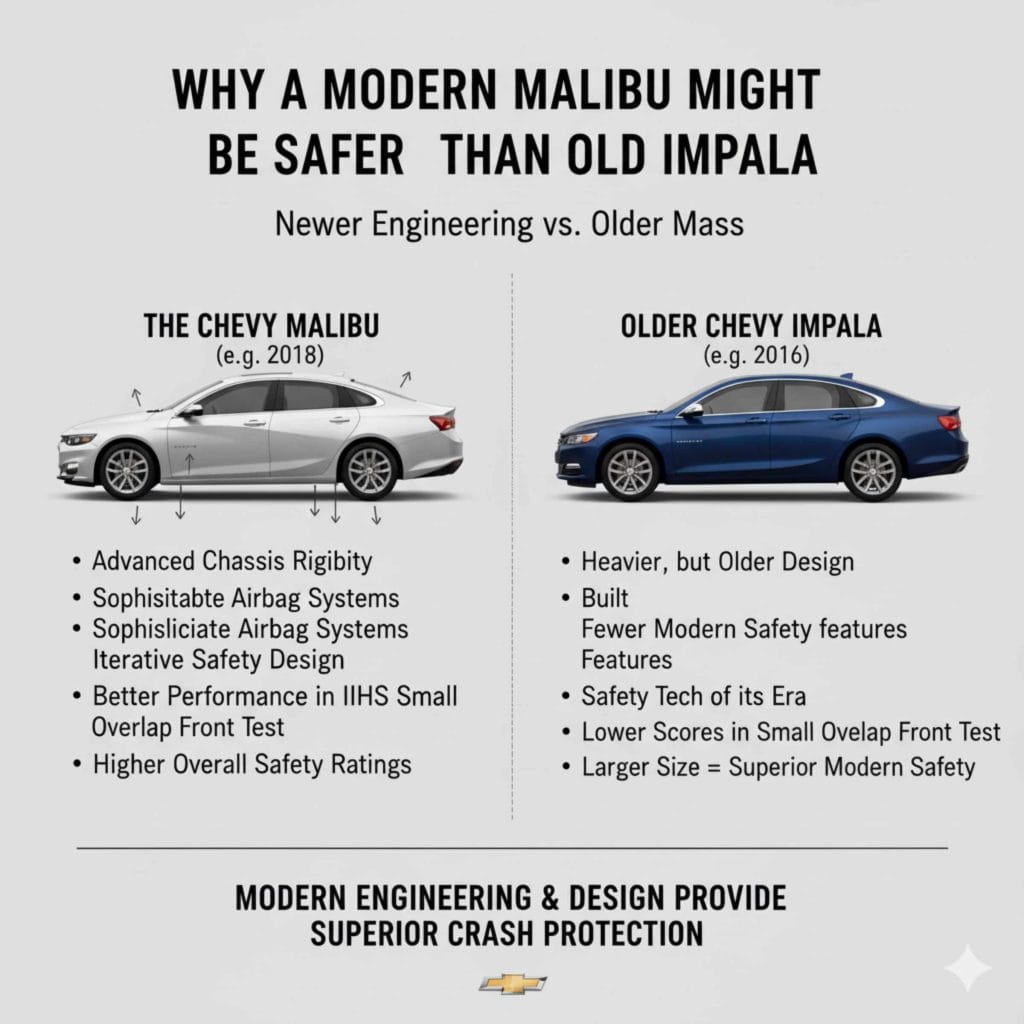
Why a Modern Malibu Might Be Safer Than an Old Impala
While big cars often feel safer because they are heavier, modern engineering beats mass when it comes to crash protection. Manufacturers like General Motors continually improve chassis rigidity and airbag systems with every new generation.
For example, a 2018 Malibu benefits from years of iterative safety design improvements that the 2016 Impala simply didn’t have access to, even if the Impala is physically larger. Safety testing agencies reinforce this idea.
When looking up crash test ratings on reliable sources like the Insurance Institute for Highway Safety (IIHS), newer models generally score better across the board, especially in small overlap front tests which challenge modern protection systems.
FAQ on Chevy Malibu vs Impala
Q1: Is the Chevy Malibu reliable?
Yes, modern Chevy Malibus (especially those from 2016 onward) are generally considered highly reliable daily drivers. They are built using proven, efficient four-cylinder engine platforms that are easy for mechanics to service.
Q2: Which car has better performance, the Malibu or the Impala?
The older V6 found in the recent Impala (around 305 hp) usually offers stronger acceleration than the base 1.5L Malibu. However, the higher-trim 2.0L Turbo Malibu can be quite quick and handles better due to its modern chassis tuning.
Q3: Can I still buy a brand new Chevy Impala?
No. Chevrolet stopped manufacturing the Impala after the 2020 model year. You can only find them on the used (pre-owned) market.
Q4: Which car is significantly cheaper to insure?
The Chevy Malibu is almost always cheaper to insure. Insurance companies base rates on overall vehicle age, replacement cost, and engine size. Since the Malibu is newer and smaller, the premiums tend to be lower.
Q5: Is the Impala a gas-guzzler compared to the Malibu?
Yes. The Impala’s large V6 engine and heavier body mean you will see significantly lower MPG figures (often 5-10 MPG less on the highway) than you would in a modern, turbocharged Malibu.
Q6: Which car has a better ride quality for daily driving?
This depends on your preference! The Impala offers a softer, more “floating” ride typical of older large American sedans. The Malibu offers a firmer, more responsive ride that feels more European and planted on curves.
Making Your Final Decision: Which Car is Better for You?
We have covered the key points: size, efficiency, technology, and upkeep. Now, let’s bring it all together. Deciding which car is “better” isn’t about one car winning overall; it’s about finding the right tool for your garage.
When the Malibu is the Proven Essential:
If you are searching for a car that minimizes your trips to the fuel pump, offers modern safety features as standard, and is easy to maneuver in parking lots, the Malibu is your champion. It represents the efficiency-focused future of the sedan segment. It’s the smart, modern choice.
When the Impala Still Holds Value:
If your primary need is hauling three large adults comfortably on weekly trips, or if you truly enjoy the smooth, quiet highway glide that only a heavy, full-size sedan can provide, then hunting for a well-maintained, recent-model Impala is absolutely the right path. Just be prepared to spend a little more at the pump.
I encourage you to test drive both—a modern Malibu loaner or rental, and a recent Impala at a used car lot. Feel the difference in the seat padding, check the rearview mirror placement, and pay attention to how the engine sounds when accelerating onto the highway. That seat-of-the-pants feeling confirms what the numbers tell you.
You are now equipped with the key knowledge to confidently choose between the modern efficiency of the Malibu and the traditional spaciousness of the Impala. Drive safely, and enjoy the ride!