

The absolute best time to check your car oil is when the engine is warm, but not hot. Park your car on level ground, turn off the engine, and wait 5 to 10 minutes. This simple pause allows the circulating oil to drain back into the pan, giving you the most accurate reading possible.
Ever stood by your car, dipstick in hand, wondering if you’re doing it right? You’re not alone. The question of when to check your oil is one of the most common bits of car confusion out there. Is it better hot? Cold? Somewhere in between? It can feel like a tricky puzzle, but I promise, the answer is refreshingly simple.
Getting this timing right is a small step that makes a huge difference in your car’s health and longevity. In this guide, I’ll walk you through the perfect moment to check your oil and explain exactly why it works. We’ll clear up the myths and give you a foolproof method you can use every time. Let’s get you feeling confident about this essential car care task.
Why Checking Your Car’s Oil is So Important
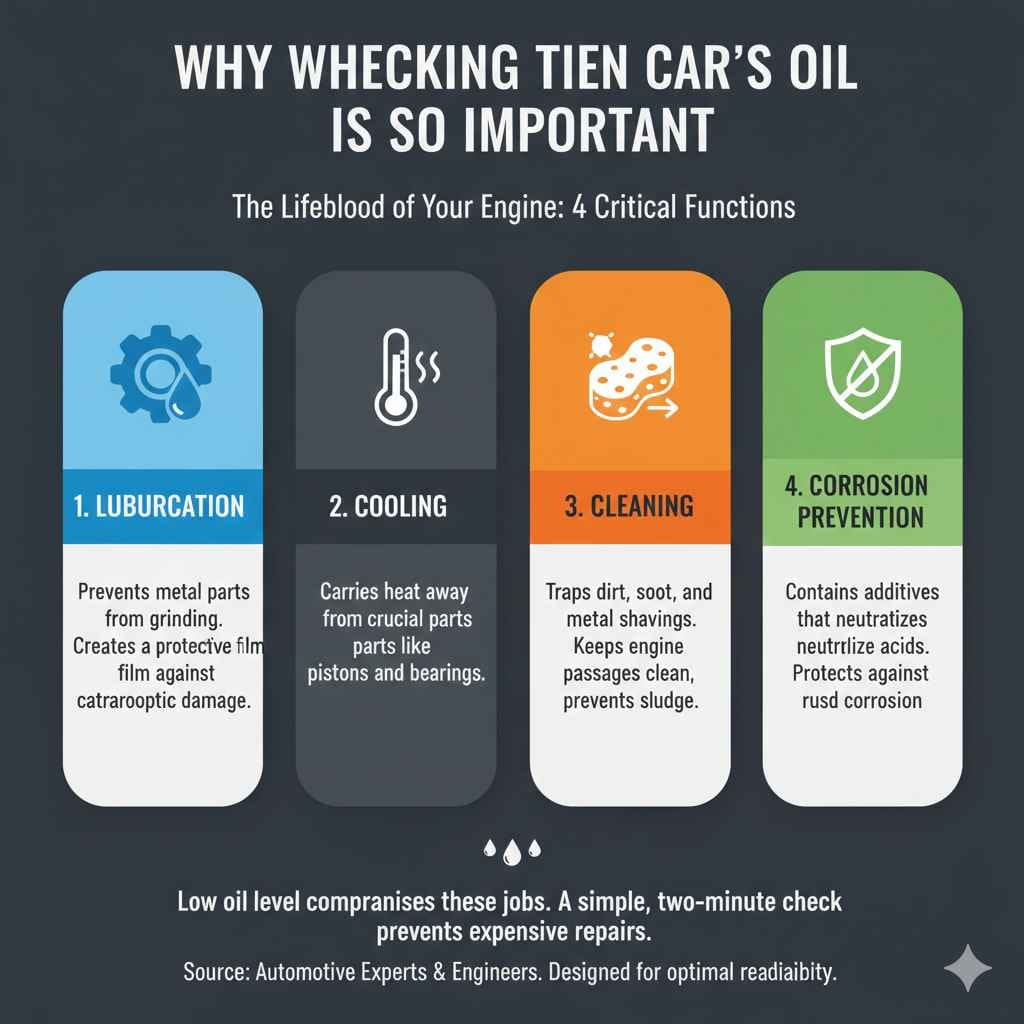
Before we dive into the “when,” let’s quickly cover the “why.” Think of engine oil as the lifeblood of your car. It’s not just a slippery fluid; it’s a hardworking hero that performs several critical jobs at once:
- Lubrication: Your engine is full of metal parts moving at incredible speeds. Oil creates a thin, protective film between them, preventing them from grinding against each other and causing catastrophic damage.
- Cooling: While your radiator does the heavy lifting, oil plays a huge role in cooling. It carries heat away from crucial parts of the engine, like the pistons and bearings.
- Cleaning: Oil traps and suspends tiny particles of dirt, soot, and metal shavings, carrying them to the oil filter. This keeps your engine’s internal passages clean and free from sludge.
- Corrosion Prevention: Engine oil contains additives that neutralize acids and prevent rust and corrosion from forming on internal engine components.
When the oil level gets too low, none of these jobs can be done properly. The engine can overheat, parts can wear out prematurely, and you could be heading for a very expensive repair bill. A simple, two-minute check is the best insurance policy you can have against major engine trouble.
The Genius Answer: The “Goldilocks” Method for Checking Oil
The perfect time to check your oil is not when the engine is stone cold, and it’s definitely not when it’s scorching hot. The ideal moment is what I call the “Goldilocks” window: when it’s just right. This means the engine is warm, but has been turned off for a few minutes.
Here’s the breakdown:
- Drive your car. A short trip of about 15 minutes is perfect. This gets the engine up to its normal operating temperature, which warms and thins the oil, allowing it to flow freely.
- Park on level ground. This is non-negotiable! I can’t stress this enough. We’ll talk more about why in a moment.
- Turn off the engine.
- Wait for 5 to 10 minutes. This is the secret step! This waiting period allows the oil that was circulating throughout the engine to drain back down into the oil pan at the bottom.
Checking the oil during this window gives you the most accurate picture of how much oil is actually in the system, ready to be picked up and circulated again when you start the car. It’s the method most mechanics use because it’s reliable and consistent.
Why Does Level Ground Matter So Much?
Imagine trying to measure a cup of water while holding the measuring cup at a steep angle. You’d get a completely wrong reading, right? The same exact principle applies to your car’s oil pan.
The dipstick is calibrated to measure the oil level when the pan is perfectly flat. If your car is parked on even a slight incline, the oil will pool to one side of the pan. This can make the dipstick read either artificially high or dangerously low, leading you to either do nothing when you need to add oil, or add too much oil, which can be just as damaging.
So, always find the flattest spot you can in your driveway, garage, or a parking lot before you even think about pulling that dipstick.
Debunking the Myths: Hot vs. Cold Oil Checks
You’ve probably heard conflicting advice about checking oil. Some people swear by checking it cold, while others might say hot is fine. Let’s clear the air and look at the pros and cons of each method compared to our “Goldilocks” approach.
| Method | Pros | Cons |
|---|---|---|
| Cold Engine Check (First thing in the morning) |
|
|
| Warm Engine Check (Goldilocks) (Wait 5-10 mins after driving) |
|
|
| Hot Engine Check (Immediately after stopping) |
|
|
A Note on Checking Oil When Cold
Is it the end of the world to check your oil when the engine is cold, like first thing in the morning? Absolutely not. In fact, some car owner’s manuals even recommend this method. Checking it cold is far, far better than not checking it at all.
The key thing to remember is consistency. If you choose to check your oil cold, always check it cold. If you use the warm method, always use the warm method. This way, you can track changes over time and get a feel for what’s normal for your car. The warm method is generally preferred by professionals for its accuracy, but a consistent cold check is still a reliable way to monitor your oil level.
Your Step-by-Step Guide to Checking Car Oil Like a Pro
Ready to do this? It only takes a couple of minutes. Let’s walk through it step-by-step.
What You’ll Need:
- A clean, lint-free cloth or paper towel
- A pair of gloves (optional, but keeps your hands clean)
- A funnel (only if you need to add oil)
- The correct type of oil for your car (check your owner’s manual!)
The Process:
- Prepare the Car: Make sure your car has been running for a bit to warm up. Park it on a flat, level surface and turn off the engine. Pop the hood and wait 5-10 minutes.
- Locate the Dipstick: The engine oil dipstick usually has a brightly colored handle (often yellow or orange) and may have an oil can symbol on it. It’s a long, thin metal rod that goes down into the engine block.
- Pull and Wipe: Pull the dipstick all the way out. Use your cloth or paper towel to wipe it completely clean, from the handle down to the tip.
- Re-insert Fully: Push the clean dipstick all the way back into its tube. Make sure it goes in completely until the handle is seated properly. This is crucial for an accurate reading.
- Pull and Read: Pull the dipstick out again, this time holding it horizontally to prevent the oil from running. Look at the very end of the dipstick. You will see markings that indicate the proper oil level.
- Analyze the Reading: The oil level should be between two marks. These are often labeled “F” (Full) and “L” (Low), or they might just be two small holes or a cross-hatched area. Ideally, the level should be at or very near the “Full” mark.
- Check the Oil Condition: While you have the oil on the dipstick, look at its color and consistency. Healthy oil is typically a translucent, amber-brown color. If it’s dark black, gritty, or looks milky and creamy (like a coffee milkshake), it’s a sign you need an oil change or may have a more serious issue like a coolant leak. You can learn more about recycling used oil from the Environmental Protection Agency.
- Finish Up: Wipe the dipstick one last time and insert it securely back into its tube. Close the hood, and you’re done!
What Do the Dipstick Markings Mean?
The end of the dipstick can look a little different depending on your car, but the principle is always the same.
Common Dipstick Markings:
- Two Dots or Holes: The oil level should be between the two dots. The top dot is “Full,” and the bottom dot is “Add.”
- “F” and “L”: These letters stand for “Full” and “Low.” The oil level should be at or near the “F” line.
- Cross-Hatched Area: If you see a textured or cross-hatched section, the oil level should fall somewhere within this area. The top of the area is “Full.”
A general rule of thumb is that the distance between the “Full” and “Add” marks represents about one quart (or one liter) of oil. So, if your oil level is at the halfway point, you need to add about half a quart. If it’s right at the “Add” line, you’ll need a full quart.
What to Do If Your Oil is Low
If your reading is at or below the “Add” or “Low” mark, you need to add oil. Don’t panic; this is a normal part of car maintenance. Here’s how to do it safely:
- Get the Right Oil: This is critical. Check your owner’s manual for the specific type and weight of oil your car needs (e.g., 5W-30, 0W-20). Using the wrong oil can harm your engine.
- Locate the Oil Filler Cap: Find the cap on top of the engine. It will usually have the same oil can symbol as the dipstick or the word “Engine Oil” printed on it.
- Add Oil Slowly: Unscrew the cap and place a funnel in the opening. Add about a half-quart of oil at a time. It’s very easy to add too much, but impossible to take it out easily. Go slow!
- Re-Check the Level: After adding some oil, wait a minute for it to settle, then use the dipstick to check the level again. Repeat this process until the level is at the “Full” mark. Do not overfill!
- Secure the Cap: Once the level is correct, remove the funnel and screw the oil filler cap back on tightly. Make sure the dipstick is also fully seated.
Overfilling the engine with oil can be just as bad as running it low. Excess oil can get churned into a foam by the crankshaft, which reduces its ability to lubricate. It can also cause high oil pressure, leading to blown seals and gaskets.
How Often Should You Check Your Oil?
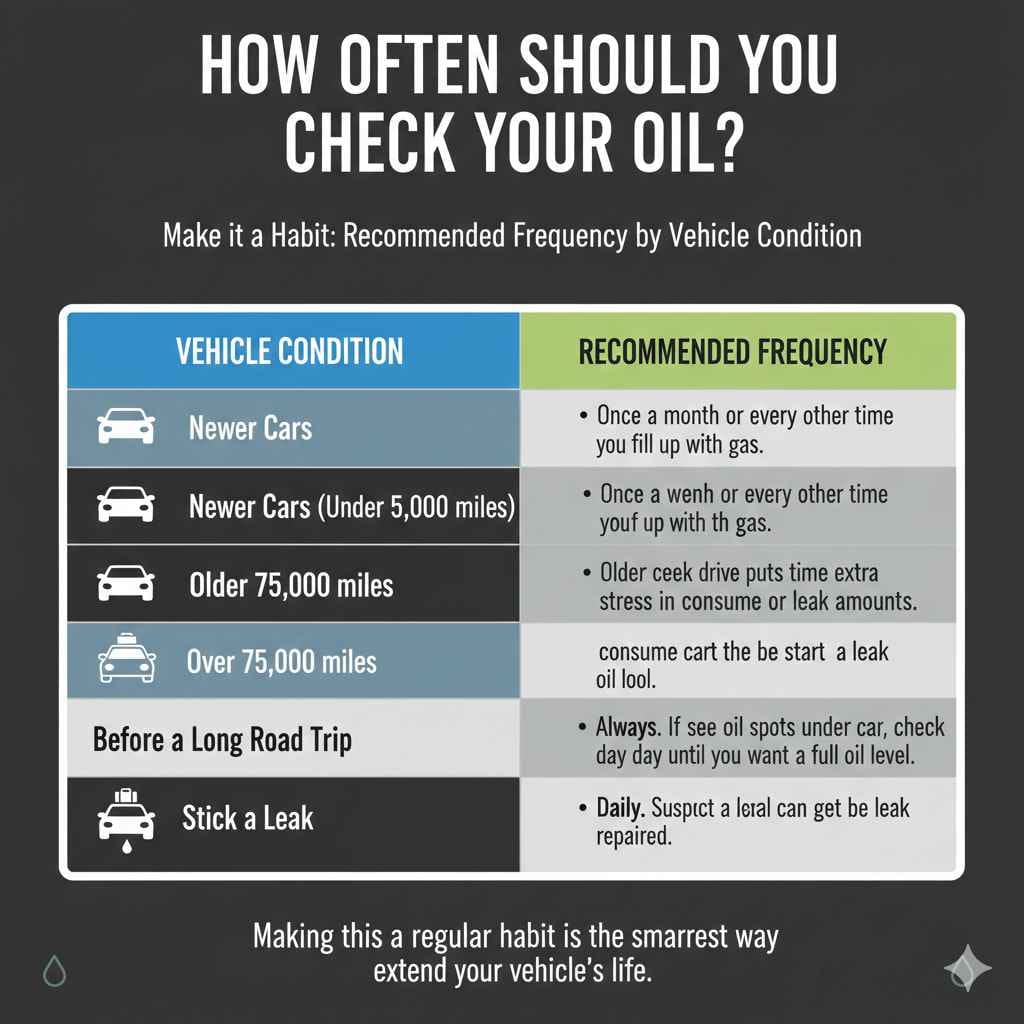
Now that you know how to check your oil perfectly, how often should you do it? The answer depends on the age and condition of your car.
| Vehicle Condition | Recommended Frequency |
|---|---|
| Newer Cars (Under 50,000 miles) | Once a month or every other time you fill up with gas. |
| Older Cars (Over 75,000 miles) | Once a week or every time you fill up with gas. Older cars are more likely to consume or leak small amounts of oil. |
| Before a Long Road Trip | Always. A long drive puts extra stress on the engine, so you want to start with a full oil level. |
| If You Suspect a Leak | Daily. If you see oil spots under your car, check the level every day until you can get the leak repaired. |
Making this a regular habit, like checking your tire pressure, is one of the smartest and cheapest ways to extend the life of your vehicle. A great resource for general car care and safety is the National Highway Traffic Safety Administration (NHTSA), which offers tips to keep your car running safely.
Frequently Asked Questions (FAQ)
1. What happens if I accidentally put too much oil in my car?
Overfilling can be serious. It can cause the oil to foam up, leading to poor lubrication, and create high pressure that can damage engine seals and gaskets, causing leaks. If you’ve only overfilled it slightly (just a tiny bit above the “Full” mark), it’s usually okay. If you’ve added a whole extra quart, it’s best not to drive the car and have a mechanic drain the excess.
2. Can I check my oil while the engine is running?
No, never! The oil is actively circulating throughout the engine, so you won’t get an accurate reading. More importantly, it can be dangerous. Pulling the dipstick out with the engine on can cause hot oil to spray out, and there are moving parts in the engine bay that could cause serious injury.
3. My oil level is full, but the oil light on my dashboard came on. What does that mean?
The oil light on your dash is typically an oil pressure warning, not an oil level indicator. If this light comes on, it means the oil pressure is dangerously low, even if the level is full. You should pull over safely and turn off the engine as soon as possible, then call for a tow. It could be a sign of a failing oil pump or other serious internal engine problem.
4. Does the oil level change when the engine is hot versus cold?
Yes, slightly. Like most fluids, oil expands when it gets hot. This is another reason why the warm-and-wait method is so accurate—it measures the oil at its normal operating volume. The difference between a cold reading and a warm reading is usually very small, but it is there.
5. What kind of rag is best for wiping the dipstick?
The best choice is a clean, lint-free cloth or a blue paper shop towel. A regular household paper towel works in a pinch, but try to make sure it doesn’t leave behind any small fibers or bits of paper on the dipstick, as you don’t want that getting into your engine.
6. My car is new and doesn’t have a traditional dipstick. How do I check the oil?
Many modern cars, especially from European brands like BMW and Audi, have replaced the physical dipstick with an electronic oil monitor. You can check the oil level through a menu on your car’s infotainment screen or dashboard display. The procedure is different for every car, so check your owner’s manual for the specific steps.
Conclusion: You’ve Got This!
See? That wasn’t so hard. The mystery of the best time to check your car oil is solved. By following the simple “Goldilocks” method—checking the oil when the engine is warm after waiting 5-10 minutes on level ground—you are getting the most accurate and reliable reading every single time.
This small, two-minute task is one of the most powerful things you can do to protect your engine, save money on future repairs, and drive with confidence. By making it a regular part of your routine, you’re taking control of your car’s health and proving that you don’t need to be a master mechanic to be a smart car owner.
So next time you’re at the gas station or in your driveway, take a moment to check. Your car will thank you for it, and you’ll have the peace of mind that comes from knowing you’re taking great care of your ride. You’ve got this!