
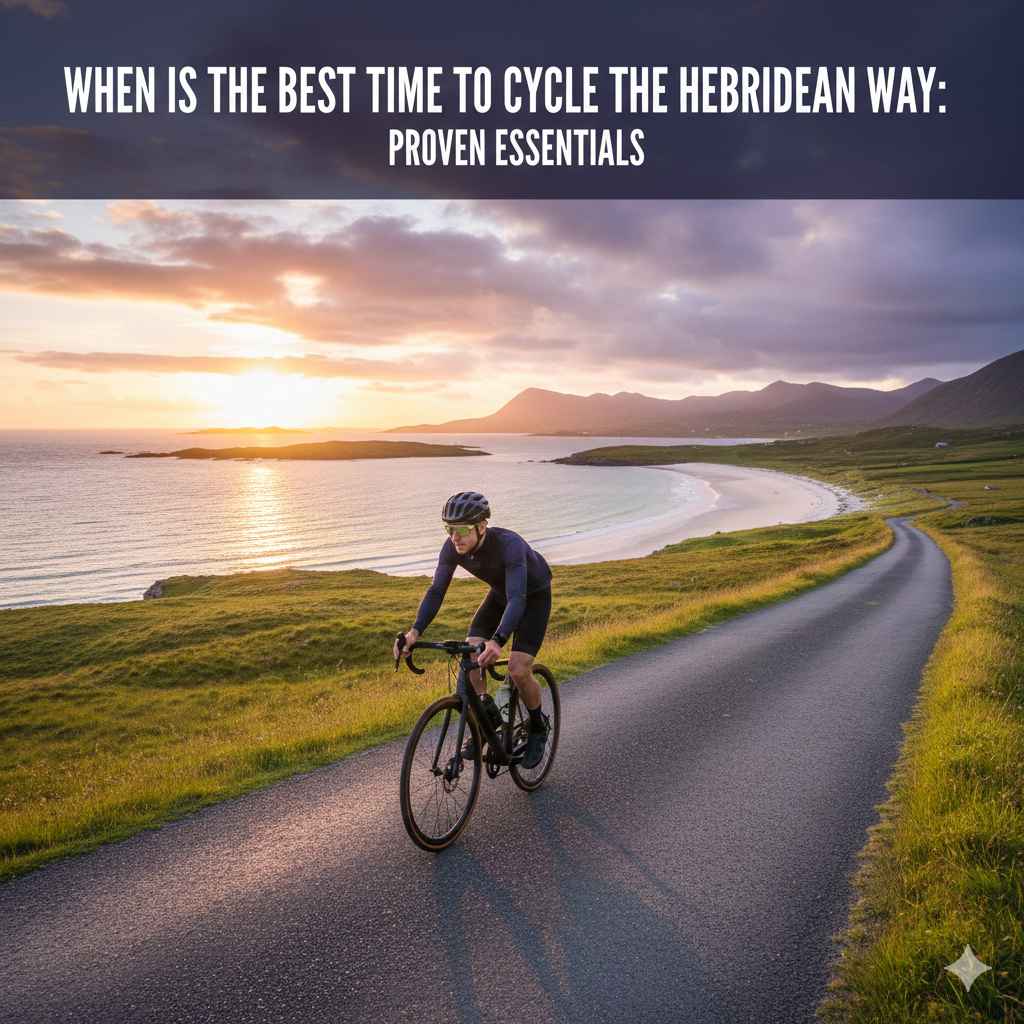
The best time to cycle the Hebridean Way is generally between May and September. This peak season offers the most reliable weather, fewer midges (especially in May or early June), and the longest daylight hours needed to enjoy the stunning scenery of Scotland’s Outer Hebrides.
Cycling the Hebridean Way is an incredible adventure that takes you across rugged islands, stunning beaches, and quiet country lanes. But planning a trip like this across Scotland’s remote Outer Hebrides requires knowing a few key details—especially about the weather! If you pick the wrong time, you might face relentless rain or swarms of tiny biting insects. It can feel overwhelming trying to choose the perfect window that balances good weather with fewer crowds. Don’t worry; thinking about timing is the crucial first step, and we are here to make it simple. We will break down the seasons so you can confidently choose the best month for your unforgettable cycling trip.
Understanding the Hebridean Challenge: Weather and Midges
The Outer Hebrides—comprising islands like the Butt of Lewis, Harris, North and South Uist, Barra, and Vatersay—are famous for their wild, unpredictable nature. When planning your cycle, two main factors completely dictate your comfort level: the weather and the infamous Scottish midge.
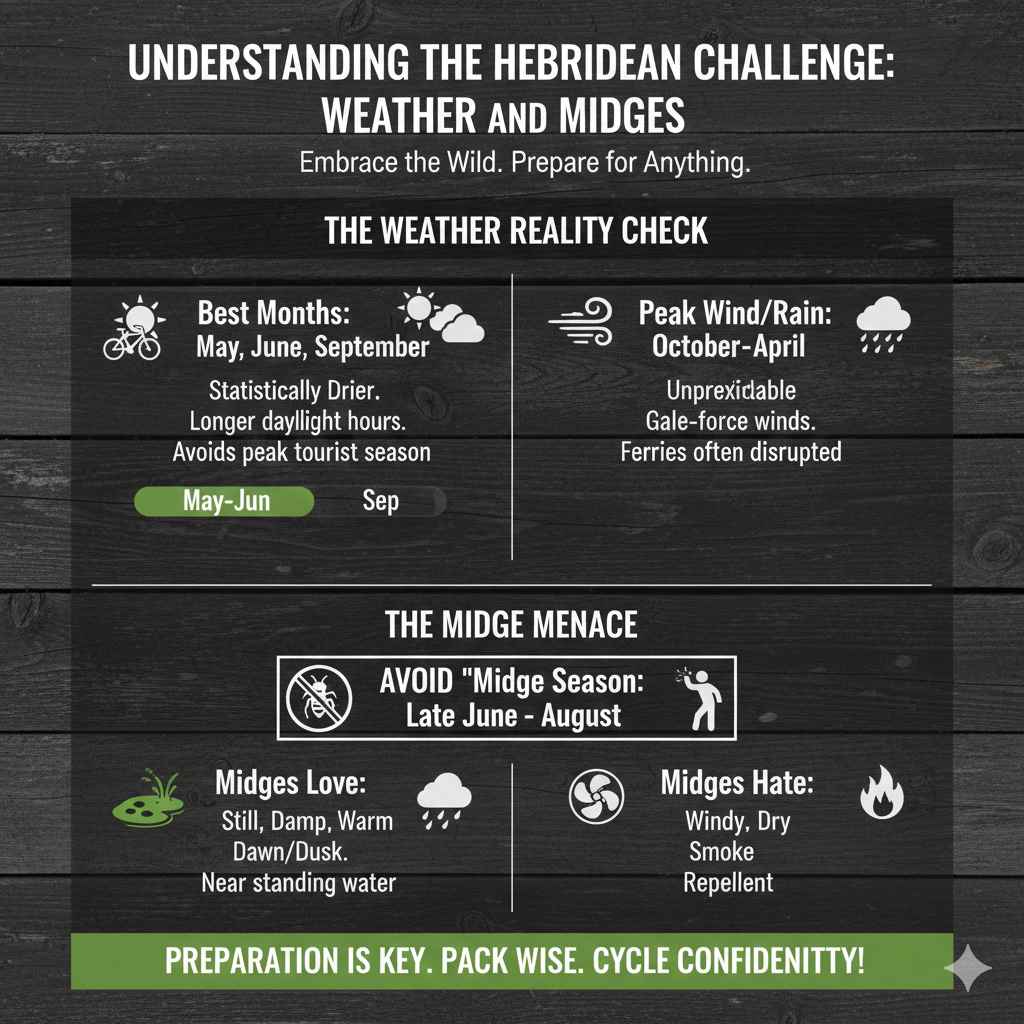
The Weather Reality Check
Scottish weather, particularly on the Atlantic coast, changes its mind quickly. You must pack for four seasons in one day, no matter when you go. However, some months are statistically better than others for longer stretches of dry, calm conditions.
The Midge Menace
Midges (tiny biting flies) are harmless but can turn a beautiful evening into a miserable experience. They thrive in still, damp, warm conditions, usually peaking from late June through August. Avoiding them is a major consideration for many first-time visitors.
When Is The Best Time To Cycle The Hebridean Way: A Month-by-Month Breakdown
To help you decide when is the best time to cycle the Hebridean Way, let’s look at the typical conditions you can expect across the main cycling season (late Spring to early Autumn).
1. Spring (April to Early June): The Quiet Start
Spring is underrated for cycling in Scotland. The landscape bursts into color, and everything is fresh.
April: The Early Bird Gets the Quiet Roads
April is very early in the season. You avoid the main tourist crush, and the midge activity is almost zero. However, be prepared for cold snaps, strong winds, and higher chances of rain.
- Pros: Minimal midges, cheap travel/accommodation, excellent birdwatching.
- Cons: Accommodation might have limited opening hours; cooler temperatures.
May: The Sweet Spot Begins
Many seasoned cyclists regard May as near-perfect. The daylight hours are growing long, the gorse bushes are blooming beautifully, and the dreaded midges have not yet hatched in large numbers. This is often considered the prime shoulder season.
- Pros: Generally good dryness, long days, low midge count.
- Cons: Sea temperatures are still very cold; wind can be a factor.
2. Summer (Late June to August): Peak Season and Long Days
This is the most popular time to tour, thanks to long daylight hours and relatively warmer temperatures.
June: Longest Days, Higher Midge Risk
You get near 18 hours of daylight, giving you maximum riding time. However, as temperatures rise toward the end of the month, the midges start waking up, especially if June sees heavy rain early on.
- Pros: Maximum daylight, vibrant scenery, all services fully operational.
- Cons: Higher cost for ferries and lodging; midges become a notable nuisance from mid-June onwards.
July & August: Warmest, Busiest, and Most Midges
These two months are the warmest, making the cycling physically easier regarding temperature, but they are also the busiest. If you pick these months, booking everything well in advance is essential. Be prepared for consistent midge encounters, particularly near sheltered woodlands or still water in the evenings.
- Pros: Warmest possible average temperatures, vibrant community feel.
- Cons: Peak prices, highest chance of midges, more traffic on popular routes.
3. Autumn (September to October): Winding Down
Autumn brings spectacular light for photography and brings the midges back under control.
September: The Second Peak Season
September is often cited as the second-best month, rivaling May. The crowds thin out significantly after the school holidays, the weather often remains dry and stable, and the intense midge season is over. The light changes, offering dramatic skies perfect for photos.
- Pros: Fewer people, almost no midges, beautiful autumn colors, still decent daylight.
- Cons: Shorter days mean less riding time; some small B&Bs may start closing after mid-September.
October: The Adventurer’s Window
October requires careful planning. While you will have the islands almost to yourself, the chances of needing waterproofs (and perhaps even full winter gear) increase significantly. Daylight is limited, and reliability drops.
- Pros: Complete solitude, very low midge risk.
- Cons: Unpredictable, cold winds, very short daylight hours, services closing down.
The Critical Factor: Midge Management Strategy
If you are truly worried about midges—and you should be if you plan to stop often or camp—your choice of month is crucial. Midges need calm, damp conditions to thrive. Think “thick, still air after a warm day.”
Here is a quick comparison based on midge activity:
| Month | Midge Risk Level | Notes |
|---|---|---|
| April/Early May | Very Low | Cooler temperatures keep hatches suppressed. |
| Late May/Early June | Low to Moderate | When the first major hatches can occur. |
| July/August | High | Peak warmth and dampness encourage swarming. |
| September | Low | Cooler nights kill off most remaining swarms. |
If you are planning to camp, aim for May or September to drastically improve your evenings. If you plan to stay exclusively in B&Bs or hotels, the risk is lower, but still present if you stop outside towns.
Essential Logistics: Booking and Daylight
Choosing the time of year impacts much more than just the weather. It affects how early you need to book and how much time you have each day to ride.
Daylight Hours: Your Natural Power-Up
Cycling isn’t fun when you are fumbling for lights on a narrow road. Longer daylight hours reduce stress and allow for more flexible pacing.
The Hebridean Way runs north-south, generally following the spine of the islands, meaning you ride south from the Butt of Lewis to Vatersay (or vice-versa).
Here is what you can expect for usable daylight during the main season:
- May: Around 16+ hours of useful daylight. Plenty of time for long days.
- June: Close to 18.5 hours of daylight. The sun barely sets, allowing for very late starts or finishes.
- July: Still enjoying very long days, just slightly shorter than June.
- August: Daylight starts noticeably receding, settling around 14-15 hours by month-end.
- September: Around 12-13 hours by the end, similar to a regular summer day elsewhere.
Booking Essentials: Ferry and Accommodation Lead Times
The logistics of getting to the Hebrides and finding somewhere to sleep are critical, especially if you are traveling with your bike (which might need specific booking slots).
The main ferry services are run by CalMac (Caledonian MacBrayne). During peak season (June–August), ferries, especially those connecting the smaller islands, book up fast.
Peak Season (June–August): Book ferries and accommodation at least 4–6 months in advance if you have specific dates. Accommodation is scarce on the Uists, so do not leave it late.
Shoulder Season (May & September): Booking 2–3 months ahead is usually sufficient, but sooner is always safer for popular spots like Stornoway.
For official ferry booking information and timetables, always check the official CalMac website, as schedules shift regularly based on demand.
Weather Variables by Island Group
While the weather is generally consistent across the chain, the prevailing winds (usually southwesterly) affect the west-facing beaches (the famous white sands) differently than the eastern, more sheltered sides.
The Northern Isles (Lewis and Harris)
These islands are often the windiest and most exposed. In spring, you will likely face strong headwinds if you ride south. Harris, with its stunning mountains and quiet roads, demands excellent visibility.
The Central Isles (North & South Uist, Benbecula)
These islands feature the “Machair”—the unique fertile lowland grassland found only on the west coast of the Outer Hebrides. This area is flatter, very exposed to the western winds, and the midge risk can be surprisingly high here if the weather stagnates, as the Machair holds moisture well.
The Southern Isles (Barra and Vatersay)
These are often the most remote leg of the journey. Weather tends to be slightly more settled, but access relies heavily on ferry schedules, which can be canceled due to high seas, even in summer.
The “Perfect Balance” Recommendation for Beginners
If you are new to long-distance cycling or sensitive to bugs, you should aim for the period where good weather trends are strongest, crowds are lighter, and midges are absent.
This leads us to two standout months:
Option 1: The May Miracle
Why it works: You benefit from very long days, the landscape is vibrant green, and the midges are still dormant due to cooler soil temperatures. You get a taste of summer weather without the August peak costs or bugs.
Option 2: The September Sweet Spot
Why it works: The holiday crowds have vanished, prices drop slightly, and the midges have retreated. The weather is often surprisingly settled and dry, offering excellent riding conditions before the harsh, dark rains of late autumn set in.
A good rule of thumb for planning your route, regardless of the time of year, is to secure your transport first. The route is an adventure, but getting there and sleeping comfortably is the foundation of success. For route advice, studying official cycling resources, such as those provided by VisitScotland, can help you finalize your itinerary based on island-to-island travel times.
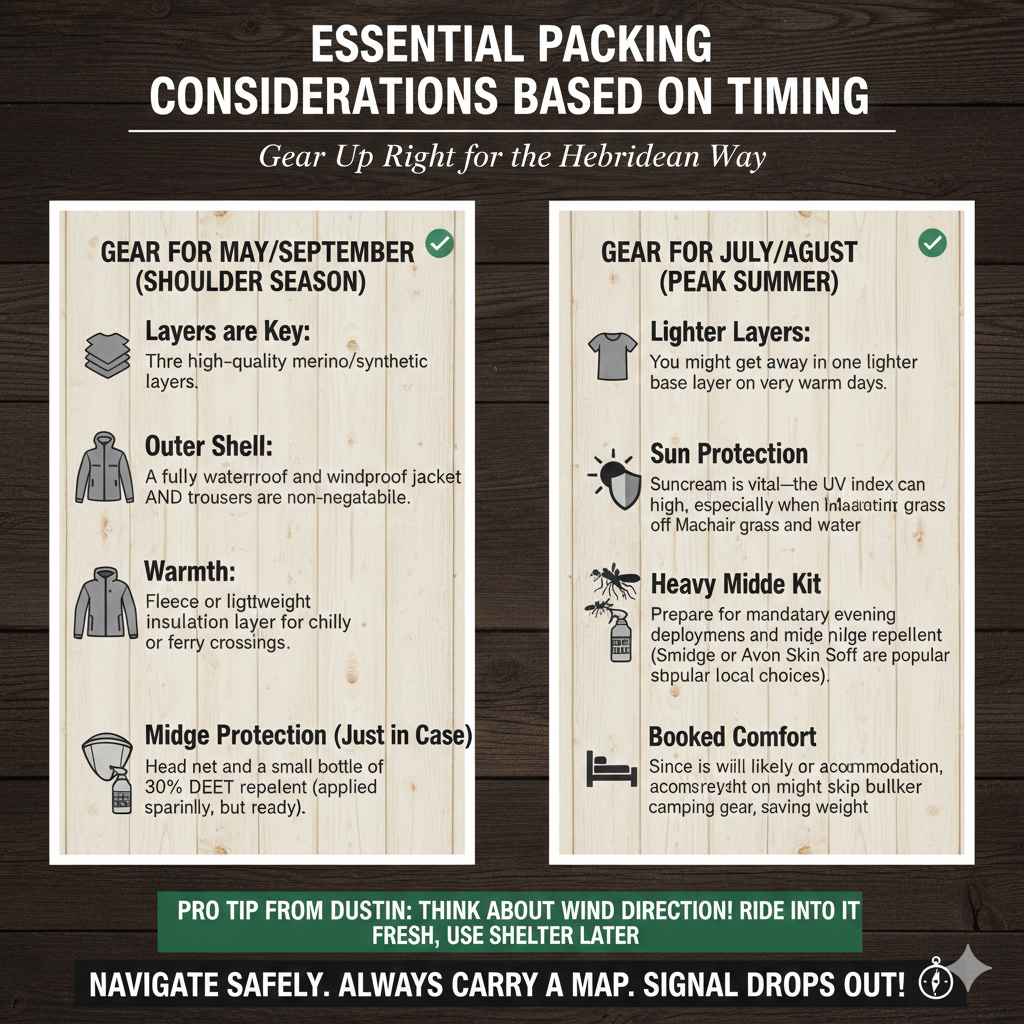
Essential Packing Considerations Based on Timing
Your choice of time dictates exactly what specialized gear you pull out of your wardrobe. Remember, safety first when dealing with remote Scottish weather. Always carry navigation materials, even if you use a GPS, as mobile signal can drop out completely between villages.
Here is a quick gear guide tied to the season:
Gear for May/September (Shoulder Season)
-
- Layers are Key: Three high-quality merino/synthetic base layers.
- Outer Shell: A fully waterproof and windproof jacket AND trousers are non-negotiable.
- Warmth: Fleece or lightweight insulation layer for chilly mornings or ferry crossings.
- Midge Protection (Just in Case): Head net and a small bottle of 30%+ DEET repellent (applied sparingly, but ready).
Gear for July/August (Peak Summer)
-
-
- Lighter Layers: You might get away with one lighter base layer on very warm days.
- Sun Protection: Suncream is vital—the UV index can be high, especially when reflecting off the Machair grass and water.
- Heavy Midge Kit: Prepare for mandatory evening deployment of head nets and midge repellent (Smidge or Avon Skin So Soft are popular local choices).
- Booked Comfort: Since you will likely rely on accommodation, you might skip bulkier camping gear, saving weight.
-
Pro Tip from Dustin: Think about the wind direction when planning your daily stages. Aim to ride towards the wind when you know you are freshest (morning) and save the more sheltered routes for later in the day, or use the lee side of major hills for a rest stop.
FAQ: Beginner Cycling on the Hebridean Way
Getting ready for a big trip can bring up many small questions. Here are clear, simple answers to common beginner concerns about timing and logistics.
Q1: What is the main route of the Hebridean Way?
A: The Hebridean Way is a national active travel route (Route 199). It covers about 185 miles (298 km) traveling from the northern tip of the Butt of Lewis down to the island of Vatersay in the south. It uses a mix of quiet A-roads, smaller single-track country lanes, and several inter-island ferry/causeway links.
Q2: Do I have to take a ferry, or are there bridges?
A: The route relies on both! There are several fantastic, long causeways connecting islands like Benbecula, South Uist, and Eriskay. However, you must take ferries to get between the main island groups (like Lewis/Harris to Uist, and Uist to Barra).
Q3: Is cycling the entire route doable in one week?
A: Yes, but only if you are already fit. Most cyclists take 7 to 10 days to complete it comfortably, allowing for rest days, poor weather, and time to enjoy the incredible beaches. If conditions are good, fit riders can cover the distance quicker.
Q4: Where is the best place to source bike repairs if something goes wrong?
A: Stornoway (on Lewis) has the best selection of bike shops and mechanical help. Outside of Stornoway, options become very sparse, often limited to small harbor vendors or general hardware stores willing to help in a pinch. Carry a comprehensive repair kit, as you will be far from help.
Q5: Is wild camping allowed on the Hebrides?
A: Wild camping is generally permitted under the Scottish Outdoor Access Code, except on certain sections of the Machair which are fragile habitats. Always pitch late, leave no trace, and ask permission if camping near occupied properties. Camping during the midges season is extremely challenging!
Q6: How do I manage food and water supplies on the quieter islands?
A: Stock up whenever you pass through Stornoway or Lochboisdale. On the smaller islands (like Harris and the Uists), shops are few and close early, often around 5:30 PM. Always carry enough snacks and at least two large water bottles (plus a filter/purifier if you treat water from streams—though taps in populated areas are usually safe).