
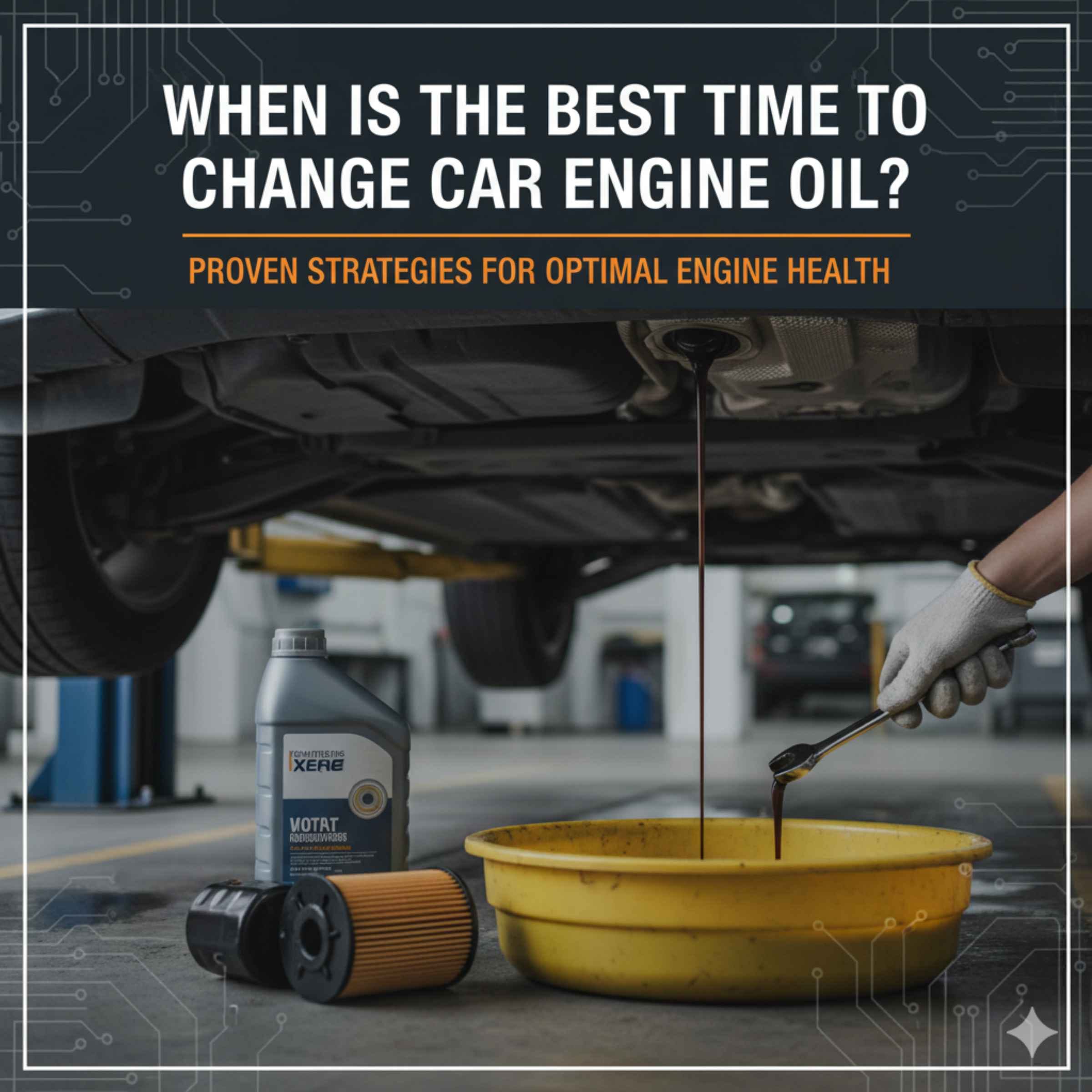
The proven best time to change your car engine oil is generally between 5,000 and 7,500 miles for most modern cars using synthetic blends or full synthetic oil. Always defer to your vehicle owner’s manual for the precise schedule, as driving habits and oil type significantly influence the exact replacement interval.
Putting off an oil change feels like an easy way to save a few bucks now, but it can cost you much more later. That dark, sludgy stuff in your engine is working overtime, fighting heat and friction. Knowing exactly when to swap it out is key to keeping your car running smoothly and reliably. Dealing with confusing mileage numbers or those flashing dashboard lights can be stressful. Don’t worry! I’m Dustin Hall, and I’m here to clear up all the confusion. We’ll break down the simple rules for timing your next oil change so you can feel completely confident under the hood. Let’s look at the proven factors that tell you the best time to change your oil.
Why Knowing the “Best Time” Matters So Much
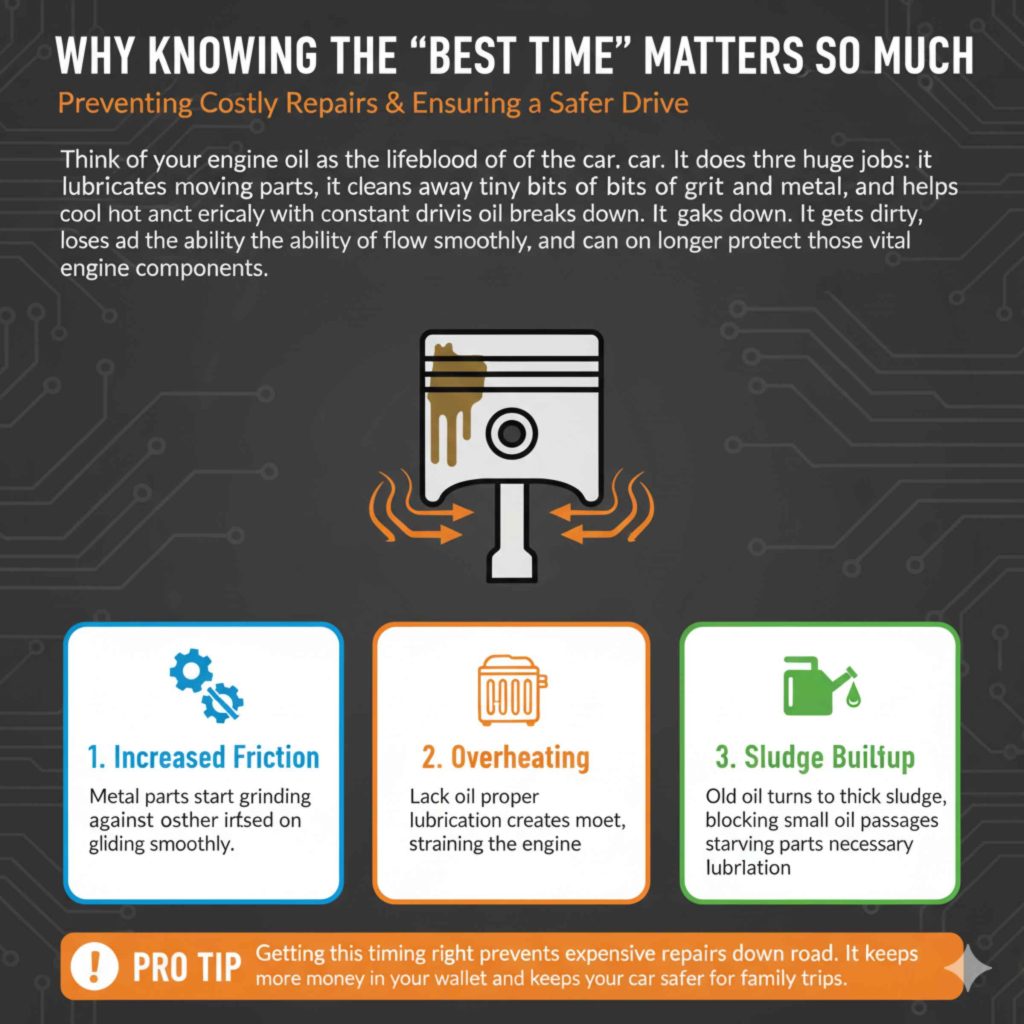
Think of your engine oil as the lifeblood of your car. It does three huge jobs: it lubricates moving parts, it cleans away tiny bits of grit and metal, and it helps cool down hot areas. Over time, especially with constant driving, this oil breaks down. It gets dirty, loses its ability to flow smoothly, and can no longer protect those vital engine components.
When oil breaks down, bad things happen:
- Increased Friction: Metal parts start grinding against each other instead of gliding smoothly.
- Overheating: Lack of proper lubrication creates more heat, straining the engine.
- Sludge Buildup: Old oil turns into thick sludge, blocking small oil passages and starving parts of necessary lubrication.
Getting this timing right prevents expensive repairs down the road. It keeps more money in your wallet and keeps your car safer for family trips.
The Old Rules vs. The Modern Reality: Mileage Milestones
If you learned to drive years ago, you likely remember hearing the magic number: “Every 3,000 miles.” That rule was great for older engines and conventional mineral oils, but it’s outdated for most cars built in the last 15 years.
The Impact of Oil Type: Conventional vs. Synthetic
The biggest factor today is what kind of oil your manufacturer recommends or what you put in during your last change. Oil is rated by high standards from organizations like the American Petroleum Institute (API).
Here is a general guide, but remember, always check your specific owner’s manual first:
| Oil Type | Approximate Recommended Interval (Miles) | Why the Difference? |
|---|---|---|
| Conventional (Mineral Oil) | 3,000 – 5,000 miles | Breaks down faster under high heat. |
| Synthetic Blend | 5,000 – 7,500 miles | Better protection than conventional, but still contains some mineral base stock. |
| Full Synthetic Oil | 7,500 – 10,000+ miles | Engineered for superior protection, heat resistance, and longevity. |
For many drivers today, using full synthetic oil is the best choice for maximizing protection and extending the time between services. Always use the viscosity grade (like 5W-30 or 0W-20) listed on your oil filler cap or in your vehicle manual.
The Importance of Time: When You Haven’t Driven Enough
What if you don’t drive very often? That little yellow light on your dash might not be triggered by mileage, but by time alone. Even if you only drive 2,000 miles a year, you should still change your oil.
Why? Because moisture and condensation build up inside the engine over time, especially if the car sits for a long time. This moisture mixes with the oil, which causes it to thicken and reduces its ability to lubricate. It can also lead to corrosion inside your engine.
The general rule for low-mileage drivers: Change your oil at least once every six months, regardless of the mileage.
Understanding Your Driving Habits: Severe vs. Normal Conditions
When your car manufacturer provides an oil change schedule, they usually offer two scenarios: Normal Driving Conditions and Severe Driving Conditions. Most people think they fall into the “Normal” category, but often, your daily commute actually fits the “Severe” criteria.
What Defines “Severe Driving Conditions”?
If any of the following sound like your regular driving routine, you should lean toward changing your oil closer to the lower end of the recommended mileage window (or even sooner):
- Stop-and-Go Traffic: Idling frequently generates a lot of heat without moving fast enough for the engine to reach peak operating temperature efficiently.
- Short Trips: Driving less than 10 miles (especially in cold weather). Short trips don’t burn off condensation, trapping moisture in the oil.
- Extreme Temperatures: Driving consistently in very hot weather (over 90°F) or very cold weather (below freezing). Extreme temperatures stress the oil additives.
- Towing or Heavy Loads: Pulling a trailer, carrying heavy cargo, or driving up steep grades routinely puts extra strain on the engine.
- Dusty Environments: Driving on dirt roads or in extremely dusty areas allows more contaminants to enter the system, even with a good air filter.
If you drive mostly on the highway at consistent speeds with the A/C off, you are likely in the Normal category, meaning you can safely extend your interval toward the higher end (e.g., 7,500 miles for a synthetic blend).
The Reliable Clues: How to Know For Sure
While mileage and time give you a baseline, your car often gives you clear signals that an oil change is due. Paying attention to these clues is the smartest way to maintain your vehicle.
1. The Owner’s Manual: Your Car’s Bible
This is the single most important tool you have. The manufacturer knows exactly what type of oil your engine needs and how long it is scientifically proven to last under specific conditions. Look for the Maintenance Schedule section. This information is specific to your engine design.
2. The Oil Life Monitoring System (OLMS / Maintenance Alert)
Most modern vehicles (those built roughly after 2008) utilize an Oil Life Monitoring System. This electronic system tracks hours of operation, engine temperature, start/stop cycles, and driving speed to calculate remaining oil life far more accurately than just counting miles.
When the system alerts you that oil life is near 15% or 20%, that is the best time to schedule your service. It means the additives are nearing depletion, and the oil’s protective qualities are weakening.
3. Visual Inspection: The Dipstick Test
You can check the oil yourself in under five minutes. This simple test gives you immediate feedback.
- Ensure your car is on level ground and has been off for at least 10 minutes so the oil drains back into the pan.
- Pull out the dipstick, wipe it clean with a lint-free cloth or paper towel.
- Reinsert the dipstick fully, then pull it out again to check the level and condition.
What to look for on the dipstick:
- Color: Fresh oil is amber or light honey-colored. If it looks opaque black, thick, or like muddy coffee, it needs changing immediately.
- Texture: Rub a small amount between your thumb and forefinger. If it feels gritty or sandy, that means abrasive particles are circulating, indicating the oil has failed to suspend the debris effectively.
- Smell: If the oil smells strongly of gasoline, it could indicate an engine running too rich or fuel leaking past piston rings, which dilutes the oil’s thickness.
For more technical background on how oil breaks down chemically, you can review resources on tribology (the science of friction, wear, and lubrication) from institutions like the National Science Foundation, which detail the shear stress oil experiences in an engine.
The Trade-Off: Changing Early vs. Changing Late
When faced with the choice, should you change your oil “early” or push it to the absolute limit?
Pros and Cons of Changing Oil Early (e.g., 3,000 miles when 7,500 is recommended)
Pros:
- Maximum component protection and engine cleanliness.
- Peace of mind, especially if you drive severely.
- May extend the lifespan of certain engine seals in very old or high-performance vehicles.
Cons:
- Increased maintenance cost over time.
- Environmental impact from disposing of oil more frequently.
- Wasted oil if using high-quality synthetics specified for longer life.
Pros and Cons of Changing Oil Late (e.g., 10,000 miles when 5,000 is recommended)
Pros:
- Saves significant money over the life of the car.
- Less time spent on maintenance trips.
Cons:
- Risk of sludge formation and premature wear.
- Engine efficiency may drop slightly due to increased friction.
- Voiding warranties if you fail to adhere to the manufacturer’s minimum requirements.
The Verdict: Especially with modern synthetic oils, changing slightly before the recommended interval is cheap insurance. Changing drastically after the recommended interval risks real engine damage. If your car permits 7,500 miles, aiming for 7,000 is a great, confident approach.
DIY vs. Professional Service: Timing Considerations
Deciding where to get your oil changed can also influence the timing. Both options are great, provided they follow best practices.
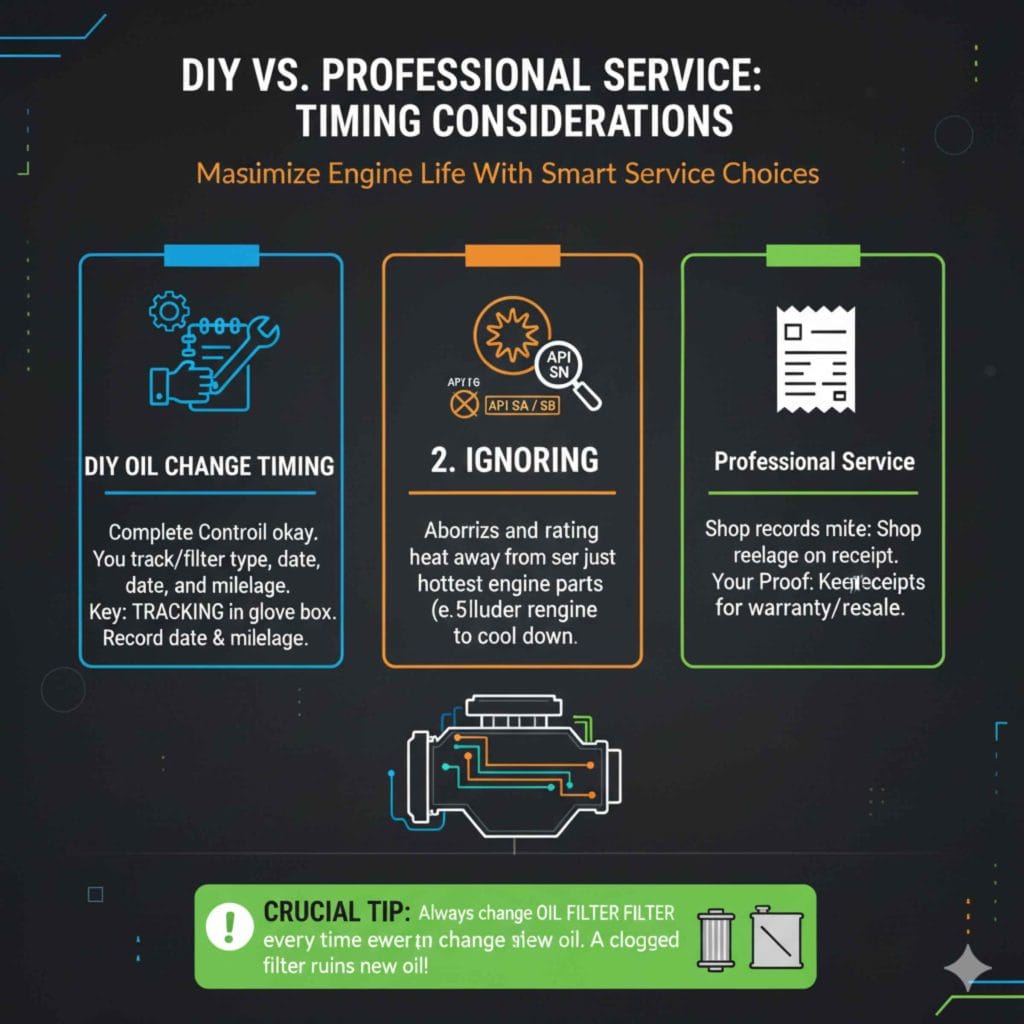
DIY Oil Change Timing
If you change your own oil, you have complete control. You know exactly what oil and filter you used, and you can reset your own maintenance reminder. The key here is tracking:
- Keep a small notebook in your glove box.
- Record the date and mileage every single time you change the oil or filter.
- This record is invaluable for warranty purposes and resale value.
Shop Oil Change Timing
When using a professional shop, they should always stamp or write down the mileage on your service receipt. This is your proof.
Crucial Tip: Ensure the mechanic changes the oil filter every single time you change the oil. The filter traps debris. Putting new oil through an old, clogged filter defeats the entire purpose of the service.
When to Consult a Mechanic Immediately (Warning Signs)
Regardless of your oil change schedule, these symptoms mean you must stop driving and check your oil level and condition immediately:
| Symptom | What It Usually Means |
|---|---|
| Oil Pressure Warning Light On | Critically low oil level or a serious pump failure. Stop driving immediately. |
| Engine Knocking or Tapping Sounds | Metal parts are hitting each other due to lack of lubrication (bearing wear). |
| Excessive Smoke from Exhaust | Oil is burning inside the combustion chamber (blue/grey smoke) due to worn gaskets or piston rings. |
| Oil Level Drops Very Quickly | You have an active internal or external leak that needs fixing. |
Frequently Asked Questions (FAQ) for Beginner Drivers
Q1: Do I really need to use synthetic oil if my manual just says “5W-30”?
A: Not always. If your manual lists conventional oil as an acceptable option, you can use it, but you will need to change it more frequently (closer to 3,000–5,000 miles). However, synthetic oil offers superior protection, and most modern cars are designed to benefit greatly from it.
Q2: How often should I change the oil filter if I’m only changing the oil every 10,000 miles?
A: Always change the oil filter every single time you change the oil. A clean filter assures that the new, clean oil stays clean longer and does its job correctly from mile one.
Q3: What happens if I accidentally put the wrong type/viscosity of oil in my car?
A: If it’s slightly off (e.g., 5W-30 instead of 5W-20), you are likely okay for a short period, but you should carefully check your manual and correct it at the next opportunity. If it’s drastically wrong (like using thick gear oil), you should not drive the car until it is drained and replaced with the correct fluid.
Q4: My oil looks almost black, but I’m only at 4,000 miles. Should I wait?
A: If it is dark black but flows smoothly and you are under your recommended maximum mileage or time limit, you can likely wait. However, if you are driving under severe conditions, changing it now provides excellent insurance and will only cost a small amount more than waiting.
Q5: Does using better oil mean I can skip the maintenance reminder light?
A: No. The maintenance light is based on driving metrics tracked by the car’s computer, not the chemical analysis of the oil. Always reset the light when you service the oil, but follow the light’s timing as a reliable guide, especially if your driving varies greatly day-to-day.
Q6: Can I use conventional oil if I drive very little (less than 5,000 miles a year)?
A: Yes, in very low-mileage situations, conventional oil changed every six months is often adequate because the issue isn’t wear, but moisture buildup. However, many mechanics still recommend a synthetic blend to combat corrosion better, even when sitting idle.
Final Confidence Boost: Mastering Your Oil Change Schedule
You now have all the proven knowledge needed to confidently determine the best time to change your car’s engine oil. Stop guessing based on old myths!
Remember this three-step approach for maximum engine health:
- Check Your Manual: Determine the manufacturer’s recommended mileage and time frames (e.g., 7,500 miles or 12 months).
- Assess Your Habits: If you idle often, drive short distances, or tow heavy loads, cut that recommendation in half, or stick to the “Severe” schedule.
- Trust the Tech: If your car has an Oil Life Monitor, follow its guidance; it’s using sophisticated data tailored just for your car’s performance.
By consistently matching your oil changes to your lifestyle, you are ensuring your engine stays clean, cool, and protected for thousands of miles to come. Great job taking control of your car maintenance—that’s the real key to saving money and driving stress-free!