
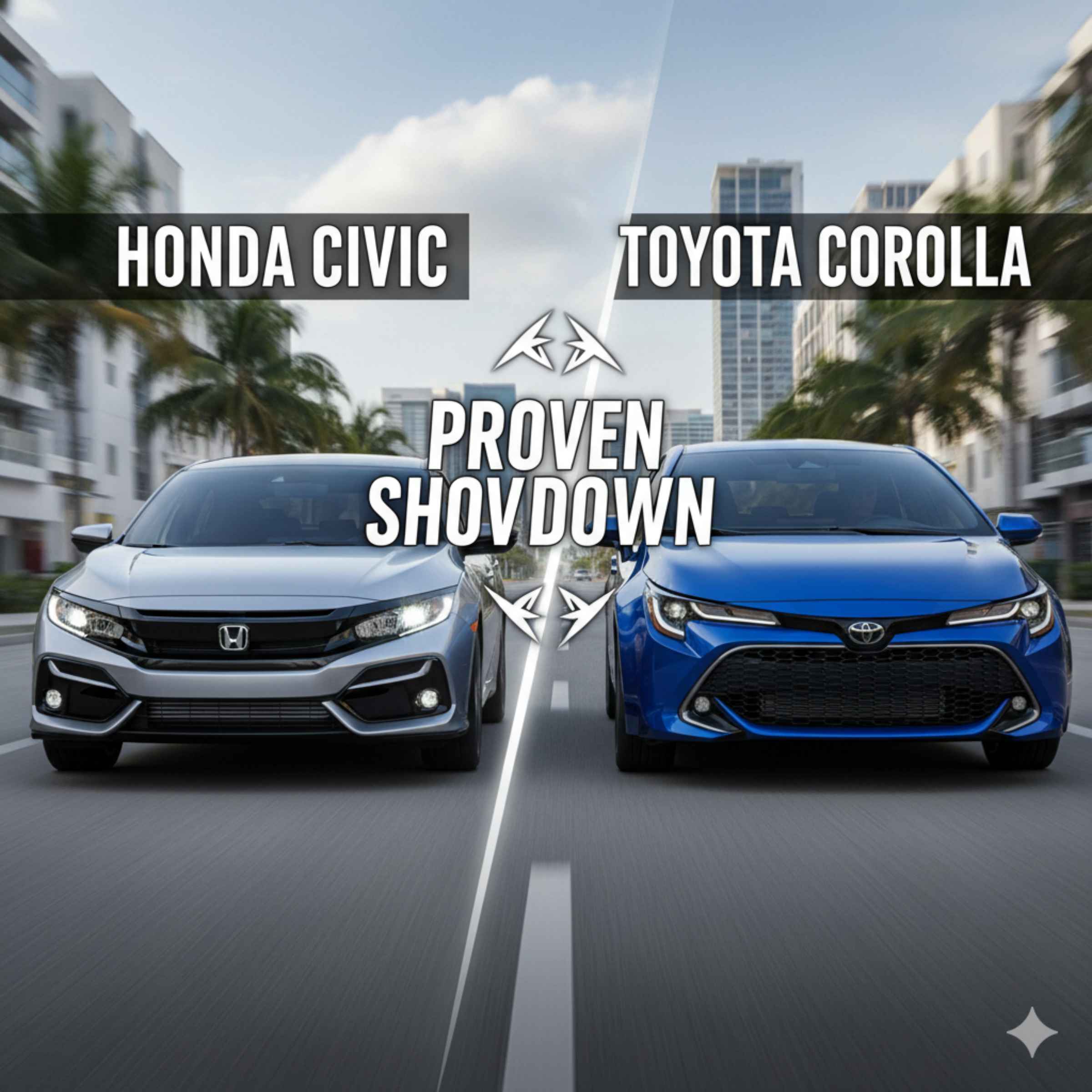
Quick Summary: For modern efficiency and tech, the Toyota Corolla often edges out the Honda Civic. However, the Civic usually wins on driving fun and slightly more interior space. Both offer fantastic long-term reliability, making your final choice depend on whether you prioritize sporty feel or proven, worry-free commuting.
Choosing a new car can feel overwhelming. Two names always seem to pop up when you talk about dependable rides: the Honda Civic and the Toyota Corolla. They are the kings of the compact car world! Many drivers ask, “What’s a better car, Honda Civic or Toyota Corolla?” It is a tough choice because both are excellent. This comparison aims to clear up the confusion, using simple facts instead of fancy dealer talk. We will look at what matters most: running costs, how they feel on the road, and which one makes more sense for your wallet now and down the road. Get ready; we’re breaking down this famous rivalry so you can drive away with confidence!
The Showdown: Honda Civic vs. Toyota Corolla – A Deep Dive for Everyday Drivers
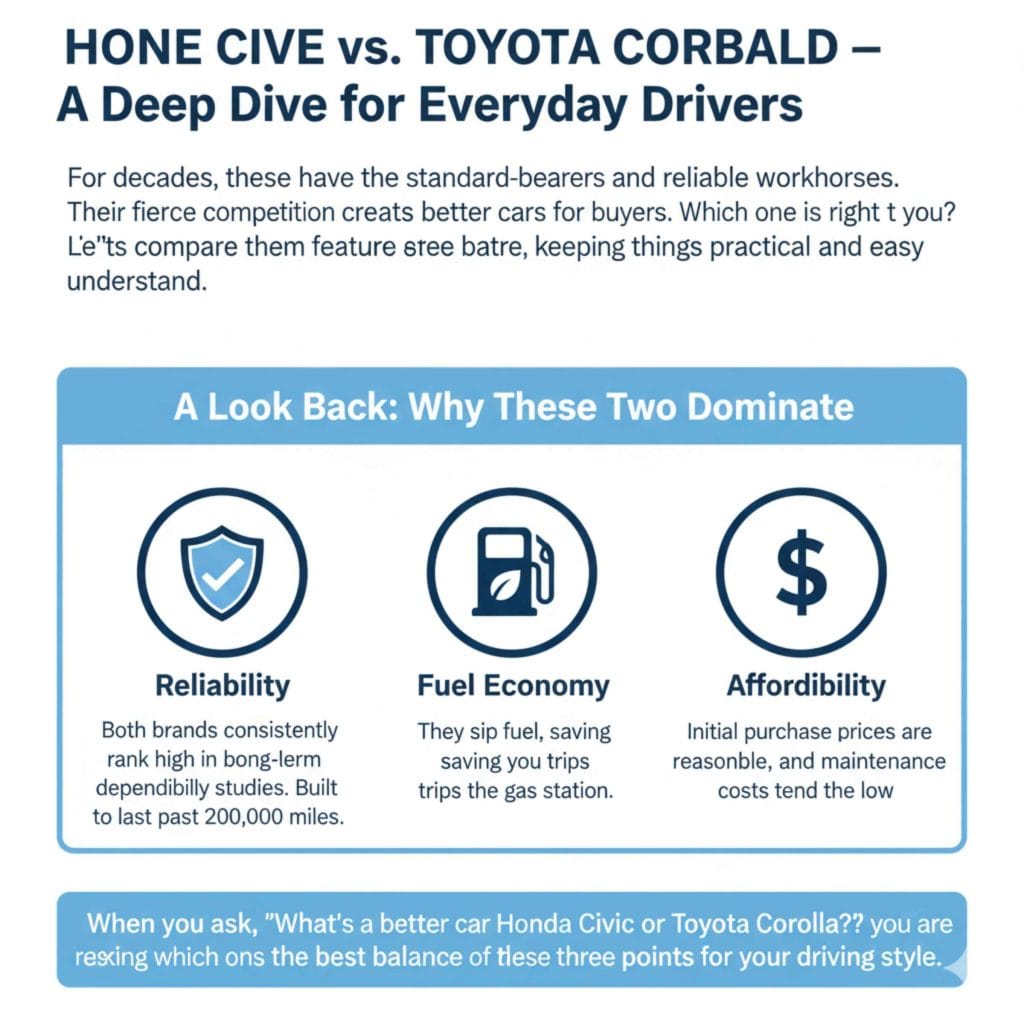
For decades, the Honda Civic and the Toyota Corolla have been the standard-bearers in the compact car segment. They compete fiercely, and that competition is great news for you, the buyer! It keeps both companies working hard to deliver top quality at fair prices. But which one deserves the spot in your driveway? Let’s compare them feature by feature, keeping things practical and easy to understand.
A Look Back: Why These Two Dominate
Before we compare the newest models, it helps to know why these cars stick around. They aren’t flashy muscle cars; they are the reliable workhorses of the road. Their success boils down to three core ideas, something drivers have trusted for years:
- Reliability: Both brands consistently rank high in long-term dependability studies (check out Consumer Reports data for annual standings). They are built to last past 200,000 miles with basic care.
- Fuel Economy: They sip fuel, saving you trips to the gas station.
- Affordability: Initial purchase prices are reasonable, and maintenance costs tend to be low.
When you ask, “What’s a better car Honda Civic or Toyota Corolla?”, you are really asking which one offers the best balance of these three points for your driving style.
Performance and Driving Experience: Fun vs. Comfort
This is often where buyers feel the biggest difference. While both are excellent for daily driving, they have distinct personalities when you hit the accelerator or corner on a winding road.
The Feel Behind the Wheel
Think of it this way: the Civic usually feels slightly more energetic, while the Corolla feels smoother and more relaxed.
Honda Civic: The Sportier Contender
The Civic typically offers slightly peppier engine options, especially in its standard four-cylinder trims. You might notice a bit more responsiveness when you press the gas pedal. Honda engineering often prioritizes a slightly firmer suspension setup, which translates to better handling when you take turns. It feels engaging.
Toyota Corolla: The Smooth Commuter
The Corolla is engineered for maximum comfort and ease. Its steering often feels lighter, which is fantastic for parking and city driving. The ride quality tends to soak up bumps better than the Civic, making long highway drives very pleasant. It prioritizes predictability over excitement.
Engine Options Comparison (Generalized Example)
While specifications change yearly, here is a general look at what powers these vehicles. Always check the specific model year you are considering!
| Feature | Honda Civic (Typical Standard Engine) | Toyota Corolla (Typical Standard Engine) |
|---|---|---|
| Horsepower Range | Slightly higher (e.g., 158 – 180 hp) | Slightly lower (e.g., 139 – 169 hp) |
| Transmission Type | CVT (Continuously Variable Transmission) or Manual | CVT (Continuously Variable Transmission) or Manual |
| Driving Feel | More agile and responsive | Smoother and more relaxed |
| Available Upgrades | Often has a stronger turbo upgrade option | Strong focus on Hybrid efficiency |
If you enjoy the drive and want something that feels a bit more lively, the Civic often has the edge. If your commute is mostly stop-and-go traffic and you value a plush ride, the Corolla might suit you better.
Interior Space and Comfort: Who’s Got More Room?
For many drivers, interior space is a huge factor. Can you fit your friends, your gym bag, or that big box store haul comfortably? Here’s where the Civic usually steps ahead.
Passenger Room and Cargo Capacity
The Honda Civic has historically been slightly larger than the Corolla, especially in the backseat legroom department. This makes a real difference on longer trips with adult passengers.
For hauling things, the trunk space also matters. Generally:
- Civic Sedan: Offers competitive, often slightly larger trunk space than the Corolla.
- Corolla Sedan: Has a perfectly adequate trunk, but it sometimes feels a bit smaller than the Civic’s offering.
Tip for Tall Drivers: Always sit in both cars during a test drive! Even if specs say the Corolla has enough headroom, your personal height and seating position might make one feel instantly better than the other. Getting that perfect seat adjustment boosts driving confidence.
Cabin Quality and Tech
Both brands have made massive strides in upgrading their cabins in recent years. Gone are the cheap plastics of old. Today, you get sophisticated designs.
- Infotainment: Both systems are intuitive now. Toyota often uses its straightforward system, while Honda integrates its screens very cleanly into the dashboard design.
- Material Feel: While both use durable materials, many reviewers feel the Civic’s cloth or leather seating materials feel a touch more upscale in comparable trims.
- Practical Features: Look for small comforts like well-placed USB ports and smart storage cubbies. Both excel here, but personal preference dictates which layout you like better.
Fuel Economy and Running Costs: The Wallet Check
This is where we get down to brass tacks. A great car is one you can afford to run week in and week out. Both cars are excellent savers, but the Corolla often holds a slight advantage, especially if you consider hybrid options.
MPG Showdown
When comparing the standard gasoline models, the figures are often neck-and-neck. A small drop or gain in miles per gallon (MPG) can add up over five years.
However, Toyota has poured serious resources into its Hybrid technology. If you live in a city or spend a lot of time just commuting short distances, the Corolla Hybrid consistently delivers class-leading fuel numbers. According to the U.S. Department of Energy’s Fuel Economy website, the Corolla Hybrid often achieves higher city MPG ratings than any non-hybrid Civic.
Maintenance and Reliability Scores
This is arguably the most significant factor for long-term ownership satisfaction. Low maintenance costs mean less money spent at the mechanic.
Reliability Ranking (Simplified)
- Toyota Corolla: Often cited as the benchmark for “set it and forget it” maintenance. Parts are widely available and generally inexpensive.
- Honda Civic: Also rock-solid reliable. Some mechanics note that highly turbo-charged versions might require slightly more attention to certain components over extreme mileage compared to Toyota’s simpler naturally aspirated engines, but this difference is usually minor for the average driver.
Bottom Line on Costs: Both are cheap to maintain, but the Corolla often wins by a hair due to Toyota’s legendary simple engineering.
Safety: Which One Protects You Better?
Safety should never be a compromise. Thankfully, both Honda and Toyota equip their flagship compacts with a full suite of modern safety aids, often standard across the lineup.
Standard Safety Suites
When researching newer models (generally 2017 onwards for the best tech), you will find similar offerings:
- Honda Sensing: Includes Collision Mitigation Braking System (CMBS), Road Departure Mitigation (RDM), Adaptive Cruise Control (ACC), and Lane Keeping Assist System (LKAS).
- Toyota Safety Sense (TSS): Includes Pre-Collision System with Pedestrian Detection, Lane Departure Alert with Steering Assist, and Dynamic Radar Cruise Control.
Both systems perform extremely well in crash testing conducted by organizations like the Insurance Institute for Highway Safety (IIHS). For the most up-to-date safety ratings, always check the latest data directly from the IIHS website.
Crash Test Popularity
In many recent model years, both the Civic and the Corolla have achieved the coveted “Top Safety Pick” awards from the IIHS. This means that regardless of which you choose, you are getting a vehicle designed with excellent protection in mind.
The Practical Side: Resale Value
When you decide to sell your car years down the road, how much money you get back depends heavily on resale value. A car that holds its value helps lower your total cost of ownership.
Historically, both the Civic and the Corolla are superstars in retaining value. They depreciate slower than many competitors.
Table: Resale Value Comparison (General Trend)
| Metric | Honda Civic Trend | Toyota Corolla Trend |
|---|---|---|
| Initial Depreciation (First 3 Years) | Excellent retention | Excellent retention |
| Market Demand | Very High (due to sporty appeal) | Extremely High (due to reliability perception) |
| Long-Term Value | Strong (often slightly behind base Corolla) | Often cited as one of the absolute best in the industry |
While both command great prices in the used market, the Corolla often maintains a minuscule edge in projected five-year resale value simply because its reputation for mechanical longevity is nearly unmatched.
Making the Final Choice: Which Car is Truly Better for You?
So, after all this comparison, “What’s a better car Honda Civic or Toyota Corolla?” The answer is highly personal. Here is a simple way to decide based on your priorities:
Choose the Honda Civic If:
- You prefer a car that feels slightly sportier and more engaging to drive.
- You frequently carry taller passengers in the back seat or need slightly more usable cargo room.
- You value interior design that feels modern and perhaps a bit sportier.
- You are interested in a higher performance engine option (like the Si, if budget allows).
Choose the Toyota Corolla If:
- Your number one priority is proven, worry-free, low-cost ownership over many years.
- You want the best possible fuel economy, especially if you look at the Hybrid model.
- You prefer a softer, quieter, and more cushioned daily ride.
- Maximum retained resale value is critical to you.
Remember, a test drive provides the final, most important piece of data. How does the seat feel? Can you see well out of the windows? Does the driver information screen make sense to you? These small things matter more than any graph or chart.
Beginner’s Guide: Quick Checks Before Buying Used
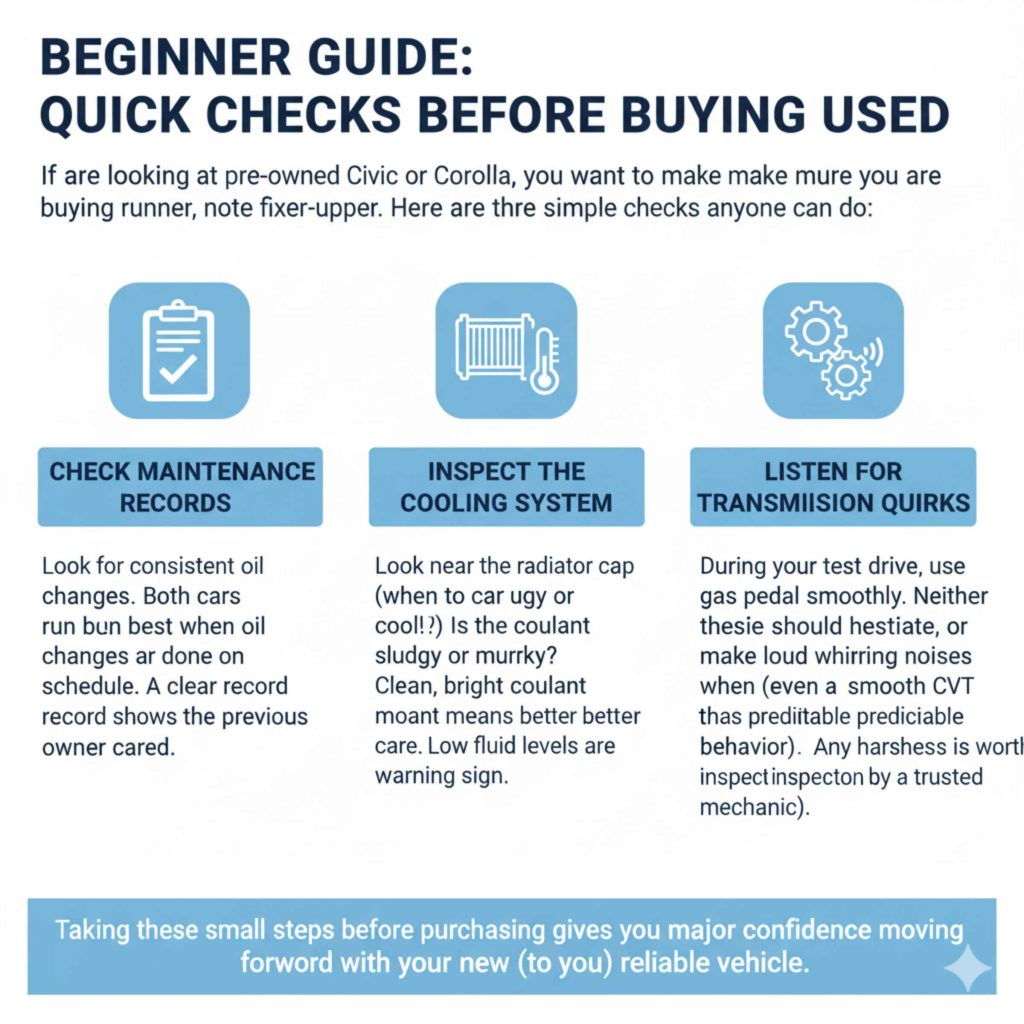
If you are looking at a pre-owned Civic or Corolla, you want to make sure you are buying a runner, not a fixer-upper. Here are three simple checks anyone can do:
- Check Maintenance Records: Look for consistent oil changes. Both cars run best when oil changes are done on schedule. A clear record shows the previous owner cared.
- Inspect the Cooling System: Look near the radiator cap (when the car is cool, of course!). Is the coolant sludgy or murky? Clean, bright coolant means better care. Low fluid levels are a warning sign.
- Listen for Transmission Quirks: During your test drive, use the gas pedal smoothly. Neither of these cars should shudder, hesitate, or make loud whirring noises when the transmission shifts (even a smooth CVT has predictable behavior). Any harshness is worth deeper inspection by a trusted mechanic.
Taking these small steps before purchasing gives you major confidence moving forward with your new (to you) reliable vehicle.
Frequently Asked Questions (FAQ)
Q1: Which car typically has a lower cost of ownership?
A: Overall, the Toyota Corolla often wins by a slim margin. Toyota parts are widely available and often slightly cheaper, and its basic engine designs tend to require less specialized attention over extremely high mileage compared to some of the more complex turbocharged options on the Civic.
Q2: Does the Honda Civic have better horsepower than the Corolla?
A: Generally, yes, the standard and upgraded gasoline engines in the Honda Civic tend to offer slightly more horsepower and torque than their non-hybrid Corolla counterparts, making the Civic feel quicker.
Q3: Which car is a better choice for someone who drives mostly in the city?
A: The Toyota Corolla is often better for city driving. It has lighter steering for easy maneuvering and parking, and if you choose the Corolla Hybrid, you will get superior city MPG ratings.
Q4: Are the safety features the same in both models?
A: In recent years, manufacturers have closely matched safety suites. Both the Civic (Honda Sensing) and the Corolla (Toyota Safety Sense) come equipped with excellent standard active safety features like adaptive cruise control and lane-keeping assists.
Q5: Is it easier to find a manual transmission in one over the other?
A: The Honda Civic has traditionally maintained a stronger offering of manual transmissions across more trim levels, appealing to drivers who prefer full control. While the Corolla can offer a manual, it is rarer, especially in hybrid models.
Q6: Which car has a more comfortable back seat for adults?
A: The Honda Civic usually provides a bit more rear legroom, making it the slightly more comfortable choice for adult passengers on longer rides.
Conclusion: Confidence in Your Compact Car Decision
Deciding “what’s a better car Honda Civic or Toyota Corolla” isn’t about finding a clear winner; it’s about finding the right fit for your life. You really can’t go wrong with either choice. Both vehicles are proven over millions of miles to be safe, inexpensive to maintain, and reliable companions.
If you chase a slightly more engaging drive, prioritize interior space, and appreciate modern design touches, the Honda Civic is likely your champion. If your heart belongs to ultimate commuting efficiency, the smoothest possible ride, and the absolute lowest running costs over the longest possible time, then the Toyota Corolla is the sensible master.
The best advice I can give you, as your automotive guide, is to test drive both on the same day. Pay attention to how you feel when you get out of the car. That feeling—that sense of ease and confidence—is the true measure of which car is better for you. Drive safely and enjoy the journey whichever legend you choose!