
Buying new tires can feel tricky, especially when you’re not sure where to start. Many people turn to online forums like Reddit to get real advice, asking about what to look for when buying car tires reddit. It’s a common question because there’s a lot to think about, and sometimes the information out there seems overwhelming.
We’ll break down everything you need to know in a simple way, step by step, so you can feel confident making your next tire purchase.
Understanding Tire Basics What To Look For When Buying Car Tires
This section will walk you through the most important aspects of car tires. We’ll cover what the numbers and letters on the sidewall mean, how different types of tires serve different purposes, and why choosing the right tire matters for your car’s performance and your safety. Understanding these fundamentals is key to making an informed decision.
Decoding Tire Sidewall Markings
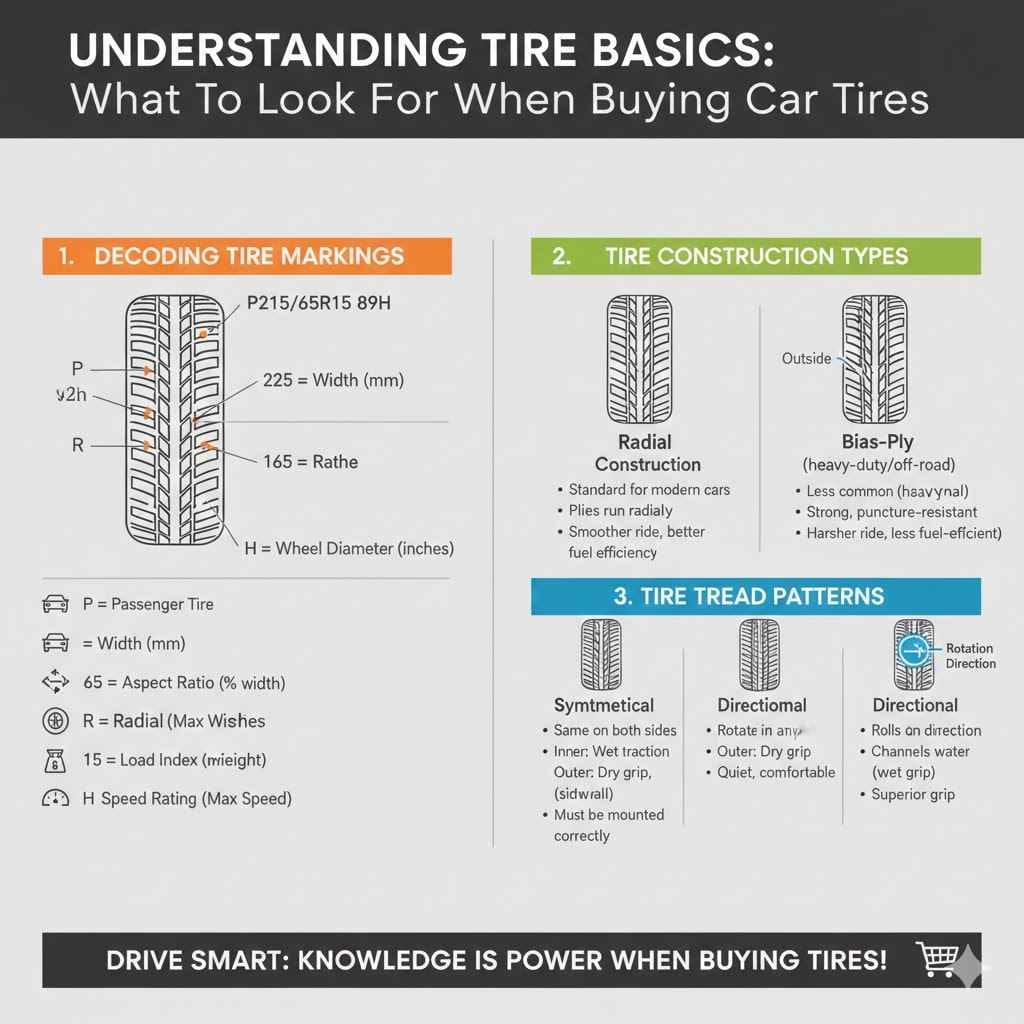
Every tire has a series of numbers and letters printed on its side, known as the tire size or service description. These markings tell you everything about the tire’s dimensions, its load capacity, and its speed rating. Learning to read these symbols is the first step in understanding if a tire is suitable for your vehicle.
For example, a common tire size might look like P215/65R15 89H. Let’s break this down:
- P stands for Passenger tire. Other letters might indicate LT for Light Truck or T for Temporary spare. This tells you the general category of vehicle the tire is designed for.
- 215 is the tire’s width in millimeters from sidewall to sidewall. A wider tire generally offers more grip but can sometimes reduce fuel efficiency.
- 65 is the aspect ratio. This is the tire’s height as a percentage of its width. In this case, the tire’s height is 65% of its 215mm width. A lower aspect ratio means a shorter sidewall, often leading to sportier handling.
- R stands for Radial construction, which is standard for most car tires today. Radial tires have plies that run across the tire from bead to bead.
- 15 is the wheel diameter in inches. This must match the diameter of your car’s wheels.
- 89 is the load index. This number corresponds to the maximum weight a single tire can carry. You should always choose tires with a load index equal to or greater than your vehicle manufacturer’s recommendation.
- H is the speed rating. This indicates the maximum speed at which the tire can be safely operated. For example, H typically means up to 130 mph (210 km/h).
Tire Construction Types
Tires are built with different internal structures, affecting their performance, durability, and comfort. The most common type is radial, but understanding other constructions can be helpful.
- Radial Construction This is the standard for almost all modern car tires. The plies (layers of fabric cords) run radially, perpendicular to the direction of travel. This design allows the sidewall and tread to function more independently, providing a smoother ride, better fuel economy, and longer tread life compared to older bias-ply tires.
- Bias-Ply Construction Less common for passenger cars today, bias-ply tires have plies that run diagonally across the tire, overlapping each other. While they can be very strong and resistant to punctures in the sidewall, they tend to offer a harsher ride and are less fuel-efficient. You might still find them on some heavy-duty trucks or off-road vehicles.
Understanding Tire Tread Patterns
The tread is the part of the tire that contacts the road. Its pattern is designed to provide grip, channel away water, and offer a quiet ride. Different tread patterns are suited for different driving conditions.
- Symmetrical Tread This is the simplest pattern, where the tread design is the same on both sides of the tire. Symmetrical tires can be rotated in any direction and are generally quiet and comfortable. They are common on many everyday passenger cars.
- Asymmetrical Tread These tires have different tread patterns on the inner and outer halves of the tread. The inner side is usually designed for water evacuation and traction in wet conditions, while the outer side is optimized for dry grip and cornering. They typically have an “Outside” marking on the sidewall to ensure they are mounted correctly.
- Directional Tread These tires have a V-shaped or arrow-like tread pattern that is designed to roll in only one direction. They are excellent for channeling water away and providing superior grip in wet conditions. They usually have a “Rotation Direction” arrow on the sidewall.
Key Factors When Choosing Tires
Beyond the basic markings, several other factors play a huge role in selecting the right tires. These include the type of driving you do, the climate you live in, and the specific needs of your vehicle. Making the right choice here ensures optimal performance and safety.
Tire Types Based on Performance and Season
Tires are not one-size-fits-all. Different types are engineered for specific conditions and driving styles, from all-season reliability to high-performance grip.
- All-Season Tires These are the most common type and are designed to provide adequate performance in a wide range of temperatures and conditions, including light snow. They offer a balance of tread life, ride comfort, and all-around traction. However, they are not optimized for extreme heat or severe winter weather.
- All-Weather Tires These are a step up from all-season tires. They carry the three-peak mountain snowflake symbol (3PMSF), indicating they meet stringent winter traction performance standards while still being suitable for year-round use. They offer better snow and ice grip than typical all-season tires.
- Summer Tires Designed for warmer climates and performance driving, summer tires have a tread compound that stays firm in heat and provides excellent grip on dry and wet roads. They are not recommended for use in temperatures below 45°F (7°C) as their compound can harden and lose traction.
- Winter Tires Also known as snow tires, these are specifically designed for cold temperatures and snowy or icy conditions. They have a special tread compound that remains flexible in freezing temperatures and aggressive tread patterns with deep grooves and sipes to bite into snow and ice. They significantly improve braking and handling in winter.
- Performance Tires These tires are built for drivers who prioritize handling, cornering, and responsiveness. They often have lower aspect ratios, wider tread, and a softer rubber compound for better road feel. They can come in summer or all-season variants but are generally not as focused on tread life or comfort as standard tires.
- All-Terrain Tires (A/T) These are a good choice if you frequently drive on unpaved roads, gravel, or light off-road trails. They offer a more aggressive tread pattern than highway tires, providing better traction on loose surfaces while still being reasonably comfortable and quiet on pavement.
- Mud-Terrain Tires (M/T) For serious off-roading enthusiasts, M/T tires feature very aggressive, widely spaced tread blocks designed for maximum traction in mud, rocks, and dirt. They are typically noisy and provide a rougher ride on paved roads and have shorter tread life.
Considering Your Driving Environment and Climate
Where you drive and the weather you experience have a major impact on tire choice. This is a crucial point many people miss when looking at what to look for when buying car tires reddit.
- Hot Climates If you live in an area with consistently hot temperatures, tires with a harder rubber compound will resist wear better. Summer tires are ideal if you don’t experience freezing temperatures. All-season tires will also work, but their rubber might degrade faster under constant high heat.
- Cold Climates For areas with freezing temperatures and snow, winter tires are a necessity for safety. If you experience light snow but also want year-round use, all-weather tires are a strong option. All-season tires can handle occasional light snow, but their performance will be significantly reduced on ice and in deep snow.
- Mixed Conditions In areas with varied weather, like four distinct seasons, choosing between all-season, all-weather, or a set of seasonal tires (one for summer, one for winter) is key. All-weather tires offer a good compromise for many.
- Urban vs. Rural Driving Urban driving often involves stop-and-go traffic and varied road surfaces. Tires focused on comfort, fuel efficiency, and good braking are beneficial. Rural driving might involve more rougher roads, gravel, or unpaved surfaces, where all-terrain tires could be a better fit.
Load Capacity and Speed Ratings
These specifications are critical for safety and ensuring your tires can handle your vehicle’s demands. Ignoring them can lead to tire failure.
- Load Index Explained The load index is a numerical code that represents the maximum weight a tire can safely carry. You can find a chart online that matches the number to a specific weight in kilograms or pounds. Your vehicle’s owner’s manual or a sticker on the driver’s side doorjamb will specify the required load index for your car. Always choose tires with a load index equal to or higher than the manufacturer’s recommendation. Underinflated tires or tires with insufficient load capacity can overheat and fail catastrophically.
- Speed Rating Explained The speed rating, represented by a letter, indicates the maximum speed at which a tire can safely carry its rated load. Common speed ratings include S (112 mph/180 km/h), T (118 mph/190 km/h), H (130 mph/210 km/h), V (149 mph/240 km/h), W (168 mph/270 km/h), and Y (186 mph/300 km/h). Your vehicle manufacturer will recommend a minimum speed rating. While you can install tires with a higher speed rating, never use tires with a lower rating than recommended. Higher speed-rated tires often have a stiffer sidewall, which can improve handling but may result in a firmer ride.
Treadwear, Traction, and Temperature Ratings UTQG
The Uniform Tire Quality Grading (UTQG) system, mandated by the National Highway Traffic Safety Administration (NHTSA), provides standardized ratings for tires sold in the U.S. It helps consumers compare tires from different manufacturers.
- Treadwear This rating indicates the expected longevity of the tire’s tread. A higher number means a longer-lasting tread. For example, a tire rated 400 will be expected to last twice as long as a tire rated 200, assuming similar driving conditions. However, treadwear ratings are relative only within a manufacturer’s own product line. It’s also important to note that tires with higher treadwear ratings often have a harder rubber compound, which may result in less grip.
- Traction This rating measures a tire’s ability to stop on wet pavement. It is graded from AA, A, B, to C, with AA being the highest level of traction. This rating is based on straight-line wet braking performance. A higher traction rating means the tire can stop your vehicle more quickly on wet surfaces, which is a critical safety feature.
- Temperature This rating measures the tire’s resistance to heat buildup at speed. It is graded from A, B, to C, with A being the highest resistance. Higher temperatures can cause tire degradation and potential failure. This rating is important for drivers who frequently travel at high speeds or live in very hot climates. Tires rated A offer the best heat resistance.
For example, a tire might have a UTQG rating of 500 AA A. This means it has a treadwear value of 500, a wet traction rating of AA, and a temperature resistance rating of A.
Where To Buy Tires And What To Look For
Once you know what you need, the next step is finding where to buy and how to ensure you’re getting a good deal and the right service. This is often where online communities like Reddit shine.
Online Retailers vs. Local Tire Shops
The choice between buying tires online or from a local shop involves different pros and cons. Both have their advantages depending on what you prioritize.
- Online Retailers Pros Buying tires online often offers a wider selection and competitive pricing. Many websites allow you to easily filter by size, brand, and type. You can often find great deals and read reviews from many customers. Some online retailers also partner with local shops for installation, which can be convenient.
- Online Retailers Cons The main drawback is that you can’t physically inspect the tires before buying. You also need to arrange for installation, which can sometimes add hidden costs or hassle if you don’t have a reliable shop lined up. Returns can also be more complicated if there’s an issue.
- Local Tire Shops Pros A major advantage of local shops is the ability to see and touch the tires before purchasing. The staff can offer expert advice based on your vehicle and driving habits. Installation, balancing, and alignment are typically done on-site by experienced technicians, making the process more streamlined. Many offer warranties and free services like flat repairs.
- Local Tire Shops Cons Prices at local shops can sometimes be higher than online retailers. The selection might also be more limited, depending on the shop’s inventory.
When considering what to look for when buying car tires reddit advice, many users suggest comparing prices from both online and local sources before making a final decision.
Installation and Balancing Services
Proper installation is as crucial as choosing the right tire. Incorrect installation can lead to premature wear, poor handling, and safety issues.
- Tire Mounting This is the process of fitting the new tire onto the wheel rim. It requires specialized equipment to ensure the tire bead seals properly against the rim.
- Balancing Each tire and wheel assembly must be balanced to ensure even rotation. Small weights are attached to the wheel rim to counteract any heavy spots. Unbalanced tires can cause vibrations, uneven wear, and stress on suspension components.
- Wheel Alignment While not directly part of tire installation, checking wheel alignment is highly recommended when getting new tires. Proper alignment ensures your tires are running parallel to each other and perpendicular to the road, which is essential for even tire wear, optimal handling, and fuel efficiency.
- Tire Pressure Monitoring System (TPMS) If your vehicle is equipped with TPMS, the sensors will need to be recalibrated or reset after new tires are installed. Most shops that perform tire installations will handle this.
Understanding Warranties and Guarantees
Tire warranties provide peace of mind and protection against manufacturing defects or premature wear. It’s important to know what they cover.
- Treadwear Warranty This is the most common type of warranty. It guarantees that the tire tread will last for a certain number of miles. If the tread wears out before that mileage is reached, you may be eligible for a prorated replacement.
- Workmanship and Materials Warranty This covers defects in how the tire was manufactured or the materials used. This can include issues like tire separation or structural problems.
- Road Hazard Warranty Some retailers offer this as an add-on. It covers damage from potholes, nails, glass, or other road debris that causes the tire to be unrepairable.
- Prorated Replacement This means if your tire fails under warranty, you won’t get a brand-new tire for free. Instead, you’ll pay a portion of the cost of a new tire based on how much tread life has already been used. For example, if you have a 50,000-mile treadwear warranty and your tires wear out after 25,000 miles, you would pay for half the cost of new tires.
When discussing what to look for when buying car tires reddit, users often stress the importance of understanding the full terms of any warranty before purchasing.
Real-World Examples And Scenarios
Seeing how these principles apply in practice can make the decision-making process clearer.
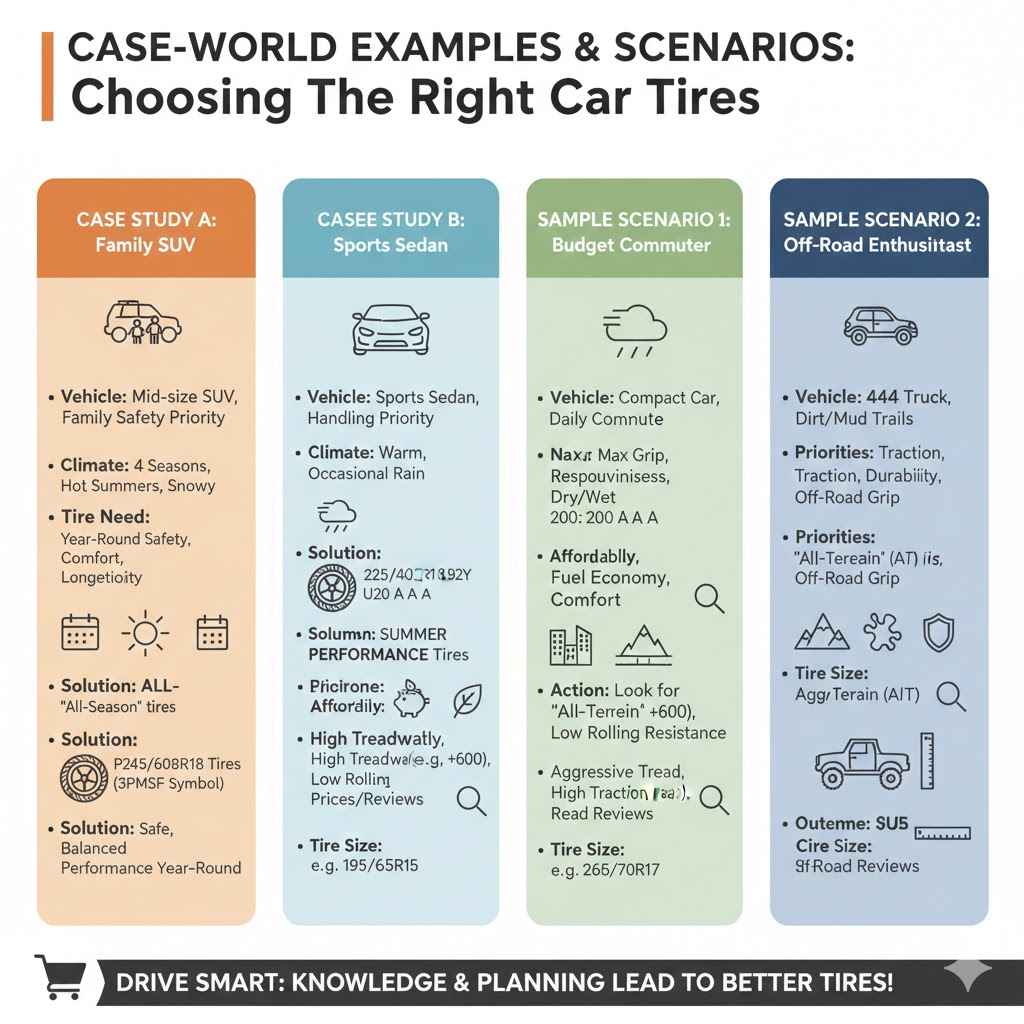
Case Study A Choosing Tires for a Family SUV
Sarah lives in a region with four distinct seasons, experiencing hot summers and cold, snowy winters. She drives a mid-size SUV and her primary concern is safety for her family, followed by comfort and reasonable tread life. She’s unsure about what to look for when buying car tires reddit.
- Sarah checks her SUV’s doorjamb sticker and owner’s manual. It specifies P245/60R18 tires with a load index of 105 and a speed rating of H.
- She considers her climate. Since she experiences significant snow, all-season tires might not be sufficient. Summer tires are out of the question.
- She researches tire types and finds that “All-Weather” tires are designed for year-round use and carry the 3PMSF symbol, indicating better winter performance than standard all-season tires.
- She compares several all-weather tire models from reputable brands, looking at their UTQG ratings (aiming for good traction and temperature resistance) and checking reviews for ride comfort and noise.
- Sarah finds a set of all-weather tires that meet her vehicle’s size and load/speed requirements, have a high traction rating (A), and good treadwear (e.g., 600). She also looks into the warranty offered.
- She compares prices from an online retailer and a local tire shop. The local shop offers a package deal including installation, balancing, and a road hazard warranty for a slightly higher price, which she decides is worth the convenience and peace of mind.
Result Sarah chose all-weather tires that provide excellent safety in both summer and winter conditions, balancing performance with the comfort and longevity her family needs.
Case Study B Performance Tires for a Sports Sedan
Mark drives a sports sedan and is looking for tires that enhance his car’s handling and responsiveness. He lives in a climate that rarely sees snow, but experiences occasional rain. He’s active on car forums and wants to know what to look for when buying car tires reddit.
- Mark identifies his tire size as 225/40ZR18. The ‘Z’ in the speed rating indicates it’s rated for speeds over 149 mph, common for performance vehicles.
- He prioritizes grip and handling over tread life or ultimate comfort. He decides summer performance tires are the best fit for his driving style and climate.
- He looks for tires with low aspect ratios (like 40), wider tread, and a high traction rating (AA). He also notes the treadwear rating, knowing that performance tires typically have lower treadwear ratings (e.g., 200-300).
- Mark reads reviews focusing on wet grip, dry grip, steering response, and cornering stability. He also checks the temperature rating, ensuring it’s A for high-heat resistance.
- He finds a set of performance summer tires that fit his criteria and vehicle specifications. He compares prices online and checks local shops for installation specials.
- Mark chooses to buy from an online retailer that ships directly to a local performance shop he trusts for installation, balancing, and a check of his wheel alignment, which is crucial for performance cars.
Result Mark’s new performance tires significantly improved his car’s cornering ability and steering feel, providing confident grip on dry and wet roads.
Sample Scenario 1 Budget-Conscious Commuter
You drive a compact car for your daily commute. Your main priorities are affordability, good fuel economy, and a comfortable, quiet ride. You don’t encounter extreme weather conditions.
- Find your exact tire size (e.g., 195/65R15).
- Look for “All-Season” tires with a good treadwear rating (higher is better for longevity) and a focus on fuel efficiency (often labeled as “eco tires” or “low rolling resistance”).
- Compare prices from various online and local retailers.
- Check reviews for noise levels and ride comfort.
- Ensure the tires meet your vehicle’s load and speed requirements.
Sample Scenario 2 Off-Road Enthusiast
You own a 4×4 truck and spend a lot of time driving on unpaved roads, dirt trails, and occasionally mud. You need tires that can handle these conditions without sacrificing too much on-road manners.
- Determine your truck’s tire size (e.g., 265/70R17).
- Consider “All-Terrain” (A/T) tires. Look at their tread pattern for aggressive blocks suitable for loose surfaces.
- Check UTQG ratings, focusing on traction and temperature.
- Read reviews specifically about their performance on gravel, mud, and rocks, as well as their noise and ride quality on the highway.
- Ensure the load index is sufficient for your truck’s weight.
Frequently Asked Questions
Question: What is the most important factor when choosing tires?
Answer: The most important factor is ensuring the tires match your vehicle’s recommended size, load capacity, and speed rating. Safety comes first, so these specifications must be correct for your car.
Question: Should I buy tires online or from a local shop?
Answer: It depends on your priorities. Online retailers often have better prices and selection, while local shops offer expert advice, immediate installation, and easier returns. Many people compare both.
Question: How often should I replace my car tires?
Answer: Tires typically need replacement every 6 years, regardless of tread depth, due to rubber degradation. They should also be replaced if the tread is worn down to the wear bars or if there are any signs of damage like cracks or bulges.
Question: What does the 3PMSF symbol mean on a tire?
Answer: The three-peak mountain snowflake (3PMSF) symbol indicates that the tire has passed stringent performance tests for snow traction, meaning it performs significantly better in winter conditions than a standard all-season tire.
Question: Are expensive tires always better?
Answer: Not necessarily. While premium tires often offer superior performance, it’s more important to choose tires that meet your specific needs, driving conditions, and vehicle requirements. Sometimes, mid-range tires offer the best value.
Conclusion
When you’re figuring out what to look for when buying car tires reddit communities offer great real-world insights. Focus on your vehicle’s size and load needs first. Then, match the tire type to your climate and driving style, whether it’s all-season, winter, or performance.
Always check the UTQG ratings and warranties. A little research will help you find the right tires for safety and performance.