
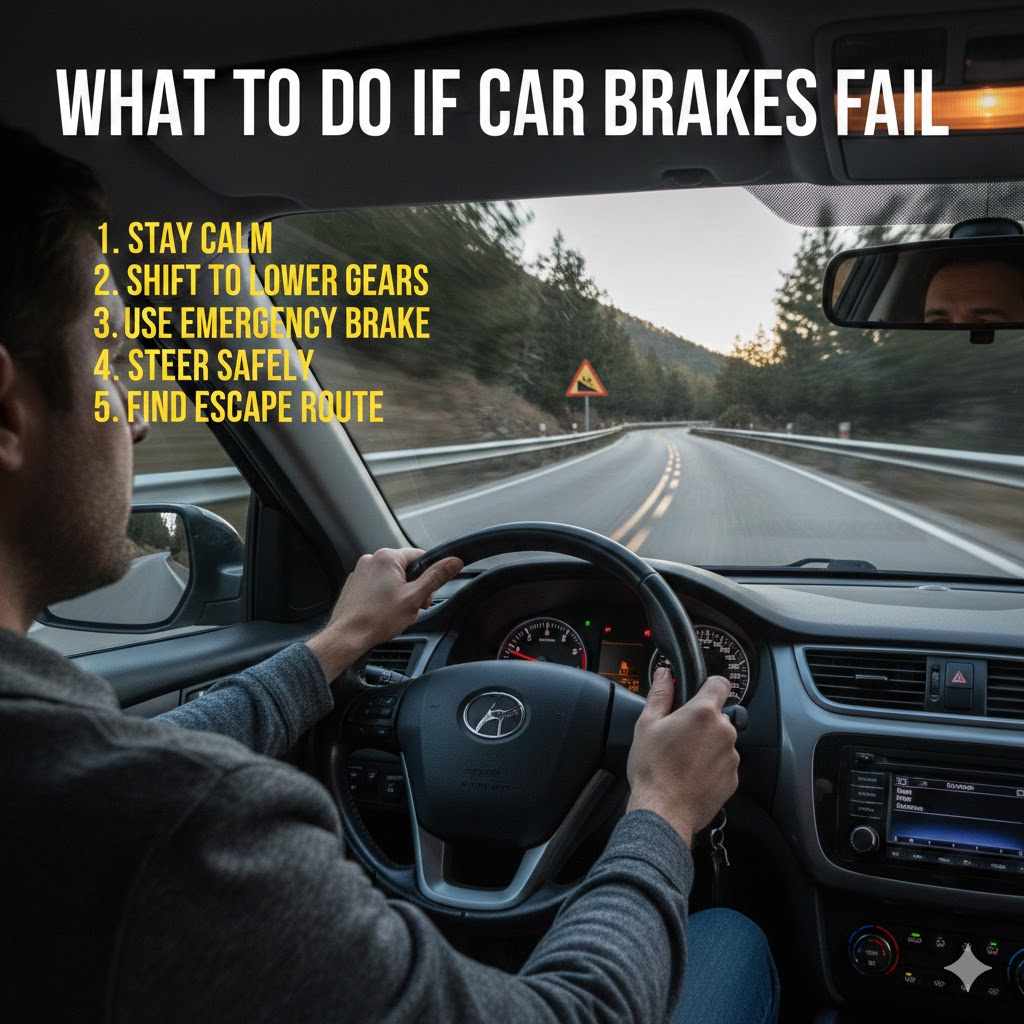
When your car’s brakes suddenly stop working, it can be a scary situation for anyone. It’s a problem that most drivers hope they’ll never face, and for beginners, it can feel overwhelming. You might not know where to start or what steps to take.
But don’t worry, this guide is here to help. We’ll walk through What to Do If Your Car Brake Doesn’t Work with simple, easy-to-follow steps so you can handle this challenge calmly.
What To Do If Your Car Brake Doesn’t Work Immediately
This section covers the very first actions you should take the moment you realize your brakes are not working. It’s about staying safe and controlling the situation. We’ll break down what to do in those critical seconds.
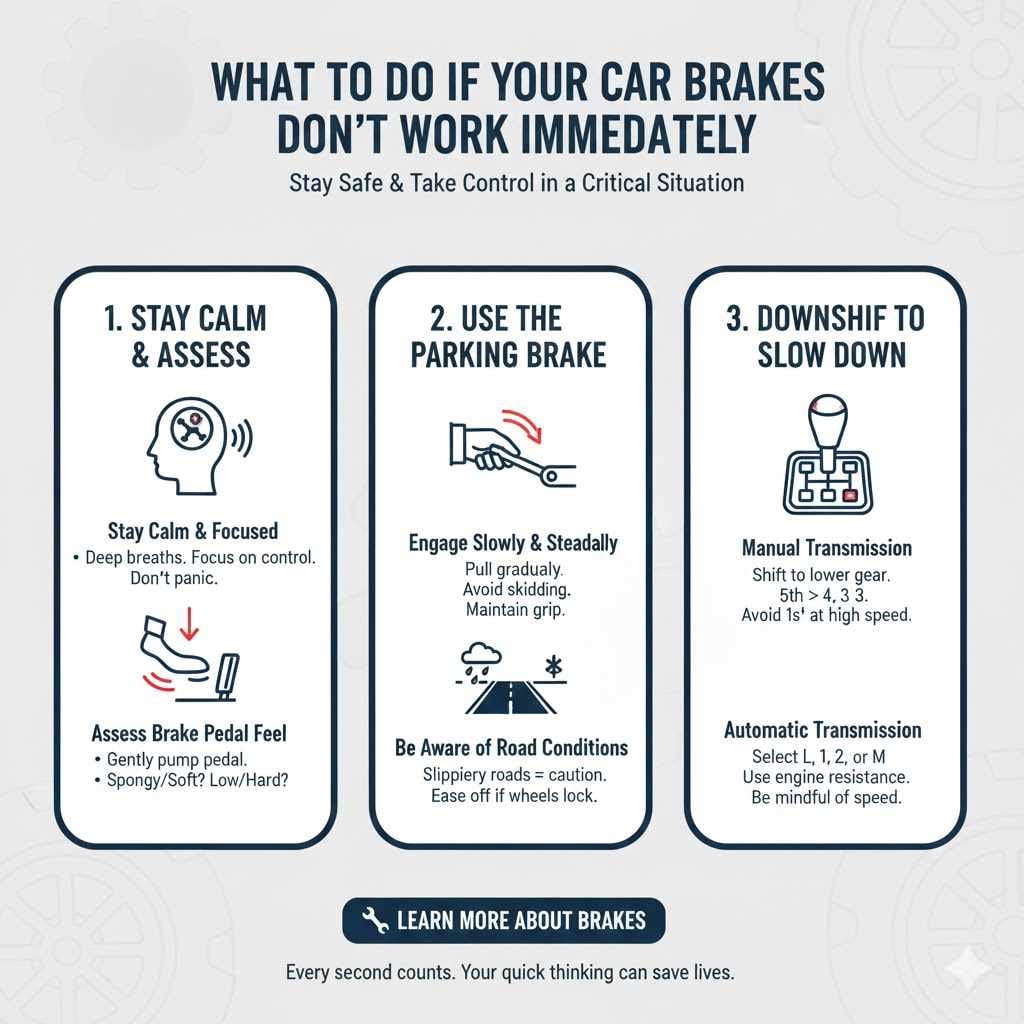
Stay Calm and Assess the Situation
The first and most important step is to try and stay calm. Panicking can make things worse. Take a deep breath and try to figure out what’s happening with your brakes.
Are they completely gone, or do they feel soft and spongy? This quick assessment will help you decide on your next moves.
- Stay Calm and Focused
It’s natural to feel scared or anxious when your brakes fail. However, maintaining a clear head is vital for making the right decisions. Focus on controlling the vehicle and finding a safe way to stop.
Think about what you need to do, not about what might go wrong.
- Assess Brake Pedal Feel
Gently pump the brake pedal a few times. This is sometimes called “pumping the brakes.” If the pedal feels spongy or goes all the way to the floor with little resistance, it means there’s likely a loss of hydraulic pressure. If the pedal feels hard and doesn’t move much, there might be a problem with the braking system’s mechanical parts.
Use the Parking Brake
Your parking brake, also known as the emergency brake, is a separate system from your main brakes. It uses a cable to engage the rear brakes. While it’s not as powerful as your regular brakes, it can help you slow down and stop the car in an emergency.
- Engage Slowly and Steadily
Pull up the parking brake lever gradually. If you yank it hard and fast, you could lock up the rear wheels, causing your car to skid. A steady, firm pull will apply braking force more effectively and safely.
Keep a good grip on the lever as you slow down.
- Be Aware of Road Conditions
The effectiveness of your parking brake depends on the road surface and your speed. On wet or slippery roads, be extra cautious. If you feel the rear wheels start to lock up, ease off the parking brake slightly.
Downshift to Slow Down
If your car has a manual transmission, you can use engine braking to help slow your vehicle. For automatic transmissions, many have a lower gear setting that can also assist. This process uses the engine’s resistance to slow the car.
- Manual Transmission
If you have a manual car, shift into a lower gear. Start by shifting from your current gear to the next lower one. For example, if you’re in fifth gear, shift to fourth.
If you need more braking power, shift into third, then second. Avoid shifting directly into first gear at high speeds, as this could damage your engine and transmission.
- Automatic Transmission
Many automatic transmissions have a “L,” “1,” “2,” or “M” (Manual) mode. Select the lowest available gear. This will increase the engine’s resistance and help slow your car.
Like with a manual, be mindful of your speed when downshifting to avoid engine strain.
What to Do If Your Car Brake Doesn’t Work Safely
Once you’ve taken immediate steps to slow down, you need to focus on safely bringing your car to a stop. This involves looking for a safe place to pull over and communicating your situation to others.
Look for a Safe Place to Stop
As you slow down, actively scan the road ahead for a safe place to pull over. This might be a shoulder, a parking lot, or a side street. Avoid stopping in the middle of traffic or on a blind curve.
Your goal is to get your vehicle out of harm’s way.
- Scan for Open Space
Keep your eyes on the road and look for areas where you can safely exit the flow of traffic. This could be a wide shoulder, an empty parking lot entrance, or even a field if necessary. The key is to find a spot where you can stop without blocking other vehicles or putting yourself in danger.
- Avoid Hazards
Be sure the area you choose is free of hazards like steep ditches, large rocks, or heavy pedestrian traffic. If you’re on a highway, the shoulder is often the best option, but only if it’s wide enough and clear of debris.
Alert Other Drivers
Let other drivers know that you are having a problem. Use your hazard lights and, if possible, your horn to signal your distress. This alerts others to slow down and be aware of your situation.
- Turn on Hazard Lights
Your hazard lights, usually activated by a red triangle button on your dashboard, flash all four turn signals at once. This is the universal signal that your vehicle is experiencing a problem and may be moving erratically or unexpectedly. Ensure they are clearly visible.
- Use Your Horn
If you see other vehicles approaching too closely or seem unaware of your problem, a few short honks of your horn can help get their attention. This is especially important if your hazard lights aren’t enough to communicate the urgency.
Steer to Your Chosen Stopping Spot
Once you have a safe place in mind, steer your car towards it. Continue using your parking brake and engine braking as needed to maintain control.
- Gentle Steering
As you steer towards your safe stopping location, do so gently. Sudden, sharp movements can be dangerous, especially when you have limited braking ability. Make smooth corrections to guide your car where you want it to go.
- Maintain Control
Your primary focus is maintaining control of the vehicle. Even if you’re moving slowly, keep your hands firmly on the steering wheel and be ready to make small adjustments.
Troubleshooting and Next Steps After Your Car Brake Doesn’t Work
After you’ve managed to stop your car safely, it’s time to figure out what went wrong and what needs to be done next. This involves inspecting your vehicle and getting professional help.
Inspect Visible Brake Components (If Safe to Do So)
If you are in a safe location, you can perform a basic visual check of your brake system. Look for obvious signs of damage or leaks. However, do not attempt to perform repairs yourself unless you have mechanical experience.
- Check Brake Fluid Level
Locate the brake fluid reservoir under the hood. It’s usually a small, translucent plastic container. Check the fluid level against the markings on the side of the reservoir.
If it’s very low or empty, it could indicate a leak somewhere in the brake lines.
- Look for Leaks
Examine the brake lines, which are metal or rubber tubes running from the master cylinder to each wheel. Look for any signs of fluid leaks, wet spots, or damaged hoses. Also, check around the wheels for any fluid accumulation.
Understand Potential Causes
Several things can cause brake failure. Knowing these can help you communicate with a mechanic. Common issues include low brake fluid, worn brake pads, damaged brake lines, or a faulty master cylinder.
- Low Brake Fluid
Brake fluid is essential for transferring the force from your foot on the pedal to the brakes at each wheel. If the fluid level is too low, air can get into the system, causing a spongy pedal or complete brake loss. This is often due to leaks.
- Worn Brake Pads or Rotors
Brake pads and rotors are the parts that physically create friction to stop your car. Over time, brake pads wear down. When they are completely worn out, the metal components can grind against the rotors, leading to reduced braking effectiveness and loud noises.
- Brake Line Damage
The brake lines carry brake fluid under high pressure. If a brake line is rusted, punctured, or otherwise damaged, it can leak fluid, leading to a sudden loss of braking power.
- Faulty Master Cylinder
The master cylinder is the heart of the hydraulic brake system. It converts the pressure from your foot pedal into hydraulic pressure. If it fails, the brakes will not work at all.
Call for Roadside Assistance or a Tow Truck
The safest and most recommended step after experiencing brake failure is to call for professional help. A tow truck will be able to transport your car to a reputable repair shop.
- Contact Your Service Provider
If you have roadside assistance through your insurance, an auto club, or a separate service, contact them immediately. They will dispatch a tow truck to your location.
- Describe the Problem
When you call for assistance, clearly explain that your brakes have failed. This will help them send the appropriate type of tow truck and inform the driver of the situation.
Seek Professional Brake Repair
Once your car is at the repair shop, explain what happened to the mechanic. They will diagnose the problem and perform the necessary repairs. Regular brake maintenance can help prevent such issues.
- Importance of Professional Diagnosis
Brake systems are complex and critical for safety. Only a qualified mechanic has the tools and expertise to accurately diagnose the cause of your brake failure and perform the correct repairs. They can also check other related components to ensure everything is functioning properly.
- Preventative Maintenance
Regular brake checks are crucial. This includes inspecting brake fluid levels, brake pads, rotors, and lines. Many manufacturers recommend brake inspections at specific mileage intervals or annually.
Don’t skip these appointments.
Real-Life Scenarios and Statistics
Understanding how others have dealt with brake failure and seeing some data can provide valuable context. These examples show that brake issues are real and can happen.
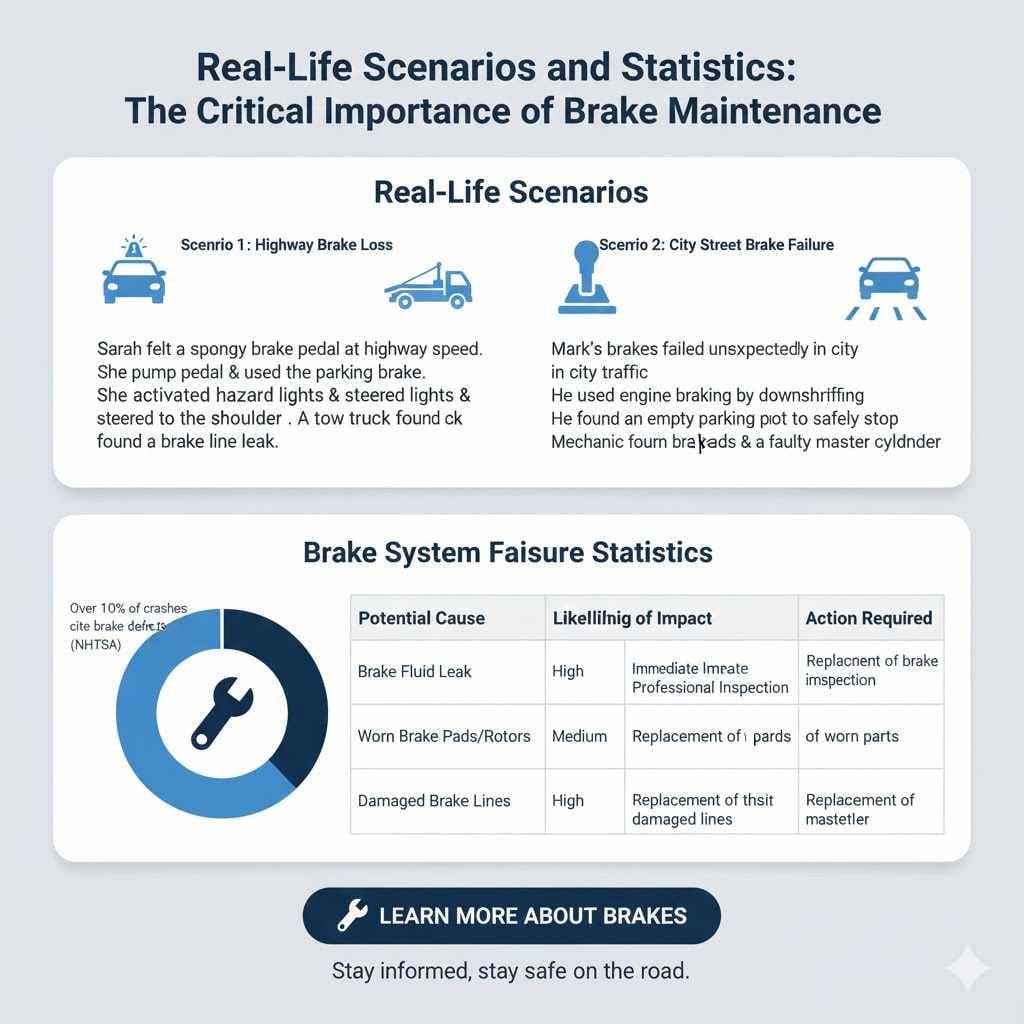
Scenario 1: Highway Brake Loss
Sarah was driving on the highway when she noticed her brake pedal felt unusually soft. She immediately pumped the brakes, which helped a little, and then slowly engaged her parking brake. She turned on her hazard lights and carefully steered towards the shoulder.
A tow truck arrived to take her car to a mechanic, who found a leak in one of the brake lines.
- Sarah felt a spongy brake pedal while driving at highway speed.
- She pumped the pedal and used the parking brake to slow down.
- She activated hazard lights and steered to the highway shoulder.
- A tow truck took her car for repair, where a brake line leak was found.
Scenario 2: City Street Brake Failure
Mark was driving in city traffic when his brakes completely failed. He quickly downshifted his manual transmission car to a lower gear, which helped reduce his speed. He scanned for an opening and managed to steer into an empty parking lot.
He then called for a tow truck. The mechanic discovered that his brake pads were completely worn out and the master cylinder needed replacing.
- Mark’s brakes failed unexpectedly in city traffic.
- He used engine braking by downshifting to slow his vehicle.
- He found an empty parking lot to safely stop.
- A tow truck was called, and the mechanic identified worn brake pads and a faulty master cylinder.
Brake System Failure Statistics
According to the National Highway Traffic Safety Administration (NHTSA), brake issues are a contributing factor in a small but significant percentage of car accidents. While precise numbers vary by year and study, brake system defects are often cited in over 10% of vehicle-related crashes, particularly those involving passenger cars. For example, a study might show that approximately 20% of vehicles failing their safety inspection have brake system defects.
These statistics highlight the critical importance of maintaining your vehicle’s brakes.
| Potential Cause | Likelihood of Impact | Action Required |
|---|---|---|
| Brake Fluid Leak | High | Immediate Professional Inspection |
| Worn Brake Pads/Rotors | Medium to High | Replacement of worn parts |
| Damaged Brake Lines | High | Replacement of damaged lines |
| Faulty Master Cylinder | High | Replacement of master cylinder |
Frequently Asked Questions
Question: What should I do if my brakes suddenly feel very soft?
Answer: If your brake pedal feels soft or spongy, pump the brake pedal several times. This might help build up some pressure. Also, begin to slow down by downshifting or using your parking brake gently.
Look for a safe place to pull over and call for roadside assistance.
Question: Can I drive my car if the brakes are not working well?
Answer: It is extremely dangerous to drive a car with faulty brakes. You should not drive your car at all if you suspect any brake issues. Call for a tow truck to take your vehicle to a repair shop.
Question: How often should I check my car’s brakes?
Answer: It is recommended to have your brakes inspected by a professional at least once a year or every 12,000 miles. However, you should also pay attention to any changes in how your brakes feel or sound and get them checked immediately if you notice anything unusual.
Question: What is the difference between the regular brakes and the parking brake?
Answer: Your regular brakes use hydraulic fluid to apply pressure to all four wheels, providing strong stopping power. The parking brake, or emergency brake, is usually a mechanical system that engages only the rear wheels and is designed for holding the vehicle stationary or for emergencies, not for regular stopping.
Question: How long does it take to fix car brakes?
Answer: The time it takes to fix brakes can vary greatly depending on the problem. Simple repairs like replacing brake pads might take an hour or two. More complex issues, such as replacing brake lines or a master cylinder, could take several hours or even require the car to be left at the shop overnight.
Summary
If your car brakes stop working, remain calm. Pump the pedal, use the parking brake, and downshift to slow down. Find a safe spot to pull over, alert other drivers with hazard lights, and then call for a tow truck.