
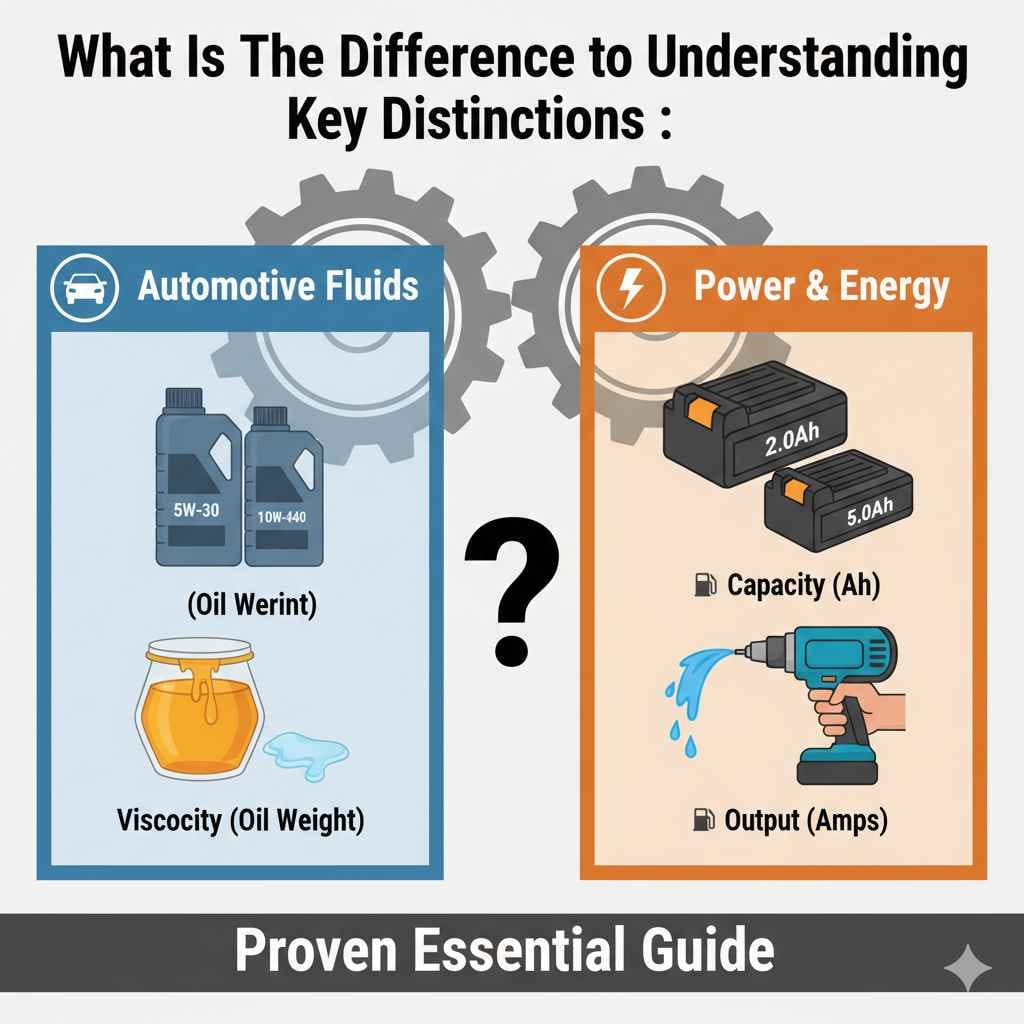
The main difference between pedal assist and throttle on an e-bike is how power is delivered. Pedal assist requires you to pedal for the motor to engage, varying assistance based on your effort. A throttle works like a scooter, providing power with a twist or button press, even if you aren’t pedaling at all.
It can be confusing when you look at new tools, car parts, or even digital settings and see two terms that seem to mean the same thing. You might hear someone say they need a ratchet versus a torque wrench, or maybe you’re looking at buying a fan and need to know the difference between CFM and static pressure. Understanding these small but important differences saves you time, money, and frustration down the road.
As your trusted guide, I’m here to take those mystery terms and break them down into plain English. We will skip the confusing technical language and focus on what you need to know to use or buy things with confidence. Whether you are comparing two types of tires or trying to figure out a new setting on your car’s dashboard, this guide will give you clear, step-by-step clarity. Let’s look at some of the most common, comparison-worthy topics drivers and DIYers face every day.
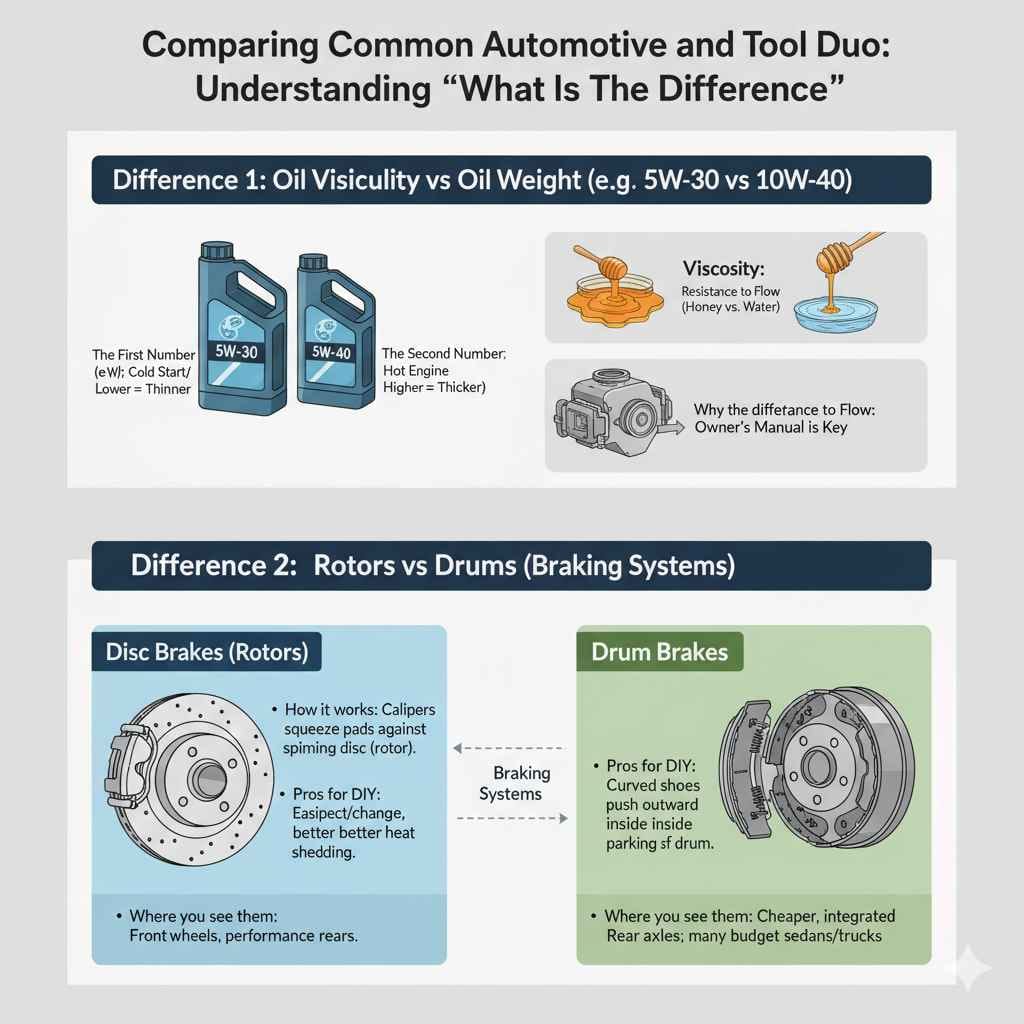
Comparing Common Automotive and Tool Duo: Understanding the “What Is The Difference”
When you are hands-on with your car, noticing the subtle differences between two similar items is crucial for safety and performance. Let’s dive into a few common areas where drivers often get mixed up.
Difference 1: Oil Viscosity vs. Oil Weight (e.g., 5W-30 vs. 10W-40)
You see these numbers printed right on the oil bottle. What do they actually mean for your engine? This isn’t about how “thick” the oil is when it’s hot, but rather how it flows when it’s cold and when it’s hot.
Understanding Viscosity and Weight
Viscosity is just a fancy word for how resistant a fluid is to flow. Think of honey versus water—honey has high viscosity.
- The First Number (e.g., 5W): This is the “Winter” rating. It tells you how thin the oil is when the engine is cold (like during a cold start). A lower number (like 0W or 5W) means it flows faster and protects parts sooner.
- The Second Number (e.g., 30): This is the operating temperature rating. This number describes the viscosity when the engine is hot and running normally. A higher number means the oil stays thicker at high temperatures.
Why the difference matters: Your owner’s manual specifies the oil best suited for the temperatures you usually drive in. Using the wrong weight can cause slow starts in the cold or inadequate protection when the engine gets hot.
Difference 2: Rotors vs. Drums (Braking Systems)
Every vehicle uses either disc brakes or drum brakes on the front, and many older or smaller vehicles use drums on the rear as well. They both stop the car, but they work very differently.
Disc Brakes (Rotors)
This is the modern standard.
- How it works: Calipers squeeze brake pads against a spinning metal disc (the rotor).
- Pros for DIY: Easier to inspect, easier to change pads, and better at shedding heat (less fade).
- Where you see them: Almost always on the front wheels, often on the rear of performance cars.
Drum Brakes
This is an older but still effective design.
- How it works: Two curved shoes push outward against the inside of a spinning drum.
- Pros for DIY: Cheaper to manufacture, and the parking brake mechanism is often built right in.
- Where you see them: Common on the rear axles of many budget-friendly sedans and trucks.
Quick Check Table: Brakes at a Glance
| Feature | Disc Brakes (Rotor) | Drum Brakes |
|---|---|---|
| Heat Dissipation | Excellent (Open design) | Poor (Contained design) |
| Maintenance Difficulty | Relatively straightforward | More complex assembly |
| Stopping Power Consistency | High, reliable in wet conditions | Can suffer from “brake fade” |
Difference 3: Torque Wrench vs. Standard Wrench
This is a critical safety difference for anyone turning a bolt on an engine or wheel.
- Standard Wrench (Box-end, open-end, socket wrench): This tool allows you to apply as much force (torque) as you can physically muster.
- Torque Wrench: This precisely calibrated tool allows you to apply a very specific amount of rotational force (measured in ft-lbs or N-m).
Why the difference matters: Every critical fastener—like your wheel lug nuts or the bolts holding your cylinder head on—needs to be tightened to a specific specification. Too loose, and it falls off. Too tight, and you break the threads, causing a much more expensive repair later. Always check the manufacturer’s recommendation, which you can often find referenced by organizations like the National Highway Traffic Safety Administration (NHTSA) for general safety standards.
Digital Distinctions: What Is The Difference in E-Bike Controls?
If you have recently bought an electric bike (e-bike), you’ve likely been faced with a choice or an adjustment panel showing two primary ways the electric motor assists you. This is arguably one of the most common “what is the difference” questions today!
What is the Difference Between Pedal Assist and Throttle?
Both systems give you electric help, but the way you activate that help is completely different. Understanding this difference lets you choose the right bike for your riding style.
1. Pedal Assist System (PAS)
Pedal Assist uses smart sensors to detect when and how hard you are pedaling. The motor only kicks in when you are performing the physical action of riding the bike.
How it feels: It feels most like a regular bike ride, but with a wonderful, steady tailwind helping you up hills or against the wind.
2. Throttle System
A throttle works exactly like the accelerator on a motorcycle or scooter. It is usually a thumb lever or a twist grip on the handlebar.
How it feels: You get immediate power boost without having to pedal at all. It’s pure electric assistance.
The Key Operational Difference
Imagine you stop at a red light on an e-bike:
- With PAS only: The motor stops assisting you completely while you idle, and you must start pedaling again to get the boost back.
- With a Throttle: You can use the throttle to slowly start moving from a dead stop without putting any strain on your legs.
Understanding E-Bike Modes Table:
| Feature | Pedal Assist (PAS) | Throttle |
|---|---|---|
| Activation Method | Pedaling motion detected by sensors | Twist grip or thumb lever press |
| Physical Effort Required | Required to engage motor | Not required (can ride without pedaling) |
| Best For | Exercise, longer commutes, smooth terrain | Short bursts, steep hills, starting from rest |
| Battery Usage | Generally more efficient | Can drain battery faster |
Note on Legality: In many places, electric bikes are legally classified based on how they deliver power. Class 1 and Class 2 e-bikes allow throttle use up to specific speed limits, while some Class 3 bikes might only allow pedal assist. Always check your local regulations, as these rules can vary widely.
DIY Cleaning: What Is The Difference: Soap vs. Detergent?
When you are washing your car, your driveway tools, or even your hands after working on an engine, choosing the right cleaning agent is vital. Using soap when you need a detergent, or vice-versa, can lead to poor results or even damage.
Soap (True Soap)
True soaps are traditionally made from natural fats or oils mixed with an alkali (like lye). They work great for cleaning things like your body or a light layer of dust.
- The Problem Around Cars: When used with hard water (water with a high mineral content), true soap reacts with the minerals to form soap scum. This leaves behind a dull, sticky film that is hard to rinse off.
Detergent
Detergents are synthetic chemicals designed to do the exact same job as soap but without those mineral issues.
- The Advantage: Detergents do not react with the minerals in hard water, meaning they rinse cleanly and leave behind less residue. They are also often formulated to lift tough, greasy automotive grime better than simple soap.
Takeaway: When washing your car, always reach for a dedicated car wash detergent or shampoo. They are engineered not to strip wax protection and to rinse clean, leaving that showroom shine!
Toolbox Basics: Difference: Pliers vs. Vise Grips
Grasping objects is fundamental in any repair, but the tool you choose determines how much grip and control you have.
Standard Pliers (Slip-Joint or Linesman)
These are your everyday pliers.
- You squeeze the handles, and the jaws close.
- They rely entirely on your hand strength.
- They rely on a simple pivot point, meaning the gripping force changes as you open and close them.
Vise Grips (Locking Pliers)
Vise Grips are specialty locking pliers that offer unmatched holding power.
- You adjust the screw at the pivot point to set the jaw width firmly onto an object (like a rusted bolt head or a piece of tubing).
- You then squeeze the handles until the tool locks itself into place.
- Even if you let go, the tool stays locked onto the piece, letting you brace the object while you use another tool to turn it.
When to use which: Use standard pliers for pulling wires or bending small metal pieces. Use Vise Grips when you need a temporary, powerful clamp or when you need to hold something steady while freeing up both your hands for another task.
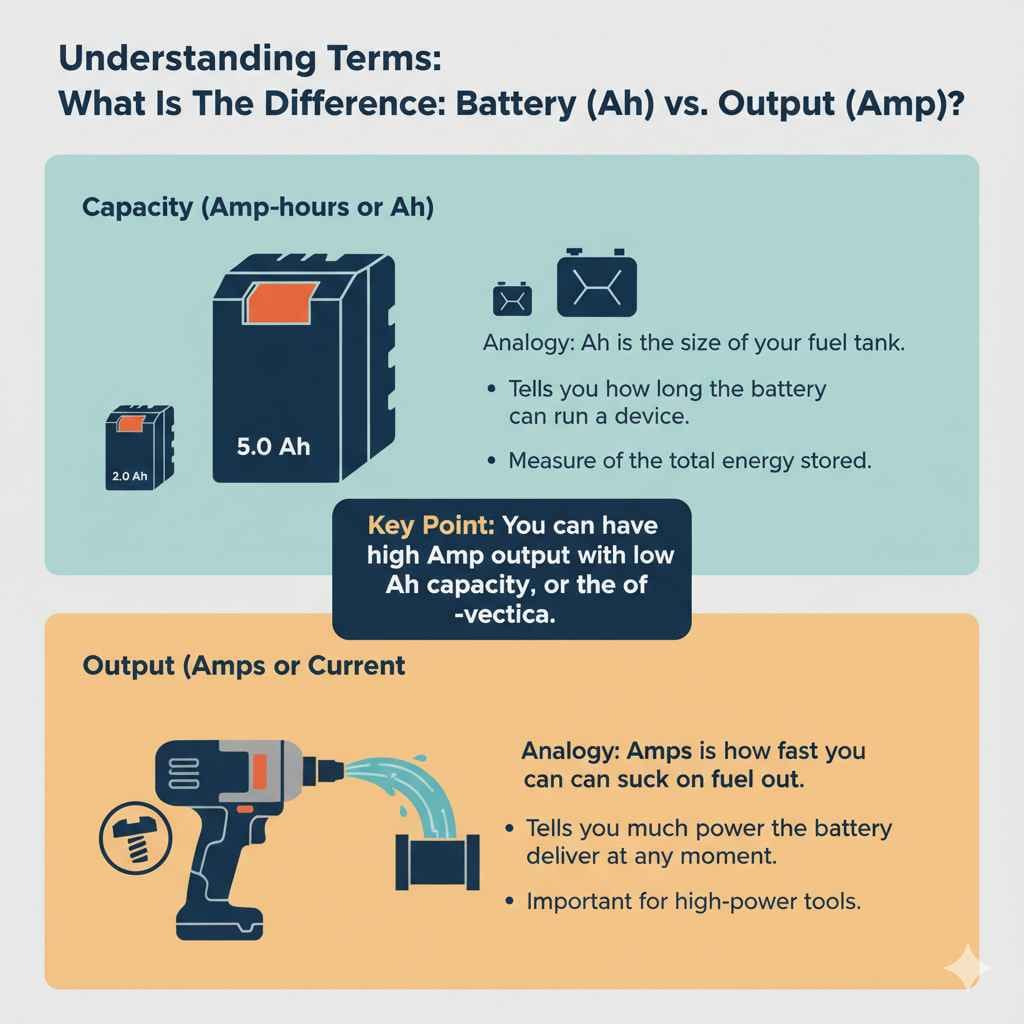
Understanding Terms: What Is The Difference: Battery Capacity (Ah) vs. Output (Amp)?
This confusion often comes up when discussing modern tools—from powerful impact wrenches to those e-bikes we mentioned earlier.
Capacity (Amp-hours or Ah)
Capacity tells you how long the battery can run a device before needing a recharge. It is the measure of the total energy stored.
Analogy: Think of Ah as the size of your fuel tank. A 5.0 Ah battery has a bigger tank than a 2.0 Ah battery, so it will run for longer time.
Output (Amps or Current)
Output (measured in Amps) tells you how much power the battery can deliver at any given moment.
Analogy: Think of Amps as how fast you can suck the fuel out of the tank. A powerful impact wrench needs a high Amp output for a short burst to shock the bolt loose, regardless of the battery size.
Key Point: You can have a very high Amp output battery that is small (short run time) or a very large Ah capacity battery that can only deliver a modest Amp output (long, gentle run time).
Frequently Asked Questions (FAQ)
What is the difference between horsepower (HP) and torque?
Torque is rotational force—how hard your engine can twist something (like the wheels). Horsepower is the rate at which work is done; it is essentially torque multiplied by speed (RPM). Torque gets you moving; horsepower keeps you moving fast.
Do I need to know the difference between synthetic and conventional oil?
Yes! Conventional oil is refined crude oil. Synthetic oil is chemically engineered for consistency. Synthetic oil provides superior protection against extreme heat and cold and breaks down much slower, leading to less frequent changes and better long-term engine health.
What is the difference between a wrench and a ratchet?
A standard wrench requires you to remove it, reposition it, and place it back on the bolt for every turn. A ratchet has a built-in gear mechanism that allows you to swing the handle back and forth without repositioning the tool on the fastener, making tightening much faster.
When should I use anti-seize instead of just grease?
Grease lubricates moving parts. Anti-seize compound is specifically used on fasteners that are likely to seize (weld themselves together due to heat, corrosion, or dissimilar metals) when you need to remove them later, like spark plugs or exhaust bolts.
Are tire “All-Season” ratings the same as “All-Terrain” ratings?
No. All-Season tires are designed for year-round use on paved roads, handling light snow. All-Terrain (A/T) tires are ruggedly built with deep treads meant for off-road performance, including rocks, mud, and sand, while still being usable on the highway.
What is the difference between a multimeter and a test light when checking electrical circuits?
A test light simply shows you if power is present (it lights up). A multimeter measures the exact voltage, resistance (ohms), or current (amps) flowing through the circuit, giving you precise diagnostic information.
Conclusion: Building Your Confidence Through Clarity
Navigating the world of cars, tools, and technology is much easier when you know the fundamental differences between similar items. Whether you were trying to understand why your e-bike needs a throttle or ensuring you tighten your lug nuts with the correct torque wrench, breaking down complex concepts into simple comparisons is the secret weapon of any successful DIYer.
Remember, you don’t need a mechanic’s degree to handle basic maintenance or make smart purchases. The primary difference between feeling confused and feeling confident is having clear, reliable information presented in a way that makes sense. By understanding the difference between capacity and output, soap and detergent, or pedal assist and throttle, you are now better equipped to care for your vehicle safely, reliably, and affordably. Keep learning, keep questioning those dual terms, and most importantly, keep driving with confidence!