
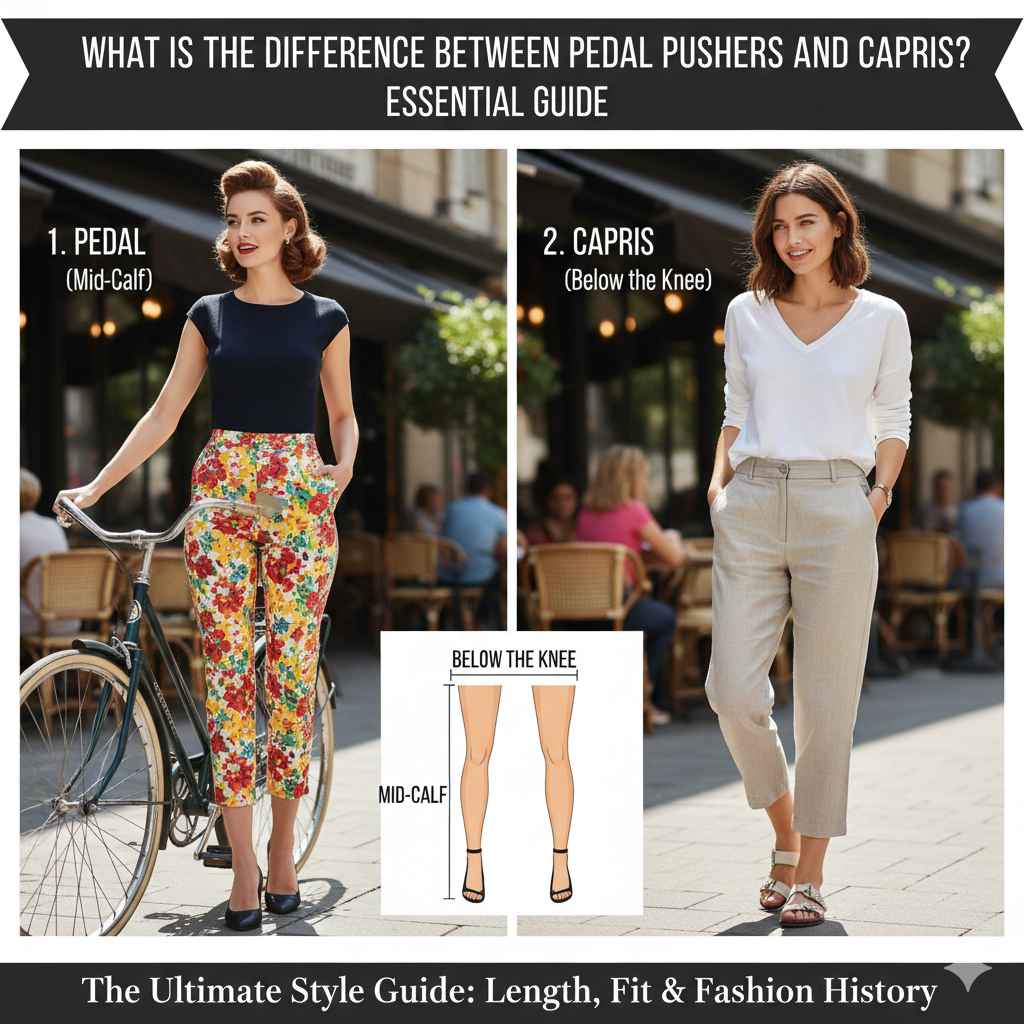
Pedal pushers and capris are both shorter pants, but the key difference is length. Pedal pushers generally hit mid-calf, while capris stop just below the knee or slightly longer. Understanding this simple length distinction helps you choose the right style for your needs, ensuring a perfect fit every time you dress.
Have you ever stared into your closet, holding two pairs of great-looking, shorter pants, wondering which one is which? You are certainly not alone! Knowing the difference between pedal pushers and capris can feel like trying to decipher a confusing car manual—lots of terms, not enough clarity. This confusion happens all the time, especially since both styles are perfect for warmer weather or casual outings.
The main sticking point is usually the length. Does it stop here, or does it stop there? Don’t worry; we are going to clear this up right now. I will break down these two popular styles so simply that you’ll be styling them like a pro by the time you finish reading. Think of this as your easy-to-follow guide to wardrobe maintenance.
Why Getting the Length Right Matters (Even for Clothes!)
As an automotive guide, I spend a lot of time talking about measurements—tire pressure, oil capacity, the exact torque for a lug nut. Even a small difference in measurement makes a big impact on safety and performance. The same idea applies to clothing! The difference between a great look and a slightly awkward one often comes down to where the hemline falls on your leg.
Choosing the right length ensures the pants flatter your body shape and fit the occasion. Capris and pedal pushers, while similar, send slightly different style signals. Let’s start by defining the classic.
Capris: The Versatile Mid-Calf Classic
Capri pants are perhaps the most recognizable shorter pant style. They are famous for their versatility and ability to transition easily from running errands to a casual lunch. They got their name from the Italian island of Capri, where they became popular resort wear.
Defining the Capri Length
The most crucial feature of a capri pant is where its hem ends. A true capri hits somewhere between the bottom of the knee and the mid-calf area. Think of it as ending about halfway between your knee and your ankle.
Here’s the breakdown of where a capri typically sits:
- The Knee Cap: They usually end below the kneecap.
- The Mid-Calf: They rarely extend past the middle of the calf muscle.
- Consistency: Modern capris are generally consistent in length, aiming for that sweet spot that offers coverage without being full-length.
Capri Styles and Fabrics
Capris come in almost every fabric imaginable, making them incredibly adaptable. Just like you can have a standard sedan or a heavy-duty truck, capris come in different “builds” to suit different needs:
- Denim Capris: Great for casual weekend wear.
- Linen Capris: Perfect for hot, breezy weather.
- Stretch/Active Capris: Often used for light workouts or yoga, similar to a 3/4 yoga pant.
- Tailored Capris: These often feature pleats or more structured waistbands for a slightly dressier look.
Pro Tip: Because capris expose a good portion of your lower leg, they pair exceptionally well with various shoe styles. Think ballet flats, low wedges, or even clean white sneakers. It’s about balancing the leg line.
Pedal Pushers: The Longer, Snug Fit
Pedal pushers have a slightly different history and a distinct fit. They are named because, originally, they were designed to be worn while cycling, stopping short enough so they wouldn’t get caught in the bicycle’s pedals.
Defining the Pedal Pusher Length
This is where the main difference lies. Pedal pushers are longer than capris but shorter than full-length pants. They generally end around the lower calf, often hitting just above the ankle bone, sometimes closer to the top of the shin.
To put it simply, a pedal pusher is longer than a capri but shorter than a cropped pant.
Historically, pedal pushers were often worn quite snugly, especially in the 1950s and 60s when they were hugely popular. While modern versions can be looser, they still maintain that characteristic longer leg line compared to a capri.
Fit Characteristics of Pedal Pushers
Beyond just the length, pedal pushers often have a more defined silhouette. They are typically:
- Snugger Through the Leg: Less “flowy” than some capris.
- Often Cuff or Roll: Sometimes they feature a permanent cuff or are designed to be rolled up to achieve the desired length.
- Casual Focus: They tend to lean more toward a retro or ultra-casual look than structured capris.
If you look at vintage style guides, you’ll see pedal pushers paired frequently with crisp blouses and ballet slippers, emphasizing that neat, tailored look.
The Essential Comparison: Capri vs. Pedal Pusher
Since the primary goal is clarity, let’s put this side-by-side. Think of this like comparing two similar-looking engine parts—they look alike, but their placement and function are slightly different. Here is a chart that clearly shows what is the difference between pedal pushers and capris based purely on where they end on your leg.
| Feature | Capri Pants | Pedal Pushers |
|---|---|---|
| Primary Length Point | Mid-calf (halfway between knee and ankle). | Lower calf, usually just above the ankle bone. |
| Relation to Knee | Ends well below the knee. | Ends lower on the leg than a capri. |
| Typical Fit | Varies widely (straight, wide leg, or slim). | Often snugger or more tailored through the leg. |
| Historical Origin | Italian resort wear (Capri Island). | Cycling/biking attire. |
The Third Contender: Cropped Pants (For Full Context)
To ensure you have the full picture, it’s worth mentioning the “cropped pant,” which often causes confusion with both capris and pedal pushers. Think of this as the shortest pant style that still covers most of the leg.
Cropped pants generally stop anywhere between the mid-shin and just above the ankle. They are often intentionally designed to show off fun footwear.
Here’s a quick hierarchy from shortest to longest:
- Bermuda Shorts (Above the knee)
- Capris (Mid-calf)
- Pedal Pushers (Lower calf/upper shin)
- Cropped Pants (Mid-shin to just above ankle)
- Ankle-length pants
Practical Style Advice: Choosing the Right Length for You
Deciding between a capri and a pedal pusher isn’t just about measurement; it’s about what makes you feel confident and comfortable. Just like choosing the right oil viscosity for your climate—a small adjustment makes the engine run better—the right hemline makes your outfit look better.
When to Choose Capris
Capris are excellent when you want maximum breathability and a defined break between your pant leg and your shoe. They work best when:
- You are aiming for a breezy, summery vacation look.
- You want to show off taller sandals or detailed shoes.
- Your activity level requires more freedom around the lower leg (they are less likely to snag than longer pants).
For a more modern, streamlined look, ensure your capris are relatively well-fitted. Baggy capris can sometimes shorten the appearance of the leg line, which is why tailored versions are so popular.
When to Choose Pedal Pushers
Pedal pushers offer a bit more coverage than capris, making them a great choice for transitional weather or when you need a slightly more polished, retro vibe.
- When the weather is slightly cooler (late spring or early fall).
- When you prefer a snugger fit around the calf.
- For achieving a classic, 1950s-inspired aesthetic.
When styling pedal pushers, remember their heritage. They look fantastic with fitted tops and flat shoes, like canvas sneakers or simple loafers. If you are interested in learning more about how different fabrics handle temperature changes, resources like those provided by textile science departments can offer great insight into why certain materials are better for warmer or cooler days (North Carolina State University Textiles Program offers great background information).
Fit and Fabric: The Unsung Heroes of Shorter Pants
In the world of DIY, the quality of your tools matters. In the world of fashion, the quality and cut of the fabric matter just as much! A poorly fitting capri or a stiff pedal pusher will never look as good as one made with the right materials.
Fabric Considerations
Fabric choice dictates comfort and how the pant drapes:
| Fabric Type | Best For Capris | Best For Pedal Pushers |
|---|---|---|
| Linen/Rayon Blends | Excellent drape, very breathable for summer. | Can wrinkle easily if fit is too tight. |
| Cotton Twill/Denim | Works well for structured, casual capris. | Ideal for the traditional, slightly structured pedal pusher. |
| Spandex/Stretch Knits | Perfect for active wear or travel capris. | Good for creating that smooth, hugging fit typical of vintage styles. |
The Importance of Hem Allowance
If you own a pair of pants that are almost the right length, remember this simple repair tip: you can often tailor the length to fit your personal preference! If you have a pair that falls awkwardly between the capri and pedal pusher range, you can adjust the hem yourself. For those learning basic sewing skills, knowing how to safely adjust a hem is a great confidence booster.
If you are unsure about making permanent alterations, you can always test a look by rolling the hem up neatly a couple of times. See where that feels best on your leg!
How to Determine Your “Perfect Break Point”
Since clothing manufacturing standards can sometimes shift, focusing on what looks and feels best on your body is the most reliable method. We can borrow a concept from automotive alignment: finding the point where everything balances perfectly.
To find your ideal break point for shorter pants, stand naturally and look in the mirror. Where does the hem line draw the eye?
- Mid-Calf Check: If the hem hits the middle of your calf, you are firmly in Capri territory. This is usually slimming for most body types.
- Below the Calf Check: If the hem dips lower, past the thickest part of the calf muscle, you are approaching pedal pusher length. This works wonderfully if you have longer legs or want more coverage.
- Avoid the “Chunky Zone”: For many people, the widest part of the lower leg (often just above the ankle) can look bulky if the hem lands right there. Generally, try to aim slightly above or slightly below this area.
Remember, there are no strict government regulations on pant hemming (unlike vehicle safety standards enforced by organizations like the NHTSA—National Highway Traffic Safety Administration), so your personal preference wins! But understanding the traditional definitions helps when shopping.
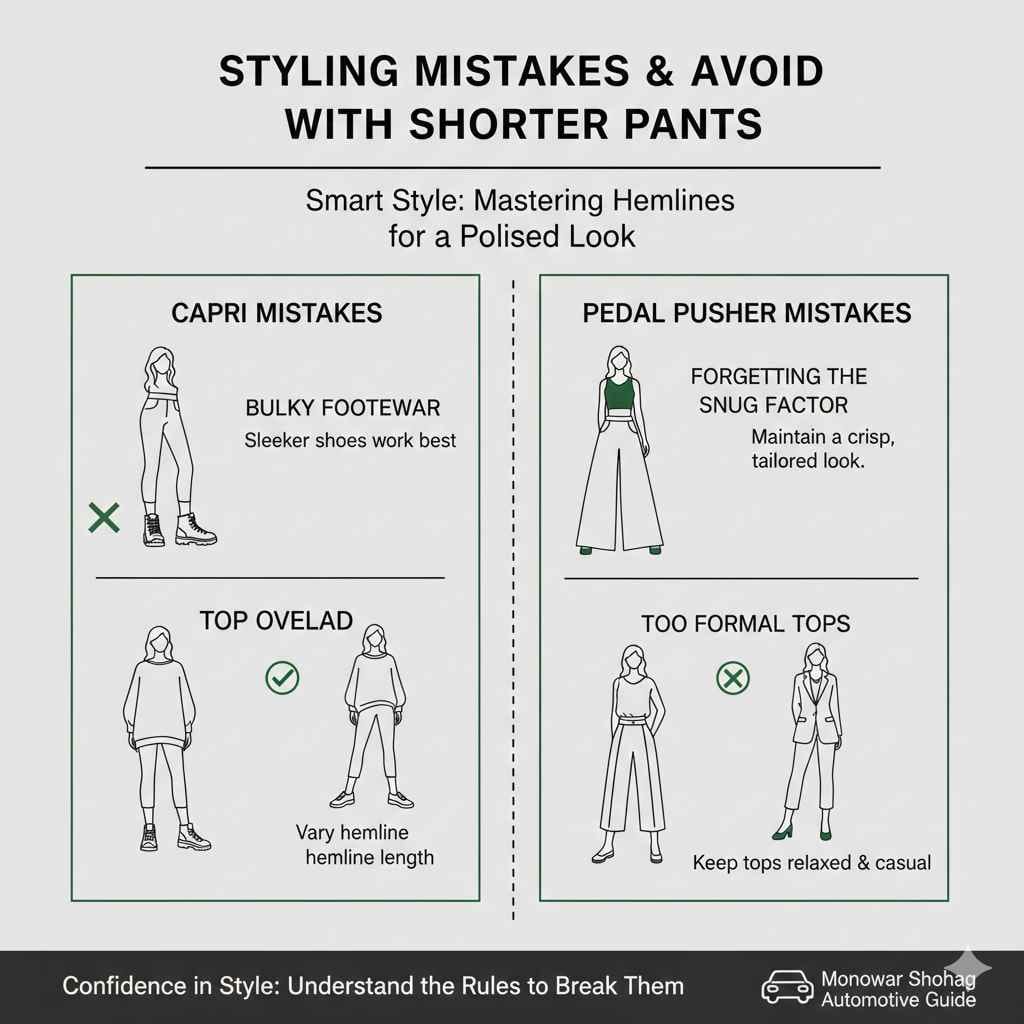
Styling Mistakes to Avoid with Shorter Pants
Just like mixing the wrong type of fluid in your transmission can lead to costly repairs, styling mistakes with capris and pedal pushers can lead to a less-than-ideal look. Here are a few common pitfalls to steer clear of:
Capri Mistakes
- Bulky Footwear: Pairing wide, chunky hiking boots or very heavy athletic shoes with slim capris can make your lower leg look disproportionately large. Stick to sleeker shoes.
- Top Overload: If your capris are very fitted, avoid wearing an overly voluminous top that ends exactly at the same level as the hem. This creates two competing horizontal lines. A top that is slightly shorter or slightly longer works better.
Pedal Pusher Mistakes
- Forgetting the Snug Factor: If you choose a very wide-legged pedal pusher, it can sometimes look like an ill-fitting, unfinished trouser. If the fit is loose, ensure the fabric is crisp.
- Too Formal Tops: Because pedal pushers lean casual or retro, pairing them with extremely formal blazers or silk blouses can create a jarring contrast. Keep the top relaxed.
FAQ: Quick Answers on Capris and Pedal Pushers
Q1: If my pants stop right above my ankle, are they capris or pedal pushers?
A: They are most likely closer to pedal pushers or even what’s called “cropped pants.” True capris usually hit higher, around the middle of your calf muscle, well below the knee.
Q2: Are pedal pushers always tight?
A: Not anymore! While the classic 1950s style was very snug (hence the name related to bicycle pedals), modern pedal pushers come in looser fits. However, they will almost always be longer than a standard capri.
Q3: Can I wear socks with capris?
A: Yes, you can, but tread carefully! If you wear socks, choose ankle socks or “no-show” socks for a clean look, especially with flats or sneakers. Visible, tall crew socks with capris often look dated unless you are intentionally going for a very specific retro athletic style.
Q4: What is the main difference between a Capri and a Cropped Pant?
A: The difference is 3 to 5 inches of fabric! Capris end near the mid-calf. Cropped pants end lower, typically between the mid-shin and just above the ankle bone.
Q5: Are capris considered professional attire?
A: Generally, no, not for traditional corporate offices. Capris are usually considered business casual at best, suitable for creative fields or very relaxed workplaces, especially when made from tailored, solid-colored fabric.
Q6: Do I need to worry about my height when wearing either of these styles?
A: It’s less about height and more about proportion. Shorter pants break up the leg line. If you are petite, ensure the hem doesn’t hit the widest part of your calf, as this can sometimes visually shorten the leg. Choose a fabric that drapes nicely.
Conclusion: Confidence in Your Closet
You’ve got the knowledge now! When you look at those shorter pants in your drawer, you won’t have to guess anymore. Remember the key takeaway: it all comes down to the hemline. Capris hit higher on the calf, and pedal pushers hit lower, usually closer to the shin or upper ankle.
Just like knowing the right tool for the job saves you time and frustration under the hood, understanding these simple style distinctions saves you wardrobe hassle. Pick the length that flatters your leg and matches your plans for the day. Whether you are cruising down the road or stepping out for coffee, feel confident knowing you’ve mastered the essential difference between pedal pushers and capris. Now go enjoy that comfortable, perfectly hemmed style!